Wilting on Spider Plant: Causes, Checks & Fixes
Quick answer
Wilting on Spider Plant usually means underwatering or overwatering with damaged tuberous roots that cannot take up water. Lift the pot, check moisture 2 inches deep, and water deeply only if the mix is dry-or stop watering and inspect tubers if soil stays wet.
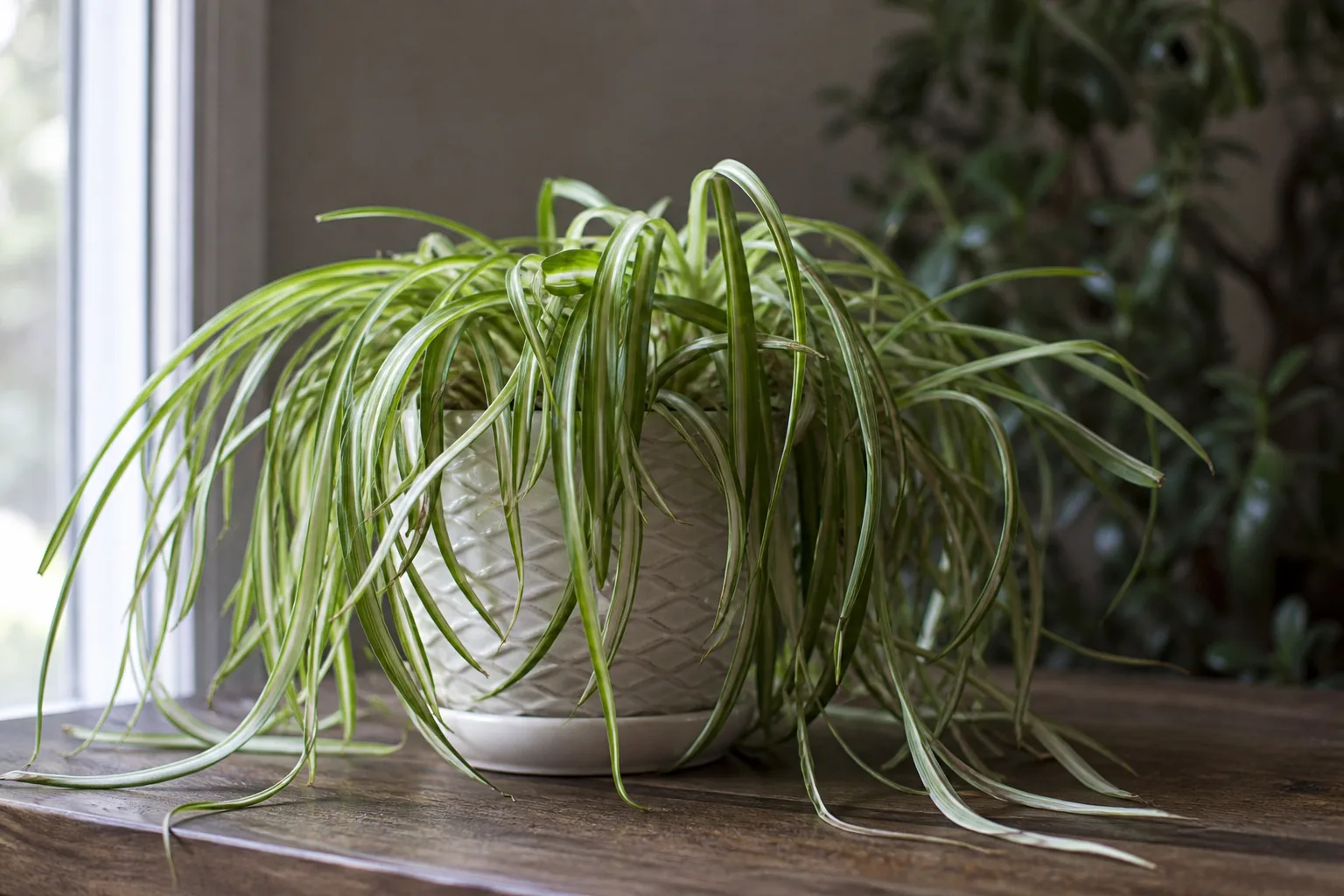
Wilting on Spider Plant: Causes, Checks & Fixes
This guide covers wilting on Spider Plant. See also the general Wilting guide, watering, and light pages for this plant.
Wilting on Spider Plant: Causes, Checks & Fixes
Quick answer
Wilting on Spider Plant is a turgor problem-long arching leaves and trailing stolons lose firmness because water is not reaching leaf cells. The same limp look can come from opposite causes, so check pot weight and soil moisture before you water.
- Dry wilt: Pot feels light, top 2 inches of mix are dry, leaves hang limp but tubers are firm. Water thoroughly until drainage runs, then empty the saucer.
- Wet wilt: Pot stays heavy for days, soil smells sour or stays soggy, leaves may yellow while still limp. Stop watering and inspect tuberous roots for rot.
Do not assume every wilted spider plant needs more water. Adding water to already saturated mix is the fastest way to destroy the thick storage roots Spider Plant overview relies on.
What wilting looks like on Spider Plant
Spider Plant wilting shows up in the long strap-shaped leaves that normally arch gracefully from a central crown. Affected leaves lose their channelled stiffness and hang straight down or fold along the midrib. In hanging baskets, the whole cascade can look collapsed rather than softly draped.
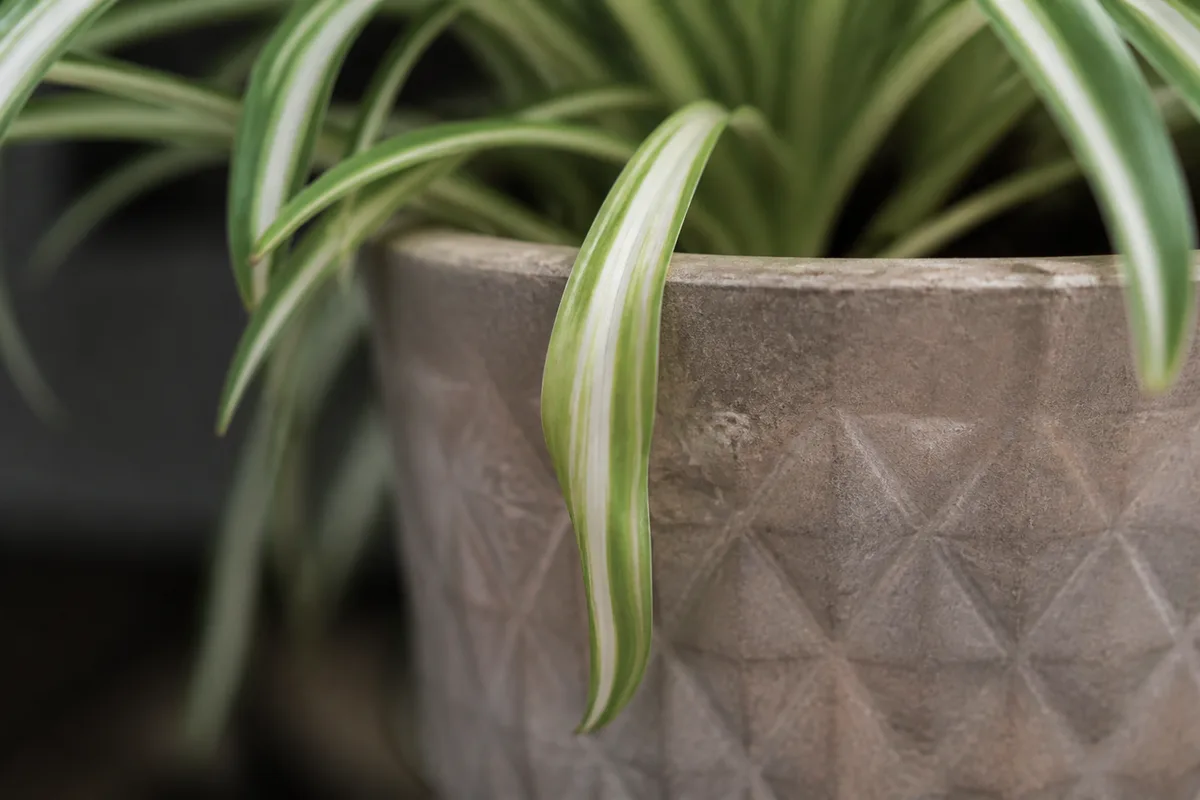
Wilting symptoms on Spider Plant - compare with healthy tissue on the same plant.
Early drought wilt:
- Leaves feel soft and limp but remain green
- Pot is noticeably lighter than after a recent watering
- Dry soil 2 inches below the surface; mix may pull away from the pot edge
- Stolons and small plantlets may wilt before the mother crown does
- Leaves often perk up within a few hours after a thorough soak
Wet-soil wilt from root stress:
- Leaves limp despite moist or wet soil
- Yellowing often appears on older arching leaves
- Pot stays heavy days after watering
- Sour or musty smell from the root zone
- Stolons and plantlets wilt even when soil feels damp
- No improvement 24–48 hours after you stop watering
Heat or light stress wilt:
- Afternoon limpness that recovers by evening when soil moisture is even
- More common in south-facing windows or near heating vents
- Leaves may look slightly dull but soil moisture is balanced
Spider Plant stores water in thick fleshy roots and rhizomes evolved for inconsistent moisture in its native coastal South African habitat. That storage buffers mild drought-but once tubers rot from chronic wet soil, the plant cannot recover turgor even when water is abundant.
Why Spider Plant wilts
Underwatering and uneven drying
Spider plants tolerate missed waterings better than many houseplants because of their water-storing roots. Repeated drought still drains turgor from long leaves faster than tubers can resupply moisture, especially in hanging baskets that dry quickly in bright light. Wisconsin Extension recommends allowing the soil to dry slightly between thorough waterings-meaning the top should dry, not the entire root ball.
Hanging baskets, small plastic pots, and heat near windows all speed drying. A plant that looked fine yesterday can wilt sharply after a warm weekend when nobody checked the pot.
Overwatering and tuber rot
This is the counterintuitive wilt. Saturated soil deprives roots of oxygen; thick tuberous tissue turns mushy and cannot transport water upward. The leaves wilt even though the mix is wet-rotting roots cannot take up water even when soil stays moist.
Spider plants are often grown slightly pot bound, which helps plantlet production but also traps moisture if drainage is poor or light is too dim for the pot to dry between waterings. Overwatering or planting in poorly drained soils can lead to root rot on this species.
Root-bound stress
Crowded tuberous roots can dry the center of the pot while the surface still looks moist, or hold stale water in a dense root mat. Yellow leaves and limp foliage together sometimes trace back to a root-bound plant sitting in tired, compacted mix rather than a single missed watering.
Heat, light, and environmental swings
NC State notes spider plant is intolerant of direct sunlight and grows best in moist soil with medium air humidity. Too much sun raises transpiration faster than roots can supply water on a hot afternoon. Cold drafts below 45°F can also collapse leaves suddenly. Recent Spider Plant repotting guide or division may cause temporary wilt while disturbed roots re-establish.
How to confirm the cause
Work through these checks in order before you change anything:
- Pot weight test - Lift the container. A light pot strongly suggests drought. A heavy pot days after watering suggests saturation or poor drainage.
- Finger or skewer test - Check moisture 2 inches deep, not just at the surface. Dry here with limp leaves confirms drought. Wet here with limp leaves points to uptake failure, not thirst.
- Recovery test - If soil is dry and tubers feel firm, water thoroughly once and recheck in 4–6 hours. Perking up confirms dry wilt. No change with wet soil means rot or severe root damage.
- Tuber inspection - Knock the plant out of the pot. Healthy spider plant roots are thick and firm, often white or tan. Mushy brown or black tubers with a sour smell confirm rot.
- Pattern on stolons - Wilted plantlets on trailing stems while the mother crown still looks firm can mean the stolon is dehydrated or the small plantlet root zone dried out-not always a whole-pot problem.
- Recent care history - Calendar watering without checking soil, a full saucer left for days, a new dark corner, or repotting within the past week all narrow the likely cause.
If soil is evenly moist, tubers are firm, and wilt appears only in afternoon sun, suspect heat stress rather than root failure.
First fix for Spider Plant
If the pot is light and soil is dry 2 inches down: water thoroughly until water runs from drainage holes, then empty the saucer completely.
Use tepid water and soak the entire root ball. Very dry peat-based mix sometimes repels water at first-a bottom soak for 20–30 minutes in a basin can re-wet a hydrophobic root ball more evenly than repeated surface splashes. Place the plant back in Spider Plant light guide and recheck turgor in a few hours.
If the pot is heavy, soil is wet, or tubers feel mushy: stop all watering, unpot, and trim rotted tissue before dry repotting.
Remove wet soil and cut away every soft brown tuber with clean scissors. Let the remaining plant air on newspaper for several hours or overnight. Repot into fresh well-draining general-purpose mix in a pot sized to the remaining root mass-not a much larger container. Wait at least a week before the first light watering when the top 2 inches are dry.
Choose one path based on moisture and tuber firmness. Do not water and repot on the same day unless every rotted tuber has already been removed.
Step-by-step recovery
Recovering from drought wilt
- Water thoroughly or bottom-soak until the root ball is evenly moist.
- Empty saucers and cachepots so the plant is never sitting in standing water.
- Move out of hot direct sun until leaves regain firmness.
- Trim fully brown crispy tips only after turgor returns-those tissues will not green up again.
- Resume checking the top 2 inches before the next watering; do not flood daily out of guilt.
Mild drought wilt often improves within hours. Repeated wilting cycles weaken the plant and stunt growth even when it survives each time.
Recovering from wet-soil wilt and rot
- Stop watering immediately.
- Unpot and rinse away old mix to see every tuber.
- Remove all mushy roots; keep only firm tissue.
- Air-dry the plant briefly, then repot dry into fresh mix with drainage holes.
- Hold fertilizer until new growth appears.
- If the mother plant is badly damaged, root healthy plantlets from stolons-these often outlive a rotted parent crown.
Partial rot can be salvaged when firm tuber sections remain. If every storage root is mushy, propagation from plantlets is the practical rescue path.
Recovering from heat-stress wilt
- Filter harsh sun to bright indirect light.
- Confirm even soil moisture-not bone dry, not soggy.
- Avoid relocating the plant repeatedly while it recovers.
Afternoon wilt that resolves by morning needs light or placement adjustment, not emergency repotting.
Recovery timeline
| Situation | What to expect |
|---|---|
| Mild drought wilt, firm roots | Noticeable perk-up within 2–8 hours after thorough watering |
| Severe drought, very dry root ball | 24–48 hours; some leaf tips may brown permanently |
| Early overwatering, firm tubers after drying out | 3–7 days once watering pauses and mix aerates |
| Tuber rot after trimming and dry repot | 1–3 weeks before new firm growth; old limp leaves may not recover |
| Post-repotting wilt | 5–10 days in stable bright indirect light |
Judge success by new firm leaves from the crown and fresh white root tips-not by whether every old limp blade stands upright again.
Lookalike symptoms
Drooping without full turgor loss: Slightly soft arching leaves in low light can look sad without true wilt. Brighten placement if leaves are pale and stretched.
Brown tips only: Fluoride, chlorine, or low humidity cause tip burn on spider plants without whole-leaf collapse. The crown stays firm and soil moisture is normal.
Yellow leaves without limpness: Older leaf yellowing on an otherwise firm plant may mean natural senescence or mild overwatering-not acute wilt.
Pest-related collapse: Heavy mealybug or scale feeding can weaken plants, but wilting with wet or dry soil and firm roots usually traces to water stress first. Inspect leaf undersides and stolon joints if moisture checks do not explain the collapse.
Mistakes to avoid
- Watering again without checking whether soil is already wet-the classic wet-wilt trap.
- Misting leaves instead of fixing root-zone moisture; surface mist does not rehydrate tubers.
- Repotting a dry wilted plant unnecessarily; drought recovery usually needs water, not disturbance.
- Keeping a wilted plant in hot direct sun while roots are stressed.
- Fertilizing to “revive” a wilted spider plant; feed only after turgor returns and new growth is active.
- Trimming all limp leaves before you know whether roots are firm-leaves may recover once water balance is restored.
Spider Plant care cross-check
Wilting prevention on this species comes down to matching water to how fast your pot actually dries:
- Light: Bright to medium indirect light; avoid direct sun that spikes heat stress.
- Water: When the top 2 inches of mix are dry-roughly every 7–10 days in active growth for many homes, faster for small hanging baskets in bright windows.
- Soil: Well-draining general-purpose potting mix; never leave saucers full.
- Temperature: Keep above 45°F; ideal growth sits roughly between 55° and 70°F.
- Humidity: 40–60% is comfortable; very dry winter air can accelerate tip browning after wilt events.
Spider Plant is non-toxic to cats and dogs, so you can hang recovery baskets out of pet reach without toxicity concerns while inspecting roots.
How to prevent wilting next time
Build a moisture rhythm instead of a calendar habit. Check the top 2 inches before every major watering. In hanging baskets, lift the pot-it is faster than guessing.
Repot before tuberous roots burst plastic pots or circle into a dense wet mat. Divide crowded clumps in spring when growth is active. Use containers with drainage holes and empty saucers within an hour of watering.
During winter, reduce watering frequency when growth slows and the pot takes longer to dry. A plant that needed water weekly in summer may need ten days or more in cool dim months-always let dryness at 2 inches guide you, not the date.
Keep spider plants in bright enough light that the mix dries predictably between waterings. Dim corners plus generous watering is the combination that rots tubers and produces chronic wet wilt.
When to worry
Escalate care if:
- The entire plant stays limp 48 hours after correct watering on confirmed dry soil
- Soil smells sour and tubers are mushy-salvage firm tissue or propagate plantlets immediately
- Wilt spreads to every stolon and plantlet while mix stays wet
- Crown tissue softens at the base, not just the leaves
- No new firm growth appears 3 weeks after rot surgery and dry repot
Spider Plant is resilient when firm tubers remain. Total tuber loss is not always fatal because plantlets on stolons can be rooted as backups-but act before rot reaches every storage root and the crown collapses.
When to use this page vs other Spider Plant guides
- Spider Plant watering guide - Use for routine moisture checks before assuming wilting is the main issue.
- Spider Plant problems hub - Browse all 4 common issues on this species.
- Root Rot on Spider Plant - Different entry point when symptoms overlap with wilting.
- Yellow Leaves on Spider Plant - Different entry point when symptoms overlap with wilting.