Curling Leaves on Spider Plant: Causes, Checks & Fixes
Quick answer
Curling leaves on Spider Plant usually mean moisture stress—dry soil with inward cupping on arching blades, or wet soil with limp curl from failing tuberous roots. First step: check moisture 2 inches deep and lift the pot before watering, moving, or spraying.
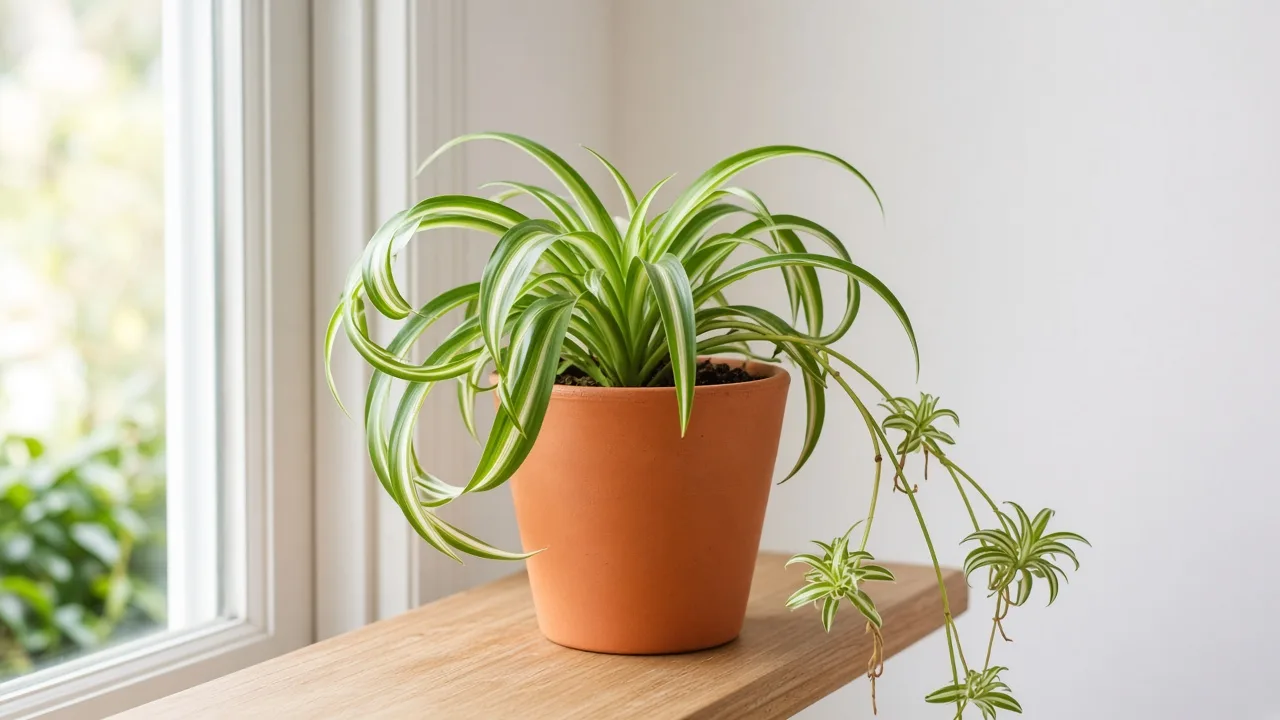
Curling Leaves on Spider Plant: Causes, Checks & Fixes
This guide covers curling leaves on Spider Plant. See also the general Curling Leaves guide, watering, and light pages for this plant.
Curling Leaves on Spider Plant: Causes, Checks & Fixes
Quick answer
Curling leaves on Spider Plant (Chlorophytum comosum) are a moisture and turgor signal first—not a missing fertilizer problem. Long arching strap leaves cup inward when tuberous roots cannot supply enough water, or when rotting roots cannot move water even though the mix feels damp.
First step: stick your finger 2 inches into the mix and lift the pot. Light and dry with inward cupping on thin blades means underwatering. Heavy and damp with limp, downward curl means stop watering and inspect tubers. Do not pour water until you know which pattern you have.
For how leaf curl works in general, see our curling leaves symptom guide. On spider plant, the pattern usually shows up on arching mother-plant blades, on spiderettes still attached to trailing stolons, or on new leaves in a root-bound hanging basket that dries unevenly.
What curling leaves look like on Spider Plant
Healthy spider plant leaves are narrow, strap-shaped, and arch gracefully from a central crown. NC State describes the species as forming long arching leaves from a central crown—stress curling breaks that relaxed arch in recognizable ways:

Curling leaf symptoms on spider plant—compare cupped blades with flat arching leaves on the same rosette.
- Inward lengthwise cupping along narrow blades, sometimes called a taco roll
- Twisted or spiraled leaves on heat-stressed or pest-damaged tissue
- Thin, papery blades with dry brown tips when soil has been dry too long
- Limp downward curl paired with yellowing lower leaves and soil that stays wet for days
- One-sided curl on blades facing a hot window or heating vent
- Progressive tip burn with slight roll when fluoridated tap water accumulates at leaf ends
Variegated cultivars like ‘Vittatum’ may look dull or floppy before curl becomes obvious. In hanging baskets, outer leaves often curl first while the crown still holds moisture—check depth, not just the surface.
Bonnie curl vs stress curl on Spider Plant
Before you change care, confirm you are not misreading a cultivar trait. NC State lists ‘Bonnie’ with green leaves that curl and twist as a normal feature—not a distress signal. The curly spider plant sold as Bonnie or Hawaiian spider plant keeps a corkscrew habit even when well watered.
Stress curl on standard flat-bladed spider plants looks different:
| Pattern | Bonnie (normal) | Stress curl |
|---|---|---|
| Blade shape | Consistent spiral on old and new leaves | Sudden change on previously flat blades |
| Soil moisture | Stable dry-down rhythm | Dry for weeks or wet for days |
| Pot weight | Normal for your routine | Very light or very heavy |
| New growth | New leaves also spiral | New blades cup, twist unevenly, or stay small |
| Stolons / spiderettes | Plantlets curl like the mother | Spiderettes wilt or cup while mother looked fine last week |
If you bought a Bonnie and leaves have always curled the same way, focus on brown tips or spider mites rather than forcing flat leaves. If a formerly flat ‘Vittatum’ suddenly cups, treat it as environmental stress.
Reading curl on arching blades and spiderettes
Spider plant distributes stress across three zones that other houseplants do not share:
Mother rosette blades curl from root-zone moisture swings. Tuberous roots store reserve water, so drought curl can appear late—after the mix has been dry 2 inches down for several days, not the moment the surface looks pale.
Trailing stolons carry water to developing spiderettes. When the mother is thirsty, young plantlets at the stolon tips cup before older crown leaves do. Curl limited to dangling spiderettes while crown blades stay flat often means the hanging basket dried from the bottom up or the stolon outgrew the mother’s water supply.
Spiderettes rooting in the same pot compete for the same tuber mass. A crowded cluster with many plantlets and few fresh roots often shows curl on outer blades while inner growth stays firm—classic root-bound stress without obvious wilt.
UF/IFAS notes that spider plants produce long stolons with plantlets at the tips that root easily. Heavy spiderette loads in small pots accelerate dry-down—factor that into your moisture check, not just calendar watering.
Why Spider Plant gets curling leaves
Water stress is the most common trigger
Leaves curl when cells lose turgor—the same mechanism behind wilting. Spider plant’s thick tuberous roots delay visible symptoms, which makes both extremes easy to miss.
Underwatering: Clemson HGIC describes thick, fleshy tuberous roots that store water. When the top 2 inches stays bone dry too long, blades cup inward to reduce surface area. Hanging baskets in bright spider plant light dry faster than floor pots—the outer mix can be desert-dry while the center still holds moisture.
Overwatering: NC State warns that spider plant grows best in moist soil yet is intolerant of overwatering in poorly drained conditions. Chronic wet mix suffocates tubers. Damaged roots cannot transport water, so leaves curl and yellow even though soil feels damp—see overwatering on spider plant and root rot when tubers turn mushy.
Fluoride and salt stress at leaf tips
Spider plants are among the houseplants most sensitive to fluoride in tap water. NC State advises avoiding tap water because chlorine and fluorides cause leaf tip burn. Tips brown first on long blades, and margins may roll slightly as necrosis advances—often mistaken for drought. If soil is moist and tubers are firm but every new leaf cups with brown tips, switch water before soaking again (brown tips guide).
Low humidity and dry winter air
The species prefers medium air humidity though it tolerates drier rooms. Winter heating pulls moisture from narrow leaf tips faster than tubers replace it—especially on blades hanging below ceiling vents. Curl at margins without dry soil points to low humidity on spider plant.
Light and heat
Spider plant tolerates low light but is intolerant of direct sunlight. Hot afternoon sun on a windowsill heats blades and triggers cupping as a self-shading response. Cold drafts from AC can produce one-sided curl on exposed leaves.
Pests on arching foliage
Dry indoor air favors spider mites on spider plant—yellow stippling, fine webbing, and curled or distorted blades. Aphids cluster on tender stolon tips and new crown leaves. Mealybugs hide in leaf axils at the crown. Pest curl usually affects new growth first and does not match a simple dry-or-wet pot pattern.
Root-bound tuber crowding
When white tubers fill the pot and water channels down the sides, the plant swings between flood and drought. Recurring curl on mid-arch leaves after seemingly regular watering often means the root ball needs more volume—see the spider plant repotting guide after moisture is stabilized.
How to confirm the cause
Work through these checks in order:
- Moisture at 2 inches — Dry and light pot = drought curl. Wet and heavy pot = overwatering or root failure.
- Which leaves curl — Scattered outer blades with dry soil = underwatering. Lower yellow leaves plus wet mix = overwatering. Only new tips twisted = pests or heat on growing points.
- Cultivar check — Consistent spiral on all ages = likely Bonnie, not stress.
- Tuber firmness — Slide the plant partly out. Firm white tubers support drought recovery; brown mushy tubers mean rot protocol.
- Water chemistry — Moist soil, firm tubers, progressive tip burn on new blades = fluoride—change water source.
- Pest inspection — Check undersides of arching blades, stolon tips, and crown axils with a hand lens.
- Placement — Curl on window-facing side only = excess direct sun. Pale stretched blades with wet soil = too little light slowing water use (not enough light).
First fix for Spider Plant
Make one correction based on moisture—nothing else on day one:
If the top 2 inches is dry and the pot is light: Water thoroughly until excess drains, empty the saucer, and recheck in 24 hours. Arching blades often relax within hours when tubers are healthy—follow the spider plant watering guide for the dry-down rhythm.
If the mix is wet or sour-smelling: Stop watering. Move to brighter indirect light so the pot can dry. If soil has stayed wet more than a week and tubers feel soft, unpot and trim mushy tissue before repotting into fresh well-draining mix.
Do not fertilize curled leaves. Do not mist heavily as a first response on a wet plant. Do not repot, prune every blade, and spray pesticide on the same day unless rot or active pests are confirmed.
Step-by-step recovery
After the first moisture correction:
- Stabilize placement — Bright indirect light, away from hot glass and AC blasts. Rotate weekly for even growth.
- Reset watering — Water when the top 2 inches dries—roughly every 7–10 days in active growth, longer in cool winter rooms.
- Switch water if tips burn — Rainwater, distilled, or RO water reduces fluoride-linked curl on new blades.
- Raise humidity if margins crisp — Humidifier or pebble tray when heated air stays below 40% RH beside the pot.
- Treat pests if confirmed — Isolate, rinse all arching foliage and stolons, then insecticidal soap on label intervals if mites or aphids persist.
- Repot if root-bound — Move up one pot size when tubers circle and water runs through without weighing the container down.
- Trim when stable — Remove blades that stay severely distorted after two weeks of corrected care; they rarely flatten fully.
Lookalike symptoms
| What you see | Often confused with | How to tell apart |
|---|---|---|
| Drooping leaves | Curl from drought | Drooping is limp arching stems; curl rolls the narrow blade tissue—check soil together |
| Wilting | Cupping only | Wilting collapses the whole rosette; curl can happen with firm tubers on dry soil |
| Brown tips | Full-blade curl | Tip burn is terminal necrosis; curl rolls the blade—fluoride vs moisture differ |
| Yellow leaves | Normal aging | Aging yellows one or two bottom blades; stress yellows several at once on wet soil |
| Leggy pale blades | Thirst | Long weak leaves with few spiderettes mean low light; soil may stay wet because the plant uses little water |
Mistakes to avoid
- Watering on a calendar without checking the top 2 inches
- Assuming Bonnie’s natural spiral is underwatering and overwatering repeatedly
- Moving a wet plant to stronger sun without fixing drainage first
- Using fluoridated tap water while blaming humidity alone
- Expecting already-curled blades to fully flatten—watch new growth instead
- Ignoring spiderettes when diagnosing—the stolon tips often curl first
Recovery timeline
Mild drought curl often improves within hours to one day after a proper soak when tubers are firm. Overwatering recovery takes one to three weeks once roots dry and new blades emerge. Fluoride-linked curl on new leaves needs two to four weeks of clean water before margins stay green. Pest-distorted new blades need one to two leaf cycles—roughly two to four weeks—before you can judge whether unfurling tissue looks normal.
How to prevent curling next time
Pair allowing the top 2 inches to dry between waterings with bright indirect light so hanging baskets dry predictably. Use low-fluoride water in fluoridated municipalities. Avoid oversized pots that hold water too long. Scout arching blades weekly during warm months. Divide or repot before tubers choke the mix and spiderette loads outpace root capacity.
When to worry
Escalate if curl climbs to every new blade within days, tubers soften while soil stays wet, or webbing spreads despite rinsing. A few cupped outer leaves on a long-arching rosette after a missed watering is routine on this forgiving species—not a crisis.
Conclusion
Spider plant curling leaves usually trace to dry tubers, wet tubers, fluoride at blade tips, or dry-air pests—not a missing fertilizer dose. Confirm with moisture at 2 inches, cultivar type, and leaf pattern, correct watering and water quality first, then inspect for pests if new growth stays twisted. Recovery shows up on the next firm arching blades—not on the ones already cupped.
When to use this page vs other Spider Plant guides
- Spider plant watering — Use for routine moisture checks before assuming curling leaves is the main issue.
- Overwatering — Use when the pot stays heavy and wet with yellow lower leaves.
- Underwatering — Use when the pot is light, soil is dusty dry, and blades perk after soaking.
- Brown tips — Use when terminal burn with slight roll appears on moist soil with firm tubers.
- Spider mites — Use when curl pairs with stippling, webbing, or dusty leaf undersides.
- Spider plant problems hub — Browse all common issues on this species.
Related Spider Plant guides
- Spider plant overview
- Spider plant watering
- Spider plant light
- Spider plant soil
- Spider plant problems
- Overwatering on spider plant
- Root rot on spider plant
Related tool
Use the Plant Problem Diagnosis Tool to narrow causes for curling leaves on this plant before changing multiple variables at once.