Not Enough Light on Spider Plant: Causes, Checks & Fixes
Quick answer
Not enough light keeps Spider Plant alive but dull-pale strappy leaves, slow dry-down, few spiderettes, and stretched stolons. First step: move the pot to bright indirect light and rotate it weekly. Old faded leaves do not green up; judge recovery on new growth.
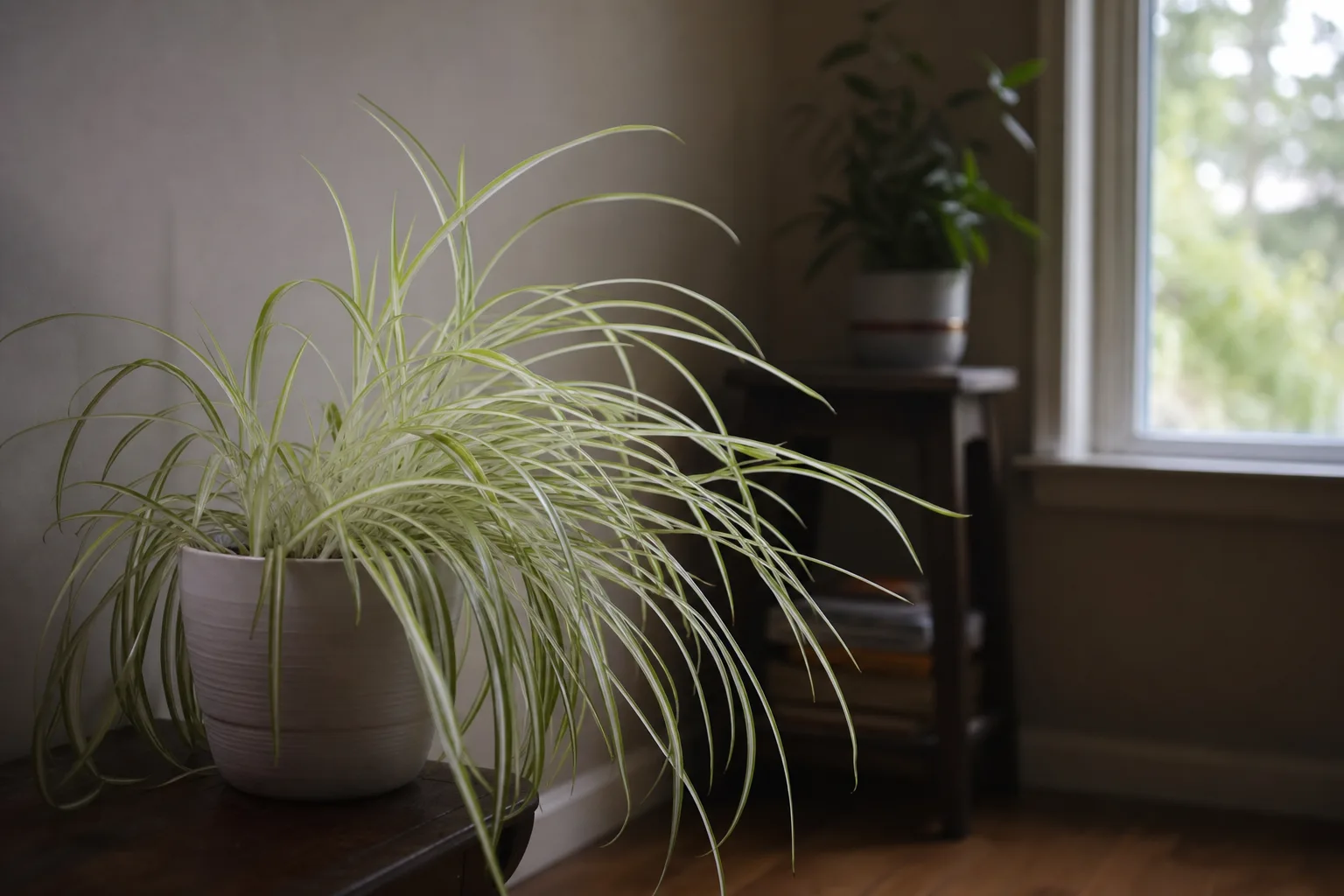
Not Enough Light on Spider Plant: Causes, Checks & Fixes
This guide covers not enough light on Spider Plant. See also the general Not Enough Light guide, watering, and light pages for this plant.
Not Enough Light on Spider Plant: Causes, Checks & Fixes
Quick answer
Spider Plant (Chlorophytum comosum) is famous for surviving dim rooms, but survival is not the same as thriving. When light is too weak, the plant keeps living while leaves wash out, growth stalls, stolons stretch with few spiderettes, and the pot dries so slowly that overwatering becomes easy to misread as kindness.
First step: move the pot to bright indirect light-near an east window, or set back from south or west glass where harsh midday sun will not hit the blades. Rotate the pot a quarter-turn each week. Do not repot, fertilize, or soak the plant on day one; better light is the single change that unlocks everything else.
How this page differs from other Spider Plant guides: This is a problem-intent diagnosis page for pale, stalled, plantlet-free baskets-not a placement reference. For window-by-window light decisions, see the Spider Plant light guide. For long stretched stolons and wide internode gaps as the main symptom, see leggy growth on Spider Plant.
What not enough light looks like on Spider Plant
Insufficient light on Spider Plant shows up as a pattern across foliage, stolons, and soil behavior-not one isolated blemish.
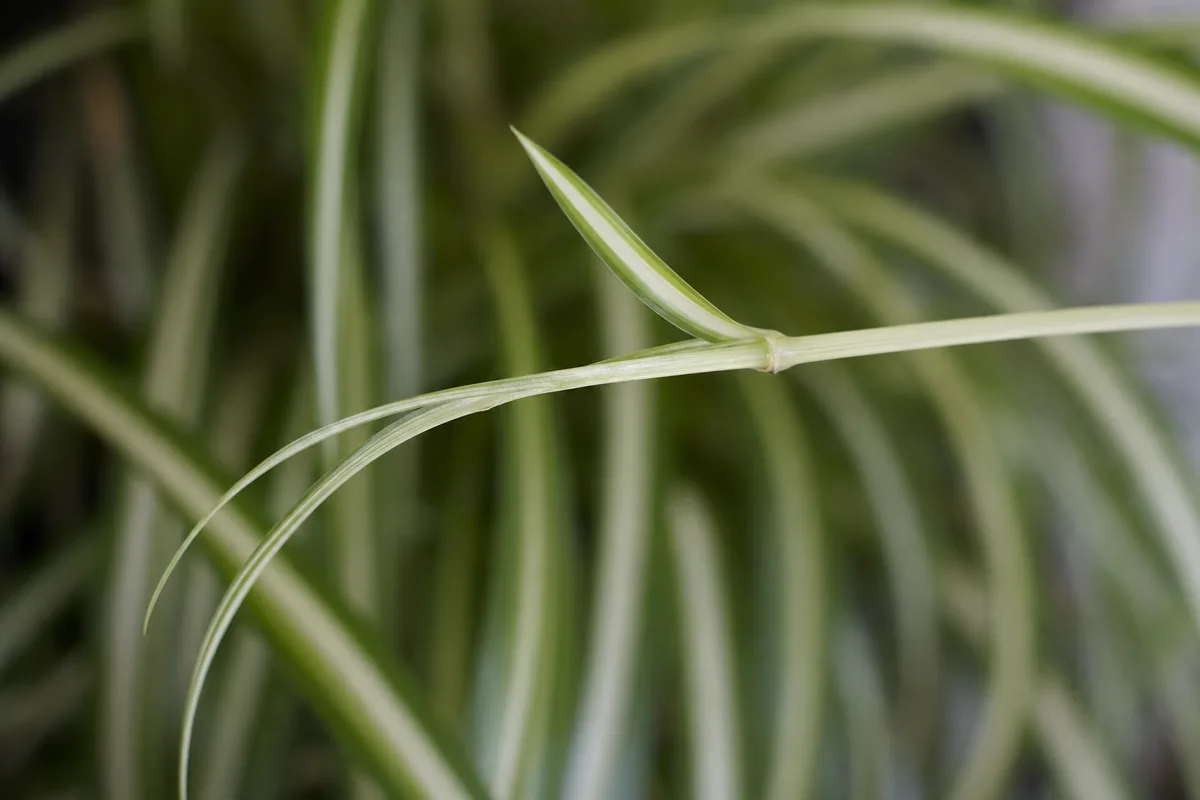
Not Enough Light symptoms on Spider Plant - compare with healthy tissue on the same plant.
Typical signs on Chlorophytum comosum:
- Pale, dull, or washed-out leaves, especially on variegated cultivars where white or yellow stripes fade toward solid green
- Slow or absent new growth for weeks or months, even during warm weather when a well-lit plant would push fresh arching blades
- Few or no spiderettes on trailing stolons, or long bare runners reaching toward the brightest side of the room
- Leggy spacing between leaf clusters on both the crown and stolons-etiolation as the plant stretches toward photons
- One-sided lean when light enters from a single direction and the basket is never rotated
- Soil that stays damp at the surface for two weeks or more because the plant is using little water in shade
Spider Plant in adequate light forms dense fountain-shaped clumps with firm arching leaves and, on mature plants, cascading stolons loaded with plantlets. A basket that looks thin, pale, and static while the mix remains wet is telling you about light and water use together-not about needing more fertilizer.
Cultivar sensitivity to dim corners
Variegated forms show low light first because white or cream tissue contains less chlorophyll. ‘Vittatum’ (central white stripe) and ‘Variegatum’ (white leaf margins) lose stripe contrast in shade before solid-green plants look obviously stressed. Curly ‘Bonnie’ may straighten and elongate in very dim spots while plain green Chlorophytum comosum stays compact longer-though no cultivar thrives indefinitely in deep shade. If stripes matter to you, prioritize brighter filtered light than you would for an all-green specimen.
Foliage fade vs. stolon stall
Faded blades often appear before stolons stop entirely. Healthy stolons carry small plantlets at nodes along arching runners. In chronic under-lighting, stolons may still elongate-but as bare searching runners with wide gaps and no offsets, stretching toward the brightest wall rather than building a cascade. That pattern differs from a mature, well-lit plant that simply has not reached flowering age yet.
Why Spider Plant gets not enough light
Spider Plant earns its beginner-friendly reputation because it tolerates conditions that would stress many houseplants. NC State Extension notes that spider plant prefers medium light levels yet can tolerate deep shade and is intolerant of direct sunlight. That tolerance lets owners keep baskets in hallways, bathrooms with frosted glass, and office desks far from windows-places where the plant persists but never builds the full arching display it would in brighter indirect light.
Distance from the window matters more than room brightness
Indoor light intensity drops sharply with distance from the glass. University of Maryland Extension explains that light decreases rapidly as you move away from the source and that houseplants in too little light become spindly, fade in color, and grow poorly. A spot that feels bright to human eyes may still be low light at the leaf surface-especially when curtains, tinted glass, overhangs, or neighboring furniture block direct rays.
Spider Plant’s wide arching blade geometry makes distance especially punishing. Unlike an upright rosette that presents a compact leaf face to the window, long strap leaves spread horizontally and shade each other when light arrives from one direction only. A hanging basket six feet back from glass may look fine to you while the leaf canopy receives a fraction of window intensity.
RHS guidance notes that while spider plants tolerate relatively low light, growth will be slower and leaves may lose their variegation-exactly the washed-out look owners notice before they realize placement is the issue.
Seasonal daylight decline
Leggy or pale new growth that appears after October often traces to shorter days and lower window intensity, not a sudden watering mistake. The plant stayed in the same corner all year, but the photon budget changed. Winter is when many Spider Plants look thinnest and produce the fewest spiderettes unless you move them closer to glass or add supplemental lighting.
Uneven light without rotation
When light reaches the plant from one direction only, growth tilts toward the source. Maryland Extension warns that one-sided light produces a lean. Hanging baskets amplify the effect because the whole mass swings toward the glass. Rotation evens the lean but cannot replace adequate intensity-spinning a dim basket still leaves it dim.
Low light paired with slow water use
Spider Plant stores water in tuberous roots and prefers soil that dries partially between waterings. In shade, photosynthesis and transpiration slow, so the same watering rhythm that worked in summer near a window leaves mix wet for days in a dark corner. That pairing is one reason not-enough-light pages matter for this species: the cultural mistake that follows is overwatering around fleshy roots, not just cosmetic paleness. See Spider Plant watering for dry-down rhythm after you improve light.
Hanging baskets dry differently than floor pots. The soil surface under a full cascading plant stays shaded and humid even when blades at the rim look airy. Floor specimens near glass often dry faster at the crown. Match checks to your container type-not a single calendar for every basket in the house.
Over-fertilizing in shade
Heavy feeding in low light pushes soft, pale top growth without fixing the underlying light deficit. NC State notes that over-fertilizing decreases plantlet formation-a problem owners already see in dim baskets. Fertilizer cannot replace photons.
How to confirm the cause
Work through these checks before repotting or pruning heavily:
- Shadow test at the leaf surface - Hold your hand above the foliage at midday. A sharp, defined shadow suggests enough intensity for compact growth and steady plantlet production. A faint or absent shadow means the plant is working with low light even if the room looks acceptable to you.
- New growth vs. old growth - Compare the newest blades to leaves lower on the crown. Paler, thinner, or more widely spaced new tissue with firm older leaves below often means recent light decline. Uniform paleness throughout suggests chronic under-lighting.
- Variegation fade - On ‘Vittatum’ or ‘Variegatum’, loss of stripe contrast combined with slow growth strongly supports a light diagnosis rather than a nutrient mystery.
- Plantlet production - A mature Spider Plant in warm, bright indirect light typically produces stolons with plantlets during active growth. Months with zero spiderettes while the plant otherwise looks stable point to insufficient light or wrong photoperiod-not necessarily disease. RHS notes that too little light, cool temperatures, and an overly large pot can all discourage offsets on otherwise mature plants.
- Soil dry-down speed - Push your finger 5 cm into the mix. If the top stays damp for two weeks while foliage looks pale and growth is stalled, low light is slowing water use. Adjust watering after you improve light; do not treat pale leaves with more water.
- Pest and root scan - Insufficient light alone rarely involves webbing, sticky residue, or sour-smelling roots. If those appear, address them separately-but do not let a pest hunt distract from an obvious placement problem.
If light is clearly inadequate and no urgent root-rot signs appear, you have enough to move the plant. You do not need to repot to confirm low light.
Placement vignette: north-room basket recovery
In March 2026, a ‘Vittatum’ hanging basket sat roughly 1.8 m from a north-facing window in a bright-looking living room. Stripes had faded to near-solid green, no spiderettes had formed in four months, and the top 5 cm of mix stayed damp for twelve days after each watering. Moving the basket to an east windowsill at 0.5 m-without repotting or feeding-produced noticeably greener new blades by week three. The first stolon with a tiny plantlet appeared around week six once day length lengthened. Older washed-out leaves never regained stripe contrast; recovery showed only on fresh growth, matching what extension sources describe for variegation loss in shade.
First fix for Spider Plant
Move the pot to the brightest location that still avoids harsh direct sun on the leaves.
Clemson HGIC recommends bright indirect light for Spider Plants and notes that midday direct sunlight may scorch leaves. Practical placements include:
- An east-facing windowsill or the floor directly beside it
- A spot 0.5–1.5 metres back from an unobstructed south or west window, ideally filtered by a sheer curtain if afternoon sun is strong
- Under a full-spectrum grow lamp in offices or north rooms-Missouri Botanical Garden notes spider plant tolerates artificial light very well
For detailed window-direction guidance and acclimation rules, use the Spider Plant light guide rather than guessing distance from memory.
After moving, rotate the pot weekly so growth does not lean one-sided toward the glass. If the plant lived in very deep shade, move it in one step to bright indirect light-not from shade to hot direct sun, which scorches strappy leaves quickly.
Do not increase watering to “help” a pale, stalled plant. Lower light use means slower dry-down. Water when the top 5 cm of soil is dry, matching the rhythm from your Spider Plant watering routine for that new location.
Grow-light setup when windows are not enough
When natural light cannot deliver bright indirect intensity-north rooms, interior offices, short winter days-supplement with a full-spectrum LED grow lamp. Position the fixture 30–45 cm above the leaf canopy and run it 12–14 hours daily on a timer. Maryland Extension notes that both duration and intensity matter indoors; a lamp left too far away adds hours without usable brightness at the leaf surface. Watch new blade color and internode spacing after two weeks rather than assuming any desk lamp is sufficient.
Step-by-step recovery
Once the plant is in better light, secondary steps restore the basket’s shape and reduce secondary stress:
- Watch new growth for two to three weeks - Tighter leaf spacing, restored variegation on fresh blades, and firmer arching curves confirm the placement is working before you prune or repot.
- Adjust watering to the new dry-down rate - Brighter spots usually dry faster. Recheck the pot weekly rather than keeping a dim-corner calendar.
- Trim faded or bare stolons after stabilization - Old pale leaves and stretched bare runners do not green up or shorten. Cut them back once new compact growth is visible if you want a tidier cascade.
- Add supplemental light in winter if needed - A timer set for 12–14 hours on a full-spectrum LED can carry the plant through short days without stretch.
- Hold fertilizer until growth normalizes - When new leaves look appropriately colored and firm, feed lightly during active growth. Avoid heavy feeding while the plant is still adjusting or still in marginal light.
- Root check only if soil stayed wet - If the pot was sour-smelling or lower leaves yellowed while mix remained damp in shade, unpot and inspect tuberous roots for softness after light and watering are corrected. Firm roots need no emergency repot. If tubers are mushy, follow root rot on Spider Plant before repotting on autopilot.
Recovery timeline and what to expect
Spider Plant responds relatively quickly once light improves, but existing tissue does not transform.
- Week 1–2: Lean may stop worsening; the newest tiny leaves may look slightly darker than pale tissue above them
- Week 3–6: Fresh blades should show shorter internodes on variegated forms; stolons may begin elongating with purpose rather than bare searching
- Month 2–3: Well-lit mature plants often resume plantlet formation when temperature and day length support it-NC State notes stolons and plantlets develop when the mother plant receives short days and long, uninterrupted nights for at least three weeks
- Beyond: Older washed-out leaves and long bare stolons remain unless you prune them
If six weeks in a clearly brighter spot produce no improvement in new growth color, spacing, or stolon activity, reassess whether the location is still too dim, whether chronic overwatering in the old spot limited recovery, or whether the pot is oversized for the root mass. At that point, inspect tubers and compare symptoms against overwatering on Spider Plant before adding fertilizer or repotting again.
Lookalike symptoms
Use this table when pale or stalled growth could be more than one cause:
| Pattern | Soil / roots | New growth | Most likely cause | Next step |
|---|---|---|---|---|
| Pale stretch, bare stolons, slow dry-down | Top damp 10+ days; firm tubers | Thin, widely spaced blades | Not enough light | Move to bright indirect light; rotate weekly |
| Yellow lower leaves, limp arch | Wet 2+ weeks; soft tubers possible | Yellowing spreads upward | Overwatering / root stress | Stop watering; see overwatering |
| Long bare stolons, wide internodes | Normal dry-down | Stretch toward window only | Leggy growth (etiolation) | See leggy growth |
| Uniform pale leaves | Normal moisture | Equal fade on old and new in bright window | Nutrient deficiency | Rule out light first; check feed history |
| Slower growth only | Normal | Slight fade in cool short days | Winter slowdown | Supplement light or wait for spring |
Leggy growth: Long stretched stolons and wide internode gaps are one visible slice of not-enough-light. The leggy growth guide focuses on etiolation specifically; this page covers the full low-light syndrome including stall, fade, and watering mismatch.
Overwatering yellow leaves: Yellowing with wet soil and soft tuberous roots is a root-zone problem. Pale green stretch with slow dry-down can precede that damage in dim corners. If both appear, improve light and let soil dry appropriately before repotting.
Brown leaf tips: Spider Plant tips brown from fluoride or chlorine in tap water, low humidity, and inconsistent watering-not primarily from shade. Tip burn with firm green arching leaves and good growth points to water quality, not placement.
Nutrient deficiency: Uniform chlorosis on new and old leaves equally across a bright window is less typical of light alone. A pale plant three metres from glass with wet soil and no spiderettes fits light first.
Normal winter slowdown: Some reduced growth in cool, short days is expected. Persistent washout and zero plantlets through an entire warm season still signal under-lighting, not season alone.
Mistakes to avoid
- Assuming “low-light tolerant” means the current spot is fine - Spider Plant can live in deep shade while failing to produce the arching, plantlet-filled look most owners want.
- Jumping from deep shade to hot direct sun - Direct sunlight scorches leaves. Bright indirect light is the target.
- Watering on a calendar regardless of light - Dim corners and bright windows dry at different speeds. Let the soil guide you.
- Feeding more to “green up” a pale plant - Fertilizer does not replace photons and may reduce plantlet formation.
- Repotting on day one - Not-enough-light is not a pot-size problem unless separate root-bound signs exist.
- Ignoring the wet-soil pairing - Pale, stalled plants in damp mix need light and a watering reset, not more moisture.
How to prevent not enough light next time
Place the parent plant where it receives bright indirect light for most of the day, or supplement with artificial light in offices and north-facing rooms. Wisconsin Horticulture Extension notes that spider plants grow best in medium to bright light throughout the year when kept indoors.
Rotate hanging baskets weekly. Match watering to dry-down in that specific spot-moist soil with good drainage, not stale wet mix in a dark corner. When you want regular spiderettes, avoid over-fertilizing and remember that photoperiod cues plantlet formation on well-lit plants.
For winter, either accept slightly thinner growth until spring or add a grow lamp on a timer so intensity and day length stay adequate through the dark season. Clean windows and unobstructed glass matter more than many owners expect-grime and heavy sheers cut usable light significantly.
When to worry
Not-enough-light alone is a cultural issue, not an emergency. Escalate care when:
- Soil stays wet for weeks and lower leaves yellow while tuberous roots feel soft-possible root rot in a dim, overwatered corner
- New growth continues to pale and stretch even after a clear move to bright indirect light for six or more weeks
- Leaf tips brown widely after a sudden move to direct sun-that is scorch, not low light; pull the plant back from the glass
Spider Plant rarely dies from insufficient light alone. It does suffer when low light pairs with chronic overwatering around its fleshy tuberous roots. Fix placement first, then align watering with how the plant actually uses moisture in the new spot.
Related Spider Plant guides
- Spider Plant overview
- Spider Plant light
- Spider Plant watering
- Leggy growth on Spider Plant
- Overwatering on Spider Plant
- Root rot on Spider Plant
- All Spider Plant problems
Conclusion
Use this page to confirm not enough light on Spider Plant by pattern and pot checks-not by treating every houseplant the same. When symptoms overlap with sibling pages, follow the linked guide for the matching cause before stacking fertilizer, repotting, or pesticide. Judge success on new blade color and stolon activity after six weeks in a brighter spot; if nothing improves, inspect roots and watering before assuming the window is still adequate.