Calcium Deficiency on Spider Plant: Causes, Checks & Fixes
Quick answer
Calcium deficiency on spider plant shows as cupped, rippled, or margin-burned new arching strap leaves unfurling at the crown center while older arching blades may stay normal. First step: confirm distortion is on the newest expanding crown blade—not fluoride tip burn on old straps or thrips scarring—and check whether soft water and incomplete fertilizer have limited calcium uptake.
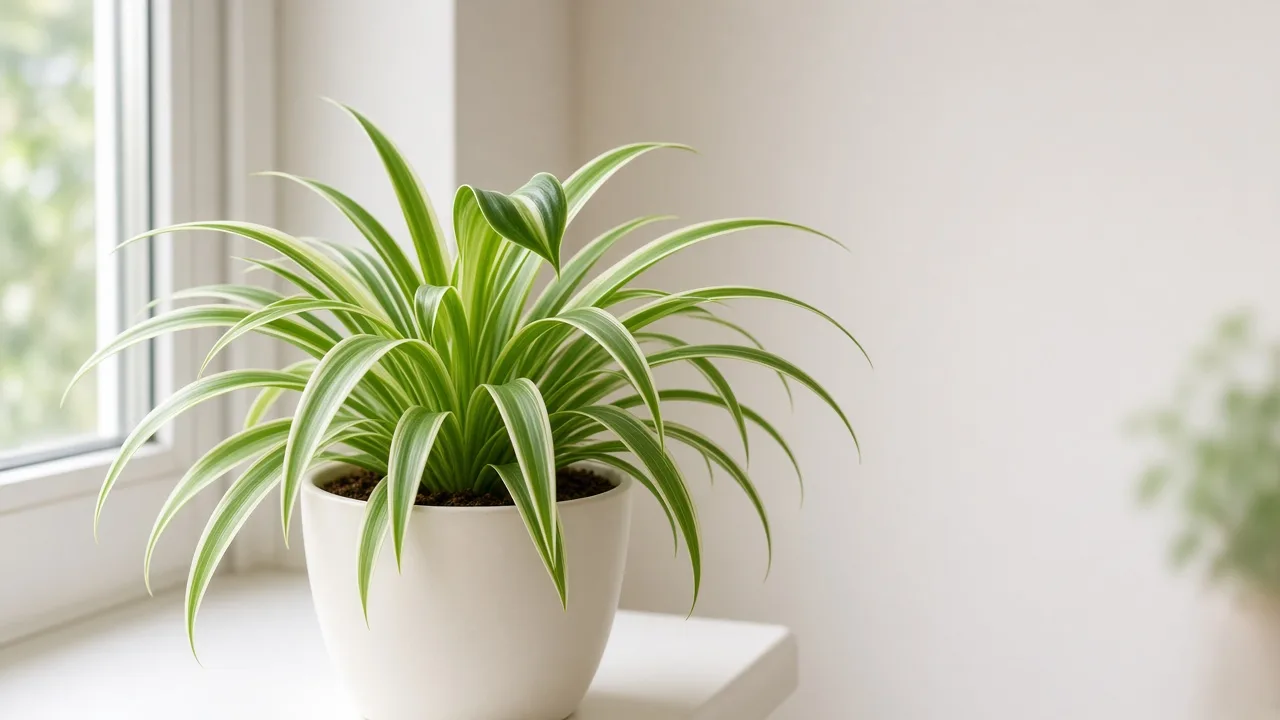
Calcium Deficiency on Spider Plant: Causes, Checks & Fixes
This guide covers calcium deficiency on Spider Plant. See also the general Calcium Deficiency guide, watering, and light pages for this plant.
Calcium Deficiency on Spider Plant: Causes, Checks & Fixes
Quick answer
Calcium deficiency on spider plant (Chlorophytum comosum) shows as cupped, rippled, or margin-burned new arching strap leaves unfurling from the crown center while older arching blades around the rosette may remain normal. Calcium is plant-immobile, so deficiency appears on young expanding tissue first—not on mature lower straps the way nitrogen deficiency does.
See our calcium deficiency guide for general new-tissue distortion mechanics. On spider plant, inspect the arching strap leaf still unfurling from the central crown tuft—cupped margins, uneven width, or necrotic edges on the newest blade point to calcium before iron, which shows yellow tissue between green veins on new growth.
First step: confirm cupped or margin-burned tissue on the newest crown strap, not silver-streaked thrips damage inside the rolled leaf or fluoride tip burn on older arching blades.
When to use this page vs other Spider Plant guides
| Pattern | Read next |
|---|---|
| New crown strap cupped or margin-burned | Calcium deficiency (this page) |
| New crown strap yellow with green veins | Iron deficiency |
| New strap silver-streaked, black specks inside roll | Thrips or distorted leaves |
| Old lower arching blades pale first, new blades small | Nitrogen deficiency |
| Interveinal yellowing on older mid-arch blades | Magnesium deficiency |
| Crispy brown tips on old blades without cupping on new growth | Brown tips — fluoride or salts, not calcium cupping |
| All blades yellow on persistently wet soil | Overwatering or root rot |
What calcium deficiency looks like on Spider Plant
Healthy spider plant pushes arching linear strap leaves from a central tuft, often with white or cream variegation along the margins on common cultivars. Calcium supports cell wall formation in expanding tissue, so when uptake fails, the newest arching strap still opening at the crown shows damage while older canopy often looks fine.
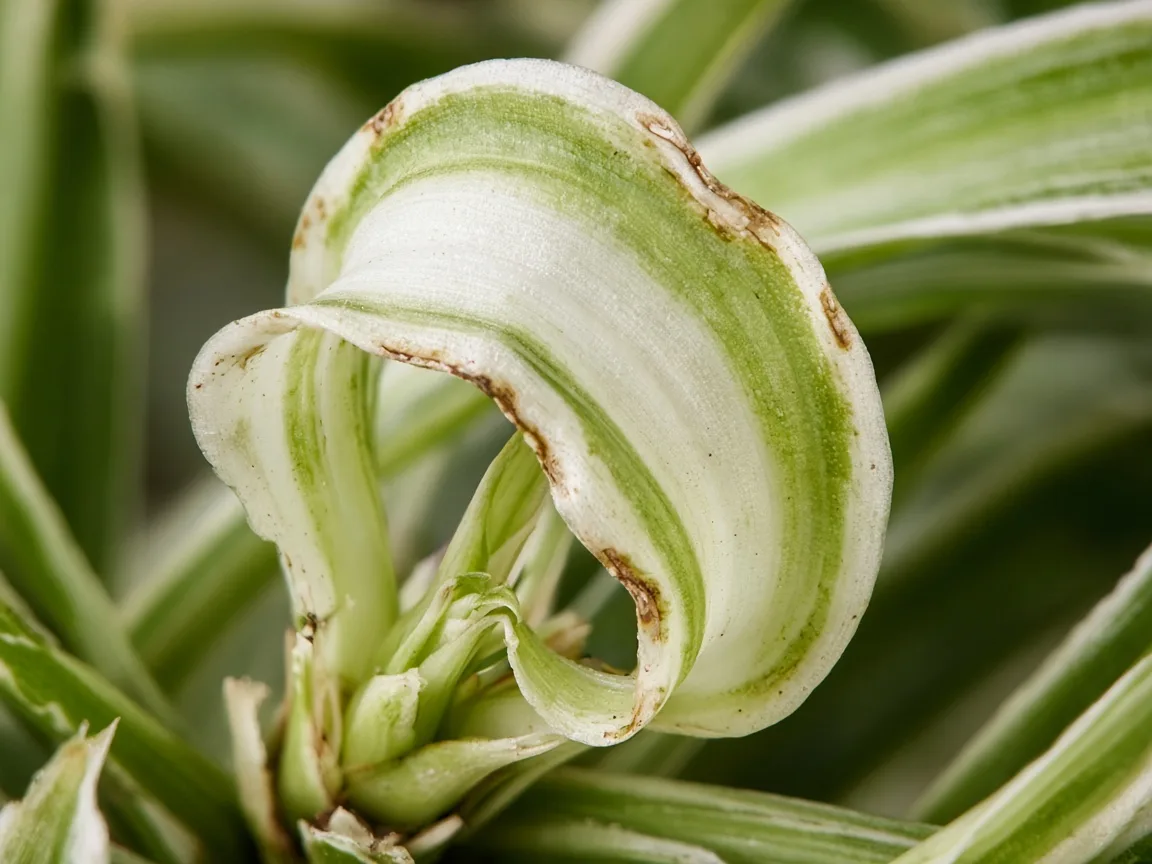
New crown strap on spider plant: cupped hood-like margin and uneven width on expanding tissue while older arching blades stay normal—calcium deficiency on immobile new growth.
Typical signs:
- Cupped, hood-like, or rippled margins on the newest arching strap leaf before it fully hardens and arches outward
- Brown or necrotic spots along the margin of the expanding crown blade
- Narrower or stunted new strap compared with prior arching leaves on the same rosette
- Asymmetric opening—the blade center expands while edges stay tight or wrinkled
- Older arching blades around the rosette may look completely normal
- Firm tuberous roots if uptake is functional; soft mushy tubers on wet mix point to overwatering instead
Not calcium deficiency:
- Silver streaks and black specks inside the rolled crown strap—thrips (distorted leaves covers unfurling pest scarring)
- Yellow tissue between dark green veins on the newest crown blade—iron deficiency
- Pale lower old arching blades without tip distortion—nitrogen deficiency
- Interveinal yellowing on oldest mid-arch blades—magnesium deficiency
- Crispy brown tips only on otherwise green mature straps—brown tips from fluoride or salts
- All blades yellow on persistently wet soil—root rot
NC State calcium deficiency work notes marginal curling on new expanding leaves before older tissue is affected, with the leaf center continuing to expand while margins remain stunted—a hood-like cupping pattern that maps cleanly onto spider plant crown straps.
Why Spider Plant gets calcium deficiency
Spider plant is a fast-growing herbaceous perennial with fleshy tuberous roots that can push several new arching leaves per month in bright indoor light. Each unfurling strap demands calcium for rigid cell walls. Very soft water, incomplete fertilizer, depleted peat mix, or inconsistent watering that interrupts transport to the crown shows up as distorted new blades while older arching leaves stay healthy.
Spider plant-specific causes:
- Distilled or reverse-osmosis water only — Irrigation removes the small calcium contribution tap water normally supplies unless fertilizer replaces it. Owners chasing fluoride-sensitive brown tips sometimes create uptake gaps on a plant pushing frequent new crown straps.
- Incomplete micronutrient fertilizer — Nitrogen-heavy products expand leaf area without calcium for cell wall integrity in those new arching blades. Wisconsin Extension warns that heavily fertilized spider plants may form fewer plantlets—but chronically underfed mothers in depleted mix can still show calcium gaps on new crown growth.
- Inconsistent watering in hanging baskets — Calcium moves with water through the xylem to the growing point at the crown. Alternating bone-dry weeks with sudden heavy soaking in a crowded hanging basket starves the apical strap even when lower tubers absorbed enough for mature blades. Follow the spider plant watering dry-down rhythm.
- Depleted potting mix — Standard peat-based mix that started airy composts down over 12–18 months in an unchanged pot. Roots stay alive but calcium availability drops until you refresh mix per the spider plant soil guide.
- Root stress blocking uptake — Chronic overwatering limits calcium transport regardless of what is in the fertilizer bottle. Soft tubers and sour mix need drainage first.
- Thrips confusion — Thrips rasp unfurling crown tissue and leave permanent ripples on new arching straps. Magnify the rolled leaf interior before assuming a nutrient gap.
Arching crown straps: calcium cupping on unfurling spider plant blades
Spider plant shows calcium stress on the arching strap leaf still opening from the central crown tuft—a pattern that would be nonsense on a snake plant vertical sword or pothos heart at a vine tip. Calcium is extremely immobile in plants, so the center of the new strap may expand while margins stay stunted, producing cupping, hood-like curling, or cracked edges along the unfurling margin.
That pattern differs from iron deficiency, which shows yellow tissue between green veins on the newest crown blade. It also differs from magnesium deficiency, which hits oldest mid-arch blades first. One outer arching strap yellowing at the base while a green blade unfurls above is normal aging—see yellow leaves.
Judge severity by successive new crown blades: one slightly wrinkled opener after a dry spell differs from three consecutive cupped new straps on stable care.
Fluoride brown tips vs calcium cupping on new crown growth
Spider plant is particularly sensitive to fluoride and chlorine in tap water, which causes brown crispy tips on otherwise green mature arching blades—a completely different pattern from calcium deficiency. Calcium shows cupped or margin-burned tissue on the newest crown strap still expanding, not tip necrosis creeping inward on older lower straps.
This matters because switching to filtered water fixes brown tips but will not straighten a cupped new crown blade. Conversely, complete fertilizer will not heal fluoride-burned tips on old arching leaves. If you see both patterns, treat water quality for tip burn and complete micronutrient feeding for crown cupping—do not assume one fix solves both.
Variegated cultivars with wide white margins can look uneven when calcium-stressed; cupping still concentrates on the expanding margin of the newest blade, not uniform washout across every strap in the basket.
Stolons, spiderettes, and calcium on baby plantlets
Spider plant produces long stolons tipped with baby plantlets. NC State notes that stolons and plantlets develop when the mother receives short days and long nights. Tiny new leaves on a dangling spiderette can show the same cupped-margin distortion as the mother crown when calcium delivery fails—because both are actively expanding tissue at the end of a long transport path.
Before repotting the whole basket, check whether distortion is crown-only on the mother while spiderettes open normal miniature straps. Crown-only cupping with firm tubers points to local uptake or fertilizer gaps. Distorted spiderettes and cupped mother crown with depleted mix suggests the whole pot needs fresh substrate and complete feed—not calcium supplements alone.
If only one spiderette on a stolon shows rippled new blades while the mother crown opens normal straps, inspect that plantlet’s root nubs separately—it may be air-rooting without enough substrate contact. Cross-check spider plant propagation if you are rooting dozens of cuttings in plain water without micronutrients.
How to confirm the cause
Work through this checklist before repotting, fertilizer changes, and calcium supplements in the same month:
- New vs old blade pattern — Cupping or margin burn on newest crown strap; older arching blades around the rosette still green and flat.
- Tuber and root inspection — Firm white tubers support nutrient fixes; brown mushy tubers need drainage first per root rot triage.
- Soil moisture at full depth — Wet many days after watering in an oversized hanging basket?
- Complete fertilizer history — Distortion despite occasional feeding points to uptake block or soft-water gaps, not starvation alone.
- Water source — Distilled or RO only without calcium in the feed?
- Pest check — Silver streaks inside the rolled crown strap?
- Light cross-check — Very dim rooms slow new blade production; see not enough light if blades stretch pale without cupping.
If soil is wet throughout, tubers soften, and roots are mostly mushy, treat as confirmed overwatering overlapping with distortion—not a mild calcium-only case.
First fix for Spider Plant
Confirm cupped or margin-burned tissue on the newest crown strap—not thrips scarring or fluoride tip burn on old blades—then apply one measured dose of complete balanced liquid fertilizer with micronutrients at half strength during active growth only if tubers are firm and mix is not chronically waterlogged.
Do not calcium-feed waterlogged tubers. Do not stack repotting, strap pruning, and triple fertilizer the same week. One corrected dry-down rhythm plus one complete feed application is the first fix—not gypsum, lime, and full-strength bloom booster on the same afternoon.
Step-by-step recovery
- Adjust watering per the spider plant watering guide; let the top 2 inches dry and empty saucer standing water.
- Flush soil if white salt crust rings the pot—leach accumulated salts before micronutrient feeds.
- Apply complete balanced fertilizer at half strength once during spring or summer active growth per the spider plant fertilizer guide; repeat only if the next crown blade still cups after three to four weeks.
- Repot into fresh well-draining mix if tubers fill the pot and old peat has compacted—see spider plant soil for ratios.
- Review water source — If you use distilled or RO water for fluoride control, ensure your fertilizer supplies calcium and micronutrients; plain water rooting of spiderettes needs the same check.
- Remove or root excess spiderettes if the mother is supporting too many stolons from one depleted pot.
- Monitor the next one or two unfurling crown straps for cleaner margins and normal width.
Do not foliar-spray concentrated calcium on hot sunny windows when the crown strap is still soft from unfurling; softening spider plant tissue at the growing point burns easily in direct sun—NC State notes spider plant is intolerant of direct sunlight.
Recovery timeline
The crown strap currently cupped rarely straightens once it hardens and arches outward. The next one or two new arching blades after corrected care usually show improvement within two to four weeks in bright active growth—faster than slow-growing snake plant because spider plant pushes leaves more frequently. Severe root damage on a neglected mother may take six to eight weeks before normal strap shape returns.
Judge recovery by flatter margins and normal width on new unfurling tissue, not by old cupped blades flattening again. If two successive new crown straps stay hooded despite firm tubers and one complete feed cycle, reassess compaction, soft-water fertilizer gaps, spiderette drain, and whether slow growth from low light is compounding the problem.
Lookalike symptoms
| Pattern | Likely cause |
|---|---|
| New crown strap cupped or margin-burned | Calcium deficiency (this page) |
| New crown strap yellow with green veins | Iron deficiency |
| New strap silver-streaked inside roll | Thrips |
| Old lower arching blades pale first | Nitrogen deficiency |
| Interveinal yellow on oldest mid-arch blades | Magnesium deficiency |
| Crispy tips on many old blades | Brown tips / fluoride or salts |
| All blades yellow, wet heavy pot | Overwatering |
Mistakes to avoid
- Fertilizer before drainage — Complete feed on waterlogged tubers wastes product and delays the real fix.
- Nitrogen-only fertilizer — Fast spider plant pushing frequent new straps still needs calcium and micronutrients during growth.
- Repot + feed + calcium supplement same month — Stack one change at a time on a stressed mother plant.
- Treating fluoride tip burn as calcium cupping — Tips brown on old blades; calcium shows margin distortion on new crown growth.
- Assuming one wrinkled opener after drought is always deficiency — Transient stress on one blade differs from three consecutive cupped crown straps.
- Feeding a dim, dormant rosette — Fix light and moisture before nutrient corrections on a plant not actively opening new blades.
Spider Plant care cross-check
Calcium uptake ties to every other variable on Chlorophytum comosum:
- Watering — Water when the top 2 inches of soil are dry. Chronic dampness and drought swings both interrupt calcium transport to the crown.
- Soil — Use well-draining general-purpose potting mix. Dense degraded peat holds water and limits nutrient availability.
- Feeding — Follow the spider plant fertilizer schedule; depleted mix needs complete feed with micronutrients, not more nitrogen alone.
- Water quality — Filtered or rainwater reduces fluoride tip burn but must be paired with complete fertilizer if you removed tap-water calcium.
How to prevent calcium deficiency on spider plant
Feed complete liquid fertilizer with micronutrients at half strength every four to six weeks during spring and summer active growth per the fertilizer guide. Flush the pot every few months if you use hard tap water or feed heavily.
Repot into fresh well-draining mix when tuberous roots circle drainage holes and water runs through dry channels—usually every one to two years for fast growers.
If you irrigate with distilled or RO water to protect arching blades from fluoride, choose a houseplant formula that lists calcium and micronutrients on the label—do not rely on plain water alone for months.
Root or remove excess spiderettes before the mother depletes the same small pot supporting six stolons.
Place hanging baskets where they receive enough indirect light to open new crown blades regularly; a plant that never pushes new growth will not show calcium cupping—but it also will not recover visibly until light and moisture support active growth.
When to worry
Calcium deficiency alone rarely kills spider plant—it is a durable species. Act within weeks when cupping pairs with:
- Wet soil for months and spreading distortion at multiple crown points
- Tuber softening at soil level or sour-smelling mix
- No new crown blade for two months despite spring light and corrected dry-down
- Successive new straps staying necrotic or severely hooded between veins
- Wilting spiderettes on stolons while the mother crown cups and tubers soften
In those cases, inspect roots before assuming more fertilizer solves everything.
Related Spider Plant guides
- Spider plant overview — growth habit, light, and watering baseline
- Problems hub — all spider plant symptom guides
- Fertilizer — complete feed with micronutrients, half-strength schedule
- Watering — dry-down checks for tuberous roots
- Brown tips — fluoride and salt tip burn vs crown cupping
Use this page when new crown growth shows cupped or margin-burned straps. Use iron deficiency when new blades yellow with green veins, and brown tips when only leaf tips crisp on older arching blades.