Thrips on Spider Plant: Causes, Checks & Fixes
Quick answer
Thrips on Spider Plant leave silvery scrape marks and black frass on narrow arching leaves, often scarring tissue still unfurling. First step: isolate the plant and shake suspect new leaves over white paper to confirm thrips before rinsing every leaf underside.
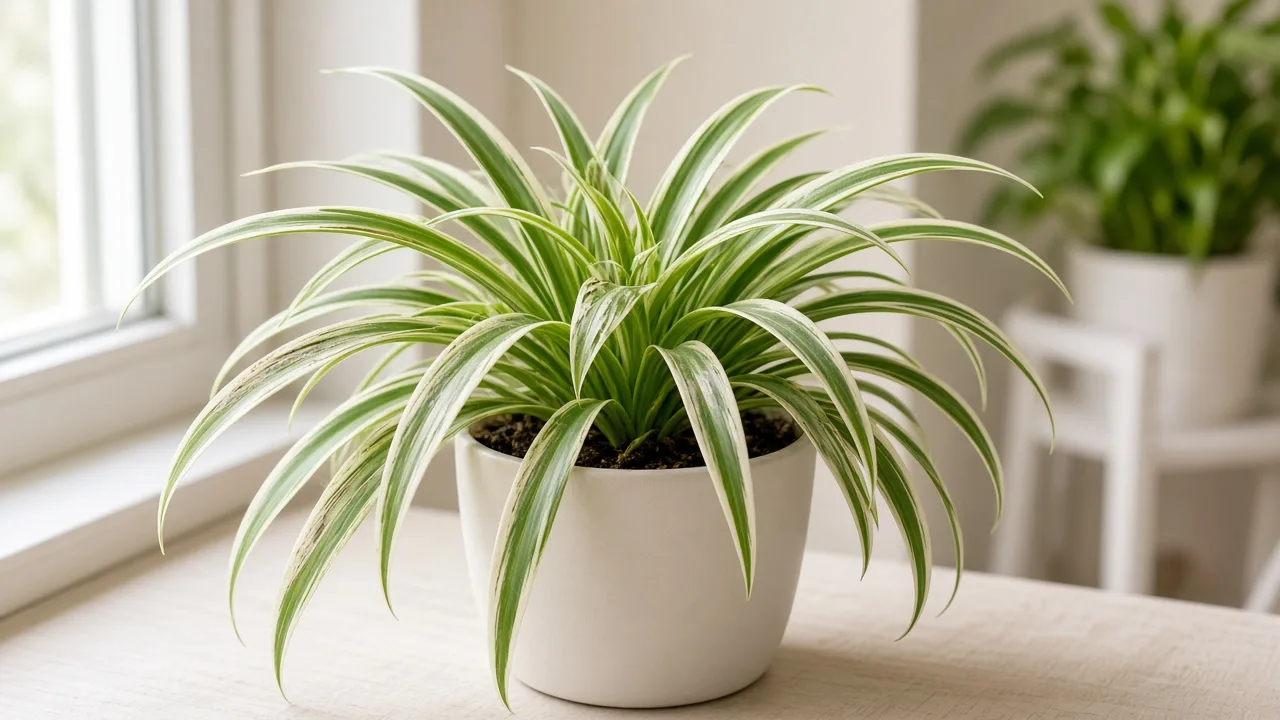
Thrips on Spider Plant: Causes, Checks & Fixes
This guide covers thrips on Spider Plant. See also the general Thrips guide, watering, and light pages for this plant.
Thrips on Spider Plant: Causes, Checks & Fixes
Quick answer
Thrips are tiny, slender insects that rasp leaf surfaces, leaving stippling, silvery streaks, and black varnish-like frass behind. On Spider Plant (Chlorophytum comosum), those marks show up sharply on narrow arching blades-especially on new crown leaves and stolons still pushing growth. Most pest thrips feed while hidden in buds and shoot tips, so you often see the damage before you spot the insects.
For how thrips behave in general, see our thrips guide. On Spider Plant, pests concentrate at the sheltered crown, along stolon nodes bearing spiderettes, and at the bases of arching leaf clumps-places a quick glance at the outer cascade misses.
First step: isolate the plant and shake suspect new leaves over white paper to confirm thrips before rinsing every leaf underside.
What thrips look like on Spider Plant
Spider plants grow as a fountain of narrow, grass-like leaves with long runners carrying baby plantlets. Thrips damage follows that soft, constantly renewing tissue.
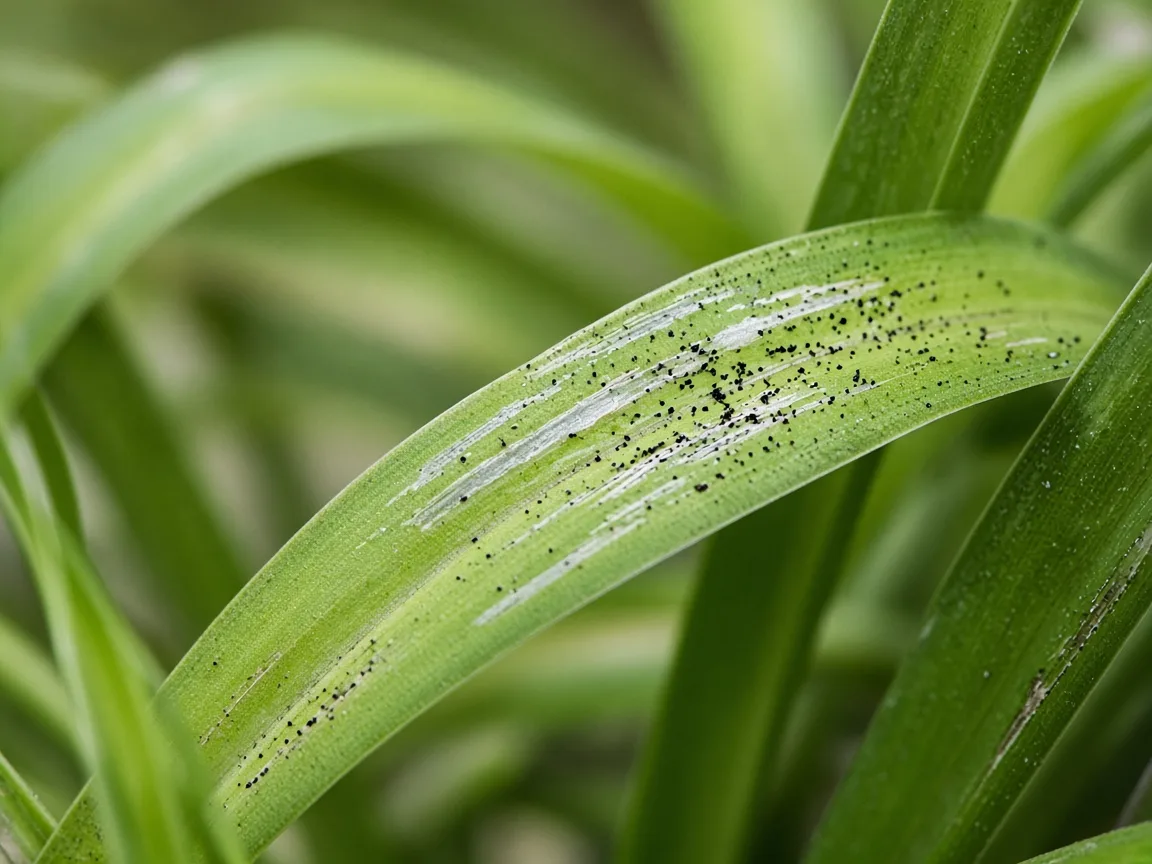
Silvery rasping damage and black frass specks on a spider plant leaf-compare with healthy blades on the same clump.
Typical signs on Spider Plant overview:
- Silvery, bronze, or pale scrape marks on upper leaf surfaces, often in streaks along the narrow blade
- Black varnish-like frass specks scattered on foliage near feeding sites
- Distorted, scarred, or crinkled new leaves still unfurling at the crown
- Bronzed or papery patches on the youngest arching blades while older outer leaves look mostly normal
- Stalled or twisted new growth when the growing tip is heavily fed
- Tiny pale or dark insects visible only with magnification-or as moving specks after a shake test
The uneven pattern confuses owners who only scan mature outer leaves. You may see clean older blades on the cascade while the inner crown and every active plantlet tip carry fresh silvery streaks. Narrow spider plant foliage makes rasping damage easier to spot than on broad-leaved houseplants, but the insects themselves stay small and quick.
Unlike spider mites, thrips do not produce fine stippling with silk webbing. Unlike mealybugs, you will not see cottony wax clusters in leaf axils. Unlike aphids, thrips rarely leave heavy sticky honeydew-though ants on a basket can still signal sap feeders nearby.
Why Spider Plant gets thrips
Spider plants are tough, but their growth habit and typical indoor placement create reliable feeding sites.
Constant tender shoots. Indoor spider plants push new crown leaves year-round in good light and send out stolons with plantlets when conditions suit offset production. Each emerging blade and stolon tip is easy feeding ground for thrips that reproduce quickly in warm rooms.
Sheltered crown and leaf bases. Arching leaves overlap at the center, creating pockets where thrips hide from rinses and sprays. Pest thrips often feed in buds and shoot tips before you notice insects on open foliage.
Hanging basket culture. Spider plants commonly hang where airflow is weaker than on an open bench. Damage builds on inner crown leaves and stolon curves above eye level before silvery streaks show on the outer cascade.
Indoor predator gap. Outdoors, beneficial insects knock thrips numbers down. Inside, populations can climb because few natural enemies reach houseplants.
Introduction routes. Thrips arrive on nursery stock, open windows, cut flowers, or contaminated tools. Skipping quarantine on a fresh basket is one of the fastest ways to spread them to crown tips on established specimens.
Dry stress in heated rooms. Spider plants tolerate average humidity, but plants kept too dry are more likely to be damaged by thrips. Warm, dry air near vents weakens leaf tissue without causing the uniform brown tips fluoride sensitivity produces.
How to confirm the cause
Work through these checks in order before you treat:
- Isolate first - Move the plant away from neighbors before handling other pots. Thrips walk and fly short distances between shelf mates.
- Inspect the crown - Lift inner arching leaves and check where new blades emerge. Silvery streaks plus black frass specks point to thrips; uniform brown tips without insects suggest low humidity or fluoride instead.
- Follow every stolon - Trace each runner to its plantlet. Thrips often concentrate at nodes and tiny leaves on spiderettes, not randomly across tough older blades.
- White-paper shake test - Hold white paper under a damaged new leaf and tap the blade. Thrips dislodge as tiny moving specks; spider mites appear as reddish or greenish dots that may crawl slowly.
- Magnify the damage - A hand lens reveals frass flecks and slender insects. Cast skins mean thrips were present even if live numbers look low today.
- Sticky trap check - A blue or yellow sticky card near the plant can catch winged adults and confirm activity when damage is fresh but insects are hard to find.
- Scan neighbors - Check other houseplants within a few feet. Thrips colonize many species; one clean spider plant beside a heavily infested neighbor can be reinfected within days.
- Rule out cultural stress - Uniform yellow leaves with wet soil and no scrape marks point to overwatering, not thrips.
If you find silvery rasping damage plus frass or live thrips on new growth, the diagnosis is confirmed. Move to treatment without waiting for the whole cascade to bronze.
First fix for Spider Plant
Move the plant away from others and shake suspect new leaves over white paper to confirm thrips, then rinse every leaf underside with a forceful stream of lukewarm water.
Cover the pot with plastic wrap or a bag so soil does not waterlog. Take hanging baskets to a shower or sink. Angle the spray upward so undersides of arching leaves and crown crevices get direct contact. Let foliage dry in Spider Plant light the same day.
This one step confirms whether thrips are present, physically dislodges nymphs and adults, and shows you how heavy the infestation really is after the foam clears. Do not apply insecticide on day one if you have not finished rinsing and reinspecting-contact sprays only work where they touch live insects.
Do not repot on day one. Spider plant tuberous roots dislike unnecessary disturbance, and thrips on this species are almost always an above-ground problem. Do not fertilize a pest-hit plant to “help it recover”-that pushes extra-soft shoots thrips prefer.
Step-by-step recovery
After the initial isolation, shake test, and rinse:
- Repeat water sprays every two to three days until two weekly inspections find no live thrips on crown tips, stolons, or plantlets. Thrips can complete a generation in as little as two weeks in warm indoor conditions-plan for multiple cycles.
- Apply insecticidal soap if colonies persist after several thorough rinses. Coat crown tips, stolon nodes, and plantlet clusters completely; soap must contact the insects directly. Repeat at label intervals through at least three pest life cycles.
- Add yellow or blue sticky traps near the plant to catch winged adults and monitor whether numbers are falling between rinses.
- Snip and discard crown leaves or stolon sections that stay heavily scarred and harbor pests after two soap cycles. Bag the clippings; do not compost them near other plants.
- Hold off on rooting spiderettes until the parent plant stays clean for at least two weeks. Thrips transfer easily to water jars and new pots.
- Scout weekly during active growth. Spider plants produce new crown blades and stolon tips quickly-that is where reinfestation shows first.
If nonchemical steps fail on a severely damaged basket and new growth keeps emerging scarred despite isolation, discarding may cost less than endless chemical cycles-but most moderate indoor infestations clear with rinsing and soap alone.
Recovery timeline
Water knockdown shows results within a few days when colonies are small. A full treatment course often takes two to four weeks with label-interval repeats because thrips hide in crown crevices and pupate in soil or leaf litter between active feeding stages.
Expect new crown leaves to emerge cleaner within one to two weeks once live thrips stay gone. Older blades that carried heavy silvery scarring may never look perfect-judge success by clean plantlet tips and firm tuberous roots, not every outer arching leaf.
Plantlets you root after control holds should show normal root nubs within the usual one to two weeks without fresh frass at their bases.
Runners and spiderettes: pest bridges on spider plant
Spider plant (Chlorophytum comosum) produces arching stolons with baby plantlets that drape toward neighboring pots and shelves. Thrips on one mother plant can reach spiderettes before you notice damage on the main clump. Hanging baskets put leaf backs at eye level but hide feeding along runner nodes where tiny new leaves stay soft longest.
During treatment, work systematically: crown first, then each stolon from base to tip, then every plantlet cluster. A single rushed pass over visible outer blades leaves thrips on nodes you plan to propagate later. If spiderettes touch a shared shelf or another pot, trim the runner or isolate the whole display until the plant stays clean for two weeks.
Narrow blades: why damage looks worse than it is
Spider plant leaves are thin and arching, so thrips rasping shows up as bright silvery streaks that read dramatic from across the room. The same injury on a thick rubber-tree leaf might look like faint stippling. Do not panic-discard based on cosmetic streaks alone if tuberous roots stay firm and new crown growth emerges clean after treatment.
Variegated cultivars can look especially alarming when bronze streaks cross white margins. Focus on whether new blades unfurl distorted or whether damage is limited to older tissue that will age out naturally.
Lookalike symptoms to rule out
| Sign | Likely cause |
|---|---|
| Stippling + fine webbing | Spider mites |
| Cottony wax + honeydew | Mealybugs |
| Pear-shaped clusters on new tips | Aphids |
| Uniform yellow, wet soil | Overwatering |
| Crispy brown tips only, no frass | Low humidity or fluoride |
| Immobile bumps on stems | Scale insects |
Mistakes to avoid
Do not treat only the outer cascade while ignoring the sheltered crown-spider plant thrips often live on inner blades you overlook.
Do not return a plant to a mixed hanging display after a single rinse. Hold isolation until you see no live thrips for at least two weeks.
Do not use homemade dish soap sprays. Harsh detergents burn narrow spider plant leaves; use products labeled for plants.
Do not blast dry, stressed plants in direct sun immediately after showering. Dry foliage in bright indirect light to avoid scorch on variegated blades.
Do not increase nitrogen feeding during an active infestation-soft new shoots invite more feeding.
Do not root infested spiderettes to share-thrips spread through propagation faster than through the parent pot alone.
Spider Plant care cross-check
Thrips exploit tender growth, but the underlying plant still needs stable care while you treat.
Water when the top 2 inches of mix are dry-roughly every 7–10 days in active growth-and never let the pot sit in a saucer of water. Tubers rot in soggy mix, and a wilted plant is harder to rinse repeatedly. See Spider Plant watering for the full dry-down check.
Keep bright to medium indirect light. Leggy, pale growth in dim corners is more vulnerable to persistent reinfestation after you clear the first wave.
Because spider plants are non-toxic to cats and dogs, rinsing and labeled soap sprays are practical in pet-friendly homes-still isolate treated plants until sprays dry and keep pets from ingesting wet residue.
How to prevent thrips next time
Quarantine every new plant, including small spider plant baskets, for at least two to three weeks before placing them near existing specimens.
Inspect crown tips and stolon nodes weekly from late winter through spring, when tender shoots are most common.
Feed lightly during active growth-half-strength balanced liquid fertilizer monthly is enough. Avoid heavy nitrogen that produces soft, pest-friendly tissue without improving plantlet numbers.
Keep leaves free of heavy dust so you spot silvery streaks early. A damp cloth wipe on mature blades is enough; skip leaf shine products.
Improve airflow around crowded hanging displays. Stagnant warm pockets let thrips numbers climb before damage spreads across the inner crown.
Before rooting plantlets in water or soil, rinse and inspect each tip. Clean stock prevents introducing thrips into propagation jars and new pots.
When to worry
Treat as urgent when silvery damage coats most crown leaves, when new growth stays distorted for multiple weeks despite treatment, or when you plan to propagate spiderettes that are already scarred. Thrips on shared cuttings spread through a whole collection quickly.
A few silvery streaks on one new blade during active growth is not a discard-level crisis if you isolate and rinse promptly. Spider plants recover well when tuberous roots stay firm and new tips grow in clean.
Replace the plant only when repeated labeled treatments fail, growth stays stunted for months, and new leaves keep emerging already scarred despite isolation-rare on an otherwise healthy indoor specimen.
Conclusion
Thrips on Spider Plant follow the plant’s own shape: sheltered crown leaves, stolon runners, and baby plantlets. Isolate first, confirm with a white-paper shake test, then rinse undersides until inspections stay clean. Use insecticidal soap only if colonies persist, scout stolon tips weekly, and hold off on propagation until the parent is clean. Distinguish silvery rasping with black frass from the brown fluoride tips this species is famous for-and you will stop most indoor infestations before they bridge to the rest of your shelf.
When to use this page vs other Spider Plant guides
- Spider Plant watering guide - Use for routine moisture checks when yellow leaves appear without silvery scrape marks.
- Spider Plant problems hub - Browse all common issues on this species.
- Distorted Leaves on Spider Plant - Different entry point when crown twisting might be cultural stress rather than pests.