Mealybugs on Spider Plant: Causes, Checks & Fixes
Quick answer
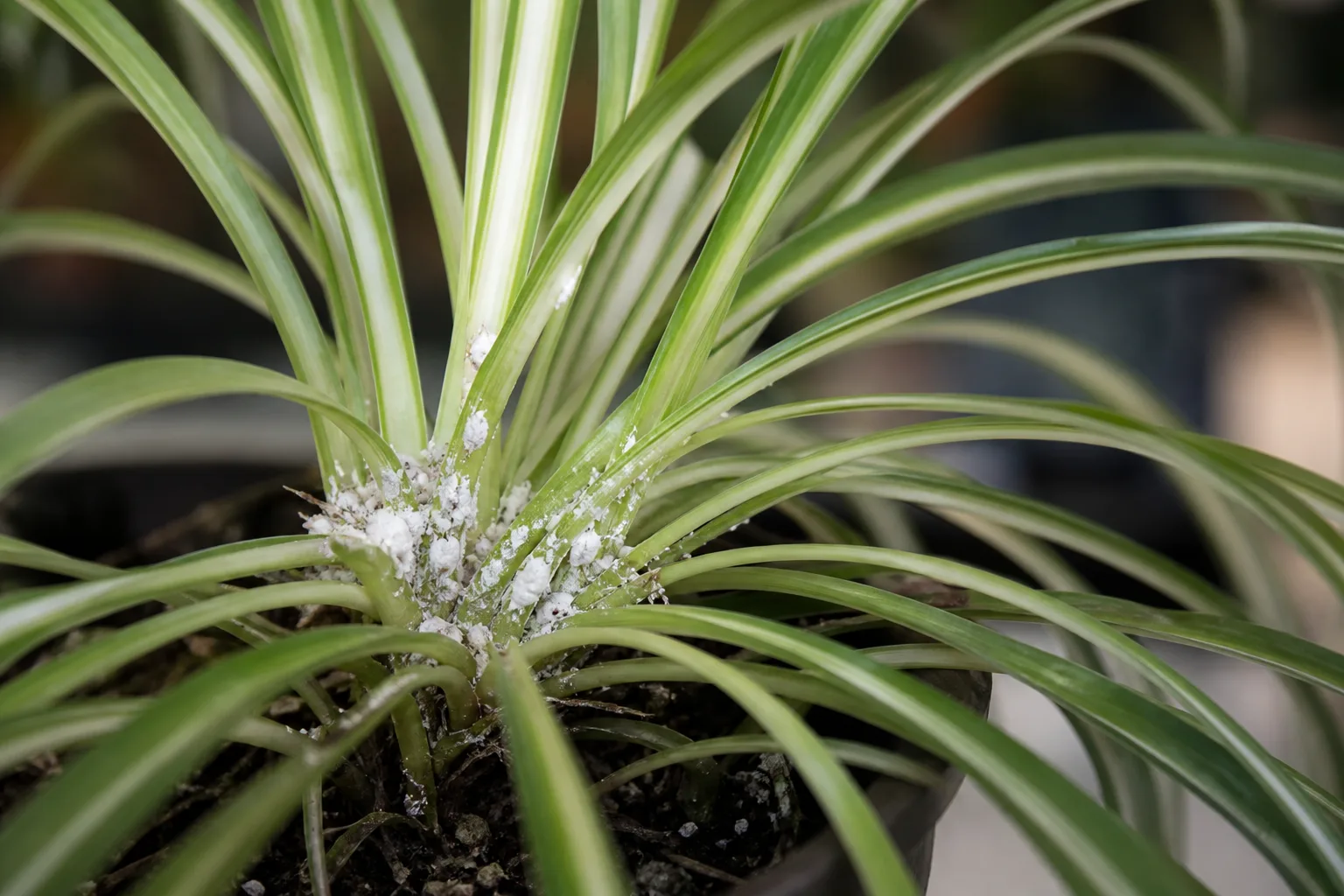
Mealybugs on Spider Plant show up as white cottony masses in leaf axils, at the crown, and along stolons-often with sticky honeydew on arching leaves. First step: isolate the plant and dab every visible cluster with a cotton swab dipped in 70% isopropyl alcohol before spraying anything.
Mealybugs on Spider Plant: Causes, Checks & Fixes
This guide covers mealybugs on Spider Plant. See also the general Mealybugs guide, watering, and light pages for this plant.
Mealybugs on Spider Plant: Causes, Checks & Fixes
Quick answer
Mealybugs are soft-bodied sap feeders that cover themselves in white, waxy cotton. On Spider Plant (Chlorophytum comosum), they settle in the tight spaces a dense rosette creates-where arching leaves meet the crown, along stolon nodes, and at the soil line around tuberous roots. You may notice sticky honeydew on leaf surfaces, ants on the pot rim, or black sooty mold on lower foliage before you spot the insects themselves.
First step: isolate the plant and dab every visible cottony cluster with a cotton swab dipped in 70% isopropyl alcohol. Work into leaf axils and stolon bases where sprays miss. Confirm live bugs-not dust or dried water spots-before moving to insecticidal soap or repeat treatments.
What mealybugs look like on Spider Plant
Healthy spider plants carry long, arching strappy leaves with a central crown and trailing stolons that produce plantlets. Mealybugs exploit every crevice that structure offers.
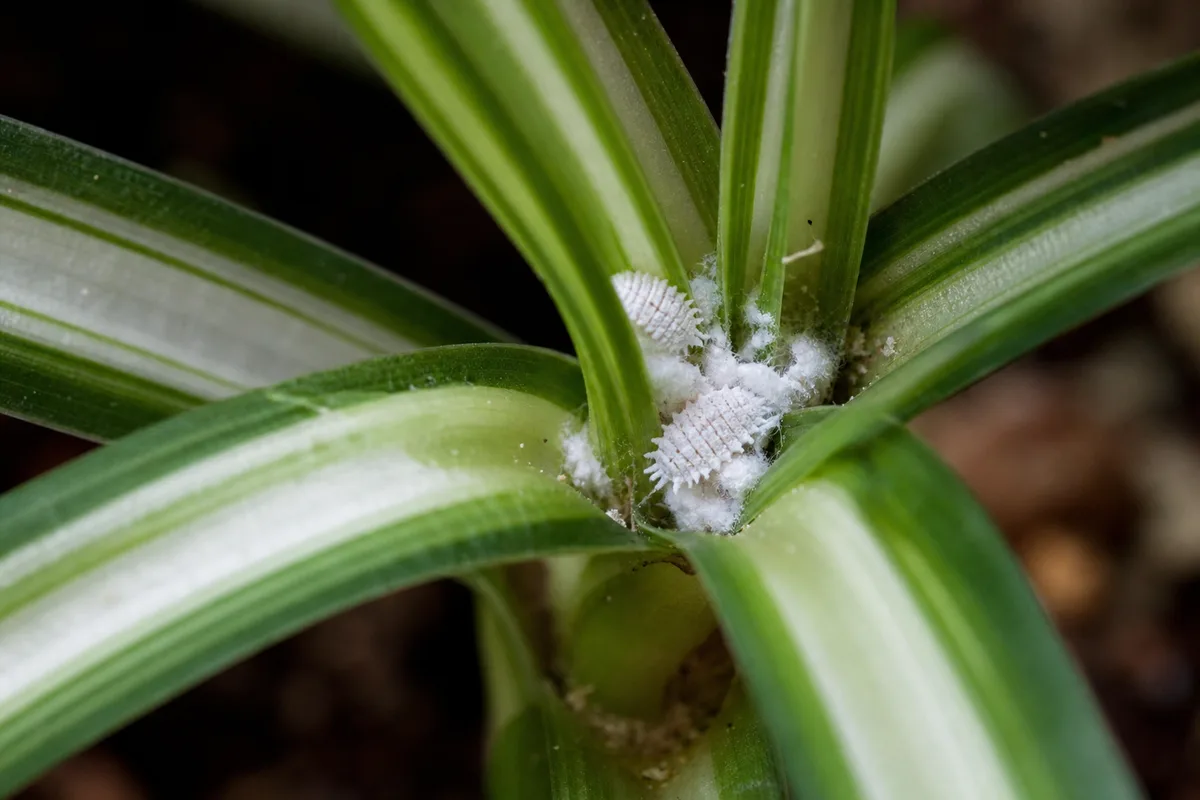
Mealybugs symptoms on Spider Plant - compare with healthy tissue on the same plant.
Typical signs:
- White, cottony or waxy clusters tucked into leaf axils-the groove where each blade meets the crown
- Slow-moving oval insects under the wax, sometimes with fine white filaments at the edges
- Sticky, shiny honeydew on arching leaves, pot rims, or surfaces below a hanging basket
- Ants on the container or basket chain, often arriving before you notice the insects
- Black sooty mold growing on honeydew-coated leaves
- Yellowing or stunted new leaves when feeding is heavy; older blades may look dull but stay attached longer than on thin-leaved plants
Mealybugs differ from spider plant scale, which forms flat brown bumps on stems. They differ from the natural white variegation on cultivars like Chlorophytum comosum ‘Vittatum’-variegation follows the leaf stripe pattern evenly, while mealybugs sit in clumps at joints and feel waxy when touched.
Unlike fluoride tip burn, mealybug damage comes with live insects, stickiness, or sooty mold-not isolated brown tips on otherwise clean leaves.
Why Spider Plant gets mealybugs
Mealybugs are not unique to spider plants, but Spider Plant overview’ growth habit makes infestations easy to miss and slow to treat.
Protected hiding spots. Mealybugs prefer somewhat protected areas-crowns, branch crotches, and stem joints near soil. A spider plant’s compressed rosette and crowded leaf bases give them exactly that cover. Stolons add more joints where crawlers settle, especially on small plantlets before you root them.
Indoor conditions favor them. Mealybugs thrive in warm settings without cold winters-the same environment where spider plants live year-round as houseplants and office plants. Hanging baskets in still air can hold colonies longer than you notice from across the room.
Stressed plants attract pests faster. Spider plants store reserve food in fleshy tuberous roots and tolerate some neglect, but they are susceptible to root rot if waterlogged-chronically wet soil weakens roots and softens crown tissue. Overwatered plants in low light are easier targets than firm, evenly watered specimens in Spider Plant light guide.
Introduction from outside. New nursery plants, open windows in warm weather, and shared tools are common entry routes. Skipping quarantine before placing a spider plant near others is the fastest way mealybugs spread through a collection-including onto spiderettes you planned to propagate.
How to confirm the cause
Work through these checks in order:
- Location pattern - Cottony masses concentrated at leaf bases, the crown, stolon nodes, or the soil line point to mealybugs. Random white dust on the whole leaf surface usually is not.
- Touch test - Press a cluster with a cotton swab. Mealybugs feel waxy and may smear pink or orange when crushed; mineral deposits or perlite wipe away dry.
- Movement check - Young crawlers lack heavy wax and can move. Watch leaf axils with a hand lens for tiny yellowish or pink nymphs near white masses.
- Honeydew and ants - Sticky residue on arching leaves or ant trails on the pot strongly support sap-feeder diagnosis.
- Root-zone check - If stems look clean but the plant keeps declining, inspect the soil surface and upper roots. Some mealybug species feed belowground on potted plants.
- Stress cross-check - Confirm soil is not waterlogged and tubers feel firm. Yellow leaves from overwatering alone lack cottony clusters; both problems can overlap on one plant.
If you find white cottony insects in axils with honeydew or ants, mealybugs are confirmed. Treat before colonies spread to stolons and neighboring pots.
First fix for Spider Plant
Isolate the plant and remove every visible mealybug with a cotton swab dipped in 70% isopropyl alcohol.
Isolate infested plants away from others immediately-mealybugs crawl short distances and hitchhike on hands, tools, and touching leaves. Set hanging baskets where you can reach the crown from below.
Dab each cottony cluster directly. Alcohol dissolves the waxy coating and kills exposed adults on contact. Work systematically through:
- The central crown where leaves emerge
- Both sides of each leaf base
- Stolon nodes and small plantlets
- The soil line and any exposed tuber tops
Test alcohol on one leaf first and wait a day to check for burn before treating the whole plant. Avoid soaking arching leaf blades unnecessarily-spider plant foliage can scorch if alcohol sits on tissue in hot sun.
Do not spray insecticide on day one if you have not confirmed live mealybugs. Do not repot immediately unless you find root-feeding colonies below the soil surface. Do not fertilize a pest-hit plant; tender new growth gives mealybugs more places to feed.
Step-by-step recovery
After the initial alcohol dab:
- Repeat manual removal every three to five days until you stop finding new cottony masses. Egg sacs and hidden crawlers survive a single pass.
- Apply insecticidal soap if colonies persist after several dabbing sessions. Coat leaf axils, crown, stolon bases, and undersides where sprays reach. Repeat at label intervals through at least two mealybug generations.
- Shower the plant lightly in a sink if the pot drains well and soil is not already soggy. A gentle rinse knocks crawlers off arching leaves-but keep tuberous roots from sitting in waterlogged mix afterward.
- Manage ants on basket chains or shelves. Ants protect mealybugs from natural enemies while harvesting honeydew.
- Trim heavily infested plantlets on stolons if cottony masses cover most of a small spiderette. Removing one bad plantlet is faster than saving it while colonies spread.
- Repot only if root mealybugs are confirmed-white wax near tubers or on upper roots with clean stems above. Use fresh mix, clean pots, and wash soil from roots before replanting.
Isolate until you see no new activity for at least two weeks after the last treatment.
Recovery timeline
Manual alcohol removal shows progress within a few days when infestations are light and localized to the crown. Moderate cases on hanging baskets often need two to three weeks of repeated dabbing plus soap at label intervals because crawlers hatch on a rolling schedule.
Judge recovery by clean new leaves emerging from the crown and unsticky stolons-not by old yellowed blades, which may stay marked. New plantlets should look waxy-free before you root them in water or soil.
If colonies return within days of treatment, you missed hidden pockets in the crown or root zone. Re-inspect with bright sidelight before assuming the product failed.
Lookalike symptoms to rule out
Spider mites cause yellow stippling and fine silk webbing, not cottony wax clusters. Tap a leaf over white paper to check for moving specks.
Scale insects form flat, immobile brown or tan bumps on stems-not fluffy white cotton. Scrape test: scale stays firmly attached; mealybugs smear waxy residue.
Powdery mildew spreads as dry white powder on leaf surfaces without honeydew or insects in axils.
Mineral or dust deposits wipe off dry. Mealybugs stay in clumps at joints and feel waxy.
Fluoride or salt tip burn browns leaf tips on spider plants but leaves the crown clean, with no stickiness or live insects.
Mistakes to avoid
Do not treat once and assume mealybugs are gone. Multiple life stages hide in the crown across several weeks.
Do not return an isolated plant to the collection after a single clean-looking day. Two weeks without new masses is a safer threshold.
Do not skip stolons and plantlets. Mealybugs on one spiderette can reinfect the parent and every pot you propagate into.
Do not overwater during recovery. Wet soil weakens tuberous roots and does not drown mealybugs in leaf axils.
Do not use homemade soap sprays. Commercial insecticidal soap is formulated to reduce phytotoxicity on foliage.
Do not ignore ants. Controlling mealybugs alone is harder while ants protect colonies.
Spider Plant care cross-check
Mealybug recovery lasts longer when baseline care supports the plant.
Spider plants prefer bright to medium indirect light and soil that dries noticeably between waterings-roughly when the top 2 inches of mix feel dry. Chronically wet pots in dim corners produce weak crowns that pests exploit.
Avoid heavy fertilizing during active infestations. Over application of nitrogen stimulates tender new growth where mealybugs prefer to lay eggs-conditions that do not help pest control.
Because spider plants are pet-safe, many growers keep them within reach of cats. That is fine for the plant itself, but keep treated foliage away from pets until sprays dry completely.
How to prevent mealybugs next time
Quarantine new spider plants at least two weeks before hanging them near existing specimens. Inspect leaf axils, crown, and stolon tips on arrival-not just the visible arching leaves.
Add mealybug checks to routine watering. Lift hanging stems and look into the crown with bright light every week or two.
Keep soil from staying soggy. Use pots with drainage, empty saucers, and avoid letting hanging baskets drip onto plants below.
Rinse dusty leaves occasionally in a sink. Dusty, stagnant foliage in dry heated rooms stresses plants and makes inspection harder.
Scout plantlets before propagation. A clean parent with infested stolons will spread mealybugs into every new pot.
Preserve beneficial insects if plants summer outdoors. Lady beetles, lacewings, and parasitic wasps reduce mealybug numbers when broad-spectrum sprays have not eliminated them.
When to worry
Treat as urgent when cottony masses cover most of the crown, honeydew and sooty mold coat most arching leaves, or ants swarm the basket daily. Mealybugs are difficult to control once populations explode in hidden crevices.
Consider discarding a severely infested spider plant if two full treatment cycles fail and the crown stays soft, yellow, or declining despite corrected watering. Protecting the rest of your collection often matters more than saving one stressed hanging basket.
Act quickly when mealybugs reach plantlets on multiple stolons-you propagate those into new pots and spread the problem across the room.
A few isolated clusters at one leaf base on an otherwise vigorous plant is manageable. Isolate, dab, and monitor before escalating.
Conclusion
Mealybugs on spider plants hide where arching leaves crowd the crown and stolons branch-not where you look from across the room. Isolate first, dab visible clusters with alcohol, then repeat until new growth comes in clean and stolons stay sticky-free. That sequence catches the pest early without unnecessary sprays and keeps your spiderettes safe to propagate later.
When to use this page vs other Spider Plant guides
- Spider Plant watering guide - Use for routine moisture checks before assuming mealybugs is the main issue.
- Spider Plant problems hub - Browse all 4 common issues on this species.
- Yellow Leaves on Spider Plant - Different entry point when symptoms overlap with mealybugs.