Whiteflies on Spider Plant: Causes, Checks & Fixes
Quick answer
Whiteflies on Spider Plant show up as tiny moth-like insects on leaf undersides and a white cloud when you disturb the foliage. First step: isolate the plant the same day you see flying insects, then wash every reachable leaf underside with lukewarm water.
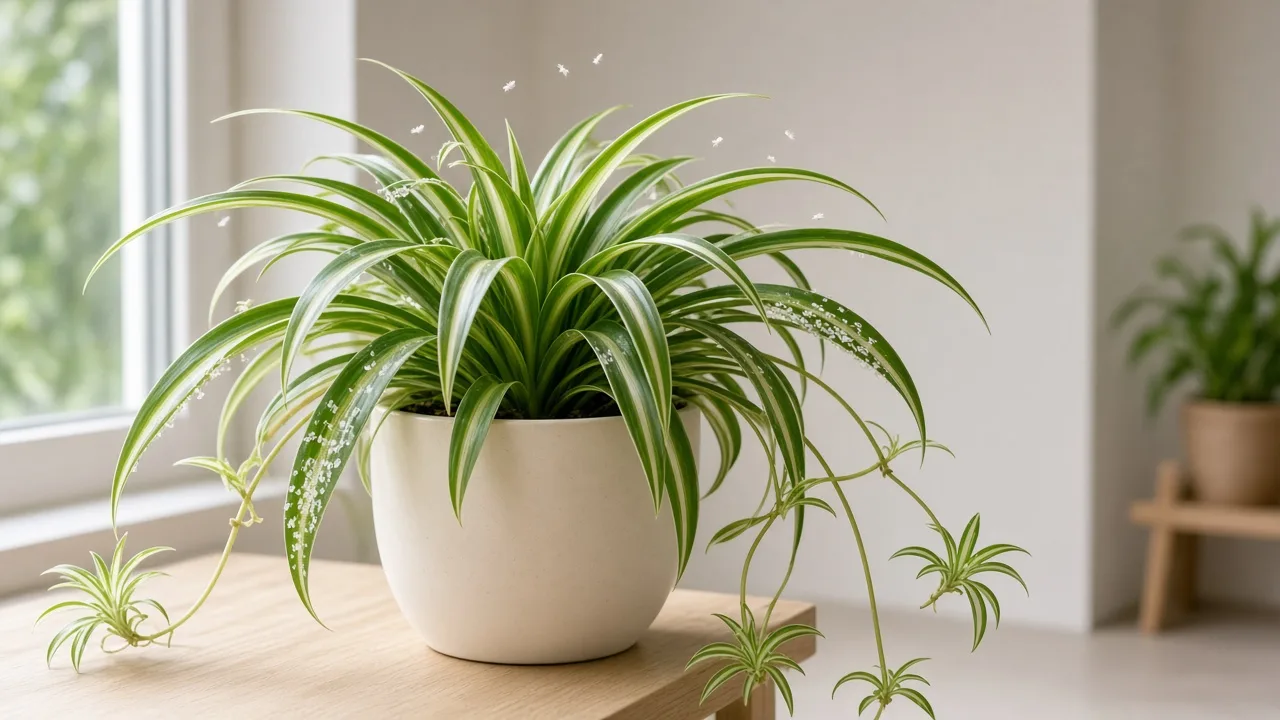
Whiteflies on Spider Plant: Causes, Checks & Fixes
This guide covers whiteflies on Spider Plant. See also the general Whiteflies guide, watering, and light pages for this plant.
Whiteflies on Spider Plant: Causes, Checks & Fixes
Quick answer
Whiteflies are piercing-sucking insects that feed on the undersides of leaves. On Spider Plant (Chlorophytum comosum), adults look like tiny white moths tucked under arching blades. Disturb the foliage and a white cloud of insects rises before they resettle. Immobile nymphs look like flat pale disks glued to the same surfaces.
For general whitefly biology and life cycle, see our whiteflies guide. On spider plant, pests concentrate on the undersides of arching leaves, the sheltered crown, and stolon nodes where plantlets form-places a quick glance from across the room will miss.
First step: isolate the plant the same day you see flying white insects, then wash every reachable leaf underside with lukewarm water.
What whiteflies look like on Spider Plant
Healthy spider plants carry long, narrow, arching leaves with a central crown and trailing stolons that produce plantlets. Whiteflies exploit the undersides of those blades and the tight spaces where leaves crowd together.
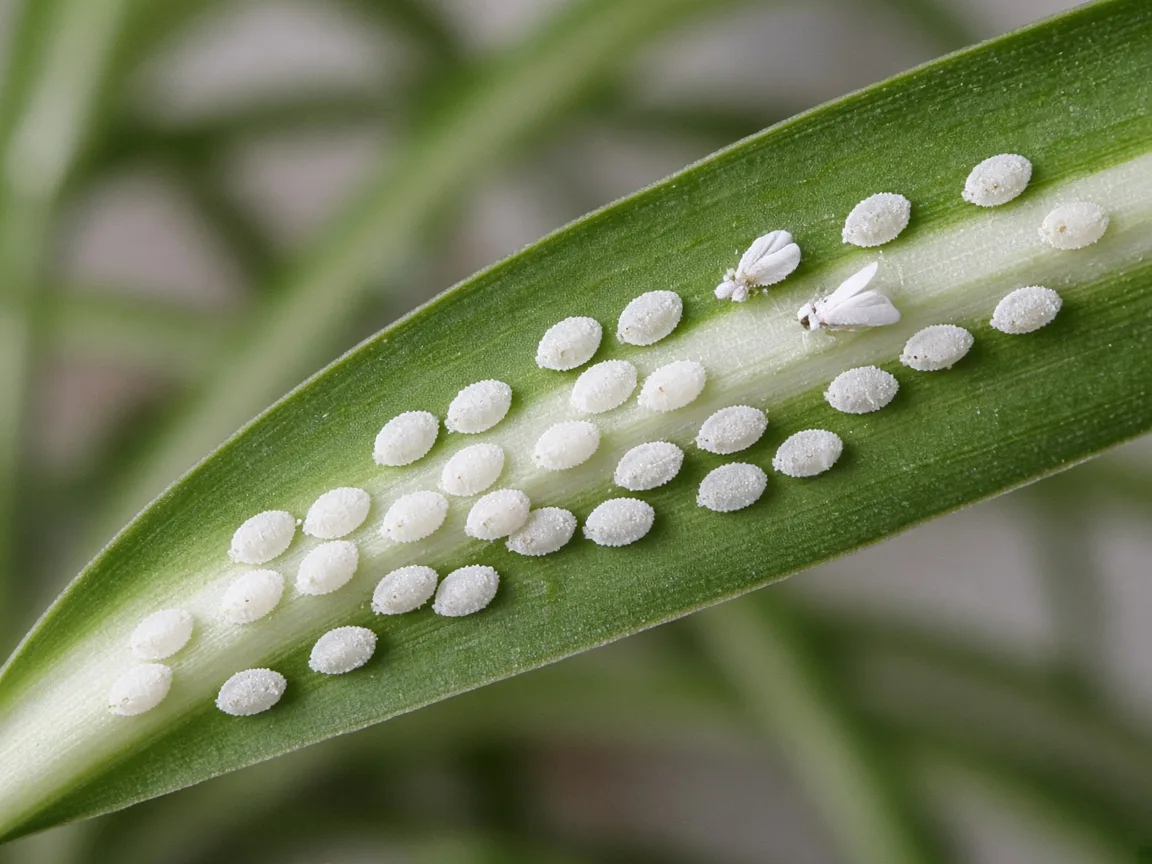
Whitefly nymphs on the underside of a spider plant leaf-flat pale disks distinct from the green blade above.
Typical signs:
- A sudden white cloud when you water, move, or tap arching leaves
- Tiny moth-like adults, about 1/10 inch long, resting on leaf undersides
- Flat, oval, pale nymphs glued to the same surfaces after crawlers settle
- Sticky, shiny honeydew on blades, pot rims, or surfaces below a hanging basket
- Black sooty mold growing on honeydew-coated foliage
- Yellowing, mottling, or stunted new leaves when feeding is heavy
Whiteflies differ from spider mites, which cause fine stippling and silk webbing without flying adults. They differ from mealybugs, which form cottony wax clusters in leaf axils rather than flat disks across leaf backs. Thrips leave silvery streaks and distorted young growth, not a white flying cloud.
Unlike fluoride brown tips, whitefly damage comes with live insects, stickiness, or sooty mold-not isolated tip burn on otherwise clean leaves.
Why Spider Plant gets whiteflies
Whiteflies are not unique to spider plants, but this species’ growth habit makes infestations easy to overlook and fast to spread through a collection.
Undersides stay out of sight. Spider plant leaves arch downward and outward. From above, foliage looks clean while nymphs feed underneath. Hanging baskets make the problem worse-you see the graceful cascade, not the sheltered inner clump where leaves overlap at the crown.
Stolons create pest bridges. Chlorophytum comosum sends out arching stolons with baby plantlets that touch neighboring pots, shelf edges, and trailing stems on other plants. Crawlers and adults move along those bridges before you notice damage on the parent clump.
Indoor warmth with no predators. Homes and greenhouses stay warm enough for whiteflies to reproduce throughout the year. Outdoor natural enemies-lady beetles, lacewings, parasitic wasps-do not reach indoor spider plants unless you deliberately preserve them.
Nursery hitchhikers and crowded shelves. New stock often arrives with eggs on leaf undersides. Inspect new plants before placing them among others. Crowded plant shelves let adults fly between pots on shared watering days.
Stressed plants show damage faster. Spider plants store water in tuberous roots and tolerate some neglect, but chronically wet soil in dim corners weakens the crown. An overwatered plant in low light yellows and stalls new growth, making whitefly feeding harder to separate from cultural stress.
How to confirm the cause
Work through these checks in order:
- Disturbance test - Tap or gently shake an arching leaf over white paper. Adults fly up and resettle on undersides. That cloud is the fastest whitefly confirmation on spider plant.
- Underside inspection - Tilt each blade with bright sidelight. Look for flat pale nymph disks and powdery white adults along the midrib and leaf base.
- Crown and stolon check - Lift hanging stems and inspect from below. Check stolon nodes where plantlets form-colonies often start on young tissue before spreading to the mother plant.
- Honeydew and ants - Sticky residue on arching leaves or ant trails on the pot rim strongly support sap-feeder diagnosis.
- Neighbor scan - Check pots on the same shelf or below a dripping hanging basket. Whiteflies spread by flight and contact between touching foliage.
- Stress cross-check - Confirm soil is not waterlogged and tubers feel firm. Uniform yellow leaves from overwatering alone lack flying insects and flat nymph disks; both problems can overlap on one plant.
If you see flying white adults plus nymphs on undersides with honeydew, whiteflies are confirmed. Treat before populations overlap multiple life stages across the whole clump.
First fix for Spider Plant
Isolate the plant the same day you see flying white insects, then wash every reachable leaf underside with lukewarm water.
Isolate infested plants away from others immediately-whiteflies fly short distances and hitchhike on hands, tools, and touching leaves. Move hanging baskets where you can reach every arching blade from below.
Wash undersides systematically:
- Support each leaf from underneath so you do not snap arching blades
- Rinse with lukewarm water strong enough to knock off crawlers and soft-bodied nymphs
- Work from the crown outward, including stolon bases and small plantlets
- Let the plant drain fully afterward-spider plant tubers dislike sitting in soggy mix
Water sprays remove eggs and crawling juveniles when you reach the surfaces sprays miss on dense foliage. Repeat washing every few days before escalating to soap or oil.
Do not spray insecticide on day one if you have not confirmed live whiteflies. Do not repot immediately unless the infestation is limited to one badly coated plantlet you can remove. Do not fertilize a pest-hit plant; tender new blades give whiteflies more feeding sites.
Step-by-step recovery
After the initial wash:
- Repeat washing every three to five days through at least three whitefly generations. Eggs, nymphs, and adults overlap on one plant at the same time.
- Hang yellow sticky traps near the isolated plant. Adults are attracted to yellow and traps reduce flying stages on light infestations.
- Apply insecticidal soap or horticultural oil only after confirming active pests. Coat leaf undersides thoroughly where nymphs attach. Repeat at label intervals-eradication often requires four to five applications at five- to seven-day intervals because eggs and pupae resist single sprays.
- Prune heavily infested lower leaves if nymph disks coat most of the underside and washing cannot reach the crown. Spider plant replaces lost foliage quickly when the crown stays firm.
- Remove coated plantlets on stolons if flat nymphs cover most of a small spiderette. Discarding one bad plantlet is faster than saving it while colonies spread along the stolon.
- Manage ants on basket chains or shelves. Ants harvest honeydew and protect sap feeders from natural enemies.
Isolate until you see no flying adults and no new nymph disks for at least two weeks after the last treatment.
Recovery timeline
Physical washing shows progress within days when colonies are light and localized to a few arching leaves. Moderate cases on hanging baskets often need two to four weeks of repeated washing plus soap or oil at label intervals because overlapping life stages hatch on a rolling schedule.
Judge recovery by clean new blades emerging from the crown and unsticky stolons-not by old yellowed leaves, which may stay marked. New plantlets should look disk-free before you root them in water or soil.
If adults return within days of treatment, you missed sheltered undersides in the inner crown or along stolon nodes. Re-inspect from below with bright sidelight before assuming the product failed.
Runners and spiderettes: pest highways on spider plant
Chlorophytum comosum is built for propagation. Arching stolons carry plantlets that dangle into neighboring pots, brush shelf mates, and rest on shared watering trays. Whiteflies do not respect the line between mother plant and baby.
A colony on one spiderette can reinfect the parent within a week. Hanging baskets put leaf backs at eye level for a moment, then hide scale and nymph disks along runner nodes where stems bend. Work systematically during treatment:
- Inspect every stolon from the crown to each plantlet tip
- Isolate or remove coated plantlets before they touch other pots
- Treat mother and spiderettes together, not just the visible arching leaves
This section would be nonsense on a single-stem succulent or a rosette-forming echeveria. Spider plant’s stolon habit is exactly why whiteflies spread faster here than on plants without trailing offsets.
Lookalike symptoms to rule out
| Sign | Likely cause |
|---|---|
| Cottony wax in leaf axils | Mealybugs |
| Silvery streaks on young blades | Thrips |
| Fine stippling + silk webbing | Spider mites |
| Flat brown bumps on stems | Scale insects |
| Uniform yellow leaves, no insects | Overwatering or not enough light |
Mistakes to avoid
Do not treat once and assume whiteflies are gone. Multiple life stages hide on undersides across several weeks indoors.
Do not return an isolated plant to the collection after a single clean-looking day. Two weeks without flying adults or new nymph disks is a safer threshold.
Do not skip stolons and plantlets. Whiteflies on one spiderette reinfect the parent and every pot you propagate into.
Do not overwater during recovery. Wet soil weakens tuberous roots and does not drown nymphs glued to leaf undersides.
Do not wait until populations explode. Whiteflies are among the most difficult houseplant pests to control once all life stages overlap on dense foliage.
Do not use homemade soap sprays. Commercial insecticidal soap is formulated to reduce phytotoxicity on foliage.
Spider Plant care cross-check
Whitefly recovery lasts longer when baseline care supports the plant.
Spider plants prefer bright to medium indirect light and soil that dries noticeably between waterings-roughly when the top 2 inches of mix feel dry. Chronically wet pots in dim corners produce weak crowns that show yellowing whether or not pests are present.
Avoid heavy fertilizing during active infestations. Tender new growth gives whiteflies more undersides to colonize.
Because spider plants are pet-safe, many growers keep them within reach of cats. That is fine for the plant itself, but keep treated foliage away from pets until sprays dry completely.
How to prevent whiteflies next time
Quarantine new spider plants at least two to three weeks before hanging them near existing specimens. Inspect leaf undersides, crown, and stolon tips on arrival-not just the visible arching leaves from above.
Add whitefly checks to routine watering. Lift hanging stems and look at undersides with bright light every week or two.
Keep baskets spaced so inner foliage gets air and you can see sheltered clumps. Crowded shelves hide flying adults until honeydew appears.
Scout plantlets before propagation. A clean parent with infested stolons spreads whiteflies into every new pot.
Preserve beneficial insects if plants summer outdoors. Lady beetles, lacewings, and spiders reduce whitefly numbers when broad-spectrum sprays have not eliminated them.
When to worry
Treat as urgent when honeydew and sooty mold coat most arching leaves, ants swarm the basket daily, or adults fly from multiple pots on the same shelf. Whiteflies become extremely difficult to control once established on dense indoor foliage.
Consider discarding a severely infested spider plant if two full treatment cycles fail and the crown stays soft, yellow, or declining despite corrected watering. Protecting the rest of your collection often matters more than saving one stressed hanging basket.
Act quickly when whiteflies reach plantlets on multiple stolons-you propagate those into new pots and spread the problem across the room.
A few adults on one sheltered underside of an otherwise vigorous plant is manageable. Isolate, wash, and monitor before escalating.
Conclusion
Whiteflies on spider plants hide on the undersides of arching blades and along stolon nodes-not where you look from across the room. Isolate first, wash every reachable underside, then repeat until new growth comes in clean and stolons stay sticky-free. That sequence catches the pest early without unnecessary sprays and keeps your spiderettes safe to propagate later.
When to use this page vs other Spider Plant guides
Use this page for tiny white insects that flutter from leaf undersides when disturbed. Use sibling guides for mealybugs (cottony wax), spider mites (stippling and webbing), or cultural stress pages when pest signs are absent.
- Spider Plant watering guide - Use for routine moisture checks before assuming whiteflies is the main issue.
- Spider Plant problems hub - Browse all common issues on this species.
- Yellow Leaves on Spider Plant - Different entry point when symptoms overlap with whitefly feeding.