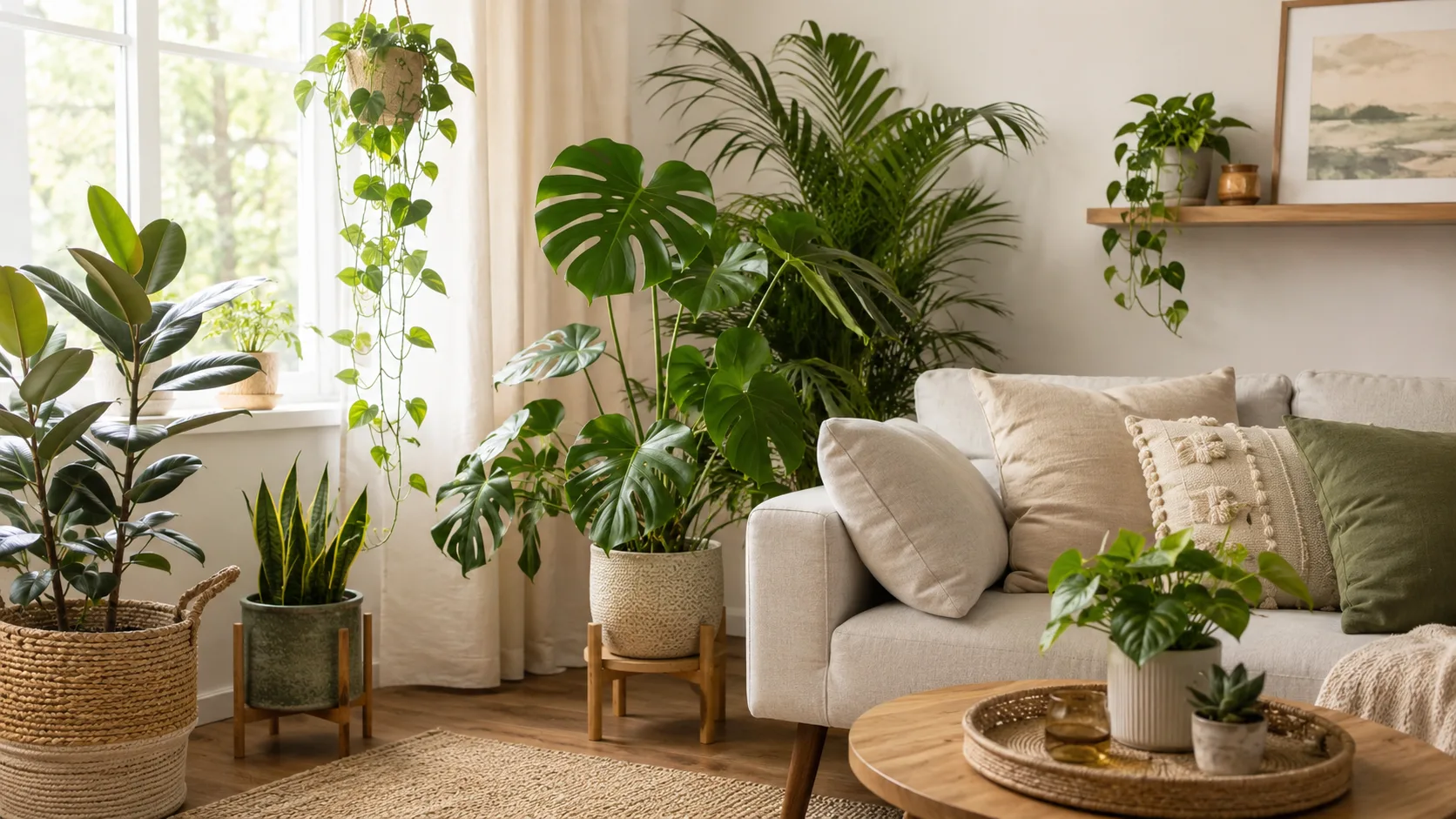
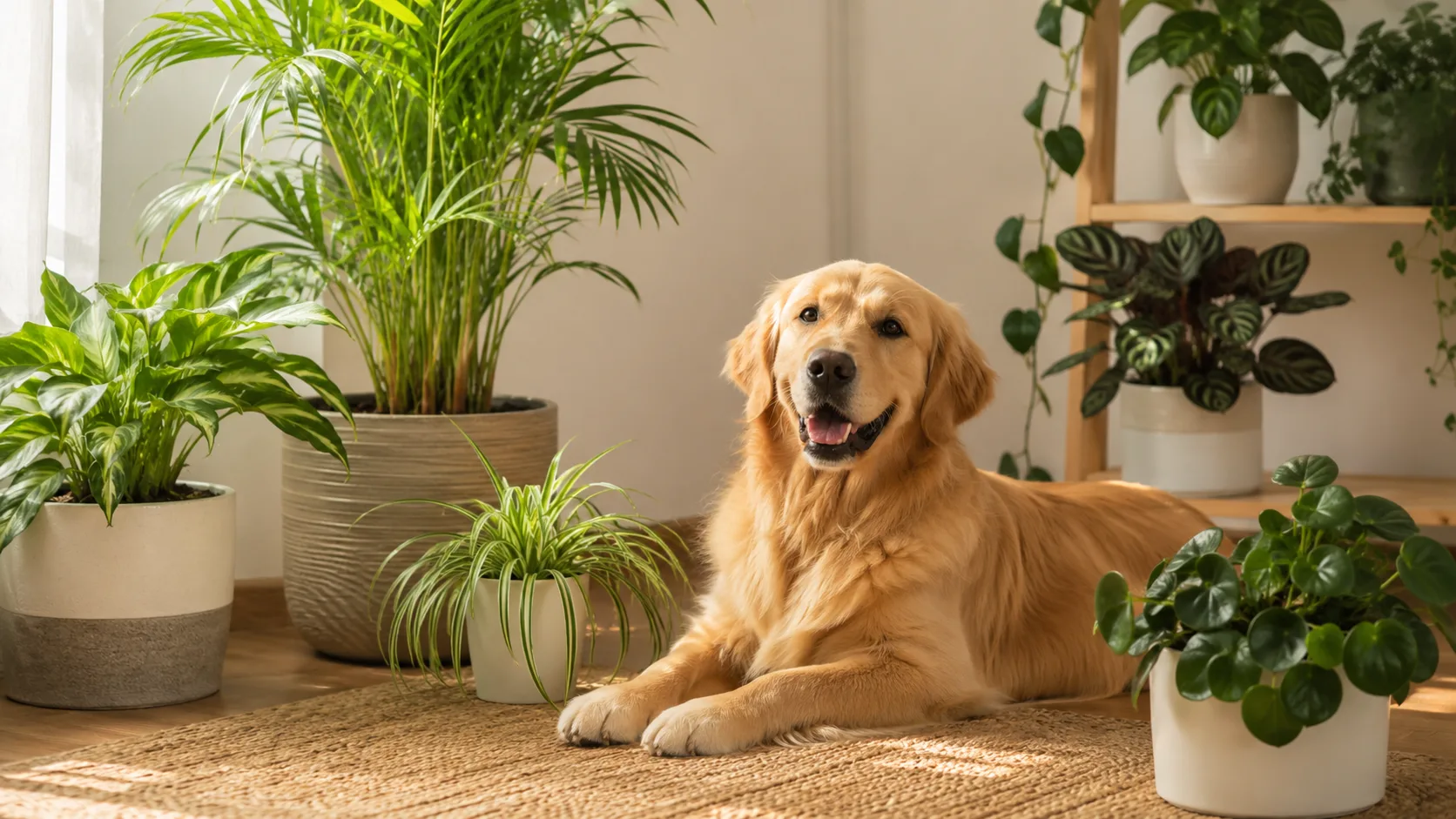
12 Best Indoor Plants for Bedrooms — Sleep, Light, and Safety Guide
Discover 12 science-backed bedroom plants for better sleep. Includes pet-safe picks, low-light survivors, care tips, and honest air-quality facts — no exaggerated claims.
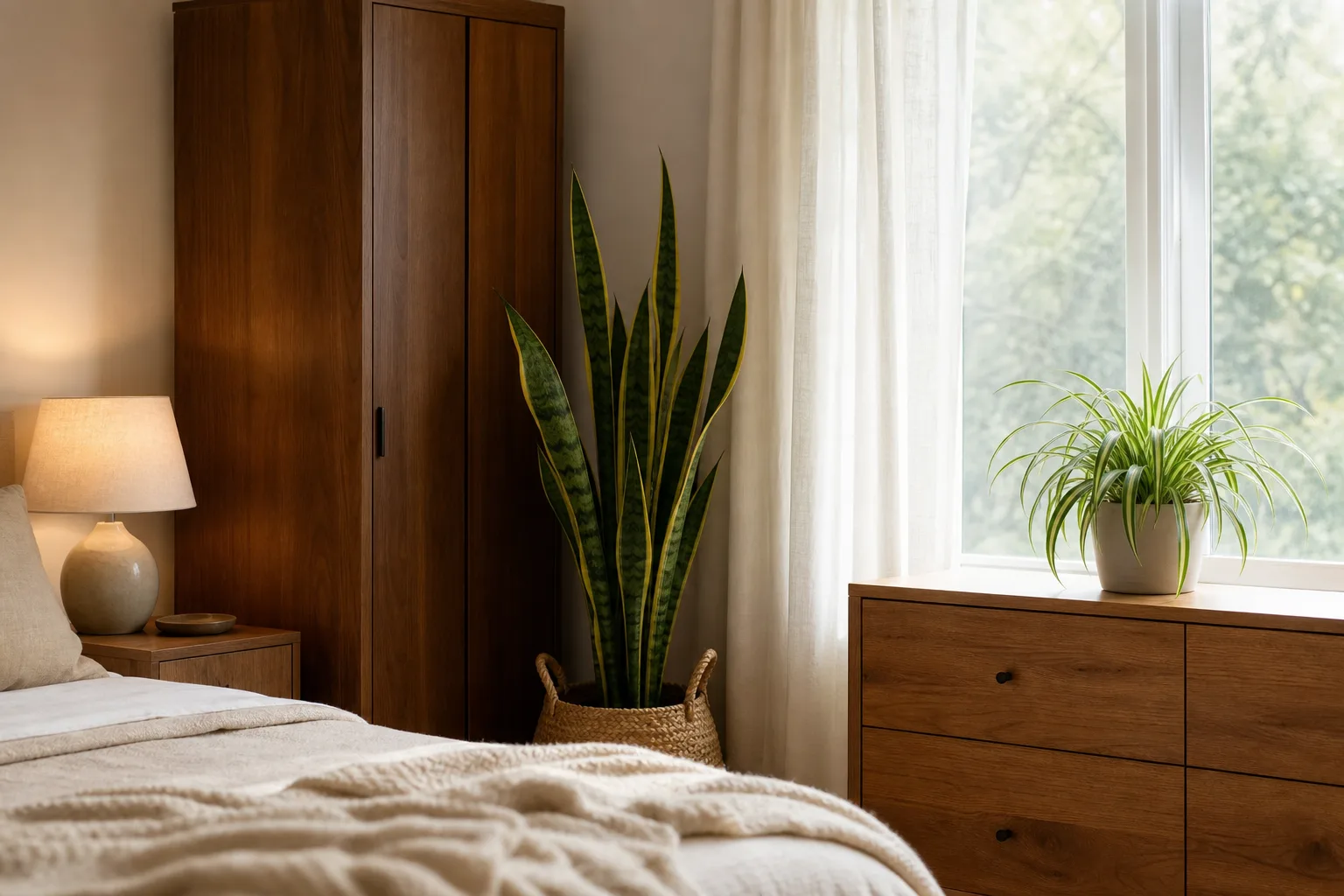
A bedroom plant is not a sleep drug. It will not fix late caffeine, bright screens, chronic pain, or untreated anxiety. What it can do is shape how your room feels at night — softer, quieter, more intentional — and give you a small evening ritual that has nothing to do with scrolling.
If you want the fastest starting point: snake plant for a dark corner and zero effort, spider plant if pets sleep in your room, or pothos for a trailing plant on a shelf. Everything else depends on your light, your pets, and how much care you will actually give.
The 12 bedroom plants in this guide were chosen against six criteria: sleep-relevant mechanism, light tolerance for typical bedrooms, ASPCA-verified pet safety, realistic care difficulty, bedroom placement fit, and ability to thrive in normal indoor conditions. None of them will purify your air the way an open window does — and we explain exactly why — but several raise humidity in dry heated rooms, a few use genuine nighttime biology that makes them better suited to sleep spaces, and all twelve are worth making room for if you match the right plant to the right spot.
What Bedroom Plants Can and Cannot Do for Sleep
Most “plants for sleep” articles make claims that outrun the evidence. Here is what the research actually supports, what it does not, and why you should still put a plant in your bedroom.
Plants and Sleep — What the Science Actually Supports
The strongest evidence for bedroom plants and sleep is psychological and physiological stress reduction, not air chemistry. A 2022 systematic review and meta-analysis pooling 42 studies found that indoor plants significantly reduced diastolic blood pressure by 2.5 mmHg and improved cognitive performance metrics. (PMC) Lower physiological stress means lower cortisol, which means easier sleep onset — a biologically sound causal chain, even though no study has yet measured sleep duration with bedroom plants as the sole intervention.
The Royal Horticultural Society also notes that people with plants in their bedrooms report lower subjective stress and better perceived sleep quality. (RHS) These are correlational and self-reported, not clinical sleep trials, but they are consistent with the biophilia hypothesis: humans respond to natural elements with measurable stress reduction.
The National Sleep Foundation emphasizes bedroom setup — darkness, temperature, noise control, and comfort — as the core of sleep hygiene. (National Sleep Foundation) Plants fit into that framework as environmental support, not as medical treatment. If insomnia persists for weeks, speak with a healthcare provider.
Air Purification — The NASA Study Everyone Misquotes
In 1989, NASA researcher B.C. Wolverton tested houseplants in sealed growth chambers roughly the size of a large armchair and found plants removed 10–70% of added volatile organic compounds (VOCs) including benzene, formaldehyde, and trichloroethylene. (NASA Technical Reports Server) The catch: these were near-hermetic sealed chambers. Your bedroom is not.
In 2019, Drexel University researchers Cummings and Waring published a meta-analysis of 196 experimental results from 12 published studies, converting all data into a standardized ventilation metric — clean air delivery rate. The median single-plant CADR: just 0.023 m³/h. To match the VOC-removal rate of your building’s natural air exchange, you would need somewhere between 10 and 1,000 plants per square meter of floor space. For a 15 m² bedroom, that is up to 15,000 plants. (PubMed)
The American Lung Association states plainly that houseplants do not meaningfully clean indoor air in ordinary homes. (American Lung Association) The US EPA emphasizes ventilation and source control — opening windows, removing synthetic pollutant sources — as what actually moves indoor air quality. (US EPA)
Choose a snake plant or peace lily because it looks calming and fits your routine — not because it replaces an air purifier.
Humidity — Where Bedroom Plants Earn Their Place
Central heating drops bedroom humidity well below the 40–60% relative humidity range considered optimal for respiratory comfort and sleep. Dry air irritates mucous membranes, worsens snoring, and fragments sleep through nighttime throat-clearing and nasal stuffiness.
This is where plant research gets genuinely useful. A 2024 study published in PLOS ONE placed five Boston ferns in a 28–33 m² office and tracked relative humidity over time. Five plants pushed humidity from 29.3% to 38.9% — a meaningful jump out of the problematic sub-30% zone. (PMC) A typical bedroom at 12–15 m² is smaller; you need fewer plants to see a proportional effect. Peace lily, Boston fern, and areca palm are the highest transpirers among common houseplants, meaning they release the most water vapor into the air through their leaves.
For a dry heated bedroom in winter, two or three high-transpiring plants with the door closed make a measurable difference — far more than any air-purification claim.
What About Plants That Release Oxygen at Night?
A specific group of plants uses CAM (Crassulacean Acid Metabolism) photosynthesis. Unlike most plants that absorb CO₂ during the day, CAM plants open their stomata at night to absorb CO₂, storing it as malic acid and releasing oxygen as a byproduct. During the day, stomata close to conserve water.
CAM plants on this list: snake plant, aloe vera, ZZ plant.
Does this meaningfully oxygenate your bedroom? No. A resting adult uses roughly 11,000 liters of oxygen per day; a medium houseplant produces roughly 3–9 liters in total. CAM plants do not flood your room with oxygen. What they do is continue metabolic activity overnight rather than going dormant — a legitimate biological differentiator, framed honestly.
The viral claim of “37% more deep sleep with bedroom plants” circulating on social media is not based on any real peer-reviewed study. No such research exists.
Quick Comparison Table: All 12 Bedroom Plants at a Glance
| Plant | Best For | Light | Water | Pet Safe | Key Benefit |
|---|---|---|---|---|---|
| Snake plant | Low light, zero effort | Low to bright indirect | Every 2–6 weeks | No — toxic | CAM nighttime activity, ultra low maintenance |
| Peace lily | Dim rooms, elegant look | Low to medium indirect | Weekly, when slightly dry | No — toxic | Humidity, low-light flowering |
| Spider plant | Pet-safe beginner | Bright indirect, tolerates lower | Weekly, dry between | Yes — non-toxic | Pet-safe, forgiving, trailing |
| ZZ plant | No-light corners, neglect | Low to medium indirect | Every 2–4 weeks | No — toxic | Confirmed CAM, drought-proof |
| Pothos | Shelves, trailing in low light | Low to medium indirect | Every 1–2 weeks | No — toxic | Virtually unkillable, versatile |
| Lavender | Fragrance, sunny windows | Bright direct/indirect | When top layer dry | No — toxic | Strongest sleep-scent evidence |
| Aloe vera | Bright windowsills, low water | Bright direct/indirect | Every 2–3 weeks | No — toxic | CAM, practical first-aid use |
| Areca palm | Large bright rooms, statement | Bright indirect | Weekly, even moisture | Yes — non-toxic | High transpiration, lush scale |
| Boston fern | Humidity, dry heated rooms | Medium indirect | Keep moist, mist | Yes — non-toxic | Best-documented humidity raiser |
| Parlor palm | Compact pet-safe dresser plant | Low to medium indirect | Weekly, dry slightly | Yes — non-toxic | Pet-safe, compact, low light |
| English ivy | Trailing air-quality workhorse | Medium to bright indirect | Keep lightly moist | No — toxic | Top VOC absorber in lab studies |
| Prayer plant | Decorative pet-safe personality | Medium indirect | Consistent moisture | Yes — non-toxic | Nyctinasty — leaves fold up at night |
How to Choose a Bedroom Plant — 4 Filters That Matter
You do not need to read about 12 plants and then guess. Run your bedroom through four filters and the list narrows itself.
Light — The First Filter Your Bedroom Sets for You
Bedrooms are often the dimmest rooms in a home. North-facing windows, small windows, or windows shaded by curtains and blinds cut light significantly. Hold your hand about 30 cm from the brightest spot in your bedroom during the day:
- Sharp, defined shadow — bright light. Lavender and aloe vera can live here.
- Soft, fuzzy shadow — medium indirect light. Most plants on this list work here.
- No shadow at all — low light. Stick to snake plant, ZZ plant, peace lily, pothos, or parlor palm.
A plant in too little light will not die immediately. It will stretch toward the window, lose variegation, produce smaller leaves, and decline over months. That slow decline creates frustration — the opposite of a calming bedroom. Match the plant to the light you actually have, not the light you wish you had.
Pets — Decide Safety Before You Buy
Several of the most popular bedroom plant recommendations are toxic to cats and dogs: snake plant (saponins), peace lily (insoluble calcium oxalates), pothos (calcium oxalates), ZZ plant (calcium oxalates), lavender (linalool), aloe vera (saponins and anthraquinones), and English ivy (triterpenoid saponins). (ASPCA)
Completely pet-safe picks from this list, all confirmed non-toxic by the ASPCA: spider plant, areca palm, Boston fern, parlor palm, and prayer plant.
If pets sleep in your bedroom unsupervised, choose only from the pet-safe list or place toxic plants completely out of reach — high shelves, hanging baskets away from furniture cats can climb, or rooms pets cannot access. Even pet-safe plants can cause mild stomach upset if a pet chews large quantities. Toxicity classification refers to the absence of compounds known to cause serious harm, not to edibility.
For any suspected ingestion of a toxic plant, contact your veterinarian or ASPCA Animal Poison Control at (888) 426-4435 (consultation fee may apply).
Care Time — Be Honest About How Often You’ll Water
Bedroom plants tend to get less attention than plants in the kitchen or living room. If you are honest about watering once a month, a Boston fern will be dead in weeks and the experience will be discouraging. Choose a plant that matches your actual routine:
- Water every 2–6 weeks: snake plant, ZZ plant
- Water every 1–2 weeks: pothos, aloe vera, lavender
- Water weekly: peace lily, spider plant, areca palm, parlor palm, English ivy
- Water several times weekly: Boston fern, prayer plant
Scent — Fragrant or Fragrance-Free
Lavender has the strongest sleep-scent evidence of any bedroom plant — multiple controlled studies show inhaled linalool reduces anxiety scores and improves sleep quality — but scent is deeply personal. For some people, fragrance in a closed bedroom feels calming; for others it triggers headaches, asthma, or discomfort.
If you want scent, place lavender on a sunny windowsill 3–5 feet from the bed — close enough for gentle diffusion, far enough that fragrance does not build overnight. If you are scent-sensitive or share the room with someone who is, choose a fragrance-free plant: snake plant, spider plant, ZZ plant, aloe vera, pothos, parlor palm, or prayer plant.
The 12 Best Bedroom Plants
1. Snake Plant
Best for: Low-light bedrooms, forgetful waterers, scent-free calm
Difficulty: Very easy
Light: Low to bright indirect
Water: Every 2–6 weeks; dry thoroughly between waterings
Best placement: Floor corner, narrow space beside wardrobe, or dresser side
Pet safety: Toxic to cats and dogs — contains saponins (ASPCA)
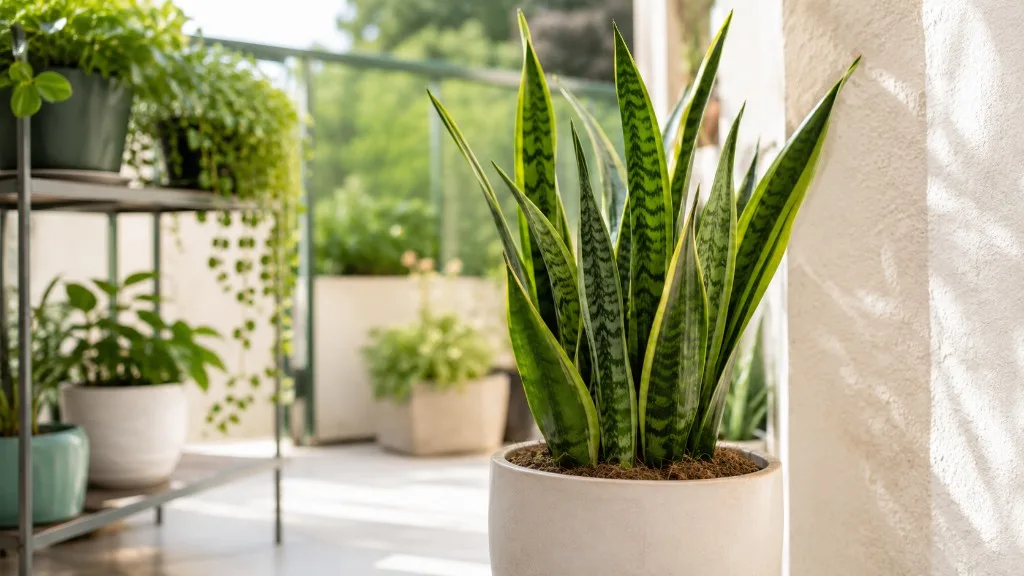
Snake plant is the closest thing to a set-it-and-forget-it bedroom plant. Its upright, architectural form fits in corners where bushy plants will not go, and it is a confirmed CAM species — stomata open at night, gas exchange happening while you sleep. This is a real biological feature, but do not buy it for nighttime oxygen: a single snake plant produces a negligible fraction of the oxygen a resting adult consumes.
What makes snake plant genuinely valuable in a bedroom is extreme tolerance of low light and forgotten waterings. It slows down in dim conditions but survives. Overwatering is the main killer — use a pot with drainage and check that soil is dry before adding water.
Why it works: Zero scent, minimal care, and survival in imperfect light suit bedrooms where plants are an afterthought. Care tip: Wipe dust from leaves monthly with a damp cloth so the plant stays a clean visual anchor. Common mistake: Watering on a calendar instead of checking soil dryness — the number one cause of snake plant death. Avoid this plant if: Pets can reach the pot and you cannot place it out of reach.
Useful care guides:
- Snake plant care guide
- Snake plant light guide
- Snake plant watering guide
- Snake plant problems guide
2. Peace Lily
Best for: Lower-light bedrooms wanting flowering elegance
Difficulty: Easy to moderate
Light: Low to medium indirect
Water: Weekly; water when the top inch of soil feels dry
Best placement: Dresser, plant stand, or shaded window area away from direct sun
Pet safety: Toxic to cats and dogs — contains insoluble calcium oxalates (ASPCA)
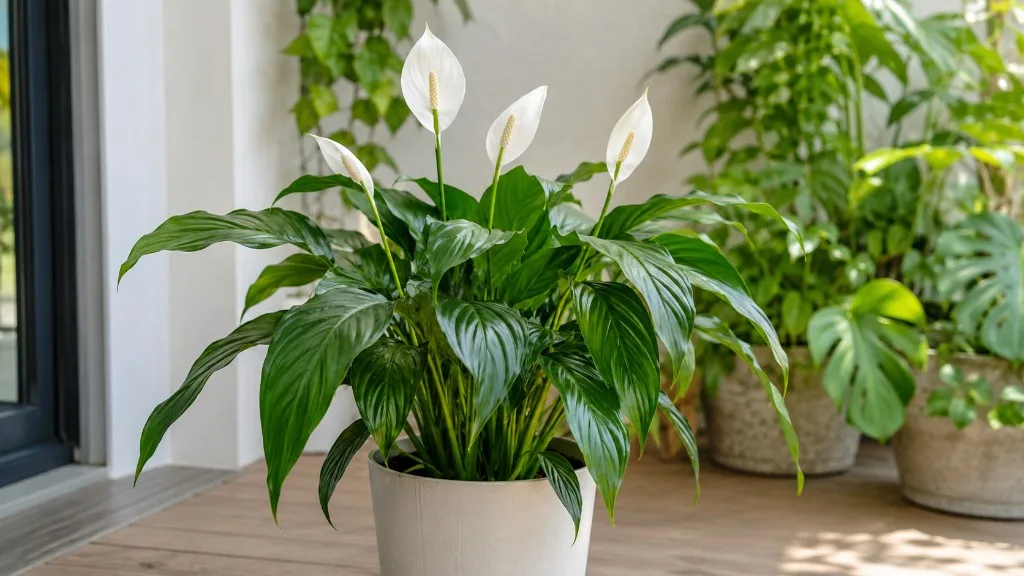
Peace lily looks serene before any wellness claim enters the picture — glossy dark leaves and white spathes suit bedrooms that want a cleaner, softer aesthetic. It is one of the few flowering plants that blooms in genuinely low light, and it appeared in Wolverton’s original 1989 NASA study as one of the higher-performing species for VOC removal in sealed chambers. At real-room plant densities, the air-purification effect is modest, but it remains a strong humidity contributor.
Peace lilies communicate thirst clearly — they droop dramatically when dry, then recover within hours of watering. This makes them beginner-friendly for people who need visual reminders. The trade-off: consistent droop-and-recover cycles stress the plant over time. Learn its rhythm instead of waiting for collapse. The RHS notes peace lilies as popular houseplants with elegant spathes and relatively easy care in indirect light. (RHS)
Why it works: Decorative calm and humidity contribution in rooms too dim for flowering plants. Care tip: Use a pot only slightly larger than the root ball to reduce the risk of constantly wet soil. Brown leaf tips usually mean fluoride in tap water — try filtered or rainwater. Common mistake: Misting constantly instead of fixing the watering rhythm and airflow. Misting does not raise room humidity meaningfully. Avoid this plant if: Cats, dogs, or toddlers can reach the leaves. The calcium oxalate crystals cause painful mouth and throat irritation.
Useful care guides:
- Peace lily care guide
- Peace lily watering guide
- Peace lily light guide
- Peace lily problems guide
- Peace lily soil guide
3. Spider Plant
Best for: Pet-safe beginner pick, hanging baskets, bright-to-moderate bedrooms
Difficulty: Easy
Light: Bright indirect; tolerates lower light
Water: Weekly; let the top layer dry between waterings
Best placement: Hanging basket near a window, high shelf, or bright corner out of direct sun
Pet safety: Non-toxic to cats and dogs (ASPCA)
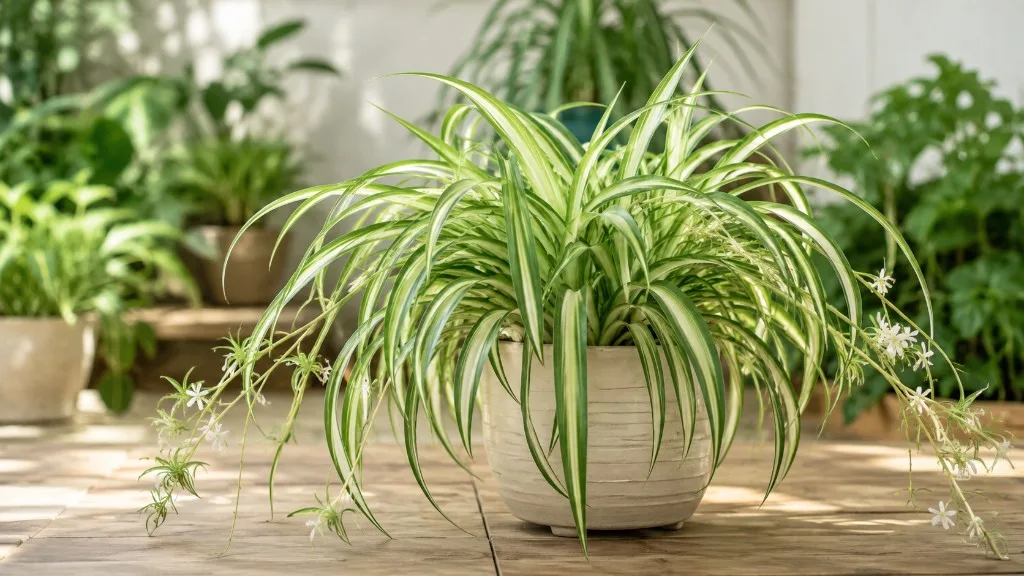
Spider plant is the safest default bedroom recommendation for a reason: it adapts to a wide range of light, forgives missed waterings better than most non-succulents, and is one of the very few popular houseplants confirmed non-toxic to both cats and dogs by the ASPCA. If pets have unsupervised bedroom access, this is your plant.
One note for cat owners: spider plant contains mild compounds that some cats find mildly euphoric — similar to catnip but weaker. This is harmless, but your cat may chew enthusiastically. Hang the plant out of easy reach rather than placing it on a nightstand.
Spider plant produces trailing plantlets that arch downward from the mother plant — a soft, cascading effect that looks especially good in hanging baskets. It is not the most dramatic bedroom plant, but it survives imperfect care better than almost any other pet-safe option, which is exactly what many first-time bedroom plant owners need.
Why it works: Pet-safe, forgiving, and visually softening — the plant equivalent of a reliable friend. Care tip: Trim brown tips with clean scissors and flush the soil occasionally with water if your tap water is mineral-heavy; fluoride and chlorine buildup causes tip browning. Common mistake: Leaving a pot on the nightstand where cats can easily reach and chew trailing leaves. Avoid this plant if: You want strong fragrance, a large floor plant, or dramatic visual impact.
Useful care guides:
- Spider plant care guide
- Spider plant watering guide
- Spider plant light guide
- Spider plant propagation guide
4. ZZ Plant
Best for: Ultra-low-light corners, genuinely neglected plants
Difficulty: Very easy
Light: Low to medium indirect; survives in windowless rooms with some artificial light
Water: Every 2–4 weeks; let soil dry completely
Best placement: Dark corner, hallway-adjacent spot, or beside furniture that blocks light
Pet safety: Toxic to cats and dogs — contains calcium oxalates (ASPCA)
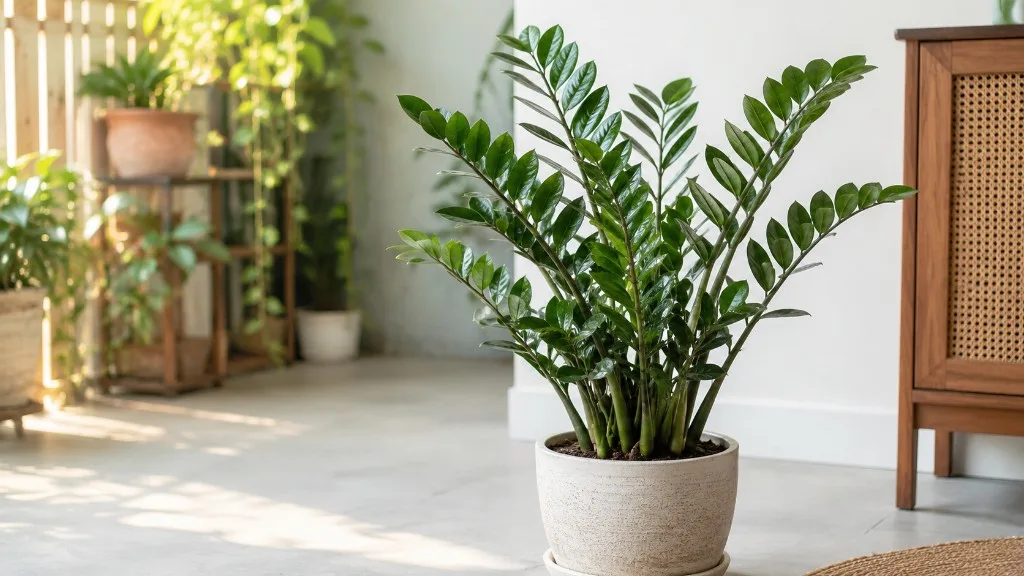
ZZ plant is one of the few confirmed CAM species among common houseplants — research published in Plant and Cell Physiology confirmed it uses crassulacean acid metabolism, placing it alongside snake plant and aloe in the inverted gas-exchange category. Beyond the CAM credentials, ZZ is almost indestructible: its underground rhizomes store water and nutrients, meaning it survives drought that would kill most foliage plants.
ZZ plant’s glossy, dark, waxy leaves reflect lamp light beautifully at night — a subtle visual effect in a dim room. It grows slowly and elegantly, never becoming unmanageable or demanding repotting attention. For a bedroom where natural light is minimal and watering happens when you remember, ZZ is the most reliable option.
Why it works: Thrives on neglect in the darkest corners — perfect for bedrooms where plants are an afterthought. Care tip: Wipe leaves every 6–8 weeks with a damp cloth; glossy leaves show dust quickly in bedroom lamp light. Common mistake: Treating ZZ like a tropical foliage plant that wants consistent moisture. Its rhizomes rot in wet soil. Avoid this plant if: Pets or toddlers can reach the leaves — all parts contain irritating calcium oxalate crystals.
Useful care guides:
5. Pothos
Best for: Trailing from shelves in low-to-medium light bedrooms
Difficulty: Very easy
Light: Low to medium indirect; tolerates fluorescent and indirect window light
Water: Every 1–2 weeks; water when top inch of soil is dry
Best placement: High shelf, bookcase top, or hanging planter near a window — vines trail 2–3 feet easily
Pet safety: Toxic to cats and dogs — contains insoluble calcium oxalates (ASPCA)
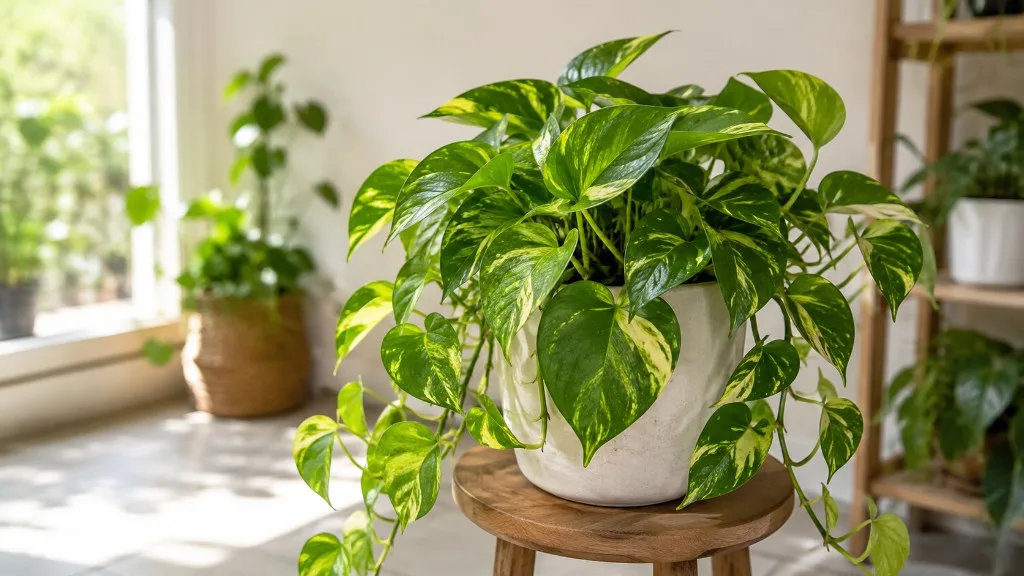
Pothos is arguably the most reliably unkillable houseplant in existence. It tolerates low light, irregular watering, temperature swings, and general neglect without dying — it just slows down. That makes it ideal for a bedroom where light is often poor and watering can slip for two weeks during a busy period.
The trailing stems — heart-shaped leaves on cascading vines — look spectacular from a high shelf or hanging planter. With more light, variegation strengthens (golden pothos develops yellow marbling; marble queen goes cream-white). In very low light, leaves stay smaller and greener. It is also one of the easiest plants to propagate: snip a stem below a node, place in water, and roots appear within two weeks — a satisfying small win for first-time plant owners.
Pothos also consistently ranks among the most effective plants for VOC absorption in laboratory studies, though the real-bedroom air-quality impact remains modest per the Cummings and Waring analysis.
Why it works: Near-indestructible trailing greenery that turns a bare shelf into a feature without demanding attention. Care tip: Trim leggy vines back to a node to encourage bushier growth. Use the cuttings to start new plants in water. Common mistake: Placing pothos where trailing vines hang within pet or toddler reach. Keep it high. Avoid this plant if: You want an upright floor plant, or pets have climbing access to shelves.
Useful care guides:
6. Lavender
Best for: Sunny bedroom windowsills, fragrance lovers, relaxation-seeking sleepers
Difficulty: Medium indoors
Light: Bright direct or very bright indirect; south or west-facing window essential
Water: When the top inch of soil is dry; excellent drainage non-negotiable
Best placement: Sunny windowsill with air movement; 3–5 feet from the pillow
Pet safety: Toxic to cats and dogs if ingested — contains linalool (ASPCA)
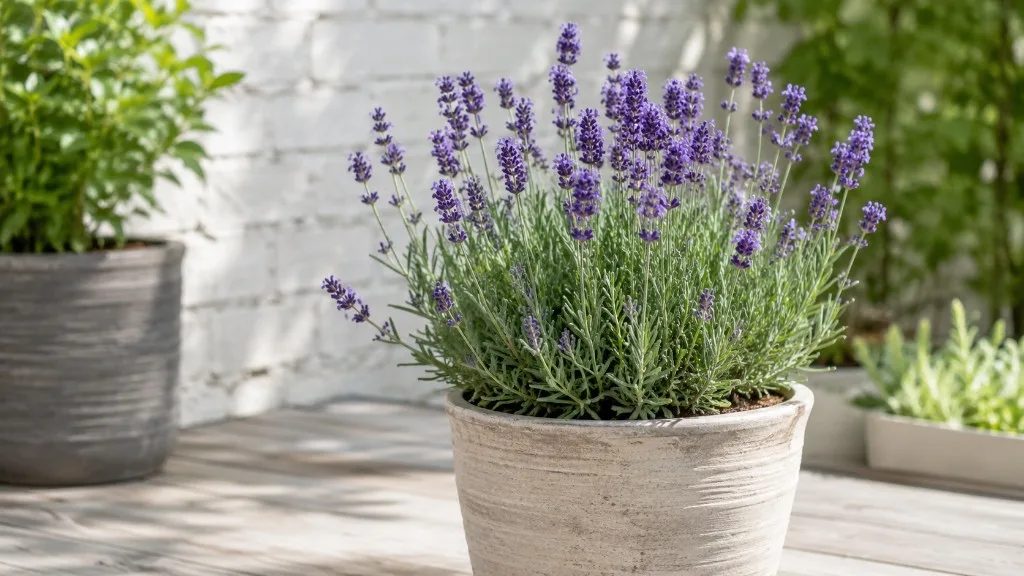
Lavender has the strongest sleep-scent evidence base of any bedroom plant. Multiple controlled studies show that inhaled linalool — lavender’s primary active compound — reduces anxiety scores, increases slow-wave sleep duration, and improves next-day alertness. A 2021 systematic review of aroma inhalation for insomnia found lavender among the strongest single-scent options. (PMC)
The catch: most sleep-related lavender research involves essential oil or aromatherapy inhalation, not a potted plant on a shelf. A live plant produces less scent than a few drops of oil, and only when actively growing and brushed or warmed. Treat a potted lavender as a gentle, pleasant scent source — not a proven sleep drug.
Indoors, lavender wants bright light, drainage, and air movement. A dark, humid bedroom is a poor match — the plant will stretch, weaken, and stop feeling like a calming presence. Use a terracotta pot with drainage, avoid heavy wet soil, and rotate the pot weekly so all sides get light.
Why it works: Herbal fragrance cues wind-down for scent-tolerant sleepers with adequate bedroom light. Care tip: Rotate the pot weekly toward the window; leggy, stretched growth means it needs more light. Prune lightly after flowering. Common mistake: Keeping lavender in a humid, low-light bedroom — it declines, attracts fungus, and stops releasing fragrance. Avoid this plant if: Your room is dim, you dislike fragrance, you share the room with a scent-sensitive partner, or pets can reach the pot.
Useful care guides:
7. Aloe Vera
Best for: Bright windowsills, scent-free minimalism, infrequent waterers
Difficulty: Easy
Light: Bright direct or bright indirect; south or west-facing windowsill best
Water: Every 2–3 weeks; let soil dry completely between waterings
Best placement: Sunny windowsill with space for upright leaves to spread
Pet safety: Toxic to cats and dogs — contains saponins and anthraquinones (ASPCA)
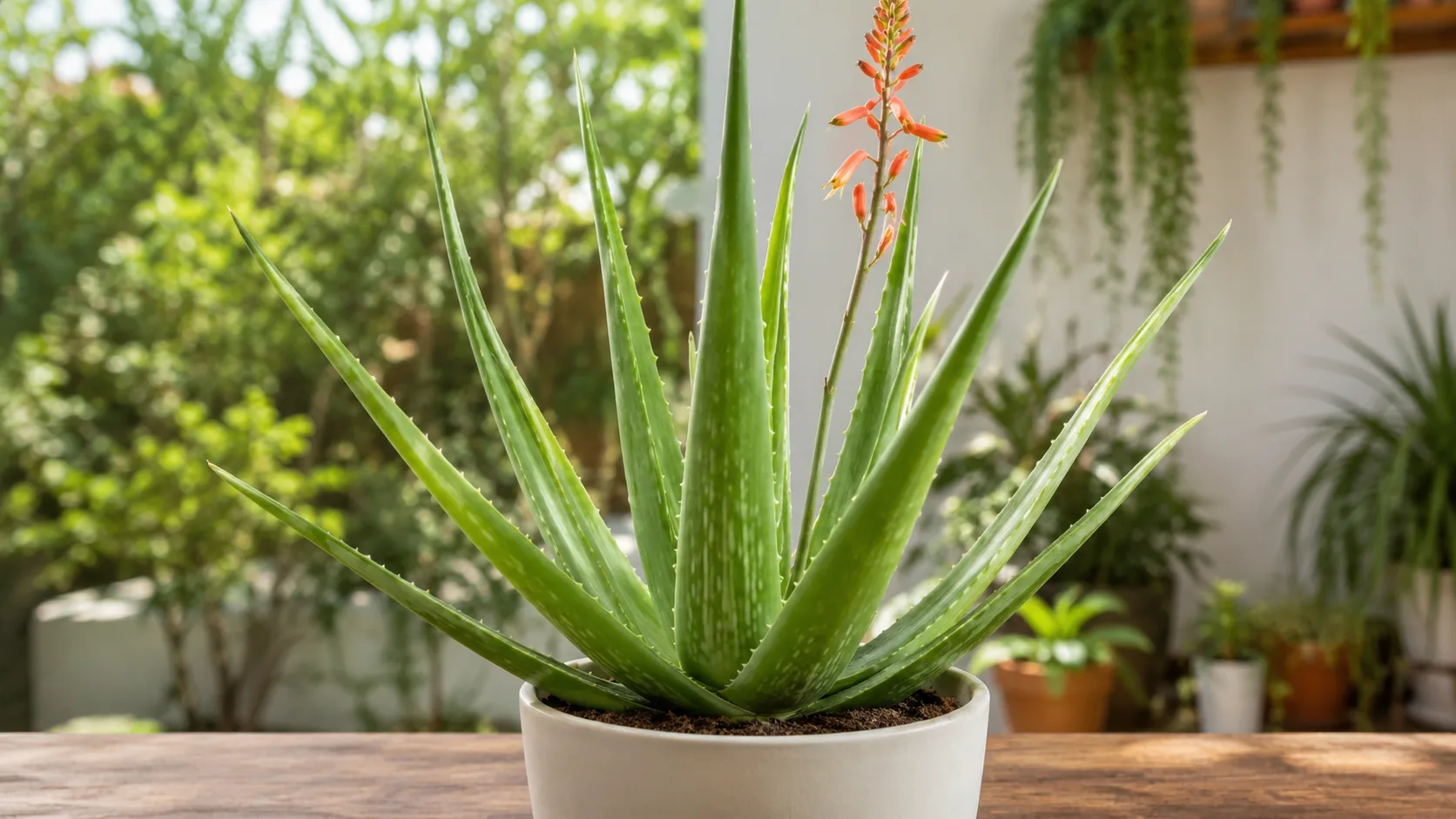
Aloe vera is a full CAM succulent — stomata open at night for gas exchange — and it suits bedrooms with strong window light and a preference for clean, modern lines. No fragrance, thick water-storing leaves, and a tidy footprint make it appropriate for a bright bedside table.
Its secondary advantage is practical: a leaf snapped at the base yields gel that soothes minor burns, sunburn, and skin irritation. I keep one on a bedroom windowsill partly as a first-aid kit that thrives on benign neglect. Aloe’s gel use is well-established in dermatology, but keep it external only — ingesting aloe latex (the yellow sap just under the skin) can cause digestive distress.
In dim rooms, aloe stretches toward the light, becomes top-heavy, and weakens. If your bedroom does not get strong sun, choose snake plant or spider plant instead.
Why it works: Scent-free greenery for bright bedrooms, CAM nighttime activity, and practical household use. Care tip: Use gritty, well-draining cactus mix and a pot with drainage holes. Let water run through completely and never let the pot sit in a saucer of water. Common mistake: Treating aloe like a tropical foliage plant that wants consistent moisture — the fastest way to rot it. Avoid this plant if: The room has little natural light, or pets treat low surfaces as grazing stations.
Useful care guides:
8. Areca Palm
Best for: Large bright bedrooms needing a statement plant and humidity
Difficulty: Moderate
Light: Bright indirect; 1–2 meters from a south or west window
Water: Weekly; keep soil evenly moist but never soggy
Best placement: Empty corner with roughly 2–3 feet of spread at maturity; needs space and airflow
Pet safety: Non-toxic to cats and dogs (ASPCA)
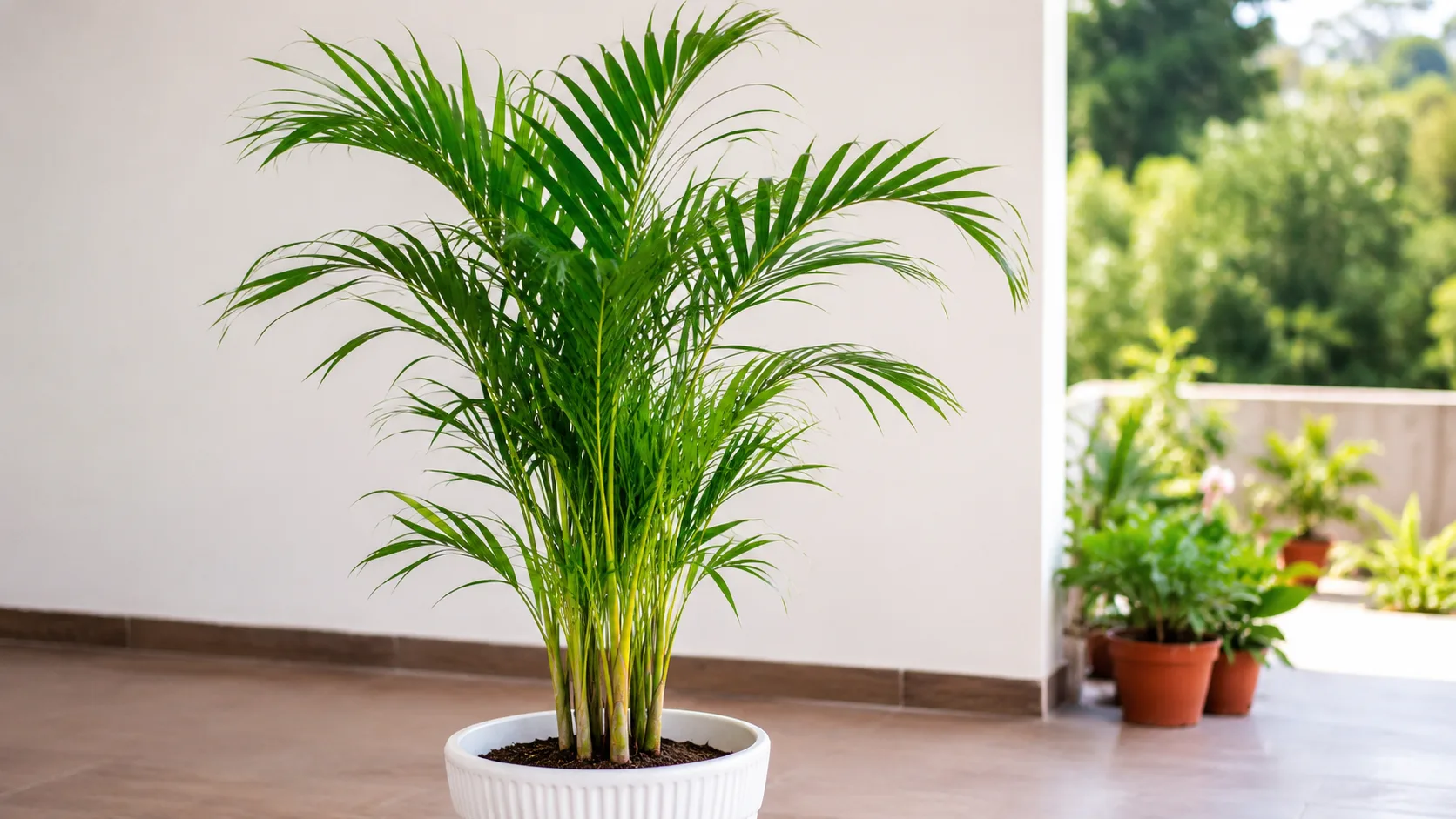
Areca palm transforms a bare, angular bedroom with feathery, arching fronds. It is one of the highest transpirers among common houseplants — releasing significant water vapor into the room through its leaves — and appeared in Wolverton’s original NASA study. At practical bedroom densities, the humidity contribution is more relevant than the air-purification one: a mature areca palm in a closed bedroom measurably raises humidity, which helps in winter when central heating drops moisture levels below 30%.
This is not a small plant. A mature specimen reaches 1.5–1.8 meters with a 60–90 cm spread, and a cramped room where fronds brush the bed will feel cluttered, not calm. Areca palm also needs consistent moisture and bright indirect light — it is not a dark-corner survivor. Dry air from heating or AC can brown leaf tips; wipe dust from fronds monthly and keep the pot away from vents.
Why it works: One large pet-safe plant replaces several small pots for a cleaner, more intentional bedroom look. Care tip: Rotate the pot a quarter turn monthly so fronds grow evenly toward the window instead of leaning in one direction. Empty the saucer after watering — sitting in water causes root rot. Common mistake: Squeezing a mature palm into a narrow walkway beside the bed. Measure the corner space before buying. Avoid this plant if: The room is small, dark, or you want a plant that tolerates forgotten waterings.
Useful care guides:
9. Boston Fern
Best for: Humidity in dry heated bedrooms, pet-safe lush greenery
Difficulty: Moderate to high
Light: Medium indirect; avoid direct sun
Water: Keep soil consistently moist; mist fronds in dry air; do not let soil dry out
Best placement: Hanging basket near a window, or plant stand in bright filtered light
Pet safety: Non-toxic to cats and dogs (ASPCA)
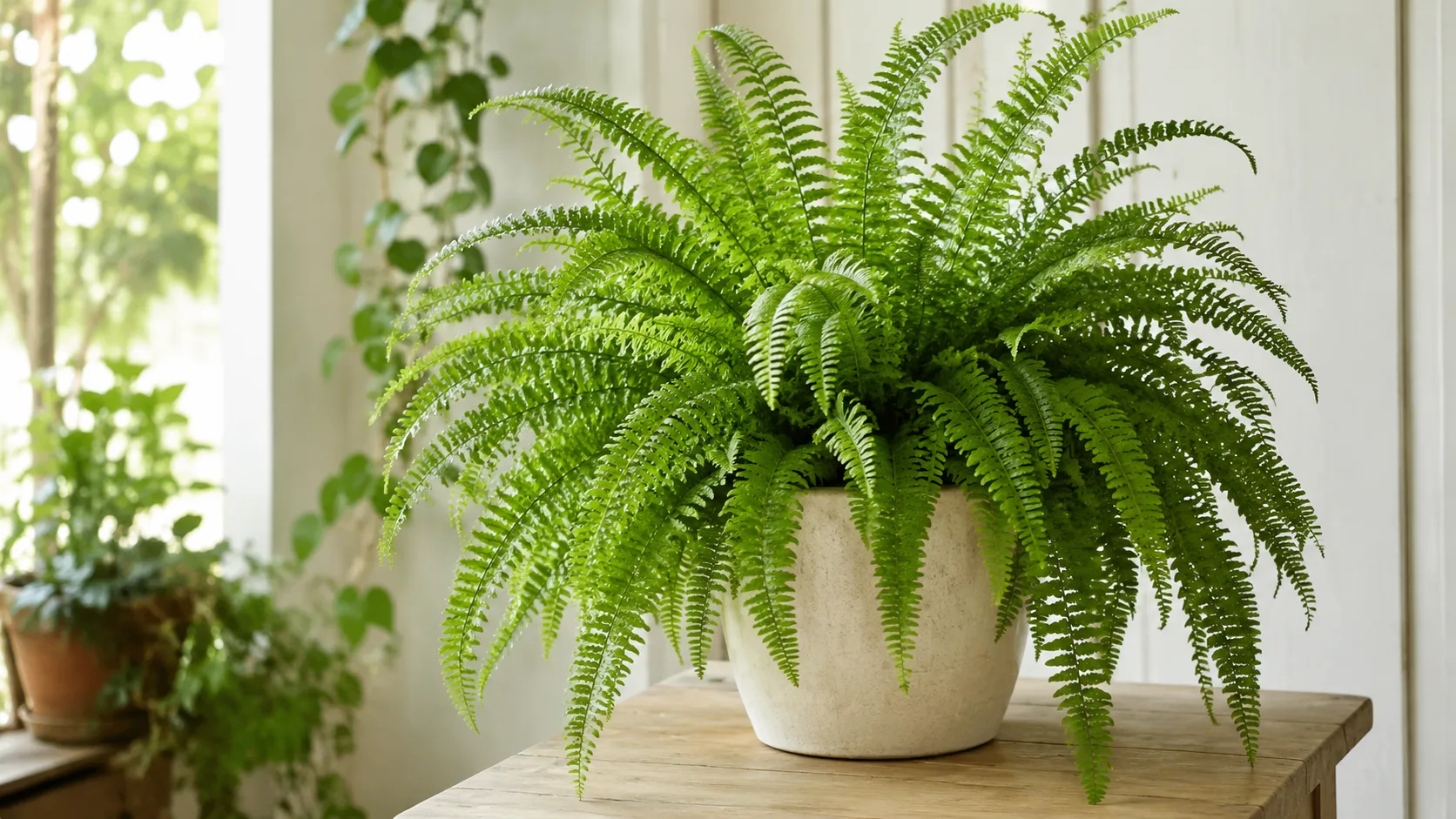
Boston fern is the single best-documented humidity raiser on this list. The 2024 Jiang et al. study placed five Boston ferns in an office-sized room and pushed relative humidity from 29.3% to 38.9% — out of the sub-30% zone where dry-air sleep disruption starts. (PMC) In a smaller bedroom with the door closed, two or three ferns produce a proportional humidity boost, which is genuinely useful in winter when central heating dries the air.
The trade-off is care commitment. Boston fern needs consistent moisture, dislikes the very central heating that makes it most useful, and will drop leaves aggressively if it dries out even once. A pebble tray with water beneath the pot, grouping with other plants, and regular misting help compensate in heated rooms. The lush, cascading fronds look spectacular in a hanging basket but shed fine leaflets — expect to sweep occasionally.
Why it works: The most scientifically supported plant for raising bedroom humidity in dry winter conditions. Care tip: Place the pot on a pebble tray filled with water (pot sitting above water, not in it). Group with other plants to create a humidity microclimate. Mist fronds daily in heated rooms. Common mistake: Placing a Boston fern in a dark corner then wondering why it thins out. This plant needs medium indirect light minimum. Avoid this plant if: You are not willing to check moisture twice weekly, or your bedroom gets very little natural light.
Useful care guides:
10. Parlor Palm
Best for: Compact pet-safe plant for dressers and low-light spots
Difficulty: Easy
Light: Low to medium indirect; one of the best true low-light palms
Water: Weekly; let the top inch of soil dry slightly between waterings
Best placement: Dresser, bedside table, or shelf near a north-facing window
Pet safety: Non-toxic to cats and dogs (ASPCA)
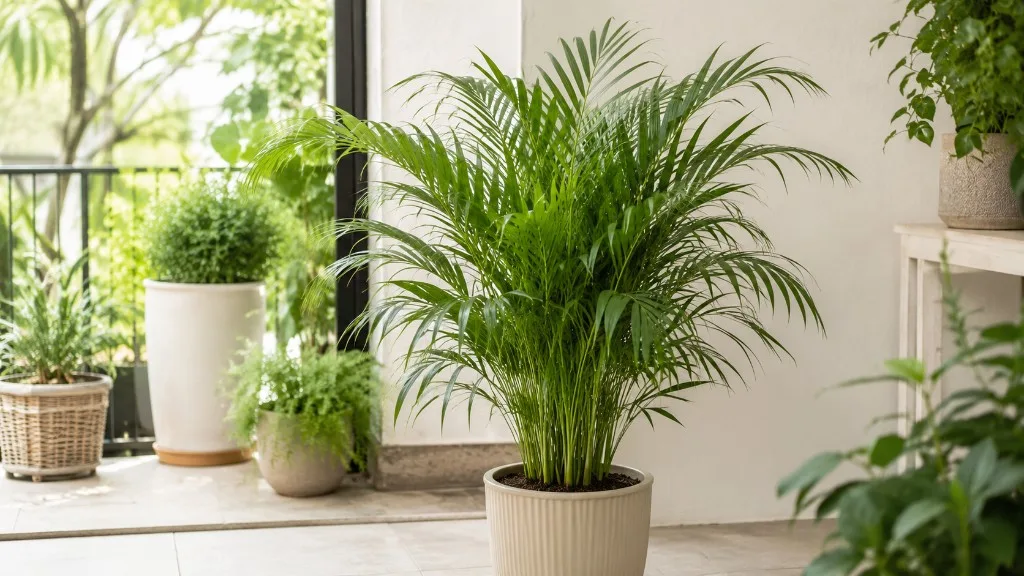
Parlor palm is the underrated pet-safe bedroom plant that asks for almost nothing. It stays compact — typically 60–90 cm indoors — with delicate, bamboo-like fronds that add soft texture without overwhelming a small space. Unlike the larger areca palm, parlor palm fits on a dresser or plant stand and tolerates lower light than most palms.
It is not a humidity powerhouse like Boston fern and it does not have the CAM biology of snake plant, but it is one of the few plants that is simultaneously pet-safe, low-light tolerant, and easy-care — a rare combination that makes it ideal for bedrooms where multiple constraints overlap. Victorian parlors grew these in dim, cool rooms, and modern bedrooms are not much different.
Why it works: Pet-safe, compact, and tolerant of low light — the trio most bedroom plant shoppers are looking for. Care tip: Trim brown frond tips with clean scissors; this palm dislikes chlorine and fluoride in tap water. Use filtered water or let tap water sit overnight before watering. Common mistake: Overwatering in a pot without drainage — parlor palm roots rot in standing water. Avoid this plant if: You want a large statement plant or a flowering specimen with strong visual impact.
Useful care guides:
11. English Ivy
Best for: Trailing air-quality workhorse on a high shelf
Difficulty: Moderate
Light: Medium to bright indirect; avoid harsh direct sun
Water: Keep soil lightly moist; do not let it dry out completely
Best placement: High shelf, hanging basket, or trained on a small trellis near indirect window light
Pet safety: Toxic to cats and dogs — contains triterpenoid saponins (ASPCA)
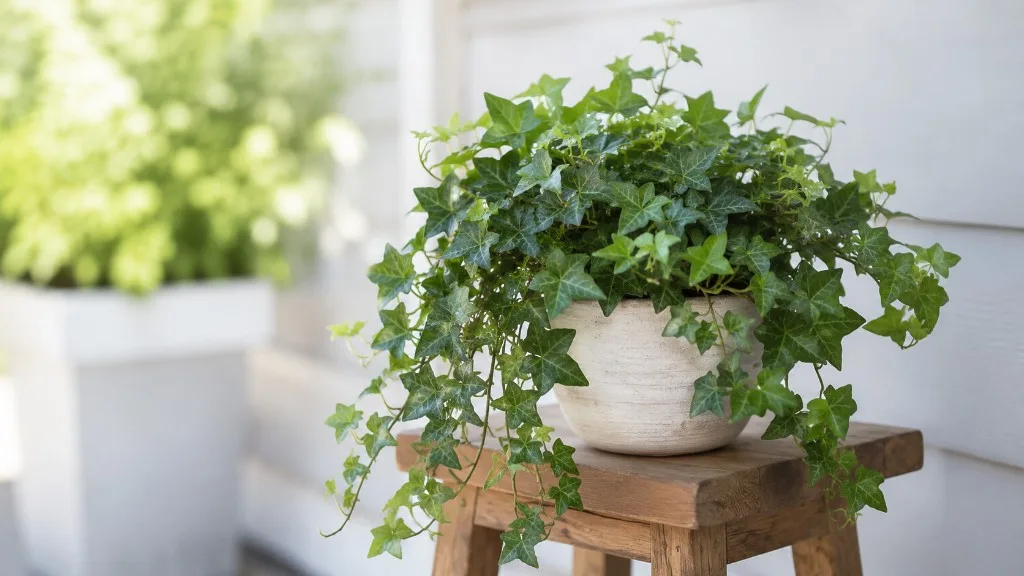
English ivy consistently ranks among the most effective plants for absorbing VOCs — formaldehyde, benzene, xylene — in laboratory conditions. It appeared in Wolverton’s NASA study as a top performer, and subsequent work confirms its absorption capacity relative to other houseplants. At real-bedroom plant densities, the air-quality effect is still modest per the Cummings and Waring analysis, but among the plants that actually do something, English ivy is near the top of the list.
More practically, English ivy is a classic trailing plant that looks refined and deliberate — not trendy or temporary. It grows well in hanging baskets or on high shelves where vines cascade down, and it tolerates the moderate light levels of a bedroom near a window. The trade-off: it needs consistent moisture, dislikes dry air, and is susceptible to spider mites in heated rooms. Regular misting and occasional leaf-wiping reduce pest pressure.
Why it works: Classic trailing beauty with better-documented VOC absorption than most common houseplants. Care tip: Mist regularly in heated bedrooms and wipe leaves monthly to prevent spider mite buildup. Trim long vines to maintain a neat shape. Common mistake: Letting ivy dry out repeatedly — it drops leaves fast and does not always recover the bare stems. Avoid this plant if: Pets can reach trailing vines, or your bedroom air is very dry year-round without humidity support.
Useful care guides:
12. Prayer Plant
Best for: Decorative pet-safe pick with nighttime movement
Difficulty: Moderate
Light: Medium indirect; avoid direct sun
Water: Keep soil consistently moist; sensitive to drying out
Best placement: Dresser or shelf in filtered light — somewhere you can see the leaves move at dusk
Pet safety: Non-toxic to cats and dogs (ASPCA)
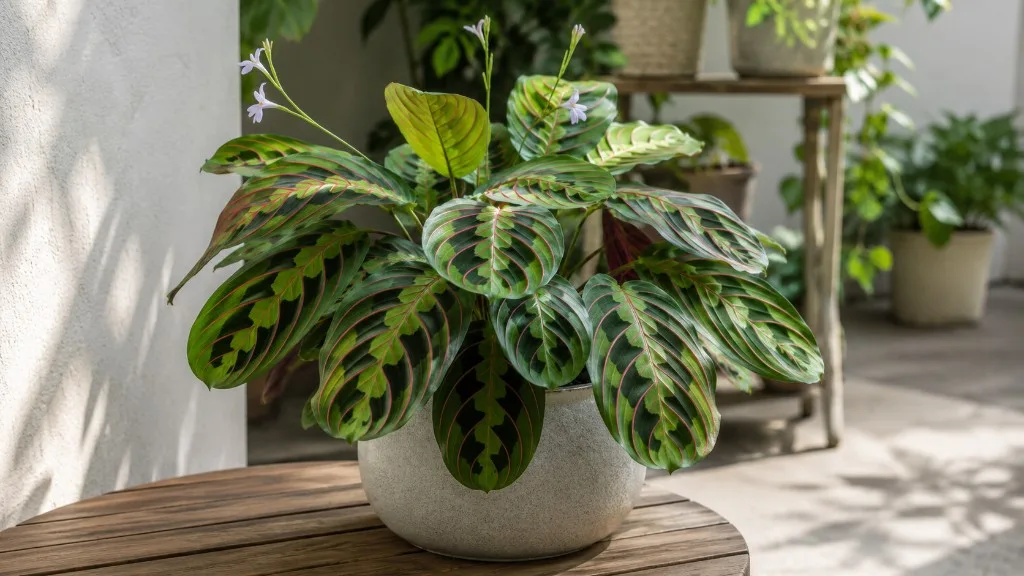
Prayer plant earns its bedroom spot for two reasons most plants cannot claim: it is fully pet-safe and it actively moves at night. The plant performs nyctinasty — its leaves fold upward at dusk and reopen at dawn in response to light changes. The movement is gentle, visible, and many owners find it genuinely calming to observe as part of an evening wind-down routine.
The foliage itself is striking: oval leaves with intricate patterns in deep green, light green, and maroon — decorative enough to hold its own without flowers. Prayer plant prefers consistent moisture and higher humidity, which in a heated bedroom means a pebble tray, regular misting, or grouping with other plants. It is more demanding than snake plant or pothos, but for a pet-safe bedroom plant with personality, it is hard to beat.
Why it works: Decorative, pet-safe, and its nighttime leaf-folding becomes part of a sleep-time ritual. Care tip: Use filtered or distilled water — prayer plant is sensitive to chlorine and fluoride, which cause brown leaf edges. Place on a pebble tray in heated rooms. Common mistake: Placing it in direct sun, which bleaches the leaf patterns and scorches the foliage. Avoid this plant if: You want a low-maintenance plant you can forget about for two weeks, or your bedroom has very low humidity.
Useful care guides:
- Prayer plant care guide
- Prayer plant watering guide
- Prayer plant light guide
- Prayer plant soil guide
Where to Place Plants in Your Bedroom
Plant placement matters more than plant count. One healthy plant in the right spot feels intentional; five crowded pots on a nightstand feel like clutter. Keep one to three plants visible during your wind-down but out of the way while you sleep. Empty saucer water after every watering — no standing water near bedding or electronics.
Windowsill, Dresser, Corner, or Shelf — Matching Plant to Spot
Windowsills suit lavender, aloe vera, and smaller snake plant varieties when glass does not scorch leaves or chill roots at night. South and west-facing sills get the strongest light and are the only spots where lavender and aloe thrive. North-facing sills are for snake plant or ZZ plant only.
Dressers and plant stands work for peace lily, parlor palm, prayer plant, and aloe vera — visible from the bed, at eye level, but not crowding your sleeping space. These are your showpiece spots. Choose one plant that looks good from across the room, not a cluster of small pots.
Corners fit snake plant, areca palm, and larger ZZ plants for height without crowding the bed. An empty corner with one architectural plant looks more deliberate than a nightstand with four small pots. Leave at least 30 cm of breathing room around the pot for airflow.
Shelves and hanging baskets suit pothos, spider plant, English ivy, and Boston fern — plants that look better from above. Trailing stems soften hard edges in a bedroom. Mount hanging baskets so they do not drip on bedding, and ensure shelf plants get enough light — dark shelves high on a wall may receive no usable light even near a window.
How Far Fragrant Plants Should Be From Your Pillow
In a typical 10 × 12 ft closed bedroom, we kept potted lavender on a sunny windowsill about 6 ft from the pillow and jasmine on a dresser about 4 ft away. At that distance, scent was noticeable when settling in but faint by morning. With lavender beside the pillow in the same closed room, fragrance felt sharp within 20 minutes.
Start fragrant plants 3–5 ft from the bed and move farther if scent builds overnight. If you or your partner have asthma, migraines, or scent sensitivity, skip fragrant plants entirely — choose snake plant, spider plant, ZZ plant, or parlor palm instead.
Common Bedroom Plant Mistakes
Most bedroom plant problems come from good intentions: too many plants at once, buying for online claims, overwatering to “care,” or ignoring light and pets. A declining plant becomes another worry — the opposite of a calming bedroom.
Overwatering is the top killer. Wet soil causes root rot, fungus gnats, and musty smells in a room where you breathe for hours. Check soil with your finger before watering; most bedroom plants want a wet-dry rhythm, not constant dampness. If you see fungus gnats hovering near the soil, you are watering too often.
Buying for air-purification claims without context. A single snake plant or peace lily will not meaningfully clean your bedroom air. The 2019 Cummings and Waring meta-analysis calculated 10–1,000 plants per square meter to match natural air exchange. Reduce pollution sources — synthetic materials, solvent-based paints, air fresheners — and open windows. Then add plants for how they look and feel.
Ignoring pet safety until after purchase. Snake plant, peace lily, pothos, ZZ plant, lavender, aloe vera, and English ivy are all toxic to pets. Check the ASPCA database before buying, and place toxic plants where pets genuinely cannot reach them. A “high shelf” that a cat can jump to does not count.
Overplanting a small room. More plants mean more watering work, more dust-collecting surfaces, more potential for mold in wet soil, and more visual clutter. For most bedrooms, one to three well-chosen plants create more calm than eight small pots scattered across every surface.
Misting instead of solving the real problem. Misting leaves briefly raises humidity around the plant for minutes, not hours. If leaf tips are browning, address the underlying issue — dry heated air, inconsistent watering, or mineral buildup from tap water — rather than misting more.
Placing light-hungry plants in dark corners. Lavender and aloe vera need bright direct light to stay healthy. In a north-facing bedroom with small windows, they will decline regardless of how well you water. Match the plant to the light you have, not the plant you wish would work.
Best Bedroom Plants by Situation
Best overall (most bedroom-friendly): snake plant — fits any corner, tolerates any light, needs almost no care, and costs very little.
Best for low light: ZZ plant or snake plant — both survive genuinely dim rooms where other plants slowly decline.
Best for pet owners: spider plant — confirmed non-toxic by ASPCA, forgiving care, and looks good in a hanging basket out of chewing reach.
Best for beginners: pothos — tolerates missed waterings, low light, and general neglect. Ideal first plant.
Best for fragrance lovers with bright windows: lavender — strongest sleep-scent evidence, but only works with direct sun and good drainage.
Best humidity booster: Boston fern — best-documented transpiration effect in the research literature.
Best statement plant for large bedrooms: areca palm — lush, pet-safe, and raises humidity while filling an empty corner.
Best compact dresser plant: parlor palm — pet-safe, low-light tolerant, and stays small enough for a bedside table.
Best decorative plant with personality: prayer plant — pet-safe, patterned foliage, and leaves that fold up at night.
Conclusion
Start with one plant that matches your light, pets, and actual care habits — snake plant for dark corners and zero effort, spider plant if pets share the room, pothos for a trailing shelf accent, or lavender if you have bright light and enjoy fragrance. Use plants honestly: they can make a bedroom feel calmer, raise humidity in dry heated rooms, and support a wind-down ritual. They cannot cure insomnia, replace ventilation, or meaningfully purify your air the way an open window does.
The best bedroom plant is the one that stays healthy in your specific room without creating new problems — a dust-collecting pot in a dark corner, a toxic plant within pet reach, or a fussy fern you resent watering are all worse than having no plant at all. Choose one, place it where you can see it from bed, and let it become part of how the room signals rest — not another thing on your to-do list.