Toxic Plants to Avoid If You Have Cats
A list of common houseplants toxic to cats, including symptoms, what to do after ingestion, and safe alternatives backed by ASPCA and veterinary sources.
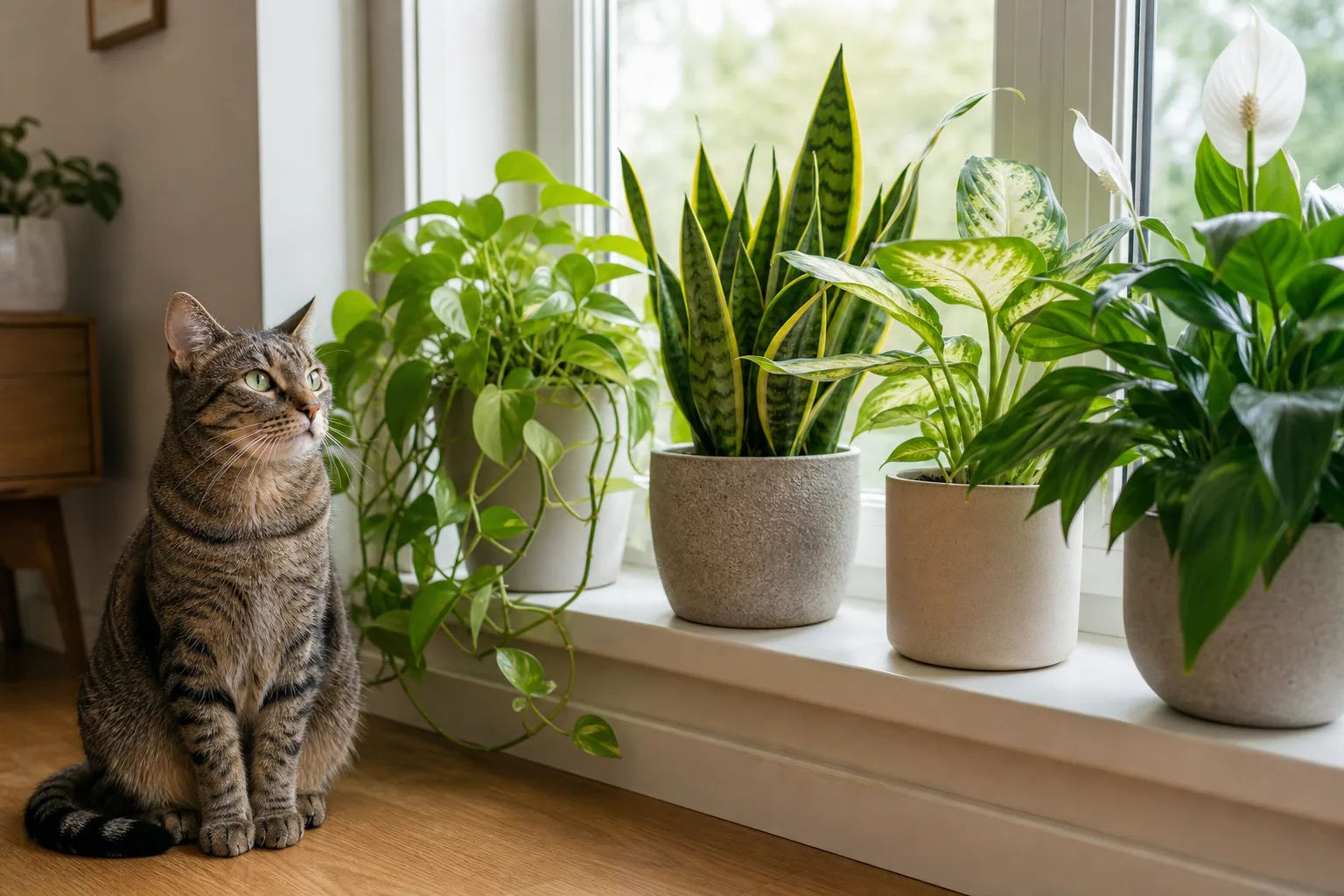
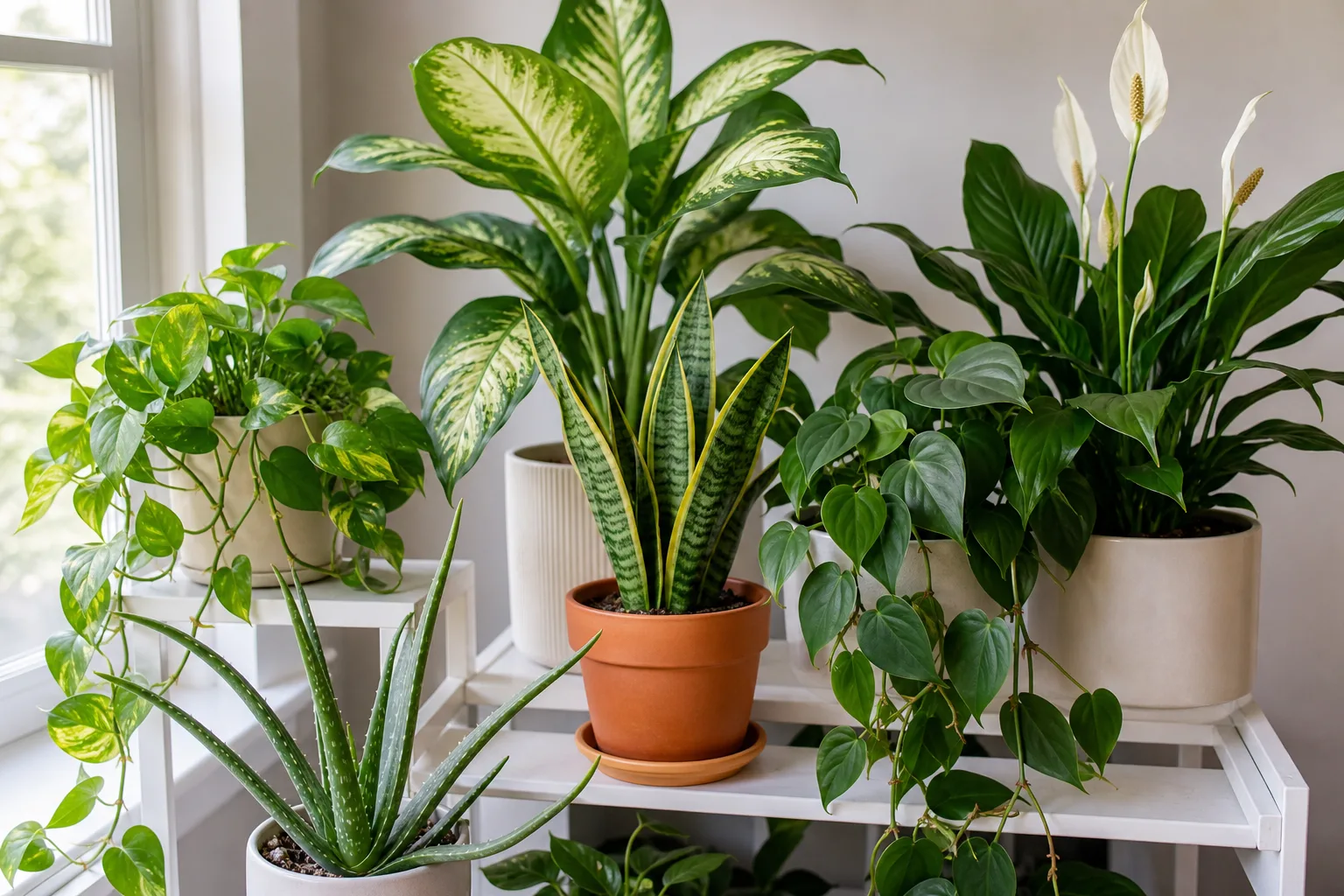
Many of the most popular houseplants are also toxic to cats. Lilies, pothos, snake plants, dieffenbachia, philodendrons, aloe vera, and peace lilies are all common finds on windowsills and shelves—and all are listed as toxic by the ASPCA. The problem is not rare plants from specialist nurseries. It is the everyday favorites already in millions of homes.
This guide lists the 10 most common toxic plants for cats found in homes, ranked by a combination of household prevalence and toxicity severity. For each plant you will find the harmful compounds, specific symptoms, and how quickly they appear after ingestion—because knowing what to watch for matters as much as knowing what to avoid.
If your cat has already ingested a plant and you are looking for emergency guidance, stop reading and call your veterinarian or the ASPCA Animal Poison Control Center at 888-426-4435. Saving plant pieces or taking photos for identification helps, but do not delay veterinary contact while searching online.
The 10 Most Common Toxic Plants for Cats
| Plant | Severity | Toxic Compound | Key Symptom | Onset |
|---|---|---|---|---|
| Lilies | Critical | Unknown nephrotoxin | Kidney failure | 2–4 hours |
| Sago Palm | Critical | Cycasin | Liver failure | 15 min–4 hours |
| Dieffenbachia | Moderate | Insoluble calcium oxalates | Oral burning, swelling | Immediate |
| Pothos | Moderate | Insoluble calcium oxalates | Oral irritation, vomiting | Immediate |
| Aloe Vera | Mild–Moderate | Saponins | Vomiting, diarrhea | Hours |
| Snake Plant | Mild–Moderate | Saponins | Nausea, diarrhea | Up to 8–12 hours |
| Philodendron | Moderate | Insoluble calcium oxalates | Oral pain, drooling | Immediate |
| Dracaena | Moderate | Saponins | Vomiting, drooling | Hours |
| Peace Lily | Moderate | Insoluble calcium oxalates | Oral burning, vomiting | Immediate |
| English Ivy | Moderate | Hederagenin | Drooling, GI upset | 4–12 hours |
 |
Understanding the Toxicity Types
Before the individual plant profiles, two broad categories explain why some plants cause mild tummy trouble while others are rapidly fatal.
Insoluble calcium oxalates are microscopic needle-shaped crystals that embed into oral tissue the moment a cat bites the plant. This causes immediate, intense burning pain in the mouth, tongue, and lips, followed by drooling, pawing at the face, and difficulty swallowing. Plants in the Araceae family—dieffenbachia, pothos, philodendron, peace lily, monstera, and calla lily—rely on this mechanism. The experience is painful but rarely fatal.
Saponins and other systemic toxins are absorbed into the bloodstream and affect organs rather than just the mouth. Cycasin in sago palm destroys the liver. The unknown nephrotoxin in true lilies shuts down kidneys. Saponins in aloe, snake plant, and dracaena cause GI disturbance. These systemic toxins are why some plants are far more dangerous than their appearances suggest—a small nibble on a lily leaf can be lethal, while the same amount of pothos causes a sore mouth and a mess on the floor.
1. Lilies (Lilium and Hemerocallis species)
Severity: Critical—life-threatening
Toxic compound: Unknown nephrotoxin
Typical symptoms: Vomiting, lethargy, loss of appetite, increased thirst, acute kidney failure
Onset: 2–4 hours after ingestion; kidney damage can progress over 24–72 hours
Toxic parts: All parts—petals, leaves, pollen, stem, and even vase water
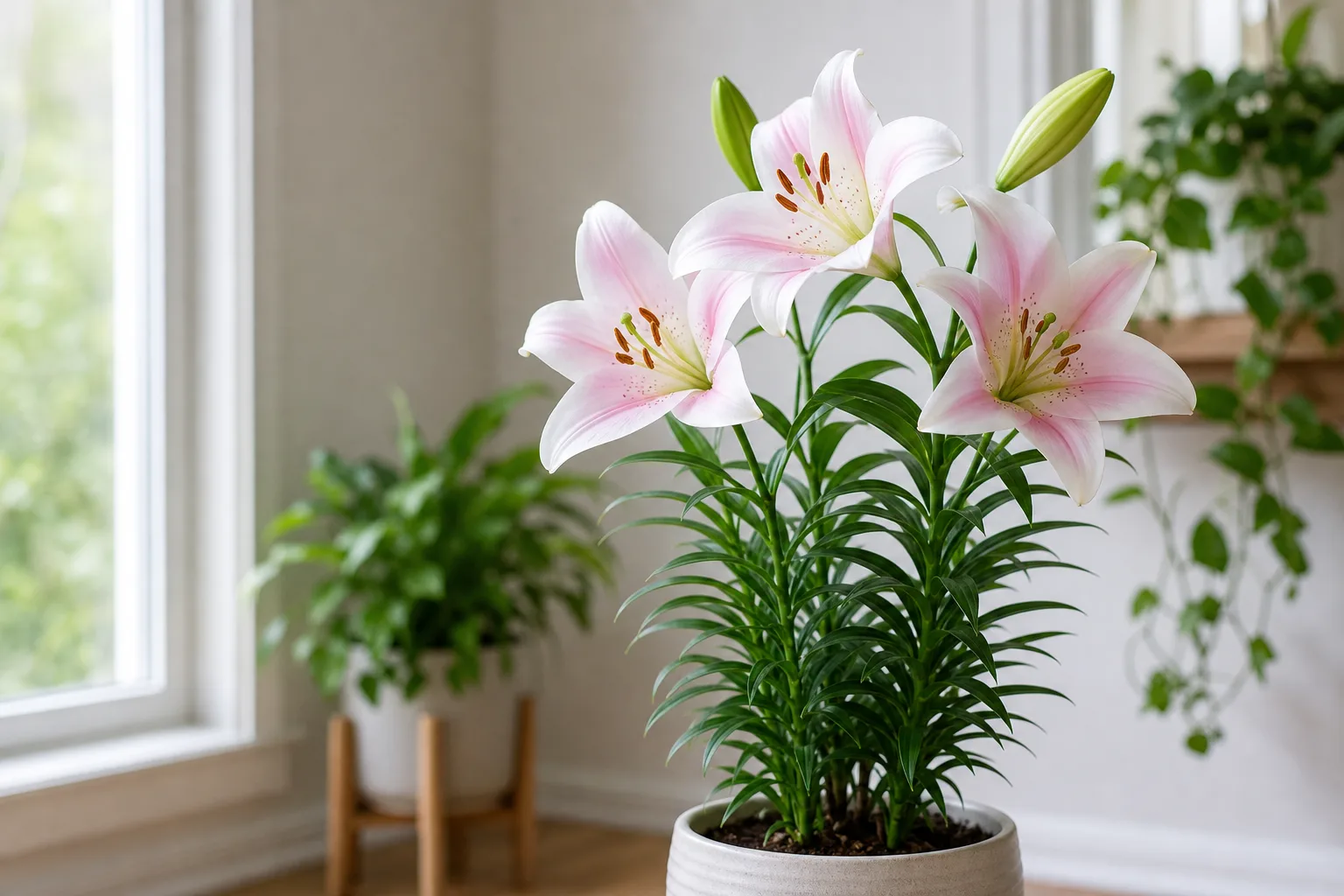
True lilies—Easter lilies, tiger lilies, stargazer lilies, Asiatic hybrids, and daylilies—are the most dangerous plants known to cats. The ASPCA database lists multiple lily species as toxic, and the veterinary consensus is unequivocal: even a tiny amount of ingested lily material can cause fatal acute kidney failure. A cat that licks pollen off its fur after brushing against a lily bloom is at risk.
The exact nephrotoxic compound in lilies remains unidentified, but the mechanism is well documented. Within hours of ingestion, kidney tubular cells begin dying. Without aggressive veterinary intervention—IV fluids, hospitalization, and possibly dialysis—the prognosis is poor. The ASPCA Animal Poison Control Center saw a significant number of lily-related calls in recent years, and prevention is overwhelmingly the most reliable approach.
Key facts:
- Peruvian lilies, peace lilies, and calla lilies are not true lilies and do not cause kidney failure—they cause oral irritation from calcium oxalates instead
- Lily pollen can drift from open flowers onto nearby surfaces where cats walk or rest
- Even lily water in a vase is toxic if a cat drinks from it
Best action if ingested: Head to emergency veterinary care immediately. Do not wait for symptoms. The sooner treatment begins, the better the chance of kidney recovery.
2. Sago Palm (Cycas revoluta)
Severity: Critical—life-threatening
Toxic compound: Cycasin and related cycad toxins
Typical symptoms: Vomiting, bloody stool, jaundice, increased thirst, liver failure, death
Onset: 15 minutes to 3–4 hours; survival rate approximately 50% even with aggressive treatment
Toxic parts: All parts, especially seeds (highest concentration)
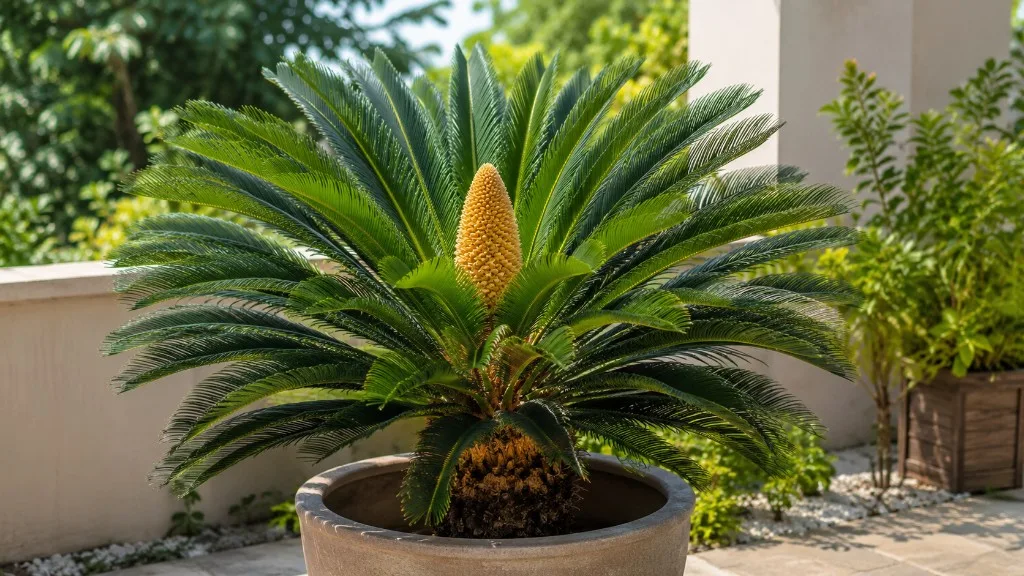
Despite its name, sago palm is not a true palm—it is a cycad, an ancient group of seed plants with highly toxic compounds. The ASPCA specifically flags sago palm as one of its top-searched toxic plants. Cycasin causes severe liver damage, and all parts of the plant are dangerous. The seeds contain the highest concentration of toxin and are the most frequently fatal part when ingested.
Sago palm is deceptively common. It appears in homes as a houseplant, on patios in containers, and in landscaping across warm regions. Its stiff, palm-like fronds do not signal danger to a cat or an owner, which makes it particularly hazardous. The ASPCA and Preventive Vet both report that even with immediate aggressive treatment, the survival rate for sago palm ingestion is only around 50%. (ASPCA sago palm listing)
Key facts:
- Cycasin is concentrated in the seeds, but all tissues are toxic
- Liver failure signs include jaundice—check gums and eyes for yellowing
- Cardboard palm and coontie palm are the same type of plant and carry the same risk
Best action if ingested: Emergency veterinary care immediately. Bring plant material for identification. Aggressive decontamination and supportive care are essential.
3. Dieffenbachia (Dumb Cane)
Severity: Moderate
Toxic compound: Insoluble calcium oxalate crystals
Typical symptoms: Immediate intense burning of mouth and tongue, excessive drooling, swelling of lips and face, difficulty swallowing, vomiting
Onset: Immediate upon chewing
Toxic parts: Leaves and stems
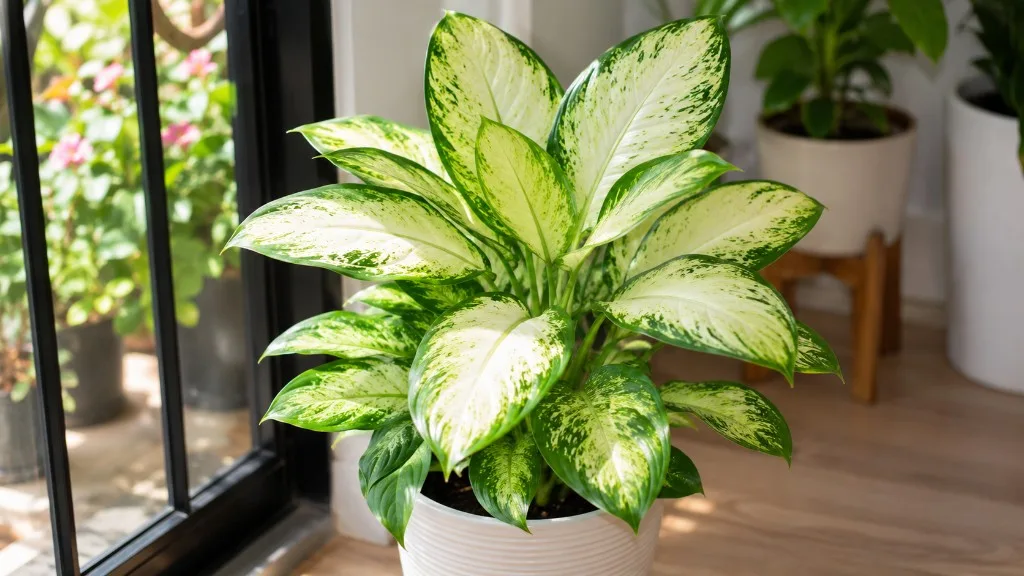
Dieffenbachia is one of the most common toxic houseplants encountered in homes, prized for its large variegated leaves and tolerance of lower light. Its common name “dumb cane” comes from the temporary loss of speech that occurs because the throat and tongue swell from the calcium oxalate crystals.
The ASPCA lists multiple dieffenbachia varieties—charming dieffenbachia, giant dumb cane, tropic snow, and spotted dumb cane—all under its toxic-to-cats classification. The immediate burning sensation usually prevents a cat from eating a large amount, but the oral swelling alone can be dangerous if it obstructs breathing. (ASPCA dieffenbachia listing)
Key facts:
- Pain is immediate, which limits how much is usually ingested
- Swelling of the throat can impair breathing in severe cases
- Rinse the mouth gently with water or milk if the cat allows it safely
Best action if ingested: Contact your veterinarian. If breathing is affected, emergency care is needed. The exact amount consumed and severity of swelling determine the necessary level of intervention.
4. Pothos (Devil’s Ivy, Epipremnum aureum)
Severity: Moderate
Toxic compound: Insoluble calcium oxalate crystals
Typical symptoms: Oral irritation, intense burning, drooling, vomiting, difficulty swallowing
Onset: Immediate upon chewing
Toxic parts: All parts—leaves, stems, roots
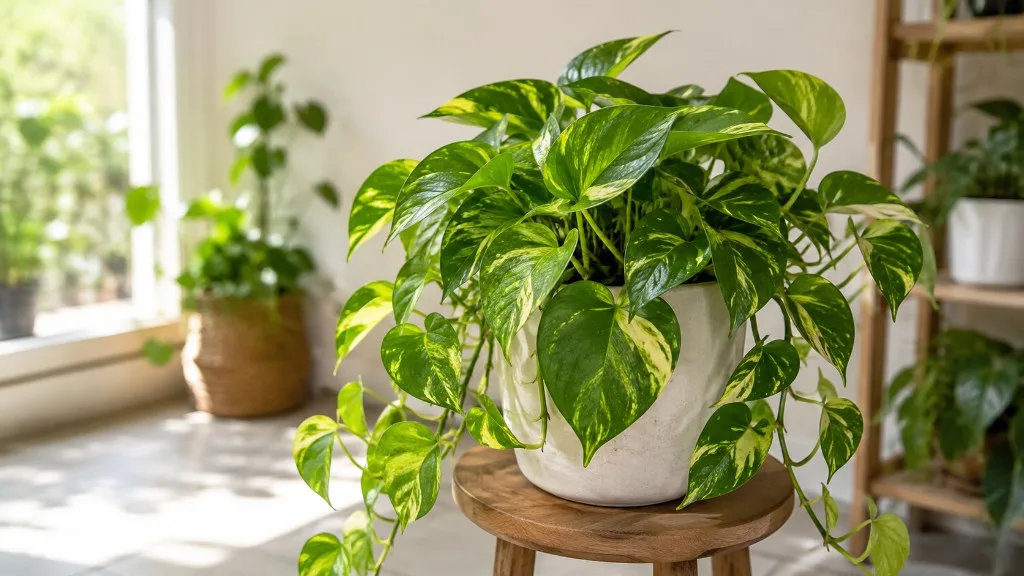
Pothos is arguably the most popular houseplant in existence. It hangs from bathroom shelves, trails from bookcases, climbs up walls, and appears in virtually every plant shop. Its ubiquity is exactly what makes it dangerous for cats: the more common a plant, the greater the chance a cat will encounter and investigate it.
The ASPCA lists pothos under “Devil’s Ivy” in its toxic-to-cats database. Like dieffenbachia, pothos contains insoluble calcium oxalate crystals that cause immediate oral pain. The trailing habit of pothos puts leaves at cat-level and encourages batting and chewing. While a single nibble is painful but unlikely to cause lasting harm, repeated or larger ingestions can lead to significant GI distress. (ASPCA pothos listing)
Key facts:
- Trailing vines are at perfect cat height and encourage play-chewing
- The immediate pain usually limits intake, but each exposure adds GI stress
- Hanging pothos out of reach or switching to a cat-safe trailing plant like spider plant is the most practical solution
Best action if ingested: Monitor for excessive drooling, vomiting, or difficulty swallowing. Contact a vet if symptoms persist or worsen. Mild exposure typically resolves with supportive care.
5. Aloe Vera
Severity: Mild to moderate
Toxic compound: Saponins (anthraquinone glycosides)
Typical symptoms: Vomiting, diarrhea, lethargy, abdominal discomfort
Onset: Hours after ingestion
Toxic parts: The latex layer just beneath the leaf skin
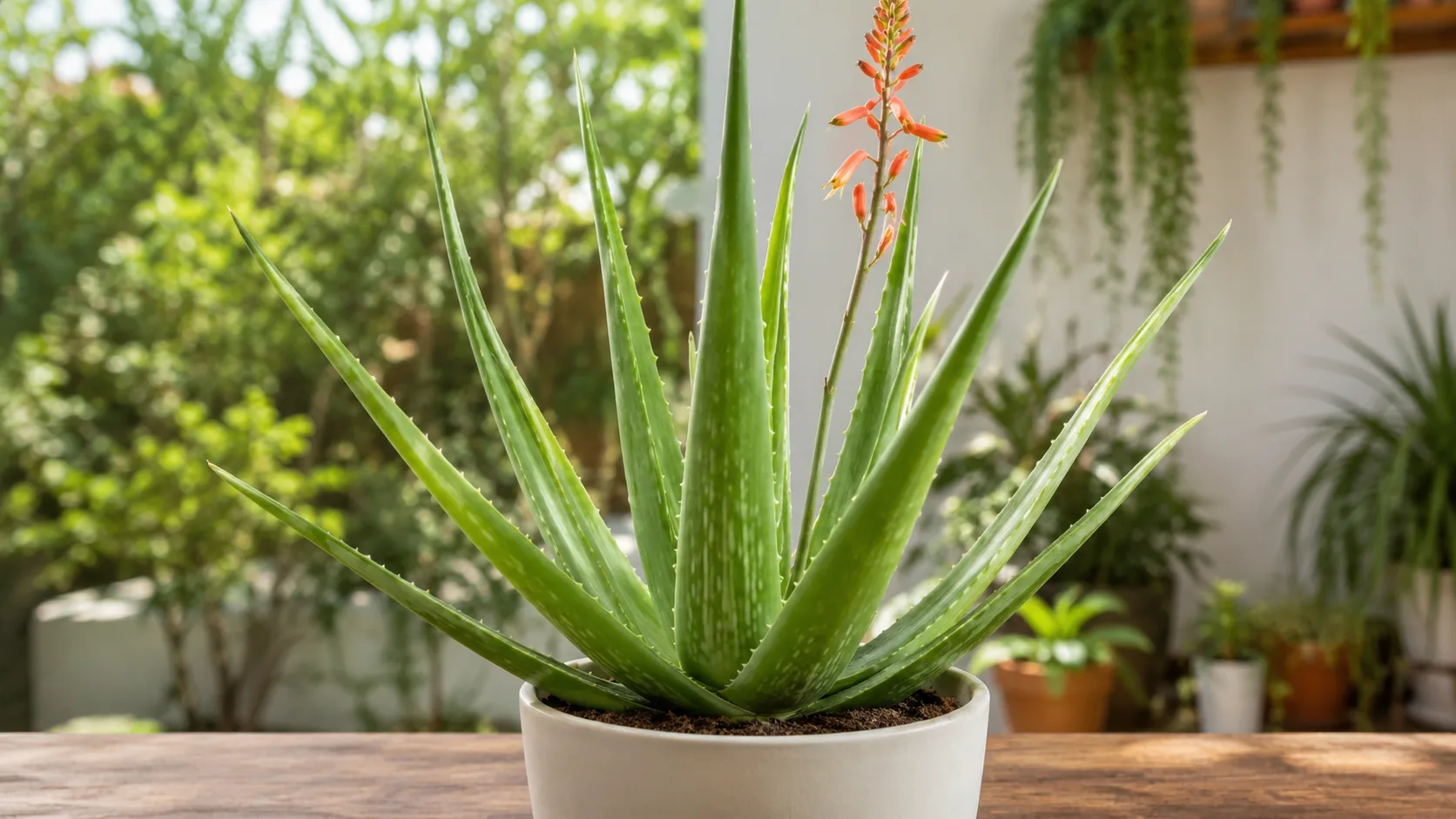
Aloe vera sits on kitchen windowsills everywhere, valued for its gel’s skin-soothing properties on humans. What helps burns on people irritates the digestive system of cats. The toxic compound, saponins, is concentrated in the latex layer just beneath the leaf skin—not in the clear central gel most people use.
The ASPCA lists aloe in its toxic-to-cats database with GI signs as the primary concern. The toxicity is typically self-limiting, meaning symptoms resolve with time and supportive care, but dehydration from prolonged vomiting or diarrhea can become a secondary risk. (ASPCA aloe listing)
Key facts:
- The toxic latex is the yellow sap just beneath the green leaf skin
- Symptoms are rarely life-threatening but can cause significant discomfort
- A cat-safe succulent alternative is haworthia, which looks similar and is non-toxic
Best action if ingested: Remove access to the plant. Contact a vet if vomiting or diarrhea is severe or prolonged, especially in kittens or cats with preexisting health conditions.
6. Snake Plant (Sansevieria trifasciata, often listed as Dracaena trifasciata)
Severity: Mild to moderate
Toxic compound: Saponins
Typical symptoms: Nausea, vomiting, diarrhea, drooling, lethargy
Onset: Can take 4–12 hours to develop
Toxic parts: All parts
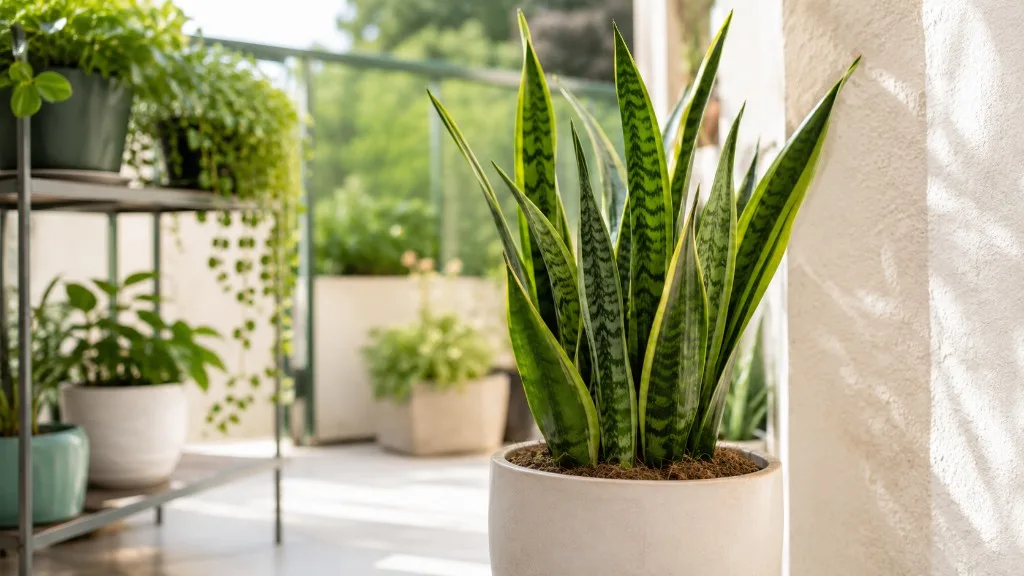
Snake plant is ubiquitous in homes, offices, and waiting rooms because it tolerates low light and neglect better than almost any other houseplant. The ASPCA lists it as toxic to cats under its now-reclassified scientific name. The saponins in snake plant cause gastrointestinal distress, and while severity is typically mild, the delayed onset of symptoms can make it harder for owners to connect cause with effect.
The upright, blade-like leaves of snake plant are texturally interesting to cats and can trigger a chew response. Because the plant sits on floors or low stands, cats have easy access to the leaves. (ASPCA snake plant listing)
Key facts:
- Symptoms can take 8–12 hours, making the plant-illness connection less obvious
- Kittens and small cats are affected more than large adults
- Move snake plants to shelves or rooms that are off-limits to cats
Best action if ingested: Monitor for vomiting, diarrhea, and lethargy. Supportive care—keeping the cat hydrated—is usually sufficient. Contact a vet if symptoms are severe or persistent.
7. Philodendron
Severity: Moderate
Toxic compound: Insoluble calcium oxalate crystals
Typical symptoms: Oral pain and burning, excessive drooling, pawing at mouth, vomiting, swelling of lips and tongue
Onset: Immediate upon chewing
Toxic parts: All parts—leaves, stems, roots
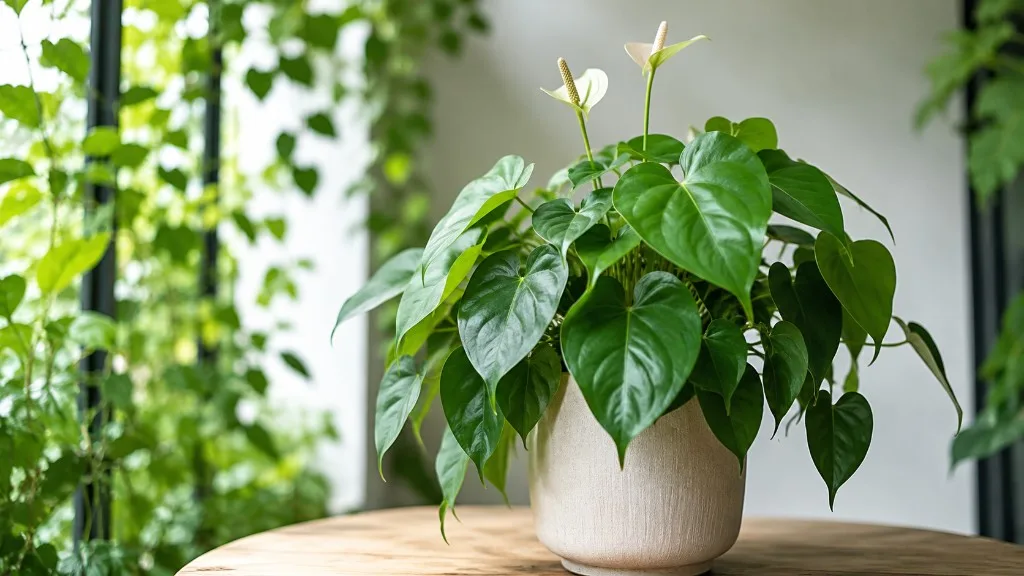
Philodendrons include heartleaf philodendron, tree philodendron, and the popular split-leaf types that are often confused with monstera. The ASPCA lists multiple philodendron species under its toxic-to-cats classification, all sharing the same mechanism: insoluble calcium oxalate crystals. (ASPCA philodendron listing)
Like pothos, the trailing and vining habit of heartleaf philodendron puts leaves directly in a cat’s path. Larger upright philodendrons present the same touching height for cats that rub against them. The immediate oral pain usually limits intake, but any exposure is uncomfortable and potentially dangerous if swelling restricts breathing.
Key facts:
- All Araceae family members share the same calcium oxalate mechanism—monstera, philodendron, pothos, and dieffenbachia all act similarly
- Trailing varieties are the highest risk because leaves are at floor level
- A single bump or paw at a leaf is not dangerous—chewing and ingestion are the concern
Best action if ingested: Gently rinse the cat’s mouth with water if safe to do so. Contact a vet for guidance. Substantial exposure or any breathing difficulty requires emergency care.
8. Dracaena (Corn Plant, Dragon Tree)
Severity: Moderate
Toxic compound: Saponins
Typical symptoms: Vomiting (sometimes with blood), excessive drooling, dilated pupils, loss of appetite, lethargy
Onset: Hours after ingestion
Toxic parts: All parts
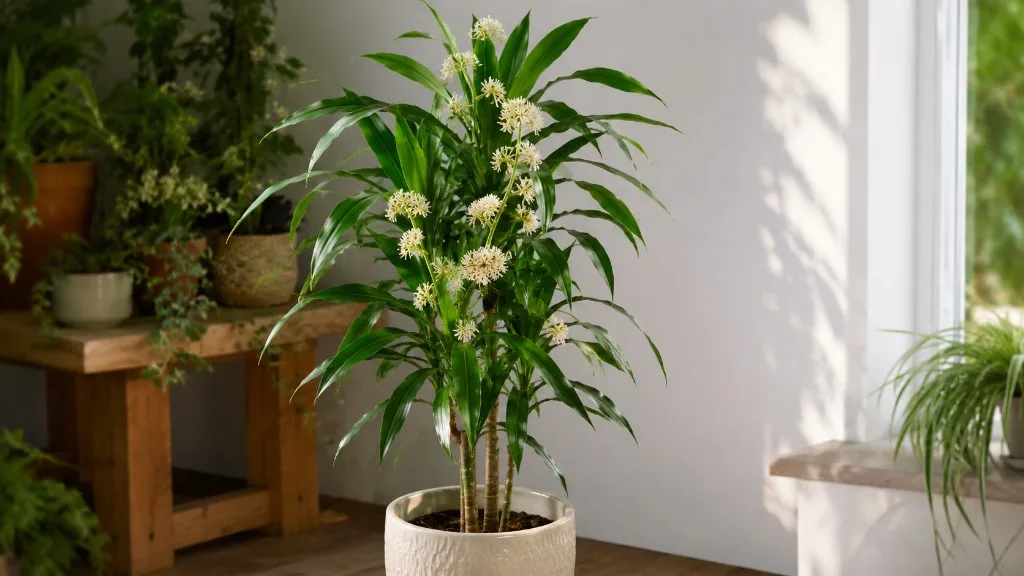
Dracaena varieties—corn plant, dragon tree, Madagascar dragon tree, striped dracaena, and Malaysian dracaena—are all listed by the ASPCA as toxic to cats. The saponin content across Dracaena species is consistent enough that you should treat all dracaena varieties as toxic regardless of the specific cultivar name. (ASPCA dracaena listing)
Dracaena marginata is especially common as a floor plant, placing its long strappy leaves at cat height. Cats are drawn to the texture, and a single chew session can trigger a bout of vomiting that may contain blood in more severe cases. Preventive Vet notes that dracaena ingestion can cause dilated pupils and dullness in addition to GI signs, which helps distinguish it from simple dietary indiscretion. (Preventive Vet)
Key facts:
- All dracaena varieties and cultivars should be treated as toxic
- Blood in vomit is a distinguishing feature of more significant dracaena ingestion
- Tall floor dracaenas are tempting targets; move them to a cat-free room or onto a high stand
Best action if ingested: Contact your veterinarian if vomiting occurs. Blood in vomit or dilated pupils warrant prompt evaluation. Isolate the plant and prevent further access.
9. Peace Lily (Spathiphyllum)
Severity: Moderate
Toxic compound: Insoluble calcium oxalate crystals
Typical symptoms: Oral burning and irritation, excessive drooling, vomiting, difficulty swallowing
Onset: Immediate upon chewing
Toxic parts: All parts
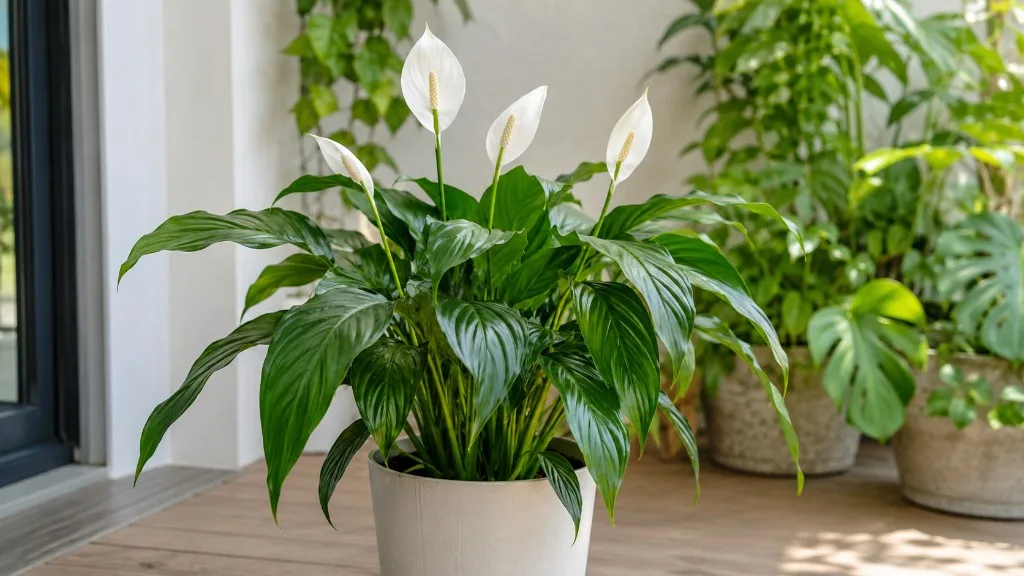
Peace lilies are not true lilies and do not carry the same deadly nephrotoxin risk. They are Araceae family members, closely related to dieffenbachia, pothos, and philodendron, and they use the same calcium oxalate defense. The confusion created by the “lily” common name is dangerous because it can cause unnecessary panic or, conversely, false reassurance.
The ASPCA lists peace lily under its toxic-to-cats classification. The oral irritation from peace lily ingestion is painful but not kidney-damaging. Even so, the swelling can become dangerous if it affects the throat. The glossy dark leaves and white spathe flowers make peace lilies common gift plants, often placed at floor level or on low tables where cats have access. (ASPCA peace lily listing)
Key facts:
- Peace lily is not a true lily—it does not cause kidney failure
- Oral pain and swelling are the primary concerns, not organ damage
- The “lily” name causes confusion; verify the plant by scientific name if uncertain
Best action if ingested: Rinse the mouth gently if safe to do so. Contact a vet for guidance, especially if breathing or swallowing is difficult. The prognosis is good with supportive care.
10. English Ivy (Hedera helix)
Severity: Moderate
Toxic compound: Triterpenoid saponins (hederagenin)
Typical symptoms: Excessive drooling, vomiting, abdominal pain, diarrhea
Onset: 4–12 hours after ingestion
Toxic parts: Leaves (more toxic than berries)
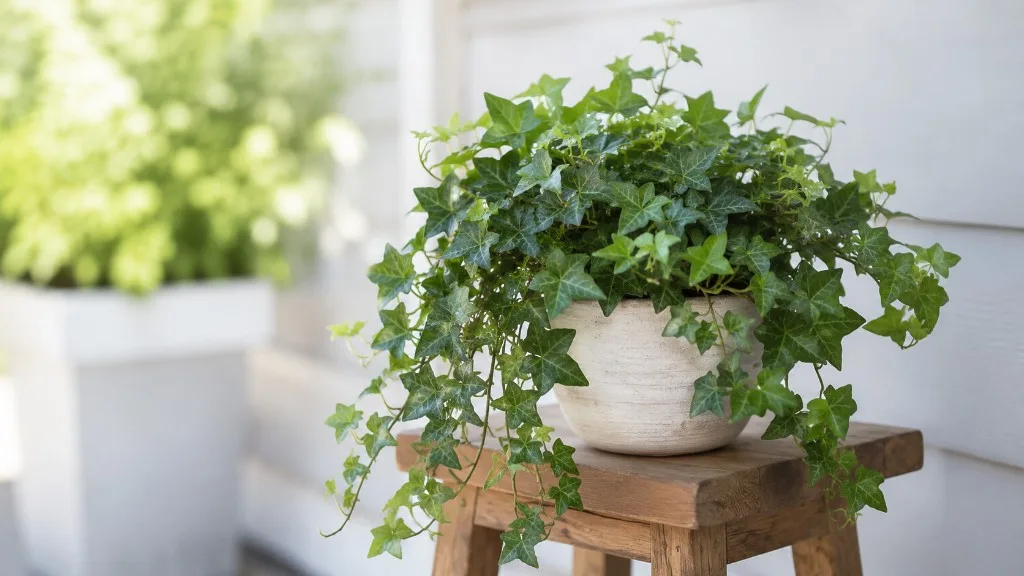
English ivy is common both as a houseplant and as an outdoor ground cover and climbing vine. Its cascading indoor habit makes trailing vines accessible to cats, and its prevalence outdoors means indoor-outdoor cats may encounter it even if you avoid it inside. The ASPCA classifies English ivy as toxic, with the leaves containing higher concentrations of hederagenin than the berries. (ASPCA English ivy listing)
The moderate toxicity of English ivy combined with its common use in hanging baskets and as a potted trailing plant makes it a trap for curious cats. The vines dangle and sway, triggering the chase-and-bite response that leads to ingestion.
Key facts:
- Leaves are more toxic than berries
- Outdoor ivy is a risk for cats that roam or go out on leashes and harnesses
- With many cat-safe trailing alternatives available, replacing English ivy is straightforward
Best action if ingested: Monitor closely. Contact a vet if vomiting or diarrhea is persistent. Most cases resolve with supportive care and removal of access.
Other Common Toxic Houseplants to Know
The plants above are the most commonly encountered in homes, but they are far from the only toxic plants for cats. If you have any of these, check the ASPCA database for specific toxicity details:
| Plant | Toxic Compound | Primary Concern |
|---|---|---|
| Jade Plant | Unknown | Vomiting, ataxia, depression |
| Asparagus Fern | Sapogenins | Allergic dermatitis, GI upset |
| Schefflera (Umbrella Tree) | Calcium oxalates | Oral irritation, vomiting |
| Cyclamen | Saponins | Severe in tubers—cardiac effects |
| Amaryllis | Phenanthridine alkaloids | GI upset, bulb most toxic |
| Begonia | Soluble oxalates | Oral irritation, vomiting |
| Rubber Plant (Ficus) | Proteolytic enzyme, ficin | GI irritation, dermal irritation |
| Kalanchoe | Bufadienolides | GI upset, cardiac effects in large amounts |
| Eucalyptus | Essential oils | Drooling, vomiting, depression |
| Yucca | Saponins | Vomiting, diarrhea |
What to Do If Your Cat Eats a Toxic Plant
Stop reading this guide and take the following steps immediately—in this order.
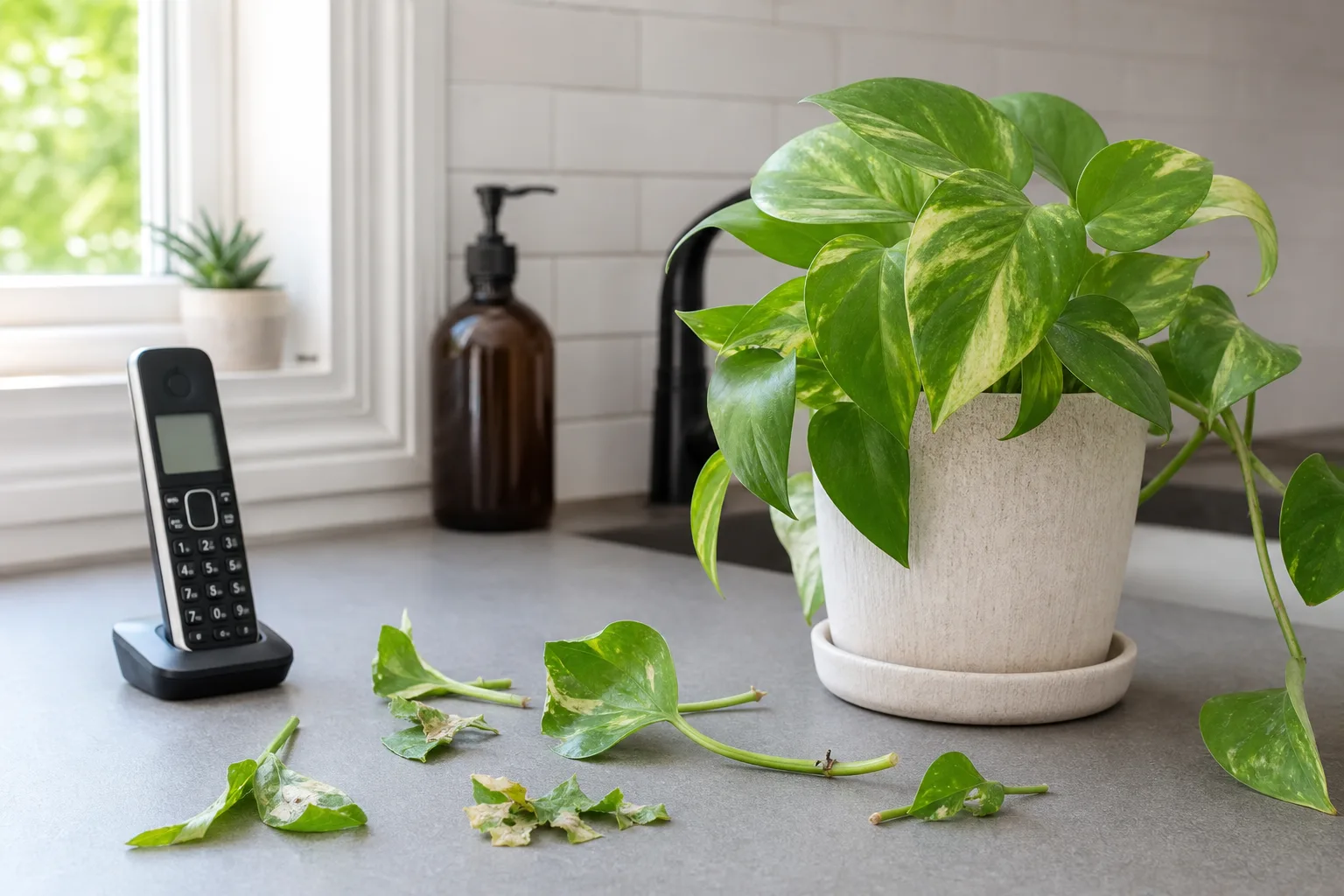
1. Remove the cat from the plant area. Isolate your cat in a safe room where you can observe them and where no other plants are accessible.
2. Identify the plant. Take a photo or save any chewed plant pieces. If you do not know the plant’s name, the photo can help a vet or poison control specialist identify it. Do not waste time on online plant identification while your cat is symptomatic.
3. Call for help. Contact your veterinarian, an emergency animal hospital, or the ASPCA Animal Poison Control Center at 888-426-4435. They are available 24 hours and can tell you whether the specific plant and amount ingested require immediate medical intervention. Have the plant name, part of plant chewed, approximate amount, time elapsed, and your cat’s weight ready.
4. Do not induce vomiting unless a veterinarian tells you to. Some toxic compounds cause more damage on the way back up. Let a professional make that decision.
5. Bring the plant or photo to the vet. If you are heading to emergency care, bring any remaining plant material and the chewed pieces for positive identification.
Keep this number visible: ASPCA Animal Poison Control Center: 888-426-4435. The faster you call, the more treatment options a veterinarian has.
Cat-Safe Houseplant Alternatives
Removing toxic plants does not mean living without greenery. Many beautiful, widely available houseplants are classified as non-toxic to cats by the ASPCA. The table below pairs toxic plants with their closest cat-safe alternatives.
| Toxic Plant | Cat-Safe Alternative |
|---|---|
| Pothos | Spider Plant or Peperomia |
| Snake Plant | Calathea or Prayer Plant |
| Aloe Vera | Haworthia |
| Philodendron/Monstera | Parlor Palm or Areca Palm |
| Dieffenbachia | Chinese Evergreen (check variety) or Cast Iron Plant |
| Peace Lily | African Violet or Phalaenopsis Orchid |
| English Ivy | Boston Fern or Lipstick Plant |
| Dracaena | Majesty Palm or Kentia Palm |
| Jade Plant | Christmas Cactus |
| Schefflera | Money Tree |
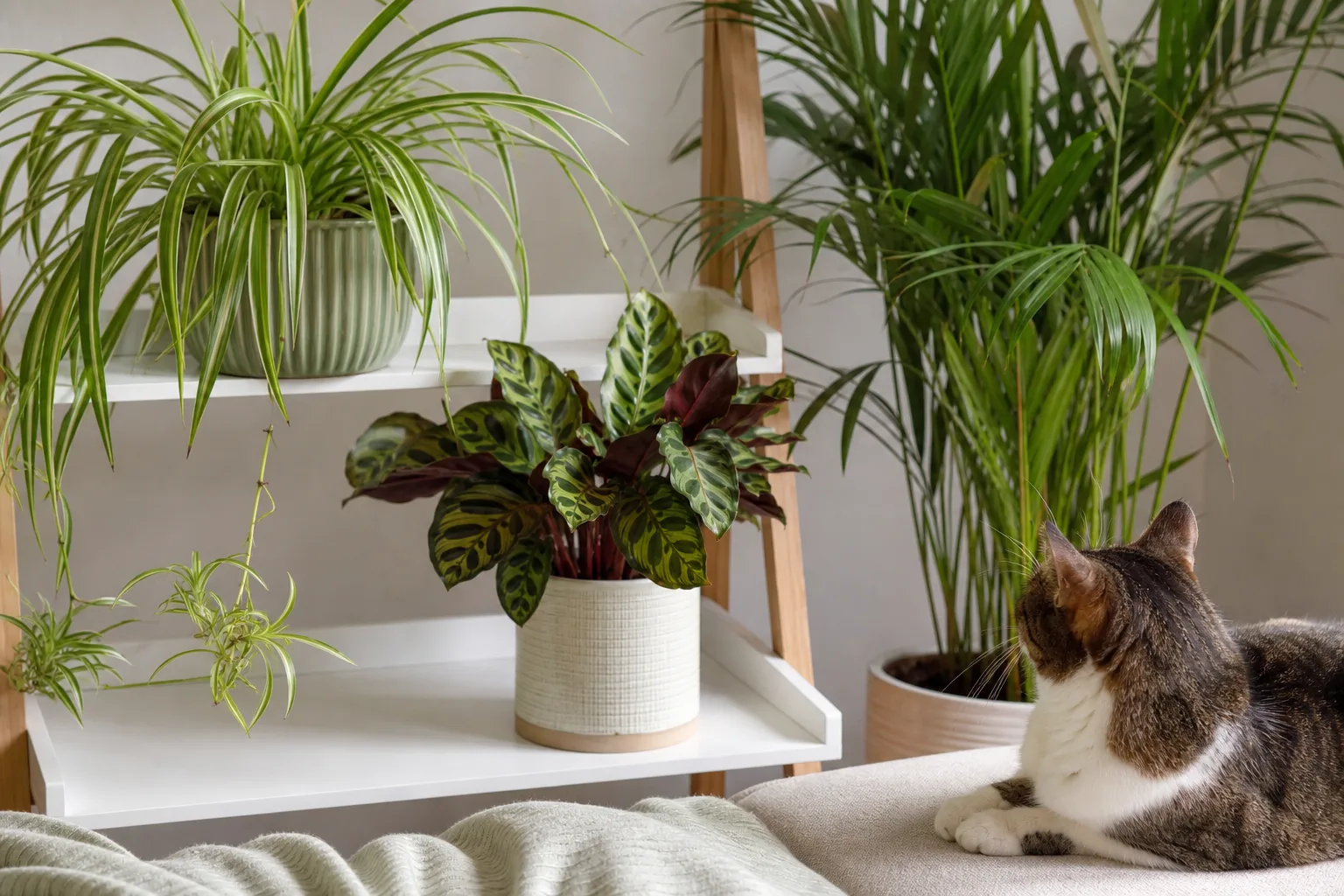
The ASPCA lists spider plant as non-toxic to cats in its main database, making it one of the best trailing alternatives to pothos. Note the same nuance raised in our non-toxic plants for cats guide: ASPCA’s own pet-safety newsletter separately classifies spider plant as “mildly toxic” because of opium-related compounds that can cause GI upset in cats who eat enough of it. It is safe from an organ-damage standpoint but not a free salad. Areca palm and parlor palm are both categorized as non-toxic and provide the vertical impact that snake plant or dracaena would otherwise fill. Calathea and prayer plants bring the bold foliage patterns of a dieffenbachia or philodendron without the calcium oxalate crystals. (ASPCA spider plant listing) (ASPCA areca palm listing) (ASPCA calathea listing)
A note on “non-toxic” designations: the ASPCA defines non-toxic as plants not expected to cause life-threatening illness. Eating any plant material can still cause mild vomiting or GI upset in some cats simply from the mechanical irritation of digesting unfamiliar plant matter. Non-toxic means safer, not edible as food. If your cat persistently chews on any plant, move it out of reach and consult your veterinarian about possible dietary or behavioral causes.
Related Guides
Conclusion
The plants most likely to harm your cat are not obscure specimens from botanical gardens. They are the pothos trailing from your bookshelf, the snake plant in your bedroom corner, the aloe on your kitchen windowsill, and the lilies in a birthday bouquet. The 10 plants listed here are toxic to cats and are found in millions of homes.
For the most dangerous plants—true lilies and sago palms—the safest approach is complete removal from any home with a cat. No placement strategy reliably prevents access for plants that are lethal in tiny amounts. For the calcium oxalate plants—dieffenbachia, pothos, philodendron, and peace lily—moving them to hanging planters, wall shelves, closed rooms, or terrariums can reduce risk if complete replacement is not practical.
Your veterinarian and the ASPCA Poison Control Center at 888-426-4435 are your partners in an emergency, not afterthoughts. Call them before you search online, before you try home remedies, and before you wait to see if symptoms develop. The difference between a messy clinic visit and a tragedy is often measured in minutes, not hours.