25 Cat-Safe Low-Light Houseplants (ASPCA Checked)
Compare 25 ASPCA-verified cat-safe houseplants that tolerate low light, with honest light limits, watering rules, and placement tips for curious cats.
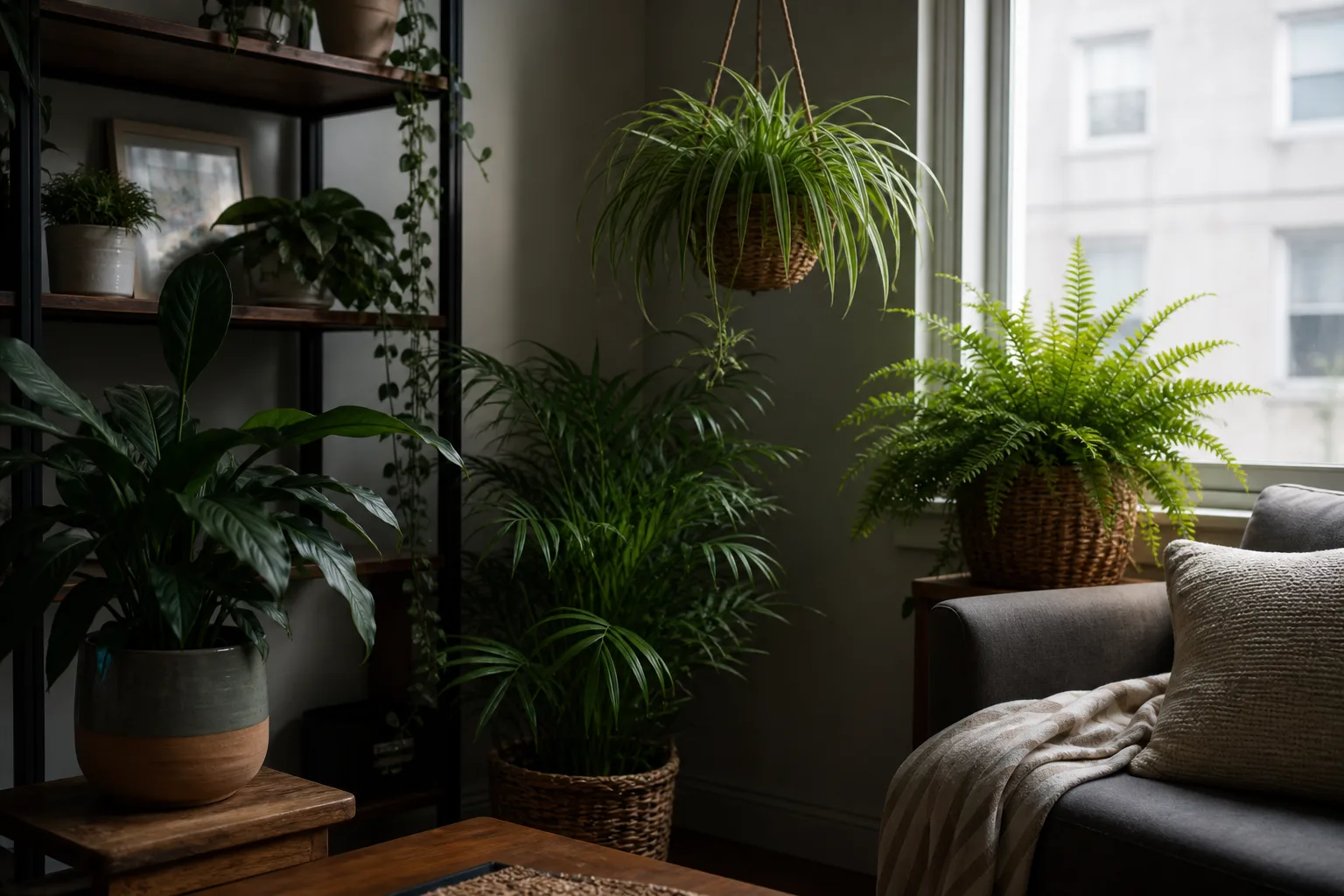
You can keep greenery in a north-facing bedroom and a curious cat—if you pick plants that are verified non-toxic and honest about how dim your room really is. Most “low light” listicles stack safe names without saying whether a plant will merely survive a shady corner or sulk until you move it. This guide fixes that: 25 ASPCA-verified cat-safe houseplants, each with a realistic low-light rating, watering cue, and placement note for pet households. Every toxicity claim was checked against the ASPCA Toxic and Non-Toxic Plants database and cross-referenced with LeafyPixels plant-detail records where a species hub exists.
For broader safety context, see our non-toxic plants for cats guide and the verified shortlist at plants safe for cats. If you need the inverse list, toxic plants for cats covers the dangerous species that still show up on “pet-friendly” Pinterest boards.
Dim rooms and curious cats push you toward two filters most plant lists treat as optional: verified non-toxicity and realistic shade tolerance. A pothos survives a dark hallway but will send a cat to the vet. A cast iron plant is safe but looks boring until you understand why it outlasts trendier picks. The 25 species below passed both filters for typical apartment conditions—not greenhouse perfection.
What Low Light Actually Means Indoors
Low light is not a dark closet. It is roughly 50–250 foot-candles at the plant’s leaf level—enough to read by during the day without switching on a lamp, but far from the direct sun a south window delivers. Penn State Extension notes that many houseplant guides use about 100 foot-candles as a common baseline for low light, while deeply shaded interior spots can fall to 25 foot-candles or less—a level where even tolerant species grow slowly unless you add artificial light. (Penn State Extension)
Foot-Candles and North-Facing Rooms
A plant on a north windowsill usually receives bright indirect light for part of the day. Move it six to eight feet into the room and levels can drop below what “low light tolerant” labels assume. Before buying, stand where the pot will sit at midday: if you would need a lamp to read comfortably, you are in true low light and should favor cast iron plant, parlor palm, or haworthia—or plan on a small grow lamp within a few feet of the foliage.
Variegated cultivars almost always need more photons than solid-green forms of the same species. A variegated baby rubber plant or heavily pink polka dot plant in a dim corner will revert to green or develop crisp brown edges while the ASPCA safety status stays unchanged. When light is limited, choose the plainest green cultivar you can find.
Office fluorescent fixtures often deliver 30–75 foot-candles at desk height—enough for parlor palm, cast iron plant, and haworthia to hold foliage, but not enough for hoya to bloom or burro’s tail to stay plump. That is still “low light,” and it still counts as workable for many entries on this list if you adjust watering downward to match slower growth.
Cat-Safe Does Not Mean Chew-Safe
Non-toxic means the plant lacks compounds known to cause systemic poisoning in cats—not that your cat should treat it as salad. ASPCA states that consumption of any plant material may cause vomiting or gastrointestinal upset. Non-toxic is a toxicology classification, not permission to graze. If your cat chews any houseplant repeatedly, move the pot, offer cat grass as a redirect, and ask your veterinarian about boredom or dietary causes—not just swap the species.
Kittens and young cats explore with their mouths more than adults do. A non-toxic fern frond can still trigger a hairball-heavy week if eaten daily. Fertilizer salts and systemic insecticides on store-bought foliage are separate from plant toxicity—rinse new plants, avoid spraying pesticides where cats groom, and store bags of soil out of reach. When in doubt after ingestion, photograph the plant label and call your veterinarian or ASPCA Poison Control at (888) 426-4435 rather than waiting for symptoms to worsen.
How We Verified These 25 Plants
Each entry was searched in the ASPCA database by common and scientific name. Plants appear here only when ASPCA lists them under Plants Non-Toxic to Cats (or a clearly equivalent non-toxic entry such as the full Calathea genus listing). Where ASPCA uses confusing common names—listing “Baby’s Tears” for Hypoestes while Soleirolia soleirolii appears as “Paddy’s Wig”—we note the correct botanical match so you do not cross-check the wrong plant.
We also excluded popular low-light toxic staples—snake plant, ZZ plant, pothos, and peace lily—from this list even though they survive dim rooms, because cat safety was non-negotiable for this article. If you live alone without pets, those species are fine; with cats, the swaps in our toxic look-alike table are the point.
Peperomia species on this list share an ASPCA genus listing: the database treats many peperomias as non-toxic collectively, which covers baby rubber plant and watermelon peperomia even when individual cultivar pages differ. When you buy an uncommon peperomia not named here, search the ASPCA database before placing it within reach.
Spider plant (Chlorophytum comosum) is non-toxic in the ASPCA database, but cats who eat large amounts may show mild stomach upset; we treat it as safe, not edible. (ASPCA Spider Plant)
Quick Picks: Match Plant to Room and Skill Level
| Your situation | Best picks | Why |
|---|---|---|
| Darkest corner, forgetful waterer | Cast iron plant, Parlor palm | Tolerate low light and irregular watering; ASPCA non-toxic |
| Bathroom humidity | Bird’s nest fern, Boston fern, African violet | Love moisture; keep out of direct spray on fronds |
| Desk or shelf, small footprint | Nerve plant, Haworthia, Watermelon peperomia | Stay compact; watch overwatering in dim rooms |
| Trailing, above paw reach | Spider plant, Hoya, Swedish ivy | Hang high; spider plant attracts chewers |
| Colorful pattern, medium-low light | Prayer plant, Zebra calathea, Polka dot plant | Need more humidity than cast iron; not for hot dry air |
The 25 Cat-Safe Low-Light Houseplants
Below, Low-light rating means how the plant behaves in roughly 50–150 foot-candles: Thrives, Tolerates, or Needs help (supplemental light or a brighter spot within the room). All are ASPCA non-toxic to cats unless noted.
Compact Foliage for Shelves and Desks (Plants 1–6)
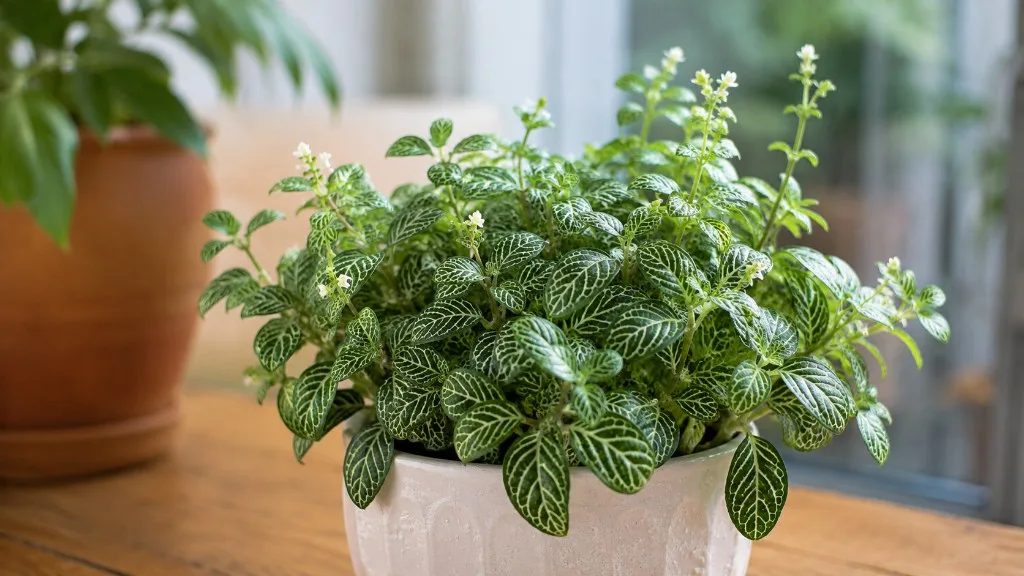
1. Nerve plant (Fittonia albivenis) — ASPCA lists Nerve Plant as non-toxic. Low-light rating: Tolerates. Loves warmth and humidity; a steamy bathroom windowsill beats a dry dark hallway. Keep soil evenly moist, not soggy. The Fittonia hub covers watering and humidity in detail. Cats rarely eat the papery leaves, but the plant is low to the ground—use a shelf.
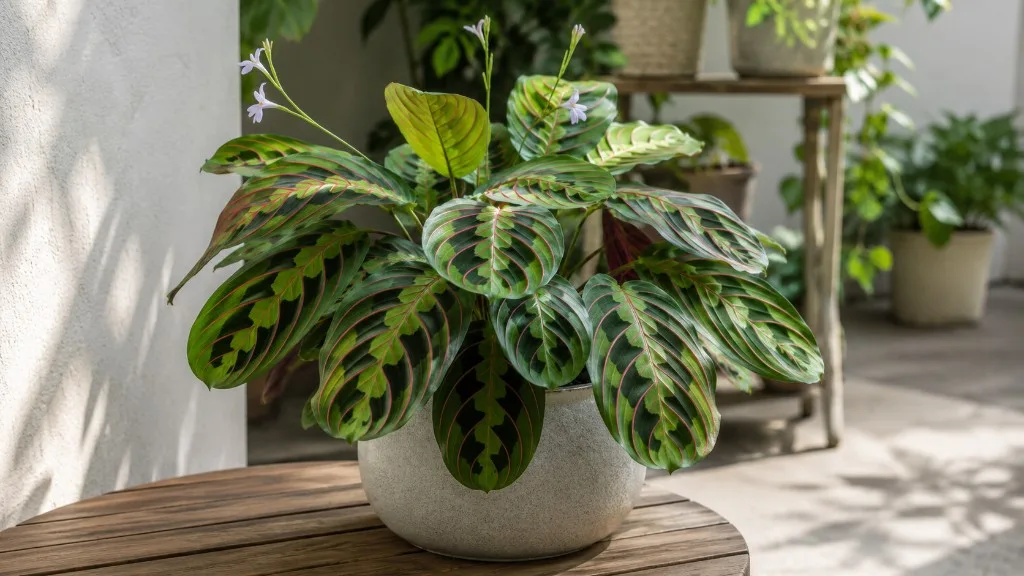
2. Prayer plant (Maranta leuconeura) — Prayer Plant is non-toxic. Low-light rating: Tolerates (folding leaves nightly is normal). Needs consistent moisture and filtered water if your tap is hard. Direct sun bleaches patterns. See prayer plant care for light and watering splits.
3. Baby rubber plant (Peperomia obtusifolia) — Baby Rubber Plant is non-toxic. Low-light rating: Thrives among peperomias. Thick leaves store water; let the top inch dry before soaking. Solid-green cultivars handle shade better than heavily variegated ones. Hub: baby rubber plant.
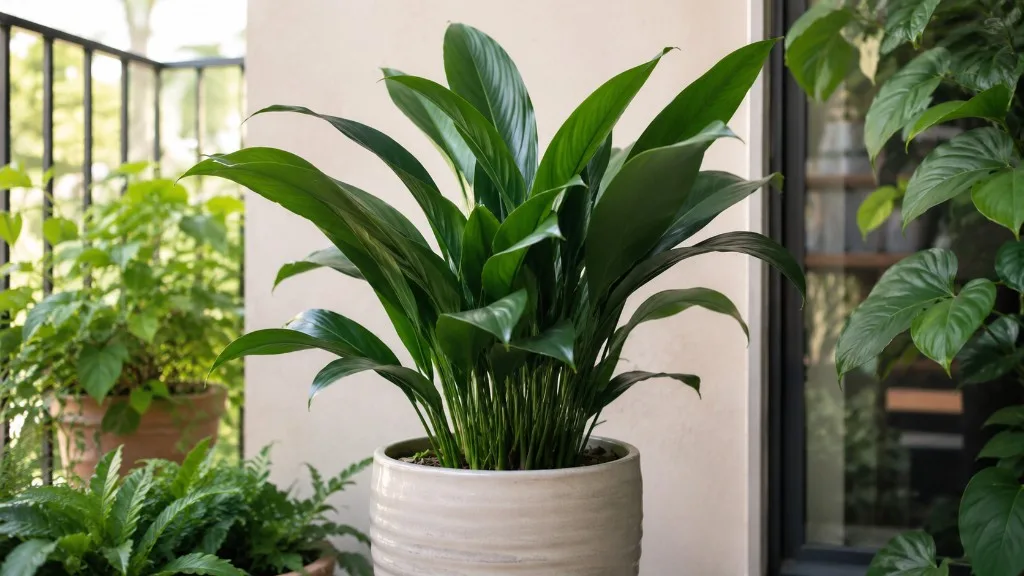
4. Cast iron plant (Aspidistra elatior) — Cast Iron Plant is non-toxic. Low-light rating: Thrives—one of the best true low-light options for cats. Water when dry; tolerate neglect better than ferns. Large leaves sit at cat height; sturdy but not chew-proof. Cast iron plant guide.
5. Spider plant (Chlorophytum comosum) — Spider Plant is non-toxic. Low-light rating: Tolerates (slower pup production). Many cats chew spider plants for the grass-like texture; hang baskets high and expect occasional GI upset if yours is a grazer. Spider plant hub.
6. Zebra calathea (Calathea zebrina) — The Calathea genus is non-toxic to cats. Low-light rating: Tolerates medium shade; wilts in hot dry air. Keep soil lightly moist and humidity above 40%. More demanding than cast iron. Calathea zebrina and general Calathea care.
Patterned Leaves and Prayer Plants (Plants 7–12)
7. Burro’s tail (Sedum morganianum) — Burro’s Tail is non-toxic. Low-light rating: Tolerates (stretches leggy). Leaves detach if bumped—keep on a high shelf away from cat traffic. Water deeply, then dry completely. Burro’s tail.
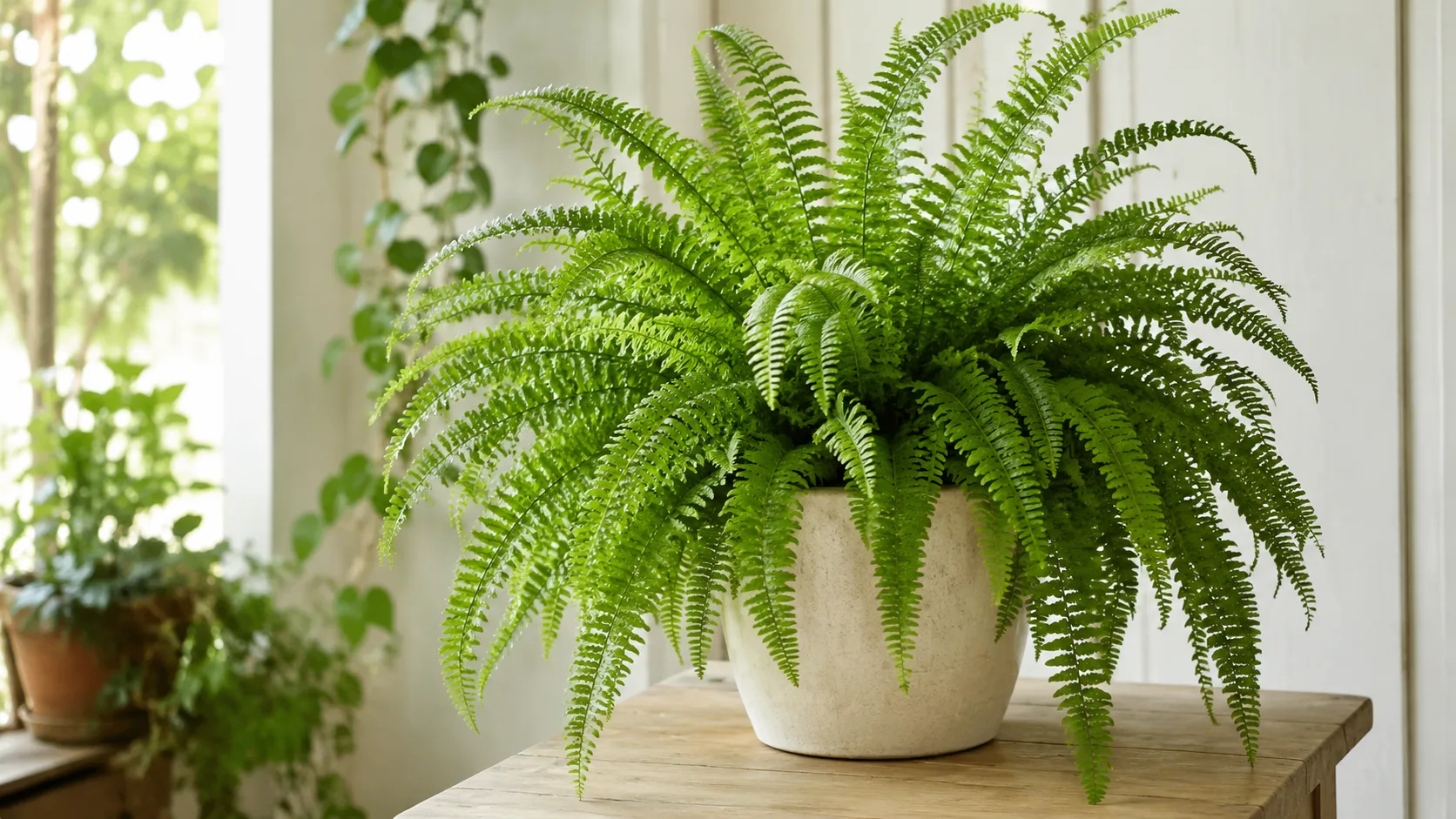
8. Boston fern (Nephrolepis exaltata) — Boston Fern is non-toxic. Low-light rating: Tolerates with humidity. Mist or use a pebble tray; never let the root ball dry to dust. Fronds tempt playful bats—hanging placement helps. Boston fern care.
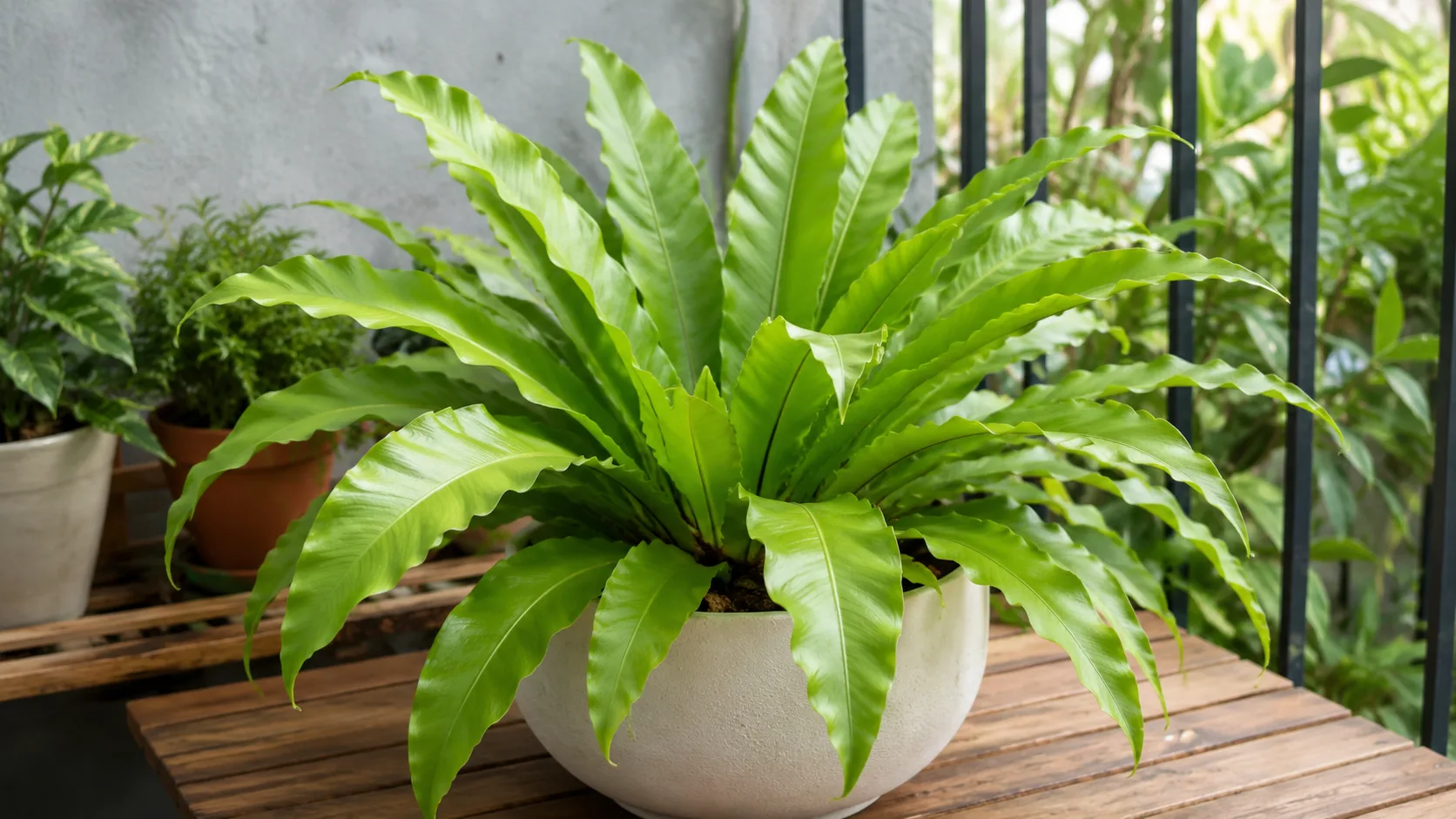
9. Bird’s nest fern (Asplenium nidus) — Listed non-toxic as Bird’s Nest Fern in LeafyPixels ASPCA research. Low-light rating: Thrives in bright bathroom indirect light; Tolerates medium shade. Water into the center cup sparingly; avoid wetting new frond coils. Bird’s nest fern.
10. Friendship plant (Pilea involucrata) — Friendship Plant is non-toxic. Low-light rating: Tolerates medium indirect light. Crisped leaves need humidity; pebble trays help. Related Pilea Moon Valley shares similar care.
11. Watermelon peperomia (Peperomia argyreia) — Watermelon Peperomia is non-toxic. Low-light rating: Tolerates; sensitive to overwatering in dim rooms. Let the top inch dry; bright indirect is ideal but east-window shade works. Watermelon peperomia.
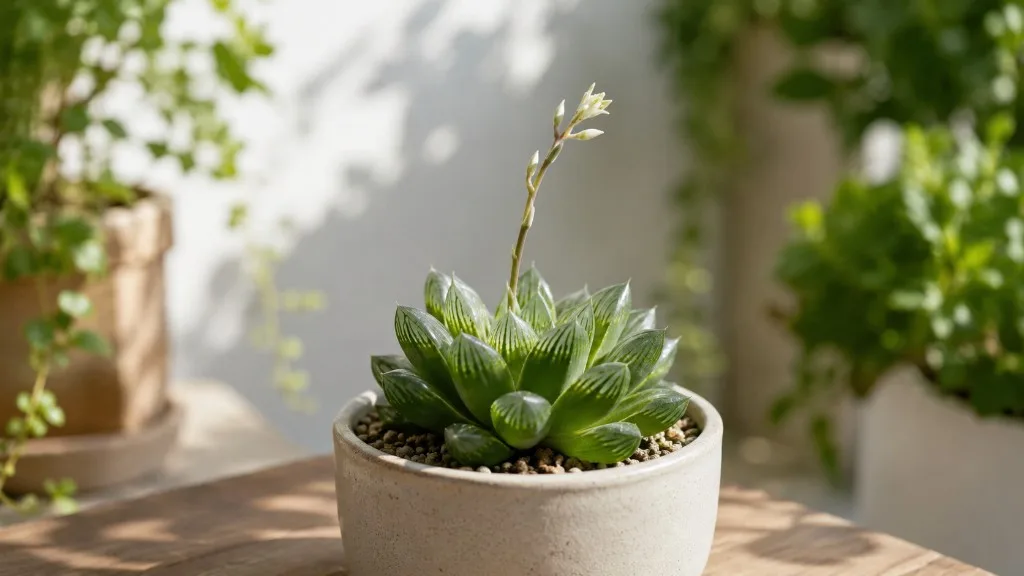
12. Haworthia (Haworthia spp.) — Haworthia is non-toxic. Low-light rating: Tolerates better than most succulents. Rosettes stay compact; water every two to three weeks in shade. Pair with gritty soil. Haworthia hub.
Ferns, Palms, and Humidity Lovers (Plants 13–18)
13. Chinese money plant (Pilea peperomioides) — ASPCA lists Pilea peperomioides as non-toxic. Low-light rating: Tolerates (fewer pups, smaller leaves). Rotate weekly for even growth. Chinese money plant.
14. Brazilian orchid (Sophronitis spp.) — Brazilian Orchid is non-toxic. Low-light rating: Tolerates bright indirect; not a deep-shade plant. Needs warm humid air and careful watering—specialist pick for experienced growers, not beginners.
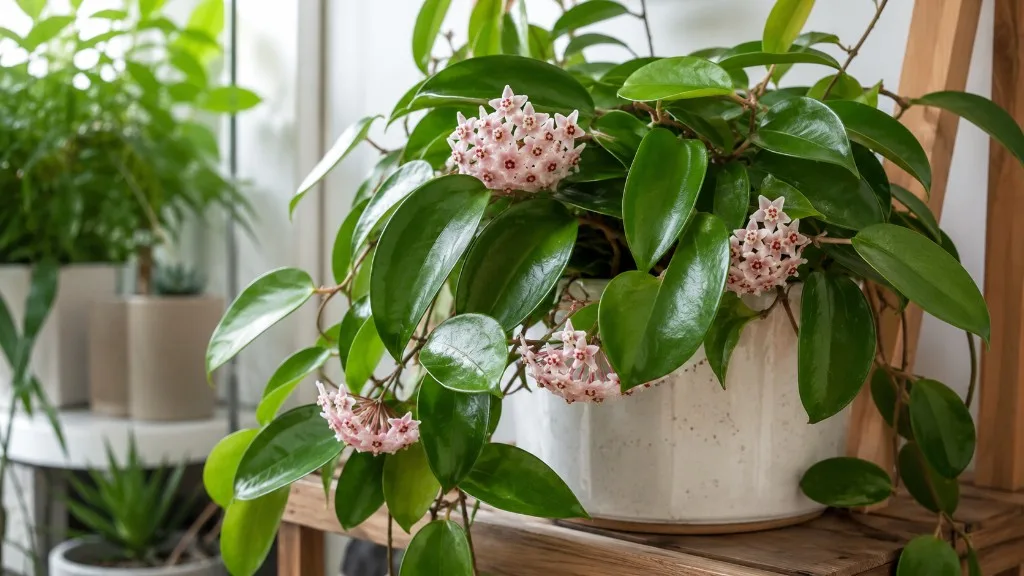
15. Hoya (Hoya carnosa) — Wax Plant / Hoya carnosa is non-toxic. Low-light rating: Tolerates (blooms need brighter light). Trailing vines suit high shelves. Water when leaves feel slightly soft. Hoya carnosa and Hoya overview.
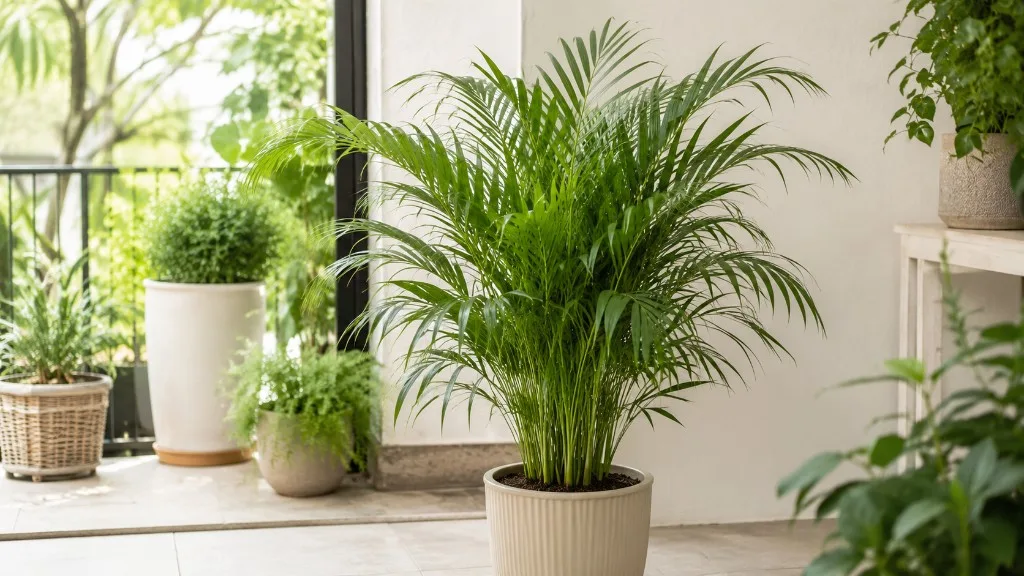
16. Parlor palm (Chamaedorea elegans) — Parlor Palm is non-toxic. Low-light rating: Thrives—classic dim-room palm. Keep evenly moist, not waterlogged. Fronds are cat-safe if nibbled in small amounts. Parlor palm.
17. Baby tears (Soleirolia soleirolii) — ASPCA lists true baby tears as Paddy’s Wig (Soleirolia soleirolii), non-toxic—do not confuse with ASPCA’s separate “Baby’s Tears” entry for polka dot plant (Hypoestes). Low-light rating: Thrives in moist shade. Spreads as a mat; protect from heavy paw traffic.
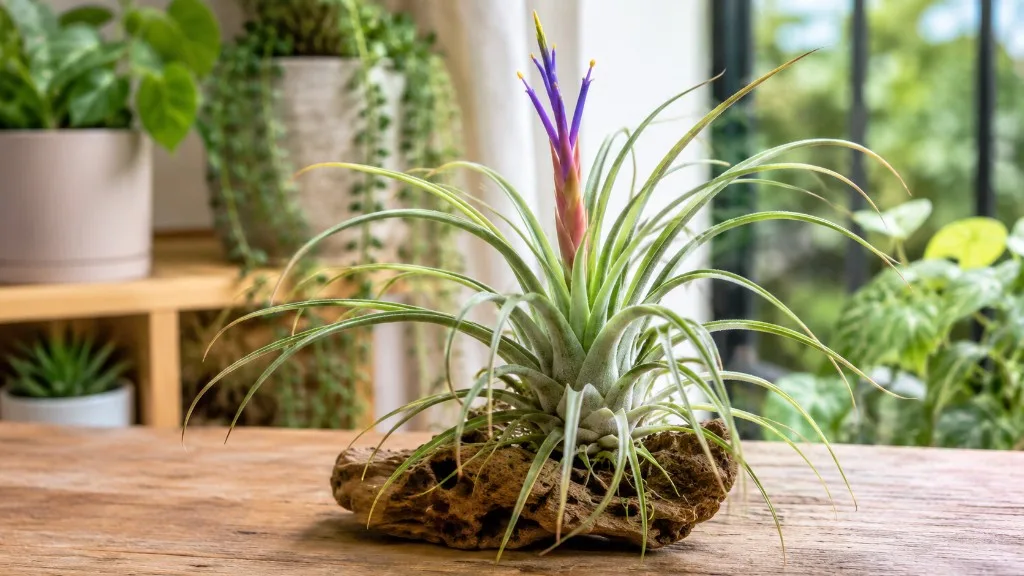
18. Air plants (Tillandsia spp.) — LeafyPixels verifies Tillandsia as non-toxic. Low-light rating: Tolerates medium indirect; deep shade causes slow decline. Soak or mist on a schedule; no soil. Tillandsia care.
Trailing, Blooming, and Statement Plants (Plants 19–25)
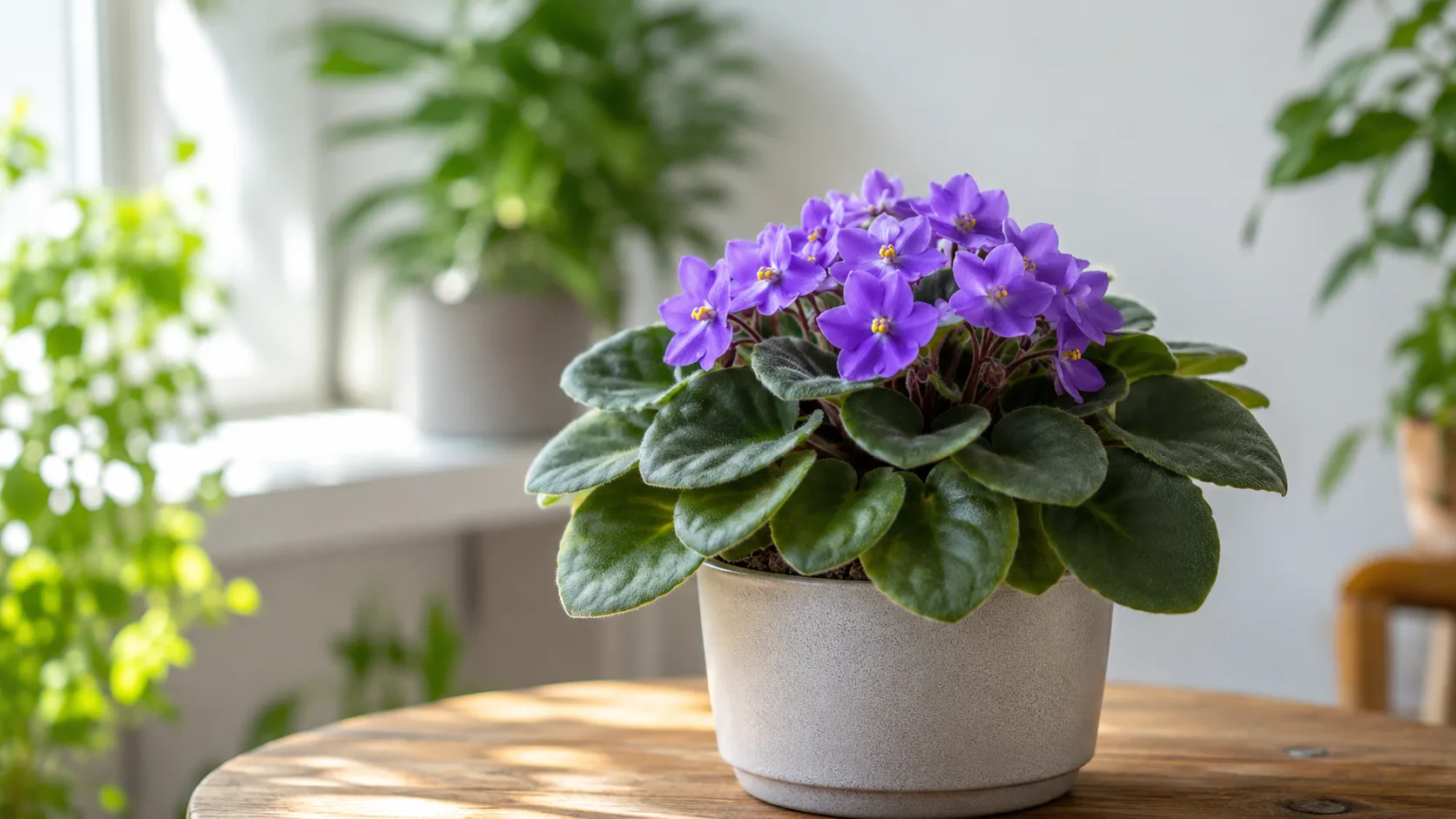
19. African violet (Saintpaulia spp.) — African Violet is non-toxic. Low-light rating: Tolerates bright indirect or fluorescent office light. Avoid wetting fuzzy leaves; warm stable roots bloom best. African violet.
20. Staghorn fern (Platycerium bifurcatum) — Common Staghorn Fern is non-toxic. Low-light rating: Tolerates bright indirect; wall mounts keep fronds above cats. High humidity essential. Staghorn fern.
21. Gloxinia (Sinningia speciosa) — Gloxinia is non-toxic. Low-light rating: Thrives in bright indirect to medium shade; scorches in direct sun. Keep soil moist during growth; plant dies back after bloom—normal cycle.
22. Bromeliads (Neoregelia, Guzmania, Vriesea) — ASPCA lists Blushing Bromeliad / Neoregelia as non-toxic. Low-light rating: Tolerates filtered light; color fades in deep shade. Fill the central cup with water, not the dense root zone. Epiphytic types need sharp drainage.
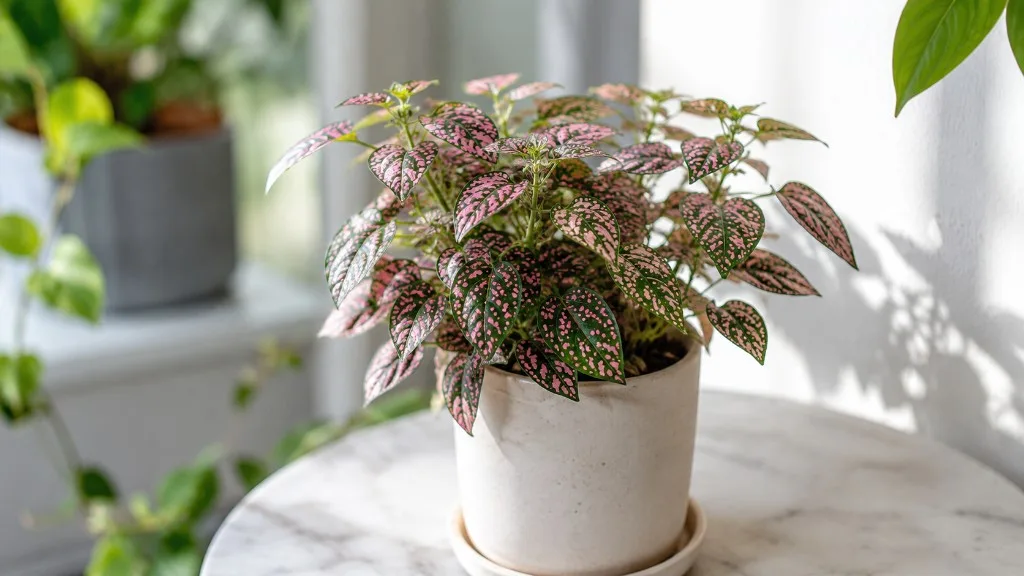
23. Polka dot plant (Hypoestes phyllostachya) — Listed non-toxic under Freckle Face / Polka Dot Plant. Low-light rating: Tolerates partial shade; too much sun bleaches pink spots. Pinch tips to prevent legginess. Polka dot plant.
24. Strawberry begonia (Saxifraga stolonifera) — Not a true begonia (Begonia spp. are toxic to cats). ASPCA non-toxic listings include related saxifrages; treat as safe with standard non-toxic caveats. Low-light rating: Thrives in shade; runners trail from hanging pots. Keep soil lightly moist.
25. Swedish ivy (Plectranthus australis) — Swedish Ivy is non-toxic. Low-light rating: Tolerates medium to low indirect light. Trailing habit suits hangers; some cultivars have a scent cats avoid. Swedish ivy.
Watering Low-Light Plants With Cats in the Room
Dim light slows evaporation from soil and leaves alike. The most common killer on this list is not shade—it is watering on a calendar while the root zone stays cold and wet. Before every watering, check the top inch of mix with your finger. Saucers left full invite fungus gnats, which cats sometimes hunt, knocking pots over in the process. Empty drainage trays after each soak.
Use heavy pots for floor specimens cats bat off sills. Cache pots without drainage look tidy but hide rot—always keep an inner nursery pot with holes you can lift out to check moisture.
Low-Light Reality Check: Tolerates vs Thrives
No common houseplant lives forever in zero light. Species marked Thrives—cast iron plant, parlor palm, baby tears, gloxinia in season—handle 50–100 foot-candles without stretching noticeably. Tolerates plants survive but grow slower, produce fewer blooms or pups, or develop leggy stems until you add a grow lamp or move them within a few feet of a window. If a plant loses variegation, produces tiny new leaves, or leans sharply toward the glass, it is asking for more light—not more fertilizer.
In winter, daylight shrinks; reduce watering frequency across the board because photosynthesis slows in dim rooms. Penn State Extension’s low-light experience matches what indoor growers see: plants with darker green leaves often adapt better than heavily variegated ones when light drops. (Penn State Extension)
Placement Tips When Cats Share the Room
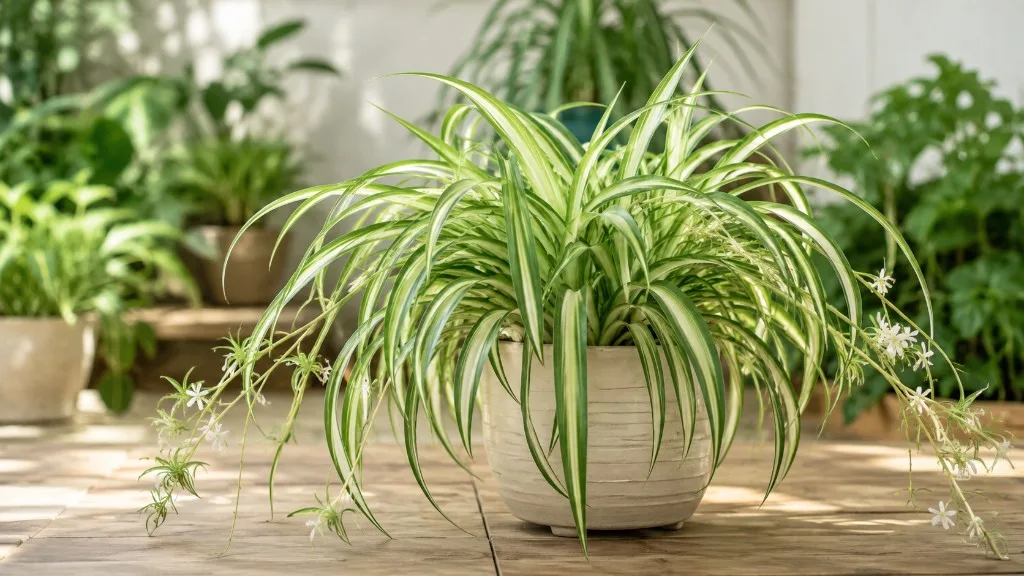
Hang trailing species—spider plant, hoya, Swedish ivy, burro’s tail—so vines sit above jump height. Use heavy ceramic pots for floor plants cats like to shoulder-check. Cover soil with mesh or large stones if your cat digs. Grow cat grass in a dedicated pot to redirect chewing. Non-toxic status helps when a leaf gets swallowed; it does not replace supervision. Call ASPCA Animal Poison Control at (888) 426-4435 if you suspect the wrong plant was eaten or symptoms persist.
Room zoning works better than hoping a cat ignores plants. Keep bedrooms or home-office shelves for humidity lovers like nerve plant and African violet; use the living room floor only for sturdy cast iron or parlor palm in weighted pots. Window ledges without screens are risky—cats push plants off while bird-watching. A wall-mounted staghorn or high hanger exploits vertical space cats reach only when motivated.
If your cat eats any plant daily despite deterrents, treat it as a behavior and health question, not a species swap. Persistent pica warrants a veterinary exam. Rotating enrichment—puzzle feeders, vertical cat trees, window perches—often reduces plant vandalism more than bitter sprays alone.
Grow-light baseline: A 15–25 watt full-spectrum LED bulb on an adjustable gooseneck, positioned 12–18 inches from foliage for 8–10 hours daily, typically raises a north-corner spot from “survive” to “grow.” You do not need commercial greenhouse hardware—consistent supplemental light beats moving a suffering calathea every week.
Seasonal shift: Winter shortens photoperiod even when foot-candles look similar to summer; plants marked Tolerates may enter a near-dormant phase. Hold fertilizer until spring unless new leaves actively unfurl, and extend the dry window between waterings by several days.
Toxic Look-Alikes to Skip
| You might want | Toxic swap to avoid | Why |
|---|---|---|
| Low-light trailing vine | Pothos, philodendron | Calcium oxalates—oral pain, vomiting |
| Large upright “easy” plant | Snake plant, ZZ plant, dracaena | ASPCA toxic; common in dim rooms |
| Peaceful white blooms | Peace lily, calla lily | Severe oral irritation; not a true lily but dangerous |
| Colorful patterned leaves | Dieffenbachia, aglaonema | Toxic sap and crystals |
| “Begonia” look | True Begonia spp. | Toxic; strawberry begonia (Saxifraga) is different |
| Palm vibe | Sago palm | Potentially fatal liver toxin |
Full danger list: toxic plants for cats.
Conclusion
The best cat-safe low-light plant is the one that matches your actual foot-candles, watering habits, and your cat’s personality—not the prettiest photo online. Start with cast iron plant or parlor palm if the room is genuinely dim; add prayer plants, ferns, or peperomias once humidity and watering are stable. Verify every new purchase against the ASPCA database before it enters a cat-accessible room, hang anything trailing, and add a grow light when leaves tell you they are stretching. With those guardrails, all 25 plants above can share a home with your cat without trading safety for shade.