Are Orchids Toxic to Dogs? A Practical Safety Guide
Are orchids toxic to dogs? The ASPCA lists moth orchids as non-toxic, but orchid species, swallowed potting material, and plant treatments still need checking.
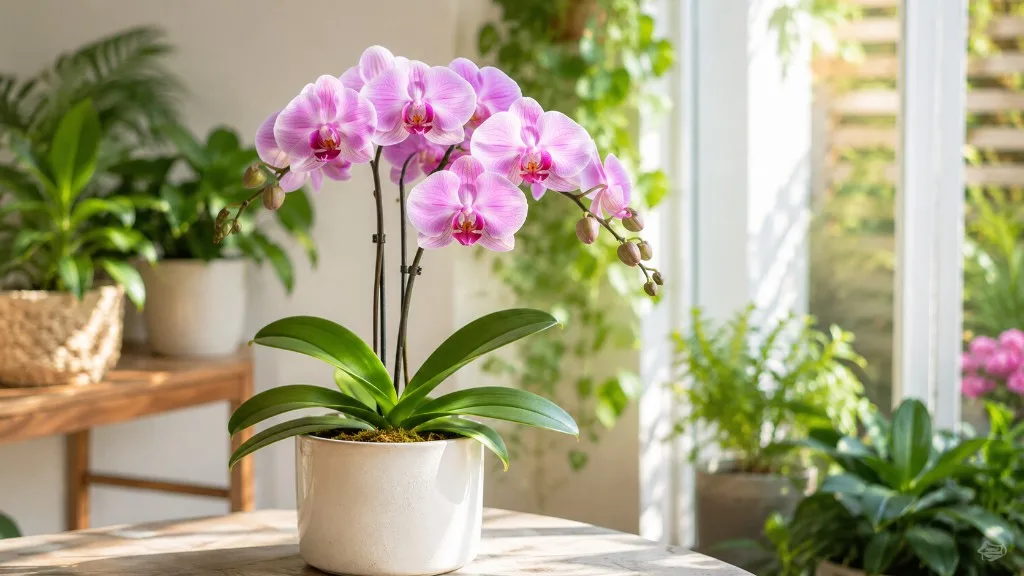
The familiar moth orchid, Phalaenopsis, is listed as non-toxic to dogs by the ASPCA. That is reassuring if your dog sampled a leaf or flower from a plant you can confidently identify as a moth orchid, but it is not a guarantee about every orchid species, every amount, or anything else your dog may have swallowed with it.
If your dog has already chewed a plant, move the dog away from it and check the plant tag before assuming what it was. A veterinarian or animal poison-control specialist can assess the specific exposure, especially if the orchid is unidentified, a fertilizer or pesticide may be involved, the dog ate potting material, or symptoms have appeared.
The short answer: moth orchids are listed as non-toxic
The ASPCA lists Phalaenopsis species—commonly called moth orchids—as non-toxic to dogs, cats, and horses. Moth orchids are among the familiar potted orchids sold in grocery stores, garden centers, and florists, so this entry often answers the question people mean when they ask whether a household orchid is poisonous to a dog. Its scope is the named plant in the entry, not the entire orchid family.
For a confirmed moth orchid, the plant itself is not expected to cause systemic poisoning based on that listing. Still, “non-toxic” does not mean edible or risk-free: a dog can react to eating plant material, may gulp more than a nibble, or may pull down the pot and chew materials that have a different risk profile. The cautious answer is therefore reassuring about the identified plant while still taking the whole incident seriously.
If your dog only mouthed a small piece of a known moth orchid and seems normal, there is no reason to assume a poisoning emergency from the plant listing alone. If you are uncertain about the plant, quantity, treatment, or your dog’s condition, contact a veterinarian for advice tailored to the exposure rather than using an online label as a diagnosis.
What the ASPCA listing does—and does not—cover
An authoritative plant database is useful because it identifies a plant by its scientific name and gives a concise toxicity classification. The ASPCA entry names Phalaenopsis sp. and calls it non-toxic to dogs, which is stronger evidence than an unverified seller tag that says only “orchid” or a social post saying all orchids are safe.
The listing is not a dose chart. It does not tell an owner that a particular quantity is harmless for every dog, explain what could happen if a plant was sprayed, or classify every genus and hybrid in Orchidaceae. A database entry should narrow the question, not replace a veterinarian’s judgment when the real exposure includes multiple unknowns.
There is another important distinction: not listed as toxic and safe to eat are not interchangeable claims. An orchid can be a low concern for plant poisoning and still be a poor thing for a dog to chew, particularly if the dog is swallowing fibrous leaves, roots, bark, moss, or something applied to the plant.
The word “orchid” covers a large, varied plant family, with many genera and cultivated hybrids. A broad horticultural overview of orchids shows how different their forms and growing habits can be; that diversity is exactly why a safety result for one named genus should not be stretched into a blanket statement about every plant sold under the same common name.
Identify the orchid before relying on a safety answer
Start with the plant tag, receipt, or nursery listing and look for Phalaenopsis. Moth orchids usually have broad, fleshy leaves and arching stems of rounded blooms that can resemble butterflies or moths; the flowers may be white, pink, purple, yellow, spotted, or patterned. Appearance can help you ask the right question, but a tag with a botanical name is more useful than color alone.
If the label has fallen off, take clear photos of the entire plant, its leaves, blooms, roots, and pot, then ask the seller or a horticultural professional to identify it. Keep the tag with the pot when you bring home a new orchid, and take a quick photo of it; in an exposure call, that saves you from trying to reconstruct a plant name while worried about your dog.
Be cautious with novelty plants, mixed arrangements, and orchids sold under a broad common name. A blue flower may be dyed, a bouquet may contain more than one plant, and a plant tag might identify a hybrid name without making its parentage obvious. Include those details when you call a veterinary clinic or poison service, since the treatment history can matter as much as the visible flower.
What “non-toxic” means, and what it does not mean
In a plant database, “non-toxic” describes the classification of the identified plant; it does not approve the plant as food or promise that no animal will ever feel unwell after eating it. Dogs vary in size, health, and sensitivity, and the amount matters. A small taste from a known, untreated moth orchid is a different exposure from swallowing several leaves, chewing a different species, or eating plant material along with fertilizer granules.
The database also does not separate every bite into its own prediction. It cannot tell from the label whether your dog swallowed a petal, a piece of a thick leaf, root, potting bark, moss, or a plastic plant tag. Treat the plant name as one part of the picture and report the whole event, including anything missing from the pot.
Even a plant that is not classified as poisonous can bother the stomach when a dog eats it. That does not prove a toxic reaction, but symptoms such as vomiting or diarrhea should not automatically be dismissed as “just the orchid,” either. If signs develop or persist, call your veterinarian and let them decide whether the plant, quantity, or another cause needs attention.
What can still go wrong after an orchid chew
Plant material can upset the stomach
Most dogs do not need orchid leaves as part of a diet, and a mouthful of greenery can irritate an individual dog’s digestive tract even when the plant is not listed as toxic. The amount actually swallowed may be hard to estimate: a dog can shred a leaf, spit out pieces, and leave only part of the evidence near the pot. Do not assume that a chewed plant means your dog swallowed everything—or nothing.
The dog’s size and health also matter when a veterinarian evaluates an exposure. A small dog and a large dog may encounter the same amount differently, and existing illness or medication may change what a clinic wants you to do. For that reason, the safest response to uncertainty is a phone call with the dog’s approximate weight and the details you can verify, not a homemade calculation of a “safe” bite size.
Potting media and products are separate concerns
Orchids are often grown in loose bark, moss, or other airy media rather than ordinary potting soil. If your dog pulled the plant over, think beyond the leaves: bark chunks, moss, clips, stakes, plastic labels, or broken pot pieces may have gone into the mouth. A non-toxic plant classification does not answer what to do about a swallowed object or sharp fragment; tell the veterinary professional exactly what may be missing.
Plant-care products create a separate question as well. Fertilizers, insecticides, fungicides, dyes, and other treatments differ by ingredient and amount; the University of Missouri Veterinary Health Center includes pesticides among substances that can poison pets. Do not assume an “organic,” “natural,” or “plant-safe” description means a product is safe for a dog to lick or eat.
If you know the plant was recently treated or cannot tell whether fertilizer is mixed into its pot, find the package or ask the seller what was applied. Keep the label or photograph its ingredients before calling, and do not try to rinse, repot, or treat the dog based on a guess; those actions can obscure what was involved without resolving the exposure.
Are all orchids equally safe for dogs?
No single entry should be read as a certification for every orchid. The ASPCA’s relevant page specifically names Phalaenopsis; other familiar genera such as Dendrobium, Cattleya, Cymbidium, and Oncidium may be sold under the simple label “orchid,” but a name’s popularity or a claim on a retail page is not the same as an entry that has been individually verified by a veterinary poison-control source.
That does not mean an unlisted orchid is automatically poisonous. It means you should not present a level of certainty the available listing does not give. If a dog has eaten an orchid with no botanical label, photograph it and ask a veterinarian or animal poison-control service to assess the exact plant, especially if the amount was substantial or the dog is unwell.
This distinction is useful before bringing home a rare or collector orchid, too. Ask the grower for its botanical name and keep that information attached to the pot; if the plant is a hybrid, save the full cultivar and parentage details if available. Horticultural overviews and specialist growers are useful for understanding plant variety and culture, but toxicity questions still belong with a veterinary source.
Lady’s-slipper orchids: a nuance, not a dog diagnosis
Lady’s-slipper orchids are a good example of why a human plant warning should not be casually converted into a canine diagnosis. The NC State Extension Plant Toolbox identifies Cypripedium as poisonous to humans and describes its human poison severity as medium, with skin irritation that is minor or lasts only a short time. That is a human contact classification; the entry does not give a dog-specific toxicity rating or prove what happens if a dog eats the plant.
If you recognize the plant as a Cypripedium and your dog chewed or brushed against it, give the exact name to your veterinarian or poison service and ask for guidance. Avoid assuming either that human skin irritation makes it dangerous to dogs or that the moth-orchid listing means this different genus has been cleared. When the evidence answers one species and one type of exposure, keeping those boundaries is more helpful than overgeneralizing.
What to do if your dog eats an orchid
First, end access to the plant and pick up loose pieces so the dog cannot eat more. Then identify what is known: plant name, part eaten, estimated amount, time, dog’s approximate weight, symptoms, and whether the pot or plant had fertilizer, pesticide, dye, or other treatment. Save the plant tag and product labels; a photo of both can be easier to share than a verbal description.
If the plant is a confirmed moth orchid, the dog only mouthed a small piece, and the dog appears normal, the ASPCA listing is reassuring about the plant’s toxicity. If the dog swallowed a lot, the orchid is unidentified, any chemical or potting material may be involved, or anything about the dog seems abnormal, call your veterinarian or an animal poison-control service for specific advice. Owners in the United States can contact ASPCA Animal Poison Control or the Pet Poison Helpline; service terms and fees may apply, so your local veterinarian is also a direct first call.
Do not induce vomiting, give human medicine, or try milk, oil, salt, peroxide, charcoal, or another home treatment unless a veterinary professional instructs you to. Cornell University’s guidance on poisonous-substance first aid for dogs explains that the appropriate response depends on the substance and the animal; inducing vomiting is not always safe. A professional can tell you whether the dog needs a clinic visit or another step after hearing the actual exposure details.
Gather the details a veterinarian needs
Use a simple checklist when you call:
- Plant identity: Read the scientific name from the tag, or send a photo of the entire plant and its flower.
- What was swallowed: Note whether leaves, blooms, roots, bark, moss, pellets, pot pieces, or a plant label may be missing.
- How much and when: Estimate the amount and time, but say plainly when you did not see the dog swallow it.
- Dog’s details: Give approximate weight, age, relevant health problems, medications, and any symptoms you have noticed.
- Products: Have the fertilizer or pesticide container, ingredients, and application timing available if a treatment may be involved.
These details help a veterinarian separate the orchid itself from a chemical, swallowed object, or unrelated illness. If you cannot identify the plant, do not delay the call while trying to solve it online; share the photographs and say that its identity is uncertain.
Signs that deserve prompt veterinary attention
Call a veterinarian promptly if your dog develops repeated vomiting, diarrhea, heavy drooling, unusual weakness, marked lethargy, difficulty swallowing, or behavior that is not normal for them. These signs do not prove an orchid caused a toxic reaction, but they are enough to warrant professional triage after any plant or product ingestion. If you see trouble breathing, choking, collapse, or a seizure, go to an emergency veterinary clinic or call ahead immediately.
Do not wait for a symptom list to match perfectly if the dog may have swallowed an unidentified plant or chemical. Cornell’s veterinary first-aid guidance recommends contacting a veterinarian or emergency clinic and providing the name, ingredient list, amount, time, and dog’s weight when known. When those facts are incomplete, a professional can help decide what information matters next.
How to keep orchids and dogs safely apart
Treat access control as a practical choice, not a verdict that the orchid is poisonous. A moth orchid can be a low-concern plant for toxicity and still be a tempting object, a toppled pot, or a source of bark and fertilizer if your dog likes to investigate planters. Pick the setup for the dog you actually have: size, jumping ability, counter-surfing, play style, and whether the dog is ever unsupervised in the room.
Choose a spot your dog cannot reach or tip
Measure the dog’s real reach rather than assuming that a shelf is high enough. A chair, sofa, cabinet, or window ledge can turn an elevated plant into an easy target for a dog that jumps or climbs; position the orchid away from those launch points and away from the edge. Use a sturdy, stable surface and secure the shelf if needed, because a falling pot can injure a dog even when the plant itself is not toxic.
An orchid also needs a workable growing position. Many commonly grown tropical orchids do best in bright, indirect light, as described in horticultural orchid-care guidance, so the answer does not have to be a dark closet; a well-lit room with a reliable gate or closed door may be better. If you use a plant cabinet or enclosure, make sure it remains ventilated and does not heat up in direct sun.
For a persistent plant chewer or a dog with access while you are away, a separate dog-free room is more dependable than a shelf alone. Orchid growers also recommend barriers or a pet-free area as practical ways to prevent a curious animal from disturbing a pot; Everyday Orchids discusses room separation and out-of-reach placement. Treat that as a management idea, not proof that a particular plant is toxic or that every barrier will fit every home.
Keep the pot stable and the growing medium inaccessible. Clean up fallen petals and leaves, and put fertilizer, pest products, and tools in a closed cabinet rather than beside the plant; follow product labels and keep dogs away during any directed restricted-access period. A heavy decorative cachepot may reduce tipping, but do not make the whole arrangement top-heavy or leave sharp pieces where a dog can reach them if it falls.
Redirect chewing without relying on repellents
If your dog keeps targeting greenery, do not rely on pepper, essential oils, citrus, bitter sprays, or another homemade repellent as the safety barrier. Such methods can irritate a dog, may be licked or swallowed, and do not control access to loose leaves, fertilizer, or broken-pot pieces. A physical barrier, room separation, and clearing the area are easier to check than whether a scent still deters a dog.
You can teach a “leave it” cue as an extra layer, preferably with a qualified trainer if the behavior is persistent. The American Kennel Club’s reward-based “leave it” guide emphasizes teaching the dog to disengage and rewarding that choice; an established cue can help when you are present, but it should not substitute for securing the orchid while you are away.
Offer a legal outlet for chewing and sniffing, such as a suitable chew, food puzzle, or an approved patch of grass, and reward the dog for choosing it. Dogs may investigate a plant out of curiosity, habit, or simple opportunity, so do not diagnose boredom or illness from one incident. If plant chewing becomes frequent, suddenly increases, or appears alongside other behavior or health changes, discuss it with your veterinarian and keep the plant physically inaccessible meanwhile.
Conclusion
The ASPCA lists the familiar moth orchid, Phalaenopsis, as non-toxic to dogs, which is reassuring for an identified plant and a small nibble. That entry does not establish the safety of every orchid species, a large amount of plant material, swallowed potting media, or fertilizer and pesticide residue.
If your dog ate an orchid, stop further access, save the plant tag and any product labels, and call a veterinarian or poison-control service when the plant, amount, treatment, or symptoms are uncertain. Prevent repeat chewing with a stable placement or a dog-free room, keep plant-care products secured, and use training only as a backup to a barrier you can trust.