How to Grow and Care for Autumn Crocus in Your Garden
Learn when to plant Colchicum autumnale, how to give it well-drained soil, and why its spring leaves and toxic corm need careful handling in your garden.
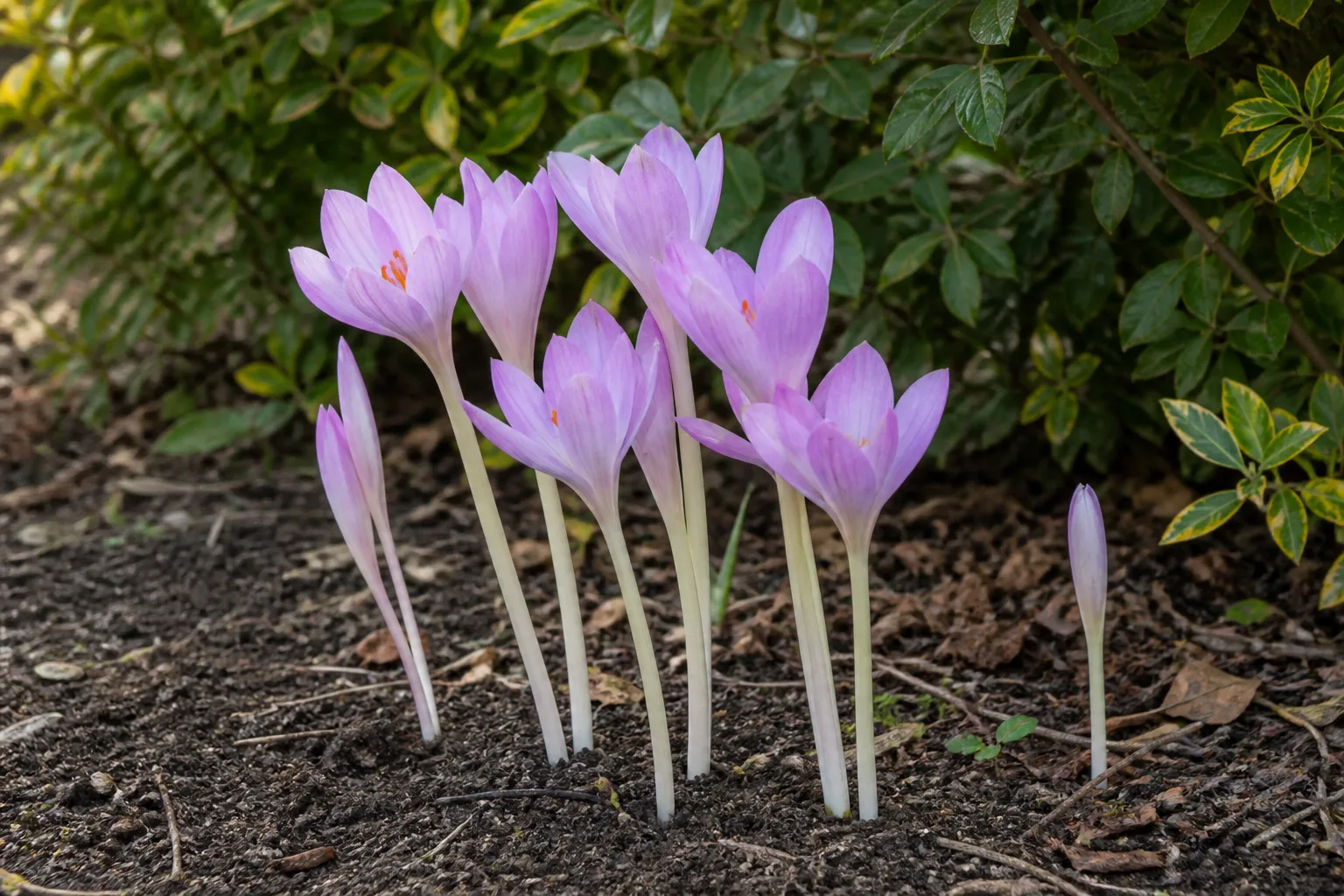
Autumn crocus is a memorable name for an unusual late-season flower, but it can be confusing on a nursery tag. This guide focuses on Colchicum autumnale, a corm-forming perennial that sends up pink, lilac, or white flowers in fall and broad leaves the following spring. It is not a true crocus and is poisonous if eaten, so identify it by its botanical name before planting it where children or pets explore.
The plant’s rhythm is the key to caring for it: a dormant corm is planted in summer, flowers appear without leaves in fall, foliage grows in spring, and the plant rests again after the leaves yellow. Give it sun during the leafy season, soil that drains well, and patience while the corm establishes. The University of Wisconsin Extension profile and NC State Extension plant profile both emphasize the important distinction between this poisonous plant and true crocuses.
Identify the plant before you buy
Read the botanical name on the package or label. Colchicum autumnale is called autumn crocus, meadow saffron, or naked ladies, while several plants in the genus Crocus also flower in fall. The common name alone is not enough to identify which plant you are buying. Ask the nursery to confirm the genus if the label says only “autumn crocus.”
Separate Colchicum from true Crocus
Colchicum and Crocus belong to different plant families and have different structures. Colchicum usually has larger, more crocus-like flowers and produces its broad leaves months later in spring. True crocuses have narrower, grasslike leaves that accompany or follow their flowers, depending on species. The RHS autumn-crocus guide specifically warns that autumn-flowering crocuses are sometimes confused with Colchicum autumnale.
Saffron comes from the red stigmas of the true autumn-flowering saffron crocus, Crocus sativus. Colchicum is not a substitute. The RHS saffron advice expressly distinguishes the saffron crop from highly poisonous colchicums sometimes sold under the misleading common name “meadow saffron.” Never harvest or taste a plant based on its common name.
Understand the flower-first growth cycle
A healthy colchicum corm can send up a cluster of goblet-shaped flowers in early or mid-fall, often when nearby perennials are winding down. The flowers rise directly from the ground on short, pale stems. There are no leaves at that time, which is why the plant is sometimes described as “naked.” That bare look is normal, not a sign of poor health.
After flowering, the plant remains quiet through winter. Its large leaves appear in spring, gather energy, and then yellow as the corm returns to dormancy. The gap between flower and foliage can surprise first-time growers, so mark the planting area or place it near a permanent edging stone. Otherwise, it is easy to dig into the spot during the months when nothing is visible.
Is autumn crocus safe around people and pets?
No. All parts of Colchicum autumnale contain colchicine and are poisonous if ingested; the corm is especially hazardous. NC State Extension lists the plant as toxic, and the Wisconsin Extension profile also notes its risk to people and animals. Do not eat it, use it as a culinary herb, or treat it as a source of saffron. Do not use common-name identification to decide that an unknown corm is safe.
Choose a planting site away from vegetable beds, play areas, pet runs, and places where a corm could be dug up and handled. Keep the original label and tell household members what is growing there. Wear gloves when handling corms if you are sensitive to plant material, wash hands after garden work, and keep loose corms stored securely until planting. Avoid leaving removed corms, spent plant material, or pruning debris where a child or animal could investigate it.
If exposure or ingestion is suspected, contact an appropriate poison-control service or veterinarian promptly and follow their instructions. Do not wait for symptoms or try a home remedy. A professional can advise based on the plant, amount, and person or animal involved. This safety concern is the most important reason to buy colchicum only when its identity is clear and its location is deliberate.
Choose a site with light and drainage
Select a spot that gets several hours of sun, especially in spring when the leaves are growing. Colchicum can flower in light shade, and a deciduous tree can provide useful summer shade while allowing spring sun through before its canopy fills in. In dense shade, spring foliage may be weak and future flowering can suffer. Avoid locations where branches drip for long periods or the soil stays waterlogged.
Drainage matters more than fine adjustments to soil acidity. A humus-rich loam is convenient, but colchicum can adapt to several soil types if excess water drains away. Heavy ground that remains saturated encourages corm rot; very dry, hot soil during active growth can also stress the plant. If the bed puddles after rain, raise it or choose another location instead of trying to compensate with extra fertilizer.
Think about how the area will look in both seasons. Fall flowers can be tucked into a sunny border, meadow edge, or lawn where mowing stops before leaves appear in spring. Spring leaves are broad and can look untidy as they fade, so place them behind later-emerging perennials or among groundcovers that leave room for foliage. Do not put them where regular spring mowing or edging will cut the leaves prematurely.
Plant corms in late summer
Plant dormant corms in mid- to late summer, while the soil is workable and before the expected autumn flowers. Exact calendar timing varies with climate and the supplier’s handling, so follow the package and local extension guidance. Corms can sometimes flower soon after planting because the flower bud is already formed, but flowering the first year is not guaranteed.
Set depth and spacing by the corm
Plant each corm pointed side upward if its orientation is clear, following the label’s depth and spacing. Instructions vary by corm size and cultivar; a general range is several inches deep, often about three to six inches, and roughly six inches apart. Use the deeper end for larger corms or sites with greater temperature swings, but do not assume every small corm needs the same depth. Planting too shallow can expose it to drying and temperature extremes; overly deep planting may delay emergence.
Loosen the soil below and around the planting hole so water can drain. Set the corm in place, cover it with native soil, and water once to settle the soil if conditions are dry. Do not add a thick layer of fresh manure or concentrated fertilizer in the hole. A compost top-dressing can improve a poor bed over time, but good drainage and correct placement matter more than a nutrient boost.
For a natural-looking drift, plant small groups rather than a single straight line. Keep each group’s position in your garden record. Do not plant in a spot where you expect to later dig up annuals or divide perennials; the corm can be difficult to locate during summer dormancy. A simple label on the back of the bed protects it from accidental disturbance.
Water through active growth, then ease off
After summer planting, give a small amount of water if the soil is dry so roots can begin developing. Once established and dormant, avoid keeping the bed wet. Resume moderate moisture when spring foliage is actively growing and when fall flowers emerge if the weather is unusually dry. The soil should be moist enough to support active growth but never persistently soggy.
Use rainfall and a soil check instead of a rigid weekly schedule. A mulch layer can slow evaporation, but keep it light around the emerging flowers and remove dense material that traps moisture against the soil surface. If leaves turn yellow at the end of spring, that usually signals the normal move into dormancy; it is not a cue to water more or apply fertilizer.
Choose varieties for color and form
The species often has pinkish-purple flowers, while named selections expand the palette and flower form. The Wisconsin Extension profile describes cultivars such as ‘Innocence,’ with white flowers, and ‘Waterlily,’ with fuller double pink flowers. Availability and performance vary by region, so confirm the botanical name and mature size on the seller’s label. A named cultivar may not perform identically in every climate or soil.
Use colchicum where low, late-season color is visible from a path or window. The flowers are short enough to be overshadowed by taller plants, so avoid placing them behind dense foliage. A neighboring plant may support flowers that lean, but allow enough space to see the blooms and protect the spring leaves. Mixed plantings can extend color, but avoid crowding that blocks airflow in a damp climate.
Grow colchicum in a container
A container can display fall flowers on a patio, but choose a deep pot with several drainage holes. Use a free-draining potting mix, plant corms at the depth recommended for their size, and water after planting if the mix is dry. Avoid a decorative cachepot that leaves water standing around the growing pot. Containers dry and freeze more quickly than garden soil, so site and overwintering needs depend on your climate.
Check the pot periodically during active growth, but do not keep it wet during dormancy. In cold regions, a container may need protection from repeated freeze-thaw cycles; sinking the pot into the ground or moving it to a sheltered, cool location can reduce temperature swings. Never bring a dormant pot into a warm living room to force growth without advice for that cultivar. Repot or divide only after the foliage has finished and the corms are dormant.
Let spring foliage finish naturally
Do not cut the leaves just because they look coarse or yellowing. The foliage makes and stores energy that supports the next flowering cycle. Leave it in place until it has turned yellow and collapsed naturally, then remove it gently. If the leaves are mixed into a lawn, delay mowing or mark the patch so the foliage can complete its work.
Avoid tying or braiding leaves to hide them. That reduces the leaf surface available to the plant and can weaken future bloom. Design around the foliage instead: use nearby perennials with later emergence, plant colchicum at the edge of a border, or select a spot where spring leaves can be visible for a few weeks without interfering with mowing.
Divide crowded corms carefully
A mature clump can produce offsets that slowly enlarge the planting. If flowers decline as the group becomes dense, lift and divide it only during summer dormancy, after spring leaves have yellowed. Carefully loosen soil around the clump, lift it with a hand fork, and separate offsets without cutting into the corm. Replant sound corms promptly at the correct depth and spacing.
Do not divide every year. Repeated disturbance interrupts the plant’s cycle, while a crowded clump can often bloom for a long time without attention. Let the plant’s performance guide the decision. Discard soft or damaged corms safely and clean tools after handling. Because colchicum is toxic, keep the removed material contained and dispose of it in a way that prevents access by people or animals.
Seed propagation is slower and less predictable than division. Seeds need suitable seasonal conditions, and seedlings may take several years to flower. For a home garden, division is usually the practical choice when you want more plants that match the parent. Buy named cultivars if you want a particular color or double-flowered form.
Troubleshoot flowers and foliage
If no flowers appear, first check the planting date, soil drainage, light during spring, and whether the corm has had enough seasons to establish. A corm planted recently may need time, and seed-grown plants take longer than divisions. Deep shade, waterlogging, summer disturbance, or premature leaf cutting can all reduce flowering. Change one condition at a time so you can tell what helped.
If flowers lean, give the group more light or place it where neighboring plants offer loose support. If spring foliage is damaged, look for frost, slugs, or physical injury rather than assuming it is disease. Persistent wet soil, mushy corms, and premature collapse are reasons to improve drainage and seek regionally specific advice. Avoid applying a broad pesticide or fungicide unless a diagnosis and product label support it.
Conclusion
Colchicum autumnale brings a distinctive flush of fall flowers, then asks for sun and patience while its spring leaves recharge the corm. Buy it by botanical name, plant it in well-drained soil in late summer, and leave foliage until it yellows. Treat every part as poisonous and choose a location that keeps it separate from food crops, play spaces, and curious pets.