10 Best Large Cactus Plants for Bright Indoor Rooms
Compare 10 large cactus plants for bright rooms, with notes on shape, realistic indoor growth, light, watering, spines, and which giants are poor fits.
A large cactus can make a room feel sculptural without asking for the floor space of a leafy tree. The catch is that “large cactus” covers two very different things: a substantial potted specimen that can live by a sunny window, and a desert giant whose mature form is measured in stories. The first can be a rewarding houseplant; the second may be a poor match for an ordinary home even if a nursery sells a small juvenile.
The best choice is the plant whose mature shape fits your room and whose light needs match your brightest window. Columnar cacti use vertical space, prickly pears spread sideways, and barrel cacti stay lower while becoming wide and heavy. A bright, dry room gives you many options; a dim room is not a good place to force a desert cactus to grow tall.
A quick shortlist: choose by shape, light, and available space
| Plant | Best reason to choose it | Main trade-off |
|---|---|---|
| Blue myrtle | Upright, branching silhouette | Needs a genuinely bright position |
| Mexican fence post | Narrow, architectural columns | Tall plants need a stable, heavy pot |
| Blue columnar | Blue-green stems add color without flowers | Indoor growth is slower in weak light |
| Prickly pear | Broad pads create a strong horizontal shape | Glochids can detach and cling to skin or fabric |
| Golden barrel | Compact, sculptural form with golden spines | Slow growth; round, heavy specimen is awkward to move |
| Mexican lime | Ribbed barrel form and red spines | Needs high light and careful handling |
| Organ pipe | Multi-stem silhouette | Better for a conservatory or serious cactus collection |
| Mexican giant cardon | Dramatic collector’s specimen | Enormous natural scale and very slow growth |
| Saguaro | Iconic tree-like form | Extremely slow, space-hungry, and protected in Arizona |
| Candelabra tree | Tall branching profile with fewer rigid spines | A Euphorbia, not a cactus; sap and pet-access caution |
The first six are the more realistic starting points for a bright home, though none should be purchased without checking the plant’s actual size, pot weight, and light history. Organ pipe, cardon, and saguaro are included because people search for them as large indoor cacti, but their natural scale and slow growth make them collector choices rather than easy décor. The candelabra tree fills a similar design role, but it is a different plant family and needs different safety assumptions.
Blue myrtle cactus (Myrtillocactus geometrizans)
Blue myrtle is a strong choice if you want a cactus that reads as a small tree rather than a single column. Its glaucous blue-green stems branch as the plant matures, creating a sculptural crown. The blue color can be an especially useful contrast in a room full of green foliage, and its upright habit is easier to place than a plant that sprawls across a table.
Give it your brightest available window and a potting mix that drains quickly. Buy a well-rooted nursery plant if you want an immediate floor-plant effect; starting from a small cutting and expecting a fast, room-filling tree is a long project. Leave space around it for the arms to develop, and avoid putting it where people brush past the spines.
Mexican fence post cactus (Pachycereus marginatus)
The Mexican fence post is useful where you want height without the spreading outline of a branching cactus. Its blue-green, ribbed stems usually grow upright, so it can frame a window or sit in a bright corner while taking less side-to-side space than a clumping species. A multi-stemmed nursery specimen makes more visual impact than one thin young column.
The narrow shape can hide a stability problem: a tall stem in a small lightweight pot may topple if bumped or if the root ball shifts. Choose a substantial pot with a drainage hole and a base broad enough for the plant, then keep it away from doorways and high-traffic routes. Give it a sun-rich location; bright shade may keep it alive but often produces weaker, less compact growth.
Blue columnar cactus (Pilosocereus pachycladus)
This blue columnar cactus has a more pronounced cool-blue cast and yellowish spines, which makes it one of the most distinctive choices for a minimalist interior. It can grow into a tall, branching architectural plant, but the color and compact shape depend on good conditions. A plant that is stretched toward a window or kept in a dim corner will not look like the dense, balanced specimen you picked out at the nursery.
Treat it as a bright-light desert cactus, not as a low-light foliage plant. When shopping, look for firm stems, a balanced base, and natural blue coloration rather than soft patches or a plant that has been painted. Ask how the seller acclimated it to sun; a greenhouse-grown plant can scorch if moved straight into strong afternoon rays.
Prickly pear (Opuntia species)
Prickly pear gives a room a very different silhouette: flat oval pads form a branching, fan-like plant that grows more in width than in height. Choose it when you have a bright alcove or a broad console where the pads can spread without touching people. The species and cultivars vary widely, so read the label rather than assuming every prickly pear has the same adult size or cold tolerance.
Its tiny glochids are the main drawback. These hair-fine bristles can detach from the pads and lodge in skin, clothing, or upholstery; they are easy to miss when moving the plant. Clemson Cooperative Extension cautions that prickly pear bristles are difficult to see and handle, so place the pot where it will not be brushed and use stout gloves and a barrier when you need to reposition it. This is not the best pick beside a child’s play area or a pet’s favorite route.
Golden barrel cactus (Echinocactus grusonii)
Golden barrel is the classic round cactus: a green globe with regular ribs and bright yellow spines. It is not the tallest plant on this list, but a mature, broad specimen can still look substantial on a stable stand or low table. Clemson Extension identifies it as a good beginner cactus, though a large one is less beginner-friendly to move than a small nursery pot.
This species grows slowly, so buy the size you want rather than planning on a small one becoming a dramatic floor plant soon. It needs high light and a mix that does not remain wet around the roots. The heavy spines make it a “look, don’t lean” plant: leave room around the pot and plan how you would carry it before you buy an extra-large specimen.
Mexican lime cactus (Ferocactus pilosus)
Mexican lime cactus has a more dramatic barrel shape than golden barrel, with strong ribs and vivid red spines. It suits someone who wants a spiky centerpiece and has a sunny, protected spot where the plant can remain undisturbed. The interest comes from the contrast between its body and spines, not from quick height or frequent flowers indoors.
Think of it as a long-term specimen. Young plants may look modest, while a large established one takes up real space and is cumbersome to rotate or repot. A bright window, drainage, and a deliberately chosen pot matter more than frequent feeding; do not size the pot far beyond the root ball just to make a small cactus look large.
Organ pipe cactus (Stenocereus thurberi)
Several upright stems rising from a common base give organ pipe cactus its name and its instantly recognizable outline. In a warm greenhouse or very bright sunroom, a cultivated specimen can be an impressive collection plant. In a typical living room, however, its eventual size and its need for strong desert light are hard to accommodate together.
Choose organ pipe if you already have a very bright, warm position and are comfortable keeping a slow-growing plant for years. Otherwise, a blue myrtle or Mexican fence post usually gives a similar upright accent in a more manageable package. Do not buy a large specimen because of its outdoor potential alone; indoor height depends on the individual plant, light, pot, and growing season.
Mexican giant cardon (Pachycereus pringlei)
The giant cardon is a spectacular columnar cactus from the Baja California region, but its natural scale is better suited to a botanical collection or arid landscape than to a living room. A young nursery specimen can be potted for a time, yet that does not make it a practical “large indoor plant.” It is slow-growing, will need exceptionally bright conditions, and eventually asks for more room than most homes can provide.
If you choose one, buy a nursery-propagated plant with clear provenance and expect to manage it as a collector’s specimen. Avoid any seller who cannot identify the plant or explain where it was propagated. For a home statement with a comparable columnar feel, a smaller blue myrtle or fence post gives you a far more realistic path.
Saguaro (Carnegiea gigantea)
A saguaro is iconic, but the plant’s famous arms are not a feature you will quickly grow in a pot. The National Park Service reports that saguaros in Saguaro National Park grow only about one to one and a half inches during their first eight years; branches commonly begin appearing around 50 to 70 years of age. Mature plants can reach about 50 feet, so a young indoor saguaro remains a small, slow-growing column for a very long time.
Saguaro is also not a casual wild-collection plant. The National Park Service states that Arizona law protects saguaros, and theft or destruction can carry serious penalties. Buy only a clearly identified, legally nursery-grown specimen, and never remove a cactus from a park or the wild. For most people, the honest recommendation is to enjoy saguaros in their desert habitat and select a more manageable cultivated cactus for the house.
Candelabra tree (Euphorbia ingens), a cactus look-alike
The candelabra tree earns a place for its tall, branching, cactus-like form, but it is not a cactus. It belongs to the genus Euphorbia, the spurge family. A true cactus has areoles—small specialized points from which spines, branches, or flowers emerge—while a Euphorbia does not. The RHS explains this distinction in its guidance on cacti and succulents.
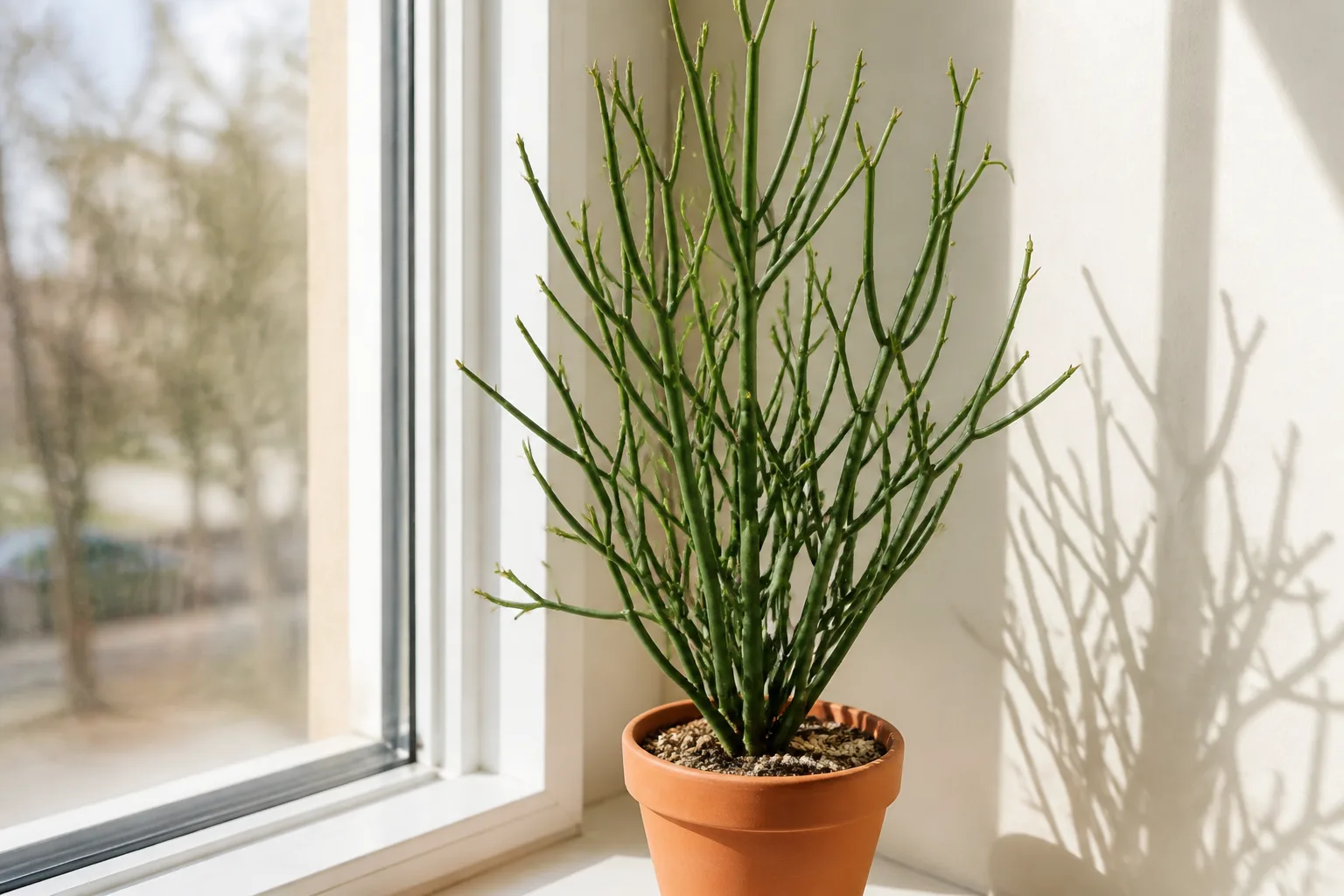
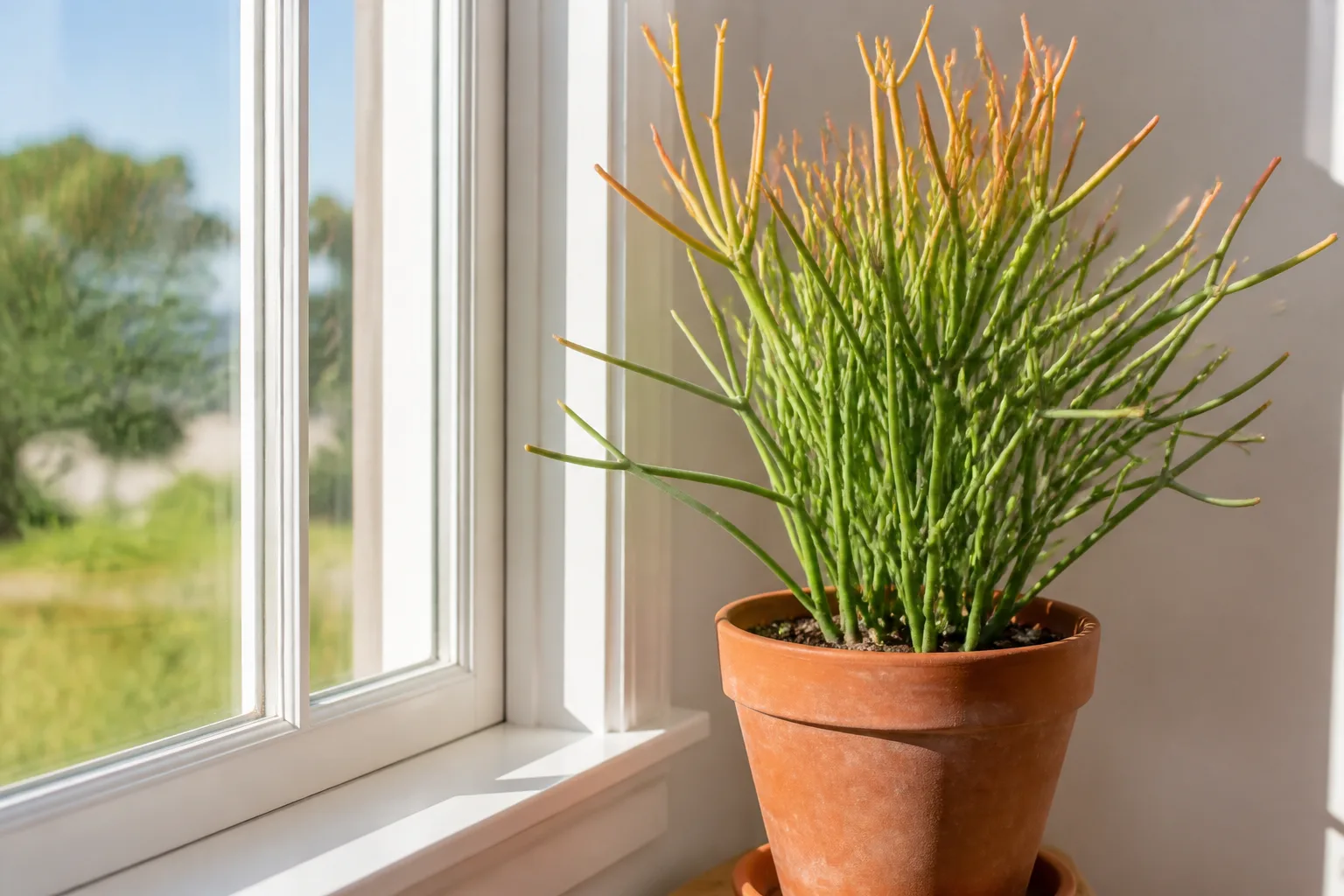
A related plant, pencil cactus (Euphorbia tirucalli), shows the branching architecture shared by some Euphorbias, though its stems differ from the thicker arms of E. ingens. Keep the candelabra tree in bright light and let its mix dry between thorough waterings, but do not transfer the care of a true desert cactus without checking the plant’s own needs. Euphorbia sap deserves caution; wear gloves and eye protection if a stem is cut, and wash off any sap promptly. The ASPCA warns that the related pencil cactus can cause vomiting, drooling, and eye irritation in pets. Because that listing is for a different species, ask a veterinarian or poison-control service about the plant you own rather than assuming every Euphorbia has identical effects.
What makes a cactus a good indoor giant?
Use “large” to describe the specimen you can fit, not the size the species can reach in a desert. An established nursery plant may already have the height, branching, or width you want. A young cactus can remain small for years, especially if it grows slowly or indoor light is weaker than the intense light it would receive outdoors.
Match the plant’s shape to your room before you choose a species. Columnar cacti need clearance above the crown and a stable footprint; broad prickly pears need lateral space; globular barrels are shorter but can become heavy and awkward to move. Measure the display spot, including the pot, and leave a buffer so nobody brushes the spines while walking past.
Then inspect the exact plant. Look for firm, evenly colored stems, a base that is not soft or dark, and a root ball that is not sitting in sour, wet soil. Ask whether the cactus was grown indoors, in a greenhouse, or outside; a plant acclimated to filtered greenhouse light may need a gradual transition before it can handle direct sun at home. Avoid buying a plant based on a species label alone when the seller cannot identify the actual specimen.
Light is the limiting factor for desert cacti indoors
Most arid-climate cacti need several hours of strong direct light to hold their shape and grow well. Clemson Cooperative Extension recommends south- or west-facing windows in the Northern Hemisphere, where direct sunlight reaches the plant for hours; in the Southern Hemisphere, a north-facing window often gives a similar exposure. A window’s direction is only a starting point—nearby buildings, trees, tinted glass, season, and distance from the pane all change the light a cactus receives. House Beautiful’s cactus-care feature likewise recommends a sunny growing spot and a cooler, bright winter position; a cactus that merely survives in a dim room may still stretch instead of keeping a compact shape.
If the plant leans toward the glass, becomes unusually narrow, or produces long pale growth, it is telling you the current spot is too dim. Move it closer to the brightest window or add a grow light rather than trying to correct weak growth with extra fertilizer. Rotate the pot a small amount every week or two if one side leans toward the light, but do not spin it constantly while it is adapting or forming new growth.
Give sun-loving plants a gradual transition
A cactus bought from a shaded sales area may sunburn when moved suddenly into intense afternoon sun. Start it in bright indirect light or gentle morning sun, then increase direct exposure over a week or two while watching for bleached, tan, or corky patches. This is especially important when moving a house cactus outdoors for summer: Clemson Extension recommends partial shade at first, then gradual adjustment to brighter light.
A grow light can help when the best window still falls short, particularly in winter, but it needs to be close enough and on long enough to deliver meaningful intensity. Use a timer and follow the light manufacturer’s distance guidance; a dim lamp across the room is not a substitute for a sunny window. If the cactus still stretches under supplemental light, treat that as feedback to adjust distance or duration.
Use a free-draining mix and a stable pot
Choose a container with an unobstructed drainage hole. A decorative cover pot is fine if you lift the nursery pot out to water and empty the cover pot afterward. For a tall cactus, stability matters as much as appearance: a broad, heavy base helps prevent tipping, but a pot that is dramatically larger than the root ball can hold wet mix for too long.
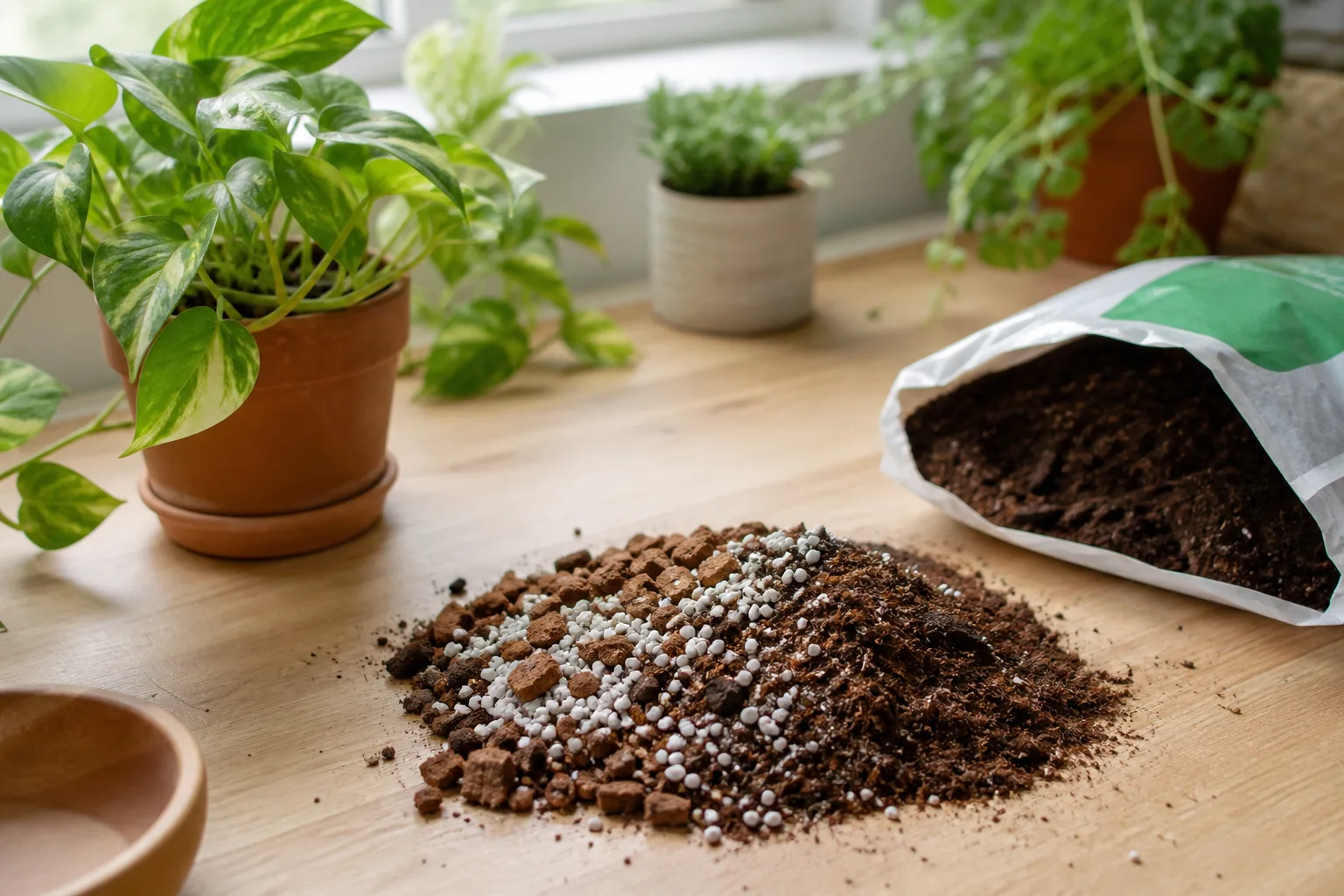
Use a commercial cactus compost as a starting point and check its texture before planting. The RHS suggests adding horticultural grit to peat-free compost; a useful home blend is roughly two parts cactus or peat-free potting mix to one part coarse mineral grit. Pumice, coarse perlite, or small lava rock can also create air spaces. Avoid fine sand, which can settle into a dense layer, and do not use ordinary moisture-retentive potting mix alone for a desert cactus.
A large plant does not need frequent repotting just because it has been in the same container for a while. Repot when roots have filled the pot, the mix has broken down and stays wet, or the plant has become unstable. Move it into a container only a little wider than the root ball, then give the fresh mix time to settle and dry before watering. Clemson Extension and the RHS both caution against oversized pots because surplus wet compost can encourage rot.
Water by dry-down, not by a calendar
For a desert cactus in a pot, water the root zone thoroughly when the mix has dried, then let excess water drain away. Do not give a few small sips every week, and do not let water collect under the pot. The correct interval changes with pot size, the amount of mineral grit, room temperature, window strength, and whether the plant is actively growing; a large pot in a cool dim room can stay wet much longer than a small one in summer sun.
Check below the surface rather than judging only the top crust. Push a clean wooden skewer into the mix near the root ball, or lift the pot and compare its weight after watering and after drying. If the lower mix still feels cool or clings to the skewer, wait. This simple check is safer than following a fixed “every 10 days” schedule that ignores your room’s conditions.
Let winter growth and room temperature change the routine
When light and temperatures fall, many desert cacti slow down and use less water. The RHS recommends a cool, relatively dry rest for many indoor cacti, while Clemson Extension says dormant arid-climate types should be allowed to get very dry between waterings. In a heated home, do not withhold water mechanically until a plant shrivels; instead, check the mix and give only enough to keep a healthy specimen from becoming severely dehydrated.
Resume a fuller routine when days brighten and you see active growth, not simply because a calendar says spring has started. If a cactus has soft, translucent, or blackened tissue near its base, stop watering and inspect the roots and mix; rot is more likely than thirst when the base is soft. A firm, wrinkled plant in bone-dry soil may need water, but do not use watering to treat every discoloration or scar.
Plan for spines, height, weight, and household safety
Give a large cactus a permanent landing place before you bring it home. A top-heavy column can tip, a broad barrel can be difficult to lift, and a prickly pear’s fine glochids may catch on fabric. Keep plants away from walkways, children’s play areas, pet routes, and frequently opened doors. Put them on a stand that can support the weight of both wet soil and the mature plant.
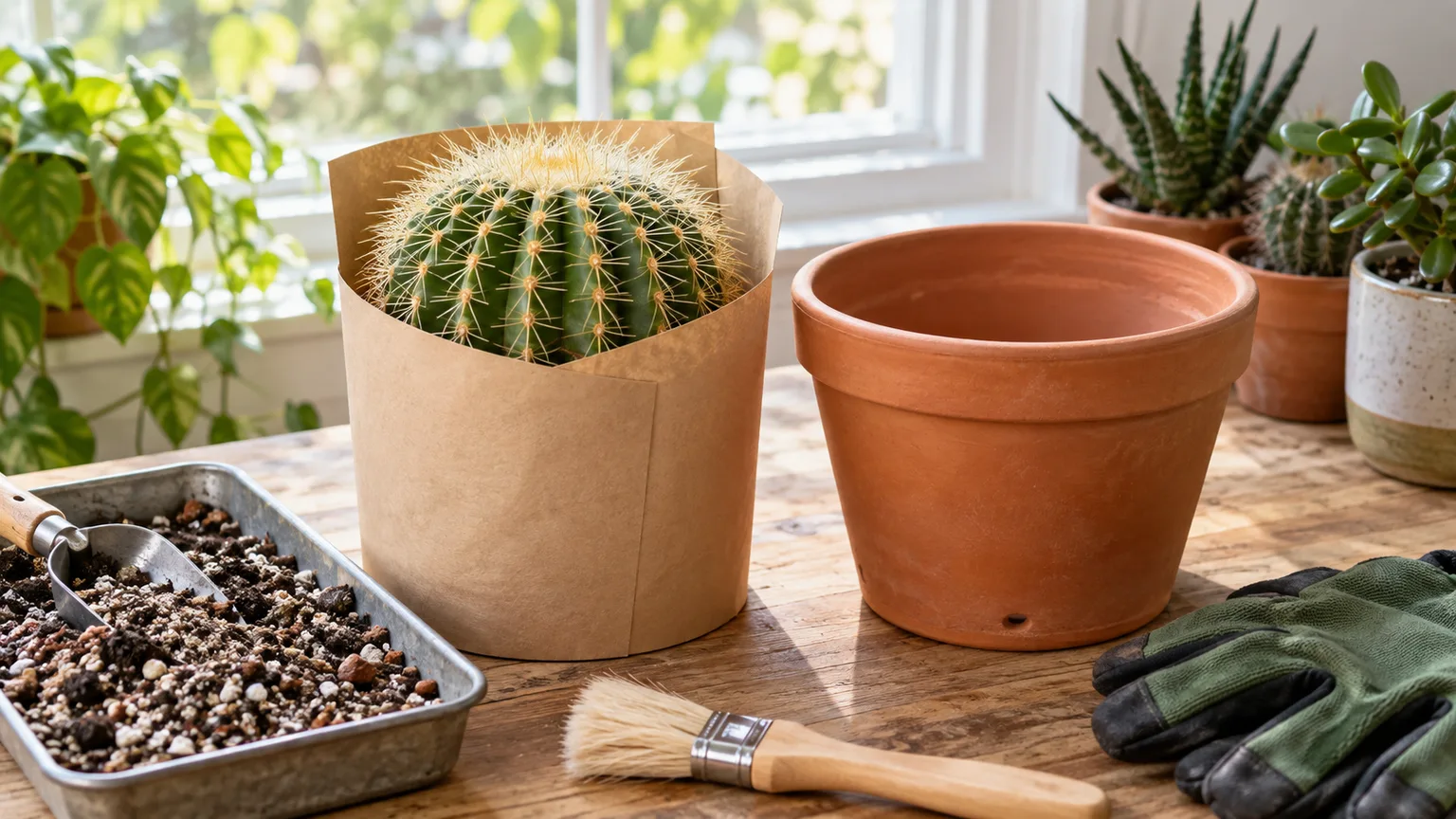
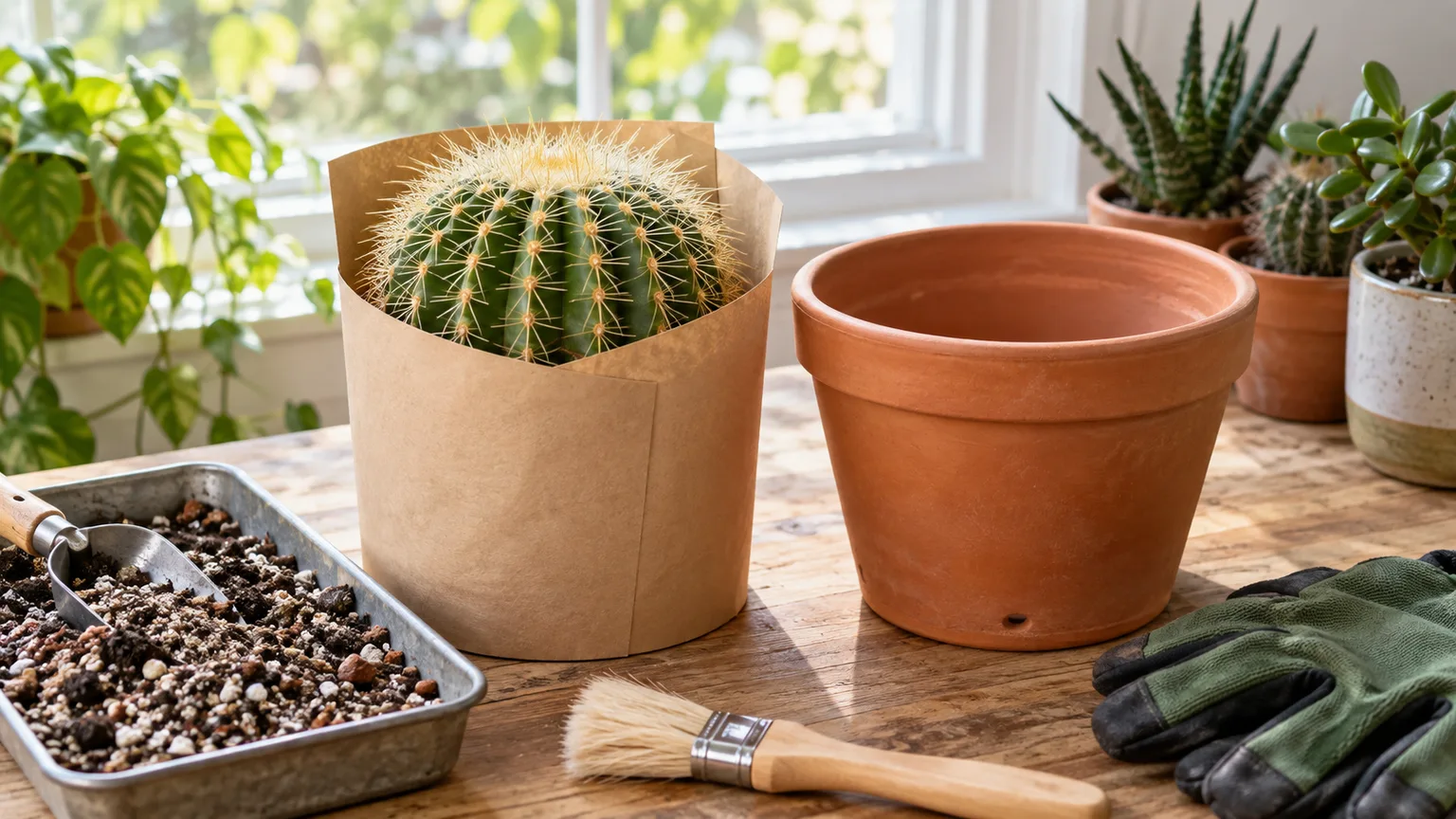
For a manageable specimen, use thick gloves, folded newspaper, or a towel as a barrier and support the pot rather than gripping spiny stems. Fine Gardening demonstrates a towel-wrap technique for moving a cactus from a pot, but that approach is meant for a plant a person can control safely. If the cactus is tall, unstable, very heavy, or too wide to contain its spines, ask an experienced nursery or professional to repot or transport it instead of improvising.
Cactus spines and glochids can injure skin and eyes, and candelabra-tree sap creates a different hazard from a spine. Read species-specific pet information before placing a Euphorbia in a home with animals that chew plants; keep all thorny pots inaccessible to pets that brush past them. When your room cannot provide the light, clearance, or safe placement a specimen needs, choose a smaller cactus rather than asking a desert plant to tolerate the wrong conditions.
Conclusion
The best large cactus for indoors is not necessarily the species with the biggest outdoor height. For a bright home, blue myrtle, Mexican fence post, blue columnar cactus, prickly pear, and golden barrel offer different shapes you can choose around your actual room. Mexican lime can suit a sunny specimen collection, while organ pipe, giant cardon, and saguaro are more demanding or slow-growing than their dramatic names suggest.
Before buying, check the exact plant’s size and light history, measure its future footprint, and confirm it can sit in a draining pot with room around its spines. Give it the brightest suitable window, a gritty mix, and water only after the root zone dries. Choose the plant your home can support now, and let the desert giants stay giants where they naturally belong.