34 Spring Flowers to Add to Your Garden This Year
Explore 34 spring flowers by bloom time, light, and garden role, with planting advice, safety cautions, and combinations for borders, woodland beds, and pots.
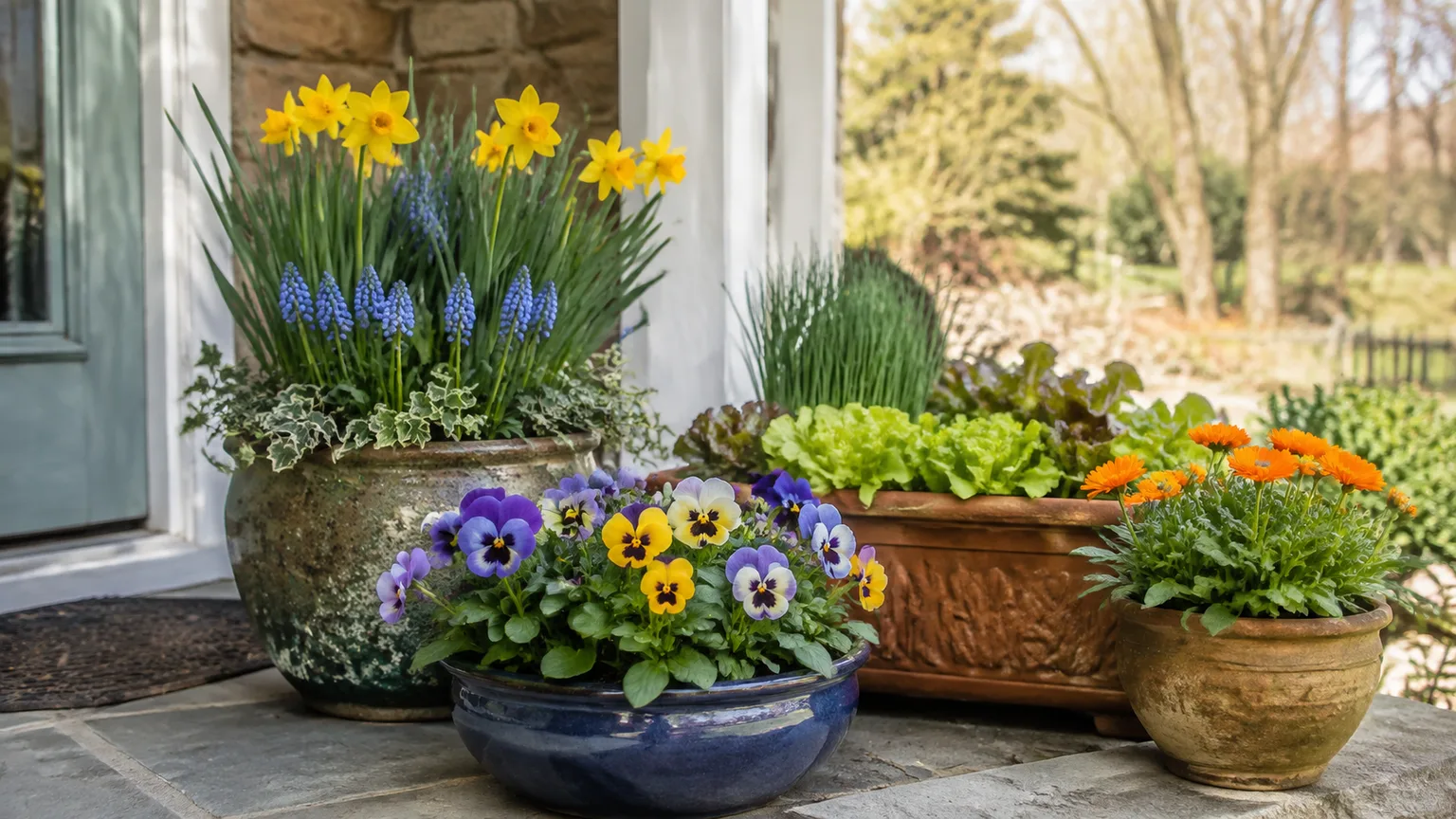
The best spring garden is not necessarily the one with the most flowers in April. It is the one where something takes over as each short-lived bloom fades: a snowdrop gives way to crocus, bulbs rise through fresh foliage, and later perennials and shrubs carry color toward the end of spring. Build that handoff first, then choose plants that suit your light, soil, space, and climate.
Spring bloom dates shift with latitude, elevation, winter chill, spring temperatures, and cultivar. Use the season labels below as a way to compare plants, not as a promise that a flower will open on a particular calendar date in your garden. A mild winter may bring early flowers forward; a cold snap can pause them or damage open blooms.
Build spring color by bloom sequence, not just flower color
For a dependable sequence, combine flowers that emerge at different times and heights. Early bulbs and corms fill the ground before many perennials wake up; cool-season annuals cover containers and bed edges; shrubs and small trees add scale above them. When buying, check the plant label for mature height, bloom window, light, and hardiness rather than assuming every plant with “spring” in its name behaves the same way.
| Approximate window | Useful choices | Garden role |
|---|---|---|
| Late winter to very early spring | Winter aconite, snowdrops, witch hazel, hellebores | First color at ground level or on bare branches |
| Early to mid-spring | Crocus, daffodils, hyacinths, tulips, forsythia | Strong blocks of color and fragrance |
| Mid- to late spring | Columbine, iris, azalea, magnolia, viburnum, weigela | Height, foliage, and a longer handoff |
34 spring flowers for different garden jobs
Very early flowers, bulbs, and cool-season color
These compact plants are useful when you want color before the main perennial border fills in. Most spring-flowering bulbs are planted in autumn; pansies and sweet alyssum are usually installed as nursery starts or seed for a cool-season display.
-
Amur adonis (Adonis amurensis) is a low, buttercup-family perennial with bright yellow flowers that can open while the garden still looks wintry. Give it a spot with spring sun and moisture-retentive, well-drained soil; it may retreat underground after its brief show, so mark the planting and avoid digging there.
-
Winter aconite (Eranthis hyemalis) makes a bright yellow carpet only a few inches tall, often flowering around the time snowdrops appear. It suits a sunny spring woodland edge or rock garden and can naturalize in favorable soil, but it spreads readily and its tubers are highly poisonous; keep it away from children or pets that dig. University of Wisconsin–Madison Extension describes both its early bloom and the need to account for its toxic tubers.
-
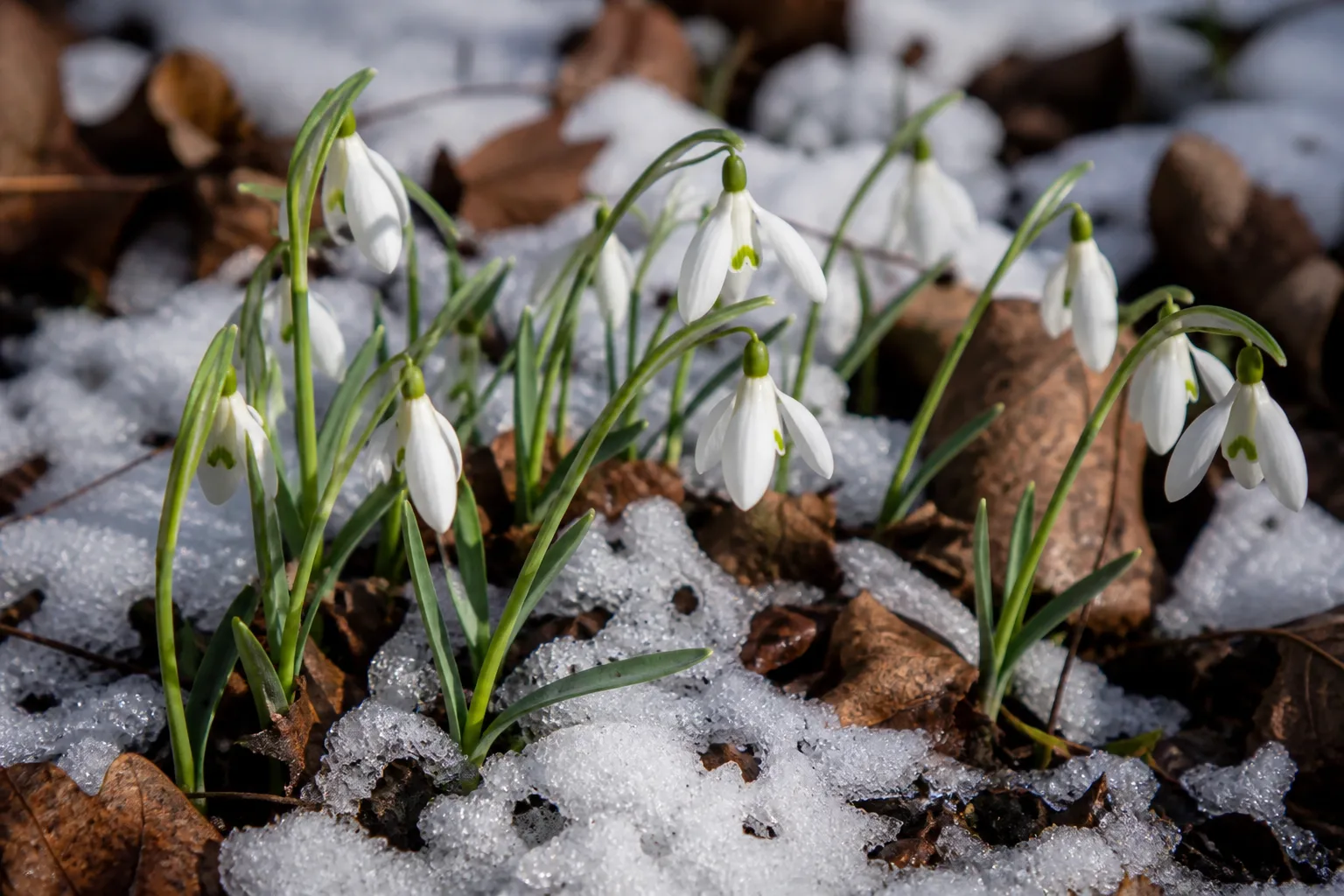
Snowdrops (Galanthus nivalis) are among the earliest small white flowers, with nodding bells marked green. Their scale makes them easy to miss as single bulbs, so plant a generous group near a path or beneath deciduous trees where they can multiply undisturbed; let the foliage yellow before clearing it.
-
Spring crocus (Crocus vernus and related species) brings purple, white, or yellow cups close to the ground, often opening on sunny days. Plant corms in groups through a lawn edge, rock garden, or sunny border, but do not mow the leaves immediately after flowering; squirrels, rabbits, and other wildlife may also dig or browse them.
-
Daffodil (Narcissus spp.) offers one of the widest ranges of spring shapes, from petite trumpets to large-cupped and double flowers. It is a strong naturalizing bulb for sun or light shade with good drainage; NC State Extension’s Narcissus profile recommends planting in fall in groups and leaving foliage until it yellows, since the leaves replenish the bulb for next year. Daffodil bulbs are toxic to dogs, cats, and horses, with the bulb the most poisonous part, according to the ASPCA plant guide.
-
Hyacinth (Hyacinthus orientalis) is a compact choice when you want a noticeable spring scent near a doorway or seating area. Its dense flower spikes come in several colors, but the display can weaken after a few seasons, especially in warm or poorly drained sites; use it where fragrance is close enough to enjoy without relying on it as the only recurring color.
-
Tulip (Tulipa spp.) gives you a wide color range and a clear vertical accent in borders and containers. Many garden tulips are most reliable as a one-season show, while some species tulips and well-sited varieties return more dependably; choose by local climate and drainage, and resist planting a mixed bag if you need a specific bloom time.
-
Pansy (Viola × wittrockiana) is a cool-season annual or short-lived perennial with broad, often face-marked flowers in containers and bed edges. It can bridge the gap while bulbs are still small, but it usually slows or declines in summer heat; use it as seasonal color rather than expecting it to anchor a permanent border.
-
Sweet alyssum (Lobularia maritima) forms a low, fragrant edging with tiny white, pink, or purple flowers, and it can spill neatly over a pot rim. It performs best in cool weather and well-drained soil; in mild regions it may self-seed more than intended, so check local invasive-plant guidance before using it as a groundcover.
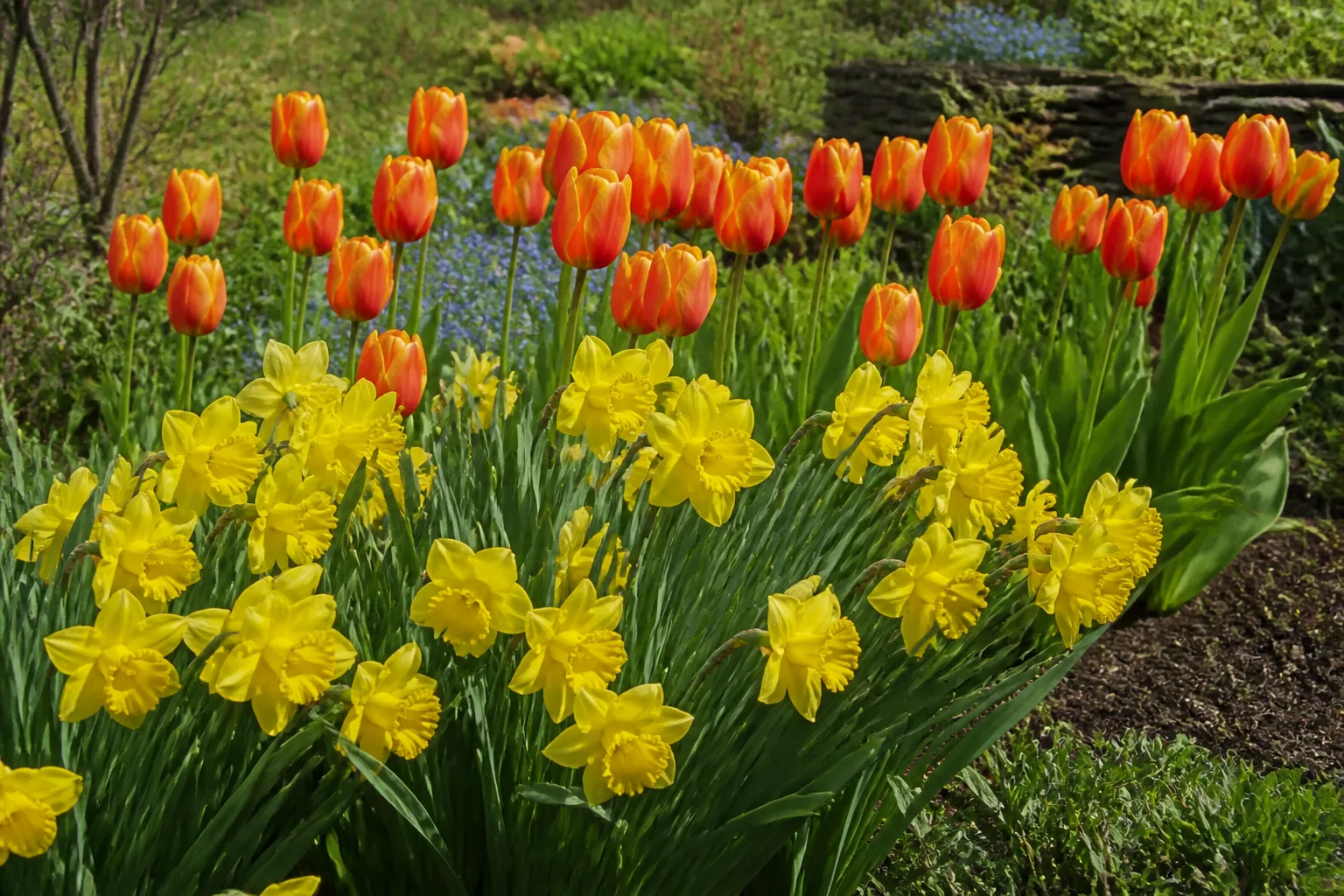
The bulb garden shown here pairs tall tulips with daffodils and a low blue layer, a useful visual reminder to vary both height and bloom time rather than planting every bulb at one level.
Spring perennials, groundcovers, and woodland flowers
Perennials return from established roots, but their bloom may last only a few weeks. Mix plants that go dormant after flowering with later foliage so the bed does not look empty, and check spread carefully before using vigorous groundcovers.
-
Creeping phlox (Phlox subulata) covers sunny slopes and rock edges with a dense mat of pink, purple, red-purple, or white flowers. Its evergreen-like foliage can tidy a bank outside bloom season, but it needs drainage and enough light to stay compact; do not tuck it into damp, deep shade and expect the same dense flowering carpet.
-
Bearded iris (Iris germanica) adds sculptural leaves and elaborate flowers in mid- to late spring, with tall, intermediate, and dwarf types for different border positions. Give the rhizomes sun and excellent drainage, leaving the upper surface exposed rather than burying them under heavy mulch; soggy soil can cause more trouble than dry spells.
-
Columbine (Aquilegia spp.) has distinctive spurred flowers that bob above soft, divided foliage, making it a natural fit for cottage and woodland-edge gardens. It can self-seed and hybridize, so a mixed planting may produce unexpected colors; let it seed if you enjoy variation, or remove spent stems before seed forms to keep a selected palette.
-
Dutchman’s breeches (Dicentra cucullaria) is a delicate woodland ephemeral with small white, sometimes pink-tinged flowers above ferny foliage. Plant it where spring soil stays cool and humus-rich, then accept that its foliage disappears after flowering; neighboring ferns or other later-growing shade plants can occupy the space it leaves behind.
-
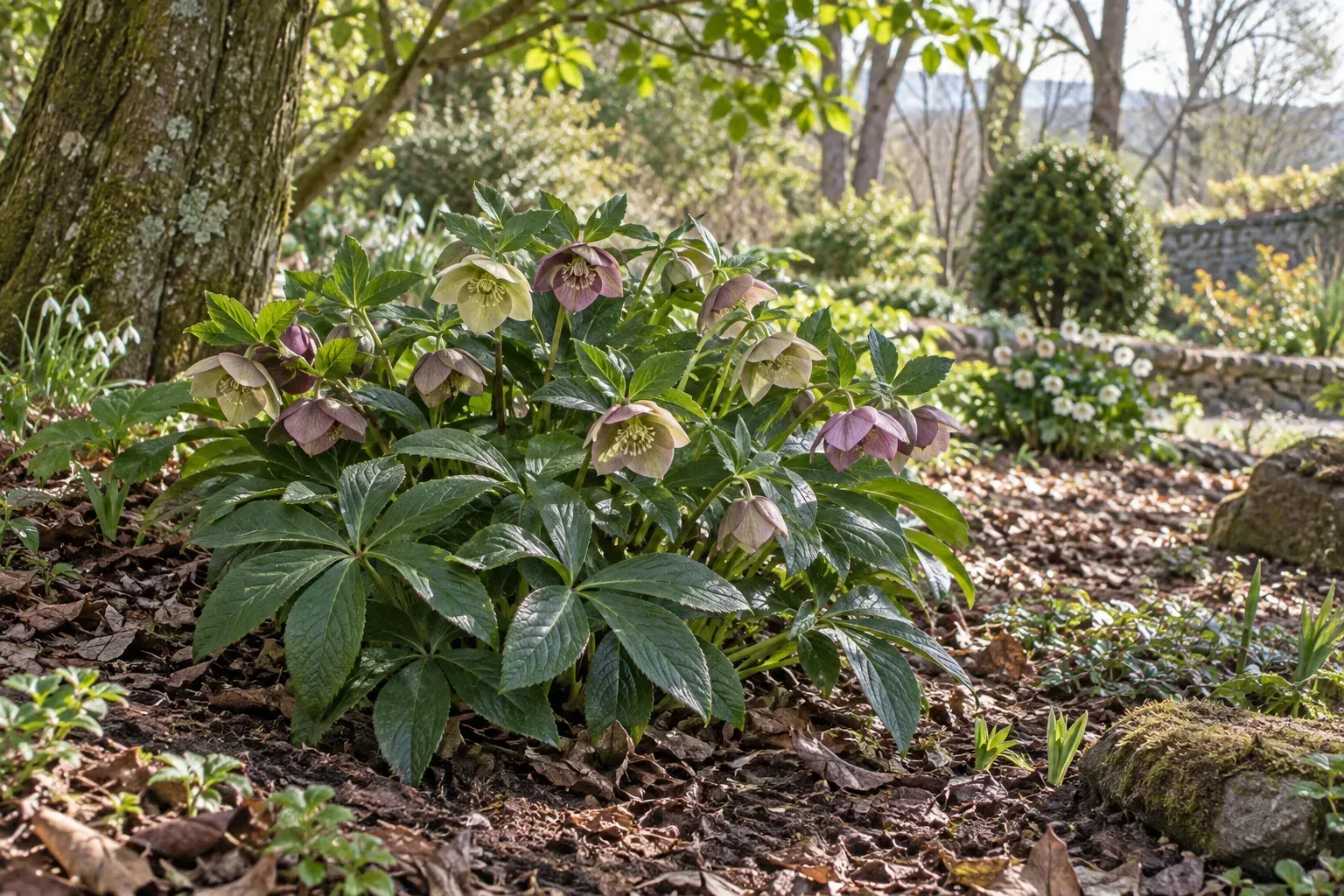
Lenten rose or hellebore (Helleborus spp.) supplies nodding blooms and sturdy foliage in a part-shade bed when little else is flowering. The colorful structures are long-lasting sepals rather than delicate petals, but the plant is not a no-care solution: it needs good drainage, and every part should be treated as poisonous rather than handled or eaten casually, as noted in the NC State Plant Toolbox profile.
-
Virginia bluebells (Mertensia virginica) create a soft patch of pink buds that open blue in a moist, shady spring garden. Their leaves fade after bloom, so combine them with hostas, ferns, or another summer presence instead of leaving bare soil; they are most at home in a woodland-style bed rather than a hot, dry border.
-
Pasque flower (Pulsatilla vulgaris) offers purple, lavender, or occasionally white flowers above finely divided, silvery foliage, followed by decorative seed heads. It is a good choice for a sunny, gritty, sharply drained spot, not a rich bed that stays wet through winter; wear gloves when handling any unfamiliar plant and keep it away from grazing pets.
-
Common periwinkle (Vinca minor) is an evergreen groundcover with blue-violet or white flowers that can hide bulb foliage later in spring. Its runners root as they spread, which is useful on a contained bank but can crowd native ground flora; use it only where it is not invasive locally and where you can keep its edges in bounds.
-
Lily of the valley (Convallaria majalis) carries fragrant white bells above broad leaves in late spring and can form a vigorous shade-tolerant colony. It is poisonous and spreads by underground rhizomes, so reserve it for a clearly bounded area away from children and pets; avoid planting it where a woodland restoration or native groundcover is the priority. NC State Plant Toolbox flags both its poisonous characteristics and spreading habit.
-
Foxglove (Digitalis purpurea) sends tall spires of spotted, tubular flowers above a rosette of leaves, adding height to a part-shade border. Many foxgloves are biennials or short-lived perennials, so a plant may flower in its second year and then die; it is poisonous to dogs, cats, and horses according to the ASPCA plant guide, making it a poor choice where pets chew garden plants.
-
Wallflower (Erysimum spp.) is a useful sunny border or rock-garden plant, with sweetly scented flowers in warm shades and a compact, shrubby habit in some varieties. Cultivars vary in hardiness and lifespan, so treat the nursery label as important rather than assuming a single species-wide rule; give it sharp drainage to reduce losses in wet winters.
-
Diascia (Diascia spp.), or twinspur, is a tender perennial usually grown as a cool-season annual in many gardens. Its airy pink, white, orange, or red flowers suit containers and the front of a border; it appreciates sun in mild weather, but afternoon shade can help it cope when spring turns quickly to heat.
Flowering shrubs, vines, and small trees
Woody plants create the framework for spring flowers and can carry foliage, berries, or fall color after the petals drop. Check mature width as well as height: a shrub that looks modest in a nursery pot can outgrow a foundation bed or block a path within a few seasons.
-
Witch hazel ‘Arnold Promise’ (Hamamelis × intermedia ‘Arnold Promise’) opens narrow yellow, ribbon-like petals on bare branches in late winter or very early spring. Its subtle flowers are best seen up close, so position it where you pass during colder weather; allow space for its eventual shrub size and do not prune heavily just to keep a naturally broad form small.
-
Pussy willow (Salix discolor) produces soft catkins before its leaves, providing a tactile early-season feature and useful cut stems. It wants consistent moisture and may become a large, vigorous shrub, so it suits a spacious rain garden or wet edge better than a small foundation bed; check local species guidance before planting near drains or utilities.
-
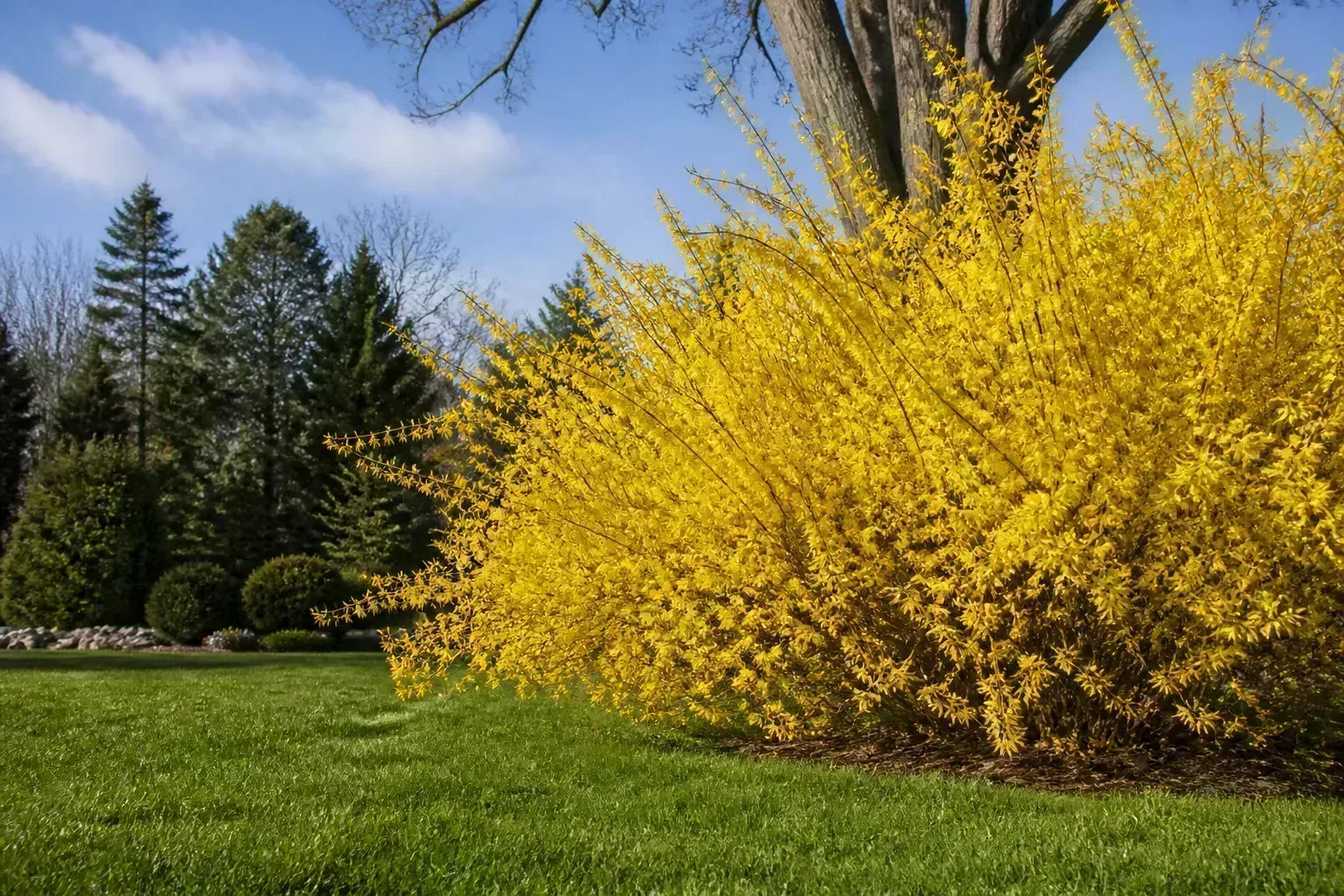
Forsythia (Forsythia × intermedia) covers arching branches in yellow flowers before the foliage emerges, making it one of the most visible signals of spring. Its size and shape vary, and older branches can become unruly; choose a compact cultivar for a small yard and, if pruning is needed, do it after flowering so you do not remove the next spring’s buds.
-
Dwarf flowering almond (Prunus glandulosa) is a small deciduous shrub that often flowers pink before its leaves fully open. It can anchor a mixed border without the scale of a full flowering tree, but it may be less compelling after the blossom show; pair it with perennials that cover the base later and leave room for its mature spread.
-
Flowering quince (Chaenomeles speciosa) brings saturated red, orange, pink, or white flowers on thorny branches in early to mid-spring. It tolerates pruning and can make a barrier hedge, but thorns make it awkward beside narrow paths or children’s play areas; select a thornless or lower-thorn cultivar if access and maintenance matter.
-
Fothergilla (Fothergilla spp.) offers bottlebrush-like white flowers with fragrance, followed by attractive foliage and, in many cultivars, strong autumn color. This North American shrub likes acidic, moisture-retentive but well-drained soil, making it a potential companion for azaleas; it is not the best fit for hot, alkaline, bone-dry ground without soil adaptation.
-
Azalea (Rhododendron spp.) can cover a shrub in spring with pink, purple, white, red, orange, or yellow flowers. Choose a species or cultivar rated for local winter conditions and give it acidic, well-drained soil with protection from punishing afternoon heat; azaleas are toxic to dogs, cats, and horses, according to the ASPCA plant guide, so locate them thoughtfully around pets and children.
-
Daphne (Daphne spp.) is prized for intensely fragrant pink or white flowers on a relatively compact shrub, often blooming in late winter or spring depending on species and climate. It dislikes root disturbance and poorly drained soil, and some types are short-lived even in good gardens; choose the exact species for your region and plant it where its scent can be enjoyed without moving it later.
-
Magnolia (Magnolia spp.) ranges from compact shrubs to substantial trees, with white, pink, cream, or yellow flowers that often open before the leaves. Star magnolia is a smaller option for a modest yard, while other magnolias may need much more room; spring frost can brown open buds, so avoid exposed frost pockets when possible.
-
Viburnum (Viburnum spp.) includes shrubs with lace-cap or rounded white and pink flower clusters, and some types later produce berries or colorful fall foliage. Bloom time, fragrance, fruiting, and mature size differ widely by species, so pick a named variety that fits the space and supports the wildlife or seasonal interest you want.
-
Mock orange (Philadelphus spp.) bears white, often fragrant flowers in late spring on arching shrubs. Flower scent varies, so if fragrance is a deciding factor, smell a flowering specimen before buying; because many types grow broad and look plain after bloom, position them where a leafy green screen is useful through summer.
-
Weigela (Weigela florida and cultivars) produces tubular pink, red, or white flowers in mid- to late spring, with some cultivars offering burgundy or variegated foliage. Hummingbirds may visit the flowers, but the shrub can spread wider than a small border allows; choose a compact variety and prune after the main bloom if shaping is needed.
-
Winter jasmine (Jasminum nudiflorum) bears yellow flowers on green, often arching stems before or around the time its leaves emerge. It can scramble over a low support or spill down a bank, and stems that touch soil may root; use a structure or prune after flowering if you do not want it to become a broad groundcover.
Match spring flowers to light, soil, and climate
Measure spring sun before choosing
Light changes as deciduous trees leaf out. A bed that receives several hours of sun in March may be shaded by May, which is why spring bulbs and woodland ephemerals can flower under trees that later become too shady for sun-loving perennials. Watch the bed at different times of day before planting; record where direct light falls rather than judging from a single visit.
Full-sun choices include tulips, crocus, creeping phlox, bearded iris, pasque flower, and many wallflowers. For dappled or part shade, look first at hellebores, Virginia bluebells, Dutchman’s breeches, snowdrops, and suitable azaleas. “Shade tolerant” does not mean “dry-root tolerant”: tree roots can make a shady bed thirsty, so match moisture as well as light.
Favor drainage for dormant bulbs and roots
Many spring bulbs spend part of the year dormant underground. Waterlogged soil around resting bulbs can lead to decay, while a fast-draining bed may dry too quickly for woodland plants and young shrubs. If water stands after rain, solve the drainage problem or choose plants that tolerate the conditions instead of hoping a top dressing of compost will fix a low, saturated site.
For a bulb display, loosen compacted soil, plant at the depth and spacing on the package, and water once if autumn is dry. NC State Extension’s daffodil guidance recommends leaving the foliage in place until it yellows, and Wisconsin Extension notes that winter aconite is suited to humus-rich but well-drained soil. In containers, drainage holes are essential; Flowerbulbs.com’s practical advice for city gardens also emphasizes containers that let excess water escape.
Treat bloom dates as local windows
“Early,” “mid,” and “late” are relative to a region and can overlap in an unusual season. A garden in a mild coastal climate may see winter jasmine and snowdrops well before the same plants flower in a colder inland yard. Cultivar, sun exposure, elevation, and a warm spell followed by frost all change what a gardener sees.
Use plant tags and local extension calendars for your area, then plan with overlap rather than precise weeks. If one species is delayed or damaged, another should already be preparing to flower. For a compact garden, use two or three plants per window instead of buying many varieties that all peak together.
Put spring flowers together for a longer display
A sunny bulb border
Layer daffodils and tulips in groups through the middle of a sunny bed, with crocus near the front and creeping phlox along a dry edge. Add a few pansies for immediate color while the bulbs establish, then let a later perennial such as columbine or iris take over as the bulb foliage fades. The trick is to leave enough room for leaves to yellow without mowing or tying them into tight bundles.
Horticultural garden-design advice commonly uses tiers: taller shrubs or flowers behind, medium-height plants in front, and groundcovers near the edge. A feature from Smith Mountain Lake HOME Magazine applies this approach to seasonal color and recommends grouping perennials while allowing annuals to fill open gaps. Use the idea flexibly rather than forcing a formal row in an informal bed.
A woodland edge
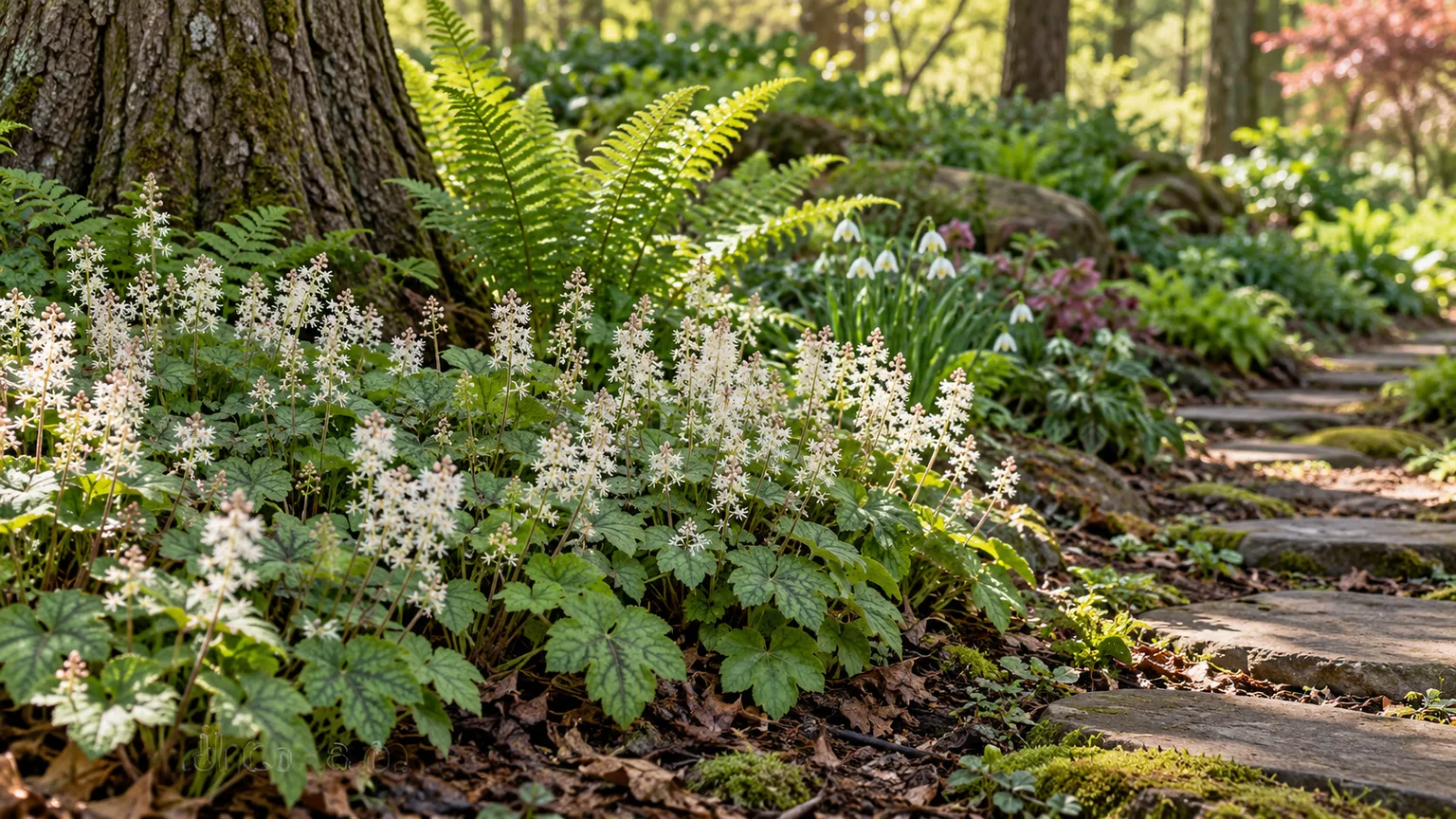
Under deciduous trees, combine snowdrops or winter aconite with hellebores and Virginia bluebells, then reserve the gaps for ferns or hostas that emerge later. This planting works when spring light is available and the soil stays moist without standing water; avoid putting small ephemerals where you plan to dig in summer, because their disappearing foliage makes dormant plants easy to disturb.
Include plants that naturally spread only when you can give them a boundary. Lily of the valley and periwinkle may fill ground quickly but can be difficult to remove from a mixed planting. A clump-forming choice such as hellebore is easier to keep in a defined position, though it still needs the right soil and careful placement around pets.
A small patio container
A broad pot can hold dwarf tulips or daffodils, low crocus, and pansies at the rim, giving you layered flowers at eye level. Use a container with drainage holes, a free-draining potting mix, and bulbs suited to the winter chill available where the pot will sit; above-ground roots experience bigger temperature swings than roots in a garden bed.
On a balcony or paved entry, raise pots on feet so water can leave freely and group them at two or three heights instead of filling every surface. Flowerbulbs.com’s city-garden guide describes bulbs as useful in compact spaces and recommends pots with drainage; that advice matters where runoff from a saucer could otherwise leave bulbs sitting in water. Rotate containers only if plants need more even light, not while stems are brittle or frozen.
Prevent common spring garden letdowns
Plan for late frost, pets, and spreading plants
A frost forecast does not mean every spring flower needs to be covered. Protect tender potted plants first by moving them against a wall or into shelter; for valuable shrubs or open flowers, use a breathable cover that reaches the ground and remove it after temperatures rise. Hardy bulbs often tolerate cold, but a late freeze can still mark exposed petals or kill a shrub’s flower buds.
Do not confuse hardiness of the plant with hardiness of the flower. A magnolia may survive a cold winter yet lose open blossoms to a late frost; a perennial may also be fine while its first flowers are browned. If bloom is the main priority, plant more than one species and choose a sheltered microclimate, then accept that exact timing is never fully controllable.
Check safety before adding flowers to a garden where a child or pet mouths plants. The species covered here include documented poisonous plants, including daffodils, winter aconite, foxglove, hellebores, azaleas, and lily of the valley; that is not a complete toxicity inventory. The ASPCA’s plant database identifies daffodil as toxic to dogs, cats, and horses, while NC State Plant Toolbox flags lily of the valley as poisonous. Keep bulbs and clippings out of reach, and contact a veterinarian or poison-control service promptly if ingestion is suspected.
Finally, check regional invasive-plant guidance before buying a fast-spreading groundcover. A plant that is easy to remove from one small border can be persistent in a woodland edge, and local ecological conditions matter more than a generic “easy-care” label.
Let bulb foliage recharge after flowers fade
Once a bulb’s flowers are spent, remove the flower head if you want to prevent seed formation, but keep healthy green leaves. The foliage is still gathering energy for the next season; wait until it has yellowed and begun to die back before cutting it, mowing it, or clearing the bed. Planting later perennials around bulbs can disguise fading leaves without sacrificing that recharge period.
The same patience helps small perennials that disappear after bloom. Mark where ephemeral flowers are planted, and avoid turning over the soil in their dormant area until you know the plant’s growth cycle. If a clump becomes overcrowded or flowers decline, check species-specific division guidance rather than dividing every spring by habit.
Conclusion
Choose spring flowers by the conditions you can provide and the period when your garden needs color. Early bulbs and woodland ephemerals bring the first flowers; cool-season annuals fill containers; perennials, shrubs, and trees extend the show and provide structure after the petals drop.
Start with a short list for your actual site, check mature size and local hardiness, then add plants with overlapping bloom windows. Leave bulb leaves until they yellow, keep vigorous spreaders contained, and check toxicity before planting around pets or young children. That sequence creates a spring garden that is more reliable and easier to maintain than a bed chosen only by flower color.