Elatior Begonia Care Guide: Light, Water, Blooming Tips
Grow Elatior begonias indoors or out with a practical light and watering routine, realistic bloom expectations, propagation steps, and common-problem fixes.
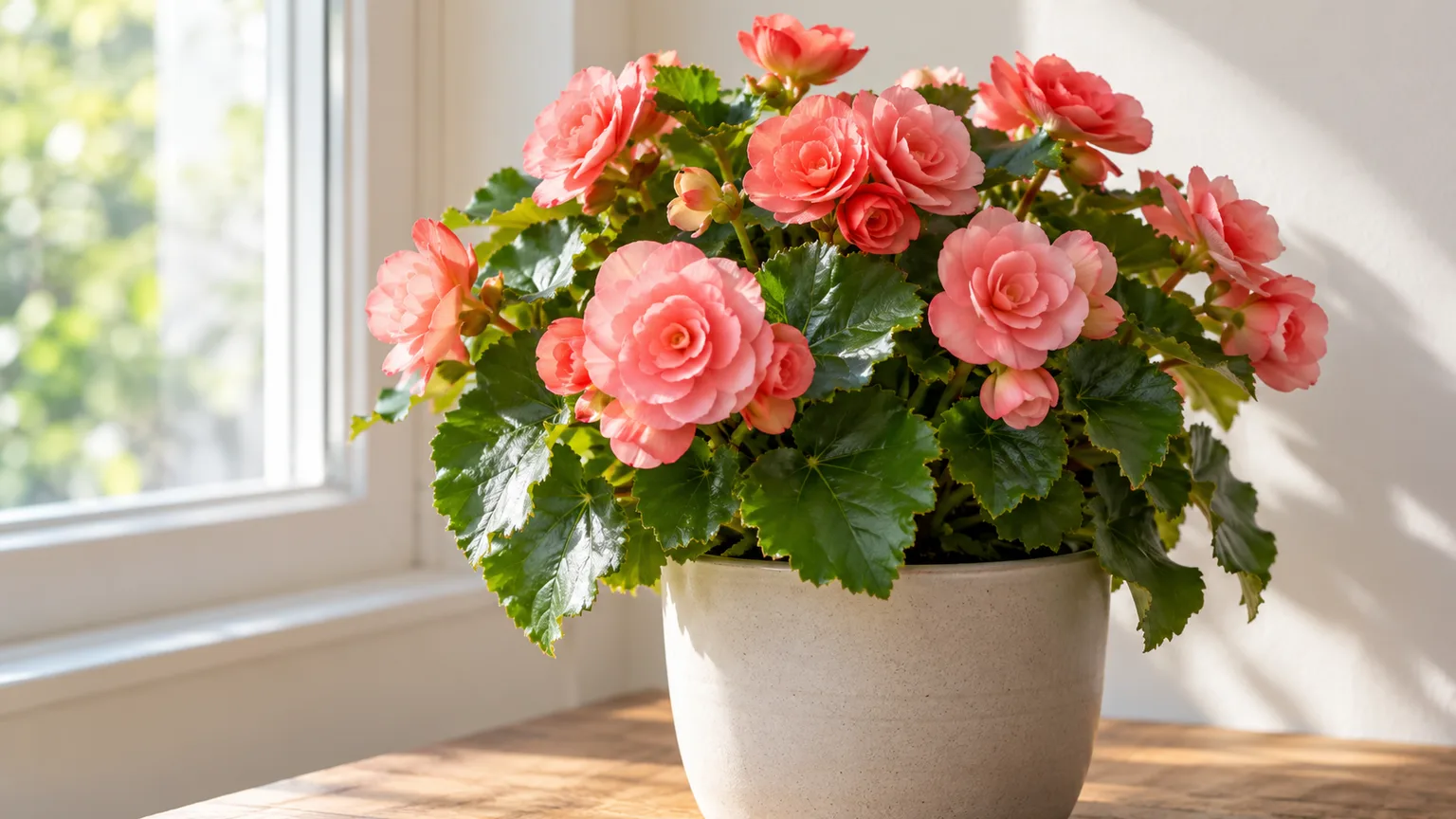
An Elatior begonia can arrive covered in flowers and then seem to change its mind a few weeks later. That does not always mean you did something wrong: many are sold as florist-grown plants timed to flower, and their next bloom can be less predictable at home. Keep the mix lightly moist, give the plant bright filtered light, and protect it from cold and stagnant air; those basics keep its foliage and roots in the best shape for another flush.
What an Elatior begonia is—and what to expect
Elatior, or Rieger, begonia usually refers to cultivars of Begonia × hiemalis, also known as Begonia × elatior. The Royal Horticultural Society groups them as semi-tuberous hybrids associated with B. socotrana and tuberous begonia ancestry. Their compact growth and showy flowers make them popular as indoor flowering gifts and seasonal container plants. They are not the same care group as rex begonias, which are grown mainly for patterned leaves, or cane begonias, which develop tall, jointed stems.
That distinction matters because general begonia tips can pull in different directions. Advice for a wax begonia in a garden bed, a rhizomatous rex on a shelf, and an Elatior florist pot may not be interchangeable. The RHS notes that Elatior hybrids are largely winter-flowering florist plants and are often not grown as long-term houseplants, even though a healthy specimen can be kept after its first display. Treat it as a living plant worth trying to maintain, while understanding that repeat flowering is not guaranteed on a schedule. The RHS houseplant guide explains the Elatior group and its semi-tuberous care.
For the first week, avoid trying to improve every condition at once. Remove any decorative foil or outer sleeve that traps water, check whether the nursery pot has drainage holes, and inspect the undersides of leaves before setting it near other plants. If the mix is wet, do not water because the surface looks pale; if it is dry through the root ball, water and let it drain. Keep the plant in one bright, protected spot while it acclimates, and wait until flowering eases before repotting unless the container has no drainage or the mix is plainly failing.
Choose bright, filtered light
Set the pot where it receives bright light for much of the day but is shielded from hard midday sun. A bright east-facing window often works; a south- or west-facing window can work if a sheer curtain softens direct rays. In a dim room, the stems stretch toward the window and flower buds may be sparse. In harsh sun, leaves can bleach or develop dry brown patches, especially after the plant has spent weeks in a greenhouse or shaded store.
Watch new growth rather than judging by the leaves that came with the plant. If the newest stems lean strongly, have long gaps between leaves, or carry leaves that are smaller than older ones, move the pot closer to a bright window over several days. If the window-facing side pales or scorches, pull it back or add a curtain. A small amount of gentle morning sun can be a useful trial, but increase exposure gradually instead of placing an acclimated indoor plant straight into full sun.
Water when the mix begins to dry
Elatior begonias prefer steady moisture while actively growing, but their roots need air. Check the upper layer of potting mix with a finger: when it is beginning to dry, water thoroughly until excess runs through the drainage holes, then empty the saucer or cachepot. If the mix is still cool and damp, wait and check again. The time between waterings will change with pot size, light, temperature, and season, so a calendar such as “every five days” is only a reminder to inspect—not a watering rule.
Do not let the root ball bake completely dry for long, especially while buds are opening, but do not keep it saturated to avoid every hint of wilt. If the plant droops, first check the soil rather than adding water automatically. A dry, light pot that perks after watering points toward thirst; limp leaves above wet soil point toward roots that cannot take up oxygen. Water at the soil surface when possible, and let the pot drain freely rather than leaving it standing in water.
If the mix has pulled away from the pot’s sides and water rushes down the gap without wetting the center, the root ball may have dried too far. Water in two slower passes a few minutes apart, allowing the first to soak in before the second; do not leave the pot soaking overnight. If you use a moisture meter, treat it as a second opinion and check more than one spot, since a dry edge and a wet center can give conflicting readings.
Build an airy mix and choose a snug pot
Use a fresh indoor potting mix that drains readily but holds some moisture. A practical blend is two parts peat-free houseplant mix to one part perlite or pumice; a little fine orchid bark can help if the mix tends to stay dense. Avoid garden soil in a houseplant pot because it can compact and dry unevenly indoors. The important test is simple: water should move through the mix, and the center should not remain swampy for days.
Choose a pot with open drainage holes, only modestly wider than the root ball. A pot several sizes too large holds a large volume of unused wet mix around a small root system. If the nursery pot is inside a decorative cover, lift it out for watering and drain it before returning it. A layer of stones at the bottom does not replace a drainage hole and can leave the root zone wetter, not safer.
Keep temperatures moderate and air moving
Keep the plant in a comfortable, steady room rather than beside a radiator, air conditioner, or cold draft. Elatior begonias are frost-tender. The RHS lists 10–13°C (50–55°F) during flowering for semi-tuberous begonias; treat that as cool-growing guidance for the group, not a reason to expose a warm-room plant to cold drafts or chilling, waterlogged soil. A cool, bright room is usually a better choice than a hot, dim corner, while sudden temperature swings are best avoided.
Average household humidity is often workable if watering is steady and the plant is not next to a heat vent. If the room is very dry, use a humidifier nearby rather than misting the leaves every day. Misting raises humidity only briefly and leaves wet foliage behind. Give the plant enough space for air to move around it; crowded leaves and dead flowers that stay damp make disease more likely.
Adjust care indoors and outdoors by season
Indoors, keep the plant in bright filtered light year-round. During spring and summer, longer days and active growth may mean checking the soil more often. In fall and winter, growth can slow and the mix may take longer to dry, so lengthen the interval between watering checks rather than continuing a summer routine. If you move it outside for a warm season, first acclimate it in bright shade and then try a short period of gentle morning sun.
Outside, use a sheltered patio, balcony, or shaded container where wind and hard rain cannot batter its flowers. Let the pot drain after rain, and do not set it where runoff from a roof keeps the soil soaked. A container is especially useful if your summer is hot or wet because you can move the plant into brighter shade or under cover rather than trying to repair stress after it happens. Bring it indoors before frost and before chilly nights become routine; Elatior begonias are tender flowering plants, not cold-hardy bedding begonias. If you want a broader seasonal plan for the genus, see how to overwinter begonias.
Feed lightly during active growth
Once the plant has settled in and is making new leaves, feed with a complete liquid fertilizer at a conservative rate on the product label. A half-strength dose every few weeks during active growth is a reasonable starting point for a container plant; reduce or stop feeding when growth slows in cool, dim conditions. The RHS recommends feeding established begonias during the growing season, and Ohio Tropics likewise emphasizes feeding as part of active growth for wax begonias. Those broader suggestions should not be read as a reason to fertilize an Elatior begonia every time you water.
Do not use fertilizer to fix yellow leaves, a plant sitting in soggy mix, or a lack of light. Extra fertilizer cannot repair damaged roots and may add more stress to a plant that is already struggling. If the plant is actively flowering but not making much leaf growth, follow the label’s lower end rather than switching to a strong “bloom booster.” Ohio Tropics’ practical begonia notes are useful for general container habits, but wax begonias are a different group.
Keep flowers coming without forcing a cycle
First correct the conditions that control the plant’s energy: enough bright light, a free-draining root zone, and consistent but not constant moisture. Remove flowers as they fade so damp petals do not sit against leaves or soil. Do not feed heavily to force new buds, and do not move the plant repeatedly between a dark room, a sunny window, and outdoors. A recently purchased plant may pause after the nursery bloom cycle as it adjusts to your home.
Elatior hybrids are commonly described as winter-flowering, but store plants can be timed for retail at different seasons through modern nursery growing methods. That means the month your plant came home does not tell you the exact conditions it needs next. Do not impose an arbitrary blackout schedule or deprive it of useful daylight; give it a regular day of bright filtered light and a normal dark night. If the plant label includes a cultivar-specific flowering method, follow that guidance. Epic Gardening’s begonia bloom advice also points readers back to light, water, and plant type before reaching for a special fertilizer. Its guide to begonia flowering includes practical tips from a named horticulture writer, while cultivar responses still vary.
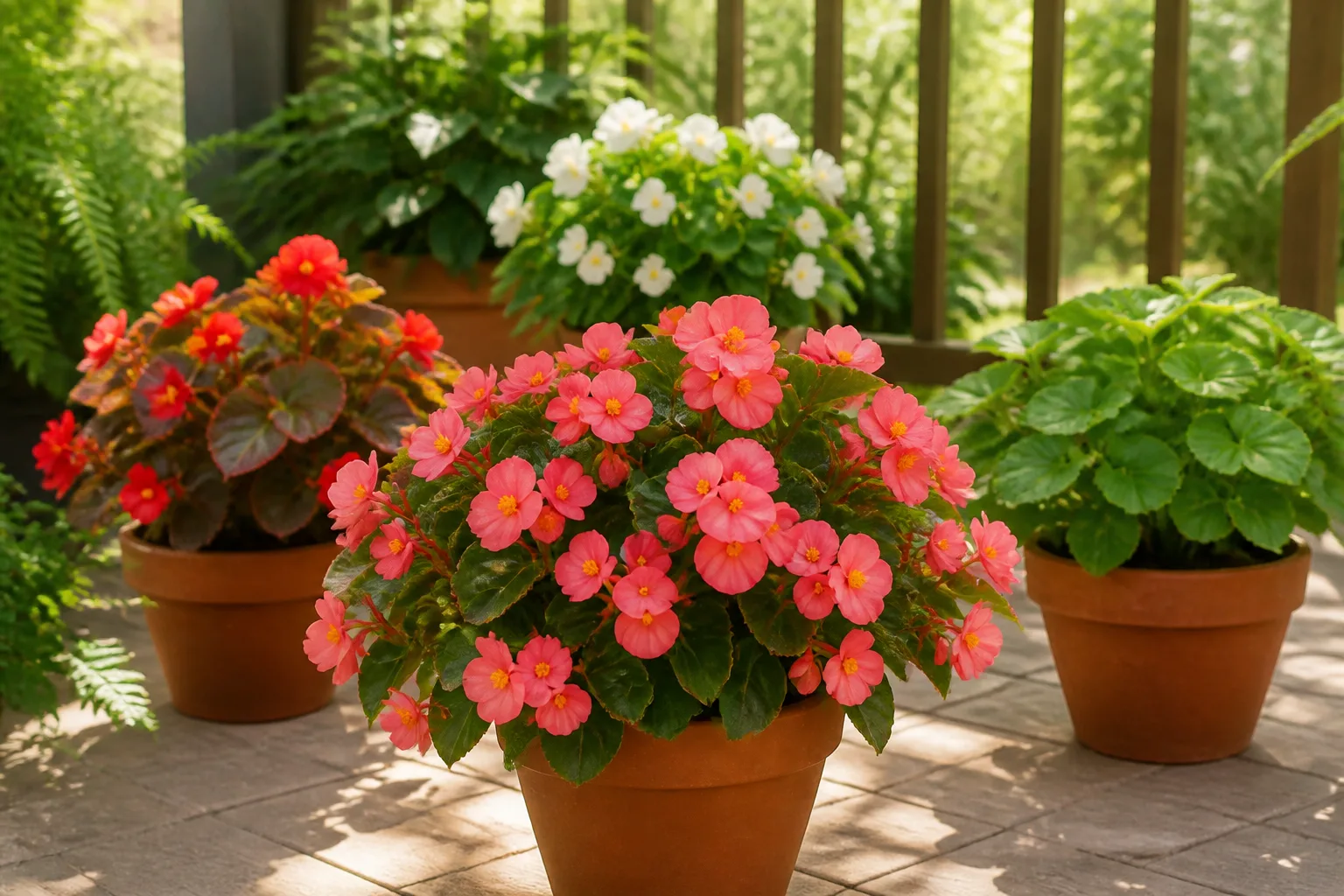
Prune and deadhead without stripping the plant
Pinch or snip off a spent flower stem where it joins a larger stem, using clean scissors if it does not break away easily. Remove yellow, damaged, or dead leaves as they appear, but do not strip healthy foliage to make the plant look tidy. Those leaves still supply energy for new growth. If stems have become long and floppy, trim just above a leaf node after the main display fades; cutting back too much at once can delay recovery.
Support a top-heavy stem with a small stake if flowers are weighing it down. Insert the stake near the pot edge to avoid spearing the main root ball, and tie loosely with soft material. Keep the plant out of strong wind and away from repeated handling while flowering; buds and brittle stems can break more easily than the foliage suggests.
Propagate with a healthy stem cutting
A stem cutting is the most practical way to try making another Elatior begonia. The popular leaf-cutting method for some rex begonias does not automatically apply to every begonia type; Elatior is a semi-tuberous hybrid, so start with a short piece of healthy stem that has visible nodes. Take the cutting from a vigorous, pest-free plant after flowering has eased, not from a stem that is soft, diseased, or already losing leaves.
Root the cutting in water or a light mix
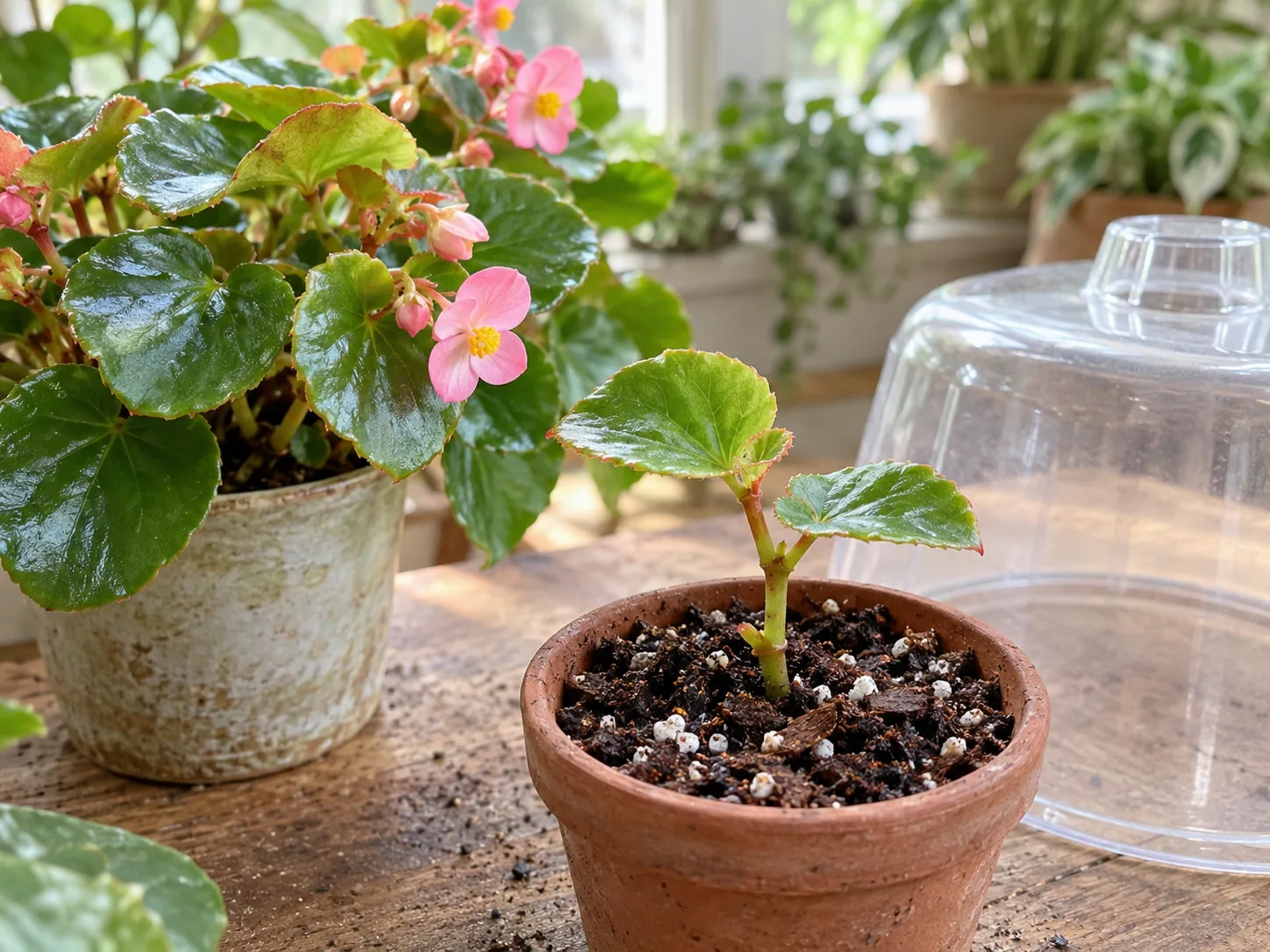
Use clean snips to take a three- to four-inch section with at least two nodes. Remove the lowest leaf, then place one node in water or in a small pot of barely moist propagation mix. Keep the cutting warm in bright indirect light and cover it loosely only if the air is very dry; open the cover daily so condensation does not linger. If rooting in water, change it when it looks cloudy. If using mix, keep it lightly moist, never sodden.
Check gently for roots after a few weeks instead of pulling the stem up every day. Once roots have branched and new growth appears, pot the cutting into a small container with the same airy mix used for a mature plant. Stem cuttings are also used across other begonia groups, though rooting speed and success vary by cultivar. Do not propagate from a plant with suspected bacterial leaf spot or rot; contaminated material can carry disease into the new pot.
Repot only when the roots or mix call for it
An Elatior begonia does not need a larger pot just because it has finished flowering. Repot when roots circle the pot, emerge from drainage holes, or the mix has broken down and stays wet much longer than it used to. Move up only one pot size, keep the crown at the same height, and water enough to settle the mix without leaving the container in a saucer of water. If the plant is healthy but still blooming, wait until the flowers fade before disturbing the root ball.
If the mix smells sour or the stem base is soft, do not solve the problem by hiding it in fresh soil. Slide the plant out, inspect the roots, and remove clearly mushy tissue with clean tools. If most roots and the crown are damaged, recovery is uncertain; take a clean cutting only from healthy tissue and discard infected material.
Diagnose common Elatior begonia problems
Look at the pattern, not one leaf in isolation. A single old leaf turning yellow can be normal aging, but several yellowing leaves plus slow drying soil point to a root-zone problem. Sudden changes in location, light, or temperature can also make buds drop even when the plant is not diseased. Before changing fertilizer or watering frequency, write down where the pot sits, how damp the mix is, and what changed over the last week.
Yellow leaves, limp stems, and dropped buds
Yellow lower leaves with wet mix suggest that watering is too frequent, drainage is poor, or the plant is sitting in collected water. Let excess water drain, make sure the pot has holes, and wait until the upper mix begins to dry before watering again. If stems are limp while the pot is light and dry, water thoroughly and watch whether the plant perks up. Do not confuse the two situations: adding water to a wet-rooted plant makes the first one worse.
Long, weak stems and few flowers usually mean the plant needs brighter light. Move it a little closer to a bright window and reassess the new growth after a couple of weeks. Buds that shrivel after a move or a cold night are more consistent with stress than with a sudden fertilizer deficiency. If you need a broader symptom guide, begonia leaves turning yellow walks through the same pattern-first diagnosis across the genus.
Powdery growth, water-soaked spots, and rot
White, powdery growth on leaves and flowers can be powdery mildew; soft, tan flower tissue with gray fuzzy growth suggests Botrytis blight. Remove affected debris, improve spacing and air movement, and keep water off the leaves. Avoid treating every white mark with the same product: mineral residue wipes away and does not spread, while active fungal growth may return or expand.
Water-soaked leaf spots surrounded by yellow halos are a different warning sign. Penn State Extension notes that bacterial leaf spot can become systemic in Rieger-type begonias; its guidance is to avoid wetting leaves, not propagate from infected plants, and discard infected Rieger material rather than trying to rescue it with a fungicide. Blackened, soft stems at soil level or a collapsing crown also call for urgent root and drainage checks. Penn State’s begonia disease table compares these symptoms and management steps.
Check for pests before reaching for a treatment
Inspect the undersides of leaves, flower stalks, and stem joints for aphids, thrips, whiteflies, or spider mites. Look for sticky residue, stippled leaves, fine webbing, pale moving specks, or distorted new growth. Isolate a suspect plant from nearby houseplants and check it again over several days; a one-time glance can miss young pests tucked into a flower cluster.
Start with the least disruptive response that fits the pest: remove a few visible insects by hand or rinse foliage gently where practical. If you use insecticidal soap or another pesticide, confirm that the label lists the plant and pest, test a small area, and follow the label exactly. Do not spray a stressed plant in hot sun or while flowers are open if the product label warns against it. Routine neem oil is not a substitute for identifying the pest and correcting the growing conditions that made the plant vulnerable.
Keep pets from chewing begonia tissue
Begonias are toxic to cats, dogs, and horses according to ASPCA Animal Poison Control. Its listing identifies soluble calcium oxalates as the toxic principle and notes that underground parts are the most toxic; chewing can cause signs such as vomiting and salivation in cats and dogs. Keep the pot and fallen leaves out of reach, and contact a veterinarian or animal poison-control service promptly if a pet eats any part. ASPCA’s begonia entry covers the plant group, which includes hybrids.
Conclusion
For dependable Elatior begonia care, give the plant bright filtered light, a pot that drains, and enough water to keep active roots lightly moist without leaving them submerged. Protect it from frost, harsh sun, stagnant damp air, and unnecessary fertilizer; deadhead spent flowers and read symptoms before changing the routine. It may bloom again, but a florist-timed Rieger begonia does not owe you a second display. Keeping it healthy is a worthwhile result even when its next flowering cycle is different from the one that brought it home.



