Vinca Care Guide: Sun, Water & Soil for Madagascar
Catharanthus roseus
Learn how to grow Madagascar periwinkle (Catharanthus roseus), including its sun and watering needs, soil drainage, annual growth, and pet-safety guidance.
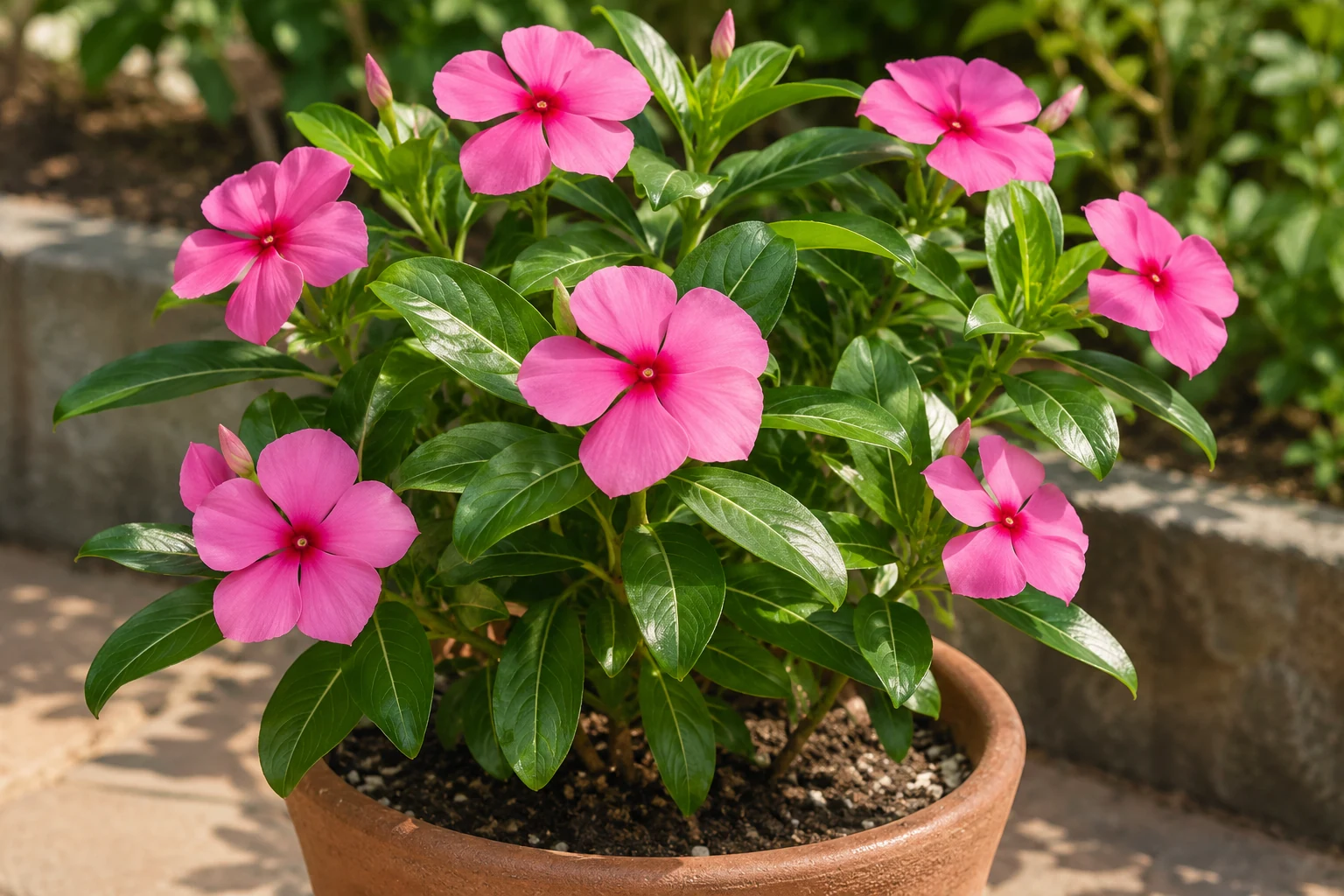
Vinca Care Guide (Catharanthus roseus)
Start with wateringThe most common care mistake for VincaWatering guide →Vinca care essentials
Light
Full sun for the strongest flowering
Water
Keep new plants evenly moist while they establish, then allow the upper soil to dry before watering again. Madagascar periwinkle tolerates heat and short dry spells, but prolonged drought can still stress container plants. Avoid keeping its roots wet; excess irrigation and persistently rainy conditions can lead to root problems.
Soil
Use a freely draining garden soil or container mix. Catharanthus roseus grows in several soil textures and prefers acidic conditions, but dependable drainage matters more than amending the soil to a precise pH.
Humidity
Temperature
Fertilizer
About Vinca
Vinca is native to Madagascar, typically reaches About 6–18 in (15–46 cm) tall and 8–12 in (20–30 cm) wide; compact hybrids vary indoors, with rapid in warm weather growth. Vinca has a erect to spreading tender perennial, commonly grown as a warm season annual growth habit and part of the Apocynaceae family. It is also known as Madagascar periwinkle, Annual vinca, Rosy periwinkle, and Rose periwinkle.
| Detail | Information |
|---|---|
| Also known as | Madagascar periwinkle, Annual vinca, Rosy periwinkle, Rose periwinkle |
| Native region | Madagascar |
| Mature size | About 6–18 in (15–46 cm) tall and 8–12 in (20–30 cm) wide; compact hybrids vary |
| Growth rate | Rapid in warm weather |
| Growth habit | Erect To Spreading Tender Perennial, Commonly Grown As A Warm Season Annual |
| Scientific name | Catharanthus roseus |
| Family | Apocynaceae |
How to care for Vinca?
How much light does Vinca need?
Full sun for the strongest flowering. Partial shade. Dappled sunlight. direct sun
- Full sun for the strongest flowering - Full sun for the strongest flowering.
- Partial shade - Partial shade.
- Dappled sunlight - Dappled sunlight.
- direct sun - direct sun.
When should you water Vinca?
Keep new plants evenly moist while they establish, then allow the upper soil to dry before watering again. Madagascar periwinkle tolerates heat and short dry spells, but prolonged drought can still stress container plants. Avoid keeping its roots wet; excess irrigation and persistently rainy conditions can lead to root problems.
- Feel the soil a few centimeters below the surface. When that layer is dry - Keep new plants evenly moist while they establish, then allow the upper soil to dry before watering again.
- water the root zone thoroughly and let excess water drain from the pot or bed - Avoid keeping its roots wet; excess irrigation and persistently rainy conditions can lead to root problems.
- Drain excess water - Avoid keeping its roots wet; excess irrigation and persistently rainy conditions can lead to root problems.
What soil works best for Vinca?
Use a freely draining garden soil or container mix. Catharanthus roseus grows in several soil textures and prefers acidic conditions, but dependable drainage matters more than amending the soil to a precise pH.
- For containers - Use a freely draining garden soil or container mix.
- use a quality potting mix amended with perlite or another coarse drainage material if it stays wet - Use a freely draining garden soil or container mix.
- Do not use a pot without drainage holes or leave the container standing in water. - Use a freely draining garden soil or container mix.
Grower notes for Vinca
Check the botanical name when buying periwinkle
This hub covers Madagascar periwinkle, Catharanthus roseus, often sold as annual vinca. It is different from true Vinca species such as Vinca minor and Vinca major, which are cold-hardy, shade-tolerant ground covers. The names overlap in garden centers, but their growth habits and care differ.
Give it sun, warmth, and room to bloom
Full sun supports the heaviest flowering, though the plant tolerates some partial shade. It is a tender perennial in warm regions and is commonly planted as a summer annual where frost arrives. Choose a compact or taller cultivar to match the bed, path edge, or container.
Let the soil dry between waterings
Annual vinca handles heat and short dry periods better than soggy roots. Water transplants as they settle in, then check the root zone before each watering. Gardening Know How notes that heavy rain or excess irrigation can cause root rot, so containers need an unobstructed drain hole.
Keep fertilizer modest
A lean, well-drained bed is usually sufficient. Gardening Know How cautions that overly fertile soil can reduce flowering; for container plants, use fertilizer sparingly and follow the product label instead of feeding at every watering.
Flowers continue until cold weather
NC State Extension describes flowering from summer until frost and notes that modern hybrids are bred to stay compact and branch well. Most do not need routine deadheading. In frost-free climates the plant may persist as a perennial; in colder areas, plan to replace it the following season.
Keep pets from chewing the plant
NC State Extension identifies vinca alkaloids, lists all plant parts as poisonous, and flags Catharanthus roseus as a problem for cats, dogs, and horses. The profile does not provide animal-specific symptoms or a dose threshold, so keep it out of reach and contact a veterinarian or animal poison service if an animal eats any part of it.
Is Madagascar periwinkle safe for pets?
NC State Extension flags Catharanthus roseus as a problem for cats, dogs, and horses and identifies vinca alkaloids in all plant parts. The profile does not give animal-specific symptoms or a dose threshold. Keep pets from chewing the leaves, flowers, stems, seeds, or roots; contact a veterinarian or animal poison service if ingestion occurs.
NC State Extension identifies vinca alkaloids as the toxic principle of Catharanthus roseus, lists all plant parts as poisonous, and flags this species as a problem for cats, dogs, and horses. The profile does not give animal-specific symptoms or a dose threshold. Prevent ingestion and seek veterinary advice after exposure.
Watering Vinca
For Vinca, feel the soil a few centimeters below the surface. When that layer is dry, water the root zone thoroughly and let excess water drain from the pot or bed. and water check the soil rather than watering on a fixed schedule. Water newly planted vinca when the surface begins to dry, and give established plants a thorough drink during extended hot, dry weather. Containers may need more frequent checks than garden beds. Water more often while seedlings and transplants establish and during long hot spells. Reduce supplemental water in cool, cloudy, or rainy weather because this plant is vulnerable to persistently wet soil.
| Detail | Information |
|---|---|
| How often | Check the soil rather than watering on a fixed schedule. Water newly planted vinca when the surface begins to dry, and give established plants a thorough drink during extended hot, dry weather. Containers may need more frequent checks than garden beds. |
| How to check | Feel the soil a few centimeters below the surface. When that layer is dry, water the root zone thoroughly and let excess water drain from the pot or bed. |
| Seasonal changes | Water more often while seedlings and transplants establish and during long hot spells. Reduce supplemental water in cool, cloudy, or rainy weather because this plant is vulnerable to persistently wet soil. |
Signs of overwatering
- Potting mix or garden soil stays wet between waterings.
- Lower leaves yellow or the plant wilts while its roots remain in wet soil.
- Stems or roots soften after prolonged rain or frequent irrigation.
Signs of underwatering
- The root zone is dry and the plant remains wilted after the hottest part of the day.
- Container soil dries very quickly during a long heat spell.
Soil & potting for Vinca
Use a mix of For containers, use a quality potting mix amended with perlite or another coarse drainage material if it stays wet., Do not use a pot without drainage holes or leave the container standing in water. for Vinca. Excellent drainage is essential. Avoid low spots that remain saturated and use pots with open drainage holes; prolonged wetness and heavy rain can trigger root problems. Target soil pH around Prefers acidic soil; NC State Extension lists a pH below 6.0. Repot in frost-prone climates, vinca is usually grown as seasonal bedding and does not need routine repotting. If overwintering a container plant in a warm, frost-free climate, move it up one pot size when roots fill the current pot., ideally in plant outdoors after frost danger has passed. In warm climates, refresh or repot container plants at the start of the active growing season.
| Detail | Information |
|---|---|
| Recommended mix | For containers, use a quality potting mix amended with perlite or another coarse drainage material if it stays wet., Do not use a pot without drainage holes or leave the container standing in water. |
| Drainage | Excellent drainage is essential. Avoid low spots that remain saturated and use pots with open drainage holes; prolonged wetness and heavy rain can trigger root problems. |
| Soil pH | Prefers acidic soil; NC State Extension lists a pH below 6.0 |
| Repotting frequency | In frost-prone climates, vinca is usually grown as seasonal bedding and does not need routine repotting. If overwintering a container plant in a warm, frost-free climate, move it up one pot size when roots fill the current pot. |
| Best season to repot | Plant outdoors after frost danger has passed. In warm climates, refresh or repot container plants at the start of the active growing season. |
Signs it needs repotting
- Roots circle the pot or emerge from its drainage holes.
- The container dries unusually fast even after thorough watering.
- The plant has outgrown its pot and is difficult to keep upright.