How to Grow and Care for Vinca Minor (Periwinkle)
Grow periwinkle as a tidy groundcover: choose a safe site, plant at the right spacing, control spread, and solve yellow leaves, wilt, and canker.

Vinca minor, commonly called periwinkle, lesser periwinkle, or creeping myrtle, is a low, evergreen groundcover with glossy leaves and blue-lavender flowers. It solves a real garden problem: a bare, shady bank or difficult strip beneath trees can become green without the mowing and watering a lawn would demand.
It also has a trait that changes the care plan. Its trailing stems root wherever nodes touch suitable soil, allowing one small planting to knit into a dense mat and then move beyond the bed. Good Vinca minor care therefore means more than light and water; it includes choosing a site you can inspect, leaving room to prune, and checking whether the plant is listed as invasive where you live.
Vinca Minor Quick Reference
| Care factor | Practical target | What to watch |
|---|---|---|
| Mature size | About 3–6 inches tall; trailing stems commonly 6–24 inches wide | The mat can spread much farther over time |
| Light | Full sun, part shade, dappled light, or shade | More shade usually means fewer flowers; hot sun can bleach or scorch foliage |
| Soil | Moist to occasionally dry, fertile or average, and well-drained | Soggy soil and standing water invite decline |
| Water | Regularly during establishment; moderate or low once rooted | Do not let a newly planted root ball dry repeatedly |
| Hardiness | Commonly listed for USDA Zones 4–9, depending on source and cultivar | Winter exposure, snow cover, and container roots change the result |
| Flowers | Blue to lavender, sometimes white; strongest in spring and early summer | Dense shade produces more foliage than bloom |
| Spread | Rapid, by trailing stems that root at nodes | Keep shoots away from lawns, woodlands, and property edges |
| Propagation | Division or stem cuttings | Seed is slower and less useful for a named cultivar |
| Pet safety | Toxic to dogs, cats, and horses | Keep clippings and plants away from animals that chew foliage |
The figures are a planning range, not a promise that a plant will remain inside a six-inch footprint. NC State Extension describes Vinca minor as a rapid-growing, broadleaf evergreen groundcover that forms dense mats and classifies its maintenance as high because that spread can become weedy; the same profile lists full sun through dappled or heavy shade, good drainage, and USDA Zones 4a through 9b. (NC State Extension)
Decide Whether Vinca Minor Fits Your Site
Periwinkle is a reasonable choice when you want an evergreen mat in a defined bed, can reach its outer edge, and do not have an easy route into a stream corridor, unmanaged woodland, roadside, or neighboring natural area. It is a poor choice when “low maintenance” means you do not want to inspect or cut anything for several years.
The Invasive Plant Atlas of the United States records Vinca minor as an introduced plant that has escaped cultivation across natural areas in the eastern United States. Its profile explains that the plant forms dense and extensive mats that displace native herbaceous and woody species, and that it commonly spreads vegetatively rather than relying on abundant seed. (Invasive Plant Atlas of the United States)
That does not make every existing garden planting an emergency. It does mean you should check your state, county, or cooperative extension invasive-plant list before buying it, especially if your property borders woods or a drainage area. A concrete path or retaining wall can slow a spread pathway, but it is not a substitute for an edge inspection because stems can root in small pockets of soil.

Light, soil, and moisture are a package
The plant tolerates a wider light range than many flowering perennials, but “tolerates” and “performs best” are different. In full sun or bright dappled light, periwinkle generally flowers more freely and stays compact; in deep shade it can still make a green cover, but bloom may be sparse and stems may travel farther searching for light.
Soil moisture changes the light decision. A dry, root-filled spot under a mature tree is not equivalent to a moist woodland margin: tree roots can intercept rainfall before it reaches the vinca, while dense shade slows evaporation. Gardenia describes the plant as tolerant of dry soil and drought once established, while RHS Plants recommends a prepared border or woodland margin with organic matter and warns that it should not dry out in summer. (Gardenia) (RHS Plants)
Use that apparent tension as a useful rule. Mature plants can handle short dry periods, but newly planted plugs need consistent moisture, and a dry shade bed may need supplemental water even when the surrounding garden looks fine. Avoid any location that stays saturated after rain; the roots need oxygen as much as they need water.
Plant Vinca Minor for Fast but Manageable Cover
Plant in spring or early fall, when soil is workable and temperatures are mild. Spring planting gives the roots a long season to establish before winter; early fall can be excellent in climates with a long cool autumn because the top growth slows while roots continue developing.
Prepare the bed by removing perennial weeds and loosening compacted soil around, rather than through, established tree roots. Mix in a modest amount of finished compost if the soil is thin or depleted, but do not create a rich, water-holding pocket that stays wetter than the surrounding bed.
Set each plant at the same depth it grew in its nursery pot, with the crown level with the soil surface. Water slowly after planting so the root ball makes full contact with surrounding soil, then apply a thin mulch layer that stops short of the crown and does not bury trailing stems you want to root only within the planned bed.
Spacing and first-season aftercare
Space small plants about 8–12 inches apart for a quicker carpet, or widen the spacing when you want fewer plants to monitor and are willing to wait longer for the gaps to close. Gardenia lists 8 inches for quick cover in small areas and 12–18 inches for larger areas; the wider range is often the better maintenance choice because it leaves inspection lanes while the plants establish. (Gardenia)
For the first four to eight weeks, check moisture at the root ball rather than watering the entire bed automatically. If the top inch or two is drying quickly and the plant is still loose in the soil, water deeply; if the soil is cool and damp, wait. A plant that wilts in the afternoon but recovers by evening may be reacting to heat, while persistent wilt in wet soil points to a root problem.
Keep weeds out while the mat is filling in, but do not cultivate aggressively through the planting. Pull small weeds by hand or use a narrow tool between plants, then inspect the outermost stems each time you are already in the bed. Early removal of one unwanted runner is easier than disentangling a season’s growth from shrubs, turf, or ground-level irrigation lines.
Watering, Feeding, and Mulching Without Overdoing It
Water new periwinkle whenever the root zone begins to dry, adjusting for sun, wind, soil texture, and rainfall. Once established, water during prolonged drought or when leaves remain limp in the cool part of the morning; a mature mat does not need a daily drink simply because it is evergreen.
The safest pattern is a slow soak at the soil line followed by a partial dry-down. UC IPM groups vincas among plants that grow well with little to moderate water and specifically warns against overwatering and poorly drained soil. (UC Statewide Integrated Pest Management Program) If irrigation wets the foliage every evening, change the timing or use a soaker line so leaves and stems dry more quickly.
Fertilizer is optional in average soil and most useful after a soil test or when growth is clearly weak. A thin spring layer of compost is usually a better first step than monthly feeding, especially in shade where excess nitrogen can produce soft, leafy growth without solving low light. If a balanced fertilizer is needed, apply it in spring according to the product label and water it in; do not fertilize drought-stressed or diseased plants.
Mulch suppresses weeds and buffers moisture, but a thick mat of organic material can hide rooted runners and wet stems. Keep mulch a few inches away from crowns, rake out leaves that remain wet against foliage, and leave enough open soil that you can see where the plant is going.
Pruning and Containment
Pruning is not required to make periwinkle survive, but it is one of the most useful parts of responsible care. A light trim keeps a bed from looking leggy, removes damaged growth, and lets you reset the boundary before stems cross into places where they will be difficult to retrieve.
The best general window is spring after the main flush of bloom, or earlier if a runner has already crossed the intended edge. Gardenia recommends cutting back unwanted shoots in spring and lifting and dividing congested clumps when necessary; RHS Plants gives similar spring guidance for keeping the plant in bounds. (Gardenia) (RHS Plants)
How to cut it back and check the edges
Use sharp, clean pruners for a small bed. Cut trailing stems back to a healthy junction or close to the crown, collect the pieces, and never leave green stem sections on bare soil where their nodes can root. A mower on its highest setting may be practical for a large, flat, contained planting, but mowing only shortens the canopy; it does not remove rooted nodes at the boundary.
Make an edge check three times a year: after spring growth begins, after the hottest or wettest part of summer, and before leaf cleanup in fall. Follow each runner to its last rooted point, lift that section, sever it, and dispose of the material in a sealed yard-waste bag or according to local composting rules. Do not place viable cuttings in a community compost pile unless its process reliably reaches the temperatures and handling standards required to kill them.
Avoid shearing a whole bed just before a major freeze if the cut exposes crowns in a cold, windy site. In colder climates, leave a modest cover until late winter or use a light mulch after the ground cools; the aim is to buffer roots, not to bury the plant in wet debris.
Propagating Vinca Minor
Periwinkle is easy to multiply, which is useful when you are filling a contained bed and risky when you are sharing pieces with a friend who has an unmanaged property edge. NC State Extension lists division and stem cuttings as recommended propagation strategies. (NC State Extension)
Choose a healthy, actively growing section with no canker, wilt, or suspicious leaf spotting. Disinfect cutting tools between plants, label cultivars if foliage differs, and decide where the new plants will live before making more than you can monitor.
Division for the fastest result
Division is the quickest route to a plant that already has roots. Work in spring or early fall while temperatures are moderate, water the parent plant the day before, and lift a small section with a spade or hand fork rather than tearing a long mat apart.
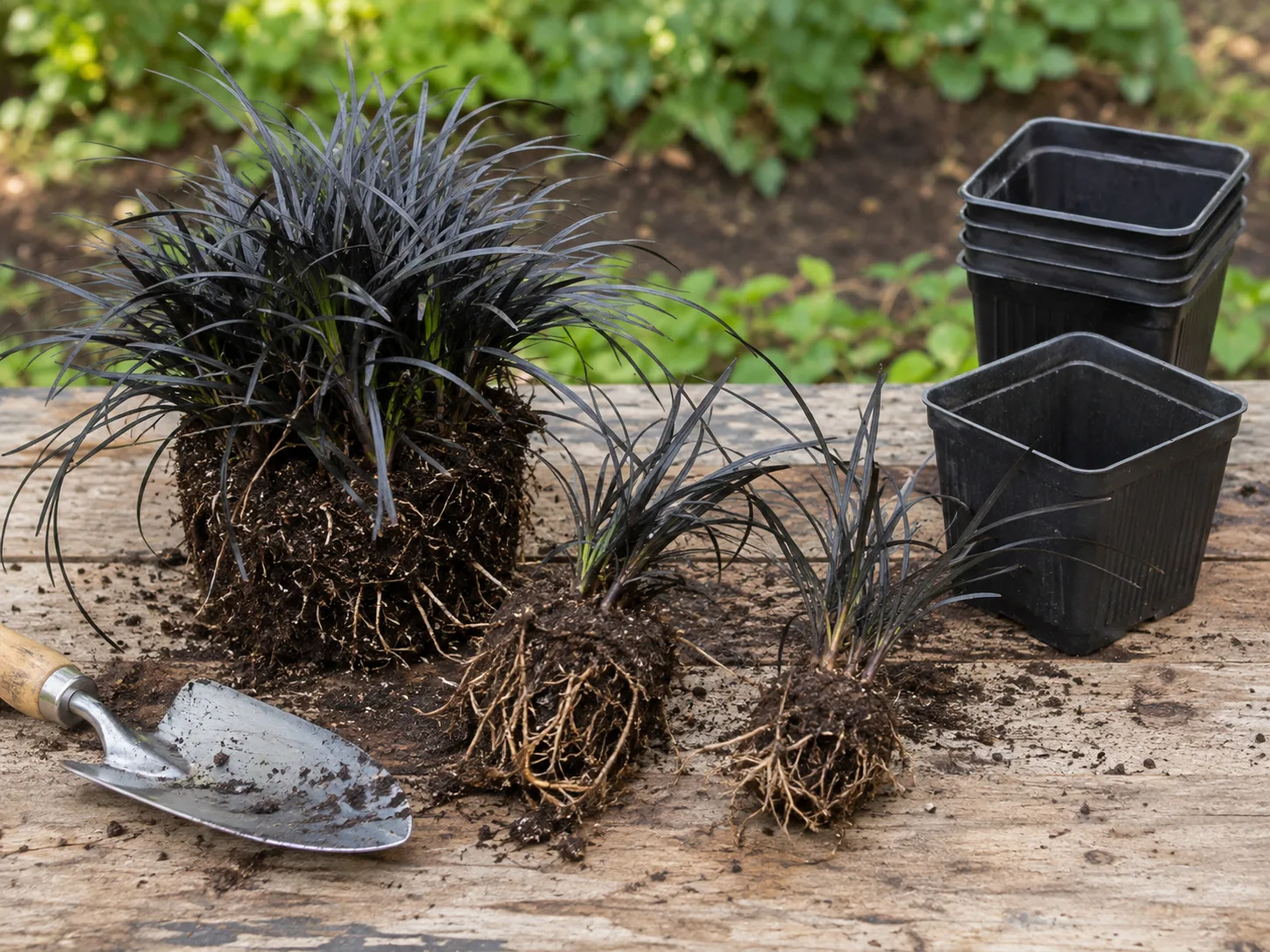
Separate the clump into pieces that each have roots, several shoots, and enough crown tissue to support new growth. Replant divisions at the original depth, firm soil around them, water thoroughly, and keep them evenly moist during the first few weeks. If a division is mostly loose vine with no crown or roots, it is a cutting, not a division, and should be handled accordingly.
Stem cuttings when you need more plants
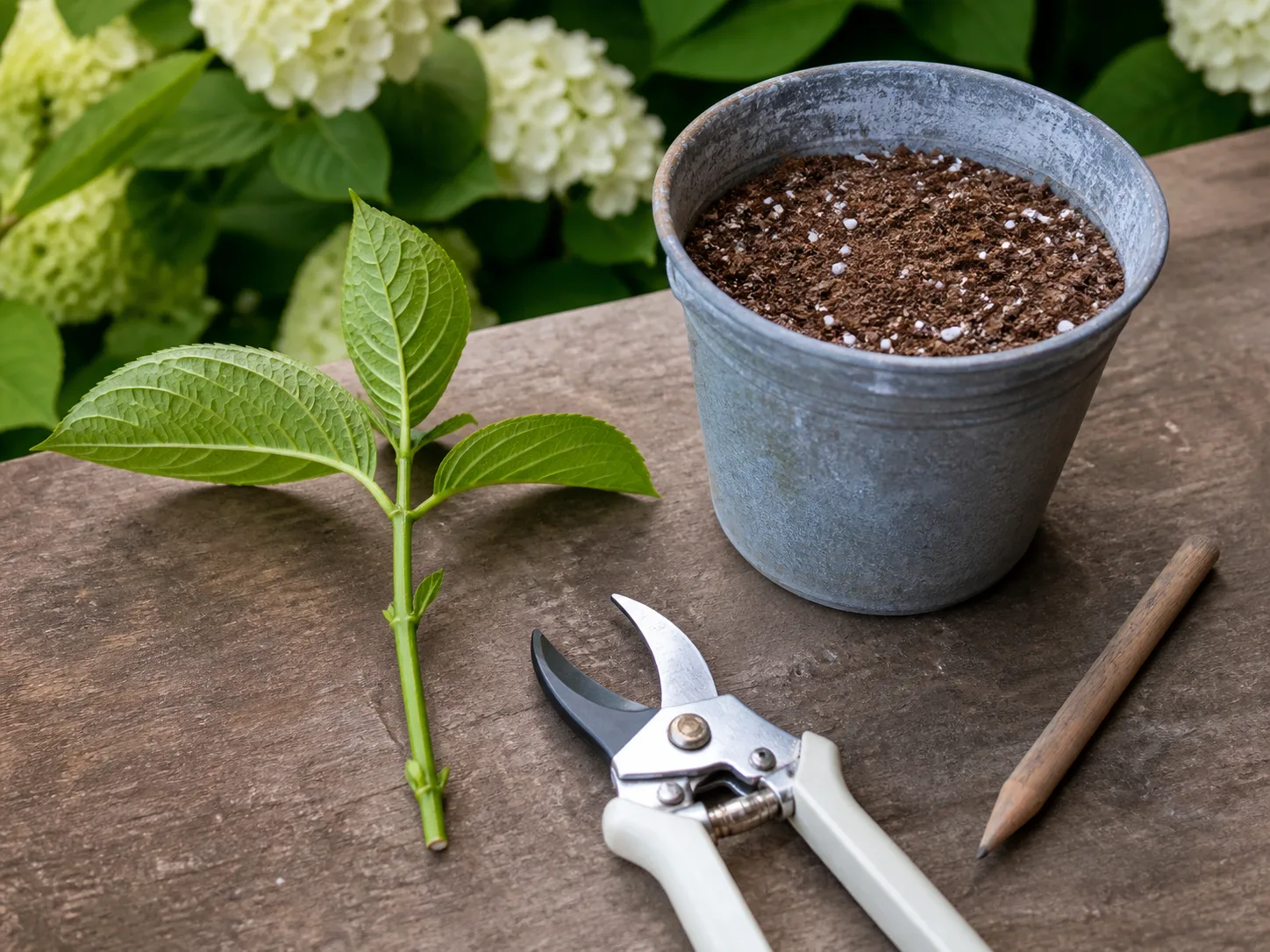
Take 4–6-inch cuttings from healthy nonflowering or lightly flowering stems during active growth. Remove leaves from the lower portion, place the base in a small pot of moist, well-drained propagation mix, and keep the container in bright shade while the cutting roots.
Rooting hormone is optional; clean technique, node contact with the mix, and consistent moisture matter more. Keep the medium damp but never waterlogged, tug very gently after a few weeks to test for resistance, and transplant only after roots hold the mix. Gardening Know How also recommends stem cuttings and division, and emphasizes that the plant’s rapid node-rooting habit is the reason it fills ground quickly. (Gardening Know How)
Growing Periwinkle in Containers and Through Winter
Vinca minor can grow in a container, hanging basket, or planter when the vessel has a drainage hole and the potting mix drains freely. Container culture is also a practical containment strategy because runners can be clipped before they touch garden soil, but it is not zero maintenance: stems can still trail over the rim and root in a neighboring planter or crack.
Choose a pot only a little wider than the root ball, use a quality outdoor potting mix rather than heavy garden soil, and water when the upper layer begins to dry. Containers lose moisture faster in sun and wind but can remain wet in cool shade, so check the mix with a finger or moisture meter instead of using the same schedule as an in-ground bed.
In USDA Zones 4–9, in-ground plants generally return after winter when their roots are established, though local exposure and snow cover matter. Container roots experience colder, faster temperature changes than roots in the ground, so move pots to a sheltered location, group them against a building, or protect them with insulation before a hard freeze. Do not seal a dormant pot in plastic where meltwater can collect.
Cultivars and Identification: Minor, Major, or Annual Vinca?
The species is usually recognized by opposite, glossy, thick-textured oval leaves and small five-petaled blue-lavender flowers on trailing stems. Cultivars add useful foliage effects: ‘Variegata’ has creamy margins, ‘Honeydew’ has chartreuse foliage, and ‘24 Carat’ is noted for gold young leaves; white- and double-flowered forms are also sold.
Do not confuse Vinca minor with greater periwinkle (Vinca major). NC State Extension notes that V. major has larger flowers and leaves that are broadest below the middle, with more heart-shaped leaf bases and ciliate margins; V. minor has smaller flowers, thicker leaves, and rounded to wedge-shaped bases. (NC State Extension) That distinction matters because the larger species can behave differently in a landscape and may have different regional recommendations.
“Annual vinca” is a separate plant, usually Catharanthus roseus, grown as a warm-season bedding annual. Its upright habit, larger flowers, and heat-season use do not tell you how a creeping evergreen groundcover should be planted or contained.
Pests and Diseases
Periwinkle is generally tough, but toughness is not immunity. UC IPM lists aphids, black scale, scale, and spider mites among potential invertebrate problems for vincas, along with wilt and water excess or deficiency disorders. (UC Statewide Integrated Pest Management Program)
Inspect undersides of leaves and crowded stem joints when growth looks distorted, sticky, stippled, or unusually pale. Start with the least disruptive response that fits the diagnosis: improve airflow, correct watering, remove a small infested section, and use only a pesticide labeled for the crop, pest, site, and application method if stronger control is necessary. Do not spray a guessed mixture across a dense mat where runoff can reach other plants or water.
Troubleshooting yellow leaves, wilt, and dieback
A few old leaves turning yellow: Check whether the plant is replacing shaded or aging foliage, then look for an obvious moisture change. Remove fallen leaves that mat against stems and watch new growth rather than reacting to one old leaf.
Many leaves yellowing after rain or irrigation: Suspect poor drainage or overwatering first. Feel the soil several inches down, confirm the bed does not collect runoff, and pause irrigation until the root zone begins to dry; persistent decline in wet soil is not fixed by fertilizer.
Bleached or yellow leaves on the sunniest edge: The plant may be receiving more heat and reflected light than the rest of the mat. Provide water during establishment, check for scorch on the exposed side, and consider whether a little afternoon shade would improve appearance without sacrificing all bloom.
Sudden wilt, sunken stem lesions, or expanding bare patches: Isolate the pattern rather than watering more. NC State Extension warns that vine stem canker or blight can damage or kill large patches, while Gardening Know How recommends avoiding overhead watering and removing damaged stems when cankers appear. (NC State Extension) (Gardening Know How) Prune well below visibly affected tissue with disinfected tools, bag the debris, and seek local extension diagnosis if the patch continues to expand.
Invasive Status and Responsible Removal
The word invasive is a regional management and ecological designation, not a rating of how attractive or vigorous one plant looks in one yard. The Invasive Plant Atlas documents that Vinca minor can escape from old homesites, occupy open and shady habitats, and displace native plants by forming dense mats; its map is not complete, so the absence of a record is not proof that planting is harmless. (Invasive Plant Atlas of the United States)
Before planting, check your local list and look at the property’s escape routes. If a bed drains toward woods or a natural stream corridor, if you cannot reach the outer edge, or if local guidance discourages the plant, choose a noninvasive or native groundcover instead. If you already have a contained planting, annual edge work and responsible clipping disposal can reduce risk, but no maintenance plan can guarantee zero spread.
How to remove a small escape
Remove periwinkle when the soil is moist enough to loosen roots. Trace each runner, lift as much rooted stem and crown as possible, and bag the material; raking or mowing alone can leave nodes behind. Recheck the area after rain and again during the next growing season because small fragments can remain hidden under leaf litter.
For a large mat in a sensitive natural area, do not improvise a herbicide program from a generic recipe. Contact your county extension office, land manager, or qualified invasive-plant professional for a site-specific plan that accounts for desirable plants, slope, water, and label restrictions. Follow local yard-waste rules, and never dump pulled pieces at the edge of woods or in a vacant lot.
Periwinkle is toxic to dogs, cats, and horses because of its vinca alkaloids, according to ASPCA Animal Poison Control. (ASPCA: Periwinkle) Keep pruning debris away from pets, wear gloves when handling large amounts, and contact a veterinarian or ASPCA Poison Control at (888) 426-4435 if an animal may have eaten it.
Safer Alternatives for Risky Sites
If your goal is shade cover beside a natural area, start with plants native to your region rather than searching for a “less aggressive” vinca cultivar. The best alternative depends on soil moisture, deer pressure, winter temperatures, mature tree roots, and whether you need evergreen foliage or spring flowers.
For a dry woodland edge, explore locally native sedges, wild ginger, foamflower, or woodland phlox where they fit your region. For a sunny, well-drained slope, consider regionally native low shrubs, pussytoes, creeping phlox, or other plants recommended by your extension service. None is universally safe or maintenance-free; a native plant can still spread beyond a small bed, but it supports a better ecological fit than importing a vigorous mat former into a natural corridor.
If you keep existing periwinkle, treat it as a managed planting rather than a set-and-forget lawn substitute. Define the boundary, leave an inspection strip, schedule edge checks, and remove extra divisions instead of passing them along without explaining the plant’s spread and regional status.
Conclusion
Vinca minor succeeds when you give it well-drained soil, dependable moisture while it establishes, enough light for the amount of flowering you want, and a boundary you can reach. It is especially useful as a low evergreen cover for a defined bed, slope, or container, but its node-rooting stems make pruning and edge checks part of normal care.
Before buying, confirm the plant’s identity and local invasive status. After planting, water the root balls deeply but let established soil breathe, feed only when there is a reason, propagate with division or cuttings when you have a contained destination, and respond to yellowing or dieback by checking moisture and stems before adding fertilizer. That approach preserves the strengths of periwinkle without pretending its vigor has no cost.



