How to Grow and Care for Triostar Stromanthe
Learn how to care for Triostar Stromanthe with practical advice on light, water, humidity, soil, repotting, propagation, pests, and brown tips.
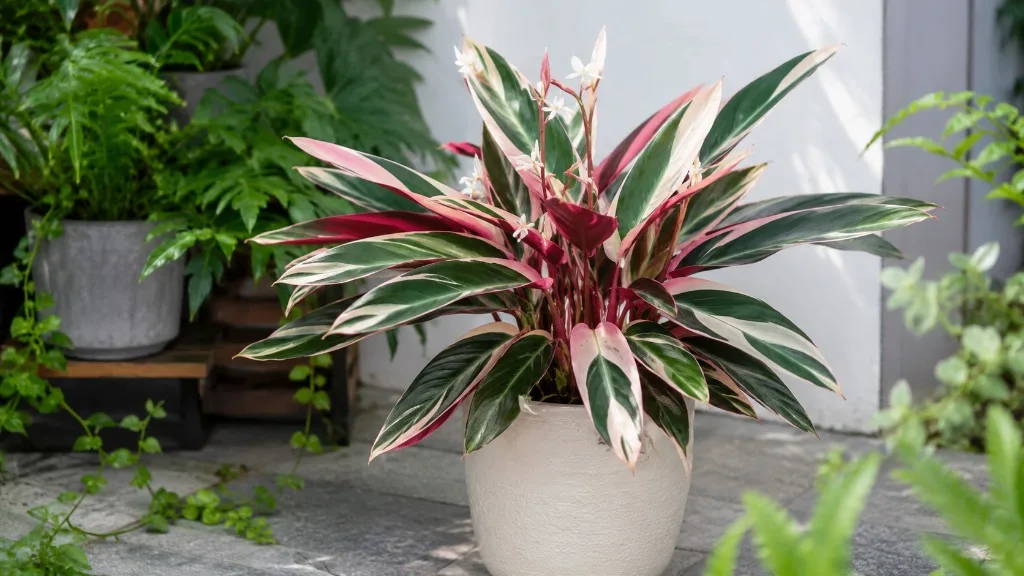
Triostar Stromanthe (Stromanthe sanguinea, also listed as Stromanthe thalia) is a clumping tropical perennial with long leaves striped in green, cream, and pink and colored burgundy underneath. Its dramatic leaf movement is part of the appeal: like other members of the Marantaceae, the leaves can lift and fold as light changes. NC State Extension lists the plant as a Brazil native that prefers warm temperatures, high humidity, partial to dappled shade, and moist but well-drained soil. NC State Extension describes the species and the ‘Triostar’ cultivar.
The plant is not difficult because it needs a mysterious trick. It is difficult when three ordinary houseplant variables drift at once: light is too dim for variegated leaves, the root zone alternates between bone-dry and saturated, and dry air increases water loss from the foliage. Build a stable environment first, then adjust one variable at a time. That approach prevents the common mistake of treating every brown edge as a watering problem.
What Triostar Stromanthe Is
The name “Triostar” generally refers to the variegated cultivar of the species rather than a separate species. Its foliage combines green tissue with pale cream or white areas and pink striping, while the undersides range from rosy red to burgundy. NC State notes that the species can reach roughly 5 feet outdoors but usually stays about 2 to 3 feet tall as a houseplant; the mature size depends on light, container volume, and how long it remains in active growth.
This is a rhizomatous, clumping plant, so new shoots emerge from a basal crown rather than from a long vining stem. That anatomy explains two care facts that matter later: a stem cutting is not a dependable propagation method, and a successful division must contain both a piece of rhizome and living roots. Small white flowers with colorful bracts can appear in ideal warm conditions, but flowering is secondary to the foliage and is not a useful health test for an indoor plant.
Choose the Right Spot Before You Water
Start with placement, because light and airflow determine how quickly the pot dries. A Triostar is happiest in a warm room with bright ambient light, steady humidity, and no blast from a heater, air conditioner, exterior door, or frequently opened cold window. A bathroom can work, but only if it has enough filtered light; humidity cannot compensate for a dim room.
Give the plant space around its leaves rather than pressing it into a dark corner among other pots. Good air movement helps wet foliage dry and makes it easier to inspect the undersides of leaves for mites or mealybugs. If you bring one home from a greenhouse, expect some adjustment: greenhouse light and humidity are higher than most houses. Nebraska Extension recommends conditioning new houseplants gradually and warns that a change in light, humidity, and salts in the growing medium can cause foliage loss after purchase. Its houseplant guide explains the acclimation principle.
Give It Bright, Filtered Light
Set Triostar near an east-facing window, or place it a little back from a bright south- or west-facing window behind a sheer curtain. The goal is a strong, soft light that casts a gentle shadow rather than a harsh beam across the leaves. Direct midday sun through glass can scorch the cream and pink sectors, while a deep interior position often produces stretched petioles, smaller new leaves, and less vivid variegation.
Turn the pot a quarter turn every week or two if light comes from one side. This keeps the clump from leaning and spreads light across new growth. Avoid making a dramatic move from a dim shelf to direct sun; shift it closer to the window over several days so the leaves can acclimate.
Adjust Light for Variegated Leaves
Triostar has less chlorophyll in its pale areas than in its green areas, so it cannot use a low-light location as efficiently as a solid-green foliage plant. That does not mean it wants full sun. Think of light as a narrow lane: too little and new leaves emerge greener or smaller; too much and pale areas develop bleached or brown patches.
Seasonal change matters. A position that was bright enough in July may be too dim in November as the sun angle changes and daylight shortens. Move the plant gradually closer to the window in fall, or use a full-spectrum grow light on a timer if the room is consistently dark. New leaves show the result of the new conditions; an older leaf that has already lost pink or suffered scorch generally will not return to its original pattern.
Build an Airy Moisture-Retentive Mix
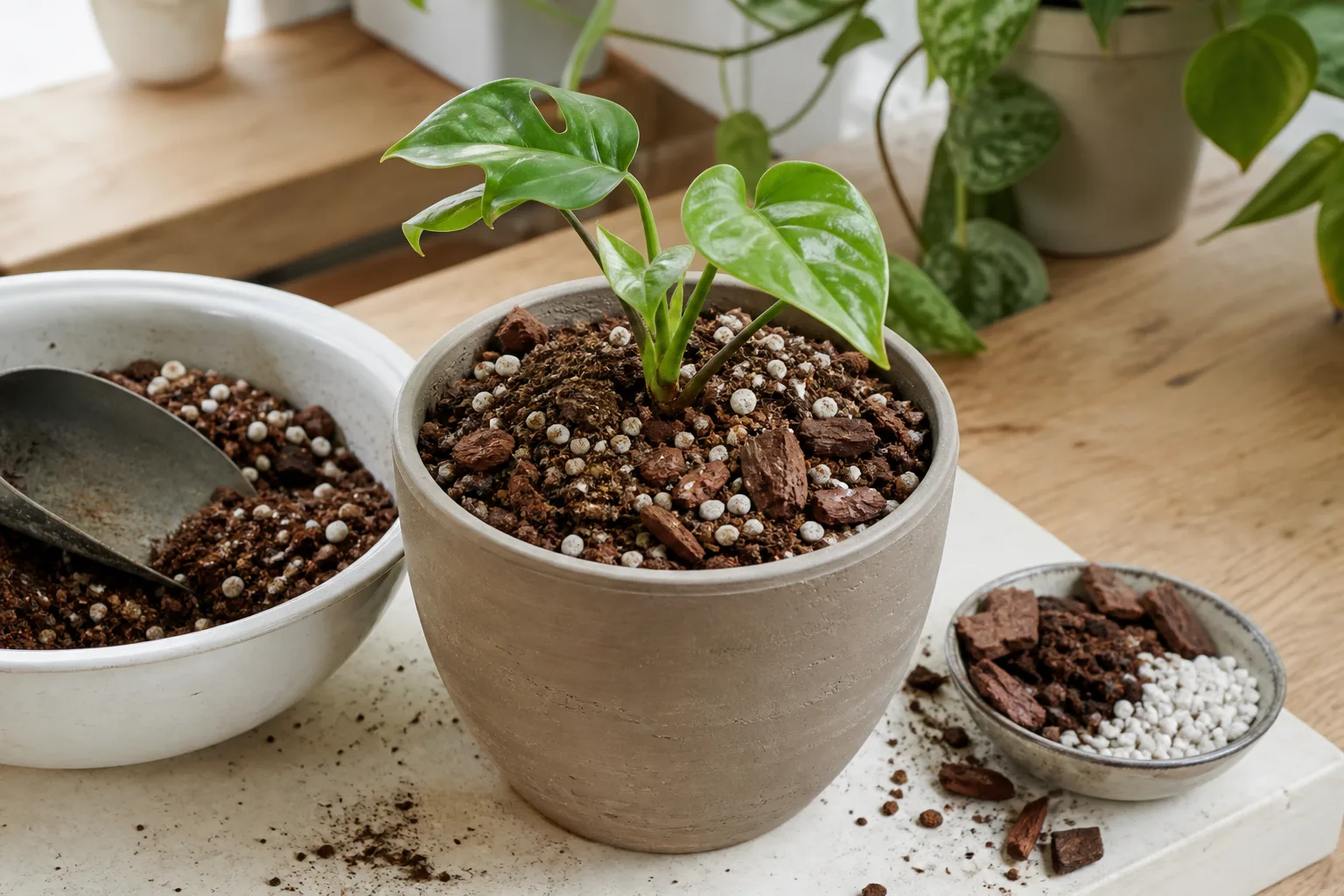
Use a quality indoor potting mix amended with a moisture-holding ingredient and an airy drainage ingredient. A practical starting blend is two parts potting mix, one part coco coir, and one part perlite or fine orchid bark. The exact recipe is less important than the result: when watered, the mix should absorb evenly, drain freely, and leave air-filled spaces around the roots instead of turning into a dense mud.
That balance matches the practical container guidance in FoliageFoundry’s Triostar care profile, which emphasizes a mix that holds moisture while remaining airy and a pot that is only modestly larger than the root system.
Do not use garden soil alone in an indoor pot. It can compact, drain poorly, and bring in unwanted organisms. Nebraska Extension describes well-drained media as important for houseplant roots because roots need water, oxygen, and nutrients; the same guide warns that wet soil lacks the oxygen roots require and can lead to yellow foliage and rot. See the extension guidance on rooting media and containers.
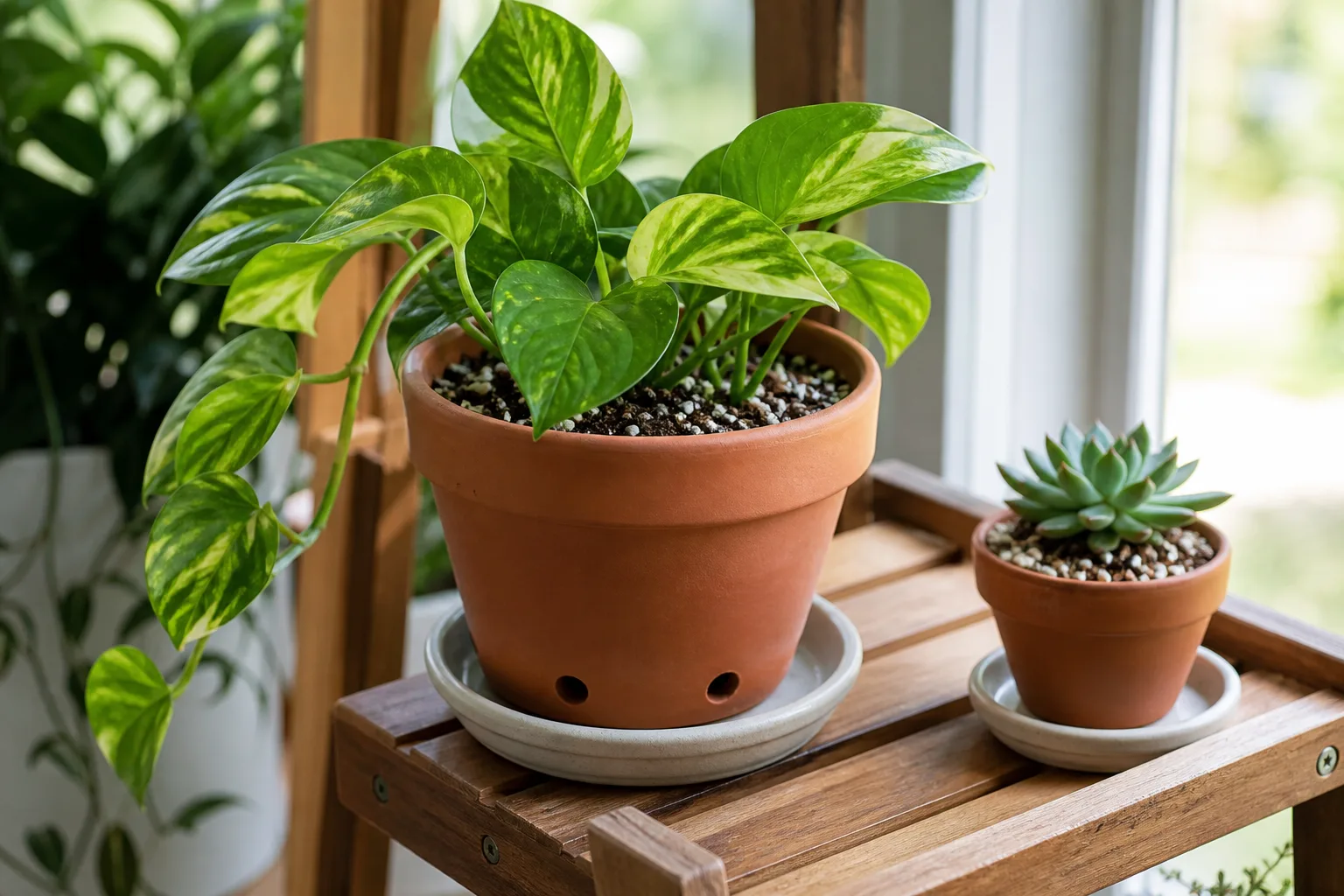
Choose a container with an open drainage hole and a saucer that can be emptied. A decorative cachepot is fine as an outer cover, but do not let the nursery pot stand in water inside it. Use a pot only slightly larger than the root ball when you repot. An oversized pot holds a large volume of wet mix around a relatively small root system, making the interval between waterings harder to judge.
Water by Soil Feel, Not Calendar
Water when the upper inch of mix feels dry, then water slowly and thoroughly until a little drains from the bottom. Empty the saucer after the pot has finished draining. This gives the roots a complete drink while preventing the “small sip every day” pattern that keeps the center of the pot continuously wet.
The calendar is only a rough starting point. A plant near a warm, bright window in summer may need water twice in a week, while a cool, dim winter room may take ten days or longer. Check the soil before every watering by pressing a finger into the mix or using a moisture meter as a second opinion. Also lift the pot occasionally: a noticeably lighter container is useful information, especially when the surface stays damp from high humidity.
Do not wait for every leaf to curl before watering. Slight surface drying is useful; repeated full drying can stress the fine roots and leave the leaf edges permanently crisp. On the other hand, do not water simply because the top looks dry if the lower pot remains heavy and wet. If the plant is in a large pot or dense mix, inspect deeper before adding more water.
Fix Water Quality and Salt Buildup
Persistent brown tips can reflect water chemistry as well as dry air. Nebraska Extension notes that excessive fluoride can scorch tips and leaves, and that room-temperature water is best for houseplants. Letting tap water sit can reduce some chlorine, but it does not remove dissolved fluoride or mineral salts. If the plant develops new browning despite stable humidity and correct watering, try distilled, reverse-osmosis, or clean rainwater where practical.
Do not let collected rainwater sit uncovered for long periods, and do not use water from a softened household system unless you know its sodium content is appropriate for plants. Once every few months during active growth, or after a long period of heavy feeding, flush the pot by running plenty of plain water through the mix and allowing it to drain completely. This reduces accumulated salts, but it is not a substitute for an airy mix or a correctly sized container.
Water quality is a diagnosis by exclusion, not a reason to panic after one imperfect watering. If brown tissue is limited to the side facing a hot window, suspect scorch first. If the whole plant is curling in a dry heated room, humidity and root moisture deserve attention before you blame the tap.
Keep Humidity Steady Without Wet Leaves
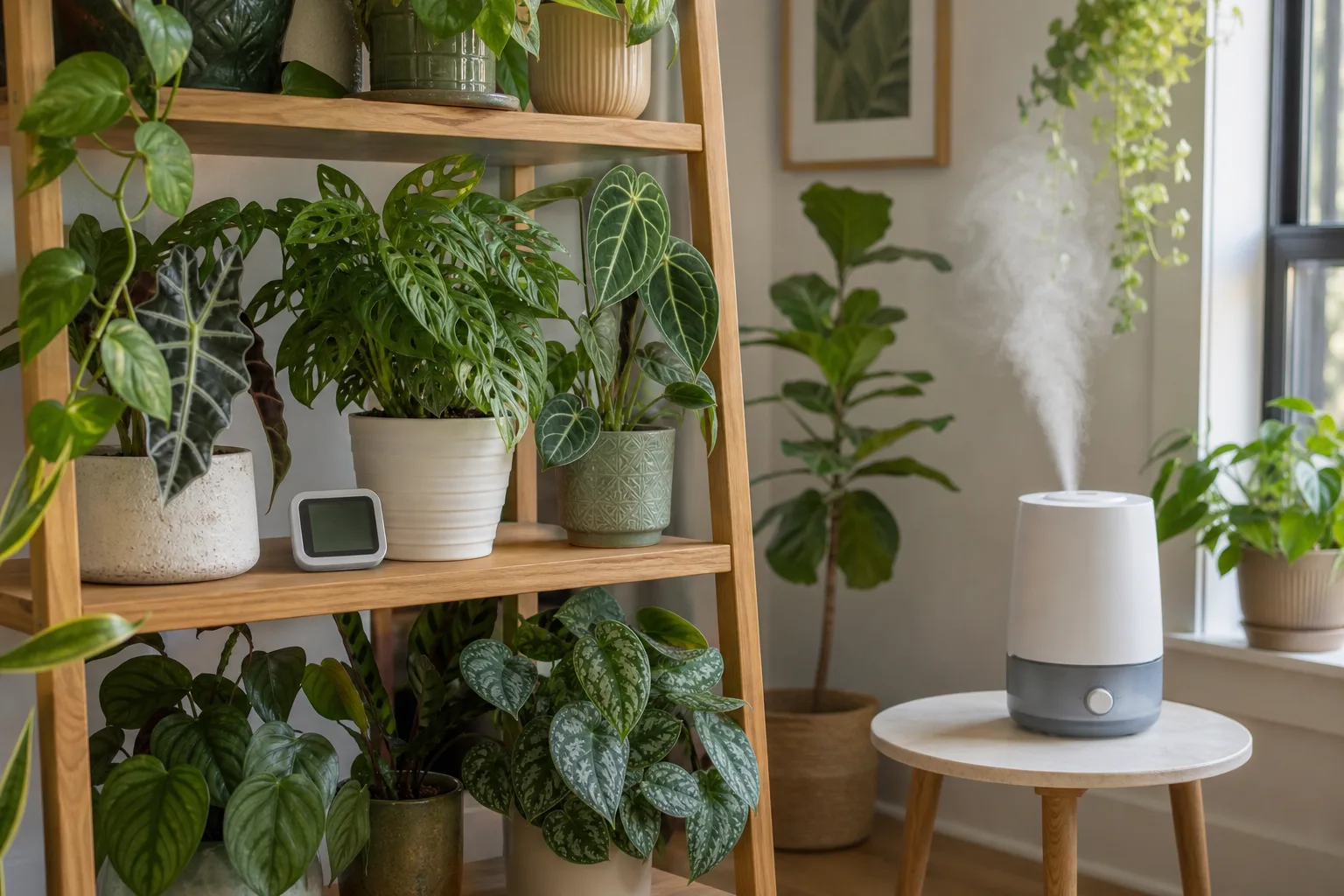
Aim for a stable, moderate-to-high humidity environment rather than chasing a single perfect percentage. A hygrometer makes the room measurable; Nebraska Extension gives 40–60 percent as a preferred range for most houseplants and recommends a humidifier when indoor air is very dry. Triostar may look better toward the upper end of that range, especially in winter, but high humidity without airflow can encourage leaf-spot problems.
A room humidifier is the most dependable tool when heating or air-conditioning dries the room. Grouping several plants can create a slightly more humid pocket, and a pebble tray may help at close range, but neither method reliably humidifies an entire room. If you use a tray, keep the pot above the waterline on the pebbles; the drainage hole should never sit in standing water.
Misting is not a durable humidity system. It briefly wets the leaf surface, and repeated evening misting can leave dense foliage damp for too long. Keep leaves clean with a soft, damp cloth or a gentle early-day rinse when needed, and allow them to dry before night. The university guide’s humidity section explains why measuring the room and using a humidifier is more useful than guessing.
Protect It From Temperature Swings
Keep the plant in a stable indoor range, roughly 65–80°F, with warmer conditions during active growth. NC State describes Stromanthe as a warm-climate perennial and lists it for USDA Zones 10–12; UF/IFAS says that in cooler parts of Florida it may be grown outdoors as an annual, while warm regions can use it in shaded perennial beds. UF/IFAS Gardening Solutions covers its shade, humidity, size, and regional use.
Cold air is often more damaging than a brief change on a thermometer. Keep the pot away from exterior doors and uninsulated glass in winter, and place it several feet from forced-air vents year-round. If you move it onto a summer patio, start in deep shade and increase outdoor exposure gradually. Bring it indoors before cool nights rather than waiting for visible injury; a cold-stressed plant can curl and shed leaves days after the temperature event.
Feed During Active Growth
Feed only when the plant is actively growing and the pot is already moist. Use a balanced liquid houseplant fertilizer at half the label strength about once a month in spring and summer, then taper or stop when growth slows in fall and winter. The best schedule depends on light, potting mix, and how often you water; a plant in dim light needs less fertilizer than one producing frequent new leaves in a bright window.
More fertilizer will not restore faded pink or compensate for inadequate light. Excess salts can burn roots and produce the same brown margins that people mistakenly treat with more water or more misting. If you see a white crust on the soil or browning that follows repeated feeding, flush the pot thoroughly and pause fertilizer until new growth resumes. Follow the product label, and do not mix several concentrated products together.
Repot Only When the Root System Needs It
Repot in spring when roots circle densely, emerge from drainage holes, the mix has collapsed and dries unpredictably, or the plant wilts soon after watering because the root ball has filled the pot. A calendar interval of roughly 18–30 months is only a prompt to inspect, not a rule. A healthy Triostar can remain in a slightly snug container if the mix still drains and the plant is growing.
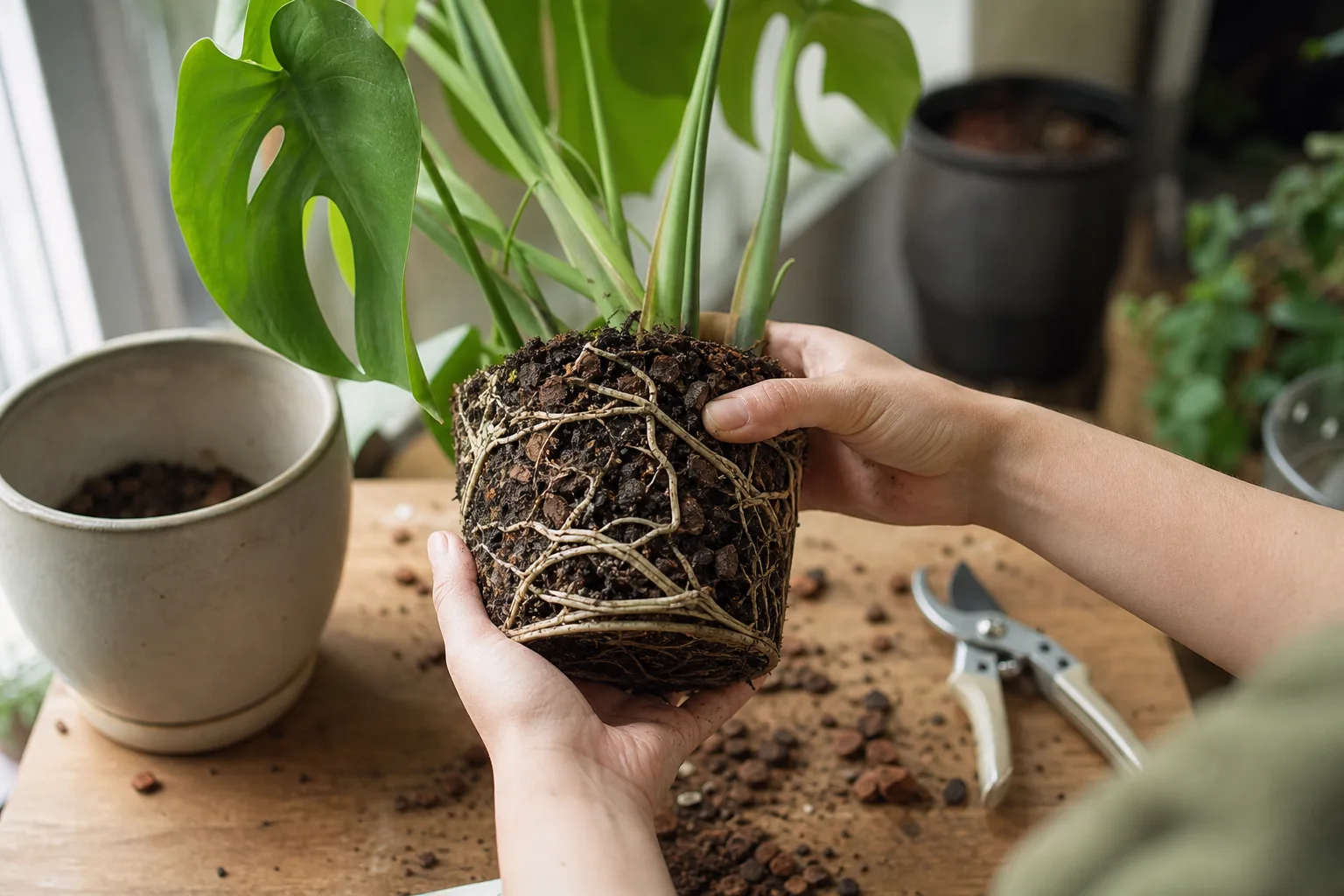
Slide the plant out gently and look at the roots before choosing a new pot. Firm, pale or tan roots and a moist, earthy mix are reassuring. Mushy dark roots, a sour smell, or a stem base that feels soft point toward rot, and that problem needs root cleanup rather than a routine size-up. Choose a new pot just one size larger, refresh the mix, keep the crown at the same depth, and water thoroughly once.
Expect a short adjustment after repotting. Place the plant in bright filtered light, keep humidity steady, and avoid feeding until new growth shows. A small amount of leaf curl is less concerning than a continually wet pot; the priority is restoring an aerated root zone.
Propagate by Division
Division is the reliable home method because Triostar grows from rhizomes. The best opportunity is spring, when the plant is beginning active growth and can rebuild roots more quickly. Water the mother plant a day before dividing so the root ball is hydrated but not dripping wet.
Remove the clump and brush away just enough mix to see where crowns connect. Separate natural sections with your fingers when possible; otherwise use a clean, sharp blade to cut through the rhizome. Each division should have a living crown, some healthy roots, and several leaves. A leafless rhizome fragment may survive in expert conditions, but it gives a home grower little margin for error.
The same basic method is described in Gardenish’s Stromanthe sanguinea profile: divide rooted rhizome sections during spring repotting and keep the new plants warm, lightly moist, and out of direct sun while they establish.
Pot each division in a small container of fresh, lightly moist mix at its former depth. Do not place a tiny division in a large pot “for future growth.” The extra wet soil can stay saturated while the reduced root system is trying to establish. Keep the divisions warm, out of direct sun, and separate from the rest of your collection while you watch for pests.
Help New Divisions Recover
New divisions often pause, curl, or lose an older leaf. That is a stress response, not proof that propagation failed. Keep the mix lightly and evenly moist, but do not compensate for root disturbance with constant watering. A clear humidity dome or loose transparent cover can slow moisture loss, provided it is vented and never traps wet foliage against plastic.
Look for resistance when you gently tug after a few weeks and for fresh leaves emerging from the crown. Remove the cover gradually once growth resumes. If a division continues to wilt in wet mix, unpot it and check for rot rather than adding more humidity; a humid room cannot repair roots that lack oxygen.
Prune, Clean, and Rotate the Clump
Use clean scissors to remove a fully yellow or badly damaged leaf at its base. If only the edge is brown, you can trim the dead tissue along the natural leaf shape for appearance, but pruning does not reverse the original stress. Leave partially green leaves in place because they still contribute energy to the rhizome.
Dusty leaves capture less useful light and are harder to inspect. Support the leaf from underneath while wiping it gently, and avoid polishing products that leave a film. Rotate the pot periodically for even growth, but do not repeatedly rearrange the plant when it is already recovering from repotting, division, or a move between rooms.
Diagnose Brown, Yellow, or Curling Leaves
Start with the pattern, location, and feel of the damage. One crispy patch beside a sunny window points in a different direction from soft yellow lower leaves in a heavy pot. Use this table to choose the first check, then give the change time to affect new growth rather than expecting damaged tissue to become green again.
| What you see | First suspicion | Check next | First response |
|---|---|---|---|
| Pink or cream fades toward green on new leaves | Too little useful light | Compare the plant with its window distance and seasonal daylight | Move gradually to brighter filtered light or add a grow light |
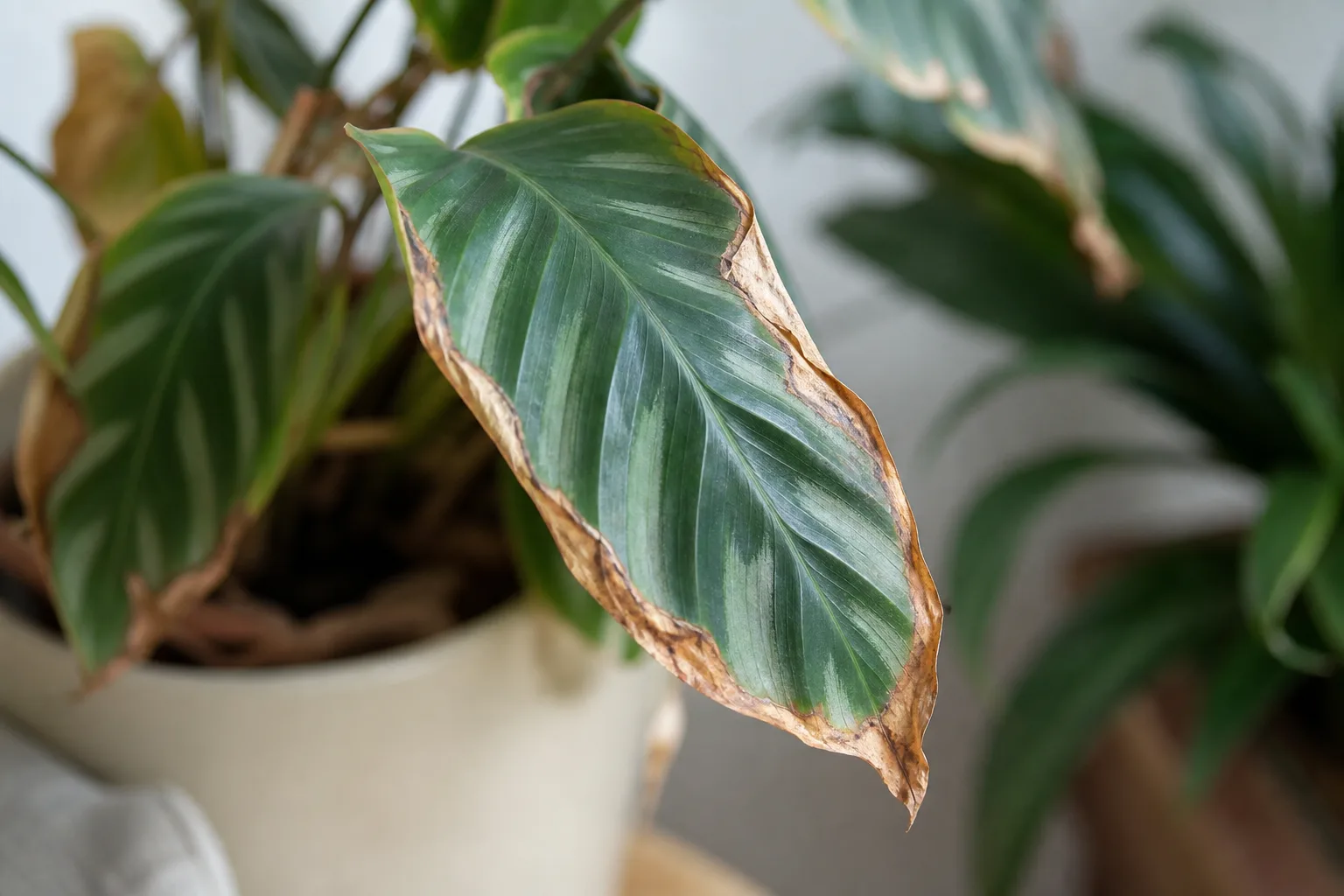
| Dry, crisp tips and edges | Low humidity, underwatering, or water chemistry | Measure room humidity, feel the mix, review water and fertilizer history | Stabilize moisture and humidity; switch water if browning persists |
| Bleached brown patches in the middle of a leaf | Direct sun or heat scorch | Identify the hours of direct rays and hot glass | Filter or move the plant; do not increase watering to treat scorch |
| Leaves curl inward but remain firm | Dry air, dry roots, or cold draft | Check soil depth and nearby vents or doors | Correct the environmental stress one variable at a time |
| Yellow lower leaves with a wet, heavy pot | Overwatering or root damage | Inspect drainage, mix texture, and roots | Let the mix drain; repot only if roots are rotting |
| Yellow leaves with very dry mix | Underwatering or root-bound dryness | Check whether water runs around a hydrophobic root ball | Rehydrate slowly, then improve the watering interval or repot if needed |
| Small pale spots, fine webbing, or sticky residue | Sap-feeding pests | Inspect leaf undersides and petiole joints | Isolate and wash or treat with a product labeled for the plant and pest |
The timing of the symptom can be more informative than its color. Damage that appears after moving to a sunny patio is likely light or wind stress; damage that follows weeks of heating is more likely humidity, mites, or a dry root ball. If the plant has several symptoms, correct the root-zone and light extremes first because a stressed plant is harder to diagnose while conditions remain unstable.
Manage Pests and Rot
Inspect new plants before they join your collection and isolate them for a week or two when possible. Spider mites become more troublesome in dry air and may leave fine webbing or pale stippling. Mealybugs collect in leaf joints and along petioles, while aphids may cluster on tender new growth. NC State lists mealybugs, aphids, and spider mites among pests to monitor on Stromanthe and warns that overwatering can cause root and stem rot.
For a light infestation, wipe visible insects away and rinse the foliage, taking care not to keep the crown or soil surface soaked. Repeat physical cleaning because eggs and hidden adults may remain. If you use insecticidal soap, horticultural oil, neem, or another pesticide, read the label for the target pest and plant, test a small area, and keep treated leaves out of strong sun until they dry. Never assume a homemade soap mixture is automatically safe for thin, variegated foliage.
Root rot requires a different response. A sour smell, mushy roots, soft crown, and wilting despite wet soil are stronger evidence than a single yellow leaf. Remove the plant, cut away dead roots with sterilized scissors, discard collapsed mix, and repot into a clean container with fresh airy media. If the crown is soft throughout, recovery is uncertain; preserve any firm healthy division only if it can be separated cleanly.
Seasonal Care Calendar
Spring: Increase checks as daylight and growth return. Repot or divide only when inspection shows the root system is ready, resume half-strength monthly fertilizer after new growth begins, and move the plant gradually toward its brighter growing-season position.
Summer: Water according to pot feel because higher light and warmth can shorten the interval. Keep the plant in filtered shade outdoors, protect pale leaves from afternoon sun, and check the hygrometer if air-conditioning makes the room unexpectedly dry.
Fall: Reduce fertilizer as growth slows and reassess the window position before colors fade. A plant that was three feet from a bright window in summer may need to move closer or receive supplemental light as the days shorten. Inspect for mites before bringing a patio plant fully indoors.
Winter: Keep the pot away from cold glass and heating vents, and water less often only when the mix actually dries more slowly. Maintain humidity with a humidifier rather than repeated misting, and avoid feeding a plant that is not producing new growth. If leaves suddenly curl after a cold night, correct the draft first and wait before making several additional changes.
Conclusion
Successful Triostar Stromanthe care is a consistency problem, not a perfection contest. Give it bright filtered light strong enough to support variegated leaves, an airy mix that stays lightly moist without standing water, room-temperature water, stable warmth, and measurable humidity. Then use symptom patterns to decide whether the next move is more light, better air moisture, cleaner water, less fertilizer, or a root inspection.
The most useful routine is simple: check the soil before watering, empty the saucer, look under the leaves, rotate the pot occasionally, and reassess the window as the seasons change. Protect the rhizomatous crown during repotting and divide only healthy clumps with roots attached. With those habits in place, the plant’s pink-and-cream foliage and daily leaf movement become rewarding features rather than clues in a weekly emergency.



