How to Grow Purple Sprouting Broccoli
Grow purple sprouting broccoli with a climate-aware plan for fall or spring harvests, including transplant timing, netting, feeding, and cutting.
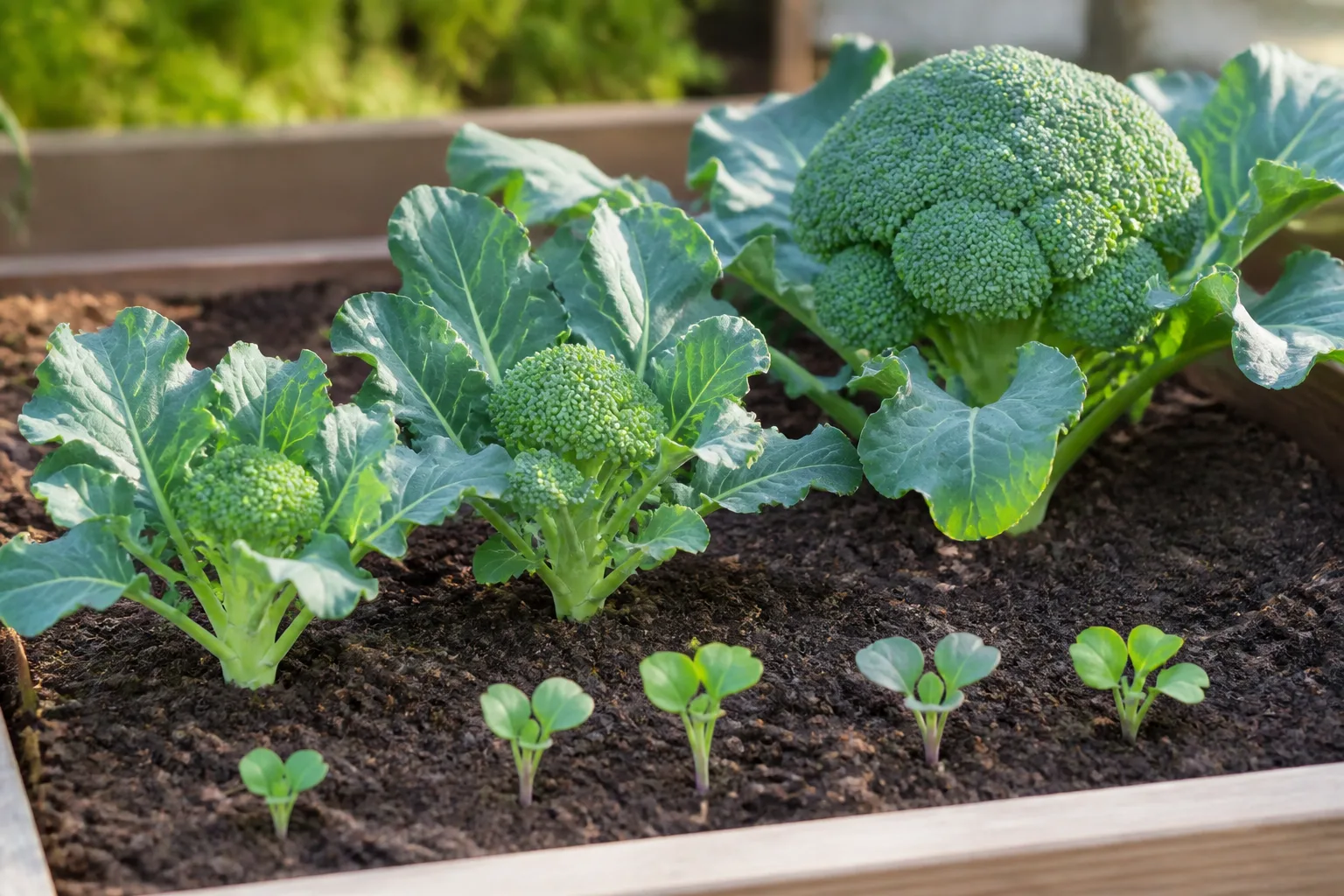
Purple sprouting broccoli is the cool-season brassica that makes a fall garden feel productive long after tomatoes and beans have slowed down. Its loose purple florets are more delicate than a supermarket crown, and one well-grown plant can keep offering tender spears instead of giving you one harvest and stopping.
The catch is timing. “Fall broccoli” can mean a crop harvested in autumn, a young plant that grows through winter, or a spring crop started in late summer. Purple sprouting broccoli often belongs to the second and third categories, so choosing the right variety and counting backward from your local weather matters more than simply putting seeds in the ground when the calendar says fall.
What purple sprouting broccoli actually is
Purple sprouting broccoli is a form of Brassica oleracea in the Italica Group, the same broad species that includes familiar heading broccoli. Instead of producing one dense, rounded crown as its main event, it develops a tall plant with many loose, long-stemmed flowering shoots. The purple color can soften or turn greener during cooking, but the stems and leaves are edible when young and tender.
That growth habit changes how you garden it. A heading broccoli plant asks you to watch one crown closely; purple sprouting broccoli asks you to maintain a healthy plant for months, cut the first central spear at the correct stage, and return regularly for side shoots. RHS profiles describe cultivars such as ‘Red Arrow’ as long-season plants with repeated purple-floret production, while ‘Red Spear’ is noted for an early-year harvest.
Do not confuse it with broccoli rabe, also called rapini. Broccoli rabe is a different species, Brassica rapa, and it is grown for a much quicker, leafier harvest. Broccolini and tenderstem types are also related but are not interchangeable with a purple sprouting cultivar that needs a long cool period.
Why it earns space in a fall garden
The practical advantage is continuity. A fall planting can occupy a bed after an early crop is cleared, then keep its leaves through cold weather before producing fresh spears when the garden has very little else to pick. GrowVeg’s sprouting-broccoli guide lists it as frost tolerant and recommends generous spacing, while its editorial comparison of sprouting broccolis emphasizes the cut-and-come-again harvest.
The flavor is another reason gardeners keep trying it. Cool, steady growth generally produces a sweeter, less harsh crop than a plant struggling in summer heat, although a cold spell does not magically rescue a poorly timed or waterlogged planting. The best eating quality still comes from harvesting tight buds before the yellow flowers open and from cooking the stems soon after cutting.
It also has a useful visual role. The blue-green foliage gives a winter bed structure, and purple spears are easy to spot against the leaves in late winter or early spring. That is a genuine garden benefit, but do not plant it solely for color if your climate cannot provide the cool conditions the cultivar needs.
The first decision: fall harvest or spring harvest?
Before sowing, decide which of these outcomes you actually want:
| Your goal | What to grow and when | Main risk |
|---|---|---|
| Spears before winter | An early, quick-cropping type started early enough to size up before cold | A late sowing may make leaves but no usable spears |
| Spears after winter | A traditional overwintering type started in summer and planted out while young | Warm winters may not provide enough chilling; hard freezes can injure plants |
| A spring crop in a cold region | Start transplants in summer and protect them through the coldest weather | Plants need room, drainage, and wind support for many months |
Purple sprouting broccoli is not automatically an autumn-harvest vegetable just because it is planted in autumn. Many cultivars spend fall building roots and leaves, pass through winter, then flower in late winter or spring. If the seed packet says “overwintering,” “late,” or gives a spring harvest window, treat that information as a biological requirement rather than a marketing detail.
Match the variety to your climate
Read the cultivar description before buying, especially if your winters are very mild or very severe. RHS lists ‘Claret’ as a vigorous, heavy-cropping plant with tender shoots and multiple side shoots, but its profile places the main display in late spring and early summer. ‘Late Purple Sprouting’ is a taller plant that may need support and is described as a traditional purple-sprouting type.
In a mild-winter or desert climate, the phrase “overwintering” deserves extra scrutiny. A plant can remain leafy and enormous without receiving the temperature pattern that triggers good spear production. Conversely, in a short-season northern garden, a late-sown plant may be killed before it has enough leaf area to withstand winter. Your best choice is the variety whose stated harvest period fits your actual winter, not the one with the most dramatic color in the catalog.
Use days to maturity as a planning tool
Days to maturity are not a promise that starts on the day you scatter seed. For a long-season brassica, the packet’s number may be measured from transplanting, from direct sowing, or under a particular climate. Use the number as a planning estimate, then add time for seedling growth, hardening off, transplant shock, and any period when cold weather slows growth.
Write down your target first harvest and work backward. If your target is a fall crop, the plant must be mature enough to flower before day length and temperatures collapse. If your target is spring, the plant must be large and well-rooted before winter but not so soft and overfertilized that it becomes floppy or pest-ridden.
When to sow purple sprouting broccoli
For most gardeners, summer sowing is the useful starting point for a spring harvest. Sow early enough that plants can reach transplant size while temperatures are still workable, but late enough that tiny seedlings do not spend their first weeks baking in the hottest part of the year. In many temperate regions, that means starting seed in mid- to late summer and planting out in late summer or early autumn; local extension calendars and the seed packet should refine the date.
If you want fall spears, select an early or short-season cultivar and start it earlier than a traditional overwintering type. The crop still needs enough cool weather to make quality buds, so a hot climate may be better served by planting for winter or early spring rather than forcing a fall harvest.
Start indoors for a reliable transplant
Starting in cells or small pots gives you control over moisture, spacing, and early pest pressure. Use a clean seed-starting mix, sow shallowly according to the packet, and give seedlings strong light as soon as they emerge. Warm, dim conditions produce stretched stems that collapse or scorch when moved outside.
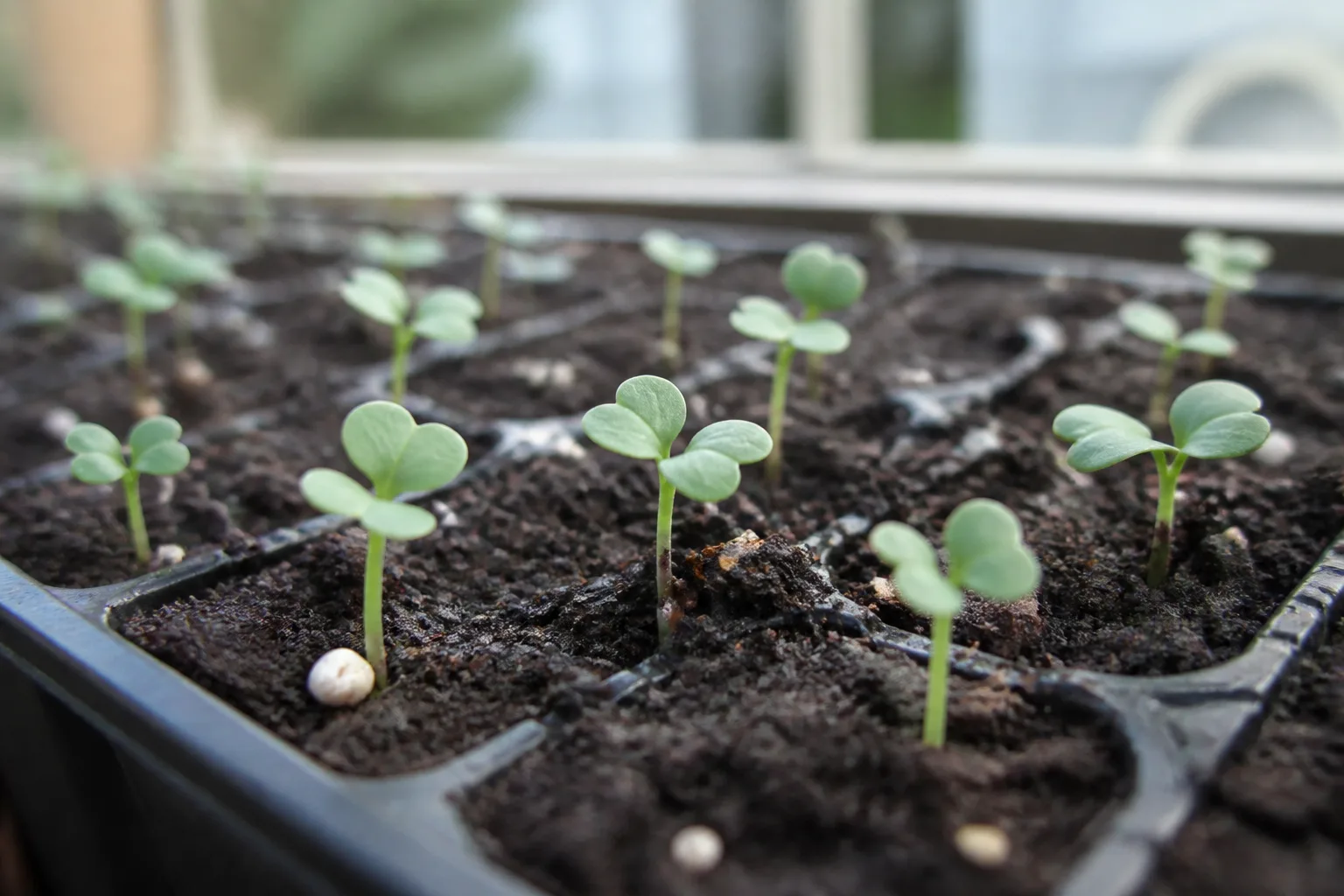
Keep the mix evenly moist, not saturated. Once true leaves appear, thin crowded seedlings so each plant has enough light and airflow. A seedling that is compact, blue-green, and actively growing is a better transplant than a tall plant with pale stems, even if the tall one is technically older.
Harden plants gradually for about a week. Start in bright shade, then add gentle morning sun and more wind exposure each day. A sudden move from a protected tray to hot sun can stall the crop at exactly the stage when it needs to establish quickly.
Direct sowing and transplanting
Direct sowing works when your garden soil is workable and you can protect seedlings immediately. It is less forgiving when flea beetles, slugs, birds, or hot weather are active, because the young plants have no protected root ball and little spare leaf area. Sow more than you need, then thin rather than trying to rescue weak, damaged seedlings later.
Transplant when plants have several true leaves and a firm root plug. Set them at the same depth they grew in the cell, firm the soil around the root ball, and water the entire planting area. Avoid keeping transplants root-bound for weeks; a stressed plant may establish slowly and miss the window for building winter resilience.
Prepare the bed before planting
Purple sprouting broccoli is a large, hungry plant, so bed preparation is not a cosmetic step. Clear the previous crop, remove diseased brassica debris, and loosen compacted soil without leaving a fluffy surface that collapses around the roots. A bed that holds moisture but drains after rain is more useful than one amended into a constantly wet basin.
Soil, drainage, and pH
Aim for fertile soil with plenty of mature organic matter, steady moisture, and good drainage. RHS cultivar profiles list loam, sand, clay, and chalk among suitable soil types when conditions are moist but well drained; the common thread is not a magic soil texture but reliable root-zone moisture without standing water.
Do not pile fresh manure against the stem or add fertilizer by guesswork. Incorporate finished compost before planting, then use a soil test if the bed repeatedly produces weak growth. Purple sprouting broccoli can look impressively leafy in soil that is too rich in nitrogen while still producing disappointing spears, so more green growth is not automatically more food.
Avoid planting brassicas repeatedly in the same bed. Clubroot can persist in soil and distort roots, leaving plants stunted even when watering and feeding look correct. Crop rotation cannot eliminate every disease, but moving broccoli, cabbage, kale, and related crops to a different bed reduces the pressure and makes failures easier to interpret.
Spacing and support
Give plants about 24 inches (60 cm) in each direction unless your packet specifies otherwise. That may feel wasteful with small transplants, but mature sprouting broccoli becomes a broad, leafy plant, and crowded foliage dries slowly after rain while competing for water and light.
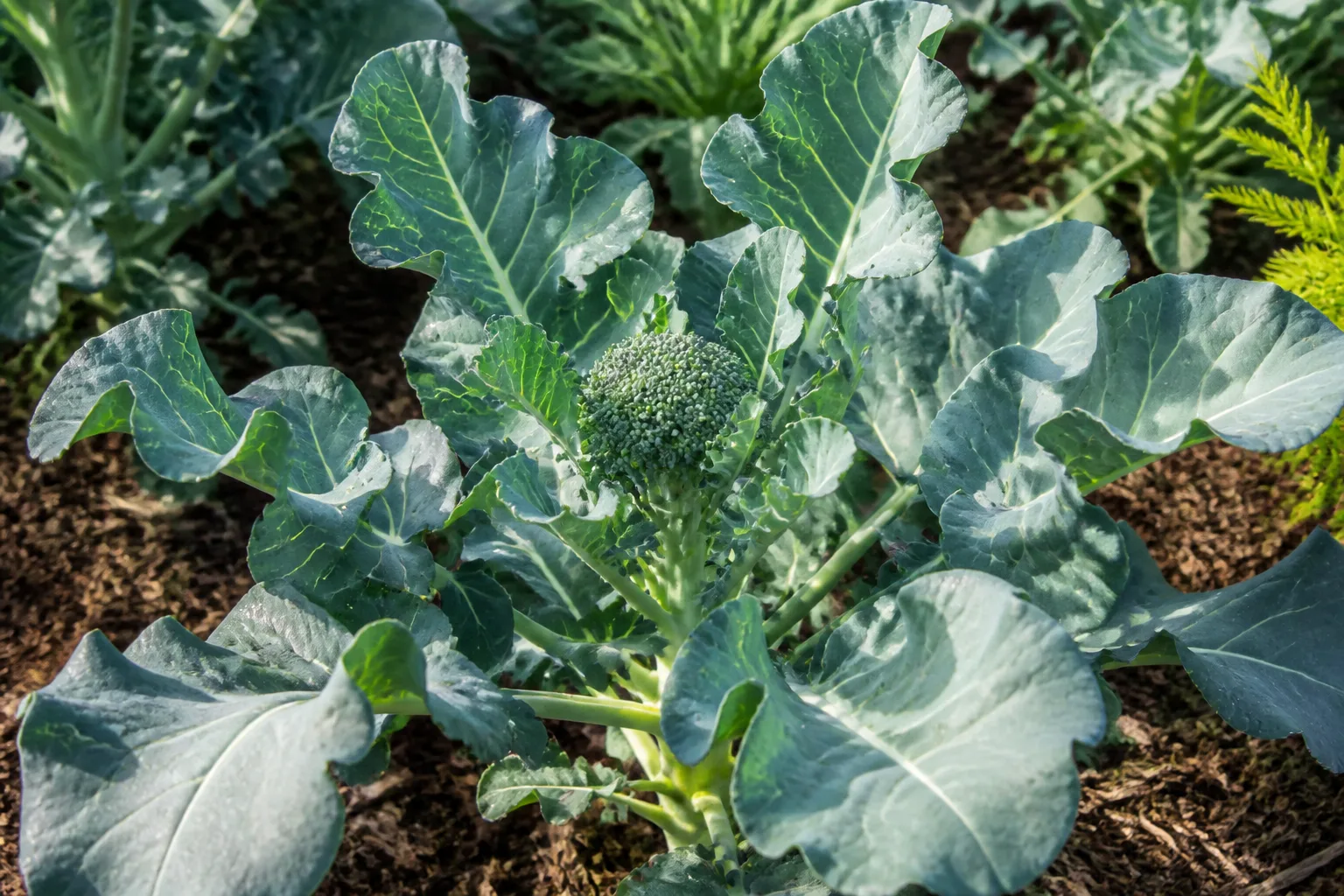
Plant in a sheltered spot or stake plants as they gain height. Wind rocking repeatedly loosens the root ball, which looks like a feeding problem because the plant wilts or fails to size up even though the soil is fertile. A short stake installed early is less disruptive than trying to tie a top-heavy plant after winter storms.
Containers are possible only with a large, deep vessel, rich mix, consistent watering, and room for the plant’s canopy. A small pot dries too quickly and cannot support a many-month crop. If space is limited, one well-spaced plant in a large container is more realistic than several crowded plants competing for the same water.
Light, water, and feeding
Choose full sun where possible—at least six hours of direct light, with more helpful in a cool season. In very hot climates, afternoon shade can reduce heat stress, but heavy shade makes a large plant that cannot generate enough energy for strong spears. Morning sun plus afternoon protection is a reasonable compromise where summer temperatures are extreme.
Water deeply whenever the upper soil begins to dry, then check again during windy or unusually warm weather. The goal is not a fixed number of watering days; it is a root zone that never cycles from dust-dry to flooded. Mulch around, not against, the stem to slow evaporation and reduce soil splash onto leaves.
Feed according to the soil and the plant’s stage. Compost before planting can be enough in a fertile bed; a weak, pale crop may need a balanced supplemental feed after establishment, while a vigorous dark-green crop does not need repeated nitrogen applications. As shoots begin forming, consistent moisture matters more than pushing leafy growth with a strong fertilizer.
Protect seedlings and mature plants
Purple sprouting broccoli is cold tolerant, but it is not pest proof. Young leaves attract flea beetles and caterpillars, mature plants attract cabbage-family pests and aphids, and overwintering foliage can be damaged by birds when other food is scarce. Prevention is easiest when the cover goes on immediately after planting rather than after holes and eggs appear.
Row cover versus insect mesh
Use fine insect mesh when your main goal is keeping butterflies and moths from laying eggs. It allows light and rain through while blocking many flying pests, but it must be sealed at the soil line and checked after windy weather. A loose cover with gaps is a false sense of security because a single opening can let pests reach the whole row.
Horticultural fleece or a heavier row cover adds warmth and some frost protection, but it can trap heat on sunny days and needs ventilation or removal when temperatures rise. Do not leave a cover pressed onto wet foliage for long periods. The choice is simple: mesh is primarily a pest barrier; fleece is primarily a weather buffer, and neither replaces checking the plant.
Bird netting may be necessary once plants are large, especially through winter. Keep netting taut and supported above the leaves so birds cannot peck through it, and inspect the edges for gaps. Avoid improvised loose loops that can snag wildlife or collapse onto the crop.
Pests and disease triage
Start with the pattern, not the product. The University of Minnesota Extension broccoli diagnostic guide organizes problems by symptoms such as collapsed seedlings, discolored stems, holes, yellowing leaves, wilting, missing heads, and damaged crowns. That structure is useful because “something is wrong with my broccoli” is too broad to guide a safe fix.
For holes, inspect the leaf undersides and the soil surface for caterpillars, eggs, flea beetles, slugs, or snails. Hand-pick visible caterpillars and remove egg clusters where practical; keep mesh sealed if flying pests are the source. If the plant is chewed overnight and the damage is low on the leaves, slugs or snails deserve attention rather than another round of caterpillar treatment.
For yellowing or weak growth, check roots and moisture before adding fertilizer. Waterlogging, root damage, clubroot, poor light, and normal aging of lower leaves can look similar from above. Brown spots that spread, blackened veins, or a rapidly collapsing plant justify removing affected material and seeking local extension diagnosis, particularly when several brassicas show the same pattern.
If the plant has leaves but no spears, check four things in order: the cultivar’s harvest timing, whether it received the needed cool period, whether heat or drought interrupted bud formation, and whether crowding or root damage reduced growth. Do not assume a missing spear means the plant needs more nitrogen; that can make the foliage larger while delaying the harvest you want.
Harvest the right way
Harvest when the buds are plump and tightly closed, before yellow petals show. Purple sprouting broccoli produces slender shoots rather than a single solid crown, so choose stems that are long enough to cut cleanly but still tender. RHS guidance for ‘Red Arrow’ recommends cutting stems around 6–8 inches (15–20 cm) long before the buds open, taking the top section rather than stripping the entire plant.
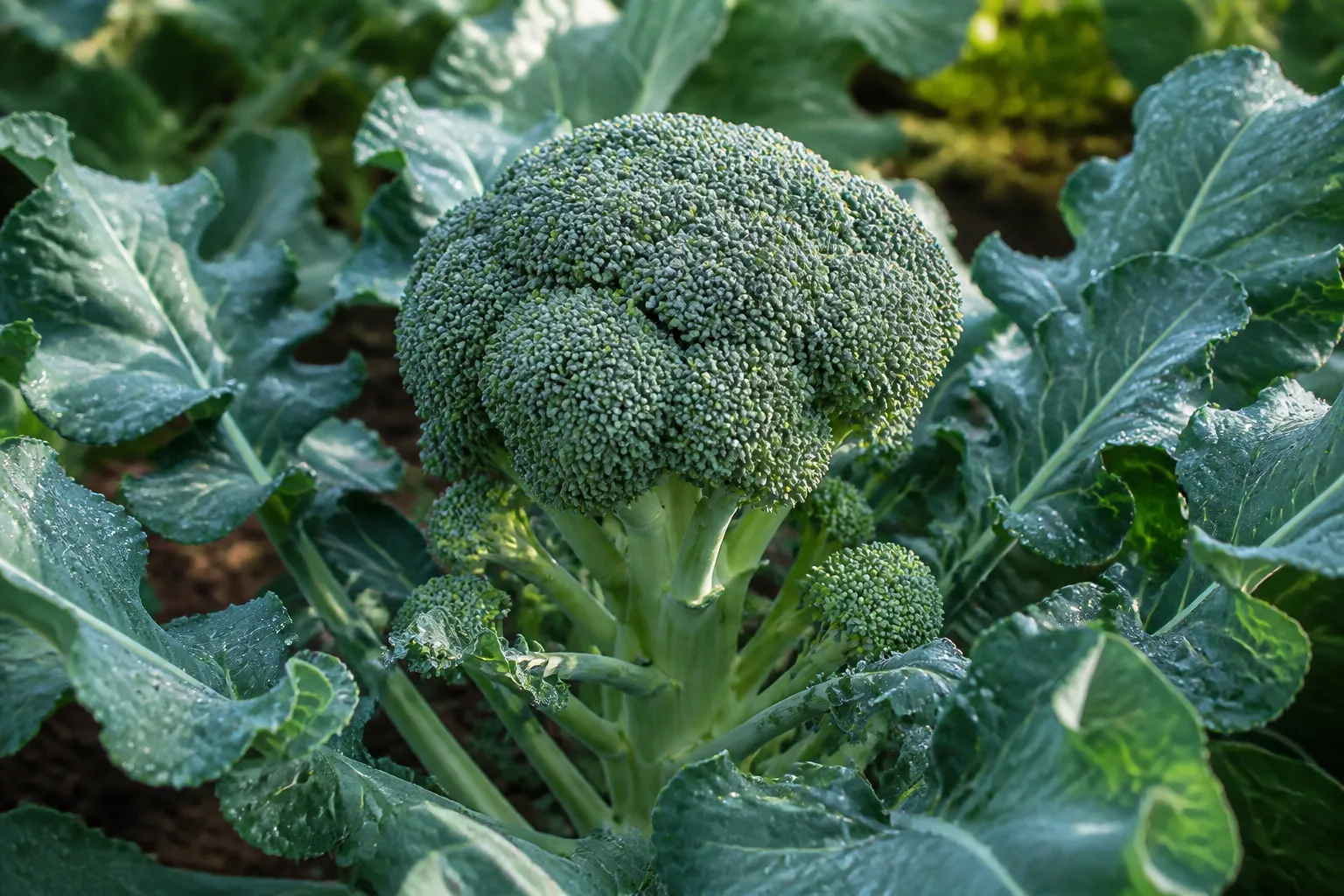
Cut the central spear first when it reaches harvest size. Use a clean, sharp knife and make a slightly angled cut so rain does not sit on a flat wound. Leave enough stem and foliage for the plant to continue feeding itself, then watch the leaf axils for side shoots.
Return every few days during peak production. The side shoots can go from tight to open surprisingly quickly in a warm spell, and regular cutting encourages the plant to keep producing. Harvest in the cool morning when possible, refrigerate promptly, and use the leaves and tender stem sections rather than treating them as waste.
If a few flowers open, the plant is not ruined. Pick the remaining tight shoots, remove fully spent flowers, and keep the plant watered while you decide whether the texture is still good enough for your kitchen. The main loss is quality, not safety, and the next flush may still be tender.
Conclusion
Purple sprouting broccoli deserves the fall-garden spotlight because it turns a season of waiting into a long harvest, not because it is an instant crop. Give it the right cultivar, enough time to establish, full light, fertile but well-drained soil, generous spacing, and a reliable cover against caterpillars and birds.
The most important correction is to plan around your weather rather than the word “fall.” In one garden, the right planting produces autumn spears; in another, it builds a sturdy plant that waits through winter and pays you back with purple shoots in early spring. Read the packet, count backward from your intended harvest, and protect the plant before trouble is visible.