Cabbage Care Guide: Brassica oleracea var. capitata
Brassica oleracea var. capitata
Grow cabbage (patta gobhi) with winter sun, evenly moist fertile soil, cultivar-aware spacing, and steady moisture for firm heads in containers or garden beds.
Cabbage Care Guide: Brassica oleracea var. capitata
Start with wateringThe most common care mistake for CabbageWatering guide → →Cabbage care essentials
Light
Water
Keep the root zone evenly moist while heads are forming, but never saturated. Water deeply when the top 2–3 cm feels dry and let excess drain.
Soil
Fertile, organic-rich loam that holds moisture yet drains freely. Aim for pH 6.0–7.5; steady nutrition supports firm head development.
Humidity
Temperature
Fertilizer
About Cabbage
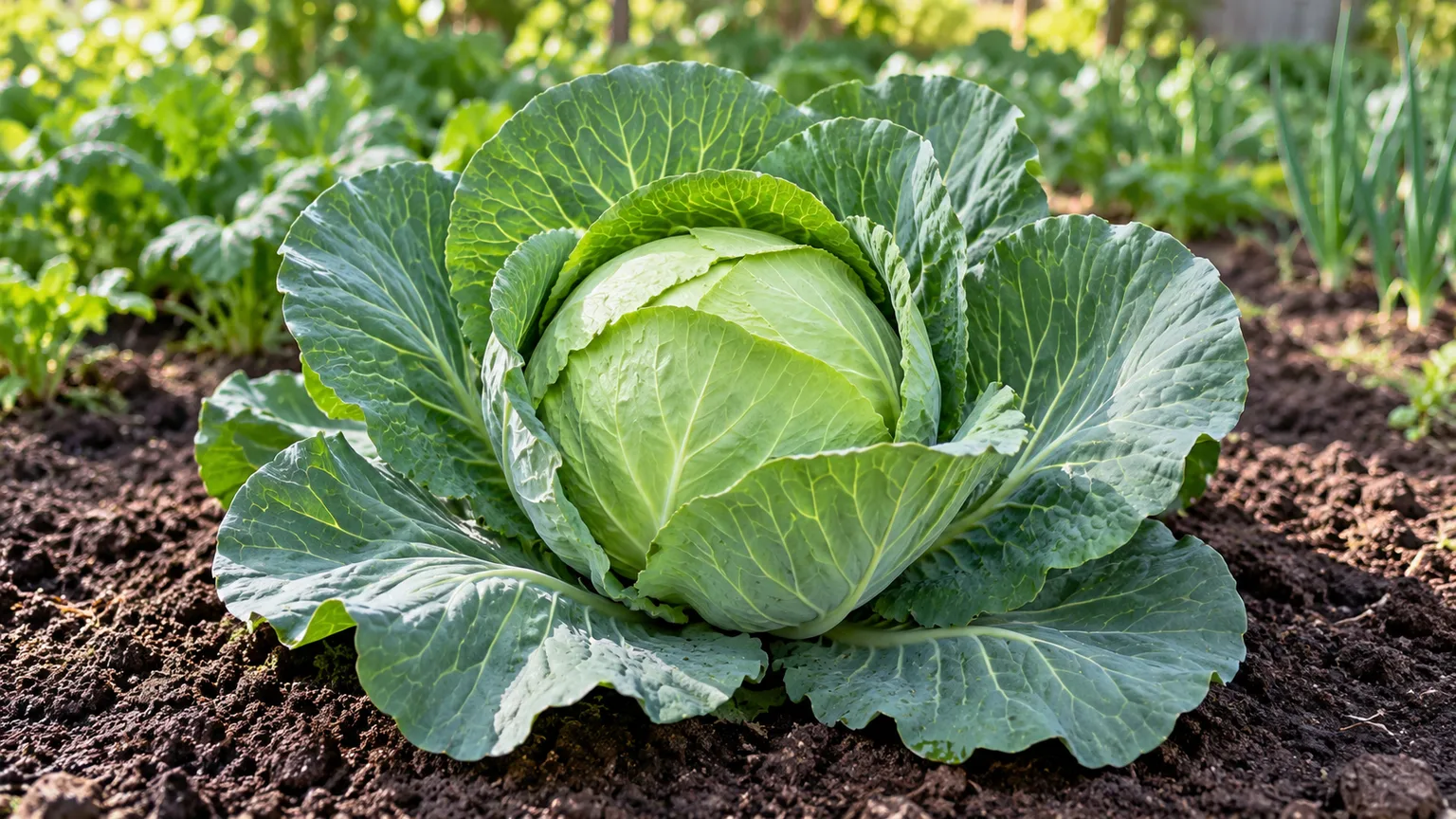
Cabbage is native to Coastal Mediterranean and western Europe; cultivated heading form derived from wild cabbage, typically reaches 25–60 cm tall and 30–60 cm wide; head size varies by cultivar indoors, with medium - compact heads often need 70–100 days from transplant, depending on season and variety growth. Cabbage has a herbaceous biennial usually grown as an annual vegetable growth habit and part of the Brassicaceae family. It is also known as Patta Gobhi, Head cabbage, Green cabbage, and Red cabbage.
| Detail | Information |
|---|---|
| Also known as | Patta Gobhi, Head cabbage, Green cabbage, Red cabbage |
| Native region | Coastal Mediterranean and western Europe; cultivated heading form derived from wild cabbage |
| Mature size | 25–60 cm tall and 30–60 cm wide; head size varies by cultivar |
| Growth rate | Medium - compact heads often need 70–100 days from transplant, depending on season and variety |
| Growth habit | Herbaceous Biennial Usually Grown As An Annual Vegetable |
| Scientific name | Brassica oleracea var. capitata |
| Family | Brassicaceae |
Cabbage Care Guide: Brassica oleracea var. capitata
Cabbage (Brassica oleracea var. capitata) is a cool-season heading brassica grown for one dense, layered head of leaves rather than repeated leaf picks. In Indian kitchens it is widely known as patta gobhi; seed packets may also list green, red, savoy, or pointed types that all share the same basic biology—cool roots, steady moisture, and months of leaf expansion before the head firms up Utah State University Extension NC State Extension. Treat cabbage as a seasonal vegetable crop, not an evergreen houseplant: on hot lowland balconies it struggles while winter sun and mild nights produce the tight heads you expect at the market.
What Cabbage Is and How It Grows
Names, aliases, and brassica relatives
The Latin name capitata refers to the formed head—a short stem surrounded by overlapping wrapper leaves that enclose the edible core. Cabbage sits in the mustard family (Brassicaceae) alongside cauliflower, broccoli, kale, and mustard greens, so it shares pests, soil diseases, and crop-rotation rules with those cole crops NC State Extension. Wild Brassica oleracea from coastal Europe is the ancestor of modern heading types; centuries of selection produced round drumheads, flat Dutch types, crinkly savoys, and red-tinged varieties Britannica.
Do not confuse heading cabbage with Chinese cabbage (Brassica rapa), which bolts faster in heat and follows a different sowing calendar. For LeafyPixels care pages, “cabbage” means B. oleracea var. capitata unless a cultivar label specifies otherwise.
Growth habit, heads, and mature size
Plants start as open rosettes of broad, often waxy leaves, then heart inward as the head develops. Mature plants commonly reach 30–60 cm (12–24 in) tall with heads from small pointed “spring” types to large winter drumheads, depending on cultivar and spacing The Royal Horticultural Society. Early varieties may be ready in 55–70 days from transplant; long-season storage types can need 100 days or more Utah State University Extension. Growth is fast but not instant—the RHS notes many cabbages need roughly four to six months from sowing to harvest when you account for indoor seedling time and cool-season pacing.
Why Cabbage Needs Cool Weather
Temperature limits and frost tolerance
Cole crops grow best when air temperatures stay roughly 60–70 °F (15–21 °C) and can tolerate light frost without serious injury Utah State University Extension. USU Extension adds that cabbage is not seriously damaged down to about 25 °F (–4 °C) once established, but growth slows and quality drops when temperatures exceed 80 °F (27 °C). Sustained heat encourages loose heads, internal tipburn, and premature bolting toward flower stalks—signals that the season has ended for quality heads.
October–March timing on Indian plains
On Indian plains (Delhi NCR, Pune, Bengaluru lowlands, and similar), cabbage fits the winter vegetable window when nights are cool and days are bright—often October through March for sowing and harvest Lazy Gardener. Sow or set transplants so most head development happens in that cool phase; attempting a main crop through peak summer heat on an unshaded terrace usually wastes space. Hill districts with milder summers can stretch the calendar, though monsoon humidity still raises fungal and caterpillar pressure.
Match the cultivar to your season: summer-bred types exist in temperate catalogs, but most Indian home growers succeed with autumn–winter plantings and early-maturing hybrids from local nurseries.
Light, Water, and Soil at a Glance
Full sun and even moisture rules
Cabbage wants a sunny site during the cool season—typically six or more hours of direct light on clear days—so leaves stay sturdy and heads size up Utah State University Extension. On a north Indian winter balcony, a south- or west-facing rail often works well; if an unseasonal warm spell hits, light afternoon shade can reduce wilting, but deep shade produces soft, loose heads. For reflector placement, grow lights, and heat-wave tactics, use the dedicated cabbage light guide.
Watering should stay deep and even while heads form. USU Extension recommends about 1–2 inches (2.5–5 cm) of water per week, applied so the root zone wets thoroughly rather than receiving daily sprinkles. Moisture swings during heading are a leading cause of split heads—the plant takes up water faster than the head can expand. Mulch helps on open beds; containers need more frequent checks. See /plants/cabbage/watering/ for finger-test depth, pot weight cues, and overwatering signs.
Fertile, well-drained soil and pH
Cabbage is a heavy feeder that prefers fertile, well-drained soil enriched with compost or well-rotted manure before planting Utah State University Extension. Most extension guides target slightly acidic to neutral pH around 6.0–7.0; very acid soils limit nutrient uptake and invite clubroot on brassicas. Firm, crumbly soil supports the plant without compaction— the RHS emphasizes rich, firm ground and good spacing. Container growers should use a compost-heavy mix with perlite or coarse sand for drainage; details live in /plants/cabbage/soil/.
Spacing, Containers, and Head Formation
In-ground plantings need room for air and head expansion. Utah State University Extension advises 12–18 inches (30–45 cm) between plants and 2–3 feet (60–90 cm) between rows. Large winter drumheads need the wider end of that range; compact summer types can go tighter. Crowding produces small heads and traps humidity against leaves—ideal for aphids and fungal spots.
On balconies, one cabbage per 25–40 litre pot is realistic for compact varieties; vigorous savoys need larger volumes. Do not cram three seedlings in one pot hoping for three full heads—you will get three stunted rosettes instead. If you must use smaller pots for nursery stage, plan to pot up before the head starts binding; see /plants/cabbage/repotting/ for when to move containers without shocking roots.
From Seed or Transplant to Firm Heads
You can direct-sow or start indoors and transplant. USU Extension suggests sowing seeds ¼–½ inch deep, thinning or transplanting to final spacing when seedlings have 3–4 true leaves. Transplants should carry 4–6 mature leaves and a healthy root ball—usually about 6–7 weeks from seed under good light. Set plants in the garden 2–3 weeks before the last frost in spring climates; on Indian plains, that translates to cool-evening transplant windows in late autumn rather than midsummer.
Feeding without splitting
Side-dress nitrogen about four weeks after transplanting if growth is pale, then stop high-nitrogen feeds once heads begin to firm Utah State University Extension. Late nitrogen pushes loose leaves and encourages splitting. Balanced starter fertility at planting plus compost usually carries the crop; timing and dilution are covered in /plants/cabbage/fertilizer/. For starting seed, hardening off, and nursery timing, see /plants/cabbage/propagation/.
Harvest, Storage, and When Heads Crack
Harvest when heads feel firm and solid across the top but before outer leaves stress-crack from over-maturity Utah State University Extension. Cut the stem below the head, leaving two or three wrapper leaves for protection in storage. Mature heads often split after heavy rain or uneven watering—if a head is nearly ready and rain is forecast, some growers twist the plant slightly to break side roots and slow water uptake, a trick USU Extension mentions for preventing split heads.
Stored at cool, humid conditions near 32 °F (0 °C) with high relative humidity, cabbage can keep for weeks to months depending on variety Utah State University Extension. Avoid storing with ethylene-producing fruit such as apples, which can turn flavors bitter. Kitchen gardeners in warm apartments should refrigerate promptly rather than leaving heads on a counter.
Pests, Rotation, and Disease Pressure
Brassicas attract cabbage worms, loopers, flea beetles, and aphids; seedlings are especially vulnerable to flea beetle shot-holing Utah State University Extension. Fine insect netting from transplant size prevents much caterpillar damage—the RHS recommends mesh covers and rotating the crop to a fresh bed each year to limit soil-borne issues such as clubroot. Never plant cabbage where other brassicas grew the previous season if you saw stunting, wilting in cool weather, or swollen roots.
Good airflow, morning watering at the soil line, and removing infected lower leaves reduce alternaria and downy mildew pressure. If heads show brown leaf edges inside while outer leaves look fine, suspect tipburn from calcium transport stress during rapid growth—often linked to uneven moisture rather than true calcium shortage Utah State University Extension.
Common Cabbage Growing Mistakes
Planting too late in warm weather leaves heads forming in heat, producing loose, bitter cores. Crowding shrinks heads and increases disease. Shallow, daily watering encourages weak roots and split heads when a deep soak finally arrives. Feeding nitrogen after heads set loosens structure. Skipping rotation invites clubroot and recurring caterpillar cycles. Harvest delay past firm maturity wastes quality when splits open to pests. Treating cabbage like a houseplant—low light year-round in an air-conditioned room—rarely produces market-style heads; match the crop to its cool, bright season instead.
When to Use This Page vs Other Cabbage Guides
Use this overview when you need the big picture: what cabbage is, when to grow it on Indian plains, and how light, water, soil, spacing, and harvest fit together. Jump to a sibling guide when one lever needs depth—/plants/cabbage/light/ for sun hours and shade cloth, /plants/cabbage/watering/ for moisture checks and wilt diagnosis, /plants/cabbage/soil/ for mixes and pH, /plants/cabbage/fertilizer/ for nitrogen timing, /plants/cabbage/propagation/ for seed and transplant steps, /plants/cabbage/repotting/ for moving containers, and /plants/cabbage/pruning/ for wrapper-leaf cleanup and post-harvest handling. The cabbage hub collects profile data and links across the cluster.
Related Cabbage Guides
- Cabbage hub — species profile, grower notes, and care index
- Cabbage light — winter sun, balcony placement, heat shade
- Cabbage watering — even moisture, splitting prevention, container rhythm
- Cabbage soil — compost mixes, drainage, pH targets
- Cabbage fertilizer — when to side-dress and when to stop
- Cabbage propagation — sowing, transplants, success tips
- Cabbage repotting — pot sizing before heads bind
- Cabbage pruning — lower leaf removal and harvest prep
Conclusion
Cabbage rewards growers who respect its cool-season, heading habit: sow or transplant for winter sun on the plains, keep fertile, well-drained soil, maintain even moisture without late nitrogen pushes, and give each plant enough spacing for air and head expansion. Harvest firm heads before they crack, rotate away from other brassicas, and net against caterpillars early. When one care topic needs more detail than this overview can carry, follow the sibling guides above rather than treating patta gobhi like a generic evergreen pot plant.
How to care for Cabbage?
When should you water Cabbage?
Keep the root zone evenly moist while heads are forming, but never saturated. Water deeply when the top 2–3 cm feels dry and let excess drain.
- Push a finger 2–3 cm into the mix - Water deeply when the top 2–3 cm feels dry and let excess drain.
- water when that layer feels dry while the soil below remains slightly moist - Water deeply when the top 2–3 cm feels dry and let excess drain.
- Drain excess water - Water deeply when the top 2–3 cm feels dry and let excess drain.
What soil works best for Cabbage?
Fertile, organic-rich loam that holds moisture yet drains freely. Aim for pH 6.0–7.5; steady nutrition supports firm head development.
- 50% good-quality potting mix or loam - Fertile, organic-rich loam that holds moisture yet drains freely.
- 30% mature compost
- 20% perlite, rice hulls, or coarse coco chips - Fertile, organic-rich loam that holds moisture yet drains freely.
Grower notes for Cabbage
Grow cabbage for a firm cool-season head
Heading cabbage forms one dense cluster of overlapping leaves, not loose harvest-and-come-again greens. In most Indian plains, sow or transplant in late monsoon into early winter so heads mature in cool weather. Heat and drought during head formation encourage bolting, loose heads, and bitter flavor, so a hot lowland summer balcony is usually a poor match even with enough water.
Match spacing and pot size to the cultivar
Round green, red, savoy, and pointed cultivars differ in mature spread and days to harvest. One standard cabbage needs a deep container of at least 30–40 litres with drainage holes, or generous in-ground spacing. Mini and early types can finish smaller, but crowded plants compete for water and light and rarely make tight heads.
Keep moisture steady while the head sizes up
Cabbage performs best in full sun with evenly moist, fertile soil. Shallow roots make the plant sensitive to drying out during rapid growth, yet saturated soil invites root and stem decay. Check the mix rather than watering on a fixed calendar, and empty saucers after drainage so winter rains do not leave roots standing in water.
Know your cabbage type on the label
Common names overlap across brassicas. True heading cabbage belongs to Brassica oleracea var. capitata. Chinese Napa types are often Brassica rapa and follow different timing and spacing. Savoy cabbage has crinkled leaves; red cabbage adds anthocyanin pigment. Retain the cultivar name so harvest timing and expected head size stay clear.
Inspect seedlings before you buy
Choose stocky seedlings with blue-green or green leaves, a firm stem, and no obvious chewing or sticky residue on undersides. Avoid plants with clusters of aphids, swollen distorted roots, or lower leaves yellowing in wet soil. Because cabbage shares pests and soil-borne diseases with other cole crops, do not reuse suspect mix or plant immediately after failed brassicas in the same container.
Keep edible heads pet-aware
Cabbage is a human food crop, but that does not establish unrestricted safety for every pet species. Major pet-toxicity databases do not provide a clear species-specific cabbage listing, and cole crops are flagged as problematic for some livestock. Prevent routine grazing, avoid pesticide-treated leaves, and ask a veterinarian before offering cabbage as food.
Is cabbage safe for pets?
Cabbage is edible for people, but a clear species-specific classification for pets was not confirmed in the major poison-control database reviewed. Prevent unsupervised grazing and consult your veterinarian before feeding it.
Human edibility is not proof of pet safety. Cole crops can cause digestive upset in some animals, and extension references note horse concerns for brassicas. Keep pesticide-treated plants inaccessible and contact a veterinarian if a pet eats a large amount or develops digestive signs.
Watering Cabbage
For Cabbage, push a finger 2–3 cm into the mix; water when that layer feels dry while the soil below remains slightly moist and water check every 2–3 days in containers; adjust for weather, pot size, and how fast the head is sizing up. Cool-season crops use less water in rainy winter weather; increase checks during dry, sunny spells and in shallow containers.
| Detail | Information |
|---|---|
| How often | Check every 2–3 days in containers; adjust for weather, pot size, and how fast the head is sizing up |
| How to check | Push a finger 2–3 cm into the mix; water when that layer feels dry while the soil below remains slightly moist |
| Seasonal changes | Cool-season crops use less water in rainy winter weather; increase checks during dry, sunny spells and in shallow containers |
Signs of overwatering
- persistently wet soil with yellowing lower wrapper leaves
- soft or darkened stem at soil level
- wilting while the root zone stays wet
Signs of underwatering
- limp outer leaves and dry, pulling soil
- stalled head size and cracked heads after erratic moisture
- tough or bitter wrapper leaves
Soil & potting for Cabbage
Use a mix of 50% good-quality potting mix or loam, 30% mature compost, 20% perlite, rice hulls, or coarse coco chips for Cabbage. Good drainage is essential, but an extremely gritty mix can dry too quickly for cabbage's moisture-demanding roots during head formation. Target soil pH around 6.0–7.5. Repot usually grown for one cool season; transplant seedlings once into a final roomy container rather than repeatedly repotting mature plants, ideally in late summer to early autumn for winter harvest in most Indian plains; early spring where summers stay mild.
| Detail | Information |
|---|---|
| Recommended mix | 50% good-quality potting mix or loam, 30% mature compost, 20% perlite, rice hulls, or coarse coco chips |
| Drainage | Good drainage is essential, but an extremely gritty mix can dry too quickly for cabbage's moisture-demanding roots during head formation |
| Soil pH | 6.0–7.5 |
| Repotting frequency | Usually grown for one cool season; transplant seedlings once into a final roomy container rather than repeatedly repotting mature plants |
| Best season to repot | Late summer to early autumn for winter harvest in most Indian plains; early spring where summers stay mild |
Signs it needs repotting
- seedlings have 3–4 true leaves and fill nursery cells
- roots circle densely or emerge from drainage holes
- the final container dries out within a day during active growth