Cabbage Propagation: Seed to Transplant Guide
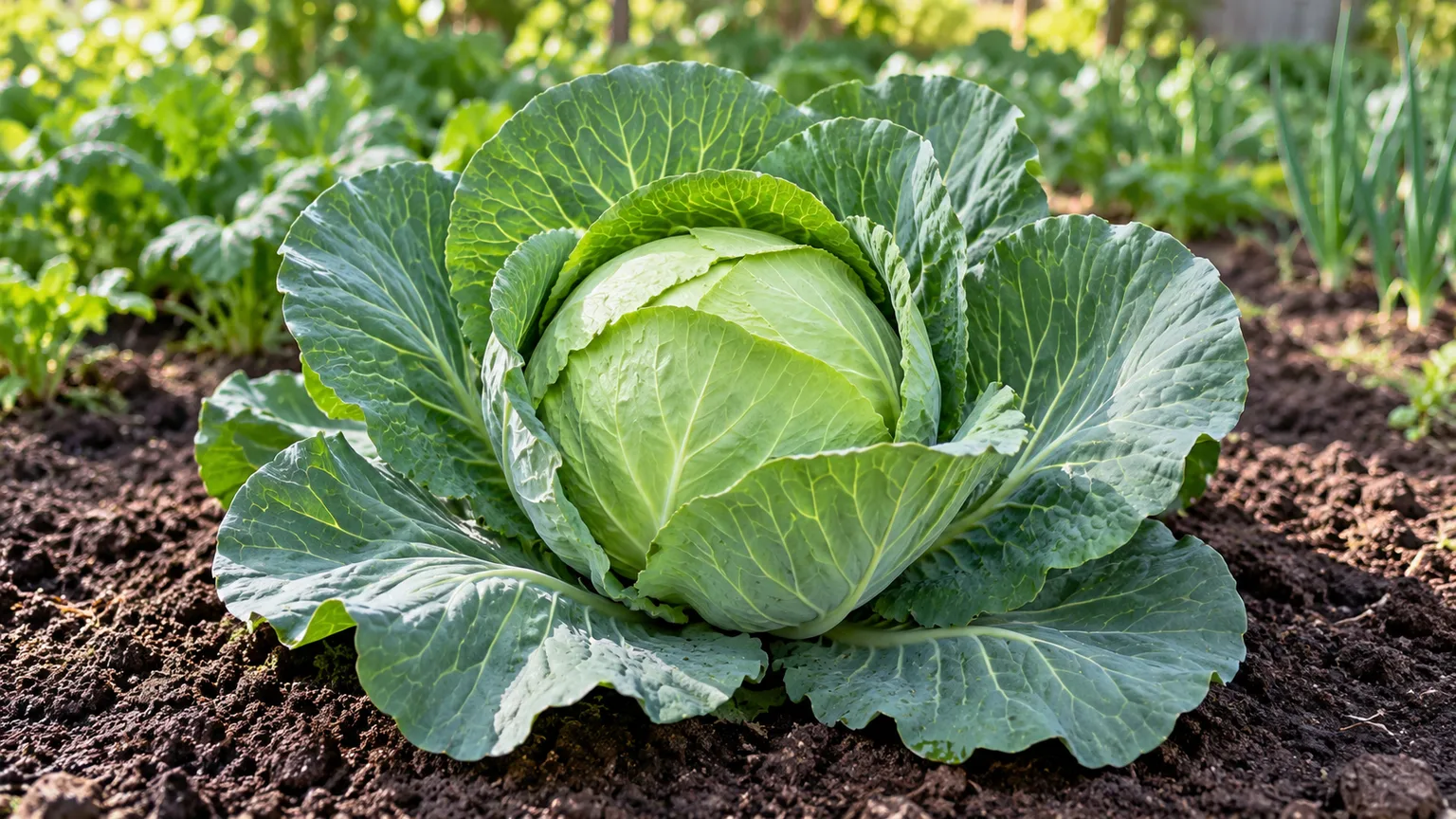
Cabbage Propagation: Seed to Transplant Guide
Cabbage Propagation: Seed to Transplant Guide
Cabbage propagation for Brassica oleracea var. capitata—the tight-headed types sold as patta gobhi across South Asia—means starting from seed. Unlike perennial kale lines that sometimes root from side shoots, heading cabbage is grown as a cool-season annual crop that forms one harvestable head per plant. NC State Extension lists seed as the recommended propagation strategy, and home success depends on cool timing, clean trays, and giving transplants room to size up before heat or water stress arrives.
If you are wondering whether a grocery-store stump will sprout a new head, treat that as a kitchen experiment, not a propagation plan. Reliable crops come from fresh seed, whether you start modules on a windowsill or direct-sow into a prepared bed.
How heading cabbage multiplies
Cabbage is a biennial in botanical terms: it grows leaves the first season, then flowers and sets seed the second year if it survives winter. Most gardeners never see that second year because they harvest the head first. That life cycle is why propagation is almost always about raising the next generation from purchased seed, not cloning an old plant.
Seed is the only practical home method
Stem cuttings, leaf rooting, and division do not produce heading cabbage the way they work for some houseplants or perennial kales. The plant’s energy goes into a single compressed head; there is no persistent crown to split. Seed gives you cultivar choice—green, red, savoy, early ball types, and long-season storage varieties—and lets you stagger plantings for successive harvests.
Epic Gardening notes that cabbage is best propagated from seed, with indoor starts about four to six weeks before you plan to transplant, or direct sowing followed by thinning. Gardening Know How recommends sowing ¼ to ½ inch deep (6–13 mm) in soil near pH 6.0–6.8, keeping seed moist until emergence.
Biennial seed-saving versus packet seed
Saving seed from a random market cabbage is possible in theory but awkward in practice: you need plants to overwinter, flower, and cross-pollinate with other brassicas in the neighborhood. For predictable head size and disease resistance, use labeled packet seed each season. Hybrid (F1) seed will not breed true if you do save it. Focus propagation effort on clean starts, not on rescuing kitchen scraps.
Pick indoor starts or direct sowing
Indoor starts win when you want a head start on the cool window, protect tiny seedlings from flea beetles, or garden on a balcony where direct sun on bare soil is scarce early in the season. Sow in modules or small pots, then move plants once they have four to five true leaves and a sturdy stem—roughly 10–15 cm (4–6 inches) tall for many varieties Gardening Know How.
Direct sowing suits large beds with good soil and steady moisture. It avoids transplant shock but requires thinning: leave one strong seedling per final spacing so heads are not competing in a crowded row. Epic Gardening suggests thinning to about 20–24 inches (50–60 cm) between plants as they mature when sown in place Epic Gardening.
For containers, both paths work. A 5–10 gallon grow bag per plant is a realistic minimum once the head begins to swell Epic Gardening. Match the final mix and drainage rules in the cabbage soil guide before you transplant.
Time sowing for cool weather
Cabbage is a cool-weather crop. It tolerates light frost when hardened but bolts—sends up a flower stalk and ruins the head—when heat and long days stack together. Epic Gardening places ideal growth around 55–65°F (13–18°C), with tolerance down to about 20°F (-7°C) on established plants once acclimated.
Work backward from your local cool season, not from a London or Minnesota calendar printed on a foreign packet.
India and tropical lowland calendars
On hot plains, treat cabbage like other winter brassicas: sow during the coolest months you can keep soil moist without heat stress—often October through December for transplanting into winter sun, with harvest before pre-monsoon heat. Hill stations and mild winter regions may stretch sowing earlier or later, but peak summer tray starts usually produce leggy, bolt-prone plants.
Pair propagation timing with the cabbage light guide so seedlings do not sit in weak indoor light while outdoor weather is still too hot for transplant. If nights stay warm, delay sowing rather than forcing August modules that will stall indoors.
Reading UK/US packet timing
Northern seed packets often say to start indoors four to six weeks before the last spring frost for summer harvest, or to sow mid-summer for fall heads. Translate that logic: sow when your weather is cool and bright, aiming for heads to mature before the next heat wave. Early varieties mature faster; storage types need a longer cool runway—check days-to-maturity on the packet and compare with your cabbage overview notes on variety choice.
Set up trays and final spacing
Wash reused trays, use fresh or sterilized seed compost, and label cultivars if you run multiple brassicas. Avoid heavy garden soil in cells; it compacts and invites fungal collapse. Moisten mix before sowing so seeds sit in even dampness, not a dry top with a soggy bottom.
Sowing depth and germination warmth
Sow one to two seeds per cell, ¼–½ inch deep, cover lightly, and mist to settle. In a warm room (roughly 18–24°C / 65–75°F), cotyledons often appear within 5–10 days; cooler trays take longer Tips Bulletin. A loose humidity dome helps the first 48 hours—remove it as soon as green shows so stems do not stretch.
Plan final spacing before you sow, because cramped transplants never make full heads. Gardening Know How advises 12–24 inches (30–60 cm) between plants depending on variety, with early types often at the tighter end and large late varieties wider. Rows in ground beds commonly run 24–36 inches apart Epic Gardening.
Grow seedlings under strong light
Cabbage seedlings become leggy quickly on a dim windowsill. Give them bright light immediately after emergence—a sunny outdoor cold frame, greenhouse bench, or grow lights within a few inches of leaves. Cool air plus strong light keeps stems stocky.
When the first true leaves expand, thin to one plant per cell or pot on into slightly larger containers so roots do not circle. Begin matching moisture habits you will use outdoors; see the cabbage watering guide for keeping young roots evenly moist without saturation.
Hold nitrogen-heavy feeding until plants are established in final pots; the cabbage fertilizer guide covers when to feed after transplant, not on day-old cotyledons.
Harden off and transplant
About seven to ten days before planting out, harden seedlings: move trays outdoors to a sheltered spot for increasing hours, bring them in only if frost beyond what they are rated for threatens. Cabbage transplants can handle cool nights once acclimated Gardening Know How.
Plant each seedling at the same depth it grew in the pot, firm soil around the root ball, and water in well. Avoid burying the stem or leaving roots exposed. In beds, stagger planting dates by a week or two only if your cool window is long enough for each variety to mature.
On balconies, one plant per large container is simpler than crowding two small heads that compete for water. If you must repot root-bound starts before the final container, follow principles in the cabbage repotting guide—brassicas resent bare-root handling.
Young plant aftercare
For the first two to three weeks after transplant, prioritize even moisture and pest patrol. Flea beetles and caterpillars attack young brassicas first; row cover or fine mesh on hoops buys time while plants size up. Remove covers once plants are sturdy and you can inspect leaves weekly.
As outer wrapper leaves expand, you can remove yellowing lower leaves that touch wet soil, but leave the growing point intact. Outer-leaf harvest tactics belong in the cabbage pruning guide once heads are forming—not during propagation.
Heads firm up over 60–110 days depending on variety and weather Epic Gardening. Propagation success is not finished at transplant; it is finished when you have a solid head before heat or drought splits it.
Fix poor germination and damping off
If seed never emerges, check depth, seed age, and temperature. Old seed or a tray that dried out on day three are more common than “bad luck.” Resow rather than waiting three weeks on empty cells.
If seedlings collapse at the soil line, suspect damping off—fungi such as Pythium and Rhizoctonia that attack weak, crowded, overwatered starts NC State Extension. Prevention beats cure: clean trays, avoid overcrowding, improve air movement, and water from below when possible. Discard affected flats and restart with fresh mix instead of drenching repeatedly.
Yellow, stunted seedlings in wet compost may also be overfertilized or too warm indoors; cool, brighter conditions often outperform another splash of water.
When to use this page vs other Cabbage guides
Use this propagation guide when you are starting cabbage from seed or planning transplant timing. For day-to-day care after plants are in final pots or beds, use the cluster below: light for sun and heat-wave shade, watering for moisture rhythm, soil for mix and pH, fertilizer for feeding after establishment, repotting if seedlings become root-bound before the final container, and pruning for wrapper leaves and harvest timing—not for multiplying plants.
Related Cabbage guides
- Cabbage overview — growth habit, varieties, and how patta gobhi fits your climate.
- Cabbage light — six to eight hours of sun and when to shade young transplants.
- Cabbage watering — even moisture from germination through head formation.
- Cabbage soil — fertile, well-drained mix for containers and raised beds.
- Cabbage fertilizer — when to feed after transplant without burning seedlings.
- Cabbage repotting — moving starts into larger pots before roots stall.
- Cabbage pruning — managing outer leaves and harvest, not propagation.
Conclusion
Propagate cabbage by seed on a cool calendar: sow shallowly in clean trays, give seedlings immediate bright light, harden them off, and transplant with generous spacing into rich, well-drained soil. Indoor starts protect fragile cotyledons; direct sowing works when you can thin ruthlessly and keep beds moist.
In Indian plains climates, the propagation season is the winter growing season. A tray started in autumn cool often produces full heads by late winter; the same cultivar pushed through peak summer heat bolts before it heads. Match method, spacing, and timing to cool weather, and cabbage remains one of the most straightforward heading brassicas to raise from seed at home.