Cabbage Repotting Guide: Timing, Pot Size & Steps
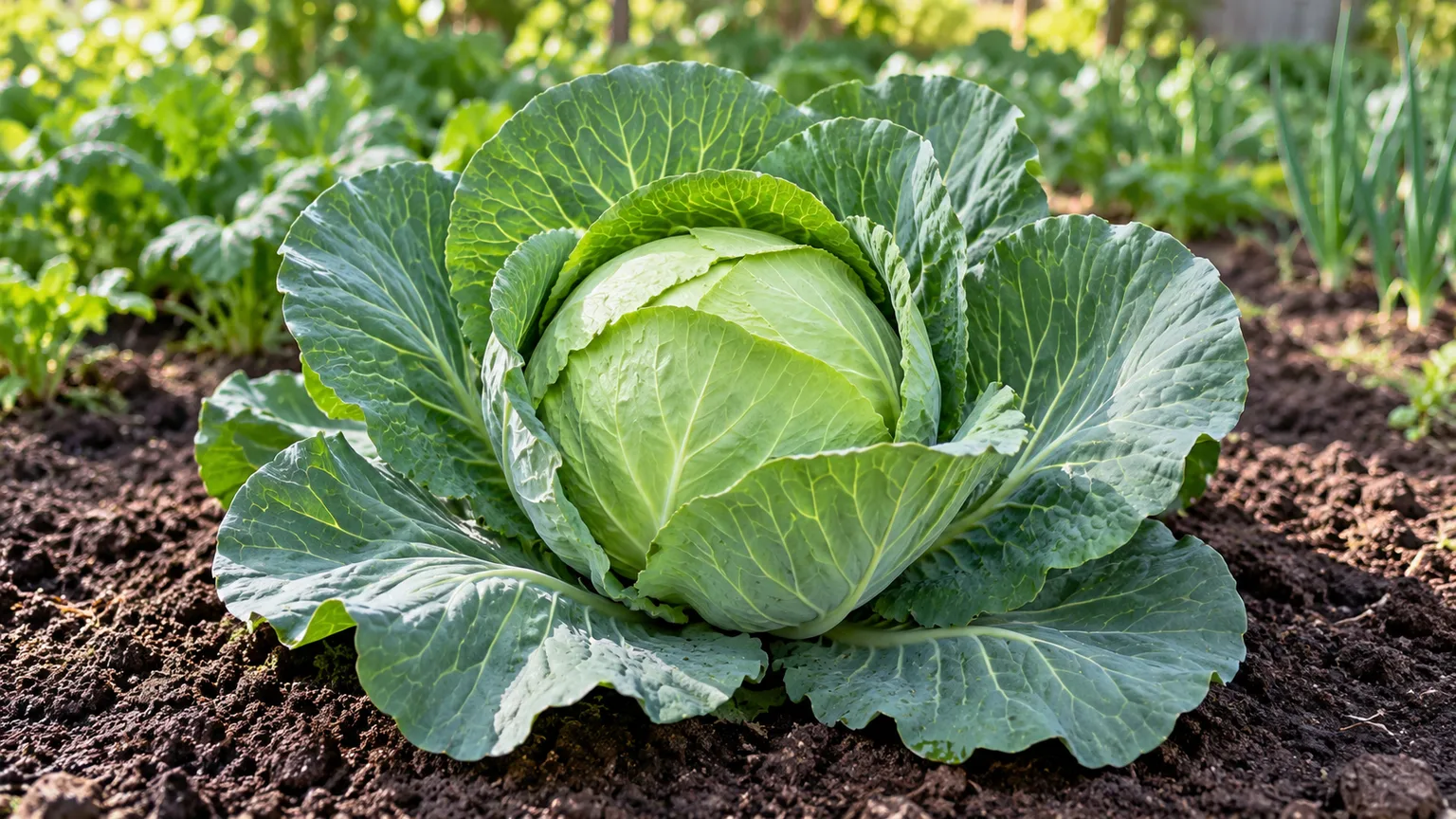
Cabbage Repotting Guide: Timing, Pot Size & Steps
Cabbage Repotting Guide: Timing, Pot Size & Steps
Cabbage repotting for container growers is really transplant timing: moving young Brassica oleracea var. capitata from a seed module or nursery plug into a pot large enough to form a firm head before heat or bolting ends the crop. Unlike a fiddle-leaf fig or peace lily, heading cabbage is a cool-season annual. After it sits in a roomy final container with fresh mix, the RHS approach treats further upsizing as unnecessary unless you are still nursing cramped seedlings—not as a yearly ritual.
That distinction keeps you from drowning roots in an oversized monsoon pot or repotting a plant that already decided to flower. This guide covers when to pot up starts, how big the final container should be on an Indian balcony, how to plant deeply without burying the growing point, and how to settle the plant afterward. For whole-plant context and sowing windows, start with the Cabbage overview.
Cabbage repotting: the quick answer
Plan for at most two container steps: (1) move seedlings out of cells when they have several true leaves and roots fill the module, and (2) transplant once into a deep, well-drained final pot before the root ball dries out every day or leaves stall. On Indian plains, align the last move with cool autumn or winter weather while the plant can still establish in strong sun—see Cabbage light for placement.
Use a container with multiple drainage holes, peat-free compost-rich mix (details in Cabbage soil), and only a modest size jump at the seedling stage. For one compact heading cabbage, the RHS suggests one plant in a 30 cm (12 in) pot; up to three compact plants can share a 50 cm (20 in) pot if you accept smaller heads. After the final potting, focus on even moisture and head development—not another repot.
Why cabbage is not a houseplant repot
Cabbage behaves like a heading brassica, not an indoor foliage plant you upsize every spring. It needs firm, fertile soil, steady moisture, and plenty of light while temperatures stay mild. The RHS vegetables in containers guidance notes that many edibles need containers with at least 45 cm (18 in) depth and width so roots do not run out of water and nutrients every afternoon—cabbage’s large final pot fits that pattern even when individual plants use slightly smaller diameters for compact cultivars.
Annual heading crop vs perennial pot culture
A houseplant repot refreshes mix and gives perennial roots room for years of growth. Cabbage finishes its useful life in one cool season: you harvest a head (or spring greens), then start again. Repotting fixes cramped seedlings and exhausted starter compost; it does not reverse aphid pressure, nitrogen shortage, or heat stress. If the plant is already bolting or splitting in late spring warmth, a bigger pot will not restore tight winter leaves.
Signs cabbage needs a larger pot or fresh mix
Repot when the container—not the calendar—shows stress. Useful triggers include:
- Seedlings with five or six true leaves at roughly 10–15 cm (4–6 in) tall, the stage the RHS describes as ready for final planting.
- Roots circling the plug, visible through drainage holes, or a stiff root mat that lifts out as one piece.
- A final pot that dries within a day in cool weather despite thorough watering—often a sign the root zone has outgrown available mix.
- Stalled leaf expansion while lower leaves yellow from hunger, after you rule out Cabbage watering mistakes and weak light.
Midday limp leaves on a hot afternoon are not automatically a repotting call. Check moisture 2–3 cm below the surface before disturbing roots.
Seedling and plug signals
The first move is potting up, not jumping into a giant tub. The RHS recommends sowing in modular trays specifically to reduce root disturbance at transplant—slide plugs out intact rather than pulling by leaves. If seedlings crowd a shallow tray, thin or move them before stems stretch and topple.
The two container moves that matter
Potting up from modular trays
When starts are at least 10 cm (4 in) tall with healthy true leaves, shift them to an interim pot only one step larger—enough fresh mix for roots to spread without leaving a huge wet zone the seedling cannot use. Gardening Know How stresses transplanting early cabbage promptly so plants mature before summer heat; in warm regions, interpret that as cool-season urgency, not mid-summer repotting on a balcony.
Water lightly before lifting so plugs slide out cleanly without being mud-saturated.
Transplanting into the final pot
The second move sets cabbage up to size a head. Choose a compact variety for pots if space is tight. Plant one cabbage in a 30 cm (12 in) pot, or up to three in a 50 cm (20 in) pot, per RHS container guidance—do not crowd more densely; cabbages need light and airflow to limit fungal issues.
You can also sow directly into a large container and thin to one strong seedling per station, skipping an extra repot when bench space is limited. Cabbage is not suitable for grow bags, which dry unevenly and lack the depth heading roots prefer.
Best timing for repotting cabbage in India
Cabbage repotting tracks cool weather, not tropical houseplant “spring repot season.” In hot lowland summers, even a careful transplant often produces loose leaves, bitterness, or early bolting—better to wait for an autumn sowing than to rescue a suffering summer pot with another move.
Indian plains: Sow October–November, pot up seedlings as they fill cells through late autumn, and settle into final containers while winter sun and mild days support establishment. Cooler hills can stretch the season, but still avoid heat-wave weeks for any transplant.
Temperate reference: Gardening Know How notes that early types should be transplanted as soon as possible so they mature before summertime heat—use that as a warning in warm regions: if your balcony already bakes above roughly 27–30°C (80–86°F) daily, postpone the final move until weather breaks or provide afternoon shade as described in the light guide.
Morning or late-afternoon transplanting reduces immediate wilting. Harden off indoor-started seedlings for several days before the final outdoor pot, as the RHS hardening-off guidance recommends.
Choose the right container
Volume, width, and drainage for heads
Cabbage needs steady moisture but cannot sit in stagnant water. Pick pots with several open drainage holes; never rely on gravel alone to fix a sealed base. Width matters because brassica roots spread outward; a tall, narrow column of mix dries unevenly and topples as heads gain weight.
For general vegetable containers, the RHS advises aiming for 45 cm (18 in) depth and width when possible so you are not feeding and watering hourly—compact cabbages can use the 30 cm minimum per plant, while shared pots should still be deep and wide enough that three plants are not competing in a shallow bowl.
Matching pots to cabbage type
Read the seed packet before choosing the final pot. Autumn and large-headed types need wider spacing—often up to 45 cm (18 in) between plants in ground terms—while compact spring cabbages can manage 30 cm (1 ft) spacing. In a single-pot culture, give each vigorous plant its own appropriately sized container when possible rather than mixing a giant savoy with a dwarf type in one crowded tub.
If you want a starting estimate, try the Pot Size Calculator with cabbage selected, then adjust upward for large-headed cultivars.
Mix, firm soil, and planting depth
Repotting is your chance to refresh fertility and structure. The RHS recommends large, deep containers filled with peat-free multi-purpose compost, kept well watered, especially in summer. For a firmer mix aligned with LeafyPixels guidance, blend roughly 50% quality potting mix or loam, 30% mature compost, and 20% perlite or coarse sand for aeration—see Cabbage soil for pH and drainage targets.
At transplant, set plants deeper than they sat in the cell, with lowest leaves at the soil surface, so buried stem nodes root and top-heavy heads anchor better—this is brassica-specific depth, not the “keep the crown high” rule used for many succulents. Firm mix gently around roots; cabbage prefers firm soil in ground culture, and a gentle firm-in in pots reduces air pockets that dry roots.
Avoid reusing mix from a previous brassica crop if you saw clubroot-like swelling or unexplained stunting—fresh compost in a clean pot is the point of container growing when soil disease is a concern, as the RHS notes for clubroot situations.
How to repot cabbage step by step
Harden off, lift plugs, and set depth
Harden off indoor seedlings by gradually increasing outdoor time over several days. On transplant day, water lightly so modules release cleanly.
Lift each plant by the root ball, not the crown. Set each plug in a prepared hole so the lowest leaves sit near the soil surface without burying the folded growing point in the center. Space according to cultivar: think 30 cm for compact types and up to 45 cm for large-headed varieties when each has its own pot. Water in generously once to settle voids, then return to even moisture rather than constant sogginess—follow Cabbage watering checks after the move.
Position the container in full sun with good airflow. Cover young plants with insect-proof mesh if cabbage white butterflies are active on your balcony—repotting stress plus pest damage compounds quickly on small starts.
Care after repotting
Expect mild transplant droop for a few days while roots contact fresh mix. Hold off heavy nitrogen feeds until new growth looks steady; a light feed later follows the Cabbage fertilizer guide once plants are actively sizing heads.
Keep strong light in the cool season, shifting to afternoon shade only when heat spikes. Empty saucers after drainage events. If leaves wilt while mix stays wet, pause watering and inspect for oxygen-starved roots rather than assuming drought.
Harvest according to type—spring greens from thinnings or full heads when firm. If you need more plants instead of a larger pot, sow additional seed rather than dividing a single cabbage crown; see Cabbage propagation for seed workflow.
When routine repotting will not help
Skip or postpone repotting when:
- Bolting has begun—flower stalks mean head quality is already shifting toward seed production.
- Sustained heat is forecast and you cannot provide shade or reliable water.
- The plant shows pest or disease collapse—caterpillars, clubroot suspicion, or mushy stems need targeted fixes, not fresh mix alone.
- You are tempted to upsize a root-bound plant in late spring hoping for summer harvest; on most Indian plains, start a new autumn sowing instead.
Loose, splitting heads near harvest are a maturity signal, not a pot-size problem—Cabbage pruning covers harvest cuts rather than another transplant.
Common cabbage repotting mistakes
Oversized final pots leave a ring of cold, wet, unused mix—especially risky right after transplant in humid shoulder seasons. Repotting into blazing midday sun without hardening off invites scorch and weak, stretched leaves. Burying the growing point too deep can rot the crown; bury the stem, not the new leaves folded in the center.
Crowding three large savoys in a 50 cm pot ignores RHS airflow guidance and produces small, disease-prone heads. Using grow bags fights cabbage’s need for depth and stable moisture. Pulling seedlings by leaves breaks the meristem you need for heading. Watering on a calendar after repotting instead of checking dryness layers repeats the pattern of yellow lower leaves while roots suffocate.
When to use this page vs other Cabbage guides
- Cabbage overview — Identity, cultivar types, and Indian season timing before you choose pots.
- Cabbage soil — Mix recipes, pH, and drainage when repotting is really a soil-quality problem.
- Cabbage watering — Moisture checks after transplant when wilting could be drought or excess water.
- Cabbage light — Sun and heat stress that no pot size fixes.
- Cabbage propagation — Starting new plants instead of repotting a finished crop.
- Cabbage fertilizer — Feeding after roots establish in the final container.
Related Cabbage guides
- Cabbage overview
- Cabbage watering
- Cabbage light
- Cabbage soil
- Cabbage fertilizer
- Cabbage propagation
- Cabbage pruning
Conclusion
Cabbage repotting is a cool-season container task, not a perennial houseplant ritual. Pot up modular seedlings when true leaves and roots outgrow cells, then transplant once into a deep, peat-free, compost-rich final container—often 30 cm for one compact plant or a 50 cm pot for up to three compact types. Plant slightly deeper than the plug to anchor stems, firm mix gently, water in thoroughly, then maintain even moisture while heads form. After that, monitor pests and harvest; do not keep upsizing a crop meant to finish in one pot. When heat, bolting, or disease take over, sow fresh seed for the next cool window rather than forcing another repot.