Cabbage Pruning Guide: Wrapper Leaves, Heads & Harvest Cuts
Cabbage Pruning Guide: Wrapper Leaves, Heads & Harvest Cuts
Cabbage Pruning Guide: Wrapper Leaves, Heads & Harvest Cuts
First, remove only yellow, slimy, or clearly damaged outer wrapper leaves at the base where each leaf meets the stem. Use clean scissors or a knife, work from the bottom of the plant upward, and stop before you cut into the forming head. After that single sanitation pass, decide whether you are tidying for airflow, picking loose leaves for the kitchen, or preparing for a full head harvest.
Heading cabbage (Brassica oleracea var. capitata) is grown for a dense head of leaves produced in the cool season, not for shaping woody branches. NC State Extension describes cabbages as cool-season vegetables with rounded, oval, or pointed heads surrounded by looser wrapper foliage. Home “pruning” means wrapper-leaf cleanup, selective outer-leaf harvest, and timed head cuts—always protecting the compact heart until you intend to harvest it. For sowing windows, spacing, and patta gobhi context, start with the Cabbage overview.
Quick answer
Cabbage pruning is wrapper maintenance plus harvest timing. Clean damaged outer leaves first, then—if you need greens before the head sizes up—pull a few mature outer wrapper leaves every week or two while the center keeps tightening. Harvest the main head when it feels firm through the squeeze test, cutting at the lowest practical point on the stem and leaving loose outer leaves if you want side sprouts. Gardening Know How warns that mature heads can split after heavy rain or overwatering, so harvest before a soak when heads are already solid. Pruning cannot fix chronic heat, drought, or dim shade—stabilize light and watering before expecting a loose plant to suddenly head up.
What cabbage pruning actually means
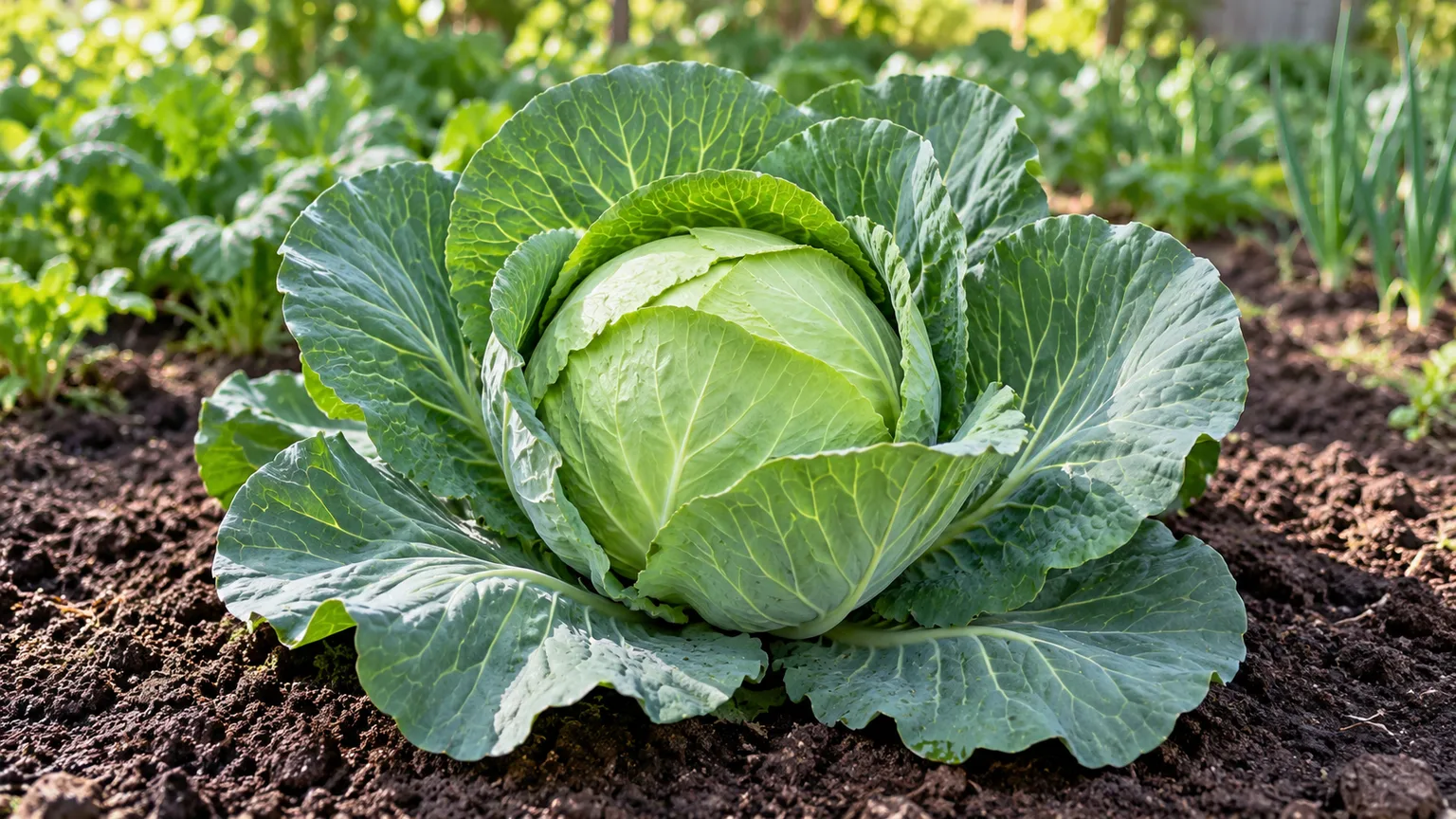
A cabbage plant has two leaf zones:
- Wrapper leaves — larger, spreading leaves outside the head. They protect the heart, photosynthesize, and often show pest damage first.
- Head leaves — inner leaves that fold into the dense ball you harvest.
There is no useful “pinch the tip for bushiness” step on standard heading cabbage. Size and tightness come from cultivar, cool weather, nutrition, and spacing—not from shearing the rosette flat.
| Goal | What you cut | Where | What you leave |
|---|---|---|---|
| Sanitation | Yellow, diseased, or heavily chewed wrapper leaves | Base of each failing leaf | Forming head untouched |
| Early kitchen greens | Older outer wrapper leaves | Twist or cut at leaf base | Central head and most wrappers |
| Main crop | Entire firm head | Lowest stem cut with knife | Optional wrapper leaves on stump for sprouts |
| Bolting plant | Flower stalk | Cut stalk low as soon as seen | Plant is usually finished for heads |
UF/IFAS Gardening Solutions notes heading types commonly need on the order of 70–90 days from transplant (longer from direct seed), while timing varies by cultivar—check your seed packet rather than guessing from leaf count alone.
When to prune or harvest cabbage
Wrapper cleanup (anytime)
Remove outer leaves that are yellow, rotting at the base, or coated in caterpillar frass when washing is impractical. This is light pruning, not a harvest. In humid monsoon beds, pulling one or two lowest soggy wrappers improves airflow around the stem and makes pest checks easier.
Defer large leaf stripping when plants are wilted from transplant shock, waterlogged soil, or midday heat on a dry root ball. A stressed cabbage needs stable care more than another layer removed.
Outer-leaf harvest before the head is ready
Gardenary explains you can begin harvesting older outer leaves about three to four weeks after transplants go into the garden—taking only a couple of leaves per plant per pass while the center keeps developing. Those leaves are edible in stir-fries, soups, and wraps, and removing a few can direct energy toward head formation.
In Indian cool-season windows (often October through February in many plains districts), this gradual pick stretches the crop while heads size up. In tight containers, be more conservative; small pots limit how many outer leaves you can afford to lose.
Main head harvest window
Heads are ready when they feel solid and firm through the palm—not soft or spongy. Gardening Know How stresses that mature heads are ready at firmness, not a single diameter; variety and weather change final size. Gardenary suggests many types head in roughly 60–90 days after sowing, with some reds taking longer—use the seed packet as your calendar anchor.
Harvest before:
- Splitting — sudden water uptake cracks tight heads.
- Bolting — warmth pushes flower stalks; leaves turn bitter.
- Over-ripeness — heads left too long on the plant can split or bolt even in cool weather.
If a heat wave is forecast, harvest slightly early; wrapper leaves and smaller heads still cook well.
What to check before you cut
Run a quick inspection:
- Head firmness — gently squeeze the center; soft means wait, rock-hard with outer cracks means harvest now.
- Wrapper condition — holey outer leaves are normal; mushy bases or black rot at the stem need removal and may mean less irrigation.
- Soil moisture — very dry plants head slowly; waterlogged crowns rot—align with your soil drainage plan.
- Pests — look under wrapper leaves for loopers and aphids before they move into the head.
- Neighbors — overlapping leaves in overcrowded rows stay wet; harvest or remove lowest wrappers on inner plants for airflow.
If heads are loose and plants are pale with long petioles, improve light and nutrition before aggressive leaf removal.
The first cut to make
Choose one clearly failing outer wrapper leaf—the lowest yellow or damaged blade you can reach without levering the head. Cut or snap it at the base, bag it if pests or disease are heavy, and step back. If the head looks clean and firm, stop there for the day.
This single cut confirms you are not accidentally nicking head tissue. Only after that should you plan additional wrapper pulls or a kitchen harvest.
How to prune and harvest cabbage step by step
Sanitation and light wrapper thinning
- Sterilize blades between plants if disease was present—Iowa State University Extension recommends cleaning tools when moving between diseased and healthy tissue.
- Hold a wrapper leaf away from the head and trace it to the stem.
- Cut at the base; do not tug hard enough to tear head leaves.
- Remove only leaves that fail your inspection—healthy wrappers shield the heart from sunscald.
Gradual outer-leaf kitchen harvest
- Pick two to three of the oldest usable outer leaves per plant, not the whole skirt.
- Wait several days; watch the head continue to tighten.
- Repeat if weather stays cool and soil moisture is steady.
This mirrors cut-and-come-again logic on leafy brassicas while the head is still forming.
Full head harvest cut
When the head is firm:
- Use a sharp knife or pruners.
- Cut at the lowest point practical on the stem, as Gardening Know How describes—leaving loose outer leaves attached if you want secondary sprouts from the stump.
- Gardenary recommends pushing the head gently away as you cut so you can see the stem base clearly.
Avoid yanking the whole plant unless you are clearing the bed; cutting reduces disturbance to neighboring roots in raised beds.
Split or cracked heads
If a head splits after rain, harvest immediately. Trim cracked sections in the kitchen; use split heads soon—they do not store as well. Future splits are prevented by even watering, harvesting at firm maturity, and not letting heads oversize.
Bolting and flower stalks
When a flower stalk elongates, leaf quality drops. Cut the stalk low for possible side shoots on some plants, but plan to replace the crop—bolted cabbage is a seed crop, not a tight head. Succession sowing through propagation beats trying to “prune back” a blooming brassica into a grocery-store head.
How much you can safely remove
- Sanitation: Only failing wrappers—no fixed percentage, but never strip the plant naked while the head is small.
- Outer-leaf picks: A few leaves per plant per week during active cool-season growth.
- Main head: One primary head per plant per cycle; optional small side heads are bonus yield, not a second full crop.
Removing too many wrappers during head formation exposes the heart to sun and pests and can slow sizing. Removing too few invites slugs and holds excess humidity against the stem.
Where to cut (and what not to cut)
Cut:
- Wrapper leaves at the petiole base on the stem.
- The main head across the stem, low enough to leave a short stump with several leaf scars if you want sprouts.
Do not cut:
- Into the dense head during routine pruning—only at final harvest.
- The root crown below soil during leaf pulls (rot entry point).
- Healthy inner head leaves while “cleaning up” for appearance—those are the crop.
Heading cabbage is not Brassica oleracea var. acephala kale; you are not maintaining a permanent leaf crown through summer. Most home plots treat cabbage as a single-head or head-plus-sprouts annual.
Aftercare after pruning and harvest
- Water: Keep soil evenly moist after wrapper pulls; avoid flooding mature heads before harvest day.
- Feed: Light fertilizer supports wrapper regrowth only before heavy heading; do not chase split heads with extra nitrogen.
- Pests: Inspect fresh cuts and stump sprouts for caterpillars; hand-pick or use labeled controls appropriate for food crops.
- Stump sprouts: If you left leaf bases, small heads may form in cool follow-on weather—harvest when firm, like the first head.
Container growers: after the main head, refresh or compost spent plants in small pots rather than expecting large second heads.
Recovery and signs pruning worked
Wrapper cleanup success: Cleaner stem, fewer slugs, head remains firm, no new yellowing spreading from cut bases.
Outer-leaf harvest success: Head continues to tighten; new wrapper leaves look deep green; kitchen picks repeat weekly in cool weather.
Head harvest success: Solid head, minimal internal browning, stump sprouts appear within a couple of weeks if weather stays mild and you left lower leaves.
Warning signs: Soft head after rain (split risk), hollow or loose head (heat or nutrient stress), black rot at the crown (reduce water, improve drainage), immediate wilting after heavy leaf strip (too much removed at once).
Mistakes to avoid
- Shearing the head early because outer leaves look messy—wrapper foliage is normal.
- Waiting for oversized heads until splits or bolts occur.
- Harvesting before the squeeze test passes—loose heads do not tighten much after picking.
- Stacking stress—hard pruning the same day as transplant, heat wave, or repotting.
- Composting heavily diseased wrappers in the same pile used for brassica beds without hot composting.
- Confusing cultivars—napa and bok choy follow looser heading rules; this page targets classic heading capitata types.
When not to prune
Skip aggressive wrapper removal when seedlings have fewer than four to five true leaves, during flowering, after heads are harvested unless you are grooming stump sprouts, or when plants show crown rot—cutting more leaves will not dry out a failing base.
Conclusion
Cabbage pruning is protect the head, clean the wrappers, harvest on firmness. Start with one damaged outer leaf, use gradual outer picks if you want early greens, then make a single low stem cut when the head is solid—before rain splits it or heat sends up flowers. Match cuts to cool-season growth and steady moisture; scissors cannot turn a bolting plant back into a tight ball. That sequence—not heavy stripping—is what keeps patta gobhi crisp from first wrapper pull to main harvest.