Cabbage Watering Guide for Pots and Beds
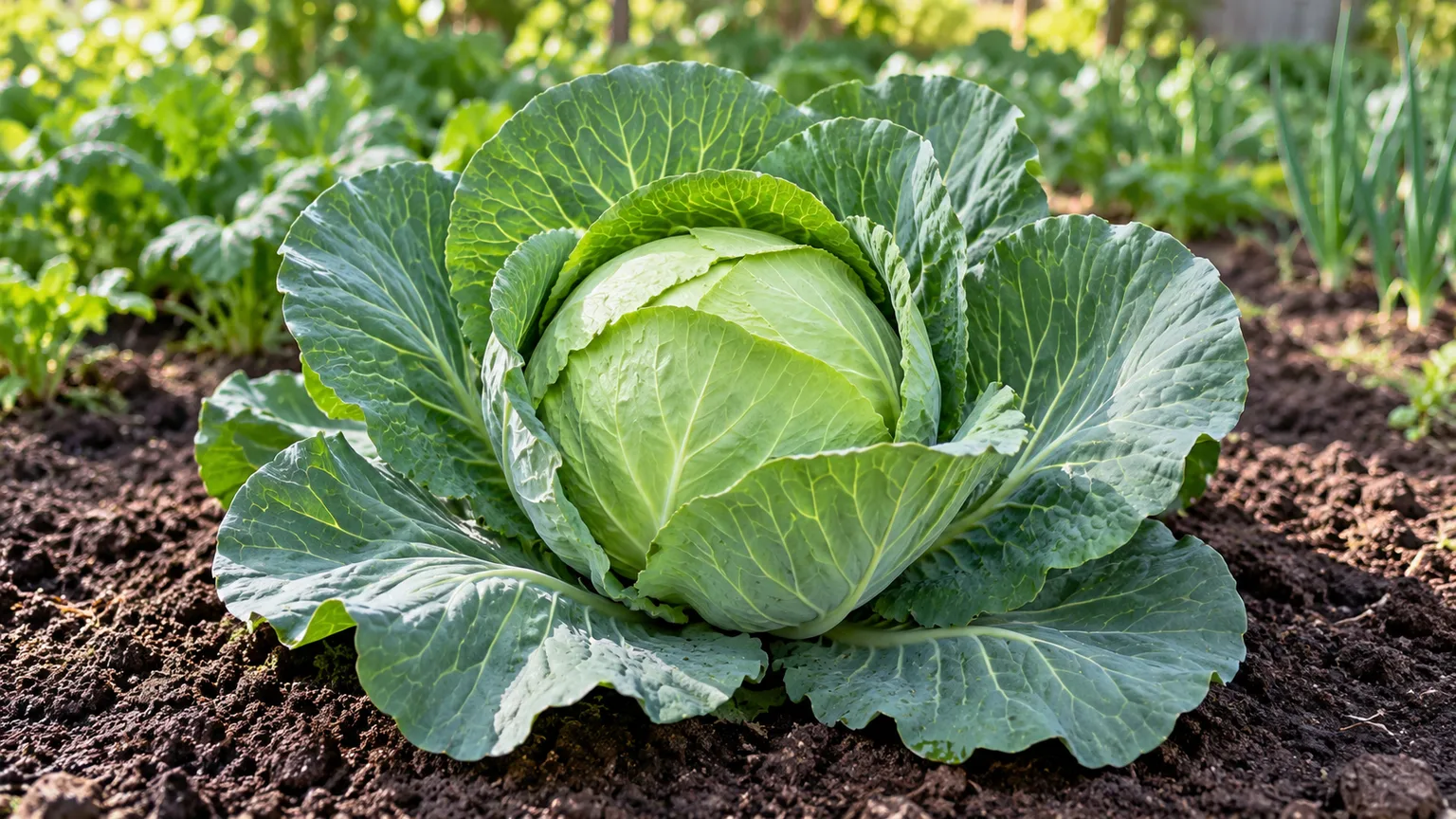
Cabbage Watering Guide for Pots and Beds
Cabbage Watering Guide for Pots and Beds
Cabbage can look thirsty when the mix is dry, and it can look equally miserable when its roots are drowning. Brassica oleracea var. capitata—the tight-headed cabbage sold as patta gobhi and countless market cultivars—is a cool-season brassica grown for one dense head, not a succulent you can neglect for weeks. Its fibrous root system and rapid leaf expansion perform best when moisture stays even: damp below the surface, never saturated for days, and never swinging from dust-dry to flooded.
For most Indian plains growers, cabbage belongs to the cool season: sow or transplant around October–November, grow through winter, and harvest before sustained spring heat pushes the plant toward bolting. Watering must follow that biology. A schedule copied from a snake plant will stall head formation in dry mix; a peace-lily approach that keeps soil wet will yellow lower leaves and invite stem rot long before you get a firm head.
The quick answer: steady moisture while heads form
Push a finger 2–3 cm into the mix away from the stem. If that layer feels dry and the soil below is only lightly moist, water the full root zone until excess drains freely. If the pot feels heavy, the mix below the surface stays cool and wet, or water pools in the saucer, wait—more water will not fix oxygen-starved roots.
The Royal Horticultural Society advises watering young cabbage plants regularly while roots are small, then watering established in-ground plants mainly during dry spells with a thorough soaking about every 10 days, and giving additional water once heads begin to form to help them size up (RHS — Grow your own cabbages). Read that as “check often, irrigate when the root zone is beginning to dry,” not “ignore the pot until a fixed weekday.”
Why cabbage is not a “dry it out completely” crop
Cabbage is a heading cole crop. It builds leaf area quickly in cool weather and draws water through a relatively shallow, fibrous root system compared with deep-rooted perennials. Leafy brassicas generally prefer moist but not waterlogged soil because turgor in the wrapper leaves and the developing head depends on steady uptake.
Shallow roots and fast head growth
Unlike a woody houseplant with years to deepen roots, cabbage in a container depends entirely on the water held in that pot. When the upper root zone swings from bone-dry to sodden and back, growth can stall, inner leaves may taste bitter, and the plant becomes more vulnerable to splitting once a head starts to firm. UF/IFAS notes that cabbage, like other vegetables, needs plenty of sun and irrigation, and recommends early-morning irrigation so leaves can dry in sun and fungal disease pressure stays lower (UF/IFAS Gardening Solutions — Cabbage).
Cool weather versus surprise heat on a balcony
Cool air slows evaporation, so a cabbage pot may need water less often in January than during a dry February week when winds pick up. Conversely, an unseasonably warm afternoon can make wrapper leaves wilt even when soil moisture is adequate, because transpiration outpaces uptake. In that case, light shade and a root-zone check beat an automatic extra soaking. Tie watering decisions to soil dryness and overnight recovery, not to the calendar alone.
How often should you water cabbage?
There is no honest universal interval. Pot volume, mix composition, cultivar vigour, sun exposure, wind, humidity, rainfall, and how close you are to harvest all change drying speed. A 15–20 litre pot with compost-rich mix on a sunny terrace behaves differently from a small nursery cell or an in-ground row mulched with straw.
The 2–3 cm finger check
Container guides often recommend checking whether soil feels dry to the first knuckle before watering, aiming for moisture similar to a well-wrung sponge rather than mud or dust (Gardeners’ Path — Grow cabbage in containers). LeafyPixels aligns with 2–3 cm for Indian container mixes, which often dry unevenly at the surface. Combine the finger test with pot weight: a noticeable lightening usually means the root ball has lost usable water.
For tall pots, a dry wooden skewer inserted toward the lower root zone can confirm whether moisture remains deep down. Darkening or clinging mix on the skewer means wait; clean dry wood supports watering.
Weekly water targets during head formation
Many vegetable guides cite about 1–1.5 inches (2.5–4 cm) of water per week for cabbage during active growth and head formation, including rainfall, with consistency mattering as much as the total (Harvest to Table — How much water does cabbage need?). Treat that as a planning benchmark for in-ground crops in moderate climates, not a prescription to pour a measured dose into every container during a humid monsoon break. Let the soil tell you whether the next check becomes a watering.
Watering cabbage in containers
Cabbage can produce a firm head in a pot, but only if the container holds enough soil to buffer moisture swings. The RHS suggests one plant in a 30 cm (12 in) pot, or up to three in a 50 cm (20 in) pot for compact types, in full sun with consistent watering—especially in warmer weather (RHS — Grow your own cabbages). Editorial container guides often recommend at least 5 gallons (roughly 19 litres) and 12 inches (30 cm) of depth per plant so roots can support a dense head without drying out in a single warm afternoon (Gardening Elsa — Grow cabbage in containers).
Pot size, one plant per pot, and drying speed
A single mature cabbage in a balcony pot may need attention every two to three days during sunny, breezy winter weather, while an in-ground row mulched with compost may go longer between irrigations. Black plastic pots heat faster and dry sooner than glazed ceramic. If your final container dries within a day of a thorough soak, the plant may be root-bound or the mix too gritty for steady head growth. Review the Cabbage soil guide and Cabbage repotting guide before you respond by watering even more aggressively.
How to water deeply without drowning roots
When a check says “water,” apply it once, thoroughly, at soil level. Partial sips every morning keep the top layer damp while leaving the centre dry, which encourages shallow roots and hides wet conditions lower in the pot where rot starts.
Water the soil, not the leaf crown
Morning irrigation gives leaves time to dry before cool nights, which helps reduce foliar disease pressure on brassicas (UF/IFAS Gardening Solutions — Cabbage). Direct water to the root zone rather than repeatedly showering the crown. Wet foliage alone does not hydrate roots, and cabbage that stays dripping in stagnant air is more vulnerable to rot in the folded wrapper leaves.
Soak slowly until water exits the drainage holes, then stop. For garden rows, moisten the soil to a depth that matches the active root zone rather than sprinkling the surface. Soaker hoses or drip lines that keep leaves dry are a practical upgrade when caterpillars and fungi are already on your mind (Tips Bulletin — Growing cabbage in containers).
Saucers, monsoon rain, and blocked drainage
Empty saucers after each watering so the pot is not sitting in a reservoir. During monsoon bursts on a sheltered balcony, pause irrigation until a root-zone check shows the mix beginning to dry; concentrated runoff from a roof can still saturate a pot that received no hose water.
If water pools on the surface or holes appear blocked, clear them before the next drink. Chronic wet mix with sour smell or fungus gnats points toward poor drainage and possible root stress—problems that need less water and better airflow, not more feeding.
Watering through the Indian cool season
Most plains growers treat cabbage as an October–March crop. Growth is fastest in the mild months after transplant, so young plants need the most consistent moisture while leaves expand and the head begins to knit.
October–March balcony rhythms
After transplant, keep seedlings from wilting hard while roots establish. As plants size up, shift from “never let the transplant collapse” to “never let the maturing root ball swing to dust-dry while a head is forming.” Mulch in-ground plantings with mature compost to hold moisture, echoing RHS guidance to mulch cabbage to reduce watering need (RHS — Grow your own cabbages).
Harvest timing approaches as the head feels firm; some growers slightly reduce watering one to two weeks before harvest to firm heads, but only when soil has been evenly moist up to that point—not as a rescue after drought (Harvest to Table — How much water does cabbage need?).
When a warm spell hits mid-winter
Sudden heat can make cabbage wilt in the afternoon even when soil moisture is adequate. Confirm with a morning finger test. If soil is moist and leaves recover overnight, improve airflow, move the pot off a heat-radiating wall, and consider light afternoon shade as described in the Cabbage light guide. If soil is dry and leaves stay limp into the next morning, water deeply once and recheck in two days.
Do not move a stressed plant into deeper shade and increase watering and fertilize in the same week. Change one variable at a time.
Seedlings, transplants, and maturing heads
Seedlings in small cells dry within hours in direct sun. Water when the surface lightens, using a gentle stream so you do not wash seed or expose roots. RHS seed-starting guidance stresses keeping modules in good light and watered regularly until transplant size (RHS — Grow your own cabbages).
Transplants need steady moisture for the first week after planting while new roots reach outward; wilting here is often genuine thirst. Water generously at planting and keep the root ball from swinging dry while it settles.
Maturing heads tolerate brief dryness better than seedlings but pay you back with split skins if you alternate drought with heavy soaking. This is the stage to water little and often rather than feast-and-famine.
Split heads: the classic watering mistake
A firm cabbage head that cracks open after rain or a heavy drink is usually a water-consistency problem, not a mysterious disease. Inner leaves expand faster than the outer wrapper can stretch when a dry plant suddenly receives a large dose of water (City Rooted — Growing cabbage in containers). Prevention is boring and effective: keep moisture steady as the head firms, use mulch in beds, and avoid letting a container go bone-dry before a monsoon drench.
If a mature head is about to split and heavy rain is forecast, harvesting a day early beats trying to “throttle” water at the last second on a plant that is already stressed. Consistent care through head formation is the real fix.
Signs cabbage needs more water
Dry mix combined with limp wrapper leaves that recover after a thorough soak usually means underwatering. Leaf edges may brown, growth slows, and the head may stay loose or small. Container weight drops sharply. These signs overlap with heat wilt from other causes, so always pair plant appearance with a root-zone check.
Signs cabbage is getting too much water
Yellowing lower leaves on a plant that has been watered frequently, soft or darkened tissue at the soil line, and wilt while mix stays wet are classic overwatering cues. Drooping leaves with soggy soil should trigger a pause in irrigation, saucer emptying, and inspection for drainage—not another round from the watering can.
Persistently wet surface mulch, algae, or sour-smelling mix mean the moisture pattern—not caterpillars—is the first problem to fix.
First steps when you are unsure
If you cannot tell whether the problem is too much or too little water, do not guess with another full soak. Push your finger 2–3 cm deep, lift the pot, and smell the drainage area. Wet and heavy means wait and improve airflow; dry and light means one deep watering at soil level.
Remove standing water from saucers. If problems continue after you correct the pattern for two weeks, compare light and nutrition in the Cabbage light guide and Cabbage fertilizer guide. Severe stem softness or spreading yellowing with foul-smelling mix may require repotting into fresh, drained mix per the Cabbage repotting guide.
When to use this page vs other Cabbage guides
Use this page when the main question is how much water, how often, and how to check dryness for cabbage in pots or beds. Start with the Cabbage overview if you need cultivar identity, seasonal sowing windows, or harvest basics.
If mix stays waterlogged or dries within hours, move to the Cabbage soil guide. If roots fill the pot or seedlings need a final container, use the Cabbage repotting guide. For pale growth after moisture is stable, see the Cabbage fertilizer guide. Propagation timing and seedling moisture from sowing onward live in the Cabbage propagation guide. Shaping, wrapper-leaf management, and harvest cuts are covered in the Cabbage pruning guide.
Related Cabbage guides
- Cabbage overview — cool-season identity, cultivars, and whole-plant care
- Cabbage light — winter sun, heat stress, and loose heads in shade
- Cabbage soil — moisture retention, drainage, and pH for brassicas
- Cabbage fertilizer — feeding without salt buildup on moist roots
- Cabbage repotting — final pot size and transplant handling
- Cabbage propagation — seedling moisture from sowing onward
- Cabbage pruning — harvest timing and outer-leaf care
Conclusion
Cabbage rewards growers who treat water as a soil question, not a habit. Check 2–3 cm deep, water deeply when that layer dries, drain every pot completely, and keep moisture steady while heads firm. Shallow roots and fast head growth need even moisture; saturated mix steals oxygen and invites rot. Split heads are the bill for feast-and-famine watering—prevent them with consistency, not panic soaks after drought. Match your rhythm to container size, cultivar vigour, and your local cool season, and use sibling guides when light, soil, or nutrition still look off after the wet–dry cycle is fixed.