Cabbage Fertilizer Guide: NPK, Timing & Container Feeding
Cabbage Fertilizer Guide: NPK, Timing & Container Feeding
Cabbage Fertilizer Guide: NPK, Timing & Container Feeding
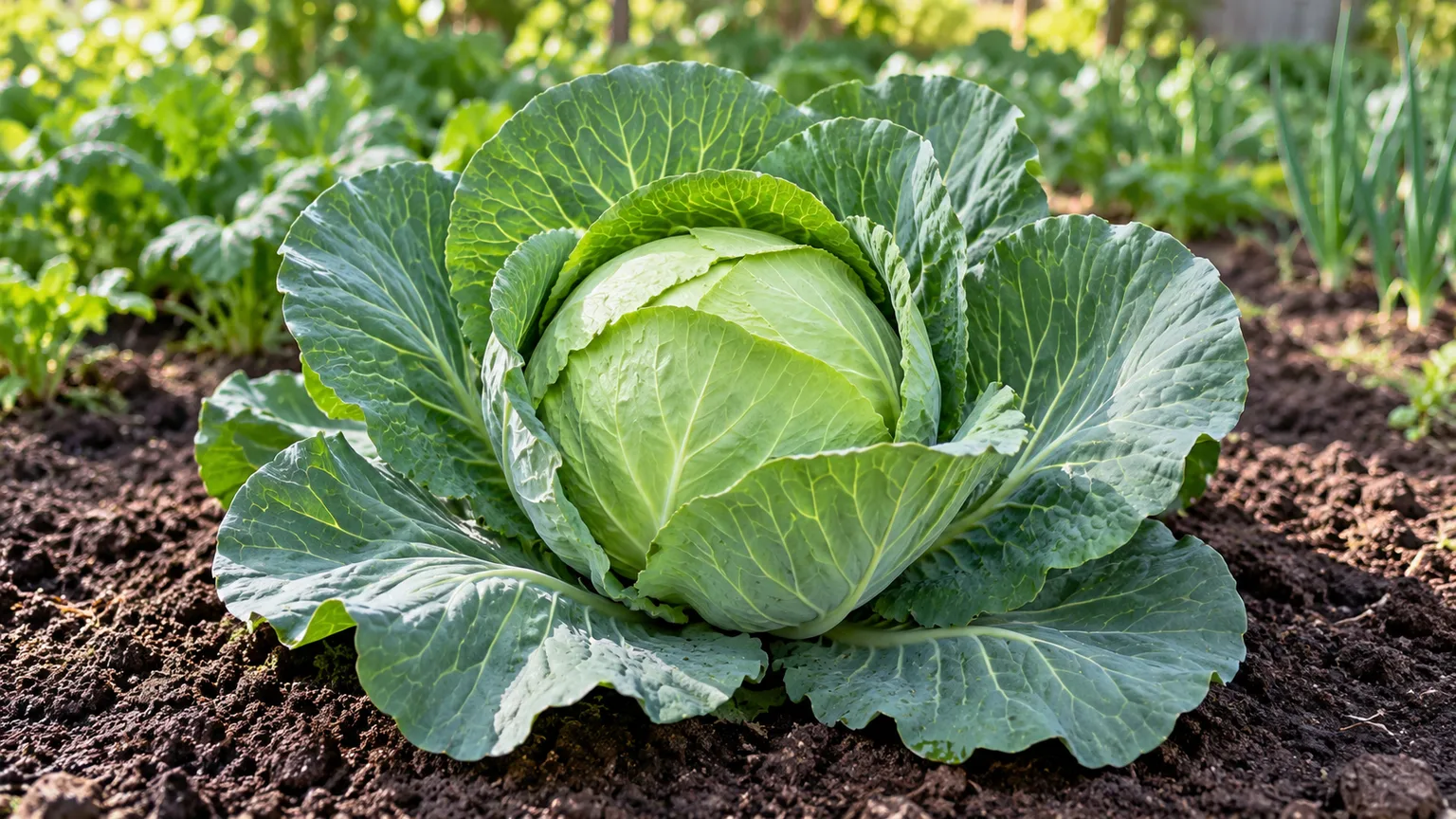
Cabbage (Brassica oleracea var. capitata) is grown for a single dense head—not for endless leaf pickings like palak or kale. That biology should drive every feeding decision for patta gobhi on a winter terrace or in a raised bed. Nitrogen still matters, but timing matters more: generous nitrogen while wrapper leaves expand, then a deliberate shift as the centre cups inward and the head tightens. Pouring the same high-nitrogen dose through the whole season is a common reason for leafy, loose heads that never firm up.
The practical starting point matches other brassicas: build fertility with compost and a suitable mix first, then add bottled fertilizer only to fill a gap you can see or measure. In-ground beds that already received manure or compost may need little else; in containers it is usually necessary because the root zone is small and nutrients leave with every drainage event.
This page is about whether, when, and how much to fertilize. For mix recipes and pH, use the Cabbage soil guide. For moisture that moves nutrients into roots, see Cabbage watering. For sowing windows and cultivar choice, start at the Cabbage overview.
Why cabbage nutrition is a two-stage job
Unlike tomatoes or okra, cabbage never needs a late-season push toward fruit set. Your goal is rapid vegetative growth in cool weather, then head sizing and firmness before heat or day length triggers bolting. Green, red, and savoy types differ in colour and texture, but all follow the same broad pattern: big outer leaves first, then a tightening head.
Cool-season timing on Indian terraces
On most Indian plains, sow or transplant cabbage from October into November and grow through winter while days are bright and nights are mild. Hill districts often enjoy a longer productive window; lowland pre-monsoon heat coarsens leaves, speeds bolting, and makes fertilizer largely wasted once the plant shifts toward flowering. Match feeding to active cool-season growth, then taper or stop as temperatures climb or a flower stalk elongates.
UF/IFAS notes that traditional heading cabbage from transplants commonly needs on the order of 70–90 days to harvest in Florida’s cool season—useful context for pacing side-dresses, not as a rigid calendar for every Indian city (UF/IFAS cabbage culture). The Cabbage light guide helps you separate pale, weak growth from simple shade stress.
How head formation changes the nitrogen story
Early in the crop, nitrogen supports the large wrapper leaves that power photosynthesis and eventually wrap the head. As the centre cups inward, excess nitrogen tends to produce soft, open heads rather than tight ones—especially in pots where salts concentrate. Terrace growers in India often describe this as a clear shift from a vegetative phase to a heading phase, with nitrogen-forward feeds early and a more balanced product once cupping begins (TerraceFarming cabbage guide).
Harvest to Table summarizes the same idea for home gardens: nitrogen-rich side-dressing about three to four weeks after transplant, then potassium-forward nutrition as heads form five to six weeks after transplant, with little or no late nitrogen before harvest (cabbage fertilization timing).
Macronutrients cabbage uses through the season
Nitrogen for wrapper leaves
Nitrogen drives chlorophyll and leaf expansion. Deficient cabbage often looks uniformly pale and grows slowly, with older leaves fading first while the plant is otherwise upright in cool weather. Cabbage is described as nutrient-hungry relative to many vegetables (cabbage fertilization timing), but hungry does not mean unlimited—steady availability beats repeated strong soluble spikes.
For edible quality, aim for enough nitrogen to build wrapper leaves without pushing the plant into overly soft tissue that invites splitting after an irregular watering event. If leaves are deep green, stems are sturdy, and the head is beginning to cup on schedule, you may already be supplying enough through compost alone.
Phosphorus, potassium, and head density
Phosphorus supports early root establishment after transplant; potassium is commonly linked to head firmness and stress tolerance during heading. A high-phosphorus “bloom” formula is not the right default for cabbage. A balanced vegetable product at planting, followed by nitrogen-leaning adjustments only when leaf colour and vigor justify them, fits the crop better than automatically using a fruiting blend all season.
Secondary nutrients and micronutrients can limit brassicas when pH is wrong—not because every bottle must be a complete trace mix. Fix pH and organic matter in the Cabbage soil guide before chasing rare deficiencies with add-on products.
Compost-first soil fertility
Long before selecting an NPK ratio, improve the root zone. Cabbage prefers fertile, moisture-retentive but well-drained soil in the pH 6.0–7.5 range typical for brassicas. Mature compost or well-rotted manure mixed at planting supplies slow nitrogen and improves water-holding capacity for roots that dry quickly on a terrace.
In-ground beds that received organic matter in prior seasons may already carry enough phosphorus and potassium for one winter crop. Where soil tests are available, use them to avoid stacking nutrients the plant cannot use this year. If older leaves yellow while veins stay green, or growth is stunted despite regular feeding, test pH and drainage before increasing fertilizer rate.
Picking a fertilizer product
There is no single magic bottle for every balcony. Choose a product labelled for vegetables, measure for the actual pot or bed area, and prefer slow, even release over repeated strong soluble doses unless you are correcting a confirmed shortfall during active cool-season growth.
NPK numbers on the label
The three numbers on a label show the percentage by weight of nitrogen, phosphate, and potash in the product. Higher first numbers mean more nitrogen relative to the other macronutrients. Gardening Know How explains that these values describe what is inside the bag, not what your soil already contains (NPK fertilizer numbers). Use the label to calculate dose, not to guess need.
At establishment, incorporating compost or a measured dose of granular vegetable fertilizer into the upper few inches of soil matches common practice for heading brassicas. Organic options such as compost, aged manure, vermicompost tea, or fish-based liquids release nutrients gradually; synthetic soluble feeds act faster but demand careful dilution and consistent watering to avoid root burn.
Feeding through the crop cycle
Think in three beats: pre-plant incorporation, vegetative side-dressing while wrapper leaves expand, and heading support with reduced nitrogen, then shutdown as heat or harvest approaches.
Pre-plant and early vegetative growth
At planting, blend compost or a measured dose of granular vegetable fertilizer into the top 8–10 cm of soil or potting mix rather than dumping concentrate against the stem. Water thoroughly after application so nutrients move into the root zone described in Cabbage watering.
About three to four weeks after transplant—once plants are established and actively sizing outer leaves in cool weather—apply a light nitrogen-forward side-dress a few centimetres from the base: compost, vermicompost tea, blood meal, or diluted fish emulsion, followed by irrigation. Skip this step if plants are already dark green and your mix was heavily composted at potting time. City Rooted’s brassica container guidance stresses that curd- and head-forming brassicas need a feeding regime that treats them as hungry plants in adequate root depth—not a single dose at planting (brassicas in containers).
Heading phase and late-season shutdown
When the centre cups inward and the head begins to tighten—often around five to six weeks after transplant in many schedules—shift toward a balanced or potassium-forward feed and avoid fresh high-nitrogen spikes. TerraceFarming recommends switching from nitrogen-heavy drenches to a balanced organic granular (for example NPK near 5-5-5) at the start of heading, then holding off if leaf margins brown (two-phase cabbage feeding).
When daytime heat rises, flower stalks elongate, or you are within a week or two of harvest, additional nitrogen cannot reverse bolting and may worsen splitting risk. Shift focus to consistent moisture and timely harvest rather than chasing size with fertilizer.
Terrace containers and balcony pots
Pots magnify both deficiency and excess. Penn State Extension notes that container vegetables rely on a limited soilless volume and generally need slow-release fertilizer at planting plus soluble feeds on a two- to four-week schedule during the season (container vegetable keys). Finished compost blended into the mix can partly substitute for slow-release nutrition.
Read the potting mix label before adding anything. Many blends already include starter or controlled-release fertilizer; doubling up is a common cause of seedling burn on terraces.
Preventing soluble-salt burn
Fertilizers are salts. In a pot with limited drainage or evaporation from hot paving, salts concentrate at the root ball. Warning signs include brown leaf margins shortly after feeding, a white crust on the medium surface, or wilting despite wet mix. Pause feeding, confirm drainage holes are open, and flush with plain water when the plant truly needs moisture—not on a blind calendar flush.
Aim for at least 10 litres of pot volume and roughly 30 cm of usable root depth for head-forming brassicas in containers; shallow pots make both watering and feeding harder to balance (brassicas in containers).
Troubleshooting before you feed again
Stalled cabbage is not automatically hungry. Compact spacing, root-bound pots, caterpillars on undersides, or cold nights after warm days can all slow growth without a fertilizer deficit. Inspect multiple plants, check moisture with a finger 2–3 cm deep, and confirm the crop is still in its cool-season productive phase before increasing feed.
Deficiency, stress, burn, and pest pressure
True nitrogen shortage tends to show as overall paleness beginning on older leaves while the plant remains otherwise upright in cool weather. Waterlogged roots, drought stress, and too little direct sun can mimic weakness without a nutrient gap. Leggy, pale stems with stretched internodes often point to light before fertilizer—cross-check Cabbage light and your watering rhythm before stacking products.
Excess nitrogen produces overly lush, soft tissue and can leave soluble salts that scorch margins. Quick-release nitrogen spikes have also been associated with greater pressure from sap-feeding pests on leafy crops; SARE’s soil-health guidance describes how fertilizer practices can influence insect outbreaks (impacts of fertilizers on insect pests). Cabbage already attracts caterpillars; overfeeding a terrace pot can make management harder without improving head quality.
If you suspect overdose, stop feeding, verify drainage, and allow only plain water until new growth looks normal. Do not apply a “balancing” micronutrient blend to fix burn.
When to use this page vs other Cabbage guides
Use this page to decide whether, when, and how much to fertilize. Use the Cabbage watering guide when wilting, saucer water, or dry pots dominate, because moisture moves nutrients and oxygen together. Use the Cabbage soil guide for mix recipes, pH, and drainage. Use Cabbage repotting when seedlings move into final containers, since that is often the best moment to incorporate slow-release feed.
For sowing, spacing, and transplant timing, see Cabbage propagation and the Cabbage plant hub. Fertilizer cannot compensate for a crop transplanted too late into warming weather.
Related Cabbage guides
- Cabbage overview — season, spacing, and the full cool-season picture.
- Cabbage watering — even moisture for shallow roots without waterlogging.
- Cabbage soil — compost-rich mixes, pH, and drainage for brassicas.
- Cabbage light — enough winter sun without unnecessary heat stress.
- Cabbage propagation — sowing and transplant timing that match feeding phases.
Conclusion
Good cabbage nutrition is measured, phased, and seasonal. Build fertility with compost and the right mix, add vegetable fertilizer only when containers or poor soil require it, and favor steady nitrogen during wrapper-leaf growth—not through heading and harvest.
Read the plant, the mix label, and the calendar together. When the head is firming and leaves are deep green, you have likely found the balance; when margins burn, heads stay loose, or stalks bolt in heat, the next step is often less fertilizer—not more.
Related tool
Try the Fertilizer Dilution Calculator with cabbage pre-selected to estimate needs for your setup.