Broccoli Bugs: 11 Pests and How to Control Them
Identify 11 broccoli bugs by their damage, then choose practical controls—from hand-picking and row covers to targeted products and harvest checks.
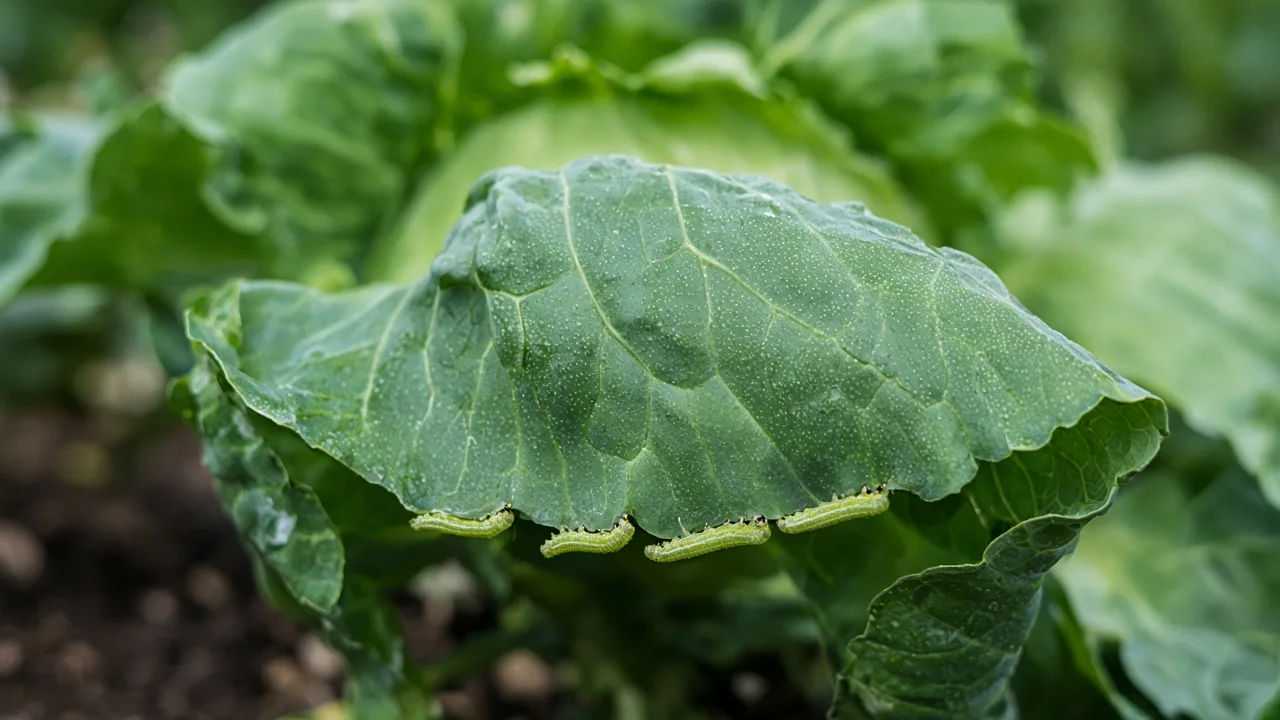
A hole in a broccoli leaf tells you that something fed there; it does not tell you whether the culprit was a caterpillar, flea beetle, or disease. That distinction matters because a rinse can remove aphids, a row cover can prevent moths from laying eggs, and neither one will cure a root maggot already feeding below ground.
Start with the pattern and look for the insect before reaching for a spray. The most useful clues are where damage appears, whether it is fresh, and what else is present: tiny jumping beetles, sticky honeydew, caterpillar droppings, webbing, pale feeding blotches, or weakened roots. Once you know which group you are dealing with, you can choose a response that protects the crop without treating every insect in the bed as a threat.
Start With the Damage Pattern, Not the Spray Bottle
Broccoli pests do not all chew in the same way. Use this field key to narrow the possibilities, then inspect the plant to confirm the live pest; an old hole by itself is not enough evidence to justify treatment.
| What you notice | Likely pest or cause | What to check next |
|---|---|---|
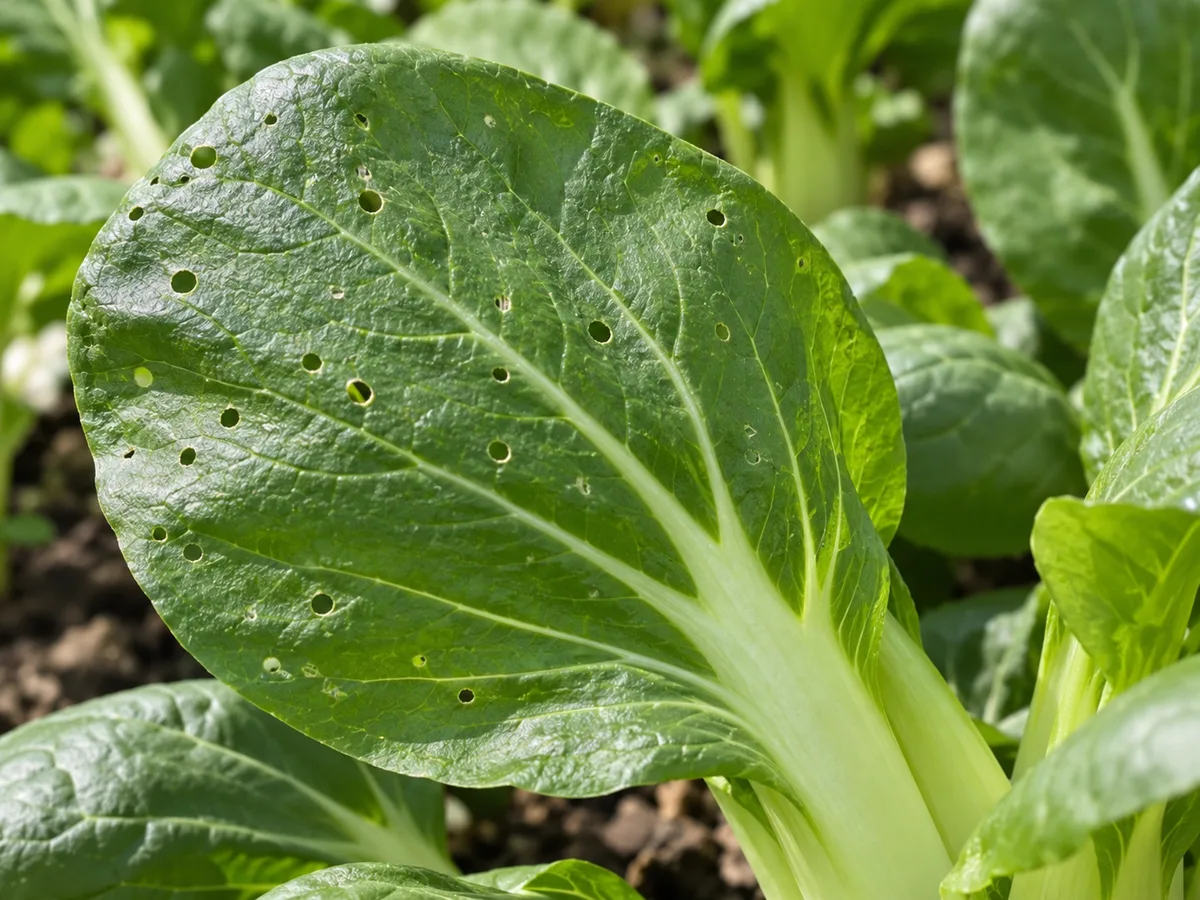
| Many tiny, round “shot holes,” especially on young plants | Flea beetles | Tap the foliage over a pale surface and look for tiny beetles that spring away. |
| Larger ragged holes, missing leaf edges, or dark pellets | Caterpillars such as cabbageworms, loopers, or diamondback moth larvae | Check undersides, leaf folds, the crown, and the developing head for larvae, eggs, or frass. |
| Groups of larvae, silk, folded leaves, or damaged growing tips | Cross-striped cabbageworms or cabbage webworms; sometimes armyworms | Look inside the web and around the newest growth rather than only at the outer leaves. |
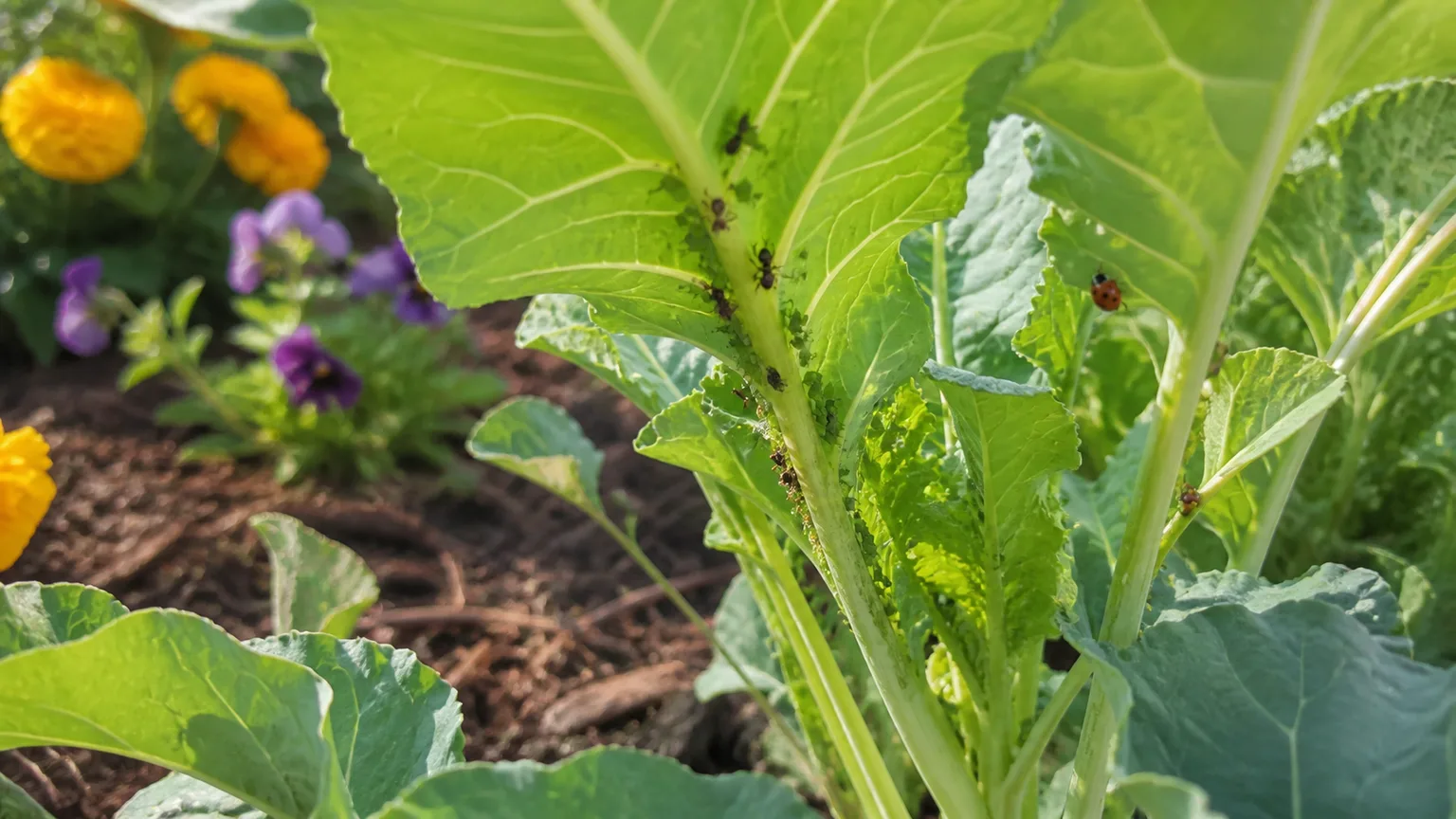
| Sticky leaves, curled new growth, ants, or clusters of soft-bodied insects | Aphids | Inspect stems and the undersides of the youngest leaves for colonies and honeydew. |
| Yellow or pale stippling with shield-shaped, brightly marked bugs | Harlequin bugs | Check both leaf surfaces for adults, compact egg clusters, and small nymphs. |
| A white cloud of tiny insects rises when the plant is disturbed | Whiteflies | Look at leaf undersides; adults may fly briefly and settle again. |
| A seedling wilts or stalls while the soil is moist | Root damage, including cabbage root maggots | Gently inspect roots for tunnels, decay, and small pale larvae before watering more. |
“Shot holes” are very different from round disease spots that dry and fall out of a leaf. The University of Minnesota Extension’s broccoli diagnosis also lists leaf-spot disease among causes of holes, so if you see circular lesions with dark or gray margins and no insects, do not assume a beetle is responsible (University of Minnesota Extension’s broccoli leaf-hole diagnosis).
How to Scout Broccoli Without Missing Hidden Pests
Inspect plants when the foliage is dry and you can take your time. Start with the newest leaves and the center of the plant, then turn over several older leaves, check where the stalks meet, and look into the forming head. Small larvae often hide on the undersides or between tightly packed florets, while aphids favor tender growth and flea beetles hop as soon as a leaf is disturbed.
Check at least a handful of plants rather than stopping at the one with the ugliest leaf. On a short row, inspect every plant; on a larger planting, sample plants from the ends and middle, including apparently healthy ones. Note whether the pest is present, how many plants show fresh damage, and whether the plant is a seedling, a leafy young plant, or already forming a head. Young plants can lose a larger share of their working leaf area before they recover, while a few old holes on a vigorous established plant may not matter.
A simple repeat visit prevents overreaction. Photograph the same plant today, hand-remove obvious pests if the count is small, and return in two or three days. New holes, fresh frass, or expanding colonies show that feeding continues; unchanged old damage means the first problem may have passed. If you cannot find an insect, inspect at dusk for active caterpillars, gently shake a leaf over a light-colored tray, and look around the root zone of plants that wilt despite adequate moisture.
11 Common Broccoli Pests
Broccoli is a brassica, so several pests also feed on cabbage, kale, collards, and related crops. The names “cabbage worm” and “caterpillar” can be confusing because they cover different moth or butterfly larvae with different sizes, patterns, and habits. For a home garden, locating active larvae and matching their behavior to the damage is usually more useful than identifying every species to the last stripe.
Caterpillars That Chew Leaves and Crowns
Caterpillars make holes, scrape leaf tissue, or hide inside the plant. Check for fresh green or brown droppings under the feeding site; following the frass often leads you to the larva. Inspect regularly while the plant is forming a head, because a pest that begins on outer leaves can end up sheltered among the florets.
Imported Cabbageworms and Cabbage Loopers
Imported cabbageworms are velvety green larvae with a faint pale stripe along the back or sides. They are the larvae of a small white butterfly and tend to stay close to the leaf surface as they move. Look for irregular holes and brown frass, then inspect both sides of the leaf and the head. University of Minnesota Extension notes that imported cabbageworms feed on broccoli and other cole crops and can deform heads or stunt growth when feeding is heavy (University of Minnesota Extension’s imported cabbageworm identification).
Cabbage loopers are generally larger, pale green caterpillars that move by arching the middle of the body and drawing the rear end forward. That inchworm-like motion is a useful clue when color alone is not. They chew ragged openings in leaves and can hide in the head, so part leaves carefully before harvest. The Minnesota Extension crop guide describes the three common brassica caterpillars as distinct in appearance and timing, and recommends scouting as heads form (University of Minnesota Extension’s brassica pest guidance).
For either pest, remove a few visible larvae by hand and crush egg masses or drop confirmed pests into soapy water. If larvae keep appearing across the planting, consider a labeled Bt-k product while caterpillars are young and actively feeding; it must be eaten to work. Do not spray at random when you have no larvae to target.
Diamondback Moths and Cross-Striped Cabbageworms
Diamondback moth larvae are much smaller than cabbageworms, tapered at both ends, and pale green. When disturbed, they may wriggle sharply or drop from the leaf on a fine strand. Feeding can create small holes or translucent patches, and larvae may tuck into the head. Their small size makes a quick glance unreliable: tilt leaves toward the light and inspect the leaf undersides and central growth.
Cross-striped cabbageworms are more conspicuous: their bodies have crosswise black markings, with pale or yellow side stripes, and they often feed in groups after eggs are laid in clusters. The first signs may be several larvae together, lacy foliage, or a damaged growing point. Remove the egg clusters or young groups early; waiting until the head is distorted leaves fewer good options. Epic Gardening’s broccoli pest guide also notes that cross-striped larvae hatch in groups, a useful reminder to inspect neighboring plants when you find one cluster (Epic Gardening’s broccoli pest guide).
Bt-k can control susceptible young caterpillars, but not every product or strain has the same permitted use, and the active larvae must eat treated foliage. The University of Minnesota Extension brassica guidance emphasizes scouting and treating small larvae early; it also notes that sunlight breaks Bt down, so label-directed repeat timing may matter. Some diamondback moth populations are resistant to certain insecticides, another reason to avoid assuming that any spray will work. Rotate to physical removal and exclusion where possible, and always follow the product label for the specific crop and pest.
Armyworms and Cabbage Webworms
“Armyworm” is a common name used for several moth caterpillars, and the species and markings vary by region. On broccoli, suspect them when a group of similar caterpillars appears together and leaves become skeletonized or ragged. Do not identify an armyworm by one stripe alone; photograph it, note whether larvae are grouped, and ask a local extension service if the identification changes your control choice.
Cabbage webworms are smaller caterpillars associated with silk, folded or webbed leaves, and feeding around the bud, stem, or growing point. Open the web carefully to see whether a larva is inside and whether the stem is being bored. A damaged central bud may fail to produce a normal main head, although side shoots can still develop depending on the plant and how much tissue remains.
Remove the webbed leaf or larvae when practical, taking care not to cut out an otherwise healthy growing point. For a larger active infestation of confirmed susceptible caterpillars, a product labeled for Bt-k and broccoli may help if it reaches the feeding site. Spraying only the outside of an intact web may miss the larva, so remove accessible shelters first and recheck for new frass and feeding. Gardener’s Path’s crop-by-crop pest guide likewise flags webbing around buds and growing tips as a clue to cabbage webworms, rather than a reason to treat every leaf-chewing insect the same way (Gardener’s Path’s broccoli pest guide).
Sap Feeders and Small Leaf Chewers
Not every broccoli pest leaves ragged holes. Sap-feeding insects weaken tender growth, while flea beetles leave characteristic pinpricks. The damage pattern helps prevent a common mistake: applying a caterpillar treatment to a pest it cannot control.
Aphids and Whiteflies
Aphids are soft-bodied insects that collect in colonies on stems and the undersides of young leaves. Cabbage aphids may look gray-green and waxy; other aphids may be green or pale. Their sticky honeydew, curled growth, shed skins, and ants moving up stems are clues. Ants are attracted to honeydew, but seeing ants alone does not confirm aphids—find the colony before acting.
On a small planting, pinch off a heavily infested tip if the plant can spare it, or use a firm stream of water to knock aphids from sturdy leaves. Aim at the undersides and growing points, then inspect again after a few days because eggs or newcomers may remain. If a colony is still expanding, use only an insecticidal soap or other product labeled for edible broccoli; these work by contact, so missed insects survive. Test a small area first and avoid spraying open flowers or beneficial insects. Do not substitute dish detergent for a formulated garden product.
Whiteflies are tiny, pale insects that flutter up in a cloud when foliage is disturbed, then settle under leaves. Their immature stages stay attached to the undersides, where they suck sap and may cause yellowing or weak growth. Remove a few infested leaves when the plant can spare them, use a gentle rinse, and repeat scouting; sticky cards can monitor flying adults but do not control hidden nymphs by themselves.
Flea Beetles and Harlequin Bugs
Flea beetles are tiny, dark, quick-jumping adults that chew shallow pits and small round holes. They are most concerning on newly transplanted or direct-sown seedlings because a small plant has little leaf area to spare. Colorado State University Extension notes that injury on established plants is often less important, while young plants are more vulnerable; its recommended first-line options include row covers and practices that help plants outgrow injury (Colorado State University Extension’s flea beetle guidance).
If you see a few shot holes on a healthy, older broccoli plant but cannot find active beetles, watch rather than spray. For seedlings, install fine insect netting or a floating row cover before beetles arrive, secure the edges, and remove nearby weeds that can host related pests. A cover placed after beetles are already under it can trap the problem against the crop. Crop rotation and cleanup can reduce some local carryover but will not stop mobile adults from flying in. Epic Gardening also recommends early row-cover exclusion and regular scouting for broccoli caterpillars; the key distinction is that the cover prevents new arrivals, while hand removal is still needed for larvae already present (Epic Gardening’s broccoli pest guide).
Harlequin bugs are larger, shield-shaped insects with vivid red, orange, or yellow markings on a dark body. Their feeding causes pale yellow or white blotches rather than holes. Look for barrel-shaped eggs in clusters and brightly marked nymphs, which may gather on the same plant. The pest is especially important in warmer areas and can overwinter in garden debris.
Hand-pick adults, nymphs, and egg clusters into soapy water; check under leaves and remove old brassica plants after harvest. UC IPM recommends hand removal and removal of old cole crops and mustard weeds, and generally does not recommend insecticides for home-garden stink bug control (UC IPM’s harlequin bug guide). Preserve general predators where possible and avoid broad spraying that may remove helpful insects without preventing bugs from flying back in.
Root and Stem Attackers
A broccoli plant that wilts in moist soil, yellows, and stops growing may have a problem below the leaves. Pulling it immediately can be useful for diagnosis, but first compare nearby plants and check whether the soil is actually wet at root depth; drought, root disease, and waterlogging can look similar.
Cabbage Root Maggots
Cabbage root maggots are the larvae of a small fly. The larvae feed on roots and can leave a young plant limp or stunted even when the leaves show little chewing. If one plant repeatedly wilts while its neighbors look normal, gently lift it and examine the roots and the soil line for feeding tunnels or small pale maggots. Minnesota Extension describes cabbage maggots as difficult to scout because the eggs are tiny and larvae become protected inside the plant, which explains why a spray applied after symptoms appear is a poor rescue plan (University of Minnesota Extension’s brassica pest guidance).
Prevention is more useful than trying to treat an infested root system. Use healthy transplants, rotate broccoli and other brassicas away from the same bed, remove spent brassica roots and debris, and cover plants at planting time if cabbage root flies are a recurring local problem. A barrier has to exclude the adult fly before eggs are laid; putting it over a plant after the crop has wilted cannot reverse root loss. Avoid repeatedly adding water or fertilizer to a plant whose roots are already damaged.
If the crown and roots are badly compromised, remove the plant and dispose of it with household waste rather than putting active larvae into a cool home compost pile. Clean soil from tools before using them elsewhere. If several plants decline or you cannot distinguish insects from disease, save a sample and contact your local extension office; a reliable diagnosis is more useful than escalating blindly through sprays.
Choose a Control That Matches the Pest
A practical IPM plan has a sequence: prevent access where possible, remove a small population physically, and use a targeted labeled product only when damage is active and consequential. It does not mean waiting until every plant is ruined, and it does not mean killing every insect you see. The Minnesota brassica guidance offers one crop-scouting framework based on the proportion of plants with caterpillars, but thresholds vary by region, crop stage, and production setting; a home gardener should treat that as context, not a universal number.
Prevent the Next Generation Before It Starts
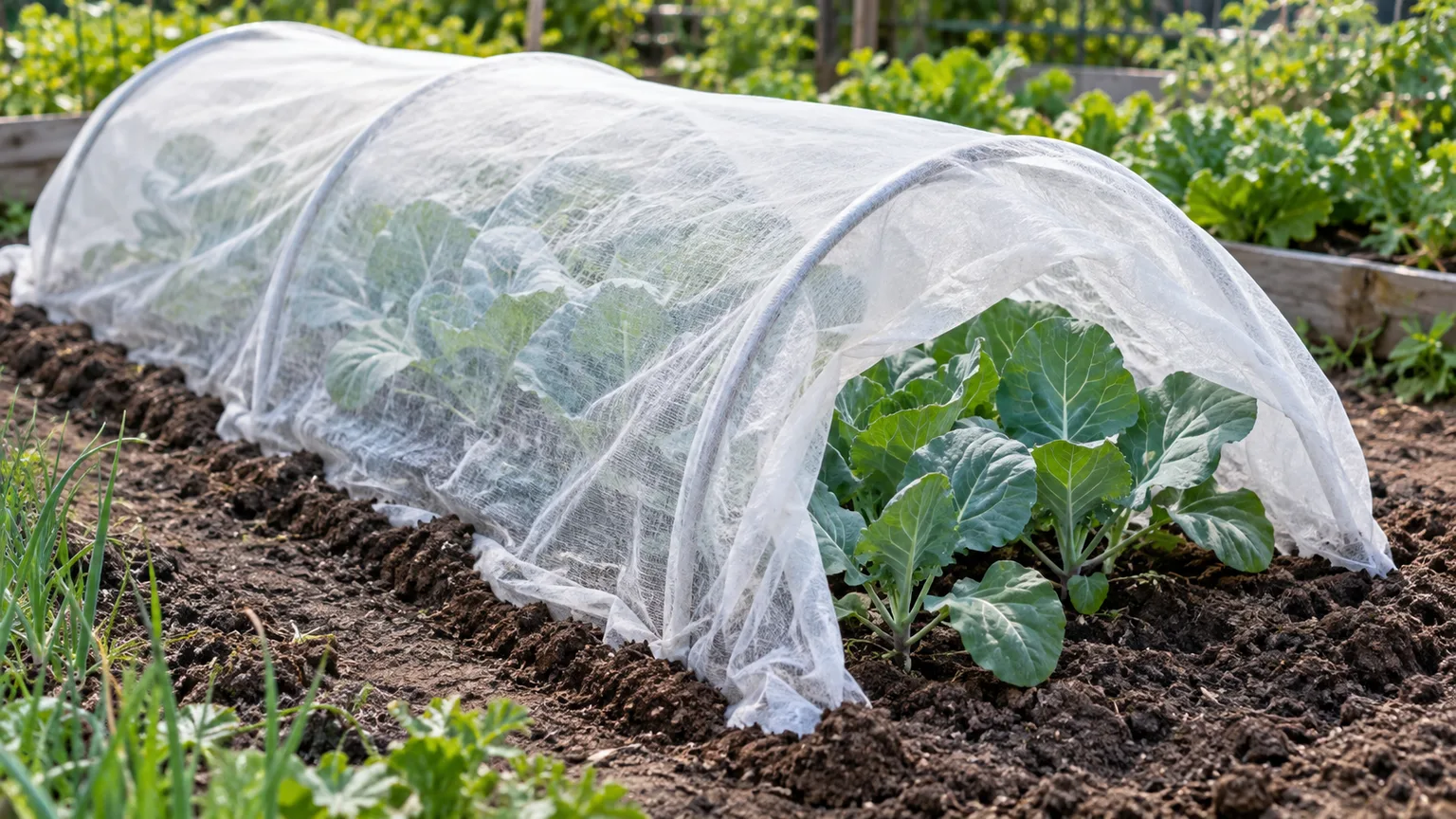
Row covers are most useful when installed over clean plants immediately after planting and sealed at the soil line. They exclude adult butterflies and moths before egg laying and can also reduce access by some beetles and flies. Remove weeds and inspect transplants first: eggs, larvae, or aphids already inside the cover can multiply with no predators outside to reach them. Lift the fabric periodically to weed, check moisture, and scout; in hot weather, choose a breathable cover and monitor temperature under it.
Rotate brassicas to a different bed when practical, clear old crop residues, and control weeds that serve as pest hosts. These steps reduce local carryover but do not guarantee a pest-free season because adults can fly in from nearby gardens or wild host plants. Keep the bed diverse enough to support beneficial insects, but do not expect companion planting to replace inspection or a barrier when young plants are being eaten.
Hand-Pick, Rinse, and Use Row Covers Where They Fit
For a few caterpillars, aphid colonies, or harlequin bugs, physical removal is usually faster and more selective than mixing a spray. Inspect both sides of leaves, the crown, and any webbing; drop pests into soapy water and crush or remove egg masses. A firm rinse works especially well on aphids and some whiteflies when the plant is sturdy, but it will not reach eggs in the soil or maggots inside roots. Recheck after two or three days rather than assuming one pass solved the problem.
Row covers work as prevention, not as a cure for pests already on the plant. They must be secured on every side, and the plants should be clean before coverage. Unlike fruiting crops that need insect pollination, broccoli grown for its unopened flower head does not need bees to set that edible head; if you keep plants to flower and save seed, however, open the cover when pollination is needed.
Use Sprays Selectively and Follow the Label
Bt-k is a bacteria-based product for certain moth and butterfly caterpillars. The larva has to eat treated foliage; it is not a general insecticide for aphids, whiteflies, flea beetles, harlequin bugs, or root maggots. It tends to be most useful against small, actively feeding larvae, and sunlight and weather reduce how long residues remain effective. Apply only if the product label includes broccoli and the target pest, and follow its rate, protective-equipment, reapplication, and preharvest directions. Do not spray blooms or nearby host plants where you want butterfly larvae to feed.
Insecticidal soap is a different tool: it can control exposed soft-bodied insects such as aphids or whitefly nymphs only when the spray reaches them. It will not reliably control caterpillars hidden in a head or beetles that jump away. Oils, neem products, and pyrethrins are not interchangeable with Bt, and “organic” does not mean harmless to pollinators or beneficial predators. Use a product only when its label names the edible crop and the pest; never increase concentration, combine products, or shorten the harvest interval based on a recipe from the internet.
If a labeled treatment fails, re-identify before repeating it. The pest may have been misidentified, missed by the spray, protected inside a web or head, or resistant to that active ingredient. Repeated blanket spraying can remove predators and leave the actual cause untouched. For a widespread outbreak, take a clear photo or insect sample to a county or university extension office and ask which local recommendations apply.
Check Broccoli Heads Before Cooking
Caterpillars and their frass can hide between florets even when the outer leaves look clean. Before harvest, inspect the head and the leaf axils; remove loose leaves and cut out damaged or webbed sections. If you find larvae, shake or separate the florets under clean running water, or soak the head briefly in a clean bowl of cold potable water and rinse it again. Change the water if it becomes gritty or contains insects, then refrigerate the broccoli promptly.
Washing removes insects and soil; it does not make spoiled or decaying tissue safe. Discard badly rotted sections, and do not eat broccoli treated with a pesticide before the product’s stated preharvest interval has passed. If a product label requires another interval or wash instruction, follow that exact direction. Mild cosmetic leaf damage does not automatically make a healthy head unusable, but inspect florets carefully before serving.
Conclusion
When broccoli leaves look damaged, use the pattern to decide where to inspect: tiny shot holes suggest flea beetles, ragged holes and frass point toward caterpillars, sticky new growth often means aphids, pale blotches can indicate harlequin bugs, and wilt with damaged roots raises concern for cabbage root maggots. Confirm the pest before acting, because a disease spot or old damage will not improve after an insecticide.
Begin with the most targeted step that fits what you find: remove a few insects by hand, rinse exposed sap-feeders, protect clean seedlings with a sealed row cover, or use a labeled product only for a confirmed pest. Recheck the plant a few days later and inspect the head before cooking. That short loop—identify, act, and verify—protects the harvest while keeping unnecessary treatments out of the garden.