Kale Care Guide
Brassica oleracea var. acephala
Grow kale in India with winter sun, evenly moist fertile soil, cultivar-aware spacing, and outer-leaf harvesting. Includes container and cool-season timing tips.
Kale Care Guide
Start with wateringThe most common care mistake for KaleWatering guide → →Kale care essentials
Light
Water
Keep the root zone evenly moist while leaves are developing, but never saturated. Water deeply when the top 2–3 cm feels dry and let excess drain.
Soil
Fertile, moisture-retentive but well-drained loam rich in organic matter. Aim for pH 6.0–7.5; consistent moisture supports tender leaves.
Humidity
Temperature
Fertilizer
About Kale
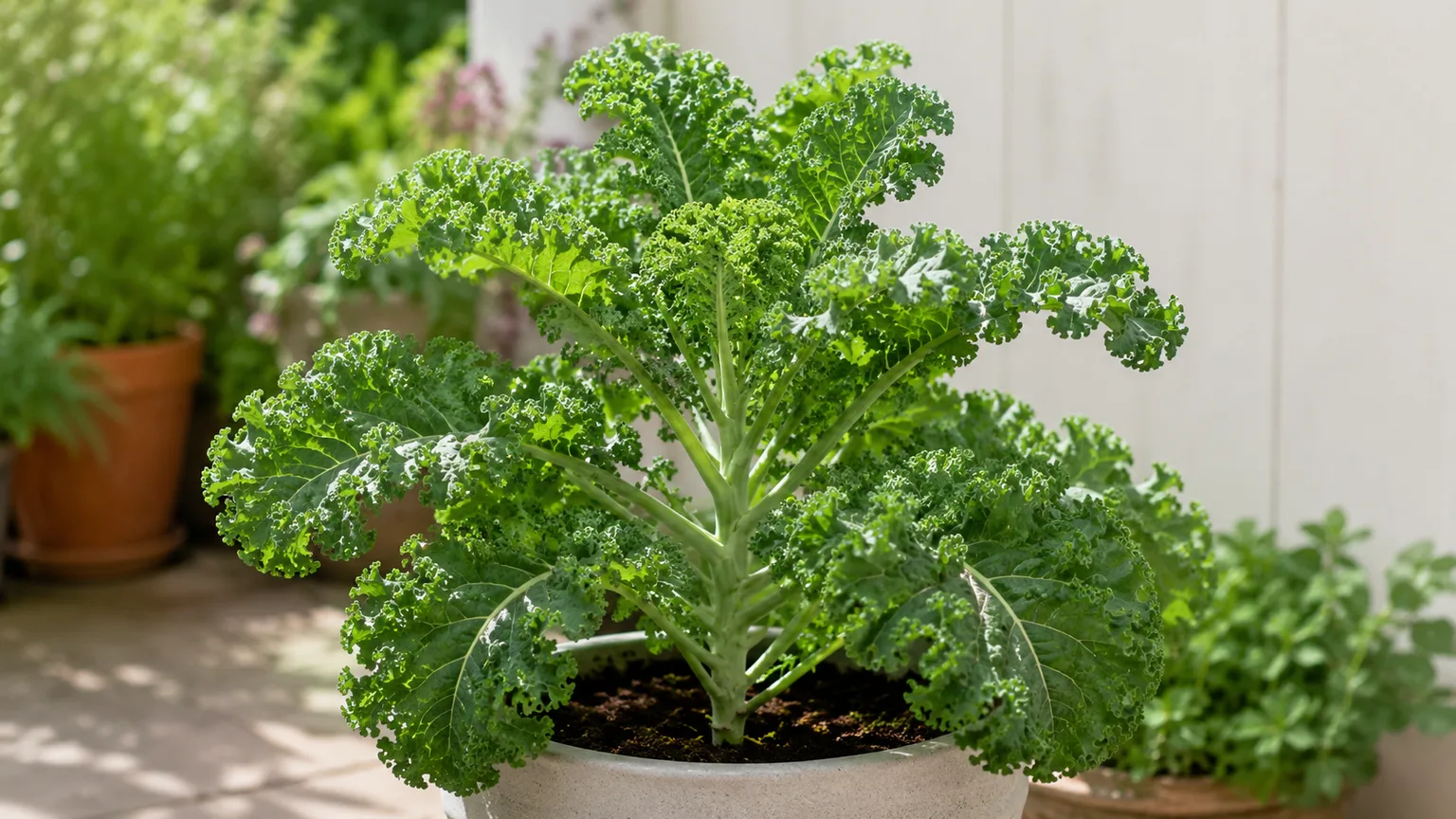
Kale is native to Cultivated leafy brassica derived from eastern Mediterranean and western Asian cabbage ancestors, typically reaches 30–90 cm tall and 30–60 cm wide; compact and tall cultivars vary indoors, with fast - baby leaves in about 30 days and mature leaves in 50–70 days growth. Kale has a herbaceous biennial usually grown as an annual vegetable growth habit and part of the Brassicaceae family. It is also known as Borecole, Leaf cabbage, Non-heading cabbage, and Karam saag.
| Detail | Information |
|---|---|
| Also known as | Borecole, Leaf cabbage, Non-heading cabbage, Karam saag |
| Native region | Cultivated leafy brassica derived from eastern Mediterranean and western Asian cabbage ancestors |
| Mature size | 30–90 cm tall and 30–60 cm wide; compact and tall cultivars vary |
| Growth rate | Fast - baby leaves in about 30 days and mature leaves in 50–70 days |
| Growth habit | Herbaceous Biennial Usually Grown As An Annual Vegetable |
| Scientific name | Brassica oleracea var. acephala |
| Family | Brassicaceae |
Kale Care Guide
Content pending Tier B write agent.
How to care for Kale?
When should you water Kale?
Keep the root zone evenly moist while leaves are developing, but never saturated. Water deeply when the top 2–3 cm feels dry and let excess drain.
- Push a finger 2–3 cm into the mix and water when that layer feels dry while the soil below remains slightly moist - Water deeply when the top 2–3 cm feels dry and let excess drain.
- Drain excess water - Water deeply when the top 2–3 cm feels dry and let excess drain.
What soil works best for Kale?
Fertile, moisture-retentive but well-drained loam rich in organic matter. Aim for pH 6.0–7.5; consistent moisture supports tender leaves.
- 50% good-quality potting mix or loam - Fertile, moisture-retentive but well-drained loam rich in organic matter.
- 30% mature compost
- 20% perlite, rice hulls, or coarse coco chips - Fertile, moisture-retentive but well-drained loam rich in organic matter.
Grower notes for Kale
Grow kale as a cool-season leaf crop
Kale produces its best texture and flavor in cool weather. In most Indian plains, sow from October into November and harvest through winter; in cooler hills, the season can be longer. Heat can make leaves tougher and more bitter and can hasten flowering, so a tropical summer balcony is usually a poor setting even when the plant receives enough water.
Match the container to the cultivar
Kale is a group of visibly different cultivars, not one uniform houseplant. Compact curly types can stay below about 40 cm, while Lacinato, tall Scotch types, and other vigorous selections can approach 90 cm or more. Use at least a 20–30 litre pot for one mature standard plant, and rely on the seed packet's spacing and days-to-harvest because baby-leaf mixes, dwarf cultivars, and full-size plants need different room.
Give winter sun and steady moisture
Provide at least six hours of direct sun in the cool season. Light afternoon shade can reduce stress if days turn unusually warm. Kale has shallow roots and makes better leaves when moisture stays consistent, but a saucer full of water or dense, airless soil invites root and stem trouble. Check the mix rather than watering by date.
Harvest without removing the growing point
Pick the oldest outer leaves once they reach useful size and leave the central bud intact. This cut-and-come-again method lets the plant keep producing. Curly, purple, and Lacinato leaves differ in tenderness and mature size, so judge harvest readiness by the cultivar and intended use, not by one universal leaf measurement.
Inspect leaves before bringing plants home
Choose compact seedlings with a firm stem, clean undersides, and an undamaged central growing point. Avoid plants with clusters of aphids, winding leaf damage, chewed holes with caterpillar droppings, or swollen and distorted roots. Kale shares pests and soil-borne diseases with other brassicas, so do not reuse suspect soil.
Keep edible leaves pet-aware
Kale is a human food crop, but that does not establish unrestricted safety for every pet species. Major pet-toxicity databases do not provide a clear species-specific kale listing. Prevent routine grazing, avoid pesticide-treated leaves, and ask a veterinarian before offering kale as food, especially to animals with thyroid, urinary, or digestive conditions.
Is kale safe for pets?
Kale is edible for people, but a clear species-specific classification for pets was not confirmed in the major poison-control database reviewed. Prevent unsupervised grazing and consult your veterinarian before feeding it.
Human edibility is not proof of pet safety. Kale contains bioactive brassica compounds, and large or repeated servings may be unsuitable for some animals. Keep pesticide-treated plants inaccessible and contact a veterinarian if a pet eats a large amount or develops digestive signs.
Watering Kale
For Kale, push a finger 2–3 cm into the mix and water when that layer feels dry while the soil below remains slightly moist and water check every 2–3 days in containers; water according to soil dryness, weather, pot size, and plant growth rather than a fixed calendar. Water more often during dry, sunny spells and less in cool or rainy weather; do not let winter containers stand in water.
| Detail | Information |
|---|---|
| How often | Check every 2–3 days in containers; water according to soil dryness, weather, pot size, and plant growth rather than a fixed calendar |
| How to check | Push a finger 2–3 cm into the mix and water when that layer feels dry while the soil below remains slightly moist |
| Seasonal changes | Water more often during dry, sunny spells and less in cool or rainy weather; do not let winter containers stand in water |
Signs of overwatering
- persistently wet soil with yellowing lower leaves
- soft or darkened stem at soil level
- wilting while the root zone is wet
Signs of underwatering
- limp leaves and dry soil
- tough or bitter leaves
- browned leaf margins and stalled growth
Soil & potting for Kale
Use a mix of 50% good-quality potting mix or loam, 30% mature compost, 20% perlite, rice hulls, or coarse coco chips for Kale. Free drainage is essential, but an extremely gritty mix can dry too quickly for kale's shallow, moisture-demanding roots. Target soil pH around 6.0–7.5. Repot usually grown for one cool season; pot up seedlings once or transplant them into their final container rather than routinely repotting, ideally in early autumn in most Indian plains; late winter or early spring where summers remain cool.
| Detail | Information |
|---|---|
| Recommended mix | 50% good-quality potting mix or loam, 30% mature compost, 20% perlite, rice hulls, or coarse coco chips |
| Drainage | Free drainage is essential, but an extremely gritty mix can dry too quickly for kale's shallow, moisture-demanding roots |
| Soil pH | 6.0–7.5 |
| Repotting frequency | Usually grown for one cool season; pot up seedlings once or transplant them into their final container rather than routinely repotting |
| Best season to repot | Early autumn in most Indian plains; late winter or early spring where summers remain cool |
Signs it needs repotting
- seedlings have 3–4 true leaves and fill their nursery cells
- roots circle densely or emerge from drainage holes
- the final container dries out within a day
Humidity & temperature for Kale
Fertilizer & pruning for Kale
Common problems on Kale
Yellow Leaves
MediumLikely cause: Common on this plant type; confirm with recent watering, light, and root checks.
Quick fix: Inspect the plant and correct the most likely care stressor before stacking treatments.
Full fix guide →Brown Tips
MediumLikely cause: Common on this plant type; confirm with recent watering, light, and root checks.
Quick fix: Inspect the plant and correct the most likely care stressor before stacking treatments.
Full fix guide →Root Rot
MediumLikely cause: Common on this plant type; confirm with recent watering, light, and root checks.
Quick fix: Inspect the plant and correct the most likely care stressor before stacking treatments.
Full fix guide →Overwatering
MediumLikely cause: Common on this plant type; confirm with recent watering, light, and root checks.
Quick fix: Inspect the plant and correct the most likely care stressor before stacking treatments.
Full fix guide →Underwatering
MediumLikely cause: Common on this plant type; confirm with recent watering, light, and root checks.
Quick fix: Inspect the plant and correct the most likely care stressor before stacking treatments.
Full fix guide →Spider Mites
MediumLikely cause: Common on this plant type; confirm with recent watering, light, and root checks.
Quick fix: Inspect the plant and correct the most likely care stressor before stacking treatments.
Full fix guide →Mealybugs
MediumLikely cause: Common on this plant type; confirm with recent watering, light, and root checks.
Quick fix: Inspect the plant and correct the most likely care stressor before stacking treatments.
Full fix guide →Aphids
MediumLikely cause: Common on this plant type; confirm with recent watering, light, and root checks.
Quick fix: Inspect the plant and correct the most likely care stressor before stacking treatments.
Full fix guide →Leggy Growth
MediumLikely cause: Common on this plant type; confirm with recent watering, light, and root checks.
Quick fix: Inspect the plant and correct the most likely care stressor before stacking treatments.
Full fix guide →Slow Growth
MediumLikely cause: Common on this plant type; confirm with recent watering, light, and root checks.
Quick fix: Inspect the plant and correct the most likely care stressor before stacking treatments.
Full fix guide →Wilting
MediumLikely cause: Common on this plant type; confirm with recent watering, light, and root checks.
Quick fix: Inspect the plant and correct the most likely care stressor before stacking treatments.
Full fix guide →Drooping Leaves
MediumLikely cause: Common on this plant type; confirm with recent watering, light, and root checks.
Quick fix: Inspect the plant and correct the most likely care stressor before stacking treatments.
Full fix guide →Low Humidity
MediumLikely cause: Common on this plant type; confirm with recent watering, light, and root checks.
Quick fix: Inspect the plant and correct the most likely care stressor before stacking treatments.
Full fix guide →Not Enough Light
MediumLikely cause: Common on this plant type; confirm with recent watering, light, and root checks.
Quick fix: Inspect the plant and correct the most likely care stressor before stacking treatments.
Full fix guide →Fungus Gnats
MediumLikely cause: Common on this plant type; confirm with recent watering, light, and root checks.
Quick fix: Inspect the plant and correct the most likely care stressor before stacking treatments.
Full fix guide →Mold on Soil
MediumLikely cause: Common on this plant type; confirm with recent watering, light, and root checks.
Quick fix: Inspect the plant and correct the most likely care stressor before stacking treatments.
Full fix guide →