Low Humidity on Kale: Causes, Checks & Fixes
Quick answer
Low humidity on kale shows as dry, papery brown margins on the oldest outer leaves while the soil may still be slightly moist. First step: move the pot out of the hot dry blast (heater vent, AC exhaust, sun-baked wall) and check the top 2-3 cm of mix before adding any water.
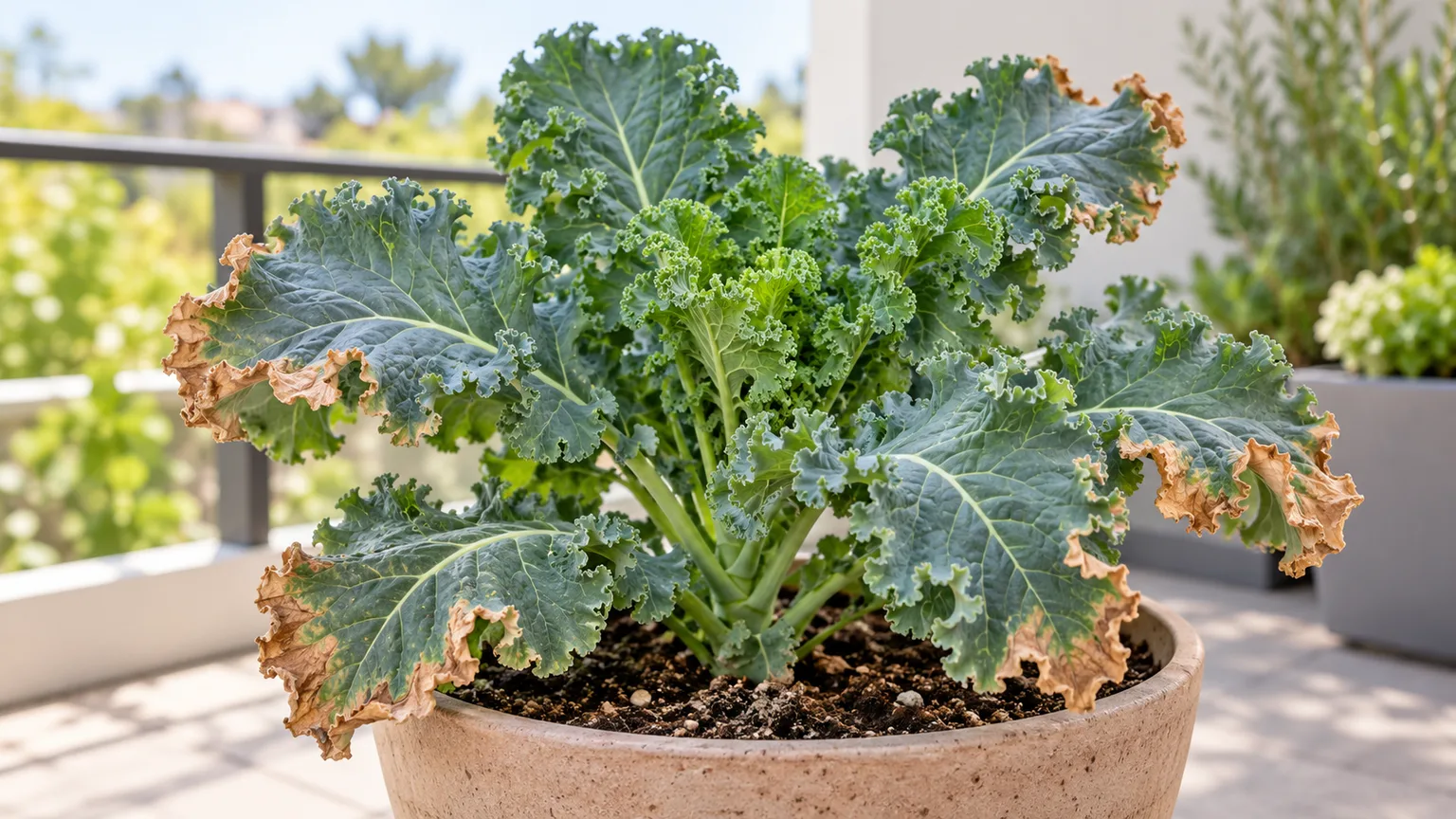
Low Humidity on Kale: Causes, Checks & Fixes
This guide covers low humidity on Kale. See also the general Low Humidity guide, watering, and light pages for this plant.
Low Humidity on Kale: Causes, Checks & Fixes
Quick answer
Kale is a cool-season leaf crop, not a tropical foliage plant, so dry air alone rarely kills it. What low humidity does to kale is crisper and slower: exposed margins of the oldest outer leaves turn papery and brown, growth stalls, and leaves trend tougher and more bitter. Soil is often part of the story, because a dry atmosphere pulls water out of a container mix fast.
First step: move the pot out of the hot, dry blast zone - away from heater vents, AC exhausts, sun-baked walls, and wind tunnels - then check moisture 2-3 cm down before watering. For how chronic dry air damages leaves in general, see our low-humidity guide. On kale, the pattern usually shows up as outer-leaf margin crisping on an otherwise upright plant, not the whole-plant wilt of a missed watering.
What low humidity looks like on kale
Dry-air damage on kale starts where exposure is highest and tissue is oldest. Expect:
- Tan to brown papery edges on the outer, lowest leaves while inner leaves stay green
- Crisp, brittle margins that crumble when pinched, rather than soft or water-soaked spots
- A plant that stays upright - no dramatic whole-pot flop the way underwatering causes
- Slower new-leaf emergence from the central bud during hot, dry spells
- Leaves that taste tougher or more bitter at harvest, since drought-stressed kale turns bitter (Savvy Gardening notes drought-stressed plants tend to be bitter)
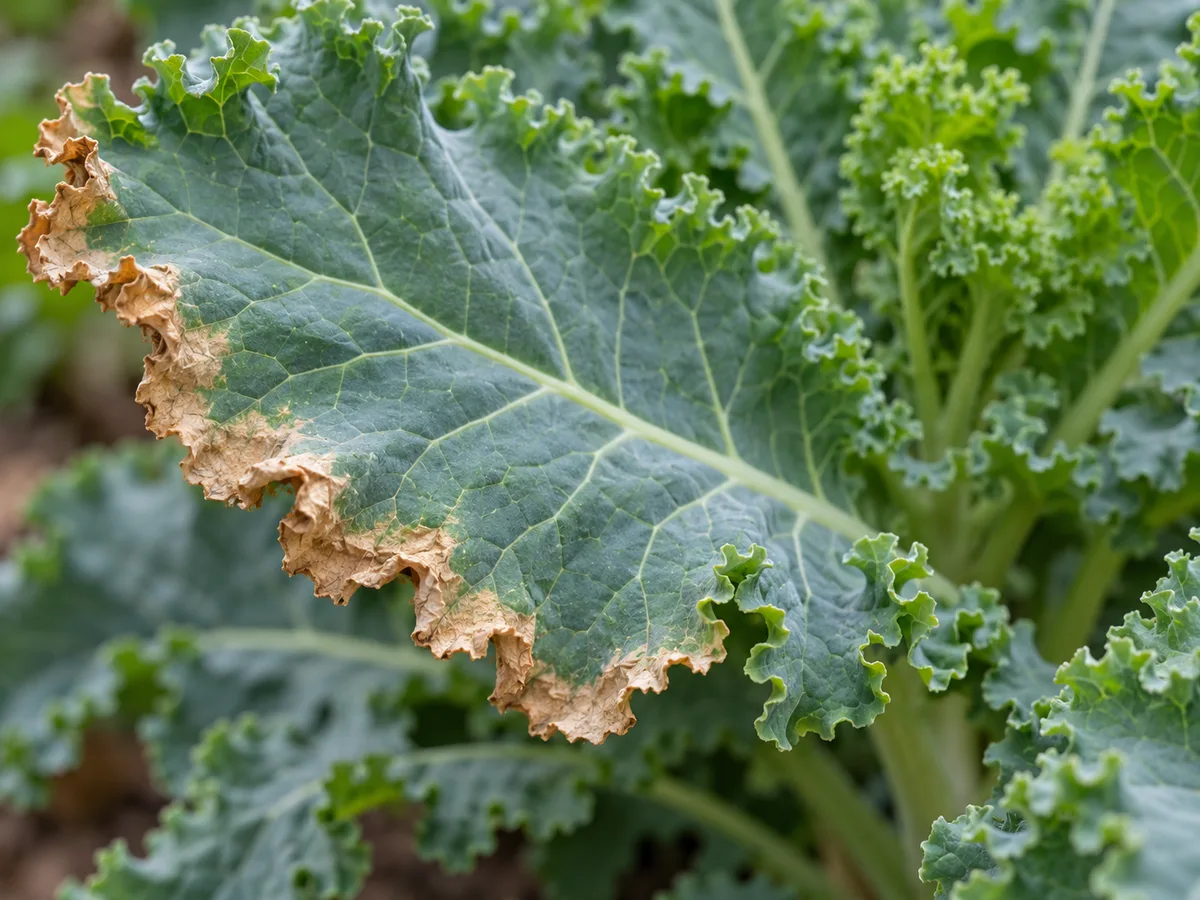
Low humidity margins on kale - papery brown edges on outer leaves while the central bud stays green; compare with healthy tissue on the same plant.
Symptoms worsen closest to the dry-air source: the vent-facing side, the windward side of a balcony row, or leaves pressed against hot glass. New purchases that move from a humid nursery to a dry balcony often shed or crisp their oldest leaves within a week or two while they adjust.
Why container kale crisps in dry air
A cool-season crop, not a tropical foliage plant
Kale evolved as a cool-weather leaf vegetable, and it produces its best texture in mild conditions with steady moisture. Unlike calatheas or ferns, it will not collapse in normal dry household air - but hot, dry air still accelerates water loss from its large, often ruffled leaf surface. Clemson Extension lists exposure to hot, dry air among the direct causes of brown leaf tips and margins, alongside improper watering, insect feeding, and salt buildup. On kale, that shows up exactly where the leaf works hardest: the broad outer blades.
Heat multiplies the damage. Established kale tolerates heat but demands extra water, and its leaves turn more bitter in hot weather. A plant baking beside a sun-heated wall in dry wind is losing water from both sides - roots cannot pull fast enough, and margins scorch even when you watered yesterday.
Shallow roots in a fast-drying pot
Kale feeds with a shallow, moisture-hungry root system, and containers dry far faster than garden beds. RHS advises that container kale needs regular watering so the compost never dries out, while in-ground plants cope once established. A 20-30 litre pot in full winter sun can swing from moist to dry in a day or two of wind, so the “humidity problem” is often really a container-drying problem wearing a dry-air disguise.
Small pots, peat-heavy mixes that shed water once dry, and saucers left empty all sharpen the swing. That is why the finger check matters more than any hygrometer reading for this plant.
How to confirm dry air is the cause
Work through these checks in order before changing anything:
- Finger test at 2-3 cm. Push a finger into the mix to the depth Clemson recommends for containers - up to the first joint, watering when it feels dry at the fingertip. Slightly moist soil plus crisping margins points at air; bone-dry soil plus limp leaves points at underwatering.
- Read the wilt pattern. Whole-plant droop that recovers after watering is thirst. Upright plants with only edge browning are breathing dry air.
- Map the damage. One-sided crisping facing a vent, heater, AC unit, or sun-baked wall is an airflow diagnosis. Uniform damage across all leaves suggests water, feed, or root trouble instead.
- Inspect the central bud. A green, actively unfurling growing point means the plant is coping - judge recovery from it. A stalled or blackened bud means escalation (see wilting and root rot).
- Check undersides for pests. Dry, dusty foliage invites spider mites, and Clemson lists insect feeding among the causes of browned margins - so tap a suspect leaf over white paper and look for moving specks before blaming air alone. See spider mites on kale and aphids on kale if you find them.
If the pot is heavy and wet yet margins still crisp, skip extra water and fix placement and airflow first - wet roots plus dry air is a double stress that invites overwatering damage on top.
The first fix to try
Move the container out of the direct dry-air blast and into bright, calmer air.
Shift it away from heater vents, AC exhausts, and the hottest sun-baked wall, but keep the six hours of direct sun kale performs best in. A step back from the glass, a wind-sheltered balcony corner, or afternoon shade in hot spells all count. Do not fertilize, repot, or spray anything on day one - one stabilizing move lets you read whether margins stop spreading.
Step-by-step recovery
After the move, work through these in order:
- Water deeply only if the check says so. If the top 2-3 cm is dry, water until it runs out of the drainage holes, then empty the saucer so the pot never sits in runoff. Kale wants even, consistent moisture - roughly an inch to an inch and a half per week in growing weather - not a daily sprinkle that wets only the surface.
- Mulch the surface. A layer of straw or composted mulch holds soil moisture and reduces the need for watering, which buffers the next dry windy spell. Keep mulch a finger’s width off the stem.
- Group or shelter pots. Clustering containers with similar water needs raises the local humidity slightly and breaks wind. A simple windbreak on the exposed side beats daily misting, which wets leaves without changing the air.
- Harvest the damaged outer leaves. Kale is a cut-and-come-again crop - pick the lower leaves, never more than one-third of the plant at once, and regular picking encourages more leaves to grow. Removing scorched blades redirects energy to the central bud; always leave that bud intact.
- Watch pests for two weeks. Mite and aphid pressure rises on stressed, dusty brassicas. If stippling, webbing, or sticky clusters appear, treat per the spider-mite guide or aphid guide rather than adding more water.
Recovery timeline
Margins that are already papery will not heal - recovery shows in new tissue. Expect crisping to stop spreading within one to two weeks of steadier air and water, and fresh inner leaves emerging from the bud within two to four weeks in cool growing weather. Drought-bitten leaves stay bitter, so harvest the first tender regrowth for eating and compost the scorched outer blades.
Slow or absent regrowth after a month, especially with a stalled bud, means the season or the roots - not the air - are the real limit. Compare notes with slow growth on kale when heat, short days, or a root-bound pot are ending the plant’s productive window.
Lookalike problems on kale
| What you see | Likely cause | How to tell apart |
|---|---|---|
| Papery brown margins, upright plant, moist soil | Dry air (this page) | One-sided near vents or wind; bud still growing |
| Whole-plant limpness, dry lightweight pot | Underwatering | Leaves flop and recover after a deep drink |
| Yellow lower leaves, wet heavy soil | Overwatering or root rot | Soil smells sour; stems soften at the base |
| Tough bitter leaves plus flowering stalk | Heat and bolting, not humidity | Bitter flavor with elongating center; season is hot |
| Stippled pale dots, fine webbing under leaves | Spider mites | Damage clusters on undersides; moving specks on a tap test |
| Clusters of soft insects on new growth | Aphids | Visible colonies and sticky residue on buds |
| Pale new leaves, thin leggy stems | Not enough light or leggy growth | Stretch toward light; whole plant pales, not just edges |
Fertilizer or salt burn can also brown margins, so if you recently fed heavily and see crusty deposits on the mix surface, flush with plain water and pause feeding before blaming the air.
Mistakes to avoid
- Misting leaves as the main fix. Wet foliage in still air invites disease on brassicas without changing room humidity - fix placement, water, and mulch first.
- Watering on a calendar. Containers dry at different speeds in wind versus still air; always check 2-3 cm down per the watering guide.
- Feeding a stressed plant. Fertilizer does not rehydrate crisped margins and can add salt stress; resume feeding only when new leaves emerge clean.
- Stripping the plant bare. Never remove more than a third of the foliage at once - the outer leaves still photosynthesize for the bud.
- Chasing humidity indoors for an outdoor crop. Kale wants sun and airflow more than tropical moisture; a humidifier beside a sun-starved plant trades one stress for another.
How to prevent it next time
- Site containers in full winter sun but sheltered from heater exhausts, AC units, and constant wind.
- Use at least a 20-30 litre pot with drainage holes for a full-size plant so the root zone buffers dry days.
- Water deeply when the top 2-3 cm dries and empty saucers, following the watering guide.
- Mulch the surface with straw or compost to hold moisture, as Savvy Gardening recommends straw mulch for holding soil moisture.
- Feed the soil with compost for moisture retention, and keep light adequate per the light guide.
- Harvest outer leaves steadily through the season so airflow reaches the crown and no single blade bakes for months.
When to worry
Treat crisping as urgent when inner leaves brown within days, the central bud stalls or darkens, stems soften at the soil line, or pests explode alongside the damage. Those signs point past cosmetic dry air toward root failure or severe infestation - inspect roots and follow the root rot or wilting guides the same day. Stable buds with only outer-edge browning can wait for your next scheduled check.
When to use this page vs other kale guides
This page covers dry-air margin crisping on otherwise upright kale. Use the underwatering guide when the whole plant flops in dry mix, the brown-tips guide when tip burn dominates new growth, and the pest guides when stippling or colonies are visible. For the full container routine, see the kale overview, and browse all kale problems when symptoms overlap.
Related kale guides
- Kale overview - cool-season timing, containers, and cut-and-come-again harvests
- Kale watering - the 2-3 cm check and deep-drink rhythm
- Kale soil - fertile moisture-retentive loam and compost
- Kale light - six-plus hours of winter sun without heat scorch
- Brown tips on kale - tip-focused browning differentials
- Underwatering on kale - whole-plant wilt versus edge crisp
- Spider mites on kale - dry-air pest checks and treatment
- All kale problems
How we wrote and verified this guide: Recommendations were checked against UF/IFAS Gardening Solutions, RHS Grow Your Own, Clemson Cooperative Extension, Epic Gardening, and Savvy Gardening references cited inline. Author: sai-ananth. Reviewer: LeafyPixels Review Board. Methodology: plant problem guidance is reviewed against botanical references, extension resources, and LeafyPixels plant-care data before publication. Last reviewed: 2026-09-06.