Slow Growth on Kale: Causes, Checks & Fixes
Quick answer
Slow growth on kale is most often a cool-season timing problem, nitrogen hunger, or crowding — not a mystery disease. First step: if days are hot, hold off on heavy feeding and judge the plant against its season; if weather is cool and the plant still stalls, side-dress once with a nitrogen fertilizer and water it in deeply.
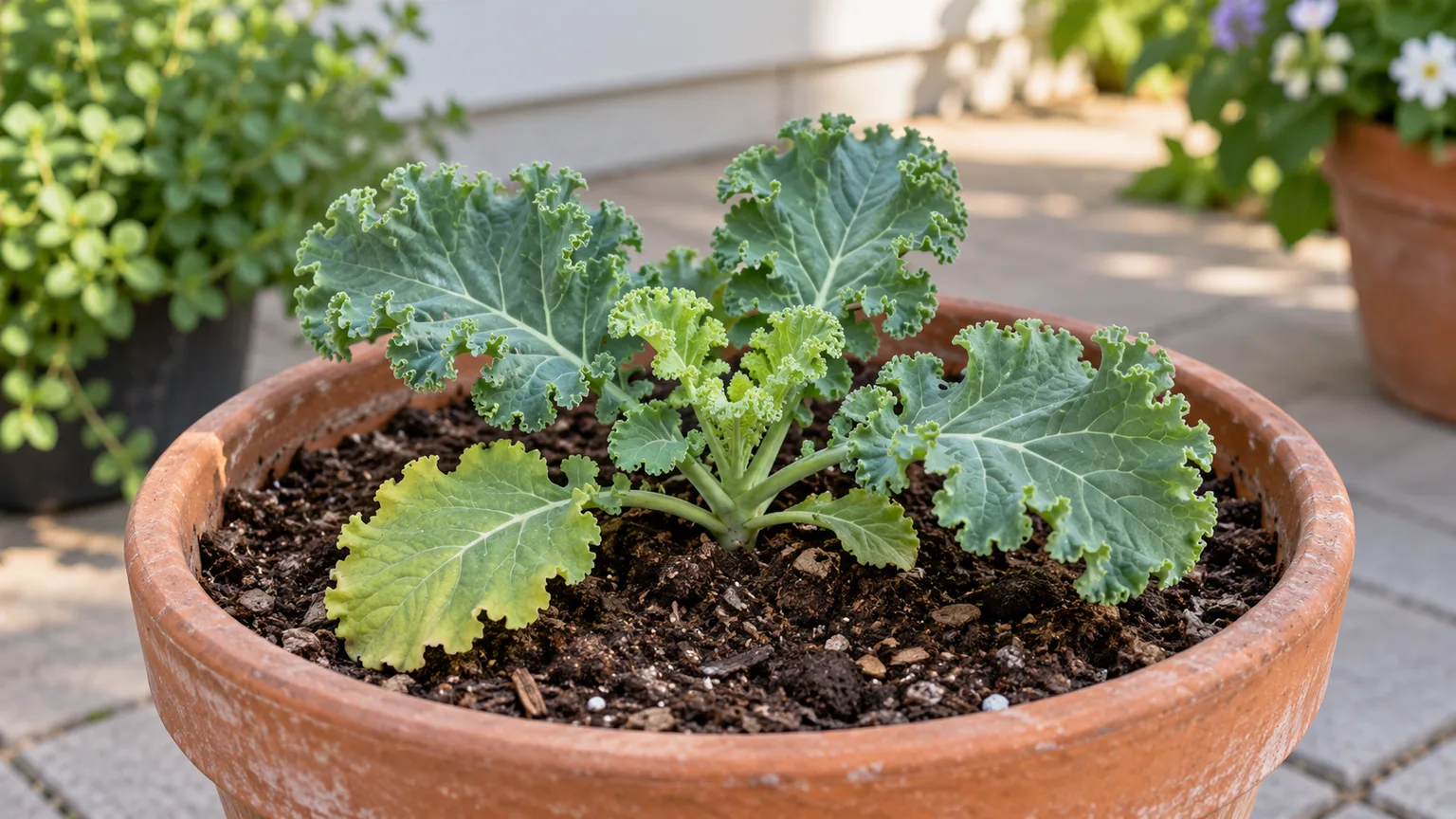
Slow Growth on Kale: Causes, Checks & Fixes
This guide covers slow growth on Kale. See also the general Slow Growth guide, watering, and light pages for this plant.
Slow Growth on Kale: Causes, Checks & Fixes
Quick answer
Slow growth on kale is most often a cool-season timing problem, nitrogen hunger, or crowding — not a mystery disease. Healthy kale is fast: baby leaves in about 30 days and mature leaves in 50–70 days, so a plant that sits unchanged for weeks in cool weather is telling you something specific.
First step: if days are hot, hold off on heavy feeding and judge the plant against its season; if weather is cool and the plant still stalls, side-dress once with a nitrogen fertilizer and water it in deeply. Then watch the central bud — fresh new leaves within 2 to 4 weeks mean you read the problem correctly.
For how stalled growth works in plants generally, see our slow growth guide. The rest of this page covers what is different about kale, because kale stalls for kale-specific reasons.
What slow growth looks like on kale
On kale, a stall shows up at the center of the plant first. The central bud stops pushing out new leaves, or new leaves emerge much smaller than the older ones below them. Because kale is a cut-and-come-again crop harvested from the outside inward, a healthy plant should always show a fresh rosette of young leaves at the crown — a crown gone quiet for weeks is the signature sign.
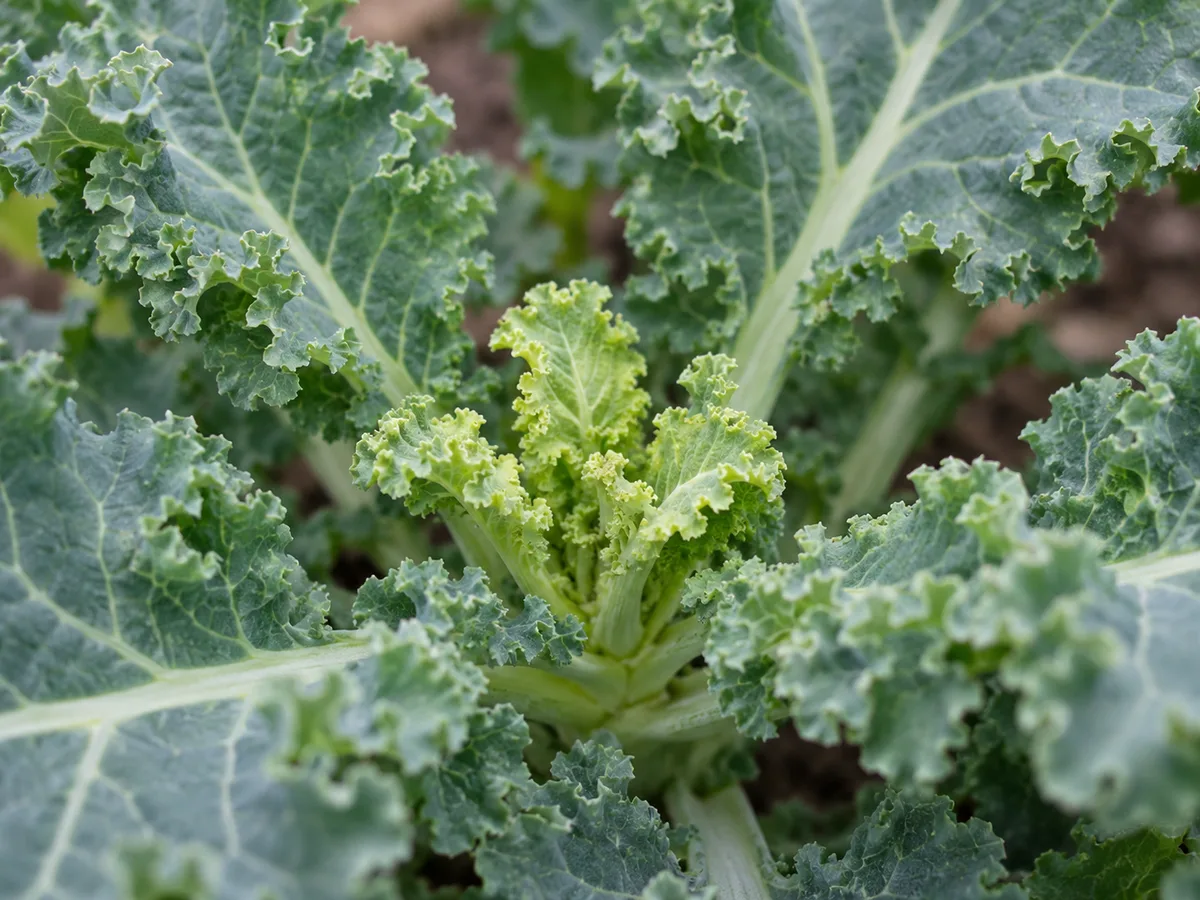
Close-up: a stalled central bud with undersized new leaves and paling outer foliage — the classic kale stall pattern.
Color gives the next clue. Older leaves turning pale green or yellow from the bottom up points toward nitrogen shortage, since kale is a heavy leafy feeder. A purplish tint, especially on leaf undersides, points instead toward phosphorus trouble and poor root function. Plants that simply sit small, tough, and bitter-leaved in hot weather are usually not sick at all — they are a cool-season brassica protesting summer, a pattern Garden Botany’s stunted-kale guide describes as visibly smaller plants with little or no new leaf development.
Why kale stalls: the kale-specific causes
1. Wrong season and heat
Kale grows best when temperatures stay below about 75°F, and high summer heat reduces growth, toughens leaves, and pushes mature plants toward bolting (USU Extension kale guide). In most Indian plains, kale sown for October-to-March harvesting thrives, while the same plant stalls through a hot summer no matter how much you water or feed it. If your kale stopped growing as days turned hot, that is the season clock, not a deficiency — no fertilizer fixes July heat.
2. Nitrogen hunger
Kale builds leaf after leaf from its crown, and that production line runs on nitrogen. Utah State Extension advises side-dressing with a nitrogen-based fertilizer (21-0-0) about 4 weeks after transplanting or thinning to encourage rapid growth (USU Extension kale guide). In containers, the 50-30-20 potting mix of potting soil, compost, and drainage material exhausts its nitrogen within weeks, and NC State Extension stresses adequate nitrogen plus a pre-plant soil test for best results (NC State Extension kale profile). Nitrogen shortage shows as overall stunting with yellowing that starts on older bottom leaves and moves upward (ICL kale crop guide). If you never fed a container kale after its first month, hunger is the leading suspect.
3. Crowding and root restriction
Kale needs room: seedlings or transplants belong about 12 inches apart in rows 2 feet apart, since tight spacing starves each plant of light, water, and nutrients (USU Extension kale guide). In pots, one standard plant wants a 20–30 litre container; a kale sharing a small pot with siblings will stall even with good feeding because its shallow roots run out of volume. Seedlings left unthinned past the 3–4 true-leaf stage compete from day one and never catch up.
4. Water swings on shallow roots
Kale roots run shallow and demand even moisture — roughly 1–2 inches of water per week, kept consistent rather than swinging between soggy and dry (USU Extension kale guide). Dry spells make leaves tough, bitter, and slow; permanently wet mix starves roots of oxygen and invites stem and root trouble. Mulch and drip-style watering at soil level (not overhead soaking) keep the zone stable. If your plant wilts in dry soil, it needs water; if it wilts while the pot feels heavy and wet, suspect roots instead — our overwatering guide for kale covers that fork in detail.
5. Pests and soil-borne disease
Aphids cluster on kale’s tender central bud and suck the momentum out of new growth — check bud and leaf undersides before assuming nutrition is the issue (see aphids on kale). Cabbage-family root diseases, especially clubroot with its swollen distorted roots, shut down uptake and stunt the whole plant; never reuse suspect brassica soil. Nematodes in sandy soils and repeated wet foliage also drag growth down, as noted in the NC State Extension kale profile.
How to confirm the cause
Work through these checks in order — each one rules out a cause before you spend money or stress the plant:
- Read the thermometer and calendar. Daytime highs consistently above 75–80°F with tough, bitter leaves means seasonal stalling. Cool weather with a stall means keep investigating.
- Measure spacing. Less than 12 inches between garden plants, multiple seedlings in one cell, or a small shared pot means crowding. Lift-check containers for roots circling the drainage holes.
- Read the leaves. Bottom-up yellowing of older leaves signals nitrogen hunger; purpling signals phosphorus or cold-soil lockout; chewed holes, sticky residue, or visible colonies signal pests rather than nutrition.
- Check the root zone. Push a finger 2–3 cm into the mix — dry means underwatering, per the kale watering guide. Soggy, sour-smelling mix with a dark stem base means root trouble; gently inspect roots for brown mush (rot) or swollen knobs (clubroot).
- Inspect the bud. Aphids packed into the central growing point, or a bud damaged by picking, halts all new leaves even when roots and soil are fine.
Match the pattern before treating. Feeding a heat-stalled plant, or repotting a nitrogen-starved one, wastes the one intervention that matters.
The first fix to try
Apply one nitrogen side-dressing and water it in — but only if the plant is in its cool growing season with acceptable spacing.
Scatter the recommended dose to the side of the plants (about 6 inches away in beds), then irrigate deeply so it reaches the shallow root zone. This single correction addresses the most common true stall: a hungry kale in good weather. Do not pile on repotting, pest sprays, and pruning the same day; you need to read the plant’s response to this one change.
If heat is the cause instead, the first fix is different: shade the plant through the hottest afternoons, keep water even, harvest what is usable, and plan a fresh October sowing rather than fighting the season. If crowding is the cause, thin or move to the proper spacing first, then feed a week later.
Step-by-step recovery
- Confirm season and spacing using the checks above. Fix crowding before feeding.
- Side-dress nitrogen once and water deeply, as described. Container plants on exhausted mix benefit from resuming a light, regular feeding schedule afterward — see the kale fertilizer guide.
- Stabilize water. Return to the check-the-top-2–3-cm routine from the kale watering guide, and empty saucers after drainage so roots get air.
- Clear pests at the bud. A strong water rinse of aphid clusters on the central bud restores momentum faster than any spray when colonies are small.
- Protect the crown. Keep harvesting outer leaves only and leave the central bud intact — it is the engine all recovery grows from. Review light placement against the kale light guide (at least six hours of direct winter sun) and the soil mix against the kale soil guide.
- Track new leaves, not old ones. Count fresh central leaves weekly. Two to four weeks of progressively normal-sized new growth means recovery; continued tiny or absent new leaves means re-diagnose (roots, disease, or season).
Recovery timeline
Kale is fast when conditions suit it, so feedback arrives quickly. Expect the central bud to show fresh growth within 2 to 4 weeks of a correct fix in cool weather. Full-sized harvestable leaves follow over the next 3 to 6 weeks. Old stunted or yellowed leaves will not size up or re-green — judge everything by new tissue. If nothing changes after a month of correct cool-season care, suspect root disease or exhausted plants past their season, and replanting beats nursing a finished crop. Heat-stalled plants will not resume until temperatures drop; plan around the season rather than the calendar.
Lookalike symptoms
| What you see | More likely page | How to tell apart |
|---|---|---|
| Older leaves yellowing along with the stall | Yellow leaves on kale | Confirmed nitrogen or water issue; stall is secondary |
| Tall, stretched stems with sparse leaves | Leggy growth on kale | Light shortage stretches internodes; true slow growth stays compact |
| Pale, stretched seedlings leaning to light | Not enough light on kale | Light-placement problem specifically; fix position first |
| Wilting despite wet soil | Root rot on kale | Root failure, not hunger; stems soften at the base |
| Visible insects on buds and undersides | Aphids on kale | Pests drain new growth directly |
When to use this page vs other kale guides
Use this page when the plant is alive but static: no meaningful new leaves for weeks, undersized new growth, or a season-long failure to reach the expected 30-day baby-leaf or 50–70-day mature stage. Go to yellow leaves on kale when color change leads and stalling follows; to wilting or root rot when stems soften or plants collapse; and to the kale problems hub when you are unsure which symptom dominates. For routine feeding schedules rather than a stall rescue, the kale fertilizer guide and the kale overview are the right stops.
Mistakes to avoid
- Feeding a heat-stalled plant heavily. Extra nitrogen in hot weather burns stressed roots and cannot restart a cool-season crop. Match feeding to the season.
- Stacking repot, spray, prune, and feed on one day. A stalled kale is already stressed; one targeted fix, then observe.
- Harvesting the central bud. Picking the growing point ends all new production. Always harvest outer leaves and leave the crown.
- Reusing brassica soil. Kale shares clubroot and other soil diseases with cabbage relatives. Discard suspect soil instead of replanting into it.
- Judging recovery by old leaves. Old tissue will not recover; only new central growth counts.
How to prevent it next time
Sow for the cool window — October into November across most Indian plains — so rapid growth finishes before summer heat. Space transplants 12 to 18 inches apart and give one standard plant a 20–30 litre pot. Build nitrogen into the plan: compost-rich mix at planting, then side-dress about a month after transplanting, guided by a soil test rather than guesswork. Keep moisture even with mulch and soil-level watering, rotate garden beds away from other brassicas each season, and inspect leaf undersides weekly so aphids never reach colony size. Full planting and harvest rhythm is covered in the kale overview.
Related kale guides
- Kale growing overview — season calendar, cultivars, and harvest method; start here for planning.
- Kale problems hub — every diagnosed kale issue in one place; use when symptoms overlap.
- Kale watering guide — the 2–3 cm check routine that prevents water-swing stalls.
- Kale light guide — sun hours and placement; use when seedlings stretch or pale.
- Kale soil guide — pH 6.0–7.5 mixes and drainage; use at planting time.
- Kale fertilizer guide — feeding schedules; use for routine nutrition, not emergency rescue.
- Yellow leaves on kale — when discoloration dominates the stall.
- Aphids on kale — when bud colonies are draining new growth.
Related tool
Use the Plant Problem Diagnosis Tool to narrow causes for slow growth on this plant before changing multiple variables at once.