Aphids on Kale: Mealy Colonies, Checks & Fixes
Quick answer
Aphids on kale are usually mealy cabbage aphid — greyish-white colonies packed under leaves and in the central growing point. First step: clip the worst-coated leaves into a bag, then rinse and inspect the crown and leaf undersides before any spray.
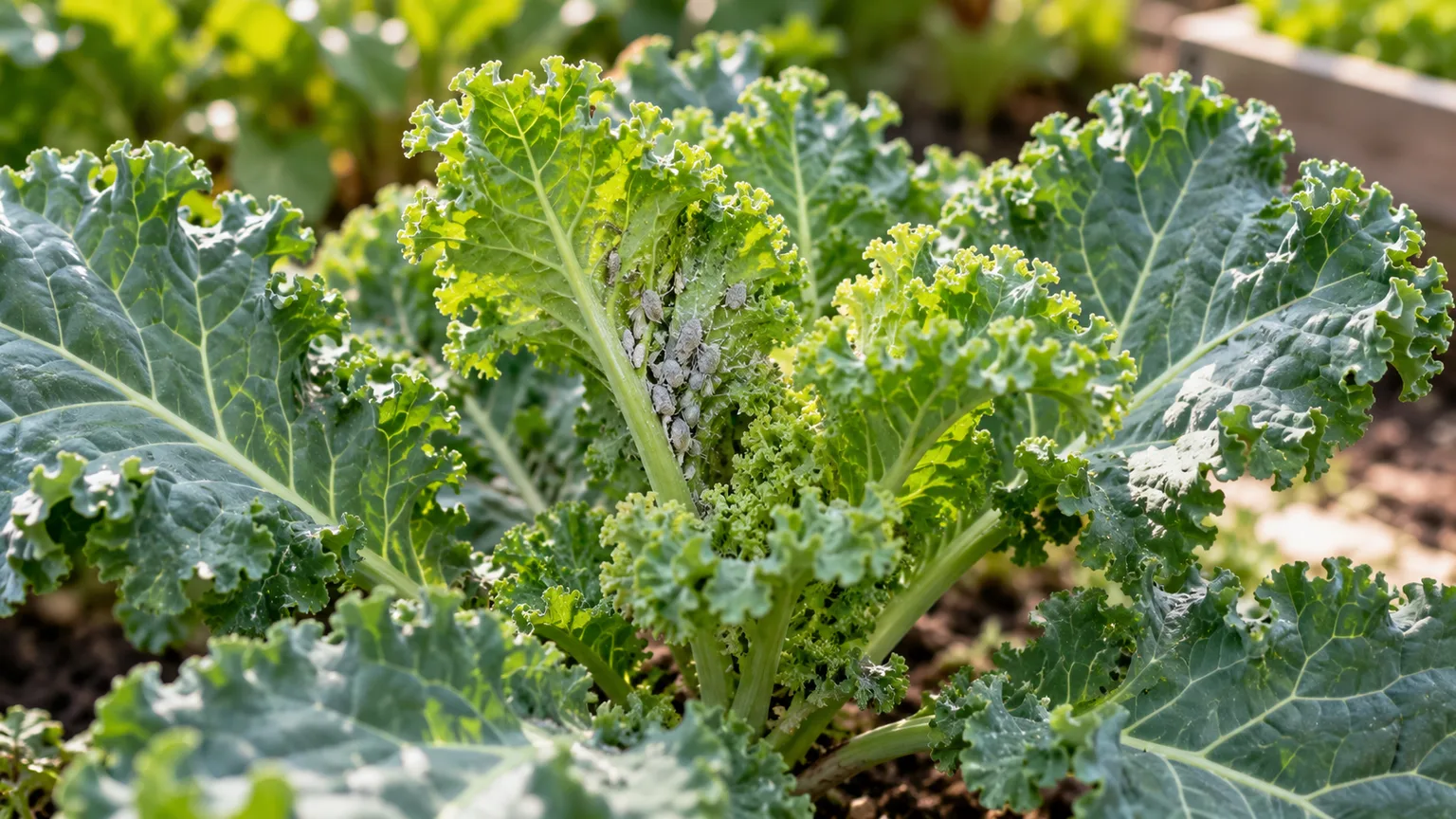
Aphids on Kale: Causes, Checks & Fixes
This guide covers aphids on Kale. See also the general Aphids guide, watering, and light pages for this plant.
Aphids on Kale: Causes, Checks & Fixes
Quick answer
On kale (Brassica oleracea var. acephala), aphids almost always mean one specialist: the mealy cabbage aphid (Brevicoryne brassicae), which forms dense greyish-white colonies under leaves and on growing points. Colonies suck sap from the youngest tissue, distort new leaves, and leave sticky honeydew that grows black sooty mold on leaves you planned to eat.
For how aphids reproduce, why ants defend them, and how water knockdown and soaps work in general, see our aphids pest guide. On kale, the practical pattern is cool-season clusters hidden in the central bud and curled leaf bases, a waxy coating that shrugs off casual rinsing, and harvest leaves that need washing — not a generic houseplant misting routine.
First step: clip the worst-coated leaves into a bag for disposal, then rinse the crown and remaining leaf undersides with a strong stream of water and re-inspect in three days before spraying anything.
What aphids look like on kale
On kale, check the tissue you harvest from — not old outer leaves first. Mealy cabbage aphids pack into the central growing point, the bases of unfurling leaves, and the undersides of the newest full-size leaves. Tall plants may carry colonies deep inside the crown where a glance from above misses them entirely.
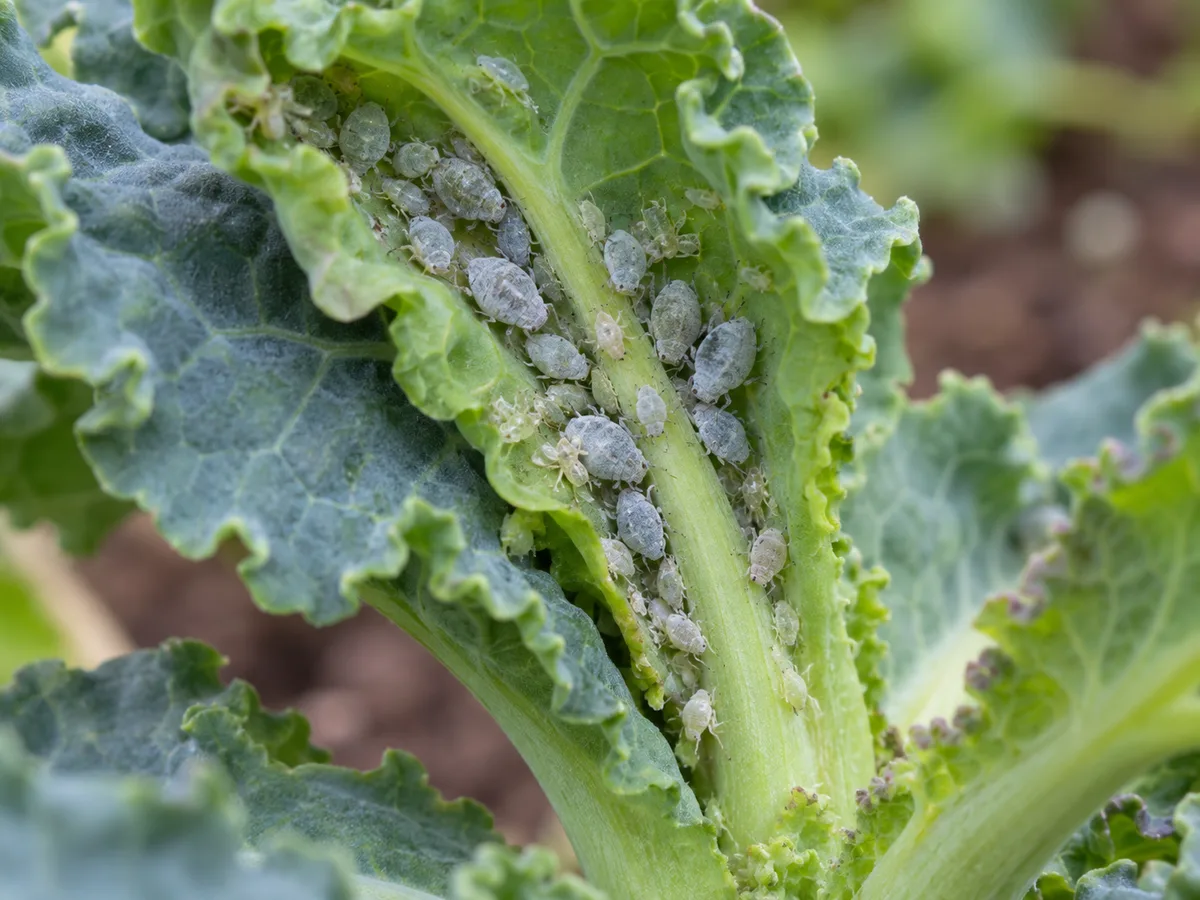
Mealy grey-white aphid colonies packed on a kale leaf underside near the growing point — compare with clean tissue on the same plant.
Typical signs include:
- Greyish-white mealy clusters of insects up to 2.5 mm long on undersides and buds — the waxy “meal” distinguishes them from shiny green aphids
- Crinkled, cupped, or stunted young leaves while older outer leaves still look normal; on young plants the growing point itself may be killed
- Sticky honeydew on leaf surfaces and black sooty mold following it on harvest-age leaves
- Whitish cast skins shed by growing nymphs tucked in leaf folds
- Ant trails up stems and stakes — ants harvest honeydew and guard colonies from predators
Aphids are pear-shaped, slow-moving insects about 1/16 to 1/8 inch long with long legs and antennae, and most carry a pair of tail-pipe cornicles that distinguish them from other small insects. Winged forms appear when colonies crowd — assume nearby cabbage, collards, broccoli, or mustard weeds are next.
Which aphid is on your kale
Two aphids matter on kale, and telling them apart changes how hard you need to work.
Mealy cabbage aphid (Brevicoryne brassicae) is the usual culprit. It is only found on cabbages and other brassicas, so colonies on kale plus clean neighboring tomatoes or herbs point straight at this species. The grey-white waxy bloom over the colony is the field mark — and it matters for control, because the wax lets colonies bead water off like the kale leaf itself.
Green peach aphid (Myzus persicae) is the backup suspect: smaller, shinier, green to yellow, without the meal, and happy on many garden plants beyond brassicas. Management is similar, but green peach colonies rinse off more easily and scatter across mixed plantings rather than concentrating in the kale crown.
One fast field test: brush the foliage. Cabbage whiteflies rise in a white cloud; mealy cabbage aphid does not fly up in a white cloud when disturbed. No cloud plus mealy clusters equals aphids, and the fix below applies.
Why kale gets aphids
Kale is not randomly unlucky. Its biology as a cool-season leaf crop builds exactly the habitat cabbage aphids want.
A crown that never stops producing soft tissue. Cut-and-come-again harvest keeps the central bud pushing tender leaves for months. Aphids feed on soft, new plant growth, so every harvest that stimulates regrowth also refreshes the buffet — unlike a succulent whose new growth hardens off quickly.
Cool, dry growing weather. In most Indian plains kale runs October to March, and cabbage aphids build fastest in cool dry spells when populations can increase with great speed. A warm-season balcony annual finishes before pressure peaks; overwintered kale sits in it for months.
Heavy nitrogen feeding. Rich compost top-dressing plus extra fertilizer pushes lush, nitrogen-rich leaves that aphids colonize first. UC IPM’s standing advice applies directly: don’t overfertilize — use slow-release products and feed for steady growth, not maximum leaf size.
Tall older plants. Field observation holds that tall, older kale carries heavier colonies than small young plants nearby, so a mature seed-stalk plant left standing can seed the whole bed. Tall-growing plants that mature early attract many more cabbage aphids, which is one reason succession sowing changes pressure.
Brassica neighbors and weedy reservoirs. Cabbage, collards, broccoli, Brussels sprouts, and wild mustards all host the same aphid. Old kale stalks, cabbage stumps, and mustard weeds left after harvest carry colonies and eggs between plantings — cleanup failures cause repeat outbreaks more often than new introductions do.
Few predators on balconies. Open beds get lady beetles, lacewings, syrphid larvae, and the parasitic wasps that wipe out colonies once active. Pots on a high balcony or behind mesh get fewer of these visitors, so small colonies grow unchecked unless you scout.
How to confirm the cause
Work in this order before mixing any spray:
- Start at the growing point — Part the youngest unfurling leaves and look into the bud. Mealy clusters packed in the crown confirm cabbage aphid; clean buds with damage only on old outer leaves point toward yellow leaves on kale from nutrition or watering instead.
- Flip the newest full-size leaves — Colonies favor undersides. Shiny insects scattered across many plant families suggest green peach aphid; grey mealy masses on brassicas only mean cabbage aphid.
- Magnify before you decide — A hand lens or phone macro should show pear-shaped bodies with long antennae. Fast-running specks, fine webbing, or white cottony tufts mean spider mites on kale or mealybugs on kale instead.
- Feel for honeydew — Tacky leaves with black film fit aphids. Dry, limp whole-plant wilt with dry deep soil fits underwatering on kale; wilt with heavy wet soil fits overwatering on kale or root trouble.
- Look for mummies — Swollen bronze or tan aphid husks mean parasitic wasps are already killing colonies; leave mummies on the plant and hold broad sprays so the wasps finish the job.
- Check the neighborhood — Infested collards, cabbage, or flowering mustard weeds within a few metres explain reinfestation and must be handled together.
Confirmed diagnosis needs visible mealy colonies or honeydew on young kale tissue — pale or puckered leaves alone are not enough.
First fix for kale
Clip the worst leaves, then rinse the crown.
Break or snip off the most heavily coated leaves — especially distorted ones wrapped around colonies — and seal them in a bag for disposal, not the compost heap. Then blast the central bud and remaining leaf undersides with a strong stream of water. A strong stream of water knocks aphids off sturdy plants, and kale foliage is sturdy enough to take it.
Do not start with oil or soap on day one. Mealy colonies tucked inside curled leaf bases survive contact sprays anyway, and clipping removes more aphids in two minutes than a first spray reaches. Re-inspect the bud in three days: clean opening leaves mean the fix held; rebounding clusters mean moving to soaps below.
Step-by-step recovery
When rinsing and clipping leave live colonies behind, escalate in this order:
- Keep clipping distorted hideouts — Aphids hidden within curled leaves escape contact pesticides, so every puckered leaf you remove makes the next spray more effective. This matters more on kale than on smooth-leafed herbs.
- Apply insecticidal soap to living aphids — Use a product labeled for edible brassicas. Soaps work by smothering and have no residual activity, so you must wet the insects directly: undersides, bud crevices, and stem joints until runoff. Spray in the cool of the evening, and expect only partial control on waxy cabbage aphids — use the lower label rate first since higher concentrations can injure leaves.
- Repeat on schedule — Treat every five to seven days for two to three cycles to catch nymphs that hatch after each round. One spray never ends a cabbage aphid outbreak on regrowing kale.
- Consider neem or pyrethrin only next — Extension lists these among organic options for aphids, but check each label’s waiting period before harvest and never spray open flowers where bees forage.
- Break ant protection — If ants stream up the pot or bed, block their routes so lady beetles, lacewings, and syrphid larvae can reach the colonies. Ant-guarded colonies rebound after every rinse.
- Hold the fertilizer — Do not feed to “push through” the infestation. Soft nitrogen-rich regrowth feeds the next aphid generation; resume the schedule in the kale fertilizer guide only after colonies collapse.
- Wash what you harvest — Strip badly coated outer leaves in the garden. Rinse the rest under running water, or soak harvest leaves in soapy water and rinse clean — remaining traces are unpleasant but the leaves are safe to eat once washed.
- Clean up after harvest — Pull finished stalks and nearby mustard weeds, because cabbage aphids overwinter as eggs in debris and stumps and transmit multiple viruses. Where winters stay mild, colonies can persist on living collards and kale for weeks, so do not leave old brassica stems standing.
Recovery timeline
Distorted leaves do not uncurl. Cupped and crinkled foliage stays misshapen after colonies die. Judge everything by the central bud.
- 3 days — After clipping plus rinsing, the bud should show fewer live insects on inspection; honeydew stays tacky until rain or wiping removes it.
- 7–14 days — With repeated soap cycles, new leaves should open flatter and colonies should shrink to scattered individuals plus mummies.
- 3–4 weeks — Steady cut-and-come-again harvest resumes if the bud stayed alive; a plant whose growing point was killed on a young transplant may never produce normally and is better replaced.
Worsening signs: colonies packing every bud across multiple plants, winged aphids dispersing daily, sooty mold blackening most harvest leaves, or virus-like mottling and severe stunting spreading after aphid feeding — the last case means tolerating the plant risks infecting its neighbors, so remove it.
Lookalike symptoms
| Pattern | Read next |
|---|---|
| Tiny white insects flying up in a cloud when brushed | Cabbage whitefly — mealy aphids stay put; confirm with a lens, then follow the soap steps above |
| Fine stippling plus webbing in dry heat | Spider mites — microscopic dots, not pear-shaped clusters |
| White cottony tufts in leaf axils | Mealybugs — stationary waxy masses, not active colonies in the bud |
| Yellowing older leaves without insects or stickiness | Yellow leaves — nutrition or watering, not sap feeders |
| Whole-plant limp wilt, dry deep soil | Wilting or underwatering — no honeydew pattern |
| Droop with soggy heavy mix | Drooping leaves or overwatering — fix drainage first |
| Stunted pale growth with no pests found | Slow growth — light, pot size, or season limits |
Mistakes to avoid
Do not hose the plant daily while leaving clipped colonies rotting in the pot — remove infested leaves first or you re-seed the crown with every splash.
Do not spray soap or oil at midday in hot sun. Wet waxy kale plus oil in heat risks leaf injury; evening application on a day when leaves dry by night is the safer pattern.
Do not compost badly infested kale leaves or leave old stalks standing. Without cleanup, eggs and adults carry straight into the next sowing.
Do not crank up nitrogen to outgrow the damage. Lush soft shoots are exactly what cabbage aphids convert into the next generation.
Do not treat flowers or assume one spray finished the job. Repeat inspection of the bud matters more than the first knockdown, because fast reproduction rebuilds skipped colonies within days.
How to prevent aphids next time
Prevention on kale is mostly exclusion and cleanup, because the crop sits in the aphid’s favorite season for months.
- Cover from transplant day — Fine insect-proof mesh over hoops keeps winged aphids off young plants; a simple row-cover tunnel over vigorous plants you keep through winter works the same way in beds.
- Space for airflow and light — Wide spacing gives kale light and air, which supports clean cropping and slows the humid pockets colonies love. Crowded baby-leaf rows need closer scouting.
- Feed steadily, not heavily — Follow the seasonal schedule in the kale fertilizer guide and keep moisture even per the kale watering guide; drought-stressed or overfed plants both carry heavier colonies.
- Scout buds weekly — Check growing points and leaf undersides on the same rhythm as outer-leaf harvests in the kale pruning guide. Early colonies on one plant take minutes; established crowns take weeks.
- Rotate away from brassicas — Do not follow kale with cabbage, collards, or broccoli in the same soil, and pull wild mustard weeds that bridge plantings.
- Keep notes on cultivars — Curly, Lacinato, dwarf, and purple types differ in tenderness and exposure, and some varieties are noticeably less bothered than others. Sow more of what stayed clean in your setup.
- Tolerate wisely on established plants — On large harvesting plants, small colonies can be tolerated as food for aphid predators; on young transplants and any kale grown for unblemished leaves, act early because palatability and the growing point suffer first.
Match soil, light, and container size to the cultivar with the kale soil guide, kale light guide, and kale repotting guide so plants mature leaves quickly past the most vulnerable stage.
When to use this page vs other kale guides
Use this page when the main finding is visible mealy colonies or honeydew on young kale tissue. Start with the kale overview if you need cultivar identity, sowing windows, or harvest basics first.
If buds are clean but leaves pale, move to the kale problems hub and compare nutrition and watering pages. If the issue is routine moisture rather than insects, the kale watering guide is the right entry. For seedling care and timing, see the kale propagation guide.
Related kale guides
- Kale overview — cultivars, cool-season timing, and harvest basics
- Kale problems — full symptom index for this plant
- Kale watering — even moisture for shallow brassica roots
- Kale light — winter sun and heat-stress response
- Kale soil — fertile, moisture-retentive but drained mix
- Kale fertilizer — steady feeding without aphid-friendly flushes
- Kale pruning — outer-leaf harvest without damaging the crown
- Kale repotting — final container size for vigorous plants
- Spider mites on kale — stippling and webbing lookalike
- Mealybugs on kale — cottony axil masses lookalike
Conclusion
Aphids on kale are a growing-point and leaf-underside problem driven by one brassica specialist — not a whole-garden mystery. Learn the grey mealy look, check the bud weekly through the cool season, clip before you spray, and reserve soaps for colonies that survive rinsing. Clean new leaves from a living central bud are the recovery signal; old cupped foliage can be harvested away without guilt.
Related tool
Use the Pest Identifier Tool to narrow causes for aphids on this plant before changing multiple variables at once.