How and When to Harvest Kale for the Sweetest Greens
Learn when to harvest kale by leaf stage, not a fixed date. Pick outer leaves for repeat growth, use cool weather for better flavor, and store greens well.
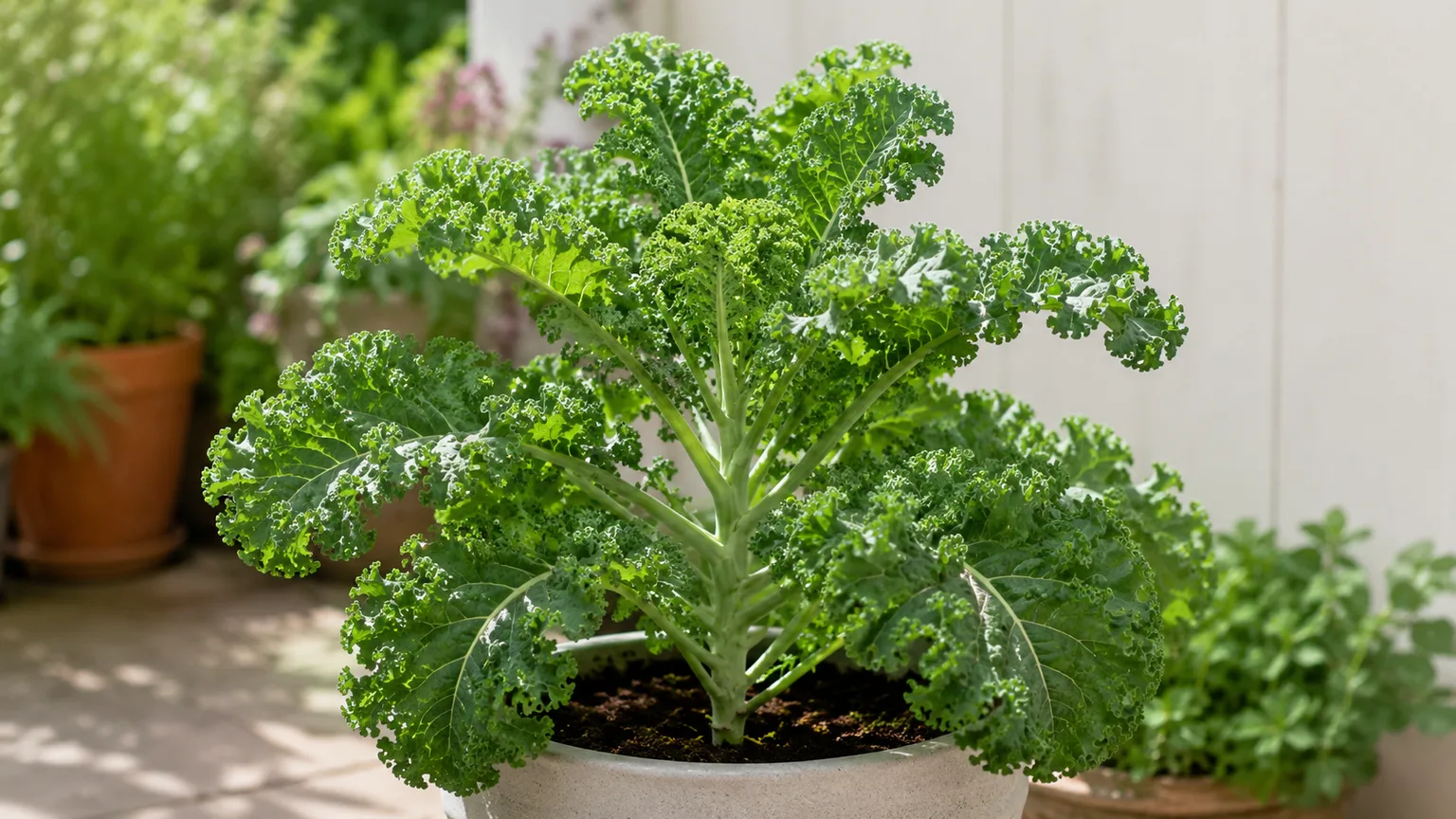
You can start picking kale as soon as the leaves are large enough for the way you plan to eat them. Baby leaves can go into salads, while larger outer leaves are better for cooking; fall leaves often taste sweeter after cool weather or a light frost. Don’t wait for one exact number of days or for frost to arrive: variety, starting method, temperature, and leaf size all affect the best time.
For a plant that will keep producing, pick the oldest outer leaves close to the main stalk and leave the small center rosette intact. If you only need a handful today, take a handful; a light, repeated harvest usually works better than stripping the plant at once.
Use leaf stage, not a calendar, to time your first pick
Seed packets and growing guides often give “days to maturity,” but kale does not suddenly become ready on one date. The figure is an estimate tied to a particular variety and growing method, and it usually assumes reasonable growing conditions. For example, NC State Extension lists about 20 to 30 days from seeding for baby greens and 50 to 75 days for mature leaves; other varieties mature on a different schedule, and slow, cold, hot, or dry conditions can extend it. Use the packet as a first estimate, then judge the actual plant.
Check whether your packet counts days from sowing or transplanting. If you start seed indoors, the clock may begin at transplanting rather than the day you sowed; compare like with like before deciding the crop is late. Transplants can also give you usable leaves sooner than direct-seeded plants because they already have several weeks of growth when they go into the bed.
The first harvest does not need to be the full, mature crop. If the plant is sturdy, has several healthy leaves, and you only want tender salad greens, begin with a few outside leaves. If you want larger bunches for sautéing or soup, let the plant build a broader rosette and pick the outer leaves as they reach the size and texture you prefer. NC State Extension’s kale guide gives useful baby-leaf and mature-leaf time ranges, but its variety examples show why the packet remains the better calendar for a specific cultivar.
Baby leaves and mature leaves have different uses
For baby kale, harvest small leaves while they are soft and easy to tear, often at only a few inches long. You can snip individual leaves or cut a small patch of a dense sowing, depending on whether you want the plants to regrow. Small leaves are convenient for salads and quick sautés because they have thinner ribs and a milder texture.
For a standing kale plant, wait until the outside leaves are broad enough to make picking worthwhile; hand-sized leaves are a useful visual cue, not a rule. Oregon State Extension suggests taking outer leaves while they remain tender and no more than about eight inches long. Some cultivars naturally make longer leaves, so feel the rib and leaf rather than rejecting a good leaf simply because it passes that measurement. Young growth near the center is usually tender, but it is also the plant’s next set of leaves, so leave it to keep the plant productive.
Read the plant before you cut
A harvestable kale plant has a firm stem, healthy leaves, and a growing tip at the center. Look for the outer leaves first: they are usually the oldest, largest, and easiest to remove without disturbing new growth. Avoid taking leaves that are badly yellowed, slimy, or heavily damaged; they are poor kitchen greens, and removing a few does not require you to take the sound leaves beside them.
Leaf size is only one quality signal. A large leaf may still be tender if it grew quickly in cool, moist weather, while a smaller leaf can feel leathery after heat, drought, or a long time on the plant. If you are unsure, pick one leaf and taste it before harvesting a whole plant. A quick sample tells you more about that cultivar and that week’s conditions than a universal length chart.
Choose outer leaves and protect the growing point
Kale produces new foliage from the central growing point, often called the crown or terminal bud. The newest leaves form a tight rosette at the top; older leaves move outward and down the stem as the plant grows. If you remove the center or repeatedly cut the top, you remove the part that makes the next leaves and can end the useful harvest earlier.
Start low on the plant and work upward over successive harvests. A neat stalk of bare leaf scars near the base is normal as the plant gets taller, but it should still have a healthy crown and a good amount of green foliage. If a bottom leaf is tough or touching soil, discard it rather than saving it just because it is large. This outer-to-center pattern is also recommended by Oregon State Extension and RHS, though their recommended leaf sizes and local harvest calendars reflect different growing conditions.
When is kale at its sweetest?
Kale is a cool-season crop, so its flavor is often best in spring and fall rather than during a spell of hot weather. As the days and nights cool, the plant’s leaves can develop a sweeter flavor; a light frost or a stretch of cold weather can improve the taste of many fall-grown varieties. That makes a cool morning after frost a tempting harvest window, but it is an optional flavor boost, not a prerequisite for picking edible kale.
“Sweeter after frost” does not mean every plant will taste sugary or that all bitterness disappears. Cultivar, leaf age, growing conditions, and personal taste matter, and some sources describe flavor improvement after cold weather while others focus on frost specifically. The reliable advice is to taste your own leaves: if they are tender and pleasant before frost, harvest them; if the fall crop tastes sharper, wait for cooler weather if the plant remains healthy. NC State Extension notes sweeter-tasting leaves after frost or cold weather, and the RHS kale guide describes frost-related changes in flavor.
Frost can help, but it is not a starting signal
Kale can tolerate cold better than many garden vegetables, but “frost tolerant” does not mean indestructible. The University of Minnesota lists kale among its hardiest fall crops and says it can survive temperatures around 20°F in its regional guidance; that is a Minnesota reference point, not a promise for every cultivar, plant size, container, or exposed site. Strong wind, wet soil, abrupt temperature drops, and prolonged hard freezes can still damage leaves or kill a plant.
If frost is forecast and the crop is healthy, you can harvest a portion before the cold arrives or protect the planting with a row cover. If you want to sample sweeter leaves, pick after the frost event when the foliage has thawed and regained firmness. Frozen leaves are fragile; do not tug or cut leaves while they are stiff or brittle, and do not assume a collapsed, water-soaked leaf will recover. Minnesota Extension’s fall-crop guidance is explicit that frost tolerance is crop-specific and gives kale’s cold limit within a Minnesota context.
Harvest kale for repeat growth
For a continuing supply, harvest individual outer leaves rather than cutting the whole plant. Use clean fingers, scissors, or a sharp knife, and remove each leaf at the base of its stem where it joins the main stalk. A clean cut is helpful when stems are thick, the plant is young, or pulling would rock the stem in loose soil.
The important part is to avoid yanking the central stem or bruising the growing point. Twist or cut the leaf at its base; do not rip downward through the main stalk, and do not take the top cluster just because those small leaves look especially tender. A healthy crown can continue making leaves after the lower outer ones are removed. Homes & Gardens’ harvesting guide also advises picking leaves gently at the base and retaining the top rosette for continued growth.
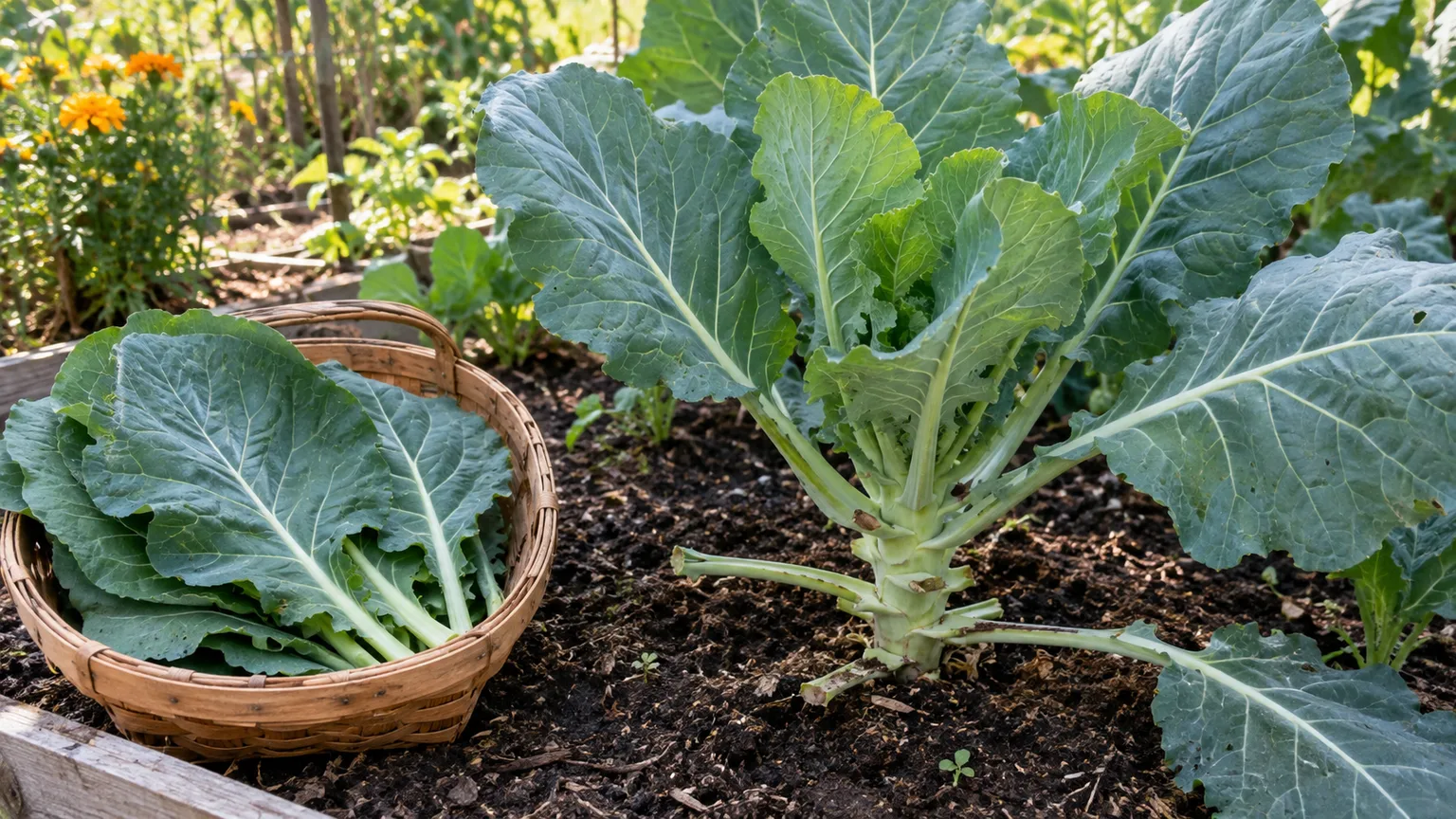
This photo shows collards, a close brassica relative; the same outer-leaf method applies to kale.
A careful first harvest
Use this sequence for a plant you want to keep cropping:
- Choose a dry, cool time if possible. Early morning is useful because the leaves are cool and hydrated, but in a frosty garden wait until frozen foliage has thawed.
- Inspect before cutting. Skip yellow, rotting, or heavily chewed leaves; check the undersides for caterpillars and eggs if the plant has insect damage.
- Pick the largest sound leaves around the outside. Begin at the bottom, then take only the number you need.
- Cut or snap each leaf at its base. Keep the main stalk and central growing tip intact.
- Stop while the plant still looks leafy. Keep most of the foliage and the entire young center so the plant can continue growing.
- Move the harvest into shade and refrigerate it promptly. Avoid leaving cut leaves in a hot basket or direct sun while you finish garden chores.
There is no need to wash leaves before refrigerating them; wetness encourages spoilage. If soil or pests are present, remove debris in the garden, then rinse and dry leaves immediately before cooking or eating. NC State Extension’s postharvest guide for leafy greens recommends harvesting in cool morning conditions and removing field heat quickly.
How much to pick and when to come back
For a conservative repeat harvest, take only a modest handful or a few outer leaves from each plant. One useful ceiling is about one-third of the foliage at one time, leaving the crown plus enough mature leaves to keep the plant photosynthesizing. A small seedling should lose less than a mature, vigorous plant, so think in proportion rather than following the same leaf count for every plant. UF/IFAS’ kale profile also recommends taking no more than a third of the plant at a time.
Return when new leaves have reached the size you want, rather than automatically waiting exactly five or seven days. In cool weather a vigorous plant may replace leaves quickly; in heat, low light, or dry soil, regrowth slows. Inspect every few days during active growth, remove the oldest usable leaves, and skip a week if the crown looks small or the plant has not recovered. This “little and often” approach yields tender leaves and avoids the shock of stripping the plant.
Adjust harvesting to spring, summer, and winter
Kale does not have one national harvest calendar. A spring sowing may offer leaves before summer heat; a late-summer sowing in a cool region can produce through fall and early winter; in a mild climate, the crop may continue much longer. Use your seed packet’s planting and harvest estimates, then adjust for local frost dates, current growth, and whether your plant is in open ground or a container.
The date printed on a seed packet is not a harvest deadline. It helps you estimate when to start checking, while the plant tells you when a leaf is ready. Regional extension schedules can also differ sharply: Oregon State gives separate sowing and harvesting windows for coastal, Willamette Valley, and eastern Oregon gardeners, which is a good reminder to use local advice rather than copy another region’s month.
Handle heat and dry weather
In hot weather, kale can keep growing, but the quality of older leaves may decline. Warm conditions and uneven moisture can make leaves tougher or more bitter, so water consistently, pick often, and favor younger leaves if mature ones have become leathery. If the plant begins to struggle, a smaller harvest is better than removing much of its foliage while it is already under stress. Montana State University Extension notes that older leaves can toughen and become bitter as temperatures warm.
If a spring crop is moving into summer, harvest the good outer leaves you can use rather than waiting for the biggest possible bunch. The center may continue growing if temperatures remain moderate, but heat, drought, and longer days can also push some cool-season crops toward flowering. If your summers are hot, a late-season crop planted in time for fall can produce milder leaves than holding an overmature spring plant through the hottest weeks.
Stretch the fall harvest through cold snaps
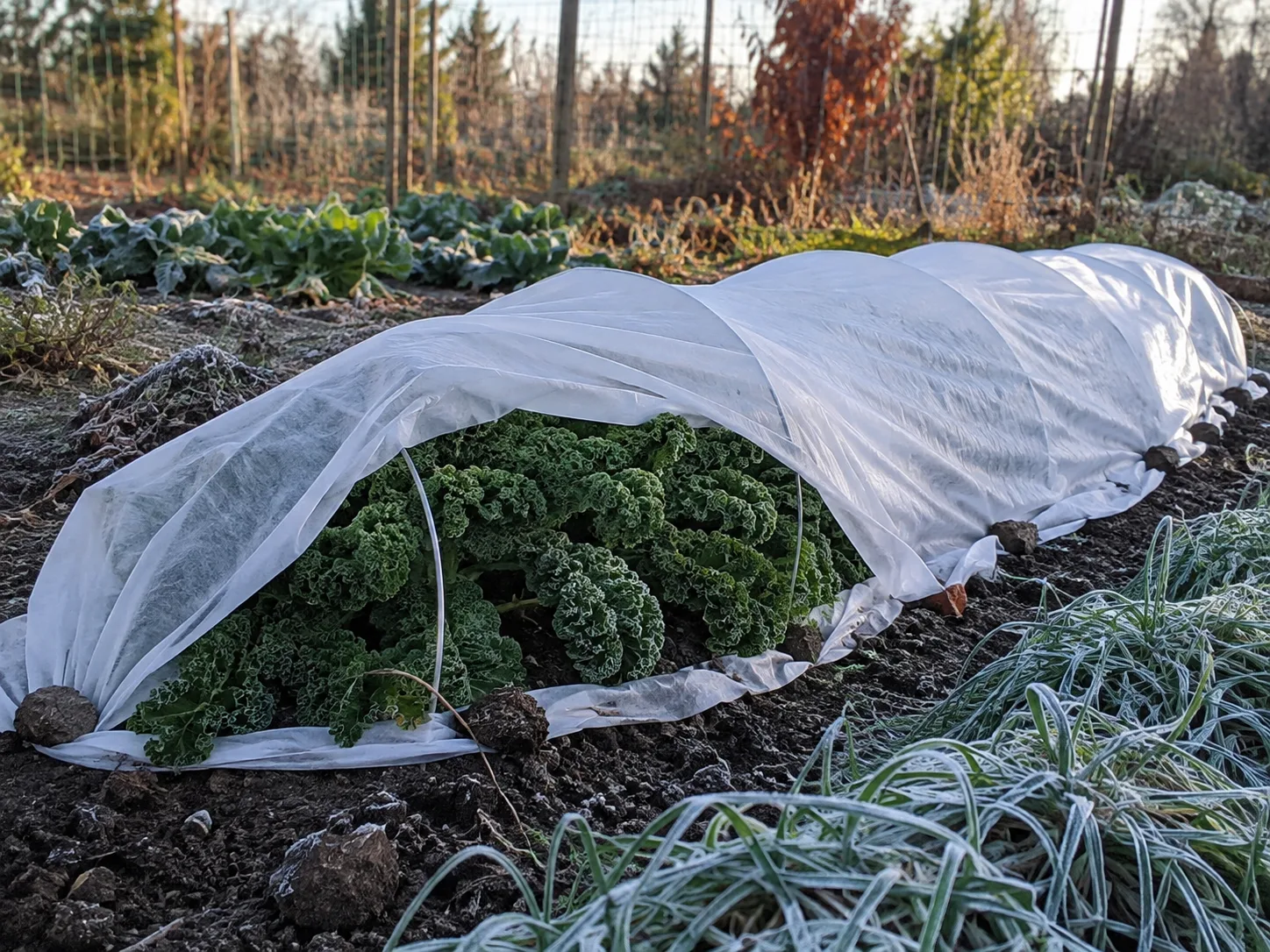
Fall kale can be picked before a frost, after a light frost, and during many cool spells as long as the leaves remain sound. A low row cover helps shield plants from wind and temperature swings, but leave enough space for the leaves and remove or adjust the cover as conditions change. Covering can extend the harvest; it cannot guarantee survival through any length of severe freezing weather.
After a cold night, wait for frozen leaves to thaw before harvesting. A thawed leaf that feels firm can be picked normally; a limp, translucent, water-soaked, or blackened leaf has likely suffered cold injury and should be removed. The NCAT cold-hardy vegetables guide cautions growers not to harvest leafy crops while they are frozen, and the University of Utah Extension’s storage guide notes that kale can tolerate light frost with insulation in place.
What to do when kale starts to bolt
Bolting is the shift from leaf production toward a flower stalk and seeds. Kale is usually grown as a biennial: a plant builds leaves during its first growing season, then may flower the following year after winter. But stress and temperature patterns can also prompt premature flower stalks, so a tall central stem or visible flower buds in the first year are a signal to harvest promptly rather than waiting for another flush of leaves.
When the central stalk begins elongating, pick any remaining good leaves while they are still tender. Small flower buds can be edible, much like other brassica shoots, but their texture and flavor change as flowers open; once the plant has gone into full bloom, it may no longer make the broad, tender leaves you wanted. Cut out damaged leaves and use or compost them appropriately, then decide whether to leave a healthy plant for pollinators and seed or replace it with a new crop. University of Maryland Extension’s bolting guidance explains that cool or hot temperatures and long days can prompt flower stalks in many biennial vegetables; the RHS kale guide describes the usual second-year flowering cycle.
Do not expect cutting off a tall flower stalk to turn an old, bolting plant back into a long-term leaf producer. You can harvest healthy leaves and tender shoots, but the plant’s growth cycle has changed. If you need a steady supply, succession sow a new batch before the existing plants age out, and keep a few plants for seed only if you want to save a variety and can isolate it from compatible flowering brassicas.
Cool, clean, and store the leaves
Kale loses crispness quickly when warm, so take the basket out of direct sun and refrigerate the leaves soon after cutting. Remove loose soil and damaged leaves, but wait to wash the harvest until you are ready to use it. Water left trapped in folded leaves or a sealed bag encourages sliminess, while letting leaves dry out causes wilting.
For home storage, keep unwashed leaves in the refrigerator’s crisper in a clean bag or container with a dry paper towel to absorb excess moisture. Use them within about five to seven days for the best texture; fresh, clean crops can sometimes last longer, but damaged or damp leaves will not. Colorado State University Extension’s kale storage advice recommends keeping kale unwashed in a bag or container lined with paper towels and rinsing it just before use.
If you have more than you can use, freeze kale for cooked dishes rather than salads. Remove thick stems, wash the leaves, water-blanch them for two minutes, cool quickly in ice water, drain well, and pack for the freezer. The National Center for Home Food Preservation’s greens instructions specify a two-minute blanch for kale and other greens; freezing softens leafy greens, so plan to use them in soups, sautés, or casseroles.
Troubleshoot tough leaves and slow regrowth
If kale tastes bitter or feels tough, start by checking the leaf’s age and the weather it grew through. Older leaves often become coarser, and heat or moisture stress can affect texture; choose smaller, younger leaves and keep the soil evenly moist. A light frost may improve flavor, but it cannot reverse a damaged leaf or turn an overmature, leathery one into tender salad greens. Try cooking tougher leaves and reserve the youngest leaves for raw uses.
If new leaves are not appearing, look at the center of the plant. A missing or damaged growing point, an early flower stalk, drought, heat, pest damage, or a heavy previous harvest can all limit regrowth. Let the plant recover, water it if the soil is dry, remove only damaged material, and wait for a healthy new leaf before picking again. If the whole plant is declining or the stem is rotting, harvest any sound leaves and replace the plant instead of repeatedly taking foliage from a failing crop.
If leaves look healthy but are dusty or gritty, separate them and rinse them in several changes of cool water right before cooking. Check leaf undersides for caterpillars or eggs while cleaning, especially on fall plants; discard damaged sections and follow the pesticide label’s harvest interval if you used a treatment. Store leaves dry after washing only if you plan to use them soon, since wet storage shortens their usable life.
Conclusion
Harvest kale when its leaves suit your meal, not just when a calendar says it should be ready. For a repeat crop, take a few mature outer leaves at a time, protect the central growing point, and use the cool season for the best chance of sweeter flavor. If frost arrives, let the leaves thaw before cutting; then cool the harvest quickly and store it dry so the garden’s flavor reaches the kitchen in good condition.



