Broccoli Care Guide: Grow Cool-Season Heads
Brassica oleracea var. italica
Grow broccoli in India with winter sun, evenly moist fertile soil, large containers, and timely central-head harvests plus side shoots. Includes cool-season timing for plains and hills.
Broccoli Care Guide: Grow Cool-Season Heads
Start with wateringThe most common care mistake for BroccoliWatering guide → →Broccoli care essentials
Light
Water
Keep the root zone evenly moist while heads are forming, but never saturated. Water deeply when the top 2–3 cm feels dry and let excess drain freely.
Soil
Fertile, moisture-retentive but well-drained loam rich in organic matter. Aim for pH 6.0–7.0; steady moisture supports tight heads.
Humidity
Temperature
Fertilizer
About Broccoli
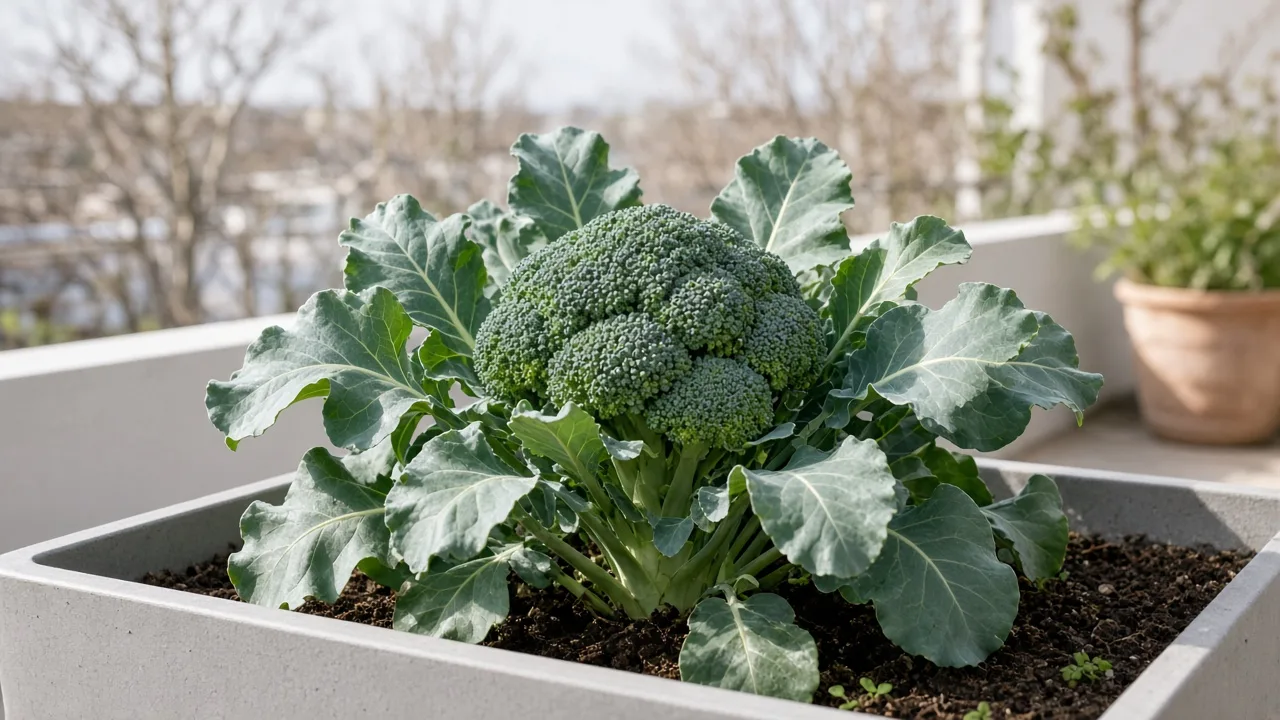
Broccoli is native to Cultivated heading brassica from eastern Mediterranean and western Asian cabbage ancestors, typically reaches 30–120 cm tall and 30–60 cm wide; central head often 10–18 cm across indoors, with medium to fast — main head in about 60–90 days from transplant; side shoots follow for several weeks growth. Broccoli has a herbaceous annual cool season vegetable growth habit and part of the Brassicaceae family. It is also known as Calabrese broccoli, Italian broccoli, Sprouting broccoli, and Purple sprouting broccoli (cultivar group).
| Detail | Information |
|---|---|
| Also known as | Calabrese broccoli, Italian broccoli, Sprouting broccoli, Purple sprouting broccoli (cultivar group) |
| Native region | Cultivated heading brassica from eastern Mediterranean and western Asian cabbage ancestors |
| Mature size | 30–120 cm tall and 30–60 cm wide; central head often 10–18 cm across |
| Growth rate | Medium to fast — main head in about 60–90 days from transplant; side shoots follow for several weeks |
| Growth habit | Herbaceous Annual Cool Season Vegetable |
| Scientific name | Brassica oleracea var. italica |
| Family | Brassicaceae |
Broccoli Care Guide: Grow Cool-Season Heads
Broccoli (Brassica oleracea var. italica) is a cool-season heading brassica grown for one dense cluster of unopened flower buds on a central stem—not for repeated leaf picks like kale. Most home gardeners grow Calabrese types that form a single large green head, then smaller side shoots if weather stays cool and the plant stays healthy. Understanding that biology separates broccoli care from generic “leafy green” advice: your success metric is a tight crown before yellow petals appear, not perpetual foliage.
In India, broccoli is most reliable as a winter crop on plains and a longer-season crop in cooler hills. Hot lowland summers commonly trigger bolting, loose heads, or bitterness long before a usable crown forms. Match sowing to your local cool window rather than a Northern Hemisphere spring calendar.
What Broccoli Is and How It Grows
Scientific identity and brassica relatives
The species Brassica oleracea also includes cabbage, cauliflower, kale, and Brussels sprouts. Broccoli’s italica variety is defined by edible immature inflorescences—the green (or purple) bead-like buds you steam or stir-fry. Seed packets may say Calabrese, Italian broccoli, or sprouting broccoli; in UK gardening usage, “broccoli” sometimes means purple sprouting types harvested in late winter, while calabrese names the large central-head form familiar in Indian supermarkets RHS. Keep the cultivar label: maturity days, head size, and cold tolerance vary widely.
Broccoli shares pests, clubroot risk, and rotation rules with every other brassica on your balcony. Planting broccoli after cabbage without refreshing soil invites recurring aphids, caterpillars, and soil-borne disease.
Growth habit, mature size, and annual life cycle
Broccoli is an herbaceous annual in the kitchen garden: you sow, form a head, harvest, and usually finish the crop within one cool season. Mature plants often reach 30–120 cm tall depending on cultivar vigor, with a central head commonly 10–18 cm across when tight. From transplant, many Calabrese cultivars need roughly 60–90 days to a harvestable crown; seed-to-harvest can run 50–75 days for early types listed on packets Utah State University Extension.
Unlike biennial kale left to flower in year two, broccoli’s useful life ends once the main head bolts or quality declines in heat. Side shoots extend production for weeks but still depend on cool air and steady moisture.
Why Broccoli Is a Cool-Season Crop
Ideal temperatures and heat limits
Broccoli is a cole crop: it thrives when growth is steady and air stays cool. UC IPM places the comfortable active range near 60–65°F (about 15–18°C), with cole crops tolerating light frost better than summer heat. Utah State University Extension notes yields stay highest when temperatures do not exceed 75°F (24°C); prolonged heat slows growth, loosens heads, and intensifies bitterness.
When nights stay warm or days spike above the upper range, plants often bolt—stretching stems and opening buds—before the crown tightens. That is a biological shift to flowering, not a watering glitch you can fix with one extra soak.
Sowing windows for Indian plains and hills
On most Indian plains (Delhi, Pune lowlands, Bengaluru winter dry season, etc.), sow or transplant from October into November so head formation lands in December–February sun. Harvest through late winter; expect quality to fall once sustained spring heat arrives in March–April. Cooler hill districts can start earlier and harvest longer when nights remain mild, though monsoon humidity still raises disease pressure.
This calendar is the dominant difference between broccoli and ever-green houseplant care. Broccoli is a seasonal vegetable on a hot lowland balcony, not a year-round foliage specimen.
Light Needs in Brief
Broccoli wants full sun during the cool season—about six or more hours of direct light on most days—so buds stay compact and stems stay stocky West Virginia University Extension. A south- or west-facing winter rail in north India often delivers enough brightness without summer scorch. If an unseasonal warm spell hits, light afternoon shade can reduce wilt; deep shade produces weak stems and poor heads.
Window placement, reflectors, and grow-light options live in the dedicated Broccoli light guide. This overview only sets the rule: bright winter sun, cautious shade in heat spikes.
Water and Root-Zone Basics
Even moisture while the head forms
Broccoli roots are fibrous and relatively shallow compared with deep trees. The plant forms its best head when the root zone stays evenly moist—damp below the surface, never waterlogged for days, and never swinging from dust-dry to flooded. Push a finger 2–3 cm into the mix; water deeply when that layer dries while deeper soil remains slightly damp.
Many vegetable references suggest about 1–1.5 inches (2.5–4 cm) of water per week including rain during active growth, but containers on windy balconies dry faster than in-ground beds Gardening Know How. Utah State University Extension recommends deep, infrequent irrigation to maintain even moisture—fluctuations contribute to tough heads and stress. Always empty saucers after watering so crowns do not sit in stagnant water.
Seasonal checks, wilt diagnosis, and pre-harvest tapering are expanded in the Broccoli watering guide.
Soil, pH, and Container Choice
Fertility, drainage, and pot size for one head
Broccoli is a moderately heavy feeder that still demands well-drained soil. West Virginia University Extension recommends fertile soil with pH 6.0–6.5 and at least six hours of sun; UC IPM similarly targets pH 6.0–6.5 with high organic matter. The LeafyPixels plant-detail range of pH 6.0–7.0 fits that window.
A workable container blend mirrors other brassicas: roughly 50% quality potting mix or loam, 30% mature compost, and 20% perlite or coarse coco chips for aeration. Dense, airless mix invites stem rot in cool wet weather; pure gritty mix dries too fast for steady head sizing.
Give one standard Calabrese plant a pot at least 30–45 cm deep and wide with drainage holes. Crowding multiple plants into one container yields smaller central heads because they compete for light and nutrients. Repotting logic for seedlings versus the final pot is covered in the Broccoli repotting guide and Broccoli soil guide.
Broccoli Types You Will See at the Nursery
Green Calabrese hybrids dominate Indian seed racks—often 55–70-day types bred for a single large head plus side shoots. Heat-tolerant selections exist for marginal warm spells but still cannot replace a true cool season on the plains. Purple sprouting broccoli and winter-sprouting types produce many smaller florets over months and suit different harvest rhythms than one central cut RHS. Broccolini and stem-heavy forms are separate products with different spacing and maturity.
Read days-to-harvest and spacing on every packet. A 50-day transplant label and a 90-day sprouting type should not share the same pot size or sowing date.
Planting: Seeds, Transplants, and Spacing
You can direct-sow or start indoors and transplant. Utah State University Extension advises seeds ¼–½ inch (6–13 mm) deep, thinning to the final stand at 3–4 true leaves. Space plants 12–18 inches (30–45 cm) apart in rows 2–3 feet wide—scale that to one plant per large container on a balcony. Tighter spacing shrinks heads and can limit side shoots.
Transplants shorten the wait if you missed the ideal sowing window. Choose stocky seedlings with 4–6 true leaves, firm stems, and clean leaf undersides. Oversized, root-bound plugs are prone to buttoning—tiny premature heads caused by transplant stress, cold snaps, or drought Utah State University Extension. Harden seedlings outdoors for several days before final placement.
Seed depth, indoor-start timing, and succession sowing are detailed in the Broccoli propagation guide. Nitrogen timing around head sizing sits in the Broccoli fertilizer guide.
Harvesting the Central Head and Side Shoots
Harvest when the head is large and compact but before flower buds open Utah State University Extension. Tight, bead-like florets signal readiness; separated buds or yellow petals mean you waited too long. Many guides describe mature heads roughly 6–12 inches (15–30 cm) across, but bud tightness matters more than diameter—stress and cultivar can produce smaller yet perfectly edible crowns.
Cut the central stem with a sharp knife, leaving lower leaves in place. With continued water and nitrogen, many cultivars push 3–6 inch side shoots for weeks Utah State University Extension. Morning harvest in cool weather preserves kitchen quality.
Post-cut sprout management and leaf removal are covered in the Broccoli pruning guide.
Pests, Diseases, and Brassica Rotation
Broccoli attracts typical brassica pests: aphids on undersides, imported cabbageworm and looper caterpillars, and flea beetles on young leaves Utah State University Extension. Inspect weekly; hand-pick caterpillars on small plantings, isolate heavily infested pots, and avoid reusing suspicious mix from failed cabbage-family crops.
Clubroot, downy mildew, and black rot appear where rotation fails or soil stays waterlogged and acidic. Refresh container soil between seasons and keep tools clean. Water the soil surface rather than repeatedly drenching foliage during humid cool weather.
Pets and Edible Plants
Broccoli is a human food crop, but that does not prove unlimited safety for every pet species or health condition. Major pet-toxicity databases may not list broccoli with a clear species-specific rating ASPCA Animal Poison Control. Prevent grazing on pesticide-treated plants, and ask a veterinarian before offering broccoli as food—especially to animals with thyroid, urinary, or digestive sensitivities. The plant-detail hub carries expanded pet notes for your household species.
When to use this page vs other Broccoli guides
Use this overview when you need the full picture: what broccoli is, when to sow in India, how big a pot to allocate, and when to cut the central head. Open the Broccoli light guide for window orientation, shade during warm spells, and supplemental lighting. Use the Broccoli watering guide for finger-depth checks, saucer habits, and over- versus underwatering signs. The Broccoli soil guide and Broccoli fertilizer guide cover mix recipes, pH, and nitrogen timing around head formation. Broccoli repotting and Broccoli propagation walk seedling pot-ups versus starting from seed. Broccoli pruning focuses on harvest cuts and side-shoot encouragement after the main crown.
Related Broccoli guides
- Light — sun hours, balcony placement, heat-wave shade
- Watering — even moisture, container checks, wilt diagnosis
- Soil — drainage, pH, compost-heavy mixes
- Fertilizer — feeding through head sizing and side shoots
- Repotting — nursery cell to final container
- Propagation — seeds, timing, transplant readiness
- Pruning — central-head harvest and side-shoot care
Conclusion
Broccoli rewards growers who respect its cool-season clock and heading habit: full winter sun, fertile well-drained soil, steady moisture while the crown forms, generous spacing, and a harvest cut taken while buds stay tight. On Indian plains, align sowing with October–November and expect the best heads in midwinter—not through scorching summer. When a section needs depth—exact water checks, fertilizer rates, or seed-start dates—follow the sibling guide linked above rather than guessing from generic brassica advice.
How to care for Broccoli?
When should you water Broccoli?
Keep the root zone evenly moist while heads are forming, but never saturated. Water deeply when the top 2–3 cm feels dry and let excess drain freely.
- Push a finger 2–3 cm into the mix and water when that layer feels dry while the soil below stays slightly moist - Water deeply when the top 2–3 cm feels dry and let excess drain freely.
- Drain excess water - Water deeply when the top 2–3 cm feels dry and let excess drain freely.
What soil works best for Broccoli?
Fertile, moisture-retentive but well-drained loam rich in organic matter. Aim for pH 6.0–7.0; steady moisture supports tight heads.
- 50% good-quality potting mix or loam - Fertile, moisture-retentive but well-drained loam rich in organic matter.
- 30% mature compost
- 20% perlite, rice hulls, or coarse coco chips - Fertile, moisture-retentive but well-drained loam rich in organic matter.
Grower notes for Broccoli
Grow broccoli for the central head, then side shoots
Broccoli is grown for a dense cluster of unopened flower buds on a central stem, not for indefinite leaf harvest like kale. Cut the main head when buds are tight and before yellow flowers open; many cultivars then produce smaller side shoots for weeks. Heat, drought, or root stress during head formation often yields loose, bitter heads or no head at all.
Treat broccoli as a cool-season crop in India
In most Indian plains, sow from October into November and harvest through winter into early spring. Lowland summer heat commonly triggers bolting and poor head quality. Cooler hill districts can support a longer season or an early-spring planting where nights stay mild. Match timing to your local cool window rather than a temperate-country calendar.
Give full sun and a roomy container
Provide at least six hours of direct sun in the cool season; light afternoon shade can reduce stress on unusually warm winter days. Use a pot at least 30–45 cm deep and wide for one standard plant, with drainage holes. Space multiple plants generously — crowded broccoli competes for light and often forms smaller heads. Containers dry faster than in-ground beds, so check moisture daily when heads are sizing up.
Harvest on bud tightness, not size alone
A ready head is typically 10–18 cm across with large, compact florets that have not opened. If individual buds begin to separate or show yellow, harvest immediately. Use a sharp knife to cut the central stem, leaving lower leaves so side shoots can develop. Morning harvest in cool weather preserves quality for the kitchen.
Inspect seedlings before you buy
Choose stocky transplants with a firm stem, undamaged growing point, and clean leaf undersides. Avoid plants with clusters of aphids, ragged caterpillar holes, or swollen distorted roots. Broccoli shares pests and soil-borne brassica diseases with cabbage and kale, so do not reuse suspect mix or plant after a failed brassica crop without rotation.
Keep edible heads pet-aware
Broccoli is a human food crop, but that does not establish unrestricted safety for every pet species. Major pet-toxicity databases do not provide a clear species-specific broccoli listing. Prevent routine grazing, avoid pesticide-treated plants, and ask a veterinarian before offering broccoli as food, especially to animals with thyroid, urinary, or digestive conditions.
Is broccoli safe for pets?
Broccoli is edible for people, but a clear species-specific classification for pets was not confirmed in the major poison-control database reviewed. Prevent unsupervised grazing and consult your veterinarian before feeding it.
Human edibility is not proof of pet safety. Broccoli contains bioactive brassica compounds, and large or repeated servings may be unsuitable for some animals. Keep pesticide-treated plants inaccessible and contact a veterinarian if a pet eats a large amount or develops digestive signs.
Watering Broccoli
For Broccoli, push a finger 2–3 cm into the mix and water when that layer feels dry while the soil below stays slightly moist and water check every 2–3 days in containers; adjust for weather, pot size, and growth stage rather than a fixed calendar. Increase checks during dry, sunny spells; reduce in cool rainy weather and never let winter containers stand in stagnant water.
| Detail | Information |
|---|---|
| How often | Check every 2–3 days in containers; adjust for weather, pot size, and growth stage rather than a fixed calendar |
| How to check | Push a finger 2–3 cm into the mix and water when that layer feels dry while the soil below stays slightly moist |
| Seasonal changes | Increase checks during dry, sunny spells; reduce in cool rainy weather and never let winter containers stand in stagnant water |
Signs of overwatering
- persistently wet soil with yellowing lower leaves
- soft or darkened stem at soil level
- wilting while the root zone is wet
Signs of underwatering
- limp leaves and dry, pulling soil away from the pot edge
- small or loose heads and stalled bud development
- bitter flavor and rapid wilting in midday sun
Soil & potting for Broccoli
Use a mix of 50% good-quality potting mix or loam, 30% mature compost, 20% perlite, rice hulls, or coarse coco chips for Broccoli. Free drainage is essential; dense, airless mix invites root and stem rot in cool, wet conditions. Target soil pH around 6.0–7.0. Repot usually one cool-season crop per container; pot up seedlings once into a final large pot rather than repeatedly repotting mature plants, ideally in early autumn in most Indian plains; late winter or early spring where summers stay cool enough for extended growth.
| Detail | Information |
|---|---|
| Recommended mix | 50% good-quality potting mix or loam, 30% mature compost, 20% perlite, rice hulls, or coarse coco chips |
| Drainage | Free drainage is essential; dense, airless mix invites root and stem rot in cool, wet conditions |
| Soil pH | 6.0–7.0 |
| Repotting frequency | Usually one cool-season crop per container; pot up seedlings once into a final large pot rather than repeatedly repotting mature plants |
| Best season to repot | Early autumn in most Indian plains; late winter or early spring where summers stay cool enough for extended growth |
Signs it needs repotting
- seedlings have 3–4 true leaves and fill nursery cells
- roots circle densely or emerge from drainage holes before the final pot
- the final container dries out within a day during active head formation