How to Propagate Broccoli from Seed
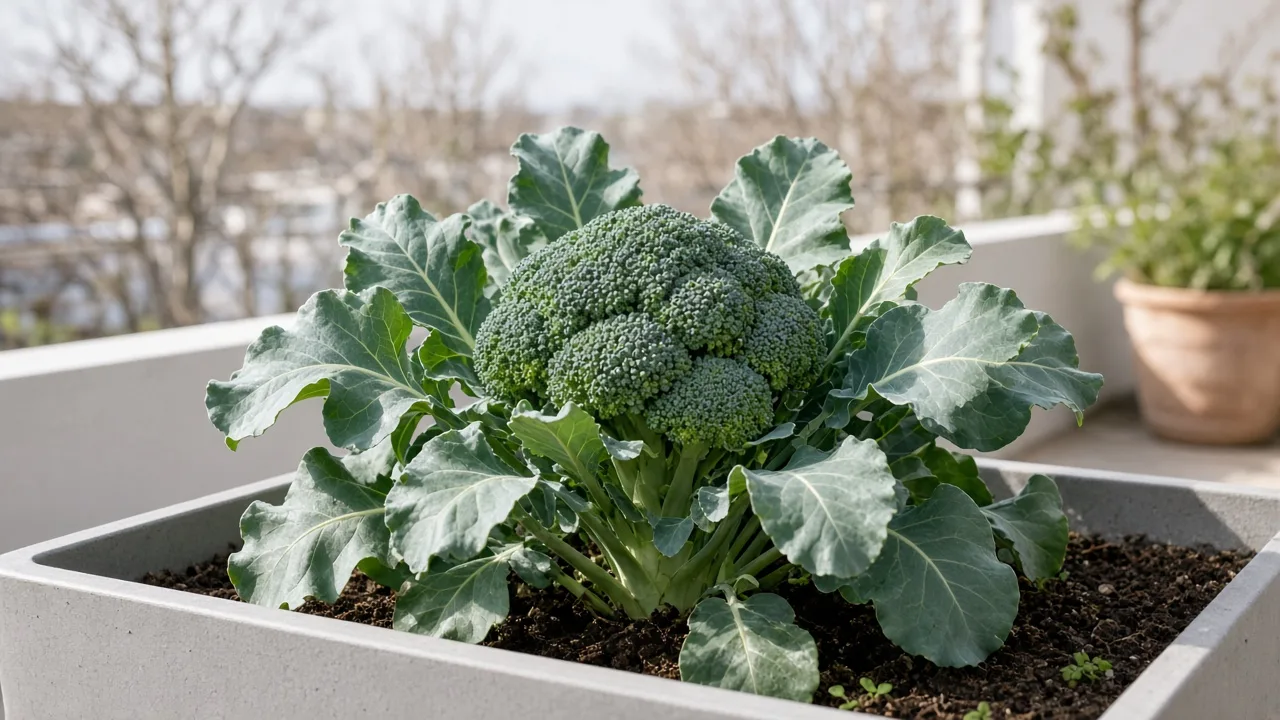
How to Propagate Broccoli from Seed
How to Propagate Broccoli from Seed
Broccoli (Brassica oleracea var. italica) is almost always started from seed—or bought as a young transplant that someone else started from seed. Unlike perennial kales, standard heading broccoli does not root reliably from stem cuttings; your practical choices are sowing modules, direct sowing in cool weather, or purchasing clean stock at a nursery. Side shoots after harvest are a second crop, not a propagation method.
If you are on a winter balcony in the Indian plains, propagation success is mostly about timing: broccoli germinates easily in mild trays but forms tight heads only when air stays cool while the crown develops. Start when October–November weather aligns with the Broccoli overview sowing window, not when a temperate-country packet says “spring.”
Broccoli propagation at a glance
Home growers typically fill modular trays or small pots with fine seed compost, sow two seeds per cell about ¾ in (2 cm) deep, thin to one seedling, then move plants outdoors when they reach roughly 10–15 cm (4–6 in) with a firm root ball The Royal Horticultural Society. Final spacing in beds or large containers is often 12–18 in (30–45 cm) between plants so each crown has light and root room Utah State University Extension.
From transplant, many green Calabrese types need about 60–90 days to a harvestable central head, though early hybrids can be faster. Heat, drought, or root binding during that window produces loose heads or early flowering regardless of how carefully you sowed the tray.
Choose the right propagation method
Seed for planned central-head crops
Seed is the default when you want a named cultivar—heat-tolerant hybrids for marginal warmth, large winter sprouting types, or compact Calabrese lines for pots. Packet labels give days to maturity, head size, and spacing; keep them beside the tray because broccoli behavior varies more than generic “brassica” advice suggests Harvest to Table.
Sowing in fresh, free-draining mix also keeps club root and other soil-borne brassica diseases out of your propagation area, provided trays and tools are clean.
Nursery transplants when trays are not an option
Buying transplants skips the germination stage and fits gardeners who missed the sowing window by a few weeks. Choose stocky plants with 4–6 true leaves, a firm stem, and no pest clusters on leaf undersides—matching the inspection tips in the Broccoli overview. Avoid tall, root-bound plugs or plants already showing a tiny head in the cell; those often button into small, early crowns that open quickly Utah State University Extension.
Microgreens as a fast seed shortcut
Dense sowing in a shallow tray yields edible seedlings in about two weeks, as the RHS describes for brassica microgreens. That is still propagation from seed, but the goal is immediate greens, not a full central head. Any broccoli variety works; purple types look striking on a windowsill.
Time propagation for cool weather
Sowing windows in India and tropical lowlands
Broccoli is a cool-season heading crop. On most Indian plains, sow or transplant from October into November so head formation rides winter sun, then harvest through the cool months before sustained spring heat arrives. Attempting to raise large seedlings during lowland summer heat often produces stretched, stress-prone plants that bolt before a usable crown forms—consistent with the seasonal framing in the Broccoli overview and hub grower notes.
Cooler hill districts may support earlier starts or longer harvests, but still work backward from mild nights and six hours of direct sun, as outlined in the Broccoli light guide.
Reading UK or US packet dates in your climate
Northern-hemisphere packets often reference indoor starts from late winter or outdoor sowing from spring. Translate the logic, not the calendar: sow when your local weather is cool and bright, similar to the RHS indoor window from February through June in Britain The Royal Horticultural Society. For Utah-style spring plantings, extension guidance suggests sowing transplants 6–7 weeks before the expected outdoor planting date Utah State University Extension—use that lead time, but anchor the planting date to your Indian cool season rather than foreign frost dates.
Prepare trays, mix, and hygiene
Wash reused modules, label cultivars, and fill with peat-free seed compost or a sifted, low-fertility mix that drains freely. Heavy garden loam compacts in cells, dries unevenly, and can introduce brassica pathogens. Moisten mix before sowing so it is evenly damp, not muddy.
On in-ground beds, avoid sowing broccoli where cabbage, cauliflower, or kale grew last season if club root or persistent brassica disease was a problem. Fresh bagged mix on a balcony makes rotation less critical, but never recycle suspicious soil from a failed brassica crop.
Sow broccoli seeds step by step
Depth, moisture, and germination warmth
Sow about ¼–½ in (0.6–1.3 cm) deep—RHS modular guidance uses 2 cm (¾ in) with two seeds per module The Royal Horticultural Society. Water with a fine rose or mist so seed does not wash into one corner. Gardening Know How notes emergence often within 4–7 days when ambient temperatures stay roughly 45–85°F (7–29°C).
A loose humidity cover can help the first day or two; remove it as soon as shoots appear. The mix should stay evenly moist, not waterlogged—saturated pores exclude oxygen and invite stem collapse at the soil line.
Modular cells versus direct sowing in final pots
Modules: sow one to two seeds per cell, thin to the strongest seedling, and pot once into a final large container when roots fill the plug but before they circle for weeks. This is the most controlled route for balcony growers.
Direct in final pots: for one standard heading plant, the hub recommends a pot at least 30–45 cm deep and wide. You can sow three seeds in the center, then thin to one vigorous plant when true leaves develop—mirroring RHS “three seeds, thin to one” spacing logic scaled to a single container The Royal Horticultural Society.
Direct in garden drills: in cool climates, outdoor sowing from spring onward is common; in India, direct sowing on a sheltered winter terrace works if birds and heavy rain are managed with light fleece or a railing position out of pounding monsoon runoff.
Light, thinning, and hardening off
Broccoli seedlings stretch quickly when light is weak, even if temperatures feel comfortable. Move emerged trays immediately to the brightest safe position—south-facing winter sun where available—and rotate pots so stems do not lean. If stems lengthen with small pale leaves, treat it as a light problem first, not a fertilizer deficiency; see the Broccoli light guide for window and heat-spike shade.
Indoor starts may need a grow light within a few inches of the canopy for 14–16 hours daily until hardening off. At the true-leaf stage you can bury an elongated stem slightly deeper at potting-on, but fix the light source or the next leaves will stretch again.
Thin crowded cells to one plant per module. Seedlings raised indoors need gradual exposure to wind, brighter sun, and wider temperature swings over about a week before they live full-time on an exposed balcony.
Transplant into final pots or beds
Spacing for full-sized central heads
Space plants 12–18 in (30–45 cm) apart in rows or single large containers so each crown receives light and airflow Utah State University Extension. Tighter spacing can work for experimentation but often yields smaller heads and weaker side-shoot development. Match final mix fertility and drainage to the Broccoli soil guide before moving plugs outdoors.
Set transplants so the lowest leaves sit near the soil surface, water in once, then shift to the moisture rhythm in the Broccoli watering guide—evenly moist root zone while the head sizes up, without a permanent saucer of standing water.
Transplant size and buttoning risk
Buttoning is premature small-head formation, often linked to cold stress, drought, nutrient stress, or oversized transplants held too long in small cells Utah State University Extension. Aim for 4–6 mature leaves and a healthy root system—not a plant already trying to form a head in the tray. If you see a tiny crown in the nursery pot, choose a different plant.
Extension notes that broccoli quality drops when temperatures exceed about 75°F (24°C) during heading Utah State University Extension; unseasonal warmth on a winter terrace can produce the same loose, bitter crowns as summer heat in temperate fields.
Optional seed saving from flowering plants
Broccoli is grown as an annual for eating, but botanically it can flower and set seed if you allow heads to mature. Saved seed is an advanced project: plants cross-pollinate with other brassicas, so isolating varieties matters, and F1 hybrids will not breed true Gardening Know How. Most Indian balcony growers buy fresh packet seed each cool season rather than maintaining flowering plants through hot months.
If you experiment, let pods dry on the plant, harvest before shatter, and store seed cool and dry. Germination viability declines over years—label date and cultivar.
Troubleshoot propagation failures
Seeds never appear: check packet age, sowing depth, and temperature. A cold, dry surface crust slows emergence; drowning the tray does not fix old seed. Resow in fresh mix rather than adding more water to a stagnant tray.
Seedlings collapse at the soil line: suspect damping off. NC State Extension describes fungi that rot stems when trays are crowded, wet, and poorly ventilated damping off in seedlings. Discard affected seedlings and soggy mix, sterilize containers, and restart with less water and more air movement.
Tall, pale seedlings: increase light immediately; avoid overheating after emergence.
Tiny heads right after transplant: often buttoning from transplant stress or oversize plugs—see spacing and transplant-size guidance above.
Plants bolt while still small: heat, root binding, or drought during the heading phase. On the plains, late winter sowing into warming March–April weather is a common trigger. Re-sow in the next cool window rather than expecting a tight crown from a bolted stem.
When to use this page vs other Broccoli guides
Use this page to choose a propagation path, sow seed, raise seedlings, buy transplants wisely, and diagnose early tray failures. Use the Broccoli overview for cultivar identity and season planning, the Broccoli soil guide when mixing final containers, and the Broccoli repotting guide when moving pot-bound seedlings into their last pot—not every plant needs multiple repots if modules were sized correctly.
Once the central head is sizing up, shift to watering, light, and fertilizer guides rather than treating mature broccoli like a seedling tray.
Related Broccoli guides
- Broccoli overview — cool-season timing, head harvest, and side shoots.
- Broccoli watering — even moisture while crowns develop.
- Broccoli light — winter sun and heat-spike shade for young plants.
- Broccoli soil — fertile, well-drained mix for final pots.
- Broccoli fertilizer — feed after roots establish; avoid heavy nitrogen on tiny seedlings.
- Broccoli repotting — when to move seedlings into final large containers.
Conclusion
Propagate broccoli from seed (or buy equivalent transplants): sow shallowly in clean, airy mix during cool weather, give seedlings immediate bright light, thin to one strong plant per cell, and transplant before roots circle or heat arrives. Skip cuttings for standard heading types; treat microgreens and seed saving as side paths.
On Indian plains terraces, the propagation season is the winter growing season. A tray started in the right cool window can produce a tight central head plus side shoots; the same cultivar pushed through summer heat often bolts before you finish potting up. Match method, transplant size, and timing, and broccoli remains one of the most straightforward heading brassicas to raise at home.