Broccoli Pruning Guide: Head Cuts, Side Shoots & Leaf
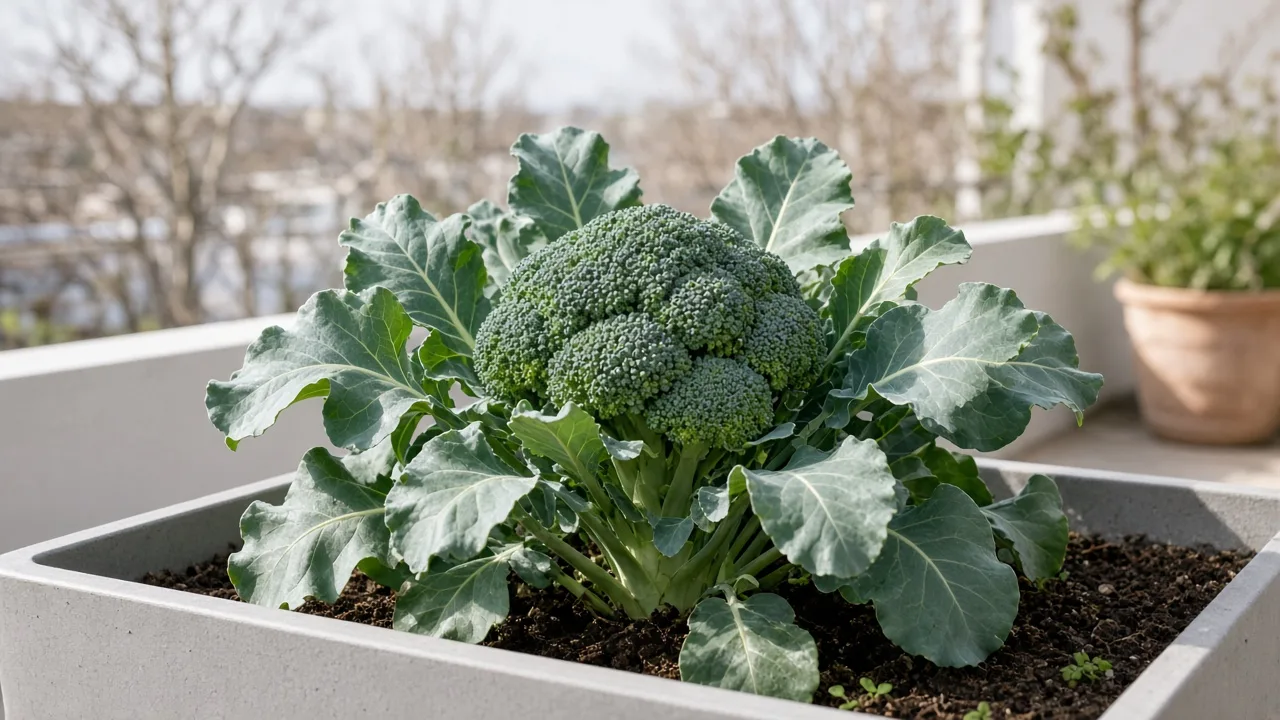
Broccoli Pruning Guide: Head Cuts, Side Shoots & Leaf Cleanup
Broccoli Pruning Guide: Head Cuts, Side Shoots & Leaf Cleanup
First, remove only yellow, slimy, or clearly damaged lower broccoli leaves at the base where each leaf meets the stem. Use clean scissors or a knife, work from the bottom upward, and stop before you nick the forming head or growing tip. After that single sanitation pass, decide whether you are thinning crowded seedlings, lightly opening airflow around a developing crown, or timing the main head cut.
Broccoli (Brassica oleracea var. italica) is grown for a dense cluster of unopened flower buds on a central stem, then for side shoots that follow in cool weather. NC State Extension explains that the head is really a flower bud mass—home “pruning” means seedling thinning, leaf cleanup, timed head harvest, and side-shoot picks, not shaping woody branches. For sowing windows, container size, and Indian cool-season timing, start with the Broccoli overview.
Quick answer
Broccoli pruning is protect the crown, clean the skirt, harvest on bud tightness, then pick side shoots. After damaged-leaf removal, thin seedlings to 12–18 inches (30–45 cm) apart so heads are not competing in one pot (Utah State University Extension). Cut the main head when florets are compact and still dark green, typically in the 4–8 inch (10–20 cm) range for many varieties before yellow petals show (NC State Extension). Leave the stump and lower leaves in place—Harvest to Table describes broccoli as a cut-and-come-again crop where removing only the main head triggers side sprouts at leaf joints. Pruning cannot fix chronic heat, drought, or dim winter shade—stabilize light and watering before expecting a loose plant to suddenly tighten its crown.
What broccoli pruning actually means
A broccoli plant has two harvest zones:
- Outer foliage — large leaves that feed the plant through photosynthesis and can be trimmed when damaged or, sparingly, for airflow.
- Flower buds — the central head first, then smaller side heads in leaf axils after the main cut.
Unlike kale, you are not maintaining an indefinite leaf crown through summer. The central bud cluster is the primary crop; side shoots are the bonus harvest if weather stays cool.
| Goal | What you cut | Where | What you leave |
|---|---|---|---|
| Sanitation | Yellow, diseased, or heavily chewed lower leaves | Leaf base on stem | Forming head and most healthy foliage |
| Spacing | Weak duplicate seedlings | At soil line when thinning | One stocky plant per final spacing |
| Main crop | Central head | Across stem, leaving several inches of stalk and lower leaves | Root system and remaining leaves for side shoots |
| Follow-on harvest | Individual side shoots | When mini-heads are tight | Plant until bolting or quality fades |
| Bolting | Elongating flower stalk | Low on stalk as soon as seen | Plant is usually finished for quality heads |
Utah State University Extension warns that over-tight spacing shrinks heads and inhibits side-shoot development—a common container mistake that no amount of leaf stripping fixes.
When to prune or harvest broccoli
Seedling thinning (early season)
When seedlings show three to four true leaves, thin or transplant to 12–18 inches apart in the row (Utah State University Extension). Snip unwanted seedlings at the soil line rather than yanking, which disturbs neighbors in a shared tray. In a single large pot meant for one heading plant, keep the strongest seedling and remove extras immediately—crowded broccoli competes for light and often forms small, early “button” heads that flower prematurely.
Leaf cleanup (anytime in cool growth)
Remove outer leaves that are yellow, rotting at the base, or unusable from caterpillar damage. This is light pruning, not a kitchen harvest. NC State Extension cautions that on brassicas grown for heads, leaves are the plant’s food factory—before the main head is cut, take only a few outer leaves per week at most. Heavy stripping while the crown is forming often yields smaller heads and fewer side shoots.
Defer large leaf removal when seedlings are newly transplanted, the root zone is waterlogged, or midday heat is wilting healthy foliage on a dry pot.
Central head harvest window
Heads are ready when buds are plump, tight, and still green, not when individual florets begin to separate or show yellow (NC State Extension). Many home heads land around 4–8 inches (10–20 cm) across, though cultivar and spacing change final size—use tightness, not diameter alone.
Utah State University Extension recommends harvesting when heads are compact but before buds open, often 6–12 inches (15–30 cm) in ideal field conditions, cutting with about 6 inches (15 cm) of stem. On balconies, harvest slightly earlier if a warm spell is forecast; opened buds turn bitter quickly.
Harvest before:
- Bolting — yellow flowers mean the plant is shifting to seed.
- Heat stress — hot, dry weather opens heads and loosens texture (Gardening Know How).
- Over-maturity — separated florets decline in flavor even if still green.
In most Indian plains, plan the main cut during winter through early spring after an autumn sowing; lowland summer heat is a poor fit for tight heads.
Side-shoot harvest (after the main cut)
Leave the plant in the garden or container after the central harvest. NC State Extension notes side shoots form below the main cut, at leaf joints on the stem, extending harvest for several weeks in mild weather—especially on Calabrese types bred for sprouting. The Royal Horticultural Society advises taking the central spear first, then picking side shoots as they reach tight, usable size, checking plants regularly so buds do not open.
Unlike broccoli, cauliflower and heading cabbage do not reliably sprout after the main head—NC State Extension recommends pulling those crops once the primary head is gone.
What to check before you cut
Run a quick inspection:
- Bud tightness — gently press the crown; separating florets or yellow tips mean harvest now or you are already late.
- Head size vs plant health — a tiny head on a large plant may signal buttoning from cold shock, drought, or oversized transplants (Utah State University Extension).
- Soil moisture — uneven water during heading produces loose, bitter crowns; align with your soil drainage and watering rhythm.
- Pests — check leaf undersides for aphids and caterpillars before they move into the head.
- Spacing and airflow — overlapping leaves in overcrowded rows stay wet; fix spacing at thinning time rather than shearing half the plant later.
If plants are pale with long, weak stems and small leaves, improve light and nutrition before aggressive leaf removal.
The first cut to make
Choose one clearly failing lower leaf—the lowest yellow or damaged blade you can reach without pulling the stem sideways. Cut at the leaf base, bag it if pests or disease are heavy, and step back. If the head looks clean and buds are tight, stop there for the day.
This single cut confirms you are not accidentally slicing into crown tissue. Only after that should you plan additional sanitation, thinning, or the main head harvest.
How to prune and harvest broccoli step by step
Sanitation and cautious lower-leaf removal
- Use clean, sharp scissors or a knife; rinse blades between plants if disease was present.
- Hold a lower leaf away from the head and trace it to the stem.
- Cut at the base without gouging the stem.
- Remove only leaves that fail inspection—healthy outer foliage feeds the head.
Some growers remove a few large outer leaves once the head is several inches wide to improve light and airflow (Harvest to Table). Treat that as optional and conservative; NC State Extension still caps pre-head leaf pulls to a few per week so the plant can photosynthesize.
Main head harvest cut
When buds are tight:
- Harvest in the morning when florets are cool and crisp.
- Cut the stem below the head, leaving several inches of stalk and plenty of lower leaves—Utah State University Extension suggests about 6 inches (15 cm) of stem with the crown.
- Angle the blade slightly if needed for a clean slice; avoid crushing the stem.
- Leave the root and remaining foliage in place for side shoots.
Harvest to Table stresses cutting only the main head, not shearing the whole plant to the ground, if you want repeated side harvests.
Side-shoot picks
- Watch leaf axils along the stem below the first cut.
- Snip mini-heads when florets are tight and roughly 3–6 inches (7.5–15 cm) long (Utah State University Extension).
- Continue picking until buds open, heat arrives, or quality drops.
A light nitrogen boost after the main head can support sprouting—see fertilizer timing rather than dumping feed on the pruning day itself.
Bolting and open flowers
If yellow flowers appear, harvest immediately for the kitchen—the head is past peak—but expect fewer side shoots because the plant is moving toward seed. Cut elongating stalks low when you are clearing the bed. Succession sowing beats trying to “prune back” a flowering brassica into a supermarket crown.
How much you can safely remove
- Sanitation: Only failing lower leaves—no fixed percentage, but never strip the plant naked while the head is small.
- Pre-head leaf pulls: A few outer leaves per plant per week at most while the crown forms (NC State Extension).
- Main head: One central harvest cut per plant per cycle.
- Side shoots: Take individual shoots as they size up; regular picking encourages more buds on sprouting types (The Royal Horticultural Society).
Removing too many leaves during heading starves the crown. Cutting the main head too high on a bare stem can reduce the leaf area that fuels side-shoot growth.
Where to cut (and what not to cut)
Cut:
- Lower leaves at the petiole base on the stem.
- The central head across the stem, low enough to leave lower leaves and several inches of stalk for side shoots.
Do not cut:
- Into the dense bud cluster during routine cleanup—only at final head harvest.
- The root crown below soil when pulling leaves.
- All foliage after the main head if you want extended side-harvests—leaves power the second flush.
Purple sprouting and large winter broccoli types follow the same axillary logic but on a longer calendar; check your seed packet for spacing and days to first spear.
Aftercare after pruning and harvest
- Water: Keep soil evenly moist after leaf cleanup and after the main cut; drought stress opens buds and shrinks side shoots.
- Feed: Side-dress nitrogen after the central harvest if you want more sprouts (Utah State University Extension)—coordinate with your fertilizer plan rather than fertilizing on the same hour you cut.
- Pests: Inspect fresh cuts and new shoots for caterpillars; hand-pick or use labeled food-crop controls.
- Containers: One large pot per plant; after side-shoot production fades, compost the spent plant and rotate away from other brassicas in the same mix.
Recovery and signs pruning worked
Leaf cleanup success: Cleaner stem, fewer slugs, head buds remain tight, no yellowing spreading from cut bases.
Main harvest success: Solid central head, clean stem cut, side shoots visible within one to two weeks in cool, moist conditions.
Side-shoot success: Repeated small tight heads; picking delays flowering and stretches the kitchen window.
Warning signs: Button-sized heads right after transplant (stress or cold), loose heads in heat, hollow stems with brown bud spots (possible boron issues—fix culture, not more cutting), immediate wilting after heavy leaf strip (too much foliage removed at once).
Mistakes to avoid
- Stripping healthy leaves while the crown is forming to “help” the head size.
- Waiting for oversized heads until florets separate or flowers open.
- Cutting the main head too early on a stressed plant and expecting side shoots to compensate.
- Crowding multiple plants in one container, then pruning to compensate for shade.
- Pulling the whole plant after the main head when weather is still cool—side shoots are lost.
- Confusing crops — cauliflower and tight-heading cabbage rarely give a broccoli-style second flush (NC State Extension).
When not to prune
Skip aggressive leaf removal when seedlings have fewer than four true leaves, during active flowering, when plants show crown rot or blackened stem bases, or when heat and drought already have the plant wilting—stabilize watering and shade before taking more foliage.
Conclusion
Broccoli pruning is thin once, clean the skirt lightly, harvest the crown on bud tightness, then pick side shoots while it stays cool. Start with one damaged lower leaf, respect how much foliage the head still needs, and make a single confident stem cut when florets are compact—leaving lower leaves so the plant can keep feeding sprouting shoots. That sequence—not heavy shearing—is what turns one winter planting into a central head plus weeks of smaller florets on the balcony or in the bed.