Broccoli Repotting Guide: Transplant Timing & Pot Size
Broccoli Repotting Guide: Transplant Timing & Pot Size
Broccoli Repotting Guide: Transplant Timing & Pot Size
Most repotting advice assumes a long-lived houseplant you upsize every spring. Broccoli (Brassica oleracea var. italica—the green heading type most Indian markets call Calabrese broccoli) is a cool-season annual grown for one dense central head, then optional side shoots. The practical question is whether to sow in the harvest pot, pot up a cramped seedling once, or start a new sowing when the season ends—not how often to refresh a perennial root ball.
Utah State Extension describes broccoli as a cool-season crop that prefers sunny sites and fertile, well-drained soil, with transplants spaced 12–18 inches (30–45 cm) apart for full heads. The RHS calabrese guide notes that heading brassicas do not like root disturbance, so modular sowing and careful transplant timing matter as much as pot volume. This page covers when a container truly needs upsizing, how to move seedlings without buttoning (tiny premature heads), and when repotting is the wrong tool—especially on Indian terraces where the reliable window is the cool part of the year. For sowing dates, harvest cues, and cultivar choice, start at the Broccoli overview.
The quick answer for heading broccoli in pots
Plan at most two container steps for one crop: (1) pot up from a crowded cell when seedlings have 3–4 true leaves and roots fill the module, and (2) transplant into a final pot sized for one plant before the mix dries out every day and before hot weather arrives. After that, focus on even moisture, fertility, and harvest timing—not another upsize on a houseplant schedule.
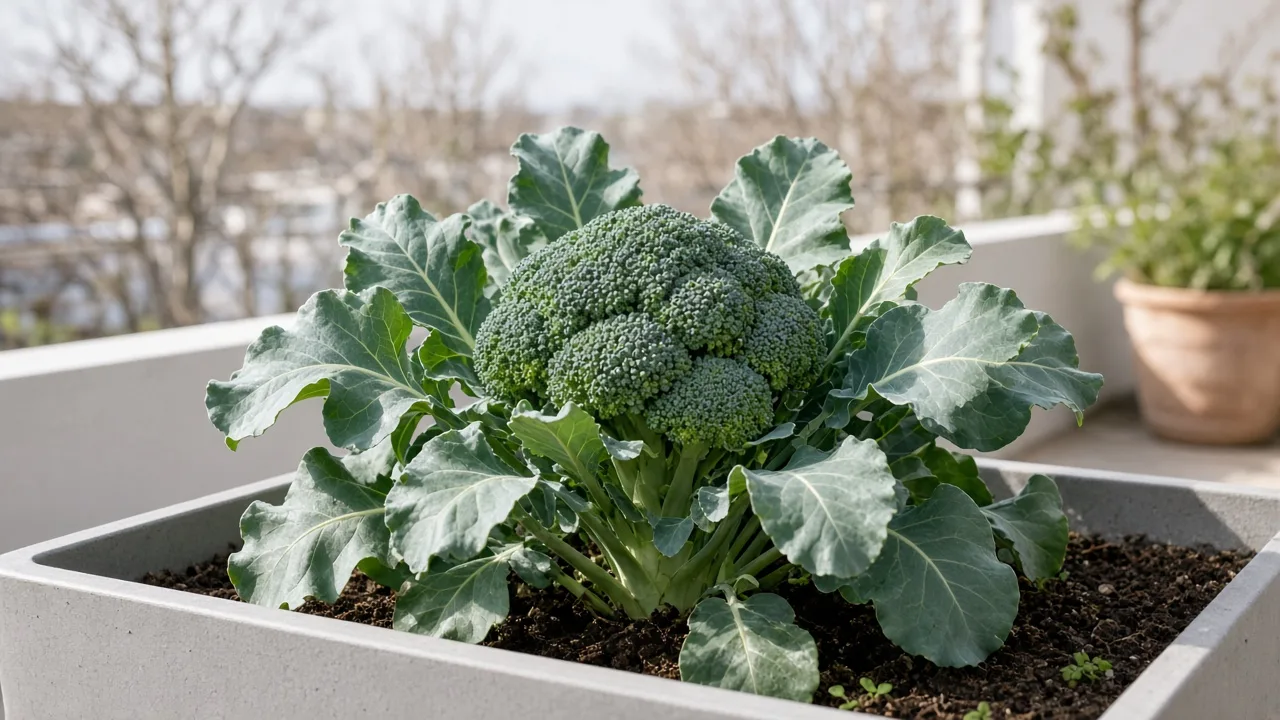
For one standard heading broccoli, choose a container at least 30–45 cm (12–18 in) deep and wide with open drainage holes, as Gardening Know How recommends for container culture. Fill with quality potting mix amended with compost because broccoli is a heavy feeder in a small root zone. On most Indian plains, align transplanting with autumn through winter growth (often sowing October–November and finishing heads into early spring), not pre-monsoon heat.
If a central head is already sizing up or flower stalks are elongating, do not repot—harvest, pick side shoots, or compost and sow again in the next cool window.
At most two container moves per crop
Your plant-detail hub already states the usual pattern: one cool-season crop per container, potting seedlings once into a final large pot rather than repeatedly repotting mature plants. Treat nursery cells and small cups as short bridges, not permanent homes. Each extra move after roots are established risks a growth check that shows up as small heads, loose florets, or early flowering when temperatures swing.
Why broccoli repotting is not houseplant repotting
Houseplant repotting refreshes a perennial for years of foliage. Broccoli completes its useful life in one season: you grow leaves until a single crown forms, cut the main head, then optionally harvest side shoots for weeks. Disturbed roots, dry soil, or heat right after a move can trigger buttoning or bolting—problems Utah State Extension links to stress and to using larger, over-mature transplants that form small early heads.
One central head and a cool-season deadline
Broccoli is grown for tight, unopened flower buds on a central stem. Heat, drought swings, or root stress during that 60–90 day heading window often yield loose, bitter heads or no usable crown—issues you cannot fix by moving the plant again mid-season. Repotting solves cramped modules and exhausted starter mix; it does not replace not enough light on a shaded balcony or correct underwatering when a small cup dries out in hours.
Calabrese types vs sprouting broccoli spacing
Supermarket “broccoli” is usually Calabrese—a large green dome. Sprouting broccoli produces smaller purple or white shoots on leafy stems and follows different spacing habits. This guide targets heading Calabrese in pots; if you grow sprouting types, still minimise transplants, but expect multiple harvests from stems rather than one central cut. Check your seed packet before you squeeze several heading plants into one tub.
Signs your broccoli needs a bigger pot or fresh mix
Repot or transplant when the container shows limits, not every yellow lower leaf. Useful triggers include:
- Seedlings crowding a tray so leaves overlap and airflow drops.
- Roots circling the plug, visible through drainage holes, or a stiff root mat that lifts out as one piece.
- Mix that dries within hours in mild cool-season weather despite thorough watering.
- Stalled growth while watering and light otherwise look adequate.
- Collapsed, salty, or hydrophobic starter mix that no longer absorbs water evenly—a refresh more than a dramatic size jump.
Utah State Extension advises thinning or transplanting when seedlings have 3–4 true leaves; transplants for the garden should carry 4–6 mature leaves and a well-developed root system—but not be so large that they button. A single floppy leaf on a warm winter afternoon is not automatically a repotting call; check moisture 2–3 cm down before you disturb roots that must support a heavy head later.
When direct sowing beats another transplant
The RHS allows sowing straight into the final position, then thinning, because each move risks root disturbance—especially when warm weather makes calabrese prone to bolting. Gardening Know How likewise describes both transplant and direct-seed paths for spring and fall crops.
Direct sowing wins when:
- You have the final-sized pot or grow bag ready with the soil mix broccoli needs.
- Weather is cool and stable for germination and early growth.
- Last season’s transplant buttoned or bolted right after a move—a sign to change timing or sow in-place.
- You want to skip modules entirely on a terrace with reliable cool nights.
Modules still help when you must protect germination from heavy rain, birds, or hot soil on paving. Treat cells as a short bridge to the final pot, not a permanent home—matching the RHS preference for modular trays to minimise root disturbance at transplant.
Best season to repot or transplant broccoli
Align any move with moderate temperatures and steady moisture. Utah State Extension notes broccoli produces best when temperatures do not exceed about 75°F (24°C); high summer heat reduces quality and causes loose, bitter heads. The RHS warns that calabrese does not transplant well in warm weather and is prone to bolting after April in temperate calendars—translate that to avoid repotting into heat, not to copying UK months blindly.
Cool windows in India and warm lowlands
On Indian plains and similar warm lowlands, sow and transplant during the cooler months (often roughly October–February, varying by region)—not during peak summer when days routinely exceed about 27–30°C. Container mix on cement heats faster than in-ground soil; postpone the final move if a heat wave is forecast unless you can shift pots to afternoon shade. Cooler hill districts may allow a longer season or an early-spring planting where nights stay mild—match timing to your local cool window as described in the Broccoli overview.
Morning transplants reduce wilting. If nights are still warm when you hoped for a “winter” crop, delay the final move and keep seedlings in slightly larger cells with strong light rather than planting into an oversized pot that stays wet and cold.
Hardening off before the final move
Indoor- or shade-grown seedlings need hardening off—gradually increasing outdoor time over about a week—before the permanent container, as the RHS hardening-off guidance recommends. Gardening Know How stresses exposing starts to direct sun and wind gradually before field planting; the same applies to terrace pots. Skipping this step on a sunny balcony often scorches leaves and stalls head formation even when pot size is correct.
Container size and depth for Brassica oleracea var. italica
Heading broccoli roots spread outward in fertile, moist mix more than they dive extremely deep, but they still need volume to hold water and nutrients through head formation. Gardening Know How advises a pot at least 30–45 cm (12–18 in) deep and wide for one plant. Utah State Extension spaces plants 12–18 inches apart in rows; in single-pot culture that translates to one strong plant per final container unless you deliberately grow compact cultivars with extra care.
One plant per final pot
For one full-sized central head, think one plant per appropriately sized pot rather than jumping from a seed tray into a half-barrel in one step unless you can water and shade consistently. Oversized final pots stay cold and waterlogged in cool weather, encouraging rot around the crown. Every vessel needs multiple open drainage holes; sealed decorative outer pots defeat the purpose of a brassica mix that should stay moist but never stagnant.
If you are unsure about volume, the Pot Size Calculator with broccoli pre-selected offers a starting estimate; adjust upward for large-headed cultivars.
Interim pot-up from modules
Step up one size at the seedling stage—for example from a cell to a 10–12 cm interim pot—then into the final container when roots nearly fill the interim pot and plants are roughly 10–15 cm (4–6 in) tall with a well-formed root system, as the RHS planting guidance describes for calabrese. Do not hold stocky seedlings in tiny cups until they are root-bound and leggy; that invites buttoning even if you eventually move them to a large pot.
Soil and mix when you move broccoli
Repotting is the moment to replace depleted or compacted starter mix with fertile, moisture-retentive, well-drained compost—aligned with Utah State Extension preferences for organic matter and with the practical blend in your Broccoli soil guide (often about 50% quality potting mix or loam, 30% mature compost, and 20% perlite or coarse aeration). Pre-moisten mix before filling so the root ball does not sit in a dry pocket after watering.
Avoid reusing mix from a previous brassica crop if you saw unexplained stunting or swollen roots—rotate containers and replace media when in doubt. Broccoli shares soil-borne brassica diseases with cabbage and kale; fresh mix on a terrace is cheap insurance compared with a failed winter head.
Step-by-step: pot up seedlings or transplant to the final container
Lifting plugs with minimal root disturbance
- Water lightly an hour before so plugs slide out without being mud-soaked.
- Prepare the new container with moist mix and drainage; dig a hole sized to the root mass.
- Slide seedlings out by pushing from the drainage hole or squeezing a flexible cell—support the root ball, not the bud-forming crown.
- Disturb roots minimally. If only the outer edge circles, loosen the outer centimetre; do not bare-root broccoli like a woody shrub.
- Set depth correctly. The RHS advises planting young calabrese deeper than they were growing, with lowest leaves level with the compost surface, then firming in well so stems root securely.
- Backfill, water gently until excess drains, and empty saucers.
- Shade lightly during the hottest afternoon for a day or two if temperatures climb after the move.
Utah State Extension recommends transplants with 4–6 leaves and warns that larger, more mature transplants are prone to buttoning. Aim for stocky, not oversized, starts.
Planting depth and firming in
Thin direct-sown pots to one strong seedling per small container, or to final spacing equivalents in shared troughs for standard types—crowded rosettes are fixed by removing extra plants, not by a bigger pot alone. Space follows cultivar: compact types tolerate closer planting; large summer types need the full 30–45 cm width per plant for maximum central heads.
Watering, light, and feeding after repotting
Expect mild wilt for a few days while roots contact fresh mix. Then return to even moisture without saturating the crown—heading broccoli fails when soil swings between dust and puddle. Containers dry faster than ground beds on windy terraces, so follow your Broccoli watering rhythm, especially while the central head forms.
Give full sun during the cool season (at least about six hours of direct light), shifting to afternoon shade only when an unusual warm spell stresses the pot. Hold heavy nitrogen feeds until new growth looks steady; later feeding follows the Broccoli fertilizer guide once plants are actively sizing a head—Utah State Extension side-dresses nitrogen after transplant and again as heads develop.
When routine repotting will not fix the problem
Skip or postpone repotting when:
- A central head is already forming and you only need harvest timing—not more root disturbance.
- Bolting has begun; the crop is finishing regardless of pot size.
- Sustained heat is forecast and you cannot shade pots or water reliably.
- Plants show pest or disease collapse—caterpillars, clubroot suspicion, or mushy stems need targeted fixes, not fresh mix alone.
- You are tempted to rescue a summer pot with another move; in warm lowlands, succession-sow in the next cool window per the Broccoli overview instead.
Buttoning—very small heads soon after planting—often traces to oversize transplants, cold or drought stress, or rough timing, as Utah State Extension FAQs explain. A bigger pot mid-season rarely reverses that response.
When to use this page vs other Broccoli guides
Use this page when you are moving seedlings between containers, choosing a final pot size, or deciding whether to sow directly in the harvest pot. For everyday moisture checks and saucer habits, see Broccoli watering. For mix recipes, pH, and drainage troubleshooting, see Broccoli soil. For nitrogen timing around transplant and head formation, see Broccoli fertilizer. For starting plants from seed or divisions, see Broccoli propagation. For harvest cuts and side-shoot encouragement after the main head, see Broccoli pruning.
Related Broccoli guides
- Broccoli overview — cool-season calendar, cultivar types, and harvest basics for India and similar climates.
- Broccoli watering — how to keep the root zone evenly moist while heads size in pots.
- Broccoli soil — fertile loam, compost ratios, and pH for container brassicas.
- Broccoli light — winter sun requirements and heat-stress shading on terraces.
- Broccoli fertilizer — feeding after transplant without pushing leaves over heads.
Conclusion
Broccoli repotting is really transplant management for a single cool-season crop: pot up cramped seedlings, settle one plant into a 30–45 cm final container with fertile, well-drained mix, then stop disturbing roots while the central head forms. Harden off starts, transplant in cool stable weather, and plant deeply with firm compost so stems stay stable. If heads are already developing or summer heat has arrived, harvest or sow again rather than chasing another repot—your best broccoli on a terrace comes from timing and one clean move, not a houseplant refresh calendar.