Broccoli Light Needs: Sun, Shade & Grow Lights
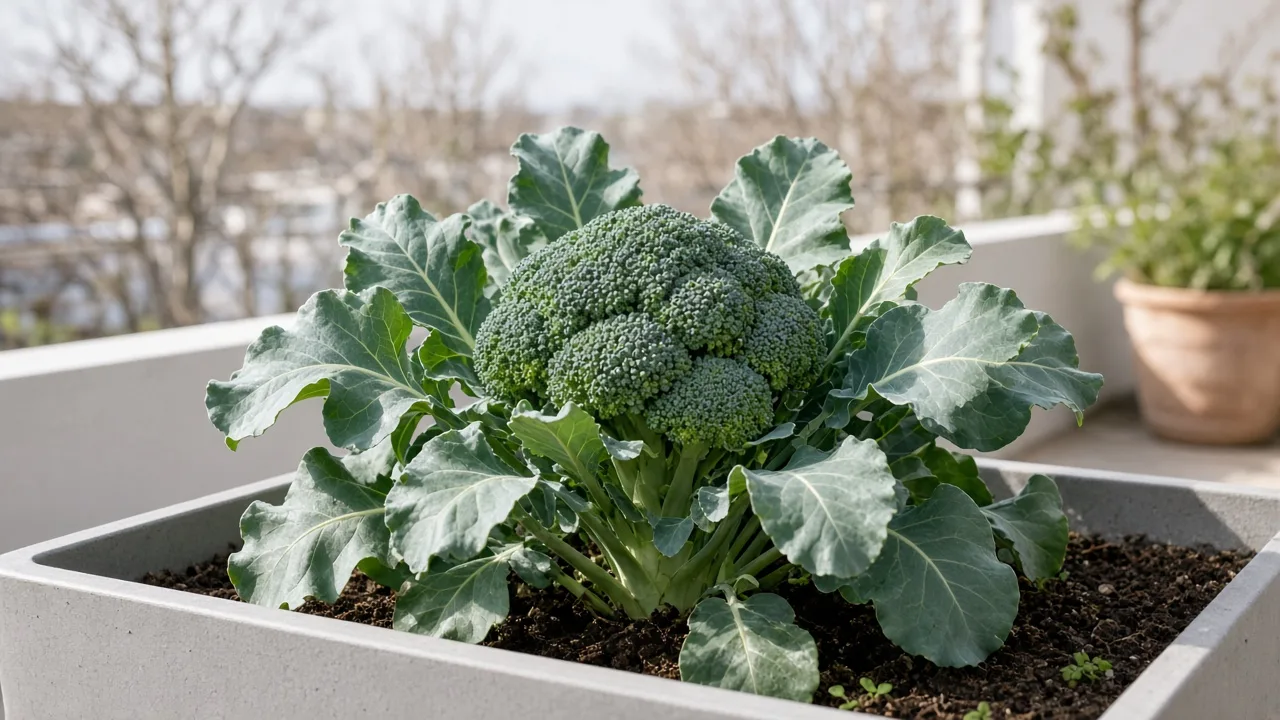
Broccoli Light Needs: Sun, Shade & Grow Lights
Broccoli Light Needs: Sun, Shade & Grow Lights
Broccoli (Brassica oleracea var. italica) is grown for a dense central cluster of flower buds—not for months of leaf picking like kale. That difference changes how you read light: during the 60–90 days when the head is forming, the plant needs steady photosynthesis without the root zone overheating. In most Indian plains, that means full cool-season sun from sowing through harvest, not a dim courtyard that might suffice for baby greens.
The workable rule is seasonal: give broccoli at least six hours of direct sun while air and soil stay cool, then reduce afternoon stress when warm spells arrive—not because broccoli is a shade crop, but because heat plus strong sun pushes loose heads, bitterness, and bolting faster than light alone.
Broccoli Light Needs: The Quick Answer
For heading broccoli—the green “calabrese” type sold in most markets—choose a sheltered, sunny spot with fertile, well-drained soil (RHS calabrese guide). NC State lists Brassica oleracea as performing best in full sun (six or more hours of direct sunlight daily) while tolerating partial shade (two to six hours) (NC State Extension).
On a clear winter day on the plains, aim for a sharp hand shadow at soil level for six or more hours while the central head is developing. If February or March afternoons repeatedly climb into the mid-20s °C and above, move pots to morning sun with afternoon shade or hang 30–50% shade cloth over midday hours—strategy borrowed from warm-region broccoli culture (Gardener’s Path). If you only have three to four hours of direct sun, you may get leaves but often small, loose, or delayed heads; treat that site as experimental unless you add strong supplemental light for seedlings and accept lower yields.
For cluster identity, sowing windows, and harvest cues, start at the overview; this page is only about where and how bright to grow.
How Much Light Broccoli Actually Needs
Broccoli uses light to build the stem and the tight bud mass you harvest. Unlike low-light tolerant houseplants, it is a cool-season field crop adapted to bright winter skies in temperate and Mediterranean climates.
Direct sun hours for heading types (calabrese)
Gardener’s Path recommends a full sun planting site for broccoli, with afternoon shade in the warmest regions—the same pattern many Indian growers use when a January terrace becomes uncomfortably hot by March. “Full sun” in vegetable guides usually means six or more hours of unobstructed direct rays on the leaf canopy (Gardener’s Path full sun definition), not merely a bright room.
Container growers should remember that a dark pot in all-day sun can warm roots even when air feels mild. Bright placement then couples to watering checks: sun drives transpiration, and dry roots during head formation produce bitter, undersized heads faster than a single cloudy week.
What “light shade” means for brassicas
NC State’s partial shade band—two to six hours of direct sun—is survivable for Brassica oleracea but is a compromise for heading broccoli (NC State Extension). Sprouting broccoli (small purple or white florets on long stems) is described by the RHS broccoli guide as growing best in sun or very light shade; heading calabrese still wants the brighter end of that range while the central head is sizing.
Very light shade is not a basement windowsill. It is open sky with a few hours of direct sun plus bright reflected light—useful when you must buffer late-day heat, not when a north stairwell delivers dim all-day gloom.
Why Light Matters More During Head Formation Than at Seedling Stage
A stocky seedling can recover from a week of mediocre light if you harden it off into strong winter sun. A plant already forming a head cannot “catch up” as easily: carbohydrate demand rises, and any stretch for light tends to produce elongated stems and looser florets you will still see at harvest.
Broccoli also shares brassica biology with cabbage and cauliflower: warming soil and lengthening days signal reproduction. A well-lit plant in cool weather builds a head; the same photon load in hot soil often triggers a bolting stalk instead. Light management is therefore brightness in cool weather, not maximizing watts in May on a Chennai terrace.
If lower leaves yellow while the head stays small, rule out crowding and shade from taller neighbors before assuming a nutrient problem—broccoli needs generous spacing so side leaves photosynthesize for the bud cluster. Spacing and final pot size tie to repotting guidance.
Calabrese Heads vs Sprouting Broccoli: Same Sun Rules, Different Calendar
Garden writers split “broccoli” two ways. Calabrese forms one large green central head (what most recipes mean) and wants a sunny, sheltered bed (RHS calabrese guide). Sprouting broccoli produces repeated smaller shoots on taller plants and is often a winter–spring crop in cool climates (RHS broccoli guide). Both are B. oleracea Italica Group types; both need bright cool-season light for quality florets.
Indian container growers usually grow calabrese-style hybrids sown October into November on the plains. Sprouting types can work in cooler hills where winter stays mild and long. The light number—six or more direct hours in the cool window—applies to both; the calendar differs.
Seasonal Light Strategy for Indian Growers
October–March on the plains
Sow when nights cool and days shorten. Place seedlings in the brightest cool-season position you have: an open terrace, a south or west exposure not blocked by summer awnings, or an east–west combo that collects morning and midday sun. While heads are sizing, prioritize unshaded winter sun over aesthetic shade sails left up from summer.
As February warms, reassess the same spot weekly. Afternoon shade that was unnecessary in December can prevent premature flowering in March. Harvest tight heads promptly when buds separate—late harvest wastes the light investment and slows side shoots.
Hill districts and longer cool windows
Cooler hill climates extend the period when full sun is an asset, not a heat risk. Plants may take six to eight hours of direct sun for months without the root-zone heat lowlanders see in late winter. You can still deploy afternoon shade on unusually warm spring days, but winter light is usually the limiting factor only if buildings or pine canopy block the sky.
Why lowland summer sun rarely fixes poor heads
Hot lowland summers combine intense radiation, short nights, and warm soil. Broccoli may photosynthesize, but head quality collapses and flowering stalks appear. Extra sun does not fix that calendar mismatch. Use this guide to maximize the cool season; do not expect heading broccoli to replace summer gourds on a shadeless lowland roof without shade, impeccable moisture, and heat-tolerant cultivars.
Best Terrace, Balcony, and Bed Placement
Orientation and wind shelter
The RHS calabrese guide recommends a sheltered sunny site because tall broccoli plants can rock in wind, damaging stems and reducing light capture as leaves tear. On rooftops, use windbreaks (jute, low trellis, neighboring pots) without casting all-day shade on the broccoli row.
Reflective walls and light-colored paving can add useful diffuse light to a balcony that only gets four hours of direct sun—helpful, but not a full substitute for direct winter rays on the top leaves.
Spacing so lower leaves still catch sun
Broccoli competes with itself. Two plants in one small pot shade each other’s lower canopy; the center may still form a head, but size and symmetry suffer. Follow hub spacing guidance—typically one standard plant per large pot—and rotate pots so no plant permanently sits in another’s shadow.
Starting Broccoli Indoors: Windows and Grow Lights
Many plains growers start seeds indoors in September or early October before transplanting to the terrace. Seedlings need a sunny location around 16–18 °C (60–65 °F) with even moisture (Gardener’s Path)—temperature and light work together to keep stems short.
If a window delivers weak brightness, run full-spectrum LEDs 12–14 hours per day and keep foliage close enough to prevent stretching until hardening off. The RHS broccoli guide also notes sunny windowsill microgreens as a separate, low-light-use case—useful for kitchen greens, not a model for full-size heads.
After hardening off, outdoor winter sun outperforms most desk lamps for head production. Treat grow lights as a bridge for two to four weeks, then transplant into your brightest cool-season site per propagation timing.
Measuring Light With a Simple Shadow Test
On a clear day, hold your hand 30 cm above the soil. A sharp shadow means direct sun; a faint shadow means bright indirect; no shadow means too dim for vigorous heading broccoli. Count sharp-shadow hours across the cool season, not on one perfect January afternoon.
Smartphone lux apps can compare two balconies, but seasonal observation beats a single reading. Log morning vs afternoon shadow on the pot rim—west-facing rails often steal late-day sun from otherwise “bright” terraces.
Warning Signs of Too Much or Too Little Light
Too little light shows as leggy seedlings, small pale leaves, wide internodes, and heads that never reach tight size before warm weather arrives. Soil may stay wet for days because the plant transpires slowly—do not water on autopilot.
Too much heat-linked sun shows as midday wilting that recovers overnight, bitter flavor, loose bud clusters, and a thickening flower stalk. Act on new growth after any move; old mechanical damage from nursery trays is not diagnostic.
| Symptom | Likely light issue | First action |
|---|---|---|
| Stretched indoor seedlings | Weak window or crowded tray | Lower stronger lamps or move to brighter cool spot |
| Small head, open florets in cool weather | Partial shade or crowding | Increase direct sun hours; space plants |
| Midday wilt, bitter taste, stalk elongation | Heat + strong sun | Afternoon shade, moisture check, harvest if buds separate |
| Yellow lower leaves with wet soil | Often water/drainage, not light | Confirm drainage; see watering |
NC State notes that downy mildew can be more problematic where full sun is not provided (NC State Extension)—another reason to favor bright, airy placement paired with good soil drainage rather than deep shade.
How Light Links to Watering, Heat, and Bolting
Bright sun dries containers faster; dim light slows drying—both change how often you should water during head formation. A plant in full winter sun on a windy terrace may need checks every day or two; the same pot in March afternoon shade might need less.
Bolting ties to warming soil and lengthening days; shading lowers root-zone heat even when the sky stays bright. Fertilizer alone will not hold back a flower stalk once the plant commits—harvest the central head and manage side shoots instead.
When to use this page vs other Broccoli guides
Use this page when you are choosing terrace placement, afternoon shade, or interpreting leggy starts and loose heads. For moisture rhythm once light is set, open watering. For mix, pH, and drainage, see soil. For nitrogen timing when bright light drives faster growth, see fertilizer. For pot size and transplant steps, see repotting. For sowing dates and seedlings, see propagation. For cutting the central head and side shoots, see pruning. For cultivar choice and India timing, start at overview.
Related Broccoli guides
- Overview — cool-season identity, calabrese vs sprouting types, and sowing windows.
- Watering — moisture checks that change with sun, wind, and pot heat.
- Soil — mixes that hold moisture without waterlogging in bright sites.
- Fertilizer — feeding when strong light drives head development.
- Propagation — indoor starts, hardening off, and moving into full winter sun.
Conclusion
Broccoli rewards generous cool-season sun and honest afternoon shade when heat arrives. Aim for six or more hours of direct winter light on Indian terraces while the central head forms, shelter plants from wind, and avoid crowding that steals light from the bud cluster. Watch new leaves and bud tightness after every placement change—they tell you whether today’s brightness is building a harvest or pushing the plant toward flowering.