When and How to Harvest Broccoli for the Best Flavor
Learn when broccoli is ready by checking bud tightness, color, and variety size, then cut the head cleanly, encourage side shoots, and store it promptly.
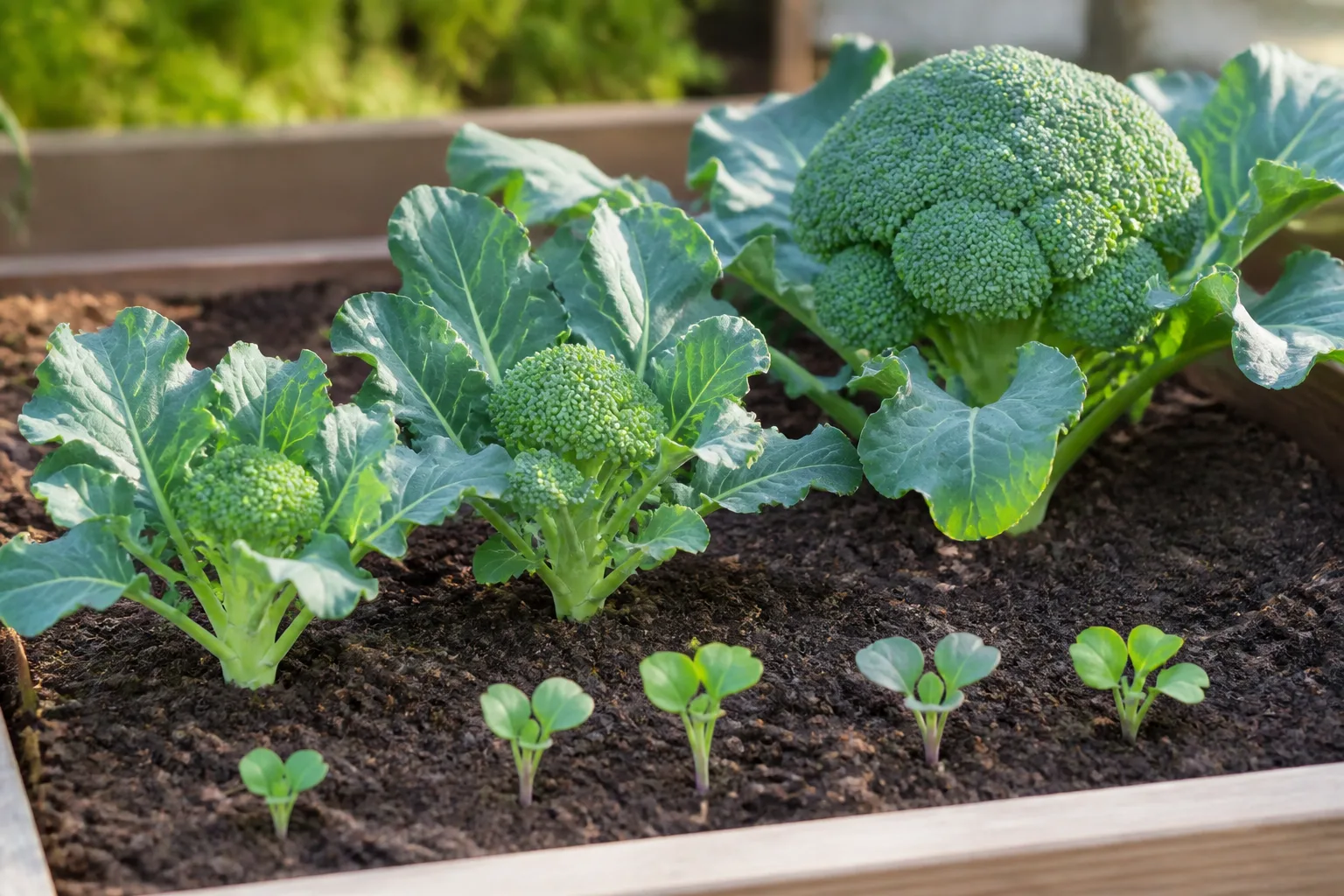
Harvest broccoli when its central head has reached the size expected for its variety and the flower buds are still tightly packed. The small green beads should form a firm, compact surface; if they begin to separate, stretch, or show yellow petals, cut the head as soon as you can. That bud test is more dependable than waiting for a particular number of days or a head the size of your fist.
The exact harvest date changes with the cultivar, planting date, and weather. Many familiar heading varieties produce a central head about 4 to 8 inches across, but some cultivars are ready at a smaller size. After you cut that head, leave the plant and its healthy leaves in place if you want to encourage smaller side shoots.
The fastest harvest test
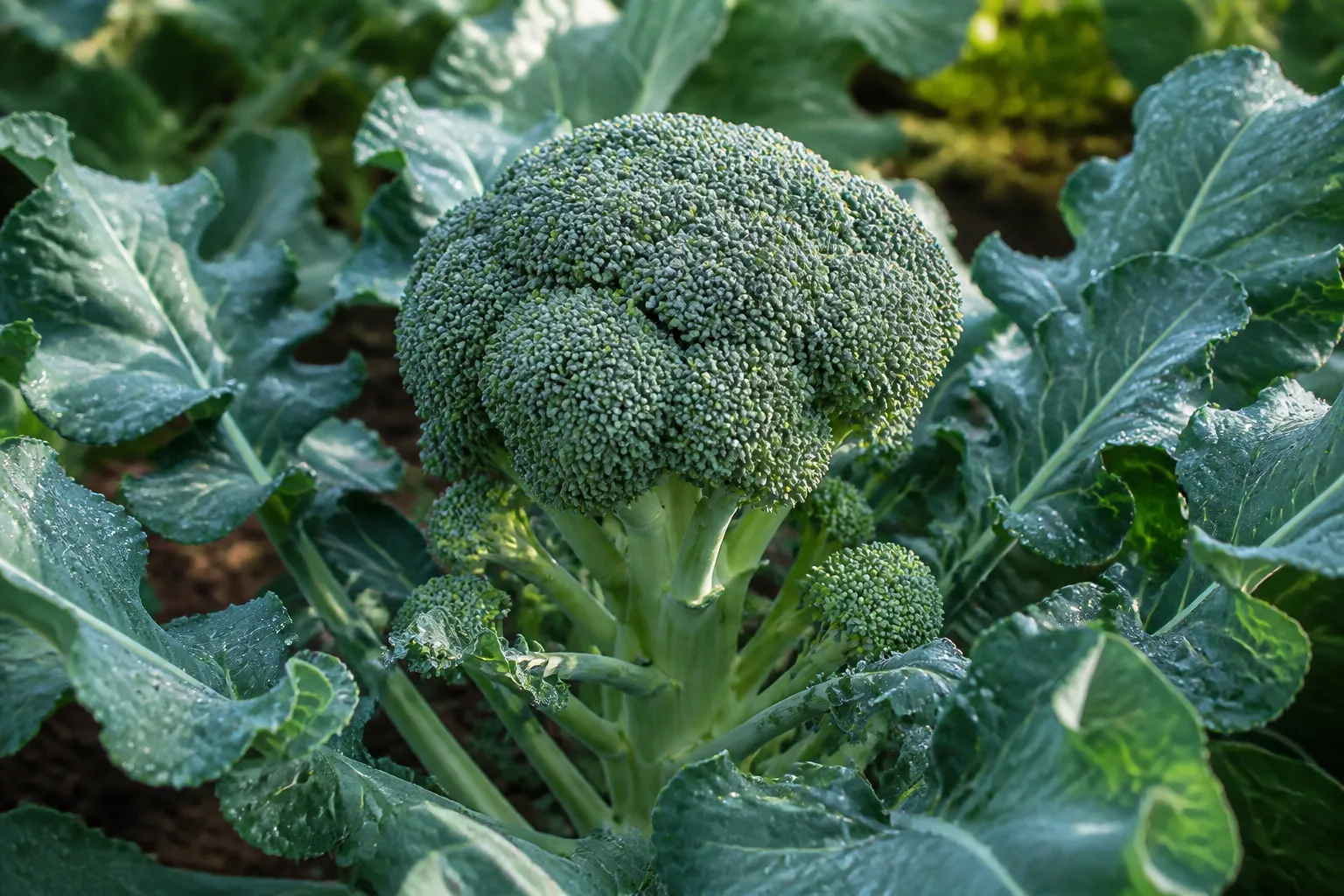
Look closely at the surface of the head rather than judging it from a few feet away. A ready head is compact, dense, and firm, with buds that are closed and packed together; the color should look healthy for the variety, usually green to blue-green. If the beads are visibly loosening or tiny yellow flowers are appearing, stop waiting for more size and harvest it.
Use size as a supporting cue, not the final verdict. A 4-inch head that is dense and has reached the expected size for its seed variety may be ready, while a larger head of another cultivar may still be filling out. The seed packet’s maturity range can help you begin checking, but the plant’s actual buds tell you when to cut.
After the cut, keep the plant if its leaves are healthy and you have time before severe heat, hard freezing, or the end of the season. The original central head will not grow back, but many heading varieties can make smaller heads from buds along the remaining stem.
Treat days to maturity as a forecast, not an appointment
Broccoli is a cool-season crop, so the season when it matures matters as much as the calendar count. Gardeners in climates with cold winters often grow spring or fall crops; in mild-winter regions, a fall planting may mature through winter or early spring. There is no single best month across all climates because planting windows, frost dates, and the cultivar’s preferred conditions vary by location.
Seed packets and catalogs usually give a days-to-maturity estimate, but check what the number is measured from. Some describe days from transplanting, while others may count from sowing or explain their timing in the fine print. A plant started indoors and transplanted later will not necessarily be ready on the same calendar date as a directly sown one. For example, NC State Extension describes annual cultivars forming heads roughly 50 to 70 days after emergence, while home-garden labels may use a different starting point or cultivar-specific range.
Treat the estimate as a reminder to start inspecting the plant, not a promise that it will be ready on that day. Penn State Extension notes that heat can speed the transition from a tight broccoli head to flowering, with summer heads sometimes bolting within days. A cool stretch may give you more time, while a heat spike or dry spell can make the harvest window much shorter.
The weather also affects what a head can achieve. NC State Extension describes head development as strongest in cool conditions and notes that prolonged low moisture can affect crop development. If a plant has been stressed, it may produce a smaller head than its packet suggests; that is not a reason to leave a ready, loosening crown in place for another week. Use the packet to set expectations, then let the head’s actual condition decide.
The cultivar changes the target size
Broccoli varieties are bred for different head sizes and growth habits. A large-heading hybrid may make a broad central crown, while a compact or sprouting cultivar can be ready with a smaller head and may put more energy into later side shoots. Epic Gardening describes examples that mature at very different diameters, which is why one universal inch measurement can lead you to either cut too soon or wait too long.
Look up the name on your seed packet or plant label and use its expected head size as a reference. If the label is gone, rely on the bud tightness, color, and firmness together. A smaller but dense head is usually a better harvest than a big crown whose beads are separating. Practical growing guides commonly describe mature heads in a broad 4- to 8-inch range, but size varies by cultivar and conditions, as Epic Gardening and Gardener’s Path explain.
This gives you a useful way to decide when the head is smaller than expected. If the crown is still expanding and all of its beads are closed, you can keep checking it; if the buds are loosening, take the crop at its best available size. A compact 3-inch head from a small-headed variety is not automatically immature, and an 8-inch head that has started flowering is not improved by waiting for a rounder shape.
Weather changes how often to check
Once a visible central head begins forming, check it every day or two. During cool weather, development may feel gradual; in warm weather, the buds can move quickly from compact to open. The hotter and drier the conditions become, the less safe it is to leave a nearly mature head unattended for several days.
Water stress can also leave a plant struggling to fill a head. Keep the soil evenly moist while the crop is developing, but do not try to rescue a mature head by waiting for it to become enormous after a dry spell. If its buds are ready, harvest first; then continue normal watering if the plant is healthy enough to make side shoots.
The signs a broccoli head is ready
Think of readiness as a combination of three cues: the buds remain closed, the head has reached a reasonable size for the cultivar, and the crown feels firm rather than loose or soft. No one cue works perfectly on its own. This combination helps you avoid a common mistake: choosing a head by diameter alone and missing the stage when its texture is best.
Start with the buds
Broccoli is an immature flower cluster. Each tiny bead on the crown is a bud, so the ideal harvest stage comes before those buds open into flowers. When they are tightly arranged, the head looks like a smooth, dense dome or cluster; as the plant moves toward flowering, individual buds become more pronounced, swell, separate, or rise on little stalks.
Check more than one area of the crown. The outside may look tight while buds near the center or lower edge are already loosening. If most beads remain closed but you spot the first few yellow petals, harvest promptly rather than waiting for the rest of the crown to catch up. This is especially useful for a broad crown that does not mature evenly: make the decision based on the majority of the head and the earliest opening buds, not the one perfect patch on top.
A yellow speck is a signal to act, not a reason to throw the crop away. If only a few flowers have opened and the head is still sound, you can harvest it and use it soon; the flavor may be stronger and the texture less tender than at peak maturity. NC State Extension describes market-quality heads as having closed, tight buds without yellow petals, which is a useful quality standard for a home garden too.
Use size and color as supporting cues
For many common heading varieties, a mature central head falls somewhere around 4 to 8 inches across, but the exact range depends on the cultivar and growing conditions. A compact cultivar may produce a smaller crown. A plant affected by heat, dry soil, or other stress may also stop short of the size listed on the packet, even when the buds are already at their best. Think of the measurement as a range for planning, not a pass-fail test.
Color should be even and appropriate to the variety. Most standard broccoli is deep green or blue-green; some cultivars naturally have purple tones. Do not wait for a head to turn darker as a sign that it is ripening. If the color begins shifting toward yellow, that usually means flowers are opening, not that the edible crown needs more time.
Check firmness and condition
A ready broccoli crown should feel dense and hold together when you support it lightly. Do not squeeze the buds hard; just use a gentle touch to see whether the head feels compact rather than soft or loose. If some florets are smaller than others, judge the main crown as a whole and look again at the tightness of the beads.
Inspect the plant before you cut. Look between the buds for caterpillars or debris, and check that the stalk and leaves are not mushy or badly damaged. Small cosmetic blemishes do not automatically make a head unusable, but discard any portion that is slimy, rotting, or foul-smelling rather than trying to store it.
Cut the main head without stripping the plant
Pick at the coolest convenient time, often in the morning after the foliage has dried. Cool, hydrated produce is easier to handle and get into storage, but time of day should not make you postpone a head that is already loosening or beginning to flower. If you must harvest later, move the cut head out of the sun and into a cool place quickly.
Support the head with one hand without crushing the buds, then make one firm cut through the main stem. A clean cut is easier on the plant than twisting or snapping the crown off. Keep the leaves and lower stem attached to the plant if you want to give side shoots a chance to grow.
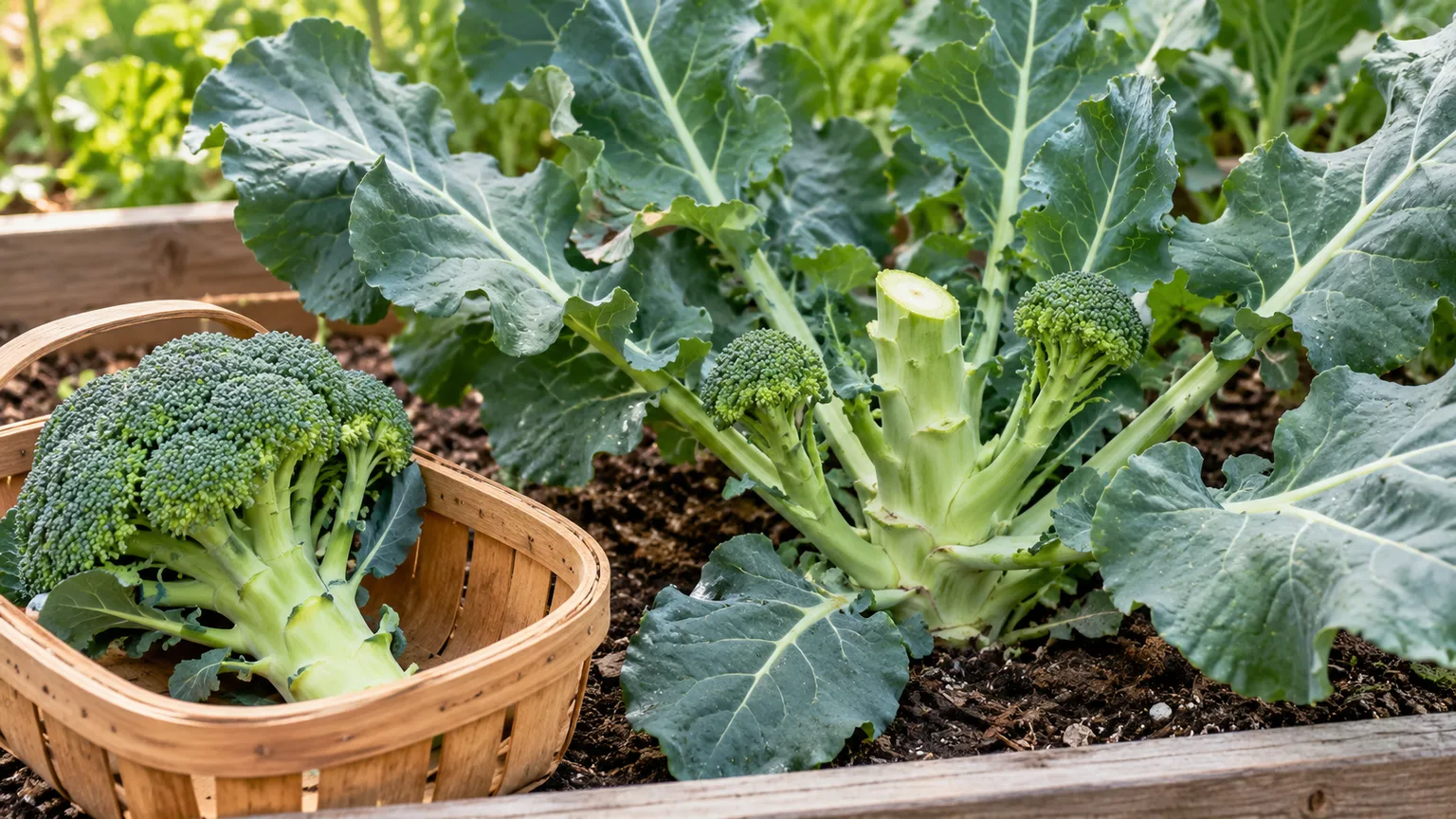
For most home gardens, the central head is cut with several inches of stem attached, often around 5 to 6 inches below the crown. The best cut line depends on where the head sits above healthy leaves and lateral buds. The goal is to take a useful length of stem with the edible head while leaving enough productive plant below.
Choose a clean tool and a safe cut line
Use a sharp kitchen or garden knife, or clean bypass pruners that can cut through the stem without crushing it. Wipe off soil and plant residue before cutting, especially if you have been pruning diseased plants. A dull blade can split or mash a thick stem, making the harvest harder to handle and leaving a ragged wound.
Find a spot just below the crown where you can cut through the stem cleanly without cutting into the broad leaves or the small buds at their joints. A slight diagonal cut is common because water is less likely to sit on the cut surface, though the main priorities are a clean cut and an intact plant. Gardener’s Path and Epic Gardening both advise leaving several inches of stalk with the central head; the lower plant should retain its leaves and potential side-bud sites. Avoid sawing repeatedly or pulling down on the stem; steady the plant and cut in one controlled motion.
Set the harvested head in a clean basket or container rather than dropping it on the soil. If it is warm outside, carry it into shade promptly. You can trim the stalk further in the kitchen, where it is easier to remove any tough outer layer without wasting the tender inner stem.
What happens after the central head is harvested
The central head is the plant’s main crown, so cutting it does not make that same head regrow. However, the plant may produce smaller heads from buds in the leaf axils—the points where leaves join the stem. For many gardeners, that second flush is the reason to leave a healthy broccoli plant in place after the first harvest.
Side-shoot production is not guaranteed. It depends on the variety, the plant’s health, the season remaining, and whether it still has enough leaves and water to support new growth. Some cultivars are bred to make a large central head with modest side shoots; others produce a steadier supply of smaller crowns. Extension and horticulture guides describe lateral heads developing from leaf axils after the central crown is removed, but the number and size of those shoots vary rather than following a fixed yield.
After the first cut, maintain normal, even moisture and keep the plant’s healthy leaves intact. Those leaves continue to support growth, so stripping the plant for greens or cutting the stalk to the ground can reduce the chance of a useful second crop. If the plant is diseased, exhausted, or no longer producing, remove it rather than expecting it to recover indefinitely.
Pick side shoots before they open
Look along the remaining stem, especially where leaves join it, for small clusters of buds. Side shoots are usually narrower than the central head and may be ready at a smaller size; use the same tight-bud test instead of waiting until each one reaches the central head’s diameter. Harvest them while their beads are still closed.
Use a sharp tool to cut each shoot above its base without removing a large section of stem or nearby leaves. Continue checking every few days when shoots are developing quickly. Healthy plants of varieties that produce lateral growth may provide smaller harvests for several weeks, but heat, frost, drought, and cultivar all affect how long that lasts. If your plant has no visible side shoots after a while, do not keep cutting away leaves to force them; it may simply be finished for the season.
If buds loosen or flowers appear
If the head is full-sized and the buds are starting to separate, harvest it now. Waiting for every bud to remain perfectly tight may be impossible once the plant reaches maturity, and a head that is just beginning to open can still be usable. The sooner you cut it, the better its chance of retaining a tender texture.
If a few yellow flowers are already visible, cut the head and use it promptly if it still looks and smells sound. Cooking can make a slightly stronger or tougher head more pleasant to eat, especially in soup, a stir-fry, or a roasted dish where it is mixed with other ingredients. Do not expect it to taste exactly like a compact, unopened crown.
When most flowers are open, the head is past its best stage for a tender broccoli harvest. You can remove the spent crown and see whether lower side shoots are still forming; otherwise, leave the flowers for pollinators or clear the plant to make room for another crop. A bolted head is a quality change, not by itself proof that the vegetable is unsafe, but rot or a bad odor is a reason to discard it.
Can you eat the leaves and stalk?
Yes. Broccoli leaves and stems are edible, though older leaves and thick outer stalks can be tougher than the florets. The central stalk is often tender once you peel away its fibrous outer layer; slice the inside into pieces and cook it with the florets instead of throwing it out.
You can also cook a few clean outer leaves like other sturdy greens. If you are hoping for side shoots, be selective: the leaves are the plant’s working surface, and removing too many at once takes away energy the plant could use for new buds. Leave the newest central leaves and most of the healthy foliage in place.
Wash leaves, stems, and crowns under cool running water before eating. If you find insects among the florets, separate the crown into smaller pieces so you can rinse the spaces between them. Do not store wet broccoli in a sealed container; moisture left on the surface can encourage spoilage.
Cool and store fresh broccoli quickly
Broccoli loses quality after cutting, so move it out of the sun and refrigerate it soon after harvest. Keep the head unwashed if it is clean, or dry it thoroughly after rinsing; store it in a perforated produce bag or loosely covered container in the crisper drawer. Use it within about 3 to 5 days for the best crispness and flavor, a practical home-garden window also recommended by Gardener’s Path, and check it before cooking.
The longer storage windows sometimes quoted for broccoli assume very cold, humid conditions. Penn State Extension describes 10 to 14 days at about 32°F and 95 to 100 percent relative humidity, while NC State Extension notes that delays in cooling and temperature fluctuations shorten storage life. A home refrigerator often fluctuates and may be less humid, so think of those conditions as a controlled postharvest target, not a guaranteed shelf life for a garden head in an ordinary crisper.
If you have more broccoli than you can use, freeze it rather than keeping it in the refrigerator until it yellows. First remove coarse leaves and woody portions, separate the crown into sections, and rinse away soil or insects. The National Center for Home Food Preservation recommends water-blanching broccoli for 3 minutes or steam-blanching for 5 minutes, then cooling promptly, draining well, packaging, and freezing. Blanching helps preserve flavor, color, and texture during frozen storage; skipping the blanch can leave a duller, less pleasant vegetable later.
Conclusion
Harvest broccoli when the head is dense, firm, and at a reasonable size for its variety—before the buds loosen or yellow flowers appear. Use the calendar to know when to start checking, but let the buds and the weather make the final decision.
Cut cleanly with a sharp tool, keep the plant’s healthy leaves if you want side shoots, and cool the head promptly. The central crown will not grow back, but a healthy plant may provide smaller later harvests; checking often and picking each shoot while its buds are tight gives you the best chance to enjoy them at their tenderest.