How to Get Rid of Cabbage Worms on Garden Brassicas
Identify cabbageworms, loopers, and diamondback moth larvae, then use hand-picking, row covers, and targeted Bt to protect cabbage and other brassicas.
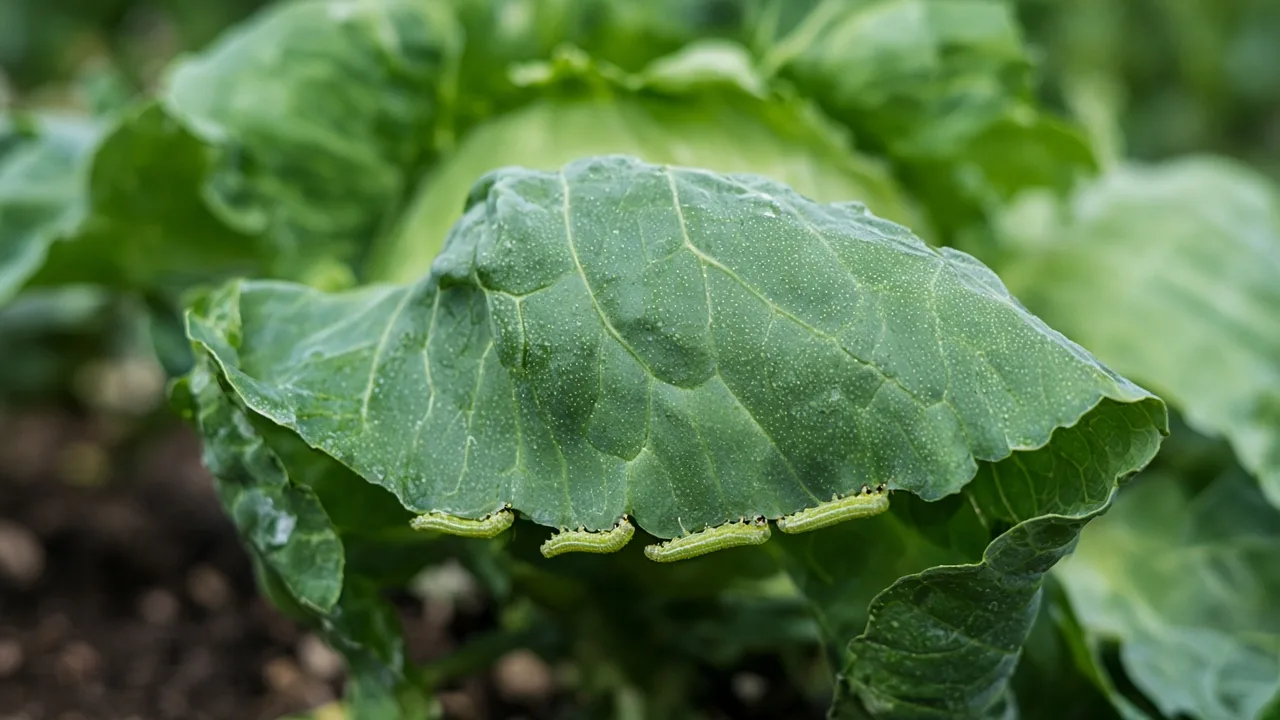
To get rid of cabbage worms, inspect the undersides and centers of cabbage-family plants, remove visible caterpillars and confirmed eggs, then cover clean crops so butterflies and moths cannot lay the next round. If young larvae keep feeding, a product labeled for your brassica and containing Bacillus thuringiensis subsp. kurstaki (Btk) can help when the caterpillars eat the treated leaves. You do not need to spray every plant just because you see a hole: first confirm the pest and whether feeding is still active.
“Cabbage worms” is a garden shorthand rather than one exact insect. The name commonly covers the imported cabbageworm, cabbage looper, and diamondback moth larva, which differ in appearance and movement but all feed on brassicas. A useful response starts with those distinctions, then follows the same practical order: inspect, remove, exclude, and use a targeted control only if needed.
Why “cabbage worms” can mean three pests
The phrase often refers to three caterpillars: the imported cabbageworm (Pieris rapae), the cabbage looper (Trichoplusia ni), and the diamondback moth (Plutella xylostella). All can attack cabbage, broccoli, cauliflower, kale, collards, Brussels sprouts, turnips, radishes, and mustard-family crops, although the looper also feeds on some plants outside the cabbage family. The name “imported cabbageworm” applies specifically to the larva of a white butterfly; loopers and diamondbacks are moth larvae, not cabbage-white butterfly larvae. Maine DACF
You can often control a small backyard outbreak before you know the exact species. Still, identification is useful when the caterpillar is tiny, the damage pattern looks unusual, or a treatment does not work: a diamondback larva may be only a few millimeters long, while an older looper can be much larger. Look at the body, the way it moves when disturbed, and where it feeds rather than relying on color alone. UC IPM imported cabbageworm UC IPM diamondback moth
Identify the caterpillar by body and movement
Use the table as a field guide, not as a laboratory identification. Caterpillars change size and color as they grow, and lighting can make pale stripes difficult to see; movement and body texture are often more useful than a single glance. If the insect does not fit any description, photograph it beside the damaged crop before choosing a control.
| Pest | What the larva looks like | Best quick clue | Adult or egg clue |
|---|---|---|---|
| Imported cabbageworm (Pieris rapae) | Velvety, finely hairy green caterpillar, often with a faint yellow stripe; grows to about 1 inch | Slow crawl; rests along leaf veins or hides near the plant center | White butterfly with dark forewing spots; pale, elongated eggs are laid singly |
| Cabbage looper (Trichoplusia ni) | Smooth light-green body with pale lines; can reach roughly 1½ inches | Arches its middle into a loop because it has fewer middle prolegs | Mottled brown-gray night-flying moth; eggs are usually laid singly on leaf undersides |
| Diamondback moth (Plutella xylostella) | Tiny, tapered pale-green larva, usually under ⅓ inch at maturity | Wriggles rapidly or drops from a leaf on a fine silk thread | Small, narrow-winged brown moth with pale diamond markings when wings are folded |
The sizes and markings above are approximate. For imported cabbageworm, UC IPM describes a green, hairy, sluggish larva and a white butterfly; Wisconsin Horticulture describes the looper’s arching crawl and thin pale body lines; Maine DACF and UC IPM describe the diamondback larva’s small size and quick drop behavior. UC IPM imported cabbageworm Wisconsin Horticulture Maine DACF UC IPM diamondback moth
Imported cabbageworm: velvety, slow, and usually on a leaf underside
The imported cabbageworm is the caterpillar people most often mean when they say “cabbage worm.” Its soft-looking, green body has fine hairs that create a velvet-like surface, sometimes with a faint stripe down the back and lighter broken markings along the sides. It can blend into kale or cabbage well enough that you may notice the dark green droppings below it before you see the larva. UC IPM imported cabbageworm
The adult is a white to pale-yellow butterfly with dark markings on the forewings. Females lay elongated, pale eggs singly on leaves, commonly underneath; a butterfly hovering over a brassica is an early scouting cue, not proof that larvae are already present. The insect can have multiple overlapping generations, and the number and timing vary with climate, so check plants more than once after adults appear. Connecticut Agricultural Experiment Station UC IPM imported cabbageworm
Cabbage looper: smooth and arching as it moves
A looper is usually smoother and larger than an imported cabbageworm. Its green body has thin pale lines, and its distinctive gait comes from arching its middle into a loop as the front and back ends draw together. If you tap the leaf gently and watch the caterpillar walk, that motion is often a better clue than its shade of green. Wisconsin Horticulture Maine DACF
The adults are mottled gray-brown moths that are active at night, so you may never see them. Their larvae feed between major leaf veins and can leave large, irregular holes; when a cabbage or broccoli head starts forming, inspect the wrapper leaves and folds because larvae and frass can be hidden there. Loopers also use hosts beyond brassicas, so nearby lettuce or other susceptible crops may be worth checking when damage continues after you protect the cabbage bed. Wisconsin Horticulture Maine DACF
Diamondback moth larva: tiny, tapered, and quick to wriggle
Diamondback larvae are easy to miss because they are far smaller than mature cabbageworms and loopers. The pale-green caterpillar narrows at both ends; when disturbed, it wriggles sharply or drops on a silken thread. The adult is a small brown moth, not a white butterfly, with pale diamond-like markings along its folded wings. Maine DACF UC IPM diamondback moth
Young larvae rasp the leaf underside, leaving a translucent “windowpane” where the upper surface remains. Older larvae make small holes and can feed at growing points, buds, or heads. That crown and head damage deserves more attention than scattered holes in old outer leaves, particularly on seedlings and Brussels sprouts. UC IPM diamondback moth
Read feeding signs before treating
Fresh irregular holes, greenish-brown pellets of frass, and a caterpillar hiding along a vein or in a leaf fold together make a strong case for a cabbageworm-group pest. Check the newest leaves, the midrib, the undersides, and the tight layers around a developing head. Frass can look like coarse green or dark crumbs and may be smeared after rain; its absence does not rule out a caterpillar, especially if the insect is very small. UC IPM imported cabbageworm Connecticut Agricultural Experiment Station
Damage is not a species-level diagnosis by itself. Imported cabbageworms and loopers often chew larger uneven holes, while early diamondback feeding can appear as translucent windows and later as small holes; other brassica pests can also make holes. Seedlings and growing points are more vulnerable to being stunted, whereas mature outer leaves can tolerate some cosmetic feeding. Once a cabbage head, cauliflower curd, or broccoli head begins to form, inspect its folds for larvae and droppings, not just the exposed leaves. Wisconsin Horticulture UC IPM diamondback moth
Scout the whole brassica, not only the damaged leaf
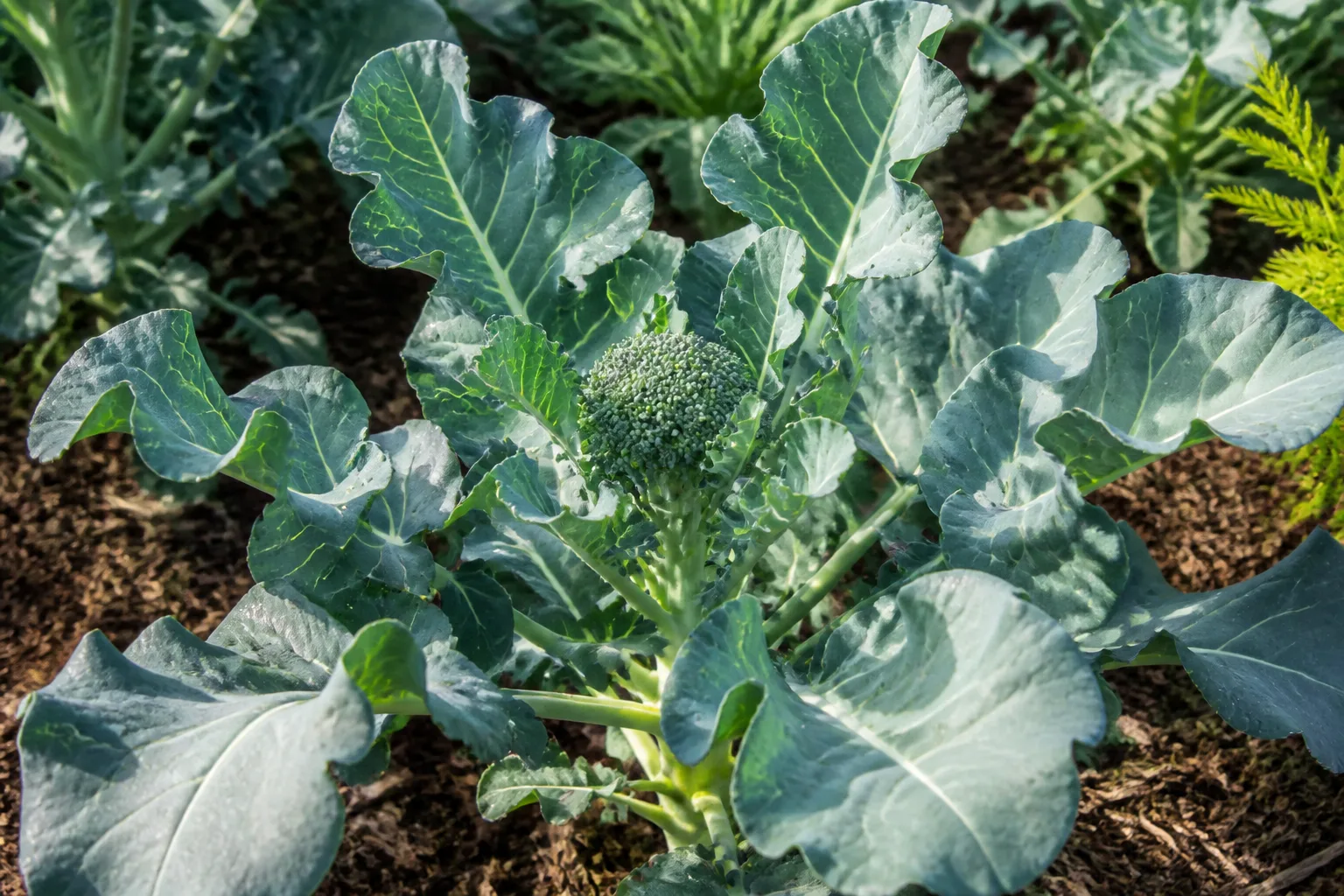
Start at the center of each plant and inspect several leaves from different heights. Turn leaves over, follow the main veins, and check leaf folds, the crown, and the base of a developing head; imported cabbageworms often feed around midribs and inner wrapper leaves. On young plants, also look directly at the growing point, where a small caterpillar can do more harm than one eating an outer leaf. UC IPM imported cabbageworm UC IPM diamondback moth
For a small bed, check every plant weekly during the growing season. If you see adult butterflies or moths, fresh frass, new holes, or larvae, inspect again within a few days until you know whether the population is increasing; extension field schedules are often more frequent because commercial crops and marketable heads have different risk and economic thresholds. There is no universal backyard rule that one caterpillar per plant always requires a spray. Crop stage, the number of plants affected, whether the growing point or harvestable head is threatened, and how much fresh feeding appears between checks all matter. UC IPM imported cabbageworm UC IPM diamondback moth
If you can, note the pest, the number of plants with larvae, and whether new feeding appeared since the last check. A quick phone photo helps you distinguish active damage from holes that are already old; caterpillar injury will not heal, so judge success by fewer larvae and undamaged new growth rather than expecting existing leaves to look whole again. This simple record also shows whether hand-picking is enough or whether exclusion needs to be improved.
Follow a practical same-day control sequence
When you confirm active caterpillars, work in this order: remove the insects you can reach, clear confirmed eggs or infested debris, protect uninfested brassicas with a clean barrier, then reassess before using a product. This sequence avoids spraying a pest that has already left and reduces the chance of harming the natural enemies that can help keep populations down. It also makes it easier to tell which step actually stopped fresh feeding.
Pick off larvae and remove confirmed eggs
On a few plants, hand-picking is usually the simplest first step. Check leaf undersides, veins, and head folds; remove each caterpillar you find and drop it into a container of soapy water if you want to kill it. Small larvae can be pinhead-sized, so take your time and recheck the crown rather than stopping after the first large green worm. Epic Gardening
Remove eggs only when you are confident they belong to a pest. Imported cabbageworm eggs are elongated and laid singly; if you find one, crush it or remove the small piece of leaf it is attached to. Avoid scraping or destroying unfamiliar clusters, because beneficial insects also lay eggs in gardens. Put infested plant material in household waste or otherwise dispose of it so larvae cannot crawl back; an unmanaged home compost pile may not heat enough to kill eggs or caterpillars.
If a caterpillar has white or yellow cocoons attached to or beside it, leave it alone when practical. Those may be parasitoid wasp cocoons, evidence that a natural enemy is already attacking the pest. UC IPM identifies several parasitoids and predators as natural controls, so routine broad-spectrum spraying can remove help the garden already has. UC IPM imported cabbageworm Connecticut Agricultural Experiment Station
Fit a row cover before the next egg-laying cycle
A floating row cover works as an exclusion barrier only if adult butterflies and moths cannot reach the crop. Install it over clean plants as soon as you sow or transplant, support it with hoops so the fabric does not crush foliage, and secure every edge to the soil, bed frame, or container. A loose opening at the ends or a gap around the stem lets egg-laying adults under the cover. UC IPM imported cabbageworm Epic Gardening
Before sealing a cover over an infested bed, inspect every plant and remove any larvae and eggs you find; otherwise you can trap the pest inside with its food. Lift the fabric occasionally to scout and check for heat, moisture, or foliage pressed against the material. Leaf and head crops do not need insect pollination for harvest, but remove the cover if you want seed from flowering plants, and keep air movement and crop temperature in mind during warm weather. A cover can prevent new egg-laying; it cannot remove larvae already feeding under it.

When a targeted Btk treatment makes sense
If larvae keep appearing or hand-picking is impractical, Btk may be an option for young, actively feeding caterpillars. It has to be eaten from treated foliage, so spray only the crop and leaf surfaces where the pest is feeding, including undersides and folds when the label allows; it does not kill adult butterflies, moths, or eggs. UC IPM reports that Btk works well against imported cabbageworms and loopers, particularly against early larval stages. UC IPM imported cabbageworm
Do not treat “Bt” as a single product or assume every strain controls every pest. Check that the product contains the appropriate Btk strain and that its label names the crop and site you are treating. Diamondback moth populations have developed resistance to multiple insecticides, and UC IPM notes that Btk resistance can occur in some areas, so a product that does not work may indicate a wrong target, poor coverage, larvae that are too large, or local resistance rather than a need to repeat applications blindly. UC IPM diamondback moth
Btk is more selective than many broad-spectrum insecticides, but it is not harmless to all caterpillars: susceptible moth and butterfly larvae that eat treated leaves can also be affected. Apply only where you have identified the target pest and follow the label exactly, including protective equipment, application timing, pollinator precautions, and the preharvest interval. Organic certification does not replace the label or make a pesticide risk-free. Health Canada Btk fact sheet Gardener’s Path
Protect beneficial insects and skip weak fixes
Parasitic wasps, tachinid flies, predators, and other natural enemies can attack cabbageworm-group pests. Protect them by avoiding routine broad-spectrum sprays and by treating only when active feeding threatens a crop you care about. If you are growing leafy greens primarily for leaves, a few holes on outer foliage may be an acceptable trade; a caterpillar inside a marketable cabbage head or at a seedling crown is a different decision. UC IPM imported cabbageworm UC IPM diamondback moth
Do not reach first for diatomaceous earth, neem, garlic water, vinegar, dish soap, or a homemade pepper mixture. A dust or spray can reach non-target insects, wash away, injure foliage, or fail to reach larvae tucked in leaves, and a product’s “natural” origin does not show that it is effective or safe on a crop you plan to eat. Use a registered, label-directed treatment only when the pest and crop match the instructions; do not copy a rate or harvest interval from a different product, country, or crop. UC IPM imported cabbageworm UC IPM diamondback moth
Reduce repeat infestations across the season
Keep new transplants clean by checking the undersides and centers before planting them. Remove brassica weeds such as wild mustard around the bed because they can provide host foliage, and clear heavily infested crop residue when a planting ends. This sanitation can reduce nearby food and overwintering sites, but it cannot guarantee prevention: adults can fly in from other gardens, and overwintering patterns differ by species and climate. UC IPM imported cabbageworm Connecticut Agricultural Experiment Station
Keep a clean row cover ready for later plantings and close it over each new crop before adults begin laying eggs. When practical, avoid leaving an uninterrupted line of overlapping brassica crops beside one another; diamondback moths can persist where a continuous supply of different-aged cole crops is available. Rotation may help break up that continuity, but it will not substitute for scouting and sealed exclusion because adult moths and butterflies move between beds. UC IPM diamondback moth
Harvest and wash damaged brassicas carefully
A few feeding holes do not automatically make a firm cabbage, kale, or broccoli leaf unusable. Trim away badly damaged or decaying sections, unfold leaves and inspect the ribs and head folds for caterpillars and frass, then wash produce under clean running water before eating or cooking. Discard produce that is slimy, rotten, or too contaminated to clean comfortably.
If you applied any pesticide, the label’s preharvest interval is the minimum time between treatment and harvest; washing does not shorten it. Follow any crop-specific directions and do not harvest from a plant until the required interval has passed. With heads and florets, check between the tightly packed parts because larvae and droppings can hide where a quick rinse misses them.
When holes need a broader diagnosis
If you find no caterpillars, eggs, frass, windowpaning, or fresh feeding, do not keep spraying for cabbage worms. Tiny round “shot holes,” ragged overnight edges, slime trails, leaf miners, disease spots, and weather tears point to different causes and need different responses. For a quick comparison, see our guide to holes in kale leaves, which covers flea beetles, slugs, sap-feeders, disease, and other lookalikes.
Conclusion
The green caterpillars on cabbage may be an imported cabbageworm, a looping looper, or a much smaller diamondback moth larva. Check the body and movement, inspect leaf undersides and the plant center, and look for fresh frass before you choose a control. Removing visible larvae and eggs, then covering clean brassicas with a well-sealed row cover, solves many small garden problems without a blanket spray.
If feeding continues, consider label-directed Btk when small larvae are actively eating treated leaves, and protect other susceptible caterpillars by limiting where you apply it. Recheck the crop in a few days and judge the result by fresh growth and fewer larvae. When the holes do not match caterpillar clues, broaden the diagnosis instead of escalating the wrong treatment.