How to Get Rid of Millipedes and Centipedes at Home
Find millipedes or centipedes indoors? Tell them apart, remove strays, fix the moisture or prey that draws them in, and use pesticides only when justified.
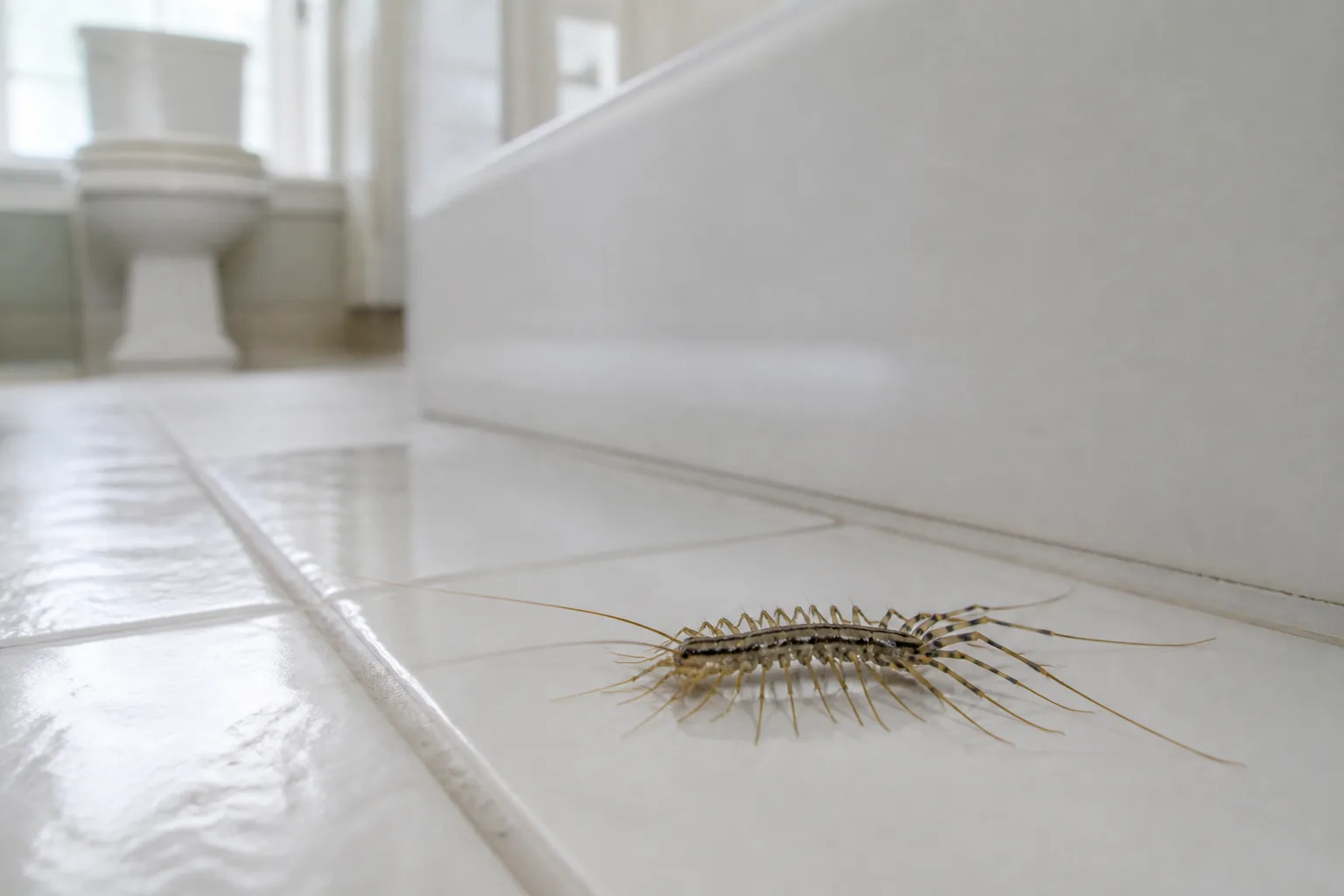
If a many-legged animal has just crossed your floor, remove that individual first; you do not need to spray the room to deal with one visitor. Then work out whether it was a slow, rounded millipede or a fast, flattened centipede, because the likely source differs: millipedes usually wander in from damp outdoor cover, while house centipedes hunt other arthropods in humid indoor hiding places.
The durable fix is usually a short sequence: identify and remove the animal, note where it appeared, reduce the moisture or prey that supports repeat activity, and close the route it used. A few visitors after a storm call for a different response than repeated centipede sightings in a damp basement with silverfish or roaches.
The first-response plan: remove one, then find the route
For one or two animals, use a cup and stiff card, a broom and dustpan, or a vacuum. Avoid picking up an unknown centipede with bare hands, and avoid crushing a millipede because some release defensive fluids that can stain or irritate skin. If you vacuum one, empty the canister or bag into an outdoor trash receptacle promptly.
Before you clean the spot, make a quick note of the room, time, recent rain, and whether the animal came from a wall edge, exterior door, floor drain, or cluttered area. That little record can reveal whether the event followed wet weather or keeps happening around the same damp crack. One animal in a dry room is usually a removal problem; repeated appearances in one zone are an inspection clue.
If several appear at once, take a photograph before sweeping them up if you can do so without getting close. A clear side view helps distinguish a flat, fast centipede from a rounded millipede, and a photo is safer than trying to preserve a live specimen. Record whether the animals were alive, dead, or curled up: millipedes that die along a sunny baseboard may simply have dried out after entry, while repeated live house centipedes can point to a suitable damp refuge.
Do not begin by spraying baseboards, setting a room fogger, or spreading powder through living areas. These arthropods hide in cracks and moist refuges that general sprays may not reach, and broad pesticide use can expose people and pets without fixing the route or habitat.
Millipede or centipede? Identify the animal before treating
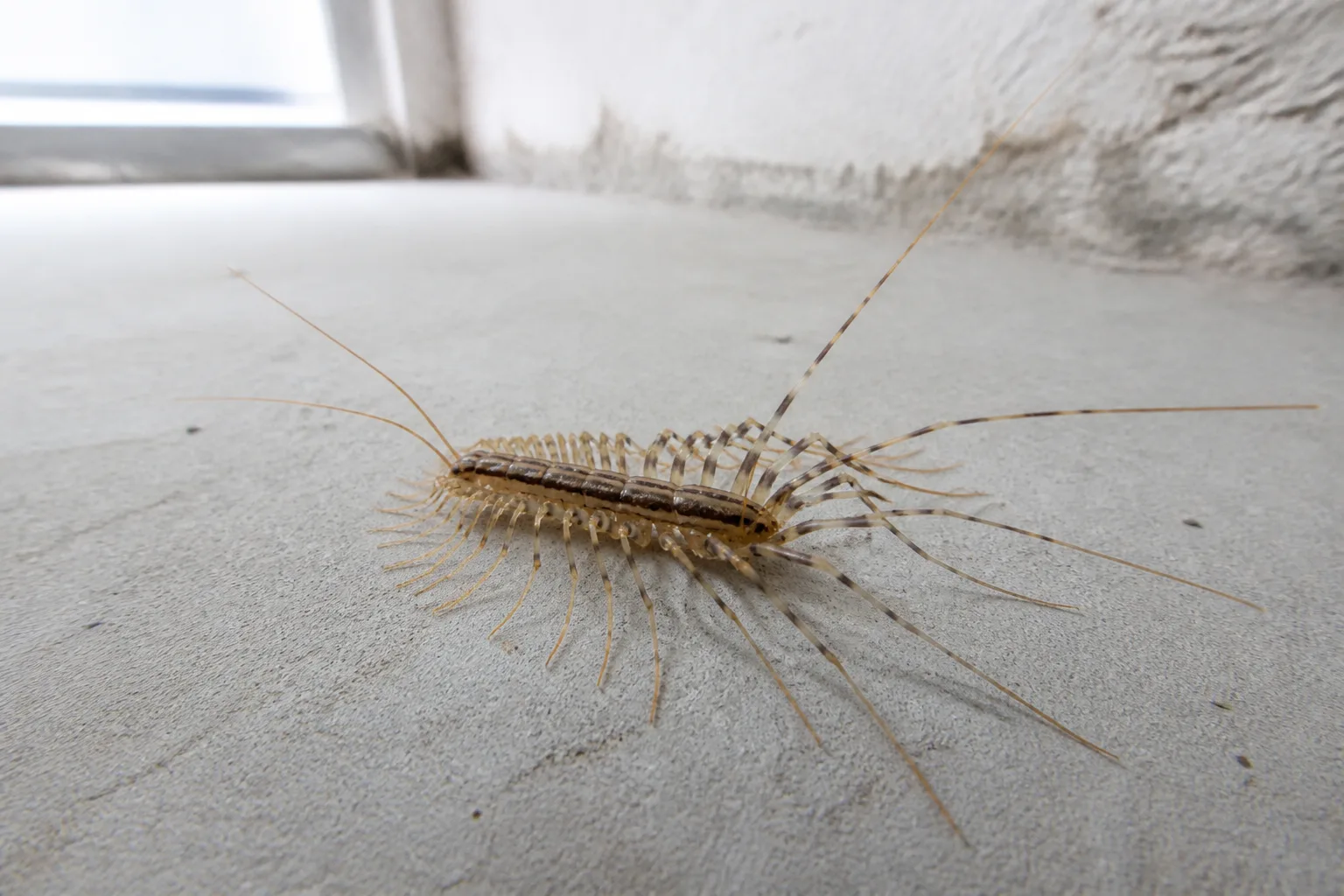
The main identification clue is how the legs attach to the body, not the animal’s color. Both are segmented arthropods with many legs, and color varies among species, so use body shape, movement, and behavior together. The UC Statewide IPM Program’s comparison is a useful reference when a specimen is intact.
The fastest visual differences
| Clue | Millipede | Centipede |
|---|---|---|
| Body | Usually rounded or cylindrical | Usually flatter from top to bottom |
| Legs | Two pairs on most middle segments | One pair on each leg-bearing segment |
| Movement | Slow, often a steady wave of short legs | Usually quick and darting |
| Response to disturbance | Often curls into a coil | Usually runs for cover; does not coil like a millipede |
| Typical food | Damp, decaying plant matter | Small insects and other arthropods |
| Main household concern | Nuisance visitor; defensive secretion from some species | Startling hunter; larger species can bite if handled or trapped |
A small pill bug can also be mistaken for a many-legged pest, but it has a compact oval body and only seven pairs of legs; many pill bugs roll into a ball. Do not rely on a single feature such as size, brown color, or whether the animal is indoors. If the animal is too damaged to identify, treat it as unknown: remove it without handling and focus first on the entry point and moisture.
Leg counts are most useful on the middle of the body, where the segments are easiest to see. Millipedes have two pairs on most middle segments, though some have four pairs on particular segments; centipedes have one pair per leg-bearing segment. An animal’s legs may be tucked beneath its body or obscured by motion, so roundness and its tendency to coil are helpful backup clues rather than a substitute for a close look.
House centipedes and common look-alikes
The common house centipede, Scutigera coleoptrata, has a narrow yellowish-gray body with dark stripes, very long banded legs, long antennae, and a sudden scurrying gait. Penn State Extension describes adults as having 15 pairs of legs and notes that they feed on silverfish, firebrats, carpet beetle larvae, cockroaches, spiders, and other small arthropods. Other centipede species may look shorter-legged or thicker, so the house-centipede description is not a universal template.
A centipede’s presence can be a useful clue, not a diagnosis. House centipedes may live and reproduce in heated structures when conditions suit them, so repeated sightings deserve attention to prey and damp hiding places; a single animal does not establish an indoor infestation. Millipedes, by contrast, are more often temporary indoor wanderers because most homes lack the damp leaf litter and decaying plant food they use outside.
This difference changes what a recurring sighting means. A millipede appearing in a garage after a soaking rain often suggests a nearby exterior shelter and a low gap; a centipede appearing repeatedly in a basement may be using a humid refuge and hunting prey already inside. The distinction is not absolute, since species and buildings vary, but it gives you a better first place to inspect than treating both as the same pest.
Why they appear indoors
An animal indoors does not necessarily mean the home is dirty. The common drivers are a route from outside, a damp refuge, and—particularly for centipedes—a supply of small arthropod prey. A room-by-room response works better than treating all sightings as one generic “bug problem.”
Moisture, weather, and outdoor shelter
Millipedes live in soil, leaf litter, under stones or logs, and among damp organic debris. Heavy rain can saturate that habitat and push them to move, while long dry spells can make it difficult to retain the moisture they need; either shift can bring wandering millipedes to a foundation and into a gap. Maine’s Department of Agriculture, Conservation and Forestry describes them as outdoor recyclers that may migrate into garages, basements, and other lower levels.
Centipedes also favor dark, damp shelter, but finding one indoors does not always mean it came straight in from the yard. House centipedes may shelter in basements, bathrooms, crawl spaces, cracks, or other places where prey is available. A dry, well-ventilated room with few insects is less supportive than a humid basement corner with a leak and abundant silverfish.
Weather can change both indoor and outdoor activity without creating a new population overnight. Rain may move millipedes out of saturated litter, while heat or drought can make exposed ground less suitable; temperature and seasonal movement also influence where arthropods shelter. If visits cluster after particular weather, use that timing to inspect the closest threshold and drainage route rather than applying a calendar-based pesticide treatment.
Centipedes follow prey; millipedes follow decaying matter
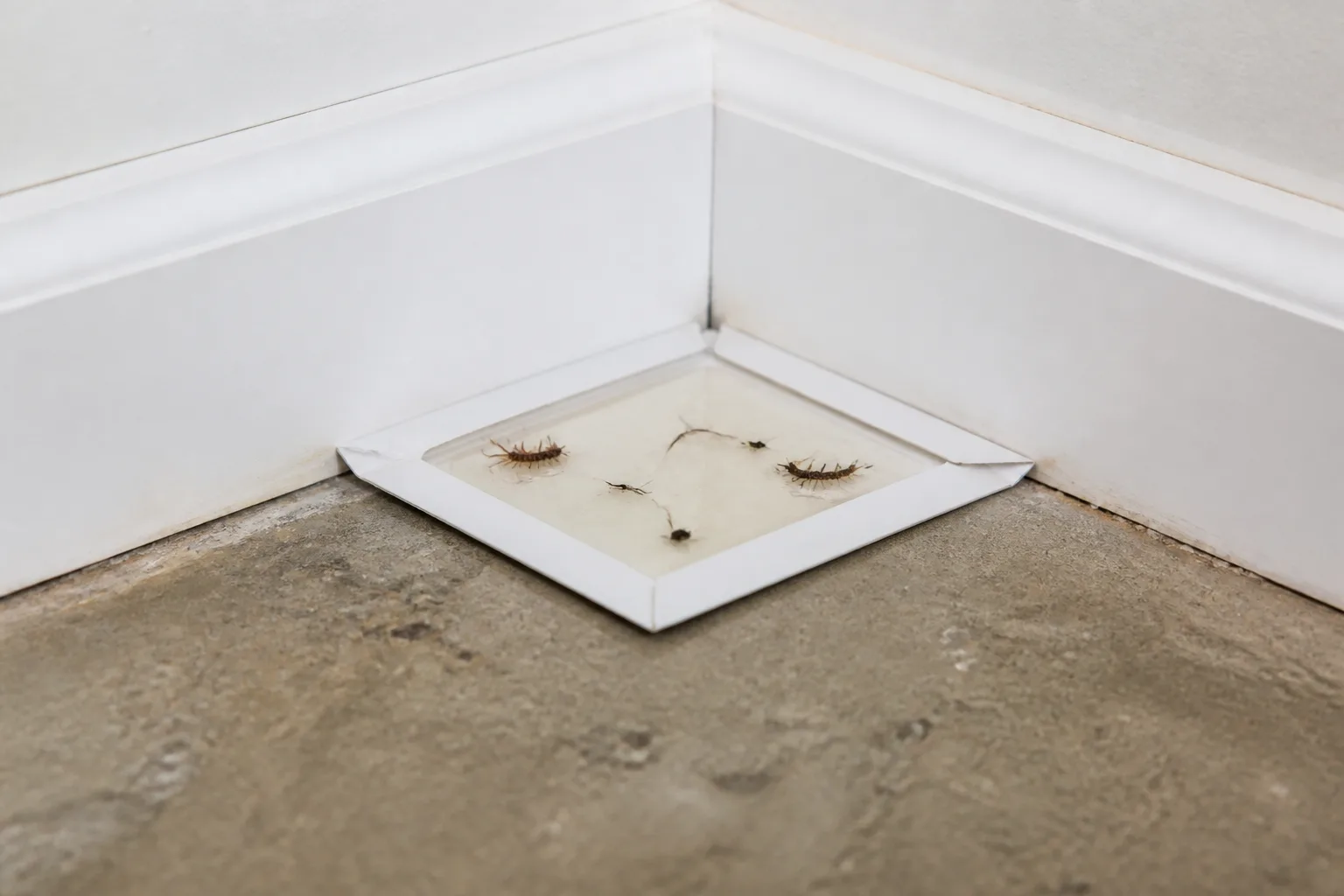
A centipede is a predator, so frequent sightings may point to insects or spiders that are worth identifying and managing. Place a few sticky insect monitors along walls in rooms where centipedes appear, then check what they catch rather than guessing. If the traps show cockroaches, silverfish, crickets, or spiders, address that pest with the method appropriate to it; killing the visible centipede alone leaves the food source untouched.
A millipede sighting usually points more directly to damp outdoor material near a low opening: wet leaves, mulch, a pile of boards, a downspout splash zone, or a threshold gap. The distinction matters because removing debris outdoors may reduce millipede pressure, but it will not resolve a centipede problem supported by prey inside. Grow Organic’s garden identification guide and Harvest to Table’s overview describe the broader ecological split: centipedes hunt small animals, while millipedes mainly break down dead plant matter.
Remove an individual safely
Removal is reasonable when an animal is in a bedroom, bath, or place where it could be stepped on. It is also reasonable to tolerate an occasional house centipede in a basement if nobody is bothered and the home has no underlying pest issue; centipedes are predators, and eliminating every one is not always necessary.
Cup, sweep, or vacuum—and clean up properly
To relocate a millipede, place a cup over it, slide stiff paper underneath, and carry it outdoors to a sheltered spot with leaf litter or soil. Use gloves if you are squeamish, but do not squeeze it or rub it against bare skin. If it leaves a mark or fluid, wash the surface according to its material’s care instructions and wash your hands with soap and water.
For a fast centipede, a vacuum is often the simplest hands-off option. Empty the vacuum outdoors rather than leaving the animal in a bagless canister inside, and wipe up any debris afterward. A sticky monitor can catch small stragglers, but treat it as a monitoring tool: place it flat along a wall where children and pets cannot reach it, check it regularly, and replace it when full.
Prevent repeat visits at the source
If sightings repeat, work through the likely causes rather than increasing spray strength. The pattern—same room, same opening, after rain, or alongside other pests—helps decide which action deserves attention first.
Map sightings and monitor for prey
For one to two weeks, record the date, room, approximate number, weather, and location of each millipede or centipede. Look for a route immediately nearby: under a door sweep, around a pipe, at a basement window, beside a floor drain, or along a cracked slab. You do not need to inspect every wall in the house if the animals repeatedly appear at one threshold.
For centipedes, sticky monitors can identify prey species as well as show where movement concentrates. Put monitors near—not directly over—suspected routes and in a few comparison areas, then check them weekly. A trap that catches many silverfish or roaches is a reason to address those pests; it is not a reason to coat the whole room with insecticide.
Use the monitors as evidence, not as a pass-or-fail test. A single catch can be a stray, and an empty trap does not prove that no animal is present; centipedes move along edges and may not cross a board placed in the wrong spot. If activity continues, shift one monitor closer to the sighting location and compare it with a second location so you can narrow the route instead of blanketing every room.
Dry damp rooms and fix water problems
Find the water source before relying on a dehumidifier. Check under sinks and appliances, around plumbing penetrations, at basement corners, and near floor drains for drips, condensation, seepage, or standing water. Repair leaks, improve bathroom exhaust after showers, and keep stored boxes or fabric off a damp floor so they can dry and be inspected.

A dehumidifier can help in a persistently humid basement, but it does not repair a leak or a wet crawl space. Use a hygrometer to understand whether the room stays humid, follow the appliance’s sizing and drainage directions, and investigate persistent water intrusion or musty odors rather than masking them with a machine. Penn State Extension recommends reducing humidity and improving drainage around a structure as parts of house-centipede management.
Also look outdoors: clogged gutters can overflow beside the foundation, and a short downspout can keep the soil wet against a basement wall. Make sure runoff drains away from the building and that the yard does not slope toward the house; if water repeatedly enters the basement, address the drainage or waterproofing problem before expecting an appliance to solve the pest issue.
Seal doors, foundation gaps, drains, and utility openings
Once you know where activity concentrates, inspect the nearest entry points in daylight. Replace a worn door sweep or compressed weather stripping; seal suitable gaps around window frames, cables, pipes, and foundation cracks with materials appropriate to the surface. For large cracks, structural movement, or water intrusion, get a qualified repair assessment instead of filling the gap with whatever sealant is on hand.
Check basement window screens, crawl-space openings, sump covers, and floor drains. A drain connected to a dry sump or missing a water trap may function as an opening; confirm how that plumbing is built before covering or altering it. Keep a drain’s trap filled and install an appropriate screen where it will not interfere with drainage, code, or maintenance.
Work from the inside toward the outside so the closest likely route gets fixed first. A door gap is an easy test: close the door and check for visible light or a draft along the bottom corners; a worn sweep may be the whole problem. For a foundation crack, check whether it is stable and dry—cracks that widen, leak, or cross masonry joints may need a building professional, not just caulk.
Reduce wet shelter beside the foundation

Remove leaf mats, rotting boards, and excess debris immediately beside the house, and keep firewood and compost away from entry doors and foundation walls. Trim vegetation that presses against siding so it does not hold moisture against the structure. UC IPM recommends eliminating moist hiding places around buildings and reducing excessive mulch or other organic debris where millipedes are moving toward homes.
Do not strip every garden bed of mulch or leaf litter. Millipedes and many centipedes perform useful outdoor roles, and a healthy garden needs decomposers and predators; the aim is to move concentrated wet shelter away from the building, not sterilize the yard. Harvest to Table and Grow Organic both describe these arthropods as part of the garden food web, though centipedes’ predatory role differs from millipedes’ decomposition.
Do sticky traps or pesticides help?
Sticky insect monitors can catch centipedes and reveal their prey, but they do not seal entry points or correct moisture. They are most useful when placed where sightings occur and checked consistently; scattered traps across rooms without a follow-up plan merely count activity. Keep boards away from children, pets, and non-target animals, and use a covered monitor if contact is possible.
Pesticides are rarely the first answer for occasional millipedes or centipedes. Millipedes that wander into dry rooms often die or can be swept outside, and centipedes are best managed by reducing prey, moisture, and harborages. The UC IPM guidance says pesticide use is rarely justified for these arthropods.
Avoid total-release foggers and routine indoor perimeter spraying for a sighting or two. If activity remains heavy after you have corrected obvious moisture and entry issues, ask a licensed pest professional to identify the animal, inspect the route, and explain whether a targeted product is warranted. Any product must be labeled for the pest and exact site; follow every label direction, including restrictions around people, pets, food, and re-entry, and do not apply a garden product indoors unless its label permits that use.
Dusts marketed as “natural” are still pesticide products and can become airborne or be contacted by children and pets. Do not spread diatomaceous earth or boric acid across floors, counters, or open living spaces as a general remedy; if a product is considered at all, use only one whose label expressly permits the location and method, and place it where occupants cannot contact it. The UC IPM recommendation that chemical control is rarely justified is a useful default for an occasional invader.
Bites, skin irritation, and when to get medical help
Millipedes do not bite or sting, but some species can release a defensive secretion when handled or crushed. It may irritate skin and can cause a more painful reaction if transferred to an eye; wash exposed skin with soap and water, and flush an exposed eye with clean water immediately. The Merck Manual Consumer Version advises immediate irrigation for eye exposure and describes the skin and eye irritation millipede secretions can cause.
Centipedes do not sting with a separate stinger; they use modified front legs to grasp and deliver venom through a bite. Most encounters do not result in a bite, but larger species can cause painful local swelling and redness. Merck notes that symptoms from a larger centipede bite rarely persist beyond 48 hours; species, bite site, and individual response vary, so do not use that timeframe as a guarantee.
For a bite, wash the area and apply a wrapped cool pack for short intervals if it helps. Seek urgent medical care for trouble breathing, swelling of the face or throat, widespread hives, faintness, severe or worsening symptoms, or an eye injury; contact a clinician or local poison center if the animal is unfamiliar, the person bitten is very young, or you are unsure what bit them. Do not capture a centipede by hand to identify it.
An eye splash from millipede fluid deserves more care than a harmless-looking mark on a floor: rinse immediately and get medical guidance if pain, redness, swelling, or vision changes persist. The advice here cannot determine what species caused an exposure or predict an individual reaction. When symptoms are significant or the species is unknown, a medical professional or poison center can help decide whether in-person care is needed.
When a pest professional is worth calling
Call a licensed pest professional if activity is persistent, widespread, or paired with a pest problem you cannot identify or safely manage. Daily sightings in several rooms, recurring clusters at the same damp wall, or sticky monitors repeatedly catching cockroaches or silverfish suggest that a broader condition needs attention. A good inspection should identify the arthropod and likely prey, check moisture and entry points, and offer a site-specific plan.
A professional is also useful when the source may be a crawl space, inaccessible drain, repeated foundation seepage, or structural gap. Ask what the inspection found, which nonchemical corrections matter, where any proposed product would be applied, and what the label requires for occupants and pets. If the plan is simply to fog every room without inspecting the source, ask for a more targeted explanation.
Conclusion
The best way to get rid of millipedes and centipedes is to remove the one you see and fix the conditions that let more follow. Identify the animal first: millipedes are usually slow, rounded decomposers coming from damp outdoor cover, while centipedes are fast predators that may be following prey or using a humid hiding place.
For a stray, cup, sweep, or vacuum it and note where it appeared. For a pattern, monitor nearby insects, repair leaks, dry persistent damp areas, seal the nearest gap, and move wet debris away from the foundation. Avoid broad indoor pesticide use for occasional visitors; bring in a licensed professional when activity persists or the underlying moisture or prey problem is beyond a safe DIY fix.