Holes in Kale Leaves: Causes and Natural Fixes
Diagnose holes in kale leaves by their shape, timing, and clues, then use row covers, hand-picking, scouting, and careful controls to stop new damage.
If your kale leaves have holes, start with the shape of the damage, not with a spray. Tiny pepper-like pits, large ragged bites, and clean-edged missing chunks point to different culprits, and the right first action may be a row cover, a flashlight inspection, or simply a thorough rinse and harvest.
The usual causes are caterpillars commonly called cabbage worms, flea beetles, slugs, and snails. Kale can also show damage from aphids or cabbage whiteflies, which suck sap rather than chewing holes, while disease, birds, rabbits, wind, or a rough harvest can create symptoms that look pest-related. The goal is not a perfectly untouched leaf; it is to stop active damage before the growing point and the next harvest are compromised.
The fastest way to identify what is making the holes
Look at three things in order: the hole pattern, the location of fresh damage, and the evidence left behind. Check several leaves from different plants rather than diagnosing one old leaf. A single torn leaf can be an accident, but matching new holes across a row suggest an active pest or a weather event.
Read the hole shape, edge, and timing
| What you see | Most likely direction | What to check next |
|---|---|---|
| Many tiny, round pits, especially on seedlings | Flea beetles | Tap the leaf over a pale surface and watch for tiny beetles jumping away |
| Large irregular holes with green droppings | Cabbage worms or loopers | Turn over leaves and look along ribs, the crown, and the newest growth |
| Ragged holes plus a shiny trail | Slugs or snails | Inspect at dusk, after rain, or beneath boards and dense mulch |
| Winding pale tunnels inside the leaf | Leaf miner | Hold the leaf to the light; the larva is inside the tissue, not on the surface |
| Curled, sticky, yellowing growth but no missing tissue | Aphids or whiteflies | Check the undersides for colonies, cast skins, honeydew, or clouds of adults |
| Holes with a brown or yellow border | Leaf spot or tissue death | Look for expanding spots, wet-looking lesions, or a pattern repeated after rain |
Fresh damage matters more than the appearance of a leaf that has already dried. If the newest center leaves are untouched and the holes are not enlarging, you may be looking at old, cosmetic injury. If the center is being eaten, seedlings are shrinking, or every morning reveals new gaps, move from diagnosis to control the same day.
The four most likely pests on kale
Kale is a loose-leaf brassica, so it offers an exposed, continuous food source to pests that also feed on cabbage, broccoli, collards, cauliflower, and related crops. This shared family explains why one infested brassica nearby can become a source of new damage even after you clean up your kale.
Cabbage worms, loopers, and diamondback moth larvae
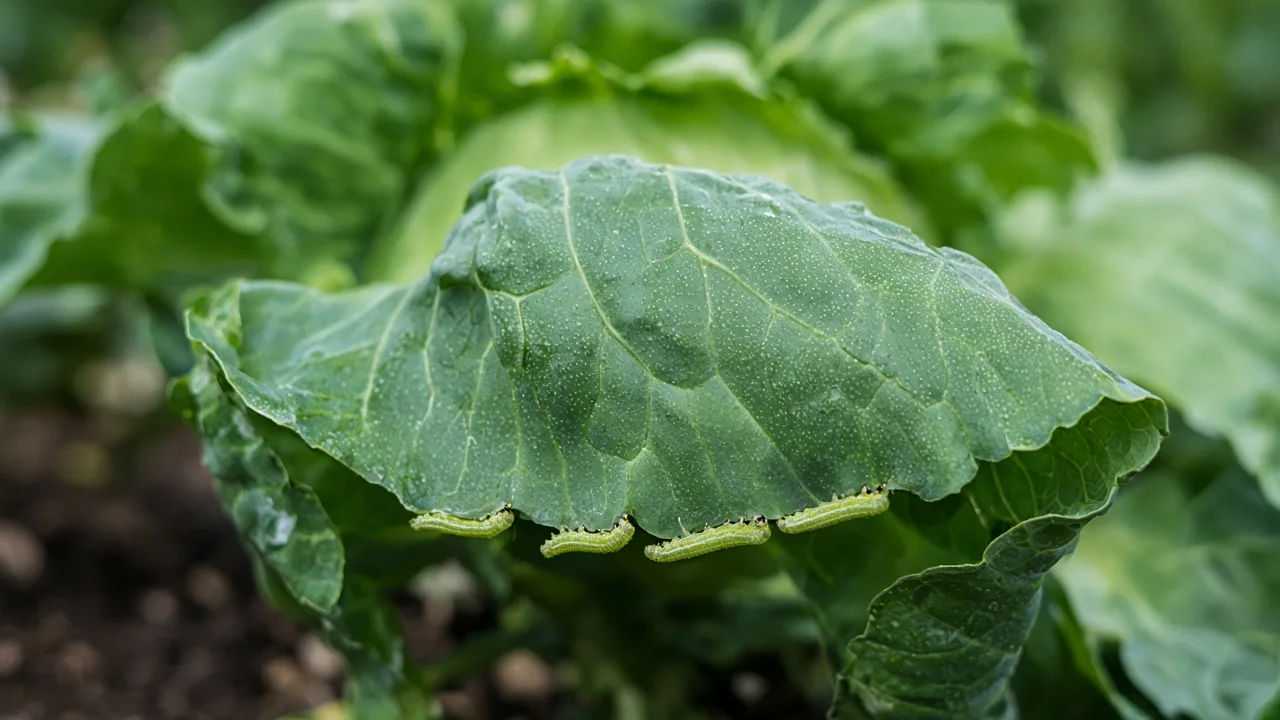
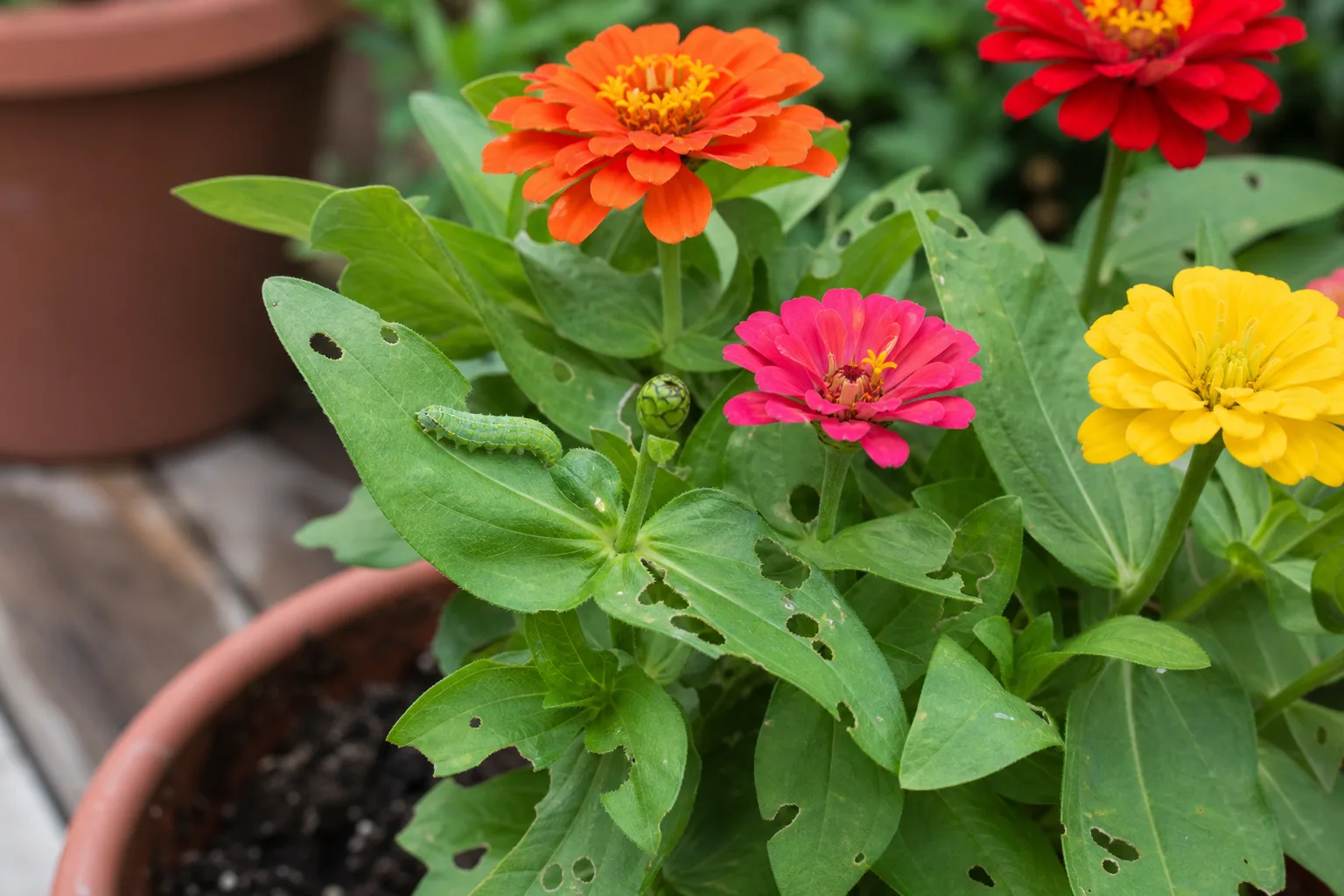
“Cabbage worm” is a convenient garden name for several caterpillars, including imported cabbageworms, cabbage loopers, and diamondback moth larvae. They do not all look or move alike, but they share a habit of hiding on or under the leaf while making irregular holes. Maine’s Board of Pesticides Control describes imported cabbageworms as velvety green caterpillars that rest on leaf undersides, while loopers move in a characteristic inchworm-like loop and diamondback larvae may wriggle or drop on a silk thread when disturbed. (Maine Board of Pesticides Control guide to cabbage worms)
Imported cabbageworms are often sluggish and blend into green leaves. Look along the main rib, around the leaf’s center, and in the protected folds of curly varieties. Greenish-brown frass is one of the strongest clues; if you see droppings but no caterpillar, search the underside of the leaf above the newest holes.
The damage can start as small windows between veins and become large irregular gaps as larvae grow. Young kale plants are less able to replace lost leaf area, so a few caterpillars per small plant are more urgent than the same count spread across a mature row. UC IPM recommends frequent checks from seedling emergence or transplanting and notes that early young larvae are the most responsive stage for Bacillus thuringiensis control. (UC IPM imported cabbageworm management)
The practical sequence of checking undersides, removing worms and eggs, and covering the bed early is also recommended by Epic Gardening’s cabbage-worm guide. Its useful distinction is that the goal is a manageable crop, not a garden with zero insects; a few nibbles can be acceptable when the growing point keeps producing clean leaves.
Flea beetles and their peppered shot holes
Flea beetles make kale look as if someone sprinkled it with fine black pepper and then punched through the leaf with a pin. The holes are usually small and rounded, though some are shallow scallops that do not pass completely through. The telltale behavior is more useful than color: when you disturb the plant, the tiny beetles spring away on enlarged hind legs.
Seedlings and newly transplanted kale are most vulnerable because a handful of tiny leaves cannot afford much lost tissue. Older plants can usually outgrow light flea-beetle feeding, but heavy pressure can slow growth and leave the crop less able to recover from heat or drought. RHS guidance notes that brassica flea beetles overwinter as adults in leaf litter and that late-summer movement into gardens can damage mature plants as well as seedlings. (RHS guidance on flea beetles on brassicas)
Do not confuse flea beetle damage with a caterpillar simply because both may occur on the same plant. Flea beetles are fast, jumping adults; cabbage-worm larvae are slow or looping and leave frass. Covering young plants before you see the first holes is more reliable than trying to chase adult beetles after an infestation is established.
Slugs and snails that feed after dark
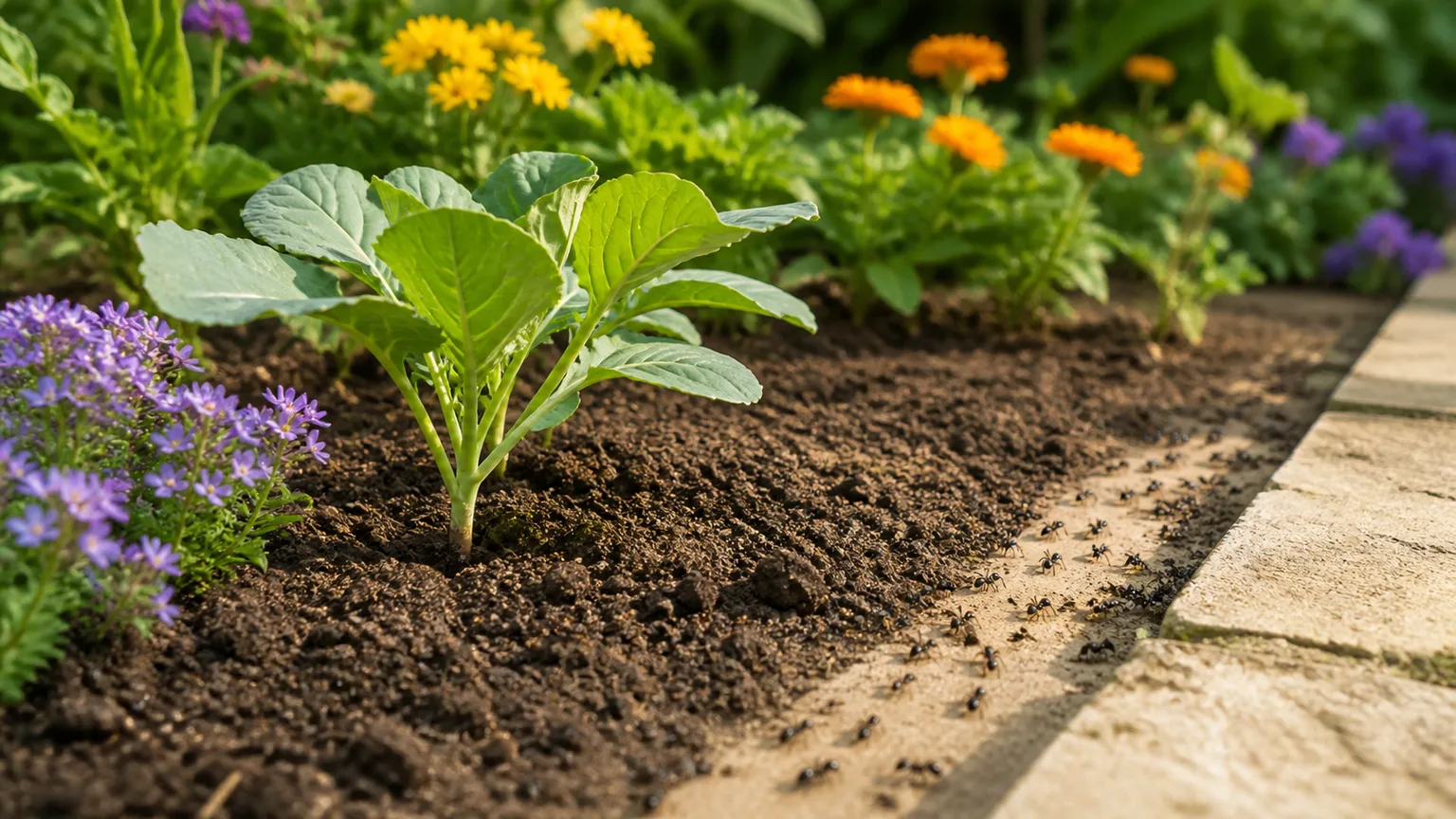
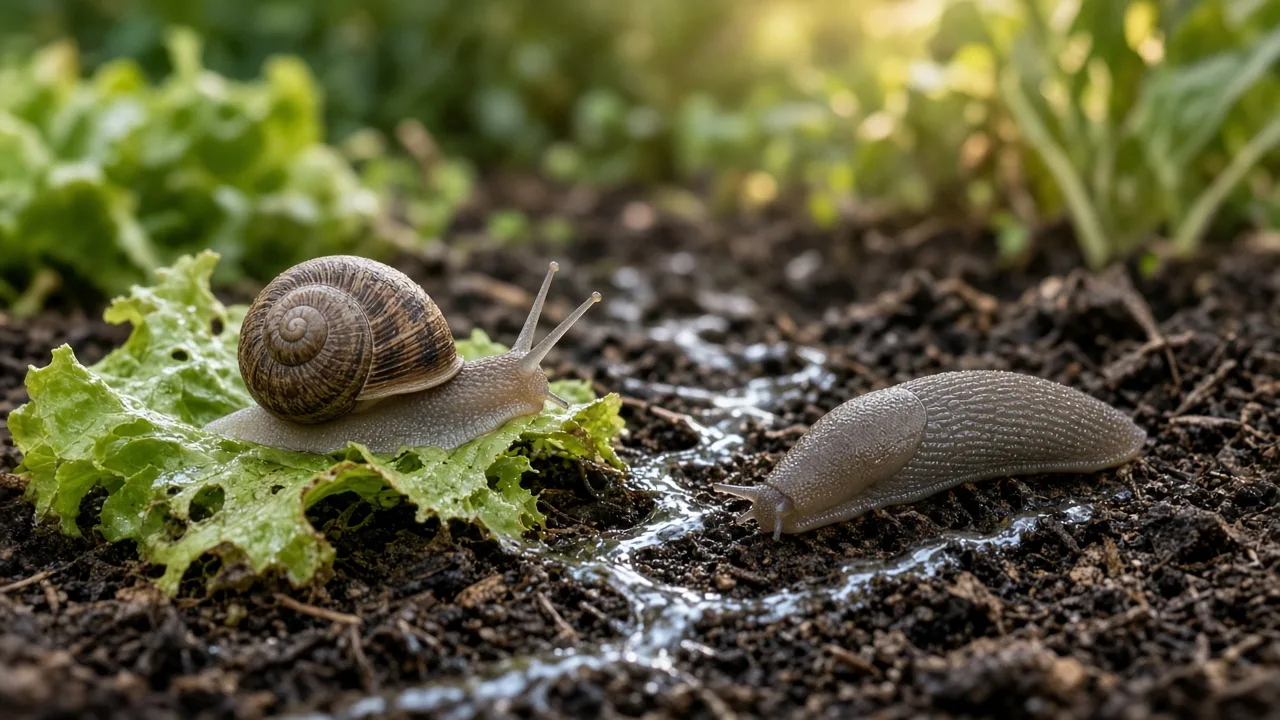
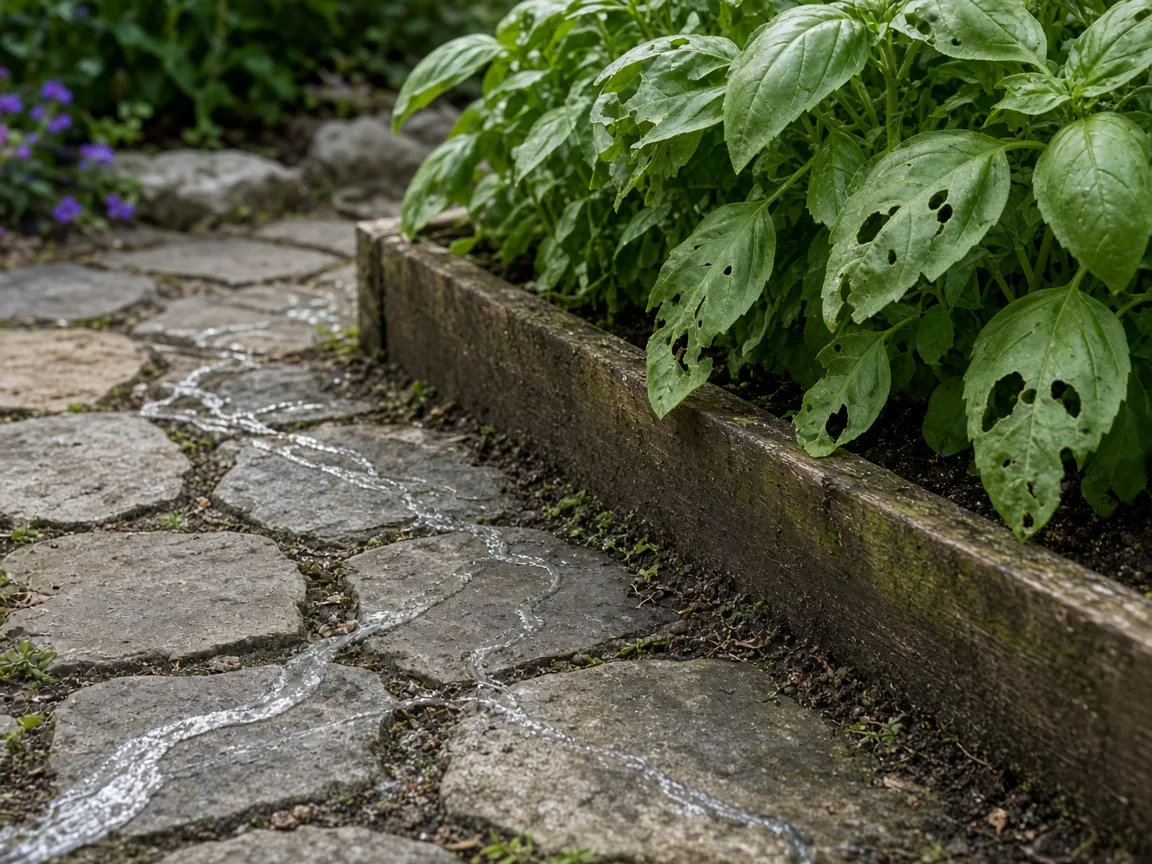
Slugs and snails produce uneven, ragged holes and may remove the soft tissue between veins. Their damage often appears overnight, especially in a shaded, damp bed, and seedlings can disappear rather than merely develop a few holes. The strongest clue is a silvery slime trail on leaves, soil, edging, or nearby paving.
Penn State Extension explains that slugs shelter during the day under boards, stones, dense vegetation, and clods, then become more active in cool, damp weather. That is why a midday inspection can falsely suggest that no pest is present. Watering at the base in the morning, clearing unnecessary hiding places, and checking with a flashlight after dusk are more informative than repeatedly spraying the leaves. (Penn State Extension on slugs and their control)
For a small planting, place a damp board or folded cardboard near the kale in the evening and inspect underneath the next morning. Remove the slugs you find and reset the trap. This is a monitoring aid as much as a control method: if the board is empty for several mornings and new damage continues, look for caterpillars, birds, or another cause instead of adding more slug measures.
Aphids, whiteflies, and other sap feeders
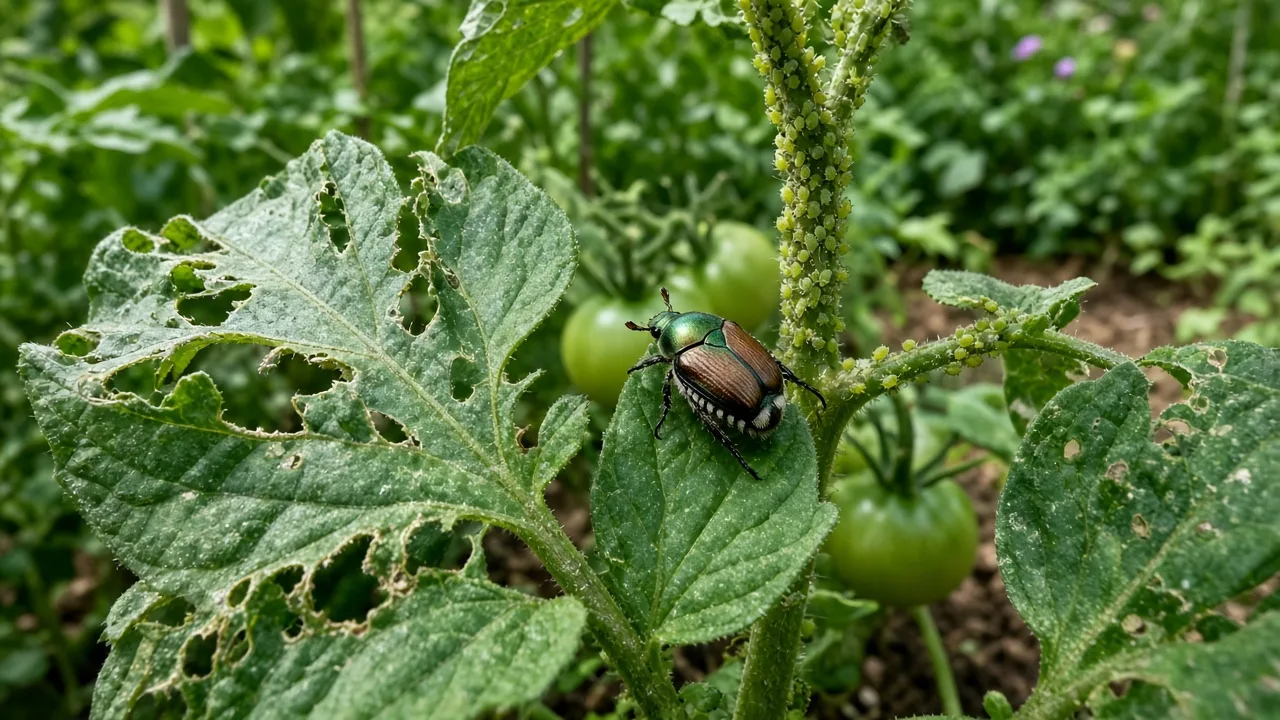
Aphids and cabbage whiteflies generally do not bite out chunks of kale. They pierce plant tissue and remove sap, causing curling, puckering, yellowing, or distorted new growth. A severe colony can make leaves look unhealthy and easier to tear, but it is a different problem from a clean hole with a chewed edge.
RHS identifies cabbage whitefly as a brassica specialist that sits on leaf undersides, where adults fly up in a cloud when disturbed and immatures remain attached like pale scales. Honeydew from sap-feeders can support sooty mold on the upper leaf surface. On kale, young leaves are harvested, so even a pest that mostly affects outer foliage may deserve attention. (RHS cabbage whitefly guidance)
For a light aphid or whitefly population, wash the undersides with a firm but plant-safe stream of water and repeat every few days. Preserve lady beetles, lacewings, hoverfly larvae, and parasitic wasps when possible; they are part of the control system. If a product is necessary, choose one labeled for edible brassicas and follow its crop directions and harvest interval rather than treating “natural” as a synonym for harmless.
When holes are not from a chewing insect
Not every gap means a bug is eating the plant. A good diagnosis asks whether the tissue was removed directly, died first and then fell out, or was torn by something moving through the bed.
Disease and weather patterns
Leaf spot diseases usually begin as discolored lesions, not as clean holes. Watch for tan, brown, black, or water-soaked spots with a halo, especially when similar spots appear on several plants after prolonged leaf wetness. As dead tissue dries, the center can crack or drop away, leaving a hole that resembles chewing damage.
Disease is more likely when the damage is fixed in one spot, has a colored border, and appears alongside widespread yellowing or leaf collapse. Chewing is more likely when the holes have fresh, uneven edges and new ones appear in different places between inspections. Improve spacing and airflow, water at the soil line, and remove clearly diseased leaves from the garden rather than composting them casually. RHS recommends removing infected plant material when it is part of an active disease cycle, while also cautioning that a garden does not need to be stripped of every piece of harmless old plant matter. (RHS guidance on managing pests and diseases without chemicals)
Wind, hail, frost, heat scorch, and drought can also create tears or brittle spots. Environmental damage usually affects several plants in a similar direction or height, while an insect tends to produce a scattered pattern that changes from day to day. If the hole pattern stopped after a storm and the new leaves are intact, focus on recovery rather than pest treatment.
Birds, mammals, and accidental damage
Birds can tear large sections from kale, leaving ragged edges but no frass or slime. Rabbits and larger mammals often browse the outer leaves or cut stems cleanly. A cat, dog, dropped tool, or harvest knife can create a straight tear that never expands.
Look for footprints, droppings, clipped stems, feathers, or damage concentrated on the bed’s exposed side. A supported net or row cover can help, but avoid loose mesh that can entangle birds or small animals. Physical barriers work best when they are secured at ground level and checked often enough to catch a trapped animal or a pest that was enclosed with the crop.
A same-day rescue sequence for damaged kale
You do not need to identify the exact species before taking the safest first steps. You do need to determine whether the damage is active and whether the plant is young enough that delay matters.
Inspect before treating
Choose a dry, calm time and examine the newest leaves, the center of the plant, and the undersides of at least five leaves per bed section. Tap a leaf over a white bowl for flea beetles, scan ribs and folds for caterpillars, and look at the soil and bed edges for slime trails. A flashlight after dusk is worth using if the damage is ragged or seems to appear overnight.
Record what you find with a quick phone photo or note: hole size, number of affected plants, presence of frass, and whether the growing point is damaged. This prevents the common mistake of switching treatments every day based on one old leaf. It also tells you whether a control worked; the real measure is intact new growth, not holes that remain in leaves that cannot heal.
Remove active pests and damaged tissue
Hand-pick visible caterpillars and slugs into a container of soapy water, or remove them in whatever way you can do consistently. Wipe away egg masses when you are certain they are pest eggs, but do not destroy unfamiliar clusters without checking them first; beneficial insects also lay eggs in gardens. Remove only leaves that are badly damaged, dying, diseased, or carrying a heavy active infestation.
For a small population, this physical step is often enough. It is especially useful on kale because the crop is harvested leaf by leaf and you can inspect the plant while picking. UC IPM emphasizes monitoring before unnecessary insecticide use because broad-spectrum treatments can disrupt the natural enemies that help suppress cabbageworms.
Protect the next leaves
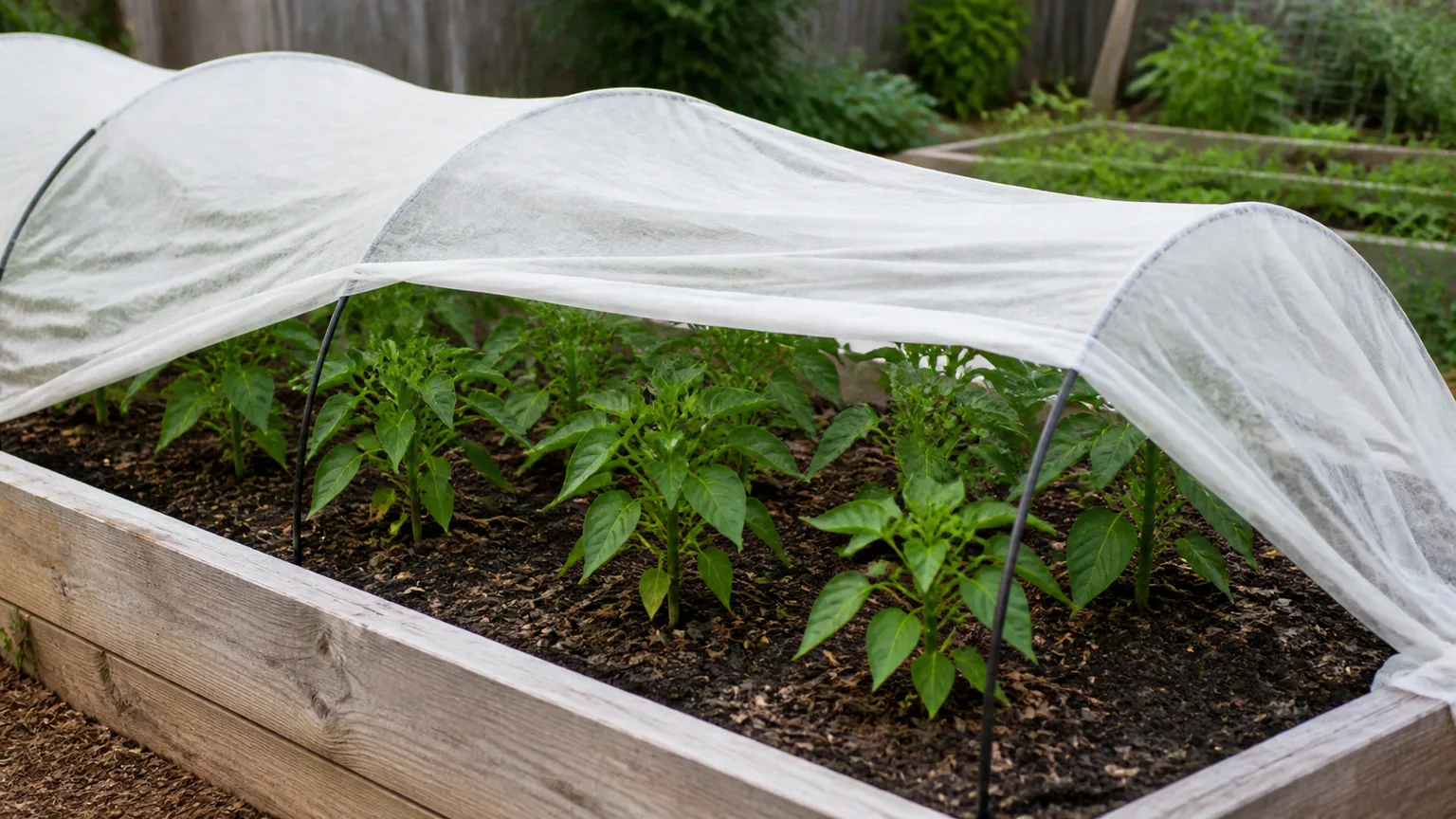
Install a lightweight floating row cover over hoops as soon as the bed is cleared. Seal the edges with soil, boards, or clips so adult butterflies and beetles cannot crawl underneath. The most important timing rule is that the cover must go on before the pest reaches the plant; covering an already infested row can trap eggs, larvae, or beetles inside.
Homestead and Chill’s practical cover guidance makes the same timing point: the fabric is most useful when it blocks adult moths and butterflies before they lay eggs, and the perimeter needs to be tucked or secured rather than left open at the sides.
Kale does not need insect pollination for the leaves you harvest, so a cover can remain in place through much of the growing period. Lift it for inspection and watering, and vent or remove it if temperatures climb high enough to stress the crop. Covers also need room above the leaves; fabric pressed against wet foliage can create its own disease and abrasion problems.
Prevention for spring and fall kale
Prevention is a sequence, not a single product. The strongest plan combines an early barrier with regular scouting and a bed that is easy to inspect.
Row covers, spacing, and brassica rotation
Put hoops, clips, and fabric beside the bed before sowing or transplanting. This removes the delay that lets cabbage butterflies lay eggs or flea beetles colonize tender seedlings. Cover individual pots with a supported cage if you grow only a few plants; the principle is the same as for a raised bed.
Give kale enough space for leaves to dry and for your hands to reach the crown. Crowding creates sheltered folds where caterpillars and slugs are harder to find, and it makes disease patterns harder to read. Remove cruciferous weeds such as volunteer mustard around the bed, since they can host cabbageworms and extend the pest’s food supply. UC IPM specifically recommends controlling cruciferous weeds as a cultural control for imported cabbageworms. (UC IPM cultural controls for imported cabbageworm)
Rotate kale away from cabbage, broccoli, cauliflower, collards, and Brussels sprouts when you can. Rotation will not stop a flying butterfly from finding a new bed, but it reduces the chance that crop debris, weeds, and soil-associated stages keep a problem concentrated in the same spot. At season’s end, remove badly infested or diseased material, but do not turn the entire garden into bare soil; healthy plant debris can shelter beneficial life.
Organic controls and common mistakes
If hand-picking and barriers are not enough, match the control to the pest. For caterpillars, a product containing Bacillus thuringiensis var. kurstaki can be useful when the larvae are small and actively feeding. It must be eaten by the target caterpillar, so spray coverage and timing matter; it will not solve flea beetles, slugs, or aphids. UC IPM lists B. thuringiensis among organically acceptable options for imported cabbageworm and recommends reading the product label. (UC IPM pesticide guidance for imported cabbageworm)
Spinosad is another product used against some chewing pests, but it is not a casual all-purpose spray. UC IPM notes that spinosad can harm some natural enemies after spraying and that formulations and crop directions differ. If you use it, confirm that the label covers kale or the relevant cole crop, follow the rate and protective-equipment directions, and observe the printed preharvest interval. The label for the product in your country—not a blog recipe—controls what is legal and safe for your harvest.
Avoid homemade mixtures of dish detergent, vinegar, salt, essential oils, or strong hot-pepper concentrates. A kitchen product can burn kale, alter the leaf surface, harm beneficial insects, or leave an uncertain residue. RHS warns that untested home brews may damage plants and the wider garden even when they sound gentle. (RHS advice on homemade and naturally derived controls)
Diatomaceous earth is often suggested for flea beetles and slugs, but it is not a permanent wall. It loses its abrasive effect after rain and can affect any small-bodied insect that crosses it. Penn State Extension also describes it as a poor general deterrent when it must be repeatedly reapplied. If you use any dust, avoid breathing it, keep it off flowers where pollinators forage, and treat it as a limited, weather-dependent tool rather than the foundation of your pest plan.
Neem oil is not a universal answer for holes in kale. It is poorly matched to a large caterpillar or slug problem, can affect non-target insects, and still needs a label that allows use on edible crops. “Organic” or “natural” describes an input’s origin, not its risk profile. Start with the barrier and the hand-pick; escalate only when the observed pest and the product’s labeled use line up.
Can you eat kale with holes?
Usually, a few holes do not make an otherwise healthy kale leaf unusable. Harvest leaves that are firm and green, trim away heavily damaged edges, and wash the remaining leaf carefully in clean running water. Inspect the folds of curly kale for caterpillars, frass, eggs, slugs, and soil before cooking or eating.
Do not eat leaves that are slimy, foul-smelling, moldy, heavily decomposed, or contaminated with a product that has not reached its labeled harvest interval. If you sprayed something, the waiting period on that product’s label is the deciding rule even if the leaf looks clean. When in doubt, discard the leaf; a damaged outer leaf is not worth taking a food-safety gamble over.
The holes will not close. Kale repairs the problem by growing new tissue from its center, so leave lightly damaged leaves in place if they are still green and helping the plant photosynthesize. Remove leaves when the damage is severe enough to shade or rot neighboring growth, when a disease is spreading, or when you need to reduce a concentrated pest population.
Conclusion
Holes in kale leaves are most often a pest-diagnosis problem, not a fertilizer problem. Tiny peppered pits and jumping adults point toward flea beetles; large irregular holes with frass suggest cabbage worms or loopers; ragged overnight damage with slime points toward slugs or snails. Sticky, curled, or yellowing leaves without missing tissue suggest sap-feeders instead.
Inspect the underside and center of the plant, check again at dusk when necessary, hand-pick what you find, and cover the crop before new pests arrive. Keep the bed spaced and rotated, protect beneficial insects, and use only a labeled edible-crop control when the evidence justifies it. A few holes are tolerable; a row of intact new leaves is the sign that your plan is working.