Holes in Hydrangea Leaves: Causes and Fixes
Holes in hydrangea leaves can mean beetles, caterpillars, slugs, disease, or browsing animals. Learn what to check and what to do next.
Quick Triage: Are the Holes New, Worsening, or Old?
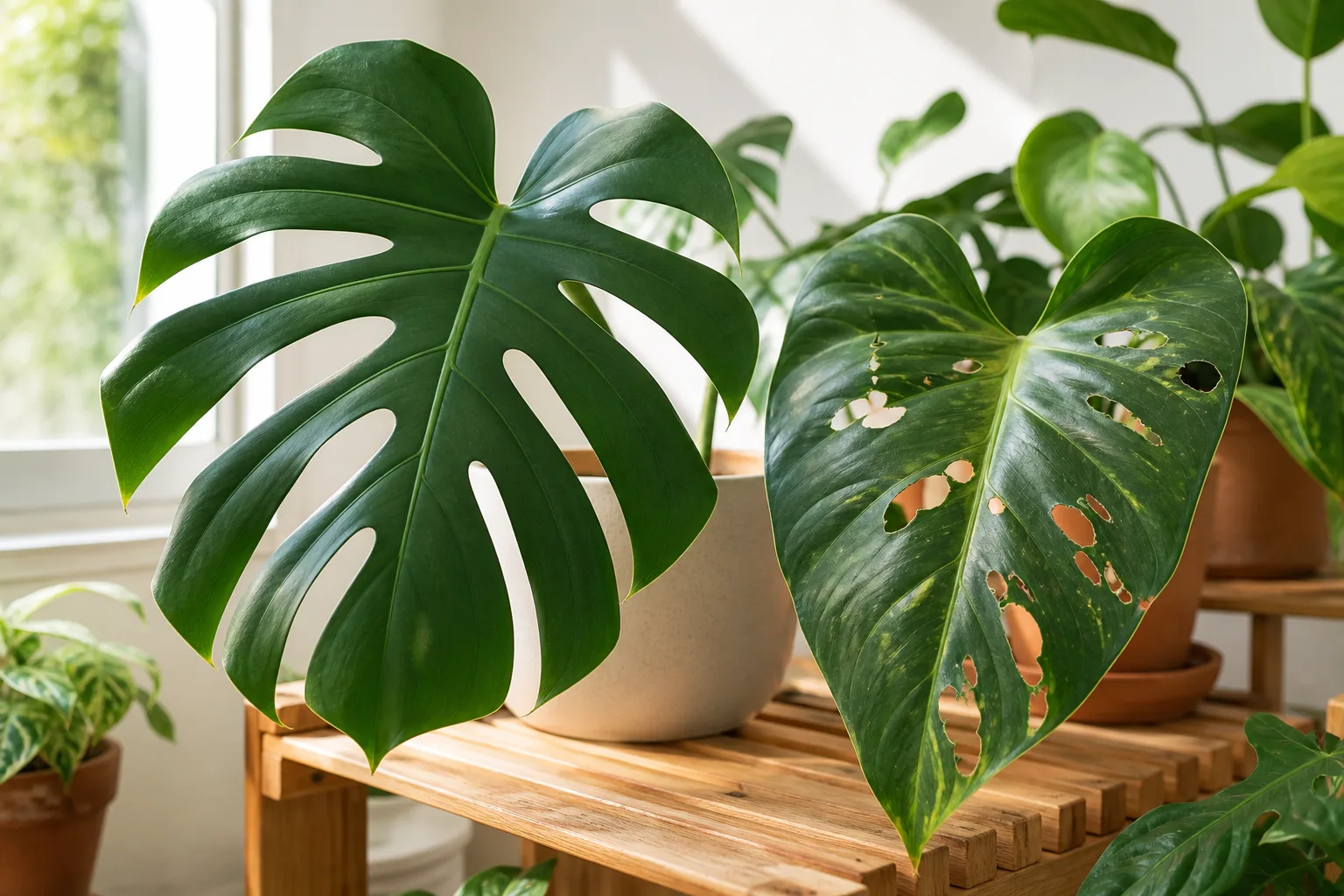
Before you remove a leaf or mix a spray, decide whether the damage is still active. Holes in hydrangea leaves are usually a symptom, not a diagnosis: the same shrub can show chewing from beetles, caterpillars, or slugs, clean cuts from leafcutter bees, torn foliage from deer, or dead tissue that dropped out after a leaf-spot disease.
Look at the plant as a timeline. Compare the newest leaves with older leaves, take a clear photo, and check whether another hole appears over the next day or two. Existing holes cannot close, so a leaf that looks bad but stays unchanged is a very different problem from a shrub that gains fresh damage every night.
Start With the Leaf Location and the Evidence Around It
Inspect three leaves at different heights, turning each one over. Chewing insects often hide on the underside or along the midrib, while slugs shelter near the soil and browsing animals leave damage at the outer, reachable parts of the shrub. A hand lens makes small aphids, mites, eggs, and caterpillar droppings much easier to see.
Record five clues: shape, edge, location, residue, and timing. A smooth circle cut from the margin suggests a very different visitor from a brown lesion with a purple border. If you find no pest, no frass, no slime, and no new damage, stop treating long enough to investigate disease, heat, hail, pets, or a branch rubbing against the leaf.
The hydrangea type adds useful context but does not identify the pest by itself. Bigleaf hydrangeas prefer dappled or partial shade and protection from afternoon sun, while NC State’s plant profile also lists leaf spot, powdery mildew, and deer damage among possible problems (NC State Extension’s bigleaf hydrangea profile). A stressed leaf may scorch more readily, but stress alone does not prove that an insect is responsible for a hole.
Read the Hole Pattern Before You Reach for Spray
The most useful diagnostic tool is not a product label; it is the pattern left behind. Do not make a species-level identification from one hole. Stack several clues, then choose the smallest intervention that can work against the likely culprit.
Skeletonized Leaves, Ragged Holes, and Windowpanes
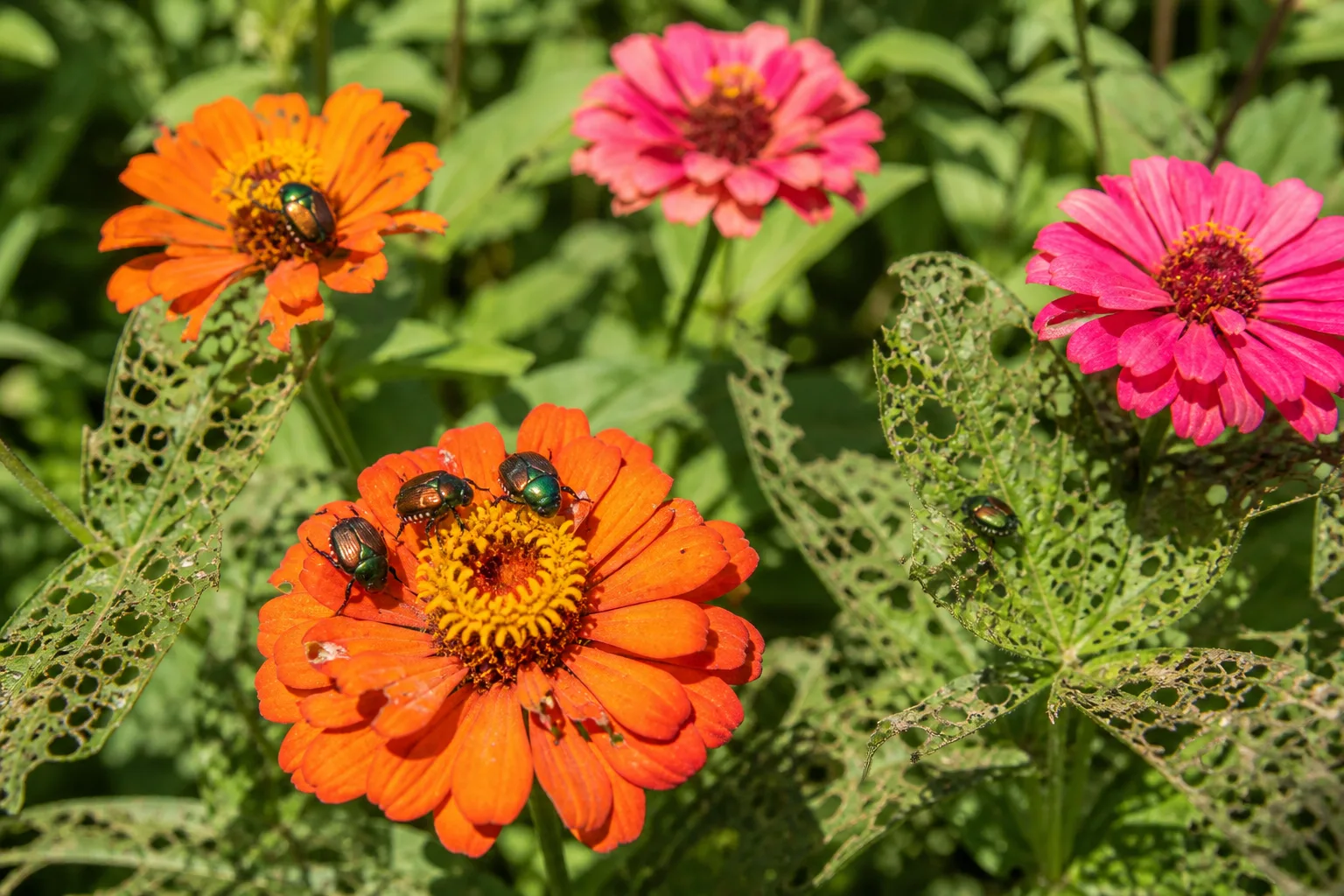
When the green tissue between the veins disappears but the veins remain, think first of a leaf-chewing beetle. Japanese beetles are the classic cause: adults feed in daylight and can leave a lace-like leaf, often while several beetles cluster on the same plant. Rose chafers can create similar skeletonization, but they are usually tan and fuzzy-looking rather than metallic green and copper.
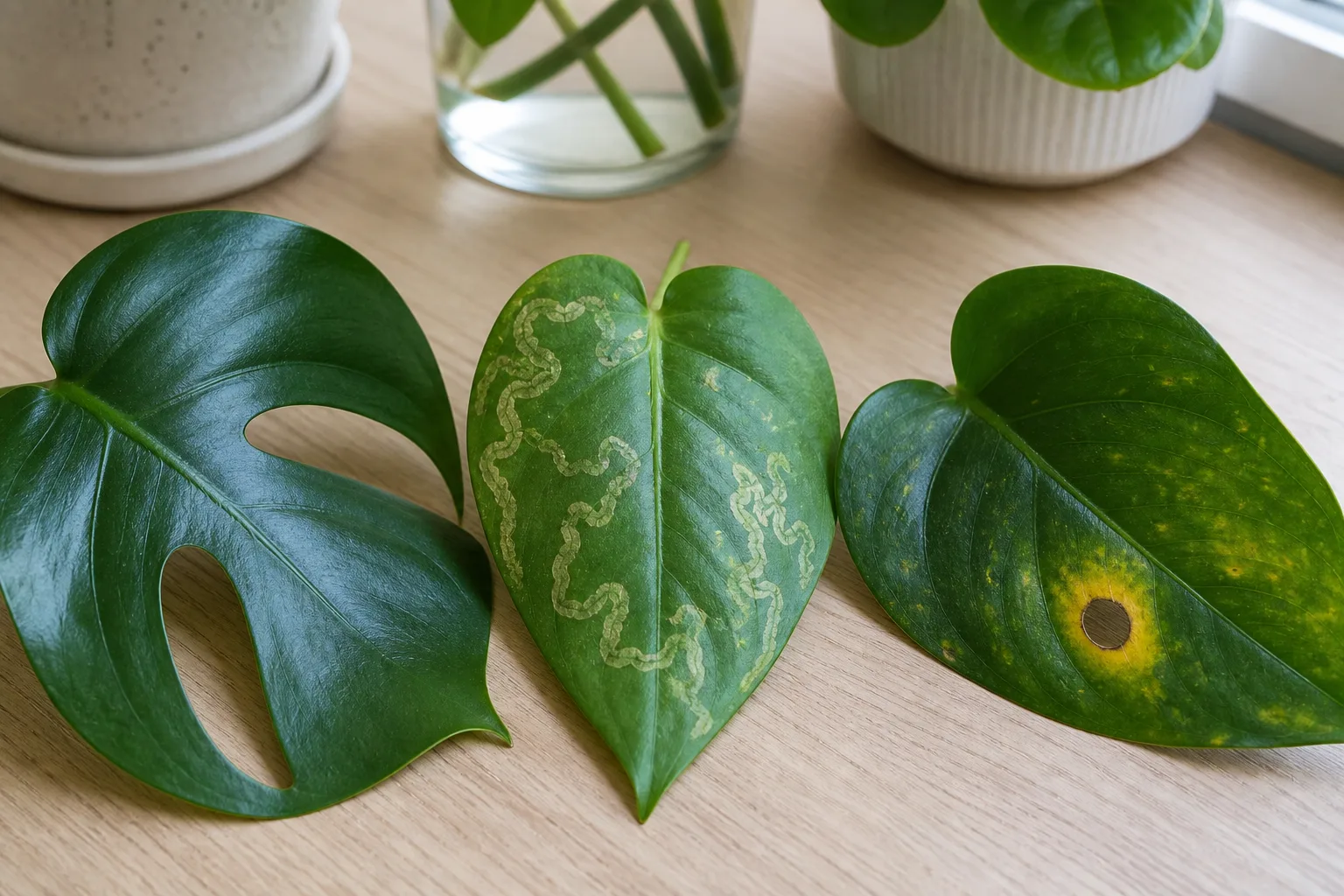
An irregular hole with dark, rice-like pellets nearby points more toward a caterpillar. Young larvae may scrape the surface and leave a pale translucent windowpane before they chew through the leaf. Unlike a disease lesion, the edge of a fresh chewing hole is usually dry and clean rather than surrounded by a spreading colored halo.
Do not assume that every green, caterpillar-shaped larva is a moth or butterfly caterpillar. Sawfly larvae can look similar but are not butterflies, and the best response depends on what you actually find. If the damage is light and the larva is unidentified, photograph it first; that single step can prevent the wrong treatment.
Smooth Notches, Leaf Margins, and Slime Trails
Neat, round or half-moon cuts along the leaf edge are often made by leafcutter bees. The cuts look as if a small punch removed them, with a smooth rim and little tearing. These native solitary bees use leaf pieces to line nest cells; they do not eat the leaf, and a few cuts are not a reason to spray or prune the shrub. The same clean-cut distinction is emphasized in practical garden pest identification by Epic Gardening.
Ragged holes concentrated on lower leaves, especially after a wet evening, suggest slugs or snails. Search at dusk or with a flashlight a couple of hours after dark, then look again at dawn for a glistening trail. Slugs have no external shell; snails carry a shell, but both can leave similar ragged feeding damage.
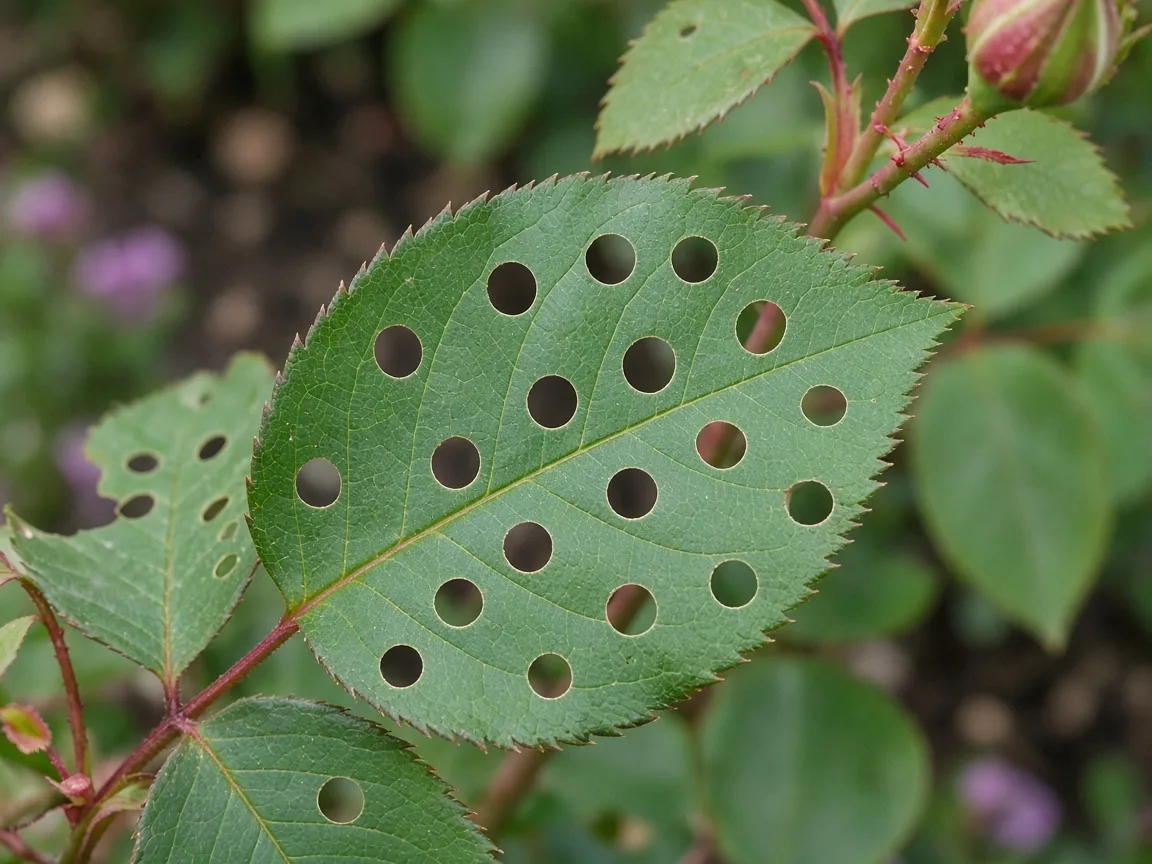
If the marks are torn rather than punched, check for a physical cause before blaming an insect. A branch whipping in wind, hail, a pet brushing through the shrub, or a person pulling a stem can split a leaf. Mechanical damage usually stops when the source stops, whereas active feeding produces fresh edges and often new evidence nearby.
Frass, Silk, Sticky Residue, and Distorted New Growth
Small dark pellets, silk, or leaves tied together are stronger evidence than the hole alone. Hydrangea leaftier larvae pull leaves together with silk and feed inside the shelter, so gently open a fold and inspect before cutting the whole shoot. Remove the larva if you can do so safely, then check nearby leaves for additional ties.
Sticky leaves, curled tips, pale stippling, and fine webbing point to sap-feeders rather than a leaf-chewing pest. Aphids cluster on soft new growth and undersides; thrips scar and distort unfolding leaves; scale looks like fixed bumps on stems or leaves; spider mites create fine stippling and webbing, especially during hot, dry weather. These pests can weaken foliage without making true holes, although damaged tissue may later dry and drop out.
Ants moving up and down the stems can be a useful clue when aphids are present because ants may collect the sugary honeydew. They are not, by themselves, proof that ants are eating the leaf. Check the plant first, then treat the pest you find rather than spraying every insect that happens to walk across the shrub.
Rule Out Disease, Heat, and Physical Damage
Not every hole is made by something with a mouth. A disease lesion can kill a patch of leaf tissue; wind or hail can tear it; heat can turn a weakened edge brown and brittle. The treatment changes completely, so this is the point where a second look matters more than a faster product.
Leaf Spots, Halos, Scorch, and Weather Injury
Fungal leaf spots usually begin as colored lesions, not as clean bites. Cercospora often produces spots with a reddish-purple border and a gray, tan, or pale center, while anthracnose can create larger brown lesions. If dead centers later fall out, the leaf may develop a shot-hole appearance. Wet springs, high humidity, overhead irrigation, and fallen infected leaves can help the problem spread.
NC State Extension notes that cercospora and anthracnose leaf spots on hydrangeas are commonly aesthetic rather than immediately fatal, but repeated infection can reduce vigor. Its recommended prevention sequence is practical: keep foliage as dry as possible, water at the base, remove infected leaves and fallen debris, and do not place diseased material in a home compost pile (NC State Extension’s hydrangea leaf-spot guidance). A fungicide, when appropriate for the diagnosis and labeled for the plant, protects new tissue; it does not fill an existing hole or restore a dead spot.
Leaf scorch has a different look. Exposed leaves develop tan or brown, crispy margins or patches after intense heat, drought, reflected sun, or root stress. Scorch can become ragged as the tissue dries, but it usually comes with wilt, curled edges, or a whole section of stressed foliage rather than isolated fresh bites. Move irrigation to the soil line, protect the root zone with mulch, and correct the site before reaching for an insecticide.
Match the Likely Culprit to the Least-Risk Action
Use the table below as a starting point, not as a substitute for seeing the plant. The goal of integrated pest management is not to sterilize the garden; it is to reduce consequential damage while preserving pollinators, predators, and the plant’s remaining healthy foliage.
| What you see | Most likely group | Best first response |
|---|---|---|
| Lace-like tissue missing between veins; beetles visible in daylight | Japanese beetles or rose chafers | Hand-pick into soapy water; use netting where practical |
| Irregular holes with dark pellets, folded leaves, or silk | Caterpillars or leaftiers | Hand-remove after identification; consider labeled BtK for confirmed young caterpillars |
| Ragged lower holes plus slime after a damp night | Slugs or snails | Evening hand-picking, debris reduction, boards or a labeled bait/barrier |
| Smooth circles or half-moons from the leaf margin | Leafcutter bees | Leave them alone; protect the shrub only if browsing is also present |
| Curling, stippling, honeydew, webbing, or scale bumps without true holes | Aphids, thrips, mites, or scale | Hose off or use a labeled contact product only on the confirmed pest |
| Torn edges, missing tips, or damage at browsing height | Deer, rabbits, pets, or weather | Inspect fencing and exposure; repair the physical cause |
| Colored spots with halos that later drop out | Fungal or bacterial leaf spot | Sanitation, base watering, airflow, and local diagnosis |
Japanese Beetles and Rose Chafers
Japanese beetles have metallic green bodies, copper-colored wing covers, and small white tufts near the legs. The adults chew the tissue between veins, so several feeding adults can turn a hydrangea leaf into a skeleton in a short time. NC State Extension describes adults feeding on more than 300 plant species and notes that they emerge from soil-dwelling grubs in late spring or early summer, with local timing varying by climate (NC State Extension’s Japanese beetle guidance).
For a small shrub, hand-pick in the cool morning when adults are less active and drop them into a bucket of soapy water. Repeat daily while new beetles are arriving. Fine netting can protect a young or especially valuable plant, but remove it when flowers need pollinating and make sure it does not press against wet foliage.
Do not place a strongly scented beetle trap beside the hydrangea. Lures can attract adults into the area, and NC State warns that traps may draw more beetles toward nearby plants than they catch. Milky spore is a long-term, inconsistent option for the grub stage, not a rescue for adults already chewing leaves. If you use an insecticide, choose only a product labeled for the plant and pest, avoid blooming periods when possible, and follow every label restriction; many broad-spectrum treatments also harm bees and other insects.
Rose chafers can also arrive in groups and skeletonize foliage, particularly in areas with sandy soil. Because their appearance and life cycle differ from Japanese beetles, photograph the adults and ask a local extension office if the distinction affects your management decision. The immediate low-risk response—hand removal and protecting the plant from repeat feeding—is the same.
Caterpillars, Hydrangea Leaftiers, and Sawfly-Like Larvae
Inspect the underside of damaged leaves and the inside of any folded or webbed leaves. Caterpillars commonly leave frass and irregular holes, while leaftiers may be easy to miss because their silk shelter hides them. If you find a butterfly or moth caterpillar and the damage is minor, moving it to an appropriate host plant can preserve a useful part of the garden ecosystem.
For a confirmed, damaging caterpillar infestation, Bacillus thuringiensis var. kurstaki (BtK) can be a more targeted choice than a broad-spectrum insecticide. UConn Extension explains that Bt must be eaten by a susceptible larva, works best on young feeding stages, and loses effectiveness with sunlight, rain, and time; it also lists hydrangea leaftier caterpillars among BtK targets (UConn Extension’s Bt factsheet). That means BtK will not fix holes already present, will not control adult moths, and should not be sprayed indiscriminately over foliage hosting desirable butterfly or moth larvae.
Apply only a product labeled for the plant and target pest, at the label rate and timing. If you cannot see a larva, do not assume Bt is the answer; a fungal spot, slug, or beetle can look similar from a distance. Hand removal is often enough for a few visible larvae and avoids coating the entire shrub.
Aphids, Thrips, Scale, and Spider Mites
These pests belong in the diagnosis because gardeners often call any leaf damage a “hole,” but they usually make a different signature. Aphids cluster on new shoots and can leave sticky honeydew; thrips leave silvery scarring and distorted unfolding leaves; scale forms bumps; mites create pale stippling and fine webbing. A leaf may later develop dead patches, but true missing tissue is not their normal first sign.
Start with a steady stream of water directed at the leaf undersides and tender stems. If the pest returns and the label allows it, insecticidal soap or horticultural oil can work by contact, so complete coverage and repeat applications matter. Test a small area first, never spray a drought-stressed or heat-baked hydrangea, and keep sprays off open flowers and active pollinators.
Neem oil is not a universal answer to holes. It may have a role against some soft-bodied pests or as a labeled protectant, but it will not fill a beetle-chewed leaf, remove a slug, or reverse fungal tissue death. Lorraine Ballato’s practical hydrangea IPM sequence likewise starts with observation, water, and hand-picking before contact products, with special attention to leaf undersides (Ballato’s hydrangea insect guidance).
Deer, Rabbits, and Ordinary Mechanical Tears
Animal browsing leaves a torn, pulled edge rather than the repeated bite marks of an insect. Deer may strip shoots, flower buds, or the outer layer of several leaves; rabbits usually work lower and closer to the ground. Look for damage at a consistent height, tracks, droppings, or a plant that is missing tips rather than peppered with small holes.
Physical exclusion is more reliable than a homemade taste spray. Use a fence or netting that is tall and well anchored enough for the animal you are dealing with, and check that the barrier does not rub against the hydrangea. NC State lists deer damage as a known issue for bigleaf hydrangea, so a shrub in a frequently browsed bed may need protection even when no animal is caught in the act.
If damage appears only after a storm, inspect nearby branches and the plant’s exposure. Remove a broken branch cleanly, stake or redirect a rubbing stem, and wait to see whether the new damage stops. A single torn leaf does not justify pesticide treatment.
What to Do in the Next 48 Hours
The first two days are for confirming the pattern and interrupting active feeding—not for trying every remedy at once. A simple sequence keeps you from confusing a treatment reaction with a real improvement.
Inspect, Photograph, and Confirm
Take a close photograph of the whole shrub, the most damaged leaf, the underside of that leaf, and the ground beneath it. Include a coin or ruler for scale if the pest is tiny, but do not handle an unknown insect bare-handed. Recheck at dawn for slime and at dusk for slugs, then make a brief daylight pass for beetles, aphids, and folded leaves.
Mark one or two leaves with a removable garden tie or photograph the same branch each day. If no fresh damage appears for several days, the original holes may be old, cosmetic, or caused by a one-time weather event. If damage is accelerating, the new evidence tells you which control has a chance to work.
For a container hydrangea, move it away from other plants if you suspect an insect infestation or disease and can do so without adding heat stress. An in-ground shrub cannot be quarantined in the same way; instead, inspect nearby plants and reduce shared conditions such as overhead watering, dense debris, or a common browsing route.
Remove Active Pests Without Collateral Damage
Use the least disruptive method that fits what you found. Hand-pick Japanese beetles in the morning, hunt slugs with a flashlight after dark, open leaftier shelters, and hose aphids from the underside of leaves. Drop removed insects into soapy water rather than onto another plant, but relocate an unidentified caterpillar only after you have considered whether it may be a desirable species.
For slugs, clear wet leaf litter directly beneath the shrub, lift a board or overturned pot as a daytime trap, and check it every morning. Copper bands may help around a single valuable plant if kept clean and placed where slugs actually climb. Commercial iron-phosphate baits can be considered only when the label covers the use; follow the product instructions and do not treat a barrier or bait as a replacement for fixing excessive shelter.
Avoid salt on the soil. It dehydrates slugs, but it also damages soil structure and can injure roots. Homemade eggshell or sharp-grit rings may be temporary obstacles in dry conditions, but they are not a dependable answer when the bed stays damp or the pest population is high. The practical options summarized by Birds & Blooms include evening scouting, hiding-place traps, and targeted barriers; use them as a system rather than relying on one trick.
Choose a Spray Only When the Evidence Warrants It
Spray only after you can name the target group and explain why a lower-impact option is insufficient. Insecticidal soap and horticultural oil are contact products: they need to wet the pest, especially on leaf undersides, and they can burn foliage when applied in heat, drought, or strong sun. A product that is “organic” or “natural” is not automatically safe for every hydrangea, pollinator, or aquatic environment.
Read the entire label for the plant, pest, rate, protective equipment, re-entry language, weather limits, and flowering restrictions. Never mix household dish soap as a substitute for a labeled insecticidal soap; detergents can strip leaf surfaces and cause injury. Do not combine multiple products because a single treatment failed—first check whether the pest was present, whether the spray reached it, and whether enough time has passed for the label’s repeat interval.
For fungal spots, sanitation and dry foliage are usually more important than a late rescue spray. NC State Extension notes that preventative fungicides may protect new leaves but do not cure already infected tissue. If the diagnosis remains unclear, send clear photos and location details to a local cooperative extension office or plant clinic instead of escalating blindly.
Prevent a Repeat Outbreak
Prevention is a combination of plant strength, habitat decisions, and early detection. A hydrangea that receives appropriate light, steady moisture, and good drainage is not immune to pests, but it is better able to replace a few damaged leaves than a shrub repeatedly scorched, waterlogged, or defoliated.
Give most hydrangeas morning sun or dappled light with protection from the hottest afternoon exposure, especially in a hot or dry climate. Keep the root zone evenly moist but not saturated, water at the base, and leave enough space for air to move through the shrub. Avoid a heavy flush of high-nitrogen fertilizer when soft new growth is already attracting aphids; more tender foliage is not a substitute for correct diagnosis.
Keep a thin, stable mulch layer over the root zone while leaving the stems uncovered. Mulch helps moderate moisture and temperature, but a deep, constantly wet mat of leaves pressed against the crown can create hiding places for slugs and prolong leaf wetness. Remove diseased foliage and fallen leaf-spot debris, while allowing some healthy garden habitat nearby for predatory insects and pollinators.
Once a week, spend three minutes checking new growth, undersides, flower clusters, and the soil line. In Japanese beetle season, check in daylight; for slugs, add an evening check after rain. Note the date, weather, location of damage, and what you found. A simple record reveals whether the issue is seasonal and recurring or whether today’s holes were a one-off event.
Do not aim for a leafless, insect-free garden. Lady beetles, lacewings, spiders, birds, and solitary bees are part of the control system, and the presence of one insect is not evidence of a damaging population. The better threshold is ongoing damage that exceeds the plant’s ability to keep useful green foliage, not the mere sight of a bug.
When to Cut Damaged Leaves—and When to Wait
Holes in a mature leaf will not grow closed. The hydrangea can continue using the green tissue around them, however, so leave a lightly damaged leaf attached if it is still mostly green and the pest is gone. Removing every imperfect leaf can reduce the plant’s energy-making surface without stopping the original cause.
Cut a leaf at its petiole when it is mostly brown, skeletonized, diseased, or physically split and likely to keep tearing. If a disease is suspected, remove the leaf during dry weather, clean pruners between plants, and dispose of it rather than composting it at home. Do not remove healthy stems just because one leaf has holes; hydrangea pruning timing can affect future flowers, especially on old-wood types.
The clearest recovery signal is clean new growth. Old holes will remain, but new leaves should emerge without fresh feeding marks, expanding halos, or distortion once the cause is controlled. After severe defoliation, keep moisture consistent, protect the shrub from harsh afternoon heat, and avoid forcing it with fertilizer; let it rebuild at its own pace.
Conclusion
Start with the pattern, not the product. Skeletonization with visible daylight beetles, frass and silk, slime on lower leaves, smooth edge cuts, sticky stippled growth, colored lesions, and torn browsing marks each point to a different response.
In the next 48 hours, photograph the damage, inspect both leaf surfaces and the soil line, remove the pest you can confirm, and monitor a marked branch for fresh holes. Hand-picking, a hose, sanitation, netting, and better moisture management solve more small outbreaks than a blanket spray. When treatment is justified, match it to the identified pest, protect pollinators, and follow the label. Your hydrangea does not need perfect leaves to recover; it needs the right cause identified before healthy new growth is lost.