How to Save an Overwatered Cactus: Signs and Steps
Save an overwatered cactus by checking for rot, trimming only damaged tissue, and resetting its pot and soil. Learn when drying in place is enough for now.
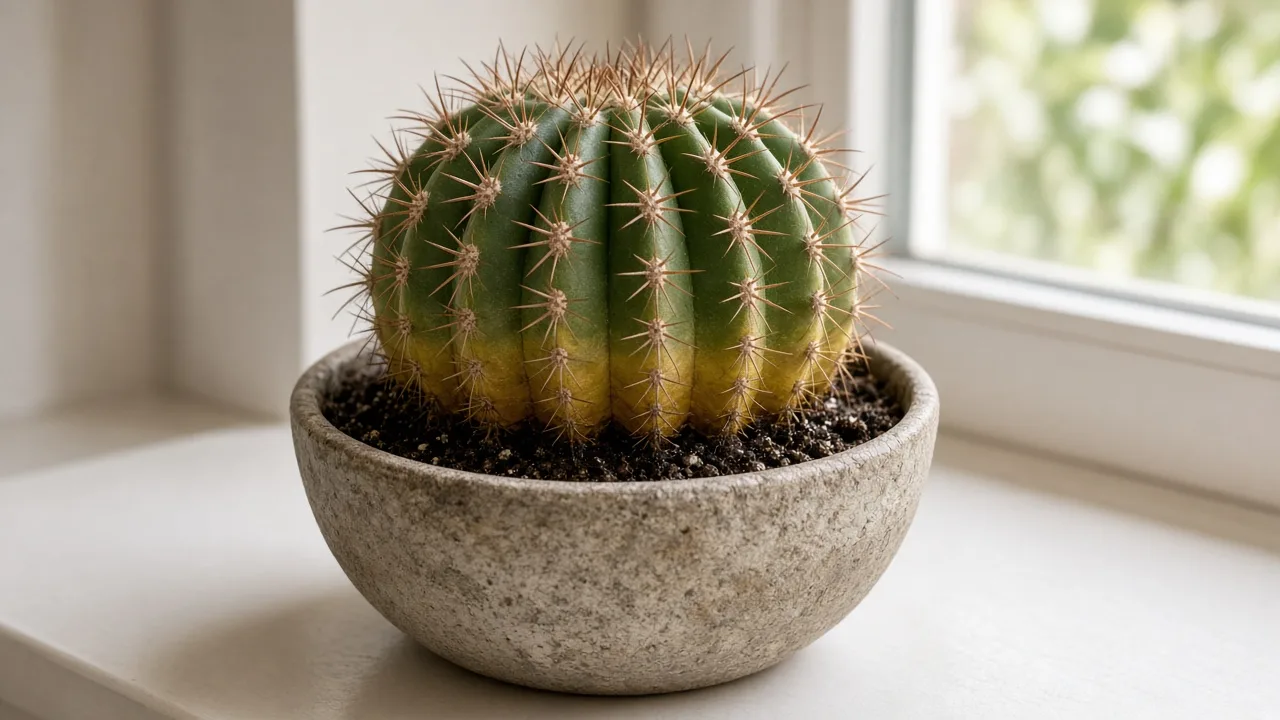
If your cactus is sitting in wet soil, stop watering and empty any water trapped in its saucer or decorative outer pot. A firm plant with damp soil may recover without being disturbed; a cactus that is soft at the base, discolored, or losing roots needs a closer inspection.
The difference matters. Unpotting a healthy cactus adds stress and can break working roots, while leaving active rot in a soggy pot gives the damage more time to spread. Use the plant’s firmness, the soil’s condition, the pot’s drainage, and—when necessary—the roots to choose the least disruptive effective response.
Start with triage: wet soil or active rot?
An overwatered cactus can often recover if enough firm, healthy tissue remains and you correct the conditions that kept its roots wet. “Overwatered” describes both a watering pattern and a root-zone problem, so the first question is not how many times you watered; it is whether the soil can drain and dry, and whether the plant tissue has begun to break down.
Look at the cactus and pot before you reach for tools. Is the mix merely damp after a recent watering, or still heavy and saturated days later? Does water leave through an open drainage hole? Is the cactus firm throughout, or is the base soft enough to dent or collapse? These observations separate a preventable moisture problem from suspected rot.
Read the symptoms before changing anything
Soft, translucent, yellow, or brown tissue can signal overwatering, especially when the mix remains wet and the change starts near the soil line. A foul or sour smell, a plant that rocks because the base has weakened, or dark tissue that feels wet rather than dry raises the concern for rot. The University of Florida IFAS Extension’s Christmas cactus guidance notes that stems and roots can rot when potting medium holds too much water.
Check firmness, color, and smell together
One yellow patch is not a diagnosis. Scarring, sunburn, age, cold exposure, pests, and normal corking at the base of an older cactus can all change color; underwatering can also make a plant look wrinkled or limp. Compare the suspect area with firm tissue higher up, feel the mix below the surface with a wooden skewer, and notice whether the pot has been slow to dry.
Rot is more likely when several clues agree: soil remains wet, the plant softens progressively, and roots or stem tissue turn dark and mushy. Healthy roots are generally firm and hold their shape, though their natural color varies by species and the soil may stain them. Texture and deterioration matter more than a perfect white color.
Account for holiday cactus and other exceptions
Not every plant sold as a cactus is a desert cactus. Holiday cacti such as Schlumbergera grow in forest habitats and have different light and moisture needs; the University of Florida IFAS recommends a well-drained medium and watering when the upper inch begins to dry, rather than treating them exactly like a desert barrel cactus. The succulent-specific advice below still applies to root rot, drainage, and avoiding waterlogged soil, but do not move a recovering holiday cactus into harsh desert-cactus sun or keep it bone dry for a long stretch.
Grafted cacti also have two parts: a scion (the colorful top) and a rootstock. If the rootstock is rotting, a healthy scion may sometimes be detached and rooted or regrafted, but the procedure depends on the species and graft; do not assume the top can simply be planted as an ordinary cutting.
Take these first steps today
Stop adding water. Remove the pot from a cachepot or saucer, pour out standing water, and make sure the drainage opening is not blocked by compacted soil or a flat surface. If the plant is outdoors, move it out of prolonged rain while it recovers; indoors, choose a bright place with normal air movement rather than a heater vent or a hot window that will stress damaged tissue.
Skip fertilizer, misting, and “drying” treatments. Fertilizer cannot repair damaged roots, and adding products to already stressed soil can complicate the diagnosis. Do not blast the pot with a hair dryer or put it straight into intense midday sun; the goal is to stop persistent wetness while keeping the cactus stable, not to shock it into drying faster.
When is letting the pot dry enough?
Let the cactus remain in its pot if it is firm, the container has an unobstructed drainage hole, excess water drains freely, and the mix is only temporarily damp rather than staying saturated. Empty the saucer and leave the pot somewhere bright and warm enough for normal drying. Check below the surface rather than judging by the dry-looking crust, then wait until the root zone has dried before watering again.
Drying in place is not the right plan if the pot has no drainage, water is trapped in an outer container, the soil smells rotten, the mix stays wet for an unusually long time, or softness is spreading from the base. Those conditions suggest that roots need air and inspection, not simply more days in the same wet medium. A fixed “wait a week” rule cannot account for pot size, temperature, light, humidity, or the cactus’s species.
When should you unpot the cactus?
Unpot the plant when you have reason to suspect damaged roots or cannot correct the wet conditions without changing the container or medium. Persistent sogginess, a sour odor, mushiness at the soil line, or a cactus that has become unstable all justify inspection. If the plant is stable and its pot drains well, avoid repotting solely because you watered it once more than intended.
Before you start, protect yourself from spines. Wrap a small cactus in folded newspaper or use padded tongs; for a large cactus, wear puncture-resistant gloves and use a second person if the plant is awkward to lift. Work on a clear surface, keep the plant away from children and pets, and do not grip a cactus by its spines or delicate growing tip.
Inspect the roots without damaging healthy tissue
Slide the root ball out gently, supporting the plant rather than pulling it by the stem. Ease away wet soil with your fingers or a soft brush so you can see the roots, but do not scrub or tug at roots that are still attached and firm. If the mix is clinging, a few minutes of careful work is safer than stripping every last particle from a fragile root system.
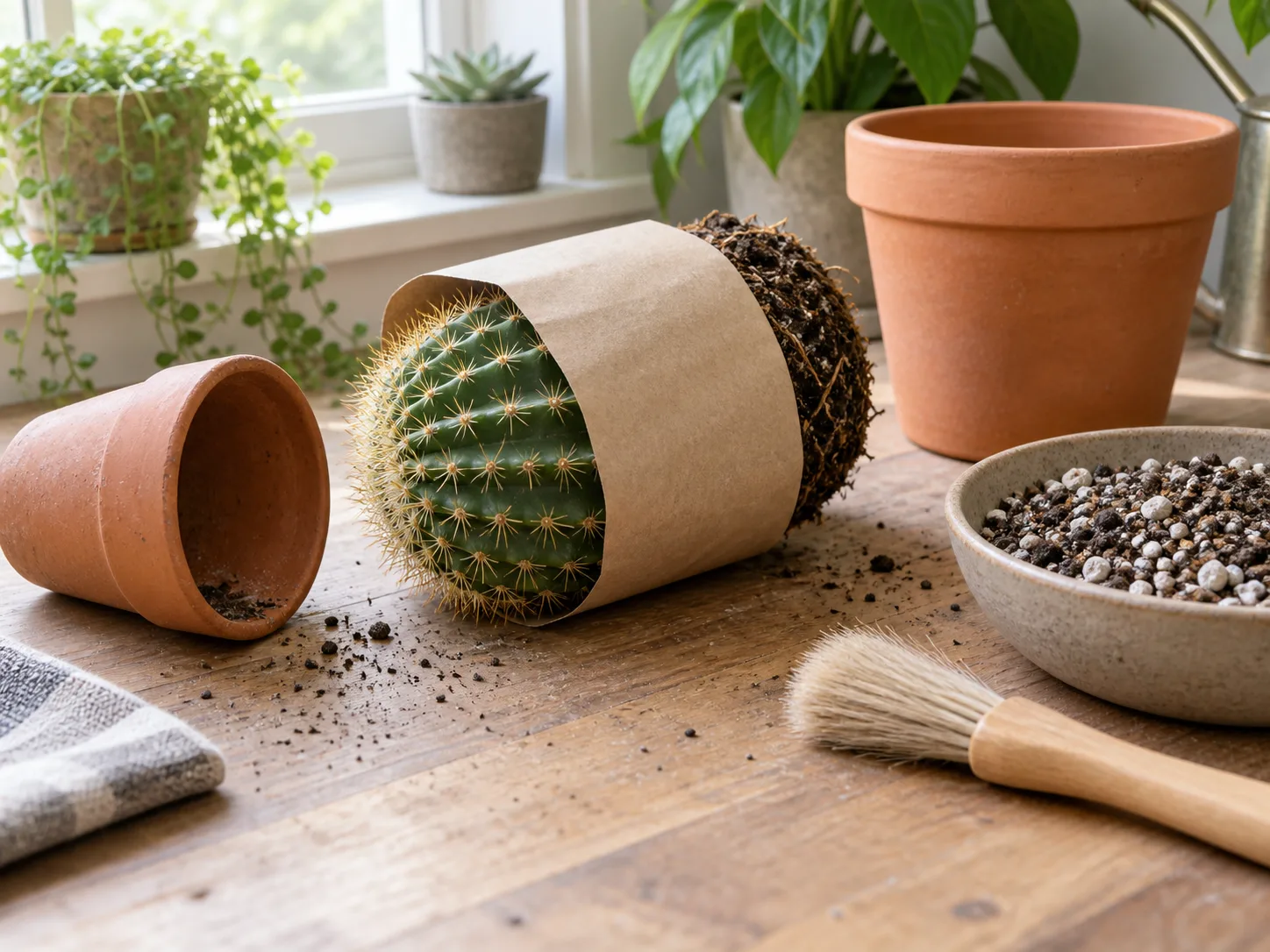
Healthy cactus roots may be cream, tan, or light brown and should feel firm, not slimy. Rotten roots are typically soft, dark, and may slough apart or smell unpleasant; a dark root that is still firm is not automatically rotten. The peer-reviewed study of the cactus root–stem junction in Frontiers in Plant Science describes how cactus roots are adapted to take up available water efficiently. That drought adaptation does not make a potted root system immune to prolonged saturation or tissue decay.
Remove rot, not every root that looks imperfect
Use a clean, sharp knife or pruning snips to remove roots that are clearly mushy, hollow, or falling apart. Make cuts back to firm tissue, and clean the blade between cuts with 70% isopropyl alcohol, letting it evaporate before the next cut. Preserve healthy roots whenever possible: they are the plant’s route back to water uptake, and cutting them just because they are brown or thin can leave the cactus with less capacity to recover.
If only a few roots are affected, remove those sections and stop once the remaining root system is firm. If most roots are compromised, trim gradually and reassess rather than making one aggressive cut. Discard the soggy old mix; do not put a rescued cactus back into soil that stayed waterlogged or reuse debris that contains rotted tissue.
What if rot has reached the cactus stem?
Softness limited to roots is a better prognosis than a stem that has become mushy or blackened. If rot has entered the base, unpotting alone will not remove it: with a sterile blade, cut away the damaged tissue until the cut surface is consistently firm and clean-looking. Re-disinfect the blade between cuts so you do not carry contaminated material into the healthy portion.
For a columnar or branching cactus, a healthy upper segment may be saved as a cutting if it can be separated above all visible soft tissue. Let that cutting dry until the wound forms a firm callus, then set or plant it according to the growth habit; never bury a fresh wet cut. A round cactus with rot extending through its crown or most of its body may have no viable portion to save, so be realistic rather than repeatedly cutting into healthy tissue without a clear clean margin.
Let cuts dry before planting again
Freshly cut roots and stem tissue should not be pressed straight into damp soil. Set the plant in a dry, shaded, airy place until exposed cuts are dry to the touch; small root snips may dry sooner than a broad stem cut. The timing depends on wound size, temperature, and humidity, so use the surface—not an arbitrary number of hours—as the signal that the cut has sealed over.
This is a place where online advice often supplies one universal waiting period, but there is no useful single number for every cactus and cut. Epic Gardening’s guidance for a waterlogged Christmas cactus and Evergreen Seeds’ cactus rescue article both emphasize drying damaged tissue and withholding water after repotting, while their suggested intervals differ. The practical rule is to wait until cuts are dry and the new medium is dry; longer cuts or cool, humid rooms need more patience.
Choose a pot and mix that drain predictably
Use a clean pot with at least one open drainage hole and choose a size that fits the remaining roots. A container much wider than the root ball holds more wet mix than the cactus can use quickly; a snug pot reduces that reservoir. Terracotta can help a mix dry sooner, but a plastic pot can also work if the size, medium, and drainage are appropriate.
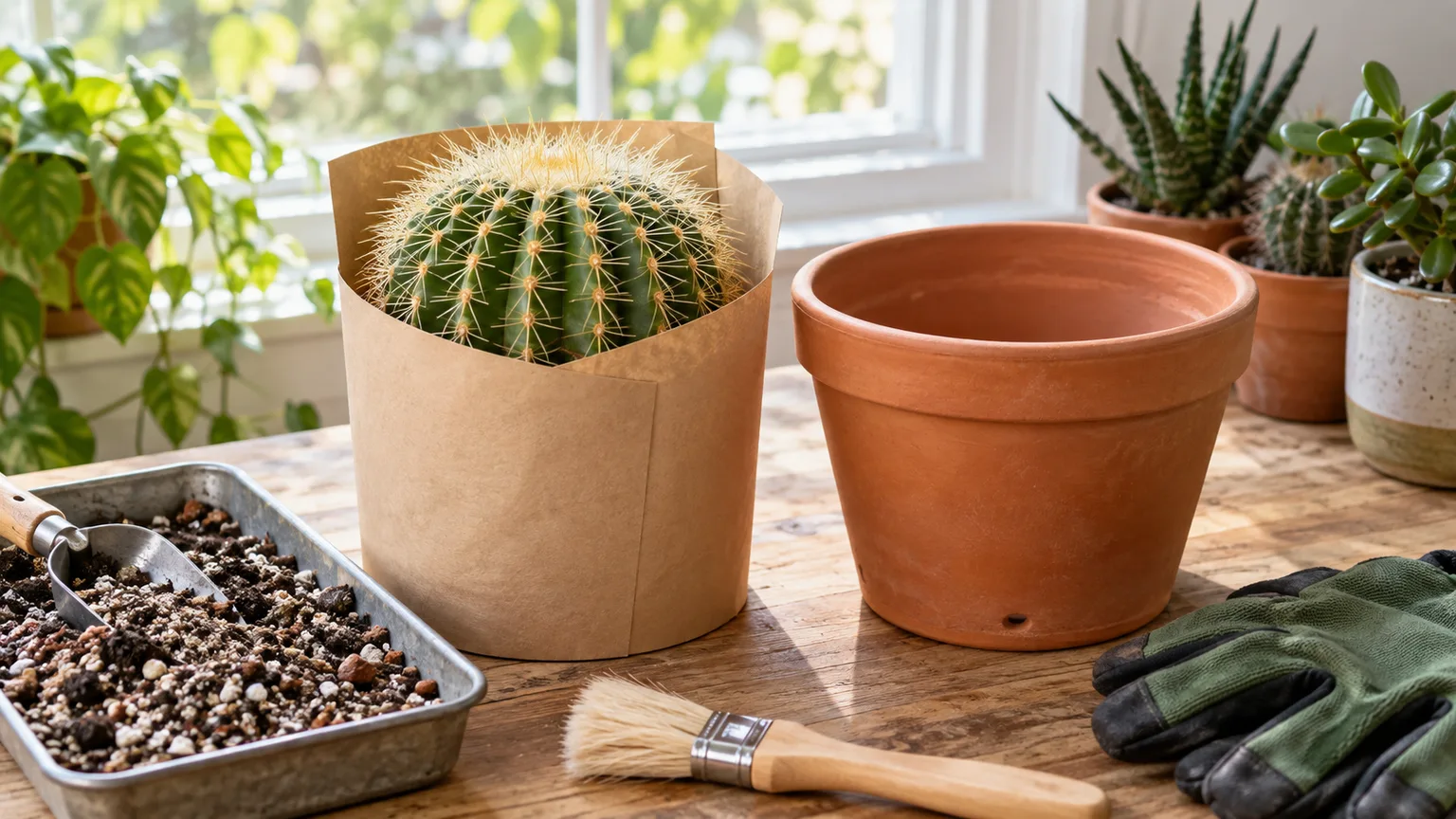
Choose a cactus-and-succulent medium that drains freely, then amend it with coarse mineral material such as pumice, perlite, or horticultural grit if the mix stays dense or peat-heavy. There is no universal recipe: particle size, climate, pot material, and watering habits change how quickly a mix dries. Avoid fine sand that fills air spaces, and do not try to create drainage by layering gravel at the bottom; a drainage hole and a well-structured mix are more important.
Repot at the correct depth
Fill the clean pot with dry mix, spread the roots naturally, and set the cactus at approximately its previous soil line. Keep the crown and stem base above the mix rather than burying extra stem to stabilize the plant; buried tissue can remain damp and begin rotting again. Backfill gently so the plant stands upright, but do not compress the mix into a solid plug around the roots.
For a spiny cactus, use folded paper or tongs to place it without damaging either the plant or your hands. Do not add stones over the drainage hole or seal the surface with decorative gravel while the cactus is recovering; those additions can make it harder to see moisture and can slow evaporation near the base. If the cactus wobbles, use a temporary stake or adjust the pot size rather than burying the stem deeper.
Give the roots a gentle recovery environment
Place the repotted cactus in bright light, but avoid a sudden jump into scorching direct sun while roots are damaged or freshly trimmed. A plant accustomed to several hours of direct light can return to that exposure gradually over several days; a cactus grown indoors in filtered light should stay near its normal bright window. The aim is to give it enough light for steady growth without making a root-damaged plant lose water faster than it can replace it.
Keep it warm and stable, away from cold glass, drafts, and heat vents. Do not fertilize until you see signs of renewed growth, and do not keep pulling the plant out to inspect it. Root recovery is largely invisible; a stable base and the absence of new soft patches are useful signs, while new growth may take longer depending on species and season.
Decide when to water after repotting
After trimming roots, wait until cuts are dry and the cactus is planted in dry mix before watering. For a plant with no significant cuts, a short settling period may be enough; for extensive root pruning or a stem cutting, wait longer until the wounds are sealed. Practical sources vary on exact waiting periods, so do not treat seven days or two weeks as a rule that overrides fresh cuts, damp soil, or cool conditions.
When the plant is ready, water the mix thoroughly and let all excess drain away. Do not leave the pot sitting in a saucer of water or give repeated small splashes that wet only the surface. The University of Florida IFAS advises watering a holiday cactus after its upper inch dries; desert cacti generally need a deeper dry-down between waterings, especially in low-light or cool seasons. For any cactus, check actual moisture and drainage instead of following a weekly calendar.
Monitor recovery without disturbing the plant
Check the soil with a wooden skewer or by carefully feeling below the surface, then track how long the pot takes to dry under its current conditions. A light pot and dry mix are useful cues, but do not water simply because the cactus looks wrinkled: damaged roots can leave a plant thirsty-looking while the root zone remains wet. If the base remains firm and no new dark, soft patches appear, leave it alone and allow time for roots to re-establish.
Old yellowed or damaged tissue may remain discolored even after the underlying problem is corrected. Judge progress by whether deterioration stops, the plant becomes stable, and new growth eventually appears—not by expecting damaged tissue to turn green again. If softness expands or an odor returns, take the plant back out and reassess the tissue and drainage rather than adding fertilizer or more water.
Know when the original plant may not recover
A cactus with firm roots and a firm stem has a reasonable chance to recover once excess water is removed. A plant with extensive root loss may still survive, but expect slower recovery and avoid forcing growth with extra water or fertilizer. When rot has consumed the base or crown, the original plant may be beyond saving; a clean, healthy cutting can be the only realistic option, and some cacti do not root readily from every segment.
If the whole plant is soft, smells rotten, or has no firm tissue above the affected area, discard it and the old soil. Clean the pot before reuse and correct the drainage or watering condition that caused the problem. Letting go of a plant that has no healthy tissue is not a failure of care; it prevents you from repeating a rescue that has no viable starting point.
Prevent the next overwatering episode
Water based on the plant’s drying conditions, not a “once every ten days” rule. Pot size, drainage holes, mix texture, temperature, humidity, light, season, and cactus type all affect how quickly roots use or lose water. During active warm-season growth, a desert cactus may dry its mix faster; in a cool, dim winter room, the same pot can stay damp far longer.
Before watering, check the mix below the surface and lift the pot to learn how it feels when dry. Water deeply when it is ready, let the pot drain, and empty the saucer. If the pot has no drainage opening, move the cactus into a suitable container rather than trying to measure a tiny amount of water indefinitely; a decorative cachepot can remain, provided the growing pot drains and is removed to empty runoff.
Also match the care to the species. A desert cactus, a tropical holiday cactus, and a grafted novelty cactus do not all use water or light in the same way. The cactus root–stem study in Frontiers in Plant Science helps explain why drought-adapted water uptake should not be confused with tolerance for a persistently saturated pot; the UF/IFAS guidance provides a useful contrast for Schlumbergera in household conditions.
Conclusion
To save an overwatered cactus, first stop watering and remove standing water, then decide whether the plant can dry safely in its pot or needs root inspection. Firm tissue and working drainage favor a less disruptive wait; persistent wet soil, a foul smell, or softening at the base call for unpotting, careful removal of rot, dry wounds, and a clean pot with a fast-draining medium.
After repotting, keep the cactus in bright, stable conditions and wait for dry cuts and dry soil before watering again. Recovery depends on how much healthy tissue remains, so watch for new deterioration rather than relying on a promised timeline. Once it stabilizes, let the soil and season—not a fixed calendar—tell you when it needs water.