How to Get Rid of Foxes in Your Yard and Garden
Learn how to get rid of foxes in your yard with humane steps: remove food, secure pets, block den access, improve fencing, and use deterrents safely.
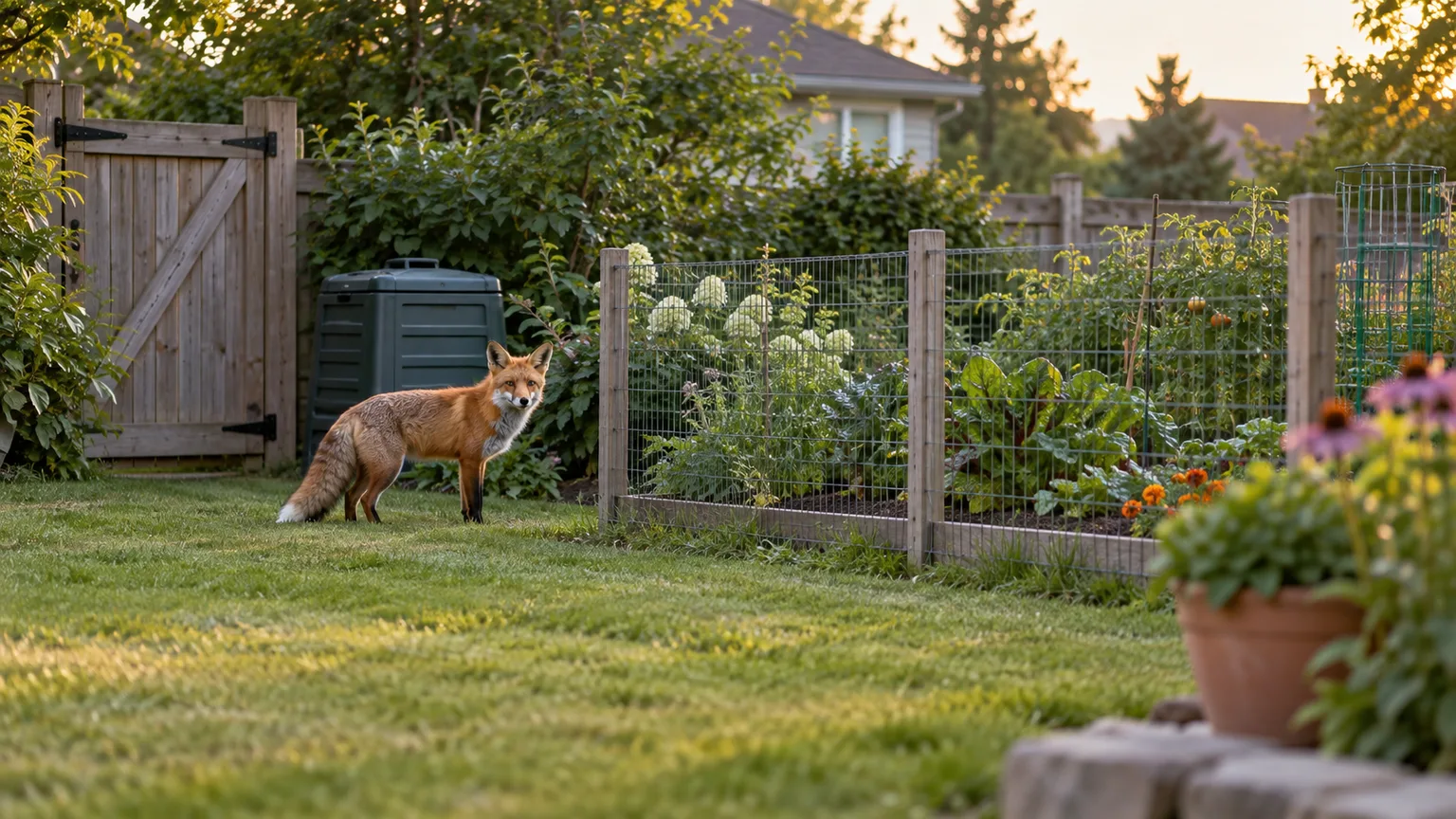
A fox crossing the lawn once is usually a wildlife sighting, not an infestation. Repeated digging, tipped bins, a den beneath a deck, or a threatened chicken run is different: those patterns mean your yard is providing a reward, a shortcut, or shelter worth revisiting.
The most reliable humane strategy is layered. Remove whatever is feeding the visit, protect the animal or garden feature being targeted, close routes and denning spaces when it is safe to do so, and use mild startles only as backup. A scent spray or motion light can buy time, but it rarely compensates for an open compost bin or a gap under the gate.
Before You Act: Is the Fox Actually a Problem?
Foxes are adaptable omnivores that may eat rodents, rabbits, birds, insects, fruit, and discarded food. That can make them useful neighbors in one yard and a serious nuisance in the next. The RHS guide to foxes in gardens notes that many visits leave no damage, while the recognizable problems include holes, trampled plants, droppings, chewed items, and buried food.
Start by identifying the damage rather than assuming every hole came from a fox. Foxes may dig for earthworms or chafer grubs, cache food, investigate an animal-based fertilizer, or use an existing hole as a den. Badgers, skunks, raccoons, dogs, and other animals can create similar marks, so a trail camera aimed at the problem spot for several nights is often more useful than buying a deterrent immediately.
Seeing a fox in daylight is not, by itself, a sign of rabies. Foxes can be active at dawn, dusk, and during the day, especially when they are feeding young or moving through an urban territory. Concern rises when the animal is disoriented, staggering, paralyzed, unusually tame, repeatedly approaching people, or showing unprovoked aggression; those are reasons to keep your distance and call the appropriate local agency.
The Safest Order of Operations
If you want a practical sequence, use this one:
- Bring children and pets inside or under close control.
- Remove food, water, and strong animal-based smells that can be removed today.
- Record where the fox enters, digs, toilets, or rests.
- Protect the specific target: poultry, rabbits, beds, bins, or a crawlspace.
- Add a motion-triggered startle or brief hazing if the fox is actively visiting.
- Build permanent exclusion only after checking that no den is occupied.
- Escalate to wildlife control or animal control if there is abnormal behavior, injury, public danger, or damage you cannot safely address.
This order matters because it prevents a common failure: chasing a fox away from one corner while leaving the food reward and the easy route intact. The animal may simply return after dark, or another fox may take advantage of the same conditions.
1. Remove Food and Scent Rewards
Food removal is the highest-value first step because it changes the fox’s reason for visiting. Secure garbage and recycling, keep compost closed, clean barbecue grease and scraps, pick up fallen fruit, and bring pet food and water bowls indoors after use. If you feed birds, use a feeder that limits ground spill and rake beneath it regularly; a bird-feeding station that feeds rodents can indirectly make a yard attractive to foxes.
Check less obvious smells too. Bone meal, blood meal, fish-based products, and some animal-derived fertilizers can smell like a possible meal to a fox and may trigger digging around new plantings. The RHS specifically flags these materials as a reason foxes may excavate newly planted areas. Switch to a plant-based fertilizer if it suits your garden, or keep animal-based products sealed and avoid applying them where digging is already a problem.
Do not leave food out as a distraction. Feeding a fox can reduce its natural caution around people, create conflict with neighbors, and attract rats or other wildlife. The Michigan Department of Natural Resources’ fox guidance also recommends securing pet food, bird food, compost, garbage, and livestock feed because human-provided food can habituate foxes to people.
Audit the hidden attractants
Walk the property at fox height—along fences, beneath decks, behind sheds, and around the compost area. Look for spilled chicken feed, an open bag of seed, a dead animal, uncovered scraps, a tipped bin, fallen fruit, and a water source that stays available overnight. If the fox is digging in one part of the lawn, inspect that area for grubs before treating the lawn or blaming the animal.
The goal is not to sterilize a garden of all wildlife. It is to remove predictable human-provided rewards and keep legitimate wildlife features—such as bird feeders or ponds—designed so they do not create an easy food trail or a trap for small animals.
2. Protect Pets, Poultry, and Small Livestock
If a fox is testing a chicken coop, rabbit hutch, or duck run, use a physical enclosure rather than relying on a dog, light, or smell. Lock birds in a secure house at night, check every seam and latch, and cover the outdoor run with strong welded mesh and a roof. Flexible netting can entangle wildlife, and light chicken wire is not the same as a predator-resistant enclosure.
For rabbits and other small pets, a secure floor and roof matter as much as the sides. A fox may dig underneath a run, squeeze through a weak corner, or exploit a door that is shut but not latched. The Connecticut Department of Energy and Environmental Protection’s advice on living with foxes emphasizes secure pens, coops, and fencing, with extra attention at night when predation is most likely.
Keep cats indoors at night if that fits your household, and supervise small dogs outdoors, particularly around dawn and dusk. A larger dog may discourage some foxes, but deliberately sending a dog after a fox can produce injuries, a cornered animal, or a chase that carries the conflict into a neighbor’s yard. Pet vaccination and ordinary leash or enclosure habits protect both animals.
3. Close Off Dens and Under-Structure Voids—Only When Empty
Foxes often use quiet spaces beneath sheds, decks, porches, crawlspaces, wood piles, and outbuildings. Do not fill a hole, install a permanent barrier, or trap an animal inside until you have established that the space is unused. Closing an occupied den can separate a mother from kits, cause frantic digging, or force the fox into a more dangerous route through the building.
If a den is active and is not creating an immediate safety emergency, the kindest plan is usually to reduce nearby attractants, keep pets away, and wait for the family to move on. Foxes typically have one litter a year, and young foxes eventually begin exploring beyond the den before dispersing. Timing varies by region, so the presence or absence of a calendar date should not substitute for checking the den itself.
How to check whether a den is active
From a safe distance, lightly cover part of the entrance with loose soil, dry leaves, or a few small sticks that an animal can move easily. Check from outside after a day, then again over several days. Disturbed material, tracks, fresh soil, or repeated entry means the den is still in use; remove your test material and stop the work.
This low-impact check is consistent with the RSPCA’s fox-den guidance, which warns against blocking a den before confirming it is empty. Once the opening stays undisturbed, fill it securely and repair the structure with rigid mesh fixed to the frame. Do not use loose netting that can catch a fox, cat, bird, or other animal.
4. Fix the Fence From the Ground Up
A fence can be a strong long-term solution, but only if it encloses the area that needs protection and does not leave an easy tunnel under the bottom. Foxes can squeeze through surprisingly small openings, dig at soft ground, and use a gate gap as a permanent route. A tall fence with a loose bottom is less useful than a slightly shorter, well-maintained barrier that meets the ground.
The Michigan DNR recommends sturdy fencing at least six feet tall and buried several inches into the ground as one way to deter foxes. Maine’s wildlife agency also stresses that large fenced areas should be fully enclosed, including gates and low spots, because wildlife will follow the perimeter until it finds the opening.

Build a fox-resistant garden barrier
For a vegetable garden or small-animal run, use sturdy welded or woven wire rather than a flimsy decorative fence. Close the bottom by burying the mesh several inches, extending a rigid mesh apron outward under the soil, or adding a solid edge that cannot be pushed aside. The best choice depends on soil, frost, drainage, pets, and local construction rules, but the principle is the same: make digging at the boundary unrewarding.
Inspect every gate after rain, mowing, and freeze-thaw cycles. A gate that looks closed may leave a triangular opening at the hinge side or a gap beneath the latch side. Secure the latch, keep objects such as composters and stacked pots from creating a launch step, and trim vegetation that hides a breach until you can repair it.
For a whole yard, total exclusion may be expensive or visually intrusive, and a standard privacy fence is not a guaranteed fox barrier. A targeted fence around the chicken run, rabbit enclosure, or vegetable bed often delivers more value than fencing a large lawn. If you electrify a fence, check local rules and use a properly designed system; it is a psychological barrier that requires maintenance, not a substitute for safe physical containment.
5. Cover Diggable Beds and Solve the Real Lawn Problem
Freshly worked soil is soft, easy to investigate, and rich in smells. Protect new plantings with a rigid mesh cloche, low tunnel, or securely pinned welded wire until roots are established. Lay the barrier flat enough that paws cannot lift it, leave room for plant growth, and remove or adjust it before it constrains stems.

If holes appear in turf, investigate what lies beneath before applying a pesticide. The RHS notes that foxes and badgers may tear up lawns while searching for chafer grubs, especially from autumn into spring. A trail camera, a close look at the hole pattern, and a local extension or lawn professional can help distinguish grub feeding from food caching or territorial digging.
Make repeat toilet corners less inviting by wearing gloves to remove droppings, cleaning the hard surface appropriately, and changing the layout with gravel, a planter, or a small barrier. Keep children away while cleaning and wash hands afterward. Do not use flexible netting, exposed wire loops, or sharp scraps that can injure wildlife while trying to protect a bed.
6. Use Motion-Activated Sprinklers or Lights
Motion-triggered devices are useful when you need a low-contact way to make one approach unpleasant. A sudden burst of water is usually preferable to a constant alarm because it is less likely to become background noise. Place a sprinkler on the route the fox actually uses, adjust the sensor so it does not trigger every passing pet, and avoid spraying sidewalks, roads, electrical equipment, or neighbors.
Motion lights can help at a gate, shed, or bin area, especially when a fox is testing a new route. Keep expectations realistic: official wildlife agencies describe lights and noise makers as temporary measures because foxes may habituate. Shift the device slightly, pair it with food removal and a repaired boundary, and stop using it if it creates a nuisance for people or non-target wildlife.
The goal is a brief interruption, not an all-night assault. A device that startles the fox away from an empty yard can reinforce avoidance; a device that fires constantly while food remains available may simply train the animal to wait until the sensor resets.
7. Haze a Fox When You See It—Briefly and Safely
Hazing means using your presence to restore a fox’s natural caution. If the fox is at a distance and has a clear escape route, stand tall, clap, speak loudly, and move toward the animal a few steps. Then stop and let it leave. The National Wildlife Federation’s advice for foxes living near homes recommends announcing yourself, clapping or shouting when a fox approaches, and keeping pets under control.
Never corner a fox, block its route, enter a den, or send children or dogs to chase it. Do not throw objects at a normal fox simply because it is passing through; reserve stronger action for a fox that approaches people, snaps, growls, or cannot move away, and involve local authorities when behavior is aggressive or abnormal.
Hazing works best as a short, consistent response to a fox entering a human space. It is not a substitute for fencing, and it is especially inappropriate around a den when you have not established whether young are present.
8. Treat Scent and Sound Repellents as Short-Term Add-ons
Commercial scent products, ultrasonic devices, and strong-smelling household remedies are often marketed as complete fox solutions. In practice, their results vary with weather, placement, animal experience, and the reward waiting on the other side. The RHS says proprietary repellents may need frequent applications and that ultrasonic devices can lose effect as foxes become accustomed to them.
If you try a product, use only one that is labeled for the intended animal and location, follow the label, keep it away from food and water bowls, and consider pets and beneficial wildlife. Reapply only as directed. Avoid mothballs, poisons, bleach, ammonia-soaked rags, and improvised chemicals; they can harm pets, contaminate soil or water, and create a more serious problem than the fox.
Be skeptical of claims about coyote urine or human urine. A peer-reviewed predator-odor study indexed by PubMed found that coyote urine reduced feeding damage by black-tailed deer in controlled trials. That is evidence about deer browsing, not proof that a urine product will make a fox abandon a yard. The useful takeaway is to avoid treating a study on one species and behavior as a guarantee for another.
Why the Fox Keeps Returning: Match the Fix to the Damage
The fastest way to troubleshoot is to match the sign to the likely reward:
| What you see | Likely reason | Best next move |
|---|---|---|
| Bin tipped or torn | Food smell | Lock the lid, rinse food containers, and store the bin behind a gate if possible. |
| Holes in a new bed | Soft soil, fertilizer smell, caching, or insects | Cover the bed with rigid mesh and review fertilizer; inspect for grubs. |
| Turf peeled back | Grubs or other prey | Identify the animal and underlying pest before treating the lawn. |
| Droppings in one corner | Territorial marking or a preferred route | Clean safely, add gravel or a barrier, and repair the nearby access point. |
| Scrapes under the fence | A repeat entry route | Install buried mesh or an apron and check the gate line. |
| Poultry missing or frightened | Inadequate enclosure | Upgrade mesh, roof, floor, latches, and night housing; remove feed spills. |
| Fox beneath a deck | Shelter or den | Check for active use before exclusion; get professional help if uncertain. |
This diagnostic approach also prevents overreaction. If the only sign is a fox crossing the lawn at dawn, there may be nothing to fix. If there are daily visits and a new food source, remove the source first. If damage continues after the obvious attractants are gone, focus on the route, the fence footing, and the possibility that another animal is responsible.
When to Call Wildlife Control, Animal Control, or a Veterinarian
Call for help when a fox is injured, trapped, entangled, unable to walk normally, repeatedly approaching people, or showing aggression. Keep people and pets indoors, do not touch the animal, and contact animal control, your state or provincial wildlife agency, or a licensed wildlife rehabilitator as appropriate. A daytime sighting without other warning signs is not enough to diagnose illness.
If a person is bitten or scratched, wash the wound thoroughly and seek immediate medical or public-health advice. The CDC’s rabies prevention guidance lists foxes among wild mammals that can carry rabies and advises prompt contact with a health department after possible exposure. If a pet has direct contact with a fox, call your veterinarian and keep the pet away from other animals until you have instructions.
Do not set a live trap casually. Trapping can catch cats, dogs, skunks, or protected wildlife, and a captured fox can injure anyone who tries to handle it. Laws also vary by state, province, and municipality; some places prohibit relocation, require a permit, or restrict trapping seasons and methods. The Virginia wildlife agency, for example, warns that relocating an animal is illegal in that state, while Michigan directs residents toward regulated or licensed options rather than authorizing casual capture and release.
Professional wildlife control is most appropriate when a fox is inside a structure, a den cannot be safely assessed, livestock losses continue, or exclusion requires specialized work. Ask what humane exclusion method will be used, how the provider will check for young, what happens to non-target animals, and whether the work complies with local wildlife rules.
Common Mistakes That Make Fox Problems Worse
The first mistake is treating a sighting as an emergency. Foxes usually avoid people, and a calm animal passing through does not need to be chased, trapped, or poisoned. Overreacting can turn a harmless visitor into a cornered animal and can expose pets or children to unnecessary risk.
The second is using a single novelty deterrent. A plastic owl, permanent noise, strong scent, or light may work briefly, then fade into the background. Layer food removal, target protection, and a repaired route; use motion devices only where they solve a specific approach.
The third is sealing a den too soon. Never rely on a quiet afternoon as proof that a den is empty. Test the entrance gently, check over several days, and call a professional if the structure is close to a doorway, the animal may have kits, or the evidence is unclear.
The fourth is improving the fence but ignoring the gate. Foxes patrol boundaries and will find the lowest corner, the drainage dip, or the two-inch opening under a gate. Inspect the whole perimeter, including the section beneath the gate, after heavy rain and whenever soil settles.
The fifth is leaving the neighborhood attractant untouched. One household can secure its own bin and still see repeat foxes if a neighbor feeds them, leaves pet food out, or maintains an overflowing compost heap. A calm conversation about shared attractants is often more effective than escalating the chemicals or noise in one yard.
Conclusion
To get rid of foxes in a yard humanely, make the property less rewarding and less accessible. Secure food and compost, protect poultry and small pets, cover vulnerable beds, repair the fence bottom and gate, and use brief motion or hazing tactics only as support.
Treat dens, trapping, and sick wildlife as situations where patience and professional guidance matter more than speed. When you match the fix to the actual damage—and keep people, pets, and escape routes in mind—you can usually reduce repeat visits without turning a manageable wildlife conflict into a dangerous one.