Tree Peony Care: Planting, Pruning, and Blooming
Learn tree peony care from planting the graft union at the right depth to watering, pruning, frost protection, propagation, and bloom troubleshooting.
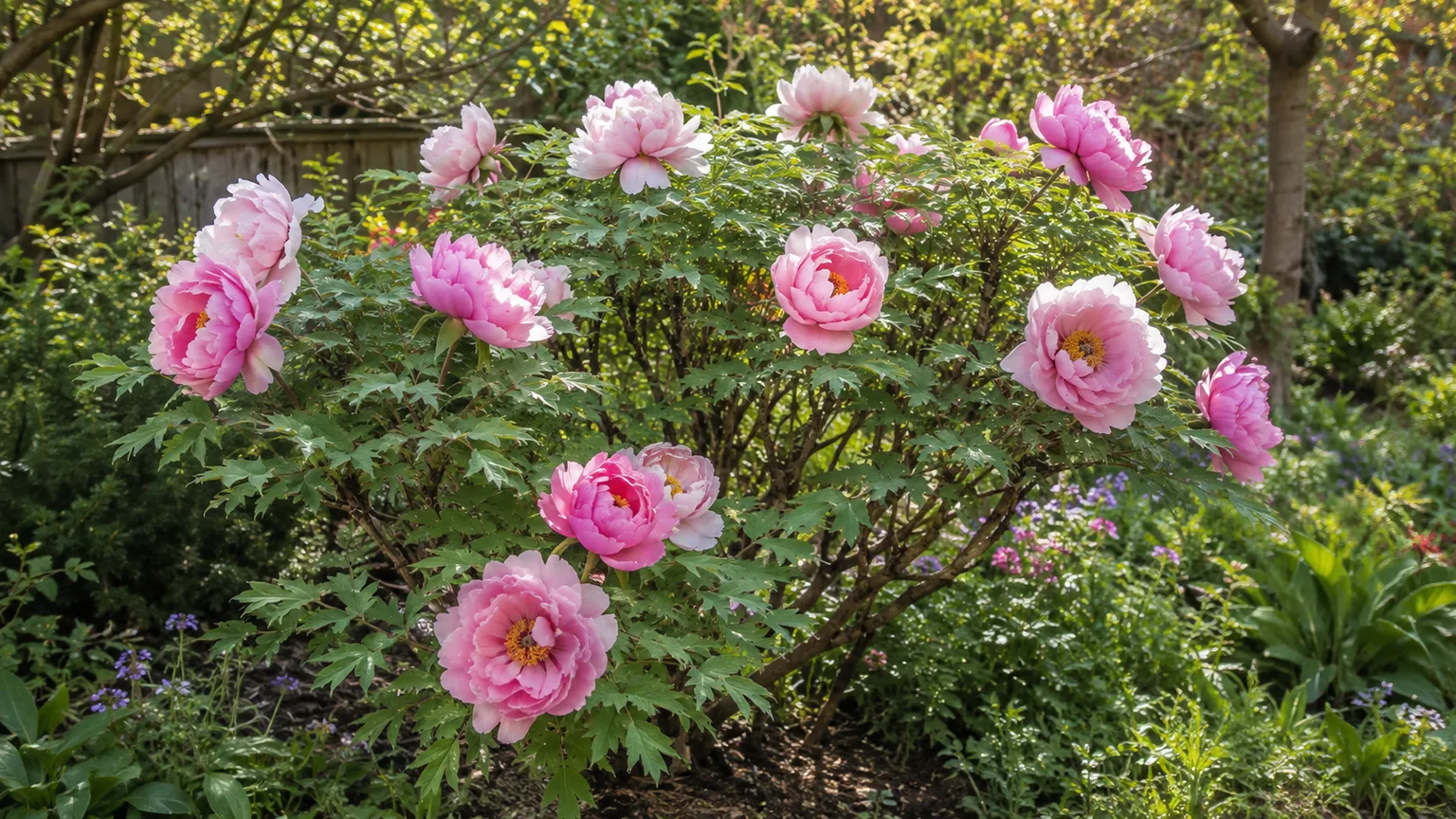
Tree peonies reward patience with a plant that looks good even when it is not in flower. Their stems become woody and remain above ground through winter, while the huge, often fragrant blooms open in spring or early summer. The important distinction is that “tree” describes the growth habit: this is a deciduous shrub, not a small tree and not an herbaceous peony that disappears to the soil line.
The planting detail that matters most is usually hidden below the label: many nursery plants are grafted. The flowering tree-peony top, called the scion, is joined to an herbaceous peony rootstock. Planting that union at the wrong depth can encourage rootstock shoots or delay the scion from making its own roots. Get that step right, give the shrub a permanent home, and the rest of tree peony care is comparatively restrained.
What a tree peony is—and what it is not
Tree peonies include hybrids and species related to Paeonia x suffruticosa, Paeonia rockii, and Paeonia delavayi. They are generally rounded, branching shrubs with divided leaves and flowers that can be single, semi-double, or fully double. Colors range from white and pink to maroon, purple, yellow, and unusual bicolors. An RHS plant profile for Paeonia arborea lists a possible mature height around 1.5–2.5 meters and a five-to-ten-year maturity range, a useful reminder that size and speed vary by plant. Epic Gardening’s species overview also distinguishes the main woody species by flower color, leaf shape, and growth habit, which is more useful at purchase time than relying on the word “tree” alone.
Unlike herbaceous peonies, a tree peony does not need its woody framework cut back every autumn. It will lose its leaves and go dormant, but the branches remain. That permanent structure is why placement matters so much: a shrub that is happy in one spot can live there for decades, while an unnecessary move risks damaging its slow-growing root system.
Choose a cultivar and planting stock for your garden
Choose the plant by more than flower color. Single flowers usually show their centers and hold up visually in a naturalistic border; double flowers make the biggest dramatic display but can be heavier in rain. If your garden is hot, favor a cultivar with a little afternoon protection. If your winters are severe or windy, prioritize a sheltered site and a source that can tell you whether the plant is a graft, division, or seed-grown specimen.
Bare-root plants from specialist nurseries are commonly shipped in autumn, when the plant is dormant and easy to inspect. Container plants are convenient, but a small plant in a pot may simply need more time to establish. Look for healthy, firm roots, a clear cultivar name, and a visible graft union or planting instruction. Do not buy a plant with soft black roots, a badly damaged crown, or a stem that has been forced into a tiny container for too long.
Pick a permanent, sheltered planting site
Choose a site with morning or all-day sun, protection from strong wind, and soil that does not stay saturated after rain. A position near a wall, hedge, or open tree canopy can soften wind and late-afternoon heat, but avoid dense tree roots that compete for water. Keep the shrub away from lawn sprinklers and from a low spot where winter water collects.
The RHS tree peony growing guide recommends autumn planting and a sunny or lightly shaded position, with shelter from cold winds and late frost. In a cool or moderate garden, more sun usually supports better flowering. In a hot-summer garden, light or dappled shade can extend the life of flowers even if the plant produces somewhat fewer blooms. Epic Gardening’s care guidance describes the same climate trade-off: several hours of direct sun are useful, but intense afternoon exposure can burn tender foliage in very hot zones. Think of the trade-off as quantity versus longevity, not sun versus shade as a rigid rule.
Plant a tree peony correctly
Autumn is the best planting window because roots can settle while the top is dormant. Winter or early spring can work in climates where the ground is workable, but avoid planting into hot, dry weather if you have a choice. Prepare the site before the plant arrives: clear perennial weeds, loosen a broad area, and improve structure with compost rather than creating a rich, isolated pocket in otherwise poor soil.
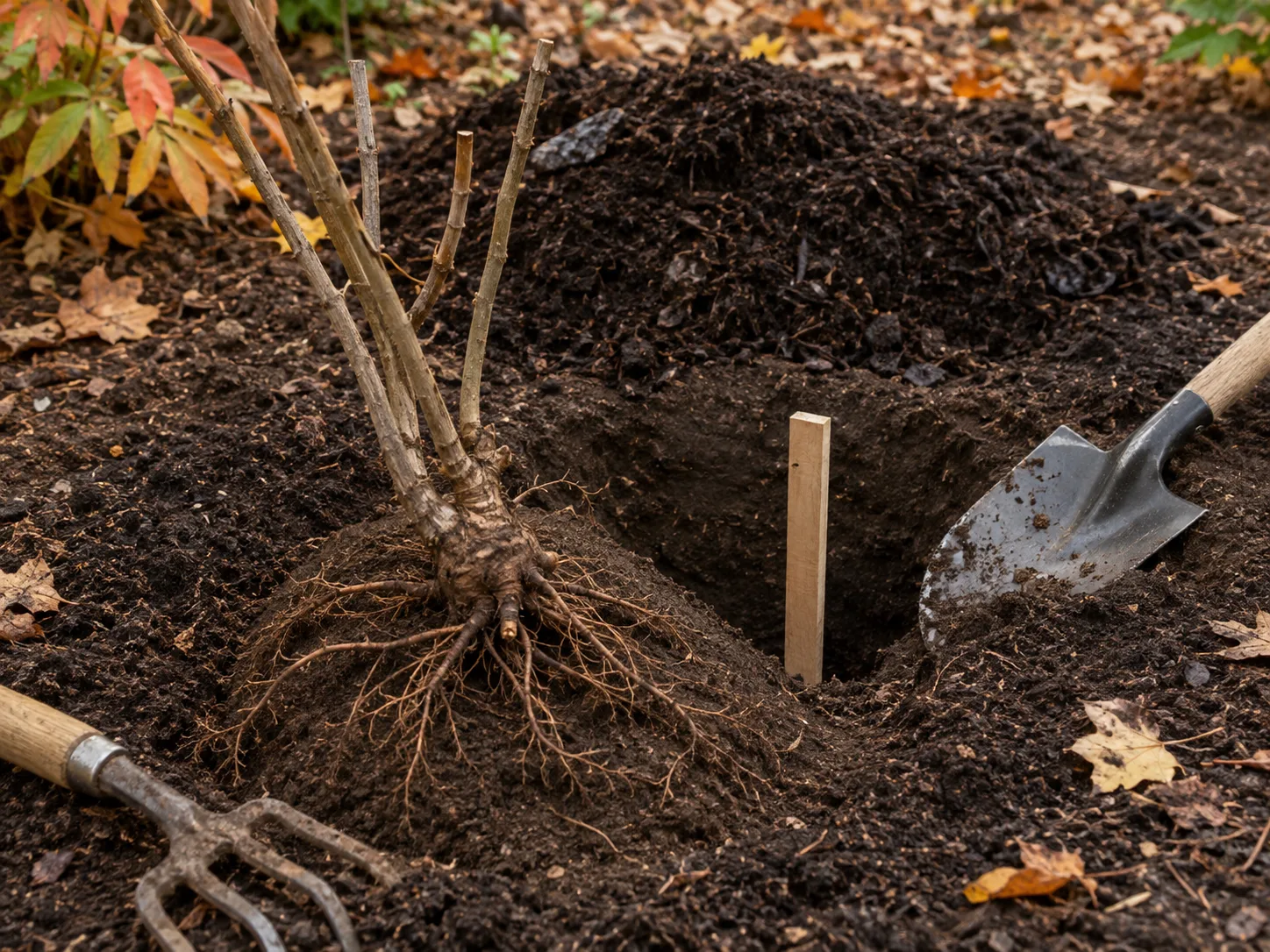
Dig a hole wide enough to spread the roots without bending them. Set a bare-root plant on a low mound of soil so the roots descend naturally. For a container plant, slide it out without tearing the crown, inspect the root ball, and loosen only circling outer roots. Backfill with the excavated soil mixed with a modest amount of mature compost, firm gently, and water slowly until the soil settles.
Get the graft union depth right
Find the graft union: it is often a swollen, knobby area near the base of the woody stem. For a grafted tree peony, the RHS planting instructions place this union about 15 centimeters, or 6 inches, below the soil surface so the scion can develop its own roots. Nursery directions may differ because plants, rootstocks, and climates differ, so use the seller’s instructions when they are specific and reliable.
This is not the same as burying six inches of stem on every container plant. Identify the union first, then measure from the union to the final soil level. If the label says the plant is own-root rather than grafted, there may be no union to bury. If you set a grafted shrub too shallow, the rootstock can send up competing shoots and the scion may remain dependent on the nurse root. If you set it too deep, the crown can stay wet and the plant may sulk.
After planting, apply a loose mulch layer around the root zone, keeping it a few inches away from the stems. Check the depth again after heavy rain or settling. Correcting the depth immediately is far easier than excavating an established shrub later.
Manage light for flowers that last
Aim for at least several hours of direct light, with filtered or afternoon shade where summer sun is intense. A tree peony in deep shade may grow leaves and long, weak stems but produce disappointing flowers. One baking beside a south-facing wall may flower early, fade quickly, and show scorched foliage.
Watch the plant through its first summer rather than making a permanent judgment on one bright week. Morning sun with afternoon shade is often the most forgiving arrangement in hot regions. In cooler regions, an open sunny border can give stronger stems and more flowers. If an older plant suddenly becomes leggy, inspect the canopy above it: a newly enlarged shrub or tree may have reduced the light reaching the buds.
Build soil that drains without drying out
Tree peonies prefer fertile soil with good drainage and consistent organic matter. Neutral soil is a comfortable target, but slightly acid or slightly alkaline ground is not automatically a problem if the structure is good. A simple soil test is more useful than guessing from leaf color, especially before adding lime, sulfur, or a strong fertilizer.
Heavy clay needs air spaces and a way for excess water to leave; sand needs organic matter that slows drainage without turning the planting hole into a bathtub. Work compost through the wider bed, not just the hole. If the site stays waterlogged after rain, move the plant or raise the bed rather than trying to solve a drainage problem with repeated fertilizer.
Water deeply during establishment
Water thoroughly after planting, then water when the upper soil begins to dry. During the first growing season, check the root zone with a finger or narrow trowel before irrigating; the surface can look dry while the deeper soil is still wet. A slow soak is better than a daily sprinkle because it encourages roots to explore the surrounding soil and keeps foliage drier.
Once established, tree peonies are more drought-tolerant than many gardeners expect, but drought during bud development can reduce flowering the following season. Water during a prolonged dry spell, especially while the plant is young or growing in sandy soil. Stop treating a calendar reminder as a diagnosis: cool, rainy weather calls for restraint, while hot wind and fast-draining soil may require a deeper drink.
Feed lightly and mulch with purpose
Annual compost or well-rotted manure applied as a surface mulch is usually the foundation of a good feeding plan. Keep it off the stems and the center of the crown so emerging buds have air and are not buried. If growth is weak or flowering declines on a mature plant, use a balanced, low-nitrogen fertilizer in spring according to its label rather than adding repeated high-nitrogen doses.
Too much nitrogen can produce lush leaves at the expense of sturdy, flower-ready growth. Do not treat bone meal or phosphorus as a guaranteed bloom switch; phosphorus is useful when a soil test or known deficiency supports it, but excess nutrients can accumulate. The RHS guidance treats annual mulching as sufficient in many gardens and reserves general-purpose fertilizer for poor growth or weak flowering.
Prune and deadhead without losing next year’s buds
Tree peonies flower on established wood, so pruning is mainly corrective and structural. In late winter, before strong new growth begins, remove dead, broken, or diseased stems back to healthy wood. Use clean, sharp secateurs and make a neat cut just above a viable bud or side branch. Do not shear the shrub into a ball or cut every branch to the ground.
After flowering, remove spent flowers if you want a cleaner appearance. Cut just below the flower or seed head while leaving the leafy stem and its lower buds intact. If the plant is producing seed, let the pods mature; if it is a named hybrid and your goal is more strength for next year, deadheading prevents energy going into seeds that may not come true. A leggy older shrub can be reduced gradually, removing roughly a third of the oldest or tallest wood over more than one season rather than making one severe cut.
Protect buds from frost, rain, and winter
The shrub may be winter-hardy while its emerging leaves and flower buds are vulnerable to a late freeze. Planting out of a frost pocket and away from a wind tunnel prevents more damage than wrapping the plant every year. If a hard frost is forecast after buds have emerged, cover the shrub overnight with breathable horticultural fleece or another supported cover, then remove it in the morning. Do not let plastic rest directly on foliage.
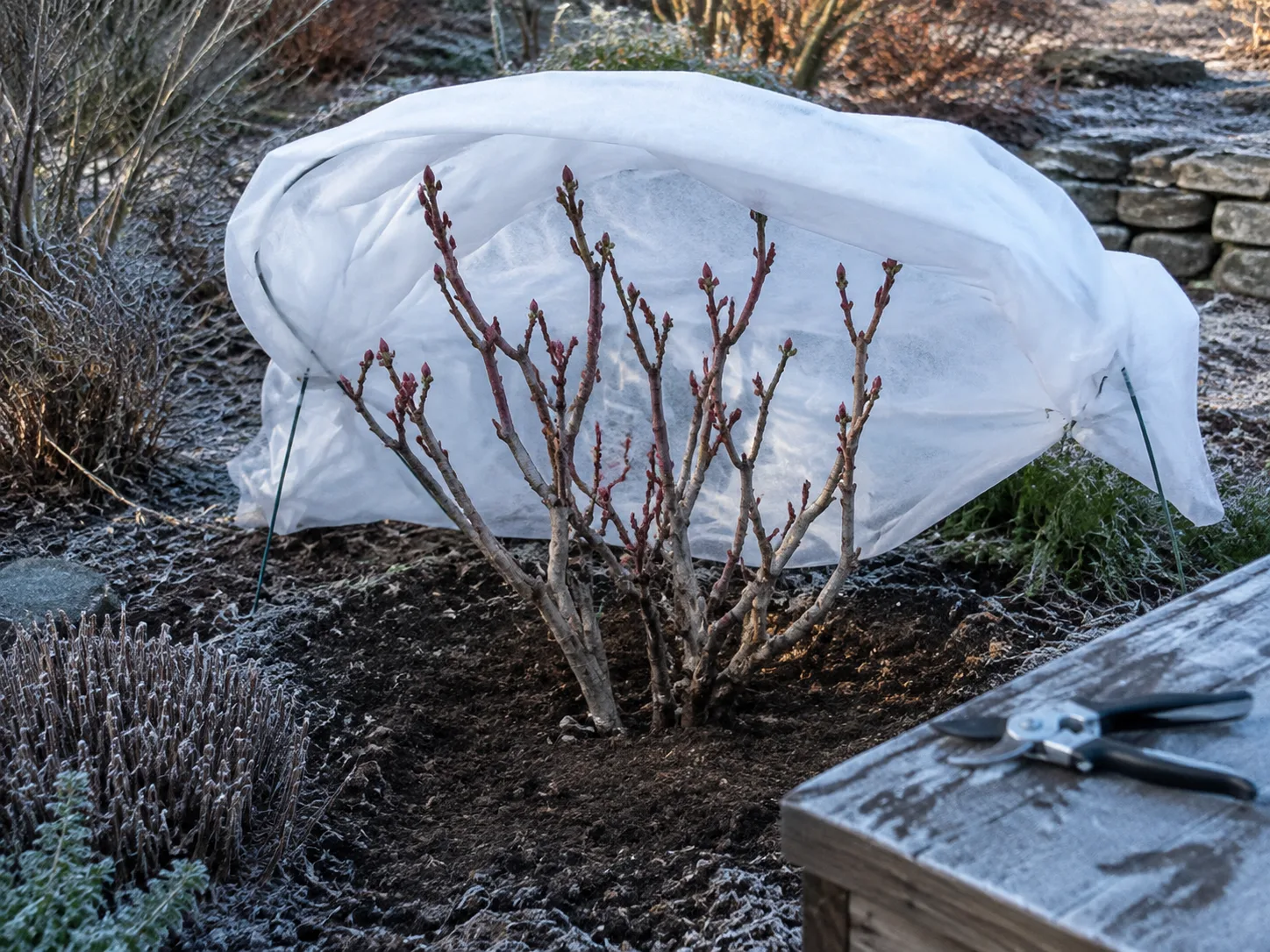
Rain creates a different problem: large, heavy flowers can bend stems, and prolonged wetness encourages gray mold or peony wilt. Good spacing, morning irrigation, and removal of diseased debris improve airflow. Temporary support can help a heavily double-flowered cultivar, but staking every branch tightly can rub bark and create a cluttered plant. A cold-climate gardener’s seasonal account at Country Home & Blooms is a useful practical reminder that winter wind, late frost, and heavy rain can require short-term protection even when the shrub itself is hardy.
In autumn, do not cut the woody framework down. Add a modest mulch layer over the root zone in a cold, exposed garden, but keep the stems clear. Young plants in borderline climates may need a windbreak or loose protection during the first winters; remove winter covers when growth resumes so heat and moisture do not build up around the crown.
Propagate only when the method fits the plant
Most tree peonies are commercially propagated by grafting, a skilled process that joins a desirable scion to a vigorous rootstock. Grafting is not a quick home project. RHS explains that grafting requires practice and that cuttings generally root poorly, so a gardener who wants an identical plant is usually better off buying a healthy division or nursery plant.
Grow from seed for curiosity, not speed
Seed is worthwhile if you enjoy uncertainty and can wait. Allow pods to ripen in late summer or early autumn, then sow viable black seed soon after collection in a free-draining medium. Tree peony seeds can have double dormancy: a chilling period may start root growth, while the shoot may wait for another cold cycle. Seedlings can take several years to reach flowering size, and hybrid offspring may differ from the parent in flower color, form, or vigor.
Keep containers evenly—not constantly—moist and protect them from rodents. Label the parent plant and sowing date. Seed propagation is a breeding experiment, not a dependable way to duplicate a prized cultivar.
Divide only a mature, multi-stem shrub
Division is possible when a mature tree peony has several stems and a substantial root system. Dig in autumn after leaf fall, work around the drip line, and lift as much root as possible. Wash or brush away enough soil to see where stems connect to roots, then make divisions that each contain a viable stem and healthy roots.
Do not dig up a young one- or two-stem plant simply to make two plants. The stress can set both pieces back, and a division without adequate roots may fail. Replant divisions immediately at the correct depth, water once to settle the soil, and expect a recovery period rather than instant flowering.
Solve common tree peony problems
When a tree peony fails, start with the least dramatic explanation. A young plant may simply be establishing. Next check graft depth, light, drought during the previous summer, root competition, and whether pruning removed old wood carrying flower buds. The RHS problem guidance notes that poor flowering can persist for several years after planting and that drought can affect the next season’s display.
Blackened buds or wilted new leaves after a cold night usually point to frost injury; do not snap or rub frozen tissue. Wait to see what recovers. Shoots arising below the graft union are rootstock suckers, not a second variety to keep for fullness. Remove them at their origin while small, using a sharp knife or pruner; cutting only the visible tip encourages another flush.
If the shrub appears to bloom twice, inspect the shoots. A later flush on rounder, herbaceous-looking stems may be the rootstock flowering while the tree-peony scion is dormant. Remove those competing shoots so the desired top is not starved of light and water. For a leggy plant, improve light and thin or shorten selected old stems over time.
Gray mold, black spots, stem wilt, or recurring dieback call for sanitation first: remove affected plant material, keep mulch off stems, water the soil rather than the foliage, and improve air movement. Aphids, scale, and ants on buds are usually observation issues before they are pesticide issues. A strong water spray can dislodge light aphid infestations; for any pesticide, follow the product label and confirm that the product is appropriate for the plant and problem.
Follow a simple year-round care calendar
Late winter: Inspect the woody framework and remove dead or damaged stems before new shoots expand. Keep an eye on weather forecasts once buds swell; a temporary breathable cover is worthwhile when a hard late frost threatens.
Spring: Apply compost or a light mulch layer without covering the crown. Water new plants when the root zone dries, watch for rootstock suckers, and avoid unnecessary pruning once flower buds are obvious. In hot climates, note whether afternoon shade is protecting flowers.
After flowering: Deadhead cleanly if you are not saving seed. Support heavy flowers before a rainstorm, remove fallen diseased leaves, and water during prolonged dry weather. This is the season when the shrub is building the wood and buds that will determine the next display.
Autumn: Collect ripe seed only if you have room for a long experiment. Plant new bare-root specimens and mature divisions while dormant, refresh mulch in exposed gardens, and leave the woody stems standing. Do not cut the shrub to the ground as though it were herbaceous.
Conclusion
Good tree peony care is mostly about a few high-consequence choices: give the shrub a permanent, well-drained site; match sun to your climate; plant a grafted union at the depth recommended for that plant; water carefully while roots establish; and prune only what is dead, damaged, or genuinely in the way. After that, the plant’s slow pace is part of the bargain, not evidence that it needs more fertilizer or a larger intervention.
Once the woody framework is established, tree peonies become remarkably self-sufficient. Protect spring buds from unusual weather, remove rootstock shoots promptly, and judge flowering over several seasons. The result is a long-lived shrub with architectural stems, attractive foliage, and flowers that deserve their brief, spectacular moment.



