What to Plant in Front of Boxwoods: 12 Beautiful Options
Find the best plants for the space in front of boxwoods, with 12 options sorted by light, moisture, spread, bloom time, and maintenance.
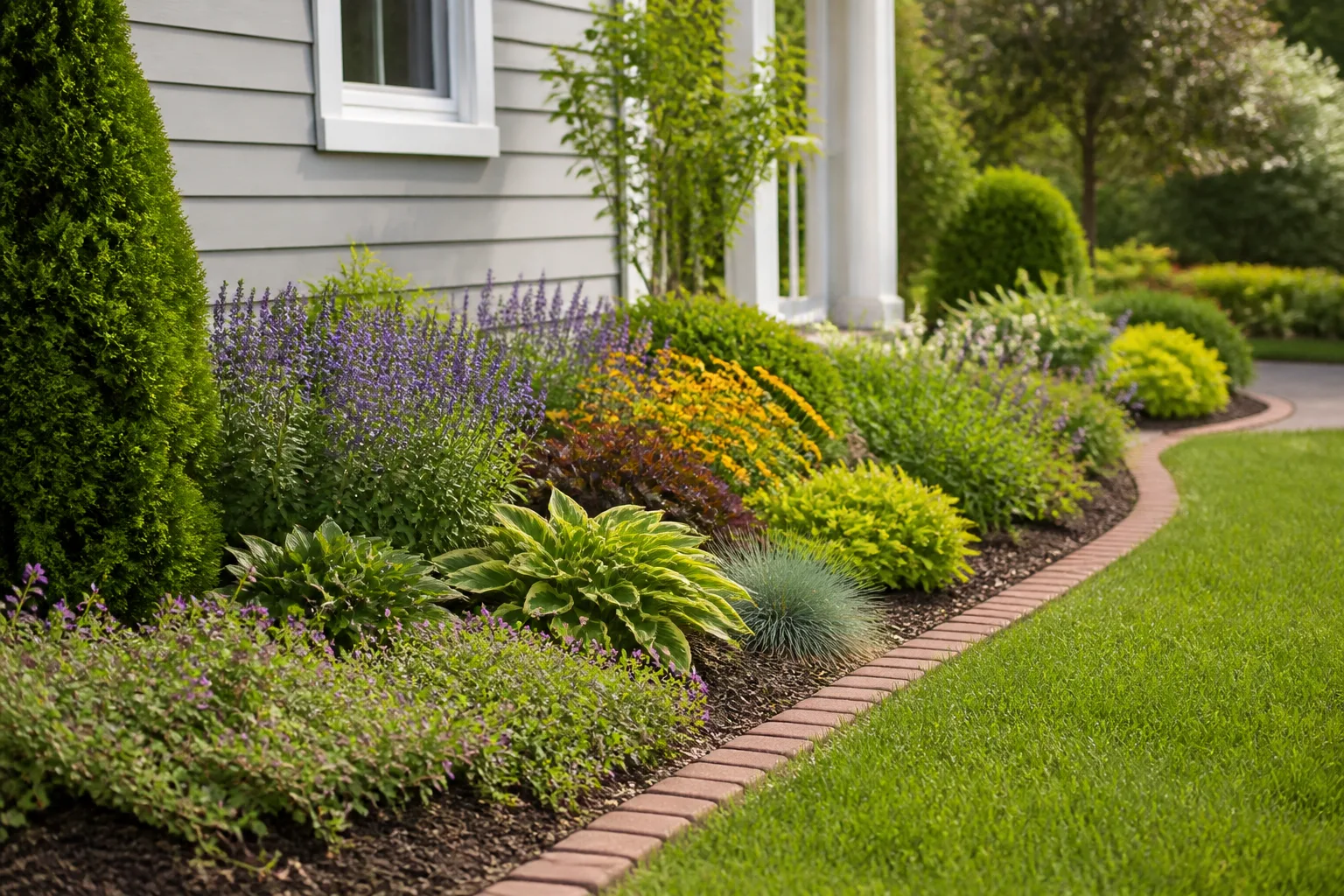
Boxwoods give a garden something most flowering plants cannot: a steady block of green that holds its shape in every season. The best plants to grow in front of them do more than add color. They should fit the light under the hedge, tolerate the bed’s drainage, stay small enough to preserve the boxwood’s outline, and offer a different texture or bloom season.
The crucial detail is that boxwoods are shallow-rooted shrubs. NC State Extension describes boxwood roots as shallow and notes that mulch helps preserve moisture; Virginia Tech also warns that nearby tree and shrub roots compete for water. That makes a “pretty” companion a poor choice if it needs constant digging, rich wet soil, or more moisture than the boxwood bed can provide. Start with conditions, then choose from the 12 options below.
Choose Companions by the Bed, Not the Catalog Photo
First, watch the bed for a full day. A north-facing foundation border may receive bright reflected light but little direct sun, while a south- or west-facing bed can become hot and dry at the soil surface. Boxwoods tolerate full sun to part shade, but Virginia Tech reports that they often perform best with some afternoon protection, especially where winter foliage can lose water while the ground is frozen.
Next, check drainage after a normal rain. If water remains around the boxwood for hours, do not solve the problem by adding a thirsty perennial; improve the site or choose plants that tolerate the moisture while keeping the boxwood on a raised, well-drained root zone. A soil test is more useful than guessing with lime or sulfur. For a general boxwood reference, see NC State Extension’s Buxus profile; for cultivar size, site selection, and landscape use, Virginia Tech’s expert-reviewed boxwood guide is a helpful companion.
Measure the planting strip from the boxwood’s outer foliage to the path, lawn, or foundation. A plant that is 12 inches wide in its nursery pot may be 24 inches wide when mature. Leave room for air movement and for your hand to reach the boxwood without stepping on the bed. In a narrow strip, choose one repeating low layer rather than trying to squeeze in a ground cover, perennial clump, and shrub.
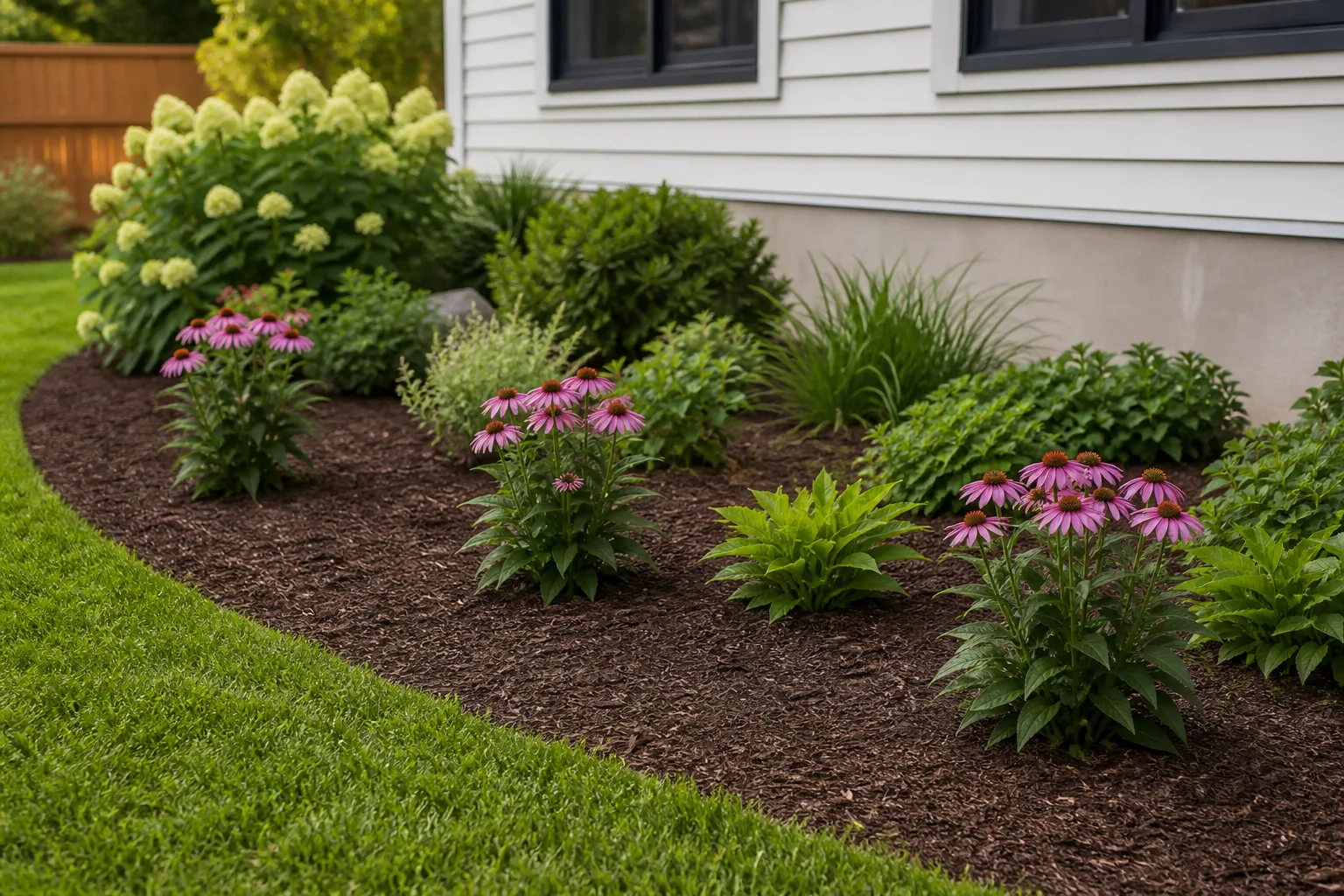
12 Beautiful Plants to Grow in Front of Boxwoods
1. Coral Bells
Coral bells (Heuchera spp.) are one of the most flexible choices for a boxwood border because their foliage does the work even when they are not blooming. Cultivars range from lime green and amber to burgundy, plum, silver, and dramatic veining, creating contrast against dark green boxwood without requiring a large plant.
Use coral bells in part shade or gentle morning sun, especially in a bed with average moisture and good drainage. Their compact mounds suit the front edge, and airy flower stems rise above the foliage without hiding a low hedge. They are a particularly good answer when you want year-round structure in a mild climate but do not want another evergreen shrub.
The trade-off is exposure. Hot reflected light from a west-facing wall can scorch or bleach some cultivars, while dry soil can leave the leaves limp. Choose a heat-tolerant cultivar for sun, keep mulch away from the crown, and group three or five plants instead of scattering single specimens.
2. Lavender
Lavender (Lavandula spp.) brings a completely different texture: narrow gray foliage and upright flower spikes against the boxwood’s small glossy leaves. It is at its best in a sunny, open border where the soil drains quickly and summer air stays relatively dry. The American Boxwood Society’s care guidance and Savvy Gardening’s companion-plant discussion both reinforce the value of matching companions to the site rather than treating every boxwood bed as the same.
Plant lavender toward the sunny front or at the end of a hedge where it will not be shaded by a tall boxwood mass. Space it according to the mature width of the cultivar, not the little pot you bring home. English lavender is usually a better fit for a formal, restrained border than sprawling shrub forms.
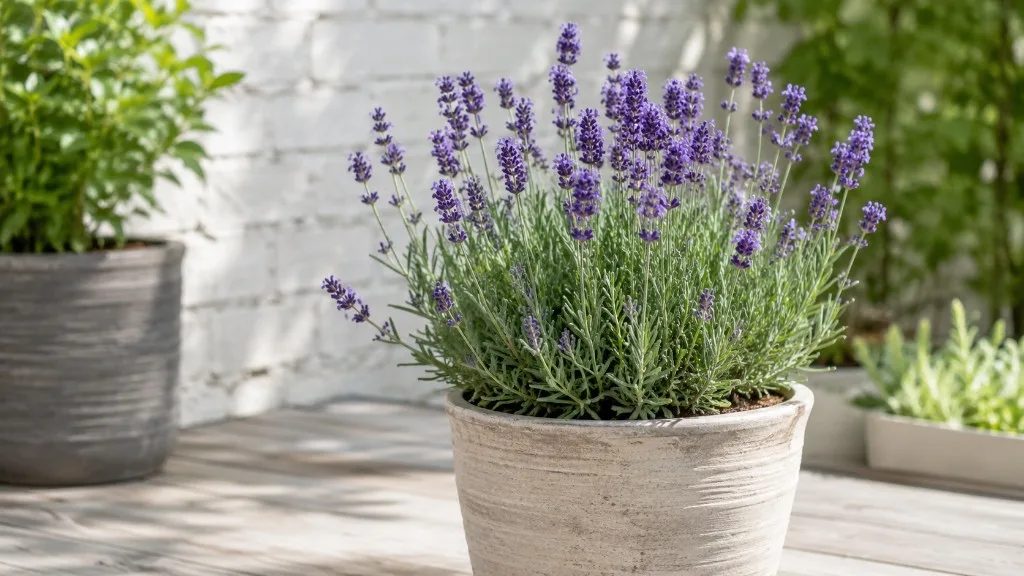
Do not plant lavender in a damp, heavily irrigated foundation bed simply because the colors work. Wet winter soil and poor air circulation are more likely to shorten its life than a lack of fertilizer. If the bed is moist and shaded, choose coral bells, hosta, or hellebore instead.
3. Lenten Rose
Lenten rose (Helleborus spp.) is a strong choice for the side of a boxwood that receives winter and spring light but becomes shaded in summer. Its nodding flowers arrive when many borders are bare, and its leathery foliage can remain attractive after the bloom period. The flowers look especially polished against a clipped hedge because their muted whites, pinks, greens, and deep purples do not compete with the boxwood’s form.
Give hellebores humus-rich, well-drained soil and enough space for the clump to expand. They work best as a middle layer in front of taller boxwoods, with a low edging plant or bare mulch closer to the path. Avoid planting directly against the shrub’s trunk; the gap makes cleanup easier and reduces the temptation to pile wet mulch into the crown.
There is an important household caveat: the ASPCA hellebore listing identifies it as toxic to dogs, cats, and horses, with ingestion associated with drooling, abdominal discomfort, and digestive signs. If pets chew garden plants, treat hellebore as a display plant to place out of reach, or pick a non-toxic alternative after checking the exact species and cultivar.
4. Hosta
Hostas (Hosta spp.) are the classic solution for a shady boxwood bed, but they are most successful where the soil stays evenly moist without becoming waterlogged. Their broad leaves create a bold contrast to boxwood’s fine texture, and miniature hostas can fit the front of a low hedge while larger cultivars make a fuller middle layer in front of taller shrubs.
Use blue-leaved hostas to cool a bright shade border, gold-leaved types to lift deep shade, and green cultivars when the bed already has strong flower color. Repeat one or two cultivars for a formal look; mixing too many leaf patterns can make a boxwood border feel busy.
Hostas need more moisture than established boxwoods in many landscapes, so install them where irrigation can reach both plants without keeping the shrub permanently wet. Deer and slugs may also change the calculation. The ASPCA hosta listing identifies hosta as toxic to dogs, cats, and horses, so it is not the first choice for a yard where pets regularly browse.
5. Sweet Alyssum
Sweet alyssum (Lobularia maritima) is a low, fragrant filler for the very front of a boxwood bed. Its small white, pink, or lavender flowers soften a hard path edge and can bloom heavily in the cool parts of spring and fall. Because it is inexpensive and quick from seed or small starts, it is useful when a new boxwood hedge looks too exposed while the permanent perennials establish.
Give it sun to part shade, moderate moisture, and good drainage. It looks best in a continuous ribbon or in repeated pockets rather than as one isolated plant. Trim it lightly when flowering slows in hot weather; it often rebounds when temperatures moderate.
Treat sweet alyssum as a short-lived annual or tender perennial unless your local climate allows it to persist. It can reseed, and the California Invasive Plant Council flags Lobularia maritima as invasive in parts of California. Check your state or county invasive-plant list before letting it spread, particularly in naturalized or coastal areas.
6. Sweet Woodruff
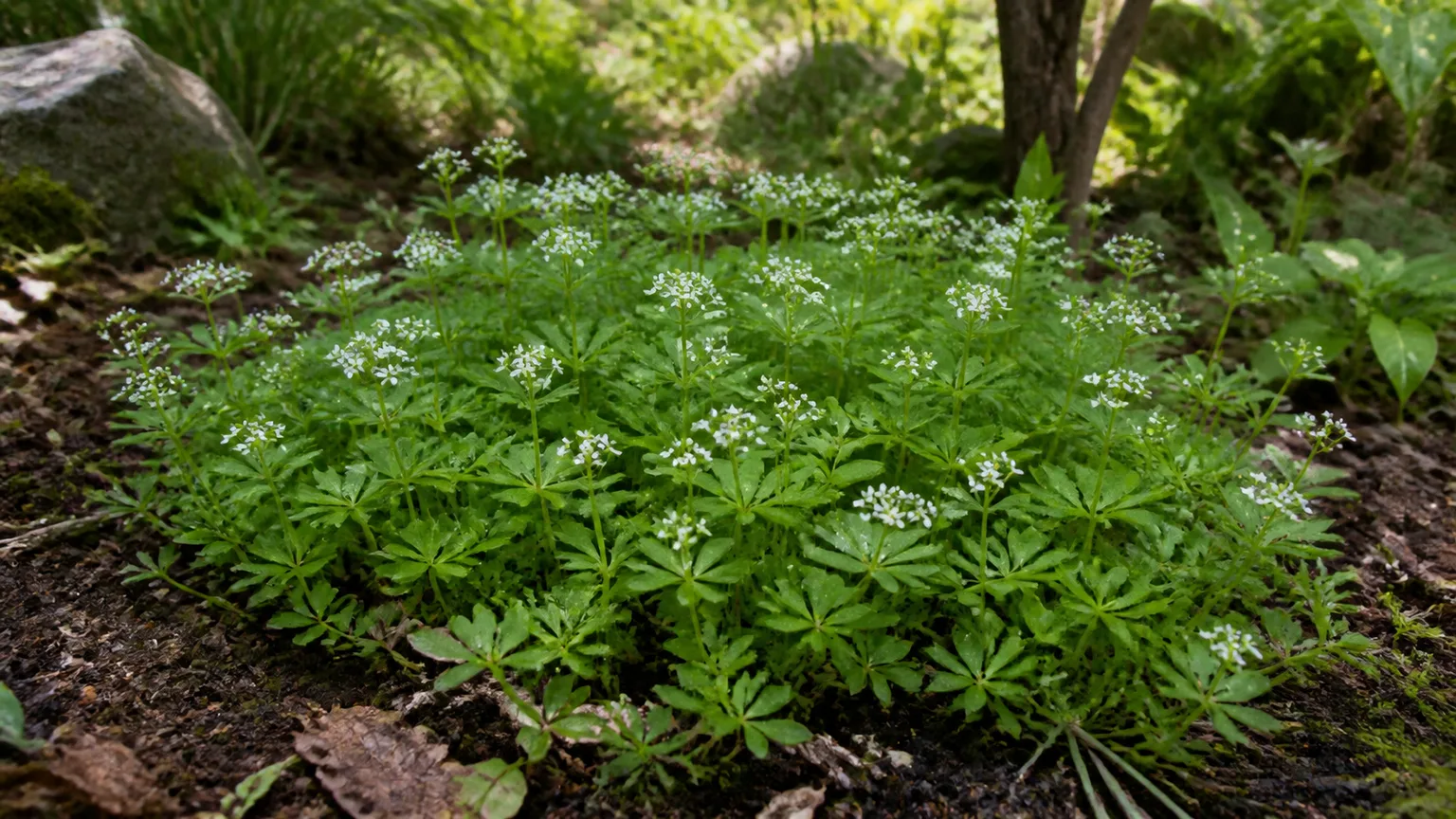
Sweet woodruff (Galium odoratum) is a fragrant, shade-loving ground cover with whorled foliage and small white flowers. It makes a soft woodland-style carpet under or in front of a boxwood hedge where the soil stays cool and evenly moist. Its low height allows the clipped outline of the shrub to remain visible, while its spreading habit can cover a bare patch more naturally than bark mulch.
Use it only where you are comfortable with a plant that expands. Sweet woodruff spreads by rhizomes and seed, so it is easier to manage in a defined bed than beside a natural area or a neighbor’s planting. A path, edging, or regularly maintained lawn gives you a clear boundary for trimming runners.
This is not a dry-sun companion. If the boxwood bed is thinly mulched, exposed to hot afternoon sun, or watered only during drought emergencies, sweet woodruff will struggle. In those conditions, use creeping phlox or lavender at the sunny front instead. For a moist, dappled border, its bright foliage and spring flowers make a more graceful pairing than another glossy evergreen.
7. Blue-Eyed Grass
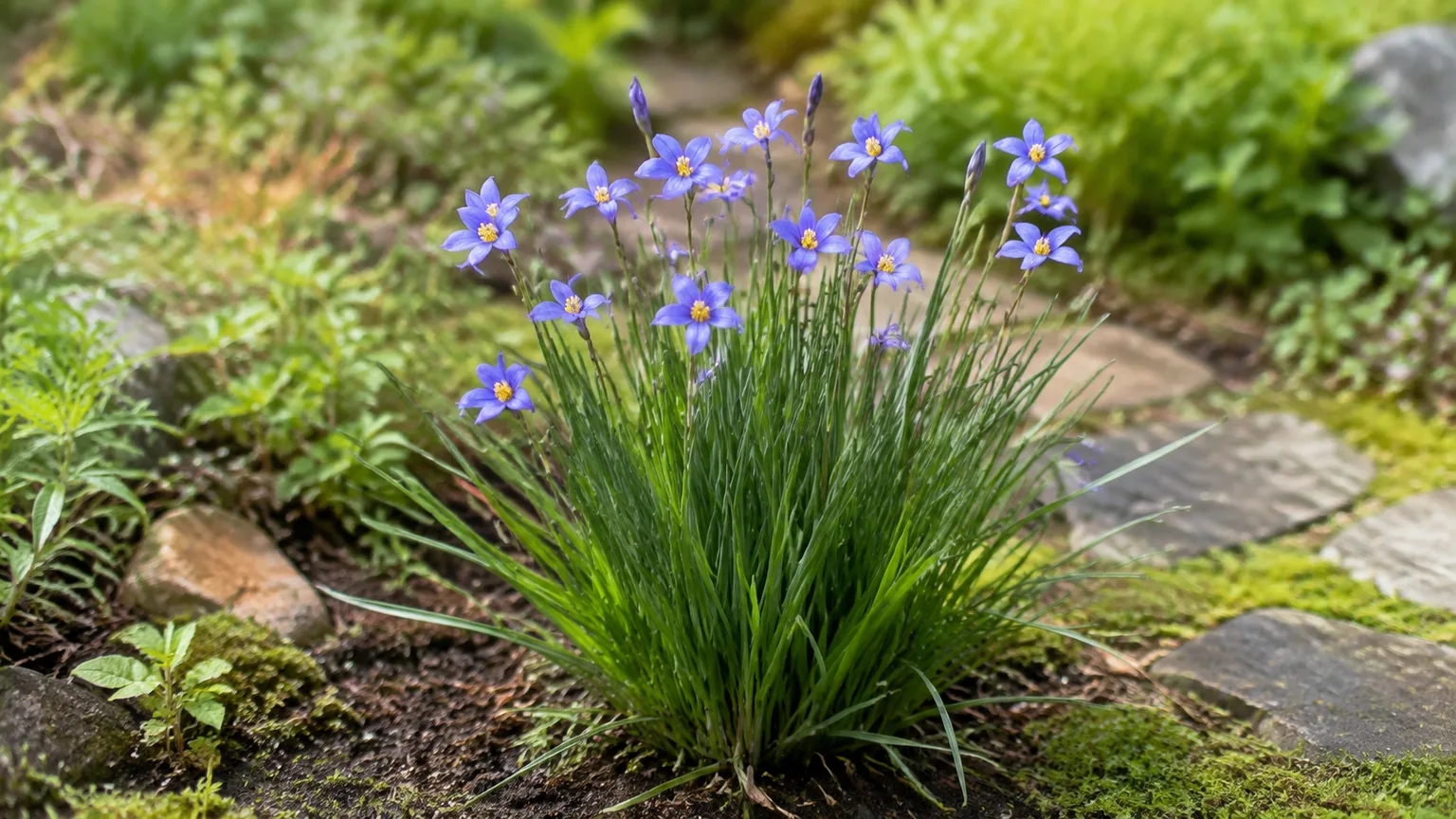
Blue-eyed grass (Sisyrinchium spp.) looks like a miniature ornamental grass but is actually in the iris family. Its narrow leaves create a vertical, grassy texture, and small blue flowers with yellow centers appear in spring and early summer. The scale is excellent in front of a low boxwood hedge, especially when you want color without a plant that flops across a walkway.
Give it sun to part shade and soil that drains well but does not bake completely dry. It is a good bridge between a formal boxwood edge and a looser perennial border because the foliage is tidy while the flowers feel less rigid. Plant it in small drifts, allowing the clumps to read as a rhythm along the hedge.
Blue-eyed grass is not the strongest pick for a deep shade foundation bed or a desert-dry strip. It can also self-sow or spread by rhizome in favorable conditions, so remove unwanted seedlings while they are small. The NC State Extension plant profile is useful for understanding the boxwood side of this pairing: keep the shared soil cool, well-drained, and mulched rather than constantly saturated.
8. Creeping Phlox
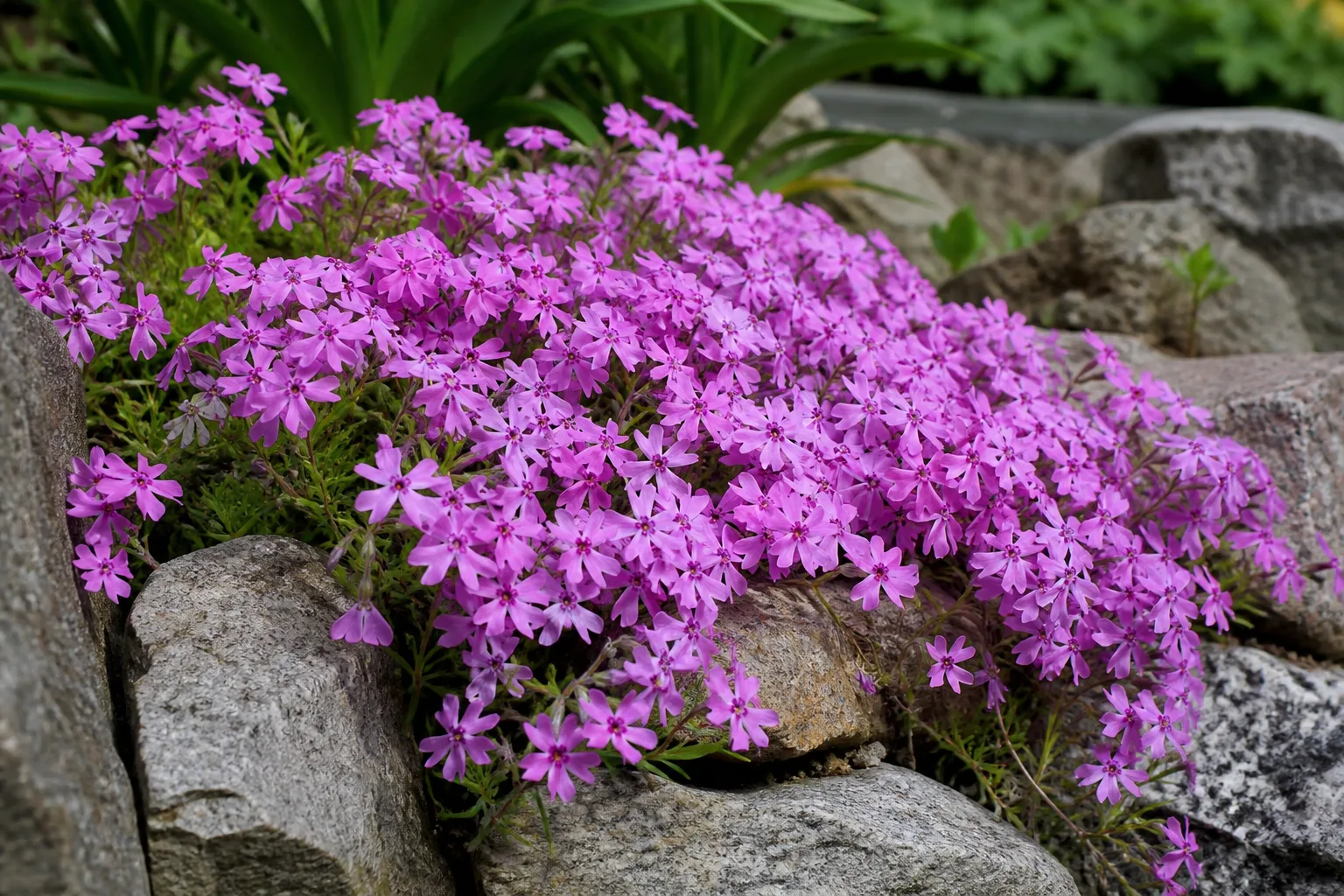
Creeping phlox (Phlox subulata and related low phlox) is a spring-blooming mat that spills neatly toward the path or over a low retaining edge. Pink, purple, blue, and white flowers cover the foliage for a short but vivid show, turning a boxwood hedge into a clear seasonal focal point without adding much height.
Choose a sunny site with sharply drained soil. Creeping phlox is especially useful on a slight slope or the top of a raised bed, where water does not linger around the crown. Its evergreen-to-semi-evergreen foliage can remain as a low cushion after bloom, though it will not provide the continuous color of boxwood.
The limitation is timing. Its strongest display may last only a few weeks, so pair it with coral bells, blue-eyed grass, or a small summer bloomer if you want the border to remain interesting. Do not bury the mat under thick mulch, and thin it after flowering if it begins to climb over the boxwood’s lower branches.
9. Dwarf Hydrangea
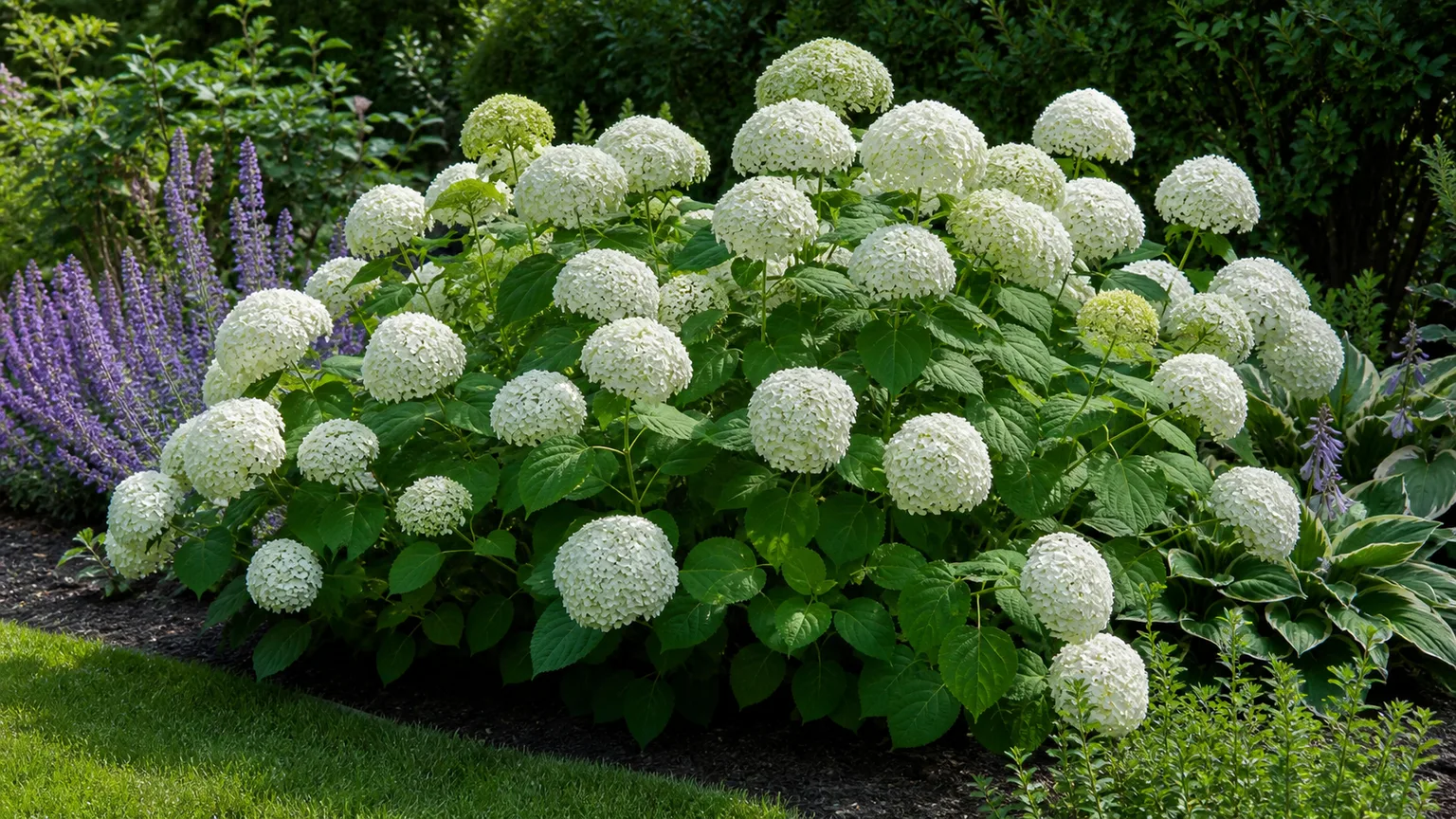
For a tall boxwood hedge, a dwarf hydrangea can create a second shrub layer with rounded flower heads and larger leaves. Compact panicle, smooth, or bigleaf selections may fit, but the cultivar name matters more than the word “dwarf” on a sales tag. Mature size, pruning time, and sun tolerance vary widely among hydrangeas.
Plant hydrangea where it receives morning sun and afternoon protection, with moisture that is consistent but not stagnant. Use it in the middle or back of a wide bed, never pressed into the front edge where its stems will block the boxwood. The combination works best when the hydrangea is allowed to keep a soft, natural outline while the boxwood supplies the clipped geometry.
Hydrangea is a high-water neighbor compared with lavender and creeping phlox. It may also outgrow a narrow foundation strip faster than expected. The ASPCA hydrangea listing identifies it as toxic to dogs, cats, and horses and notes that gastrointestinal signs can occur after ingestion. In pet-accessible beds, select a safer shrub or position hydrangea behind a barrier.
10. Pachysandra
Pachysandra (Pachysandra terminalis and related species) is an evergreen ground cover for part shade and shade. Its glossy foliage echoes the boxwood without copying its shape, and small spring flowers provide a quiet accent. It is most useful where a boxwood hedge sits beneath trees or beside a north-facing wall and the gardener wants a uniform carpet rather than a succession of tall flowers.
Give it well-drained soil and enough moisture to establish, then watch its spread. Japanese pachysandra is invasive in parts of the United States, and it can move beyond the intended bed through creeping stems. The fact that it fills a space quickly is both its appeal and its maintenance risk.
Before buying, look for a locally recommended native or non-invasive alternative suited to the same shade and moisture. If you already have pachysandra, keep the edge defined, do not dump pulled pieces into a wooded area, and remove runners before they root outside the bed. A slower ground cover is often the better long-term companion when the boxwood borders natural habitat.
11. Periwinkle
Periwinkle (Vinca minor) offers glossy evergreen leaves and blue, purple, or white spring flowers. It tolerates dry shade better than many flowering ground covers and can cover difficult banks or the front of an established hedge. Use it only when you have a firm plan for containment and have checked local invasive-plant guidance.
Periwinkle is a vigorous vine that roots where its stems touch soil. That means a small planting can become a maintenance boundary problem around paths, trees, and neighboring beds. It also creates a dense mat that can hide boxwood debris, volunteer seedlings, and early signs of disease. Keep it away from natural areas and inspect the outside edge several times each growing season.
The pet-safety trade-off is serious. The ASPCA periwinkle listing identifies it as toxic to dogs, cats, and horses, with potentially severe clinical signs after ingestion. For a family garden, choose sweet alyssum, blue-eyed grass, or a locally recommended native ground cover instead.
12. Lily of the Valley
Lily of the valley (Convallaria majalis) is a classic woodland plant for a cool, shady boxwood border. Its arching stems, white bell-shaped flowers, and sweet fragrance make it feel especially at home beside old-fashioned foundation plantings. The foliage forms a low colony that can fill the visual gap between a hedge and a path.
It is also a plant that demands restraint. Lily of the valley spreads by rhizomes, can be difficult to remove once established, and is invasive in some regions. Plant it only in a contained bed after checking local recommendations. Do not share dug divisions casually; a small piece of rhizome can start a new colony.
Every part is poisonous if eaten, and the plant is a poor fit for gardens where young children, dogs, or cats may chew leaves or berries. If you want the same cool-shade effect with fewer concerns, compare a locally recommended native ground cover or use hosta and coral bells in a controlled planting pattern.
Turn the List Into a Layered Border
A successful boxwood planting usually has one structural layer, one contrast layer, and one edge layer. The boxwood is the structure. Choose either bold foliage (hosta or coral bells), flowers and fine texture (lavender or blue-eyed grass), or a compact shrub (dwarf hydrangea) for the middle. Finish with a low edging or ground cover only if the strip is wide enough to maintain it. This follows the same basic design logic discussed in Garden Gate’s plant-combination guidance: use contrast in color, texture, and season while keeping the site requirements compatible.
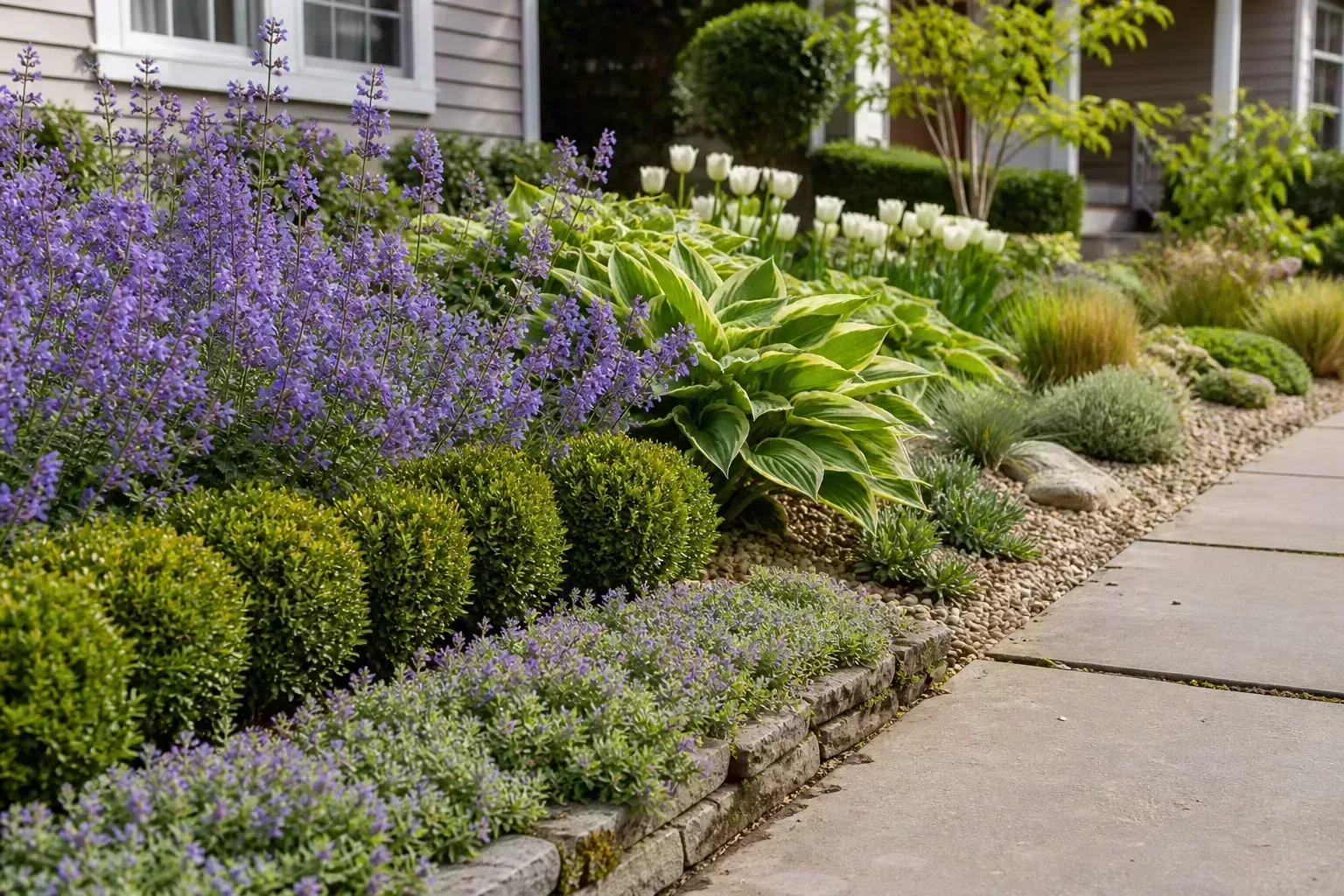
For a sunny formal border, try boxwood with lavender behind creeping phlox or sweet alyssum. For a dappled shade bed, combine taller boxwood with hellebores or hostas and use a restrained patch of sweet woodruff at the edge. For a narrow walkway, repeat coral bells or blue-eyed grass and leave a visible mulch strip; the empty space is what makes the hedge look intentional.
Repeat plants in groups of three, five, or seven when the bed is large enough. Repetition creates order, while contrasting leaf shapes keep the planting from looking like a second hedge. A few bloom colors are enough. Boxwood already supplies the background; the companions should clarify the season and the path rather than compete for attention.
Plant Without Disturbing Boxwood Roots
Plant companions while the boxwoods are young only if the bed has been prepared and the shrubs are watered consistently. Virginia Tech recommends a generous mulched area around boxwoods because grass and nearby woody roots compete for water. Treat that advice as a design constraint: the more tightly you fill the ground, the more carefully you must manage irrigation.
Use this sequence:
- Mark the boxwood’s trunk and outer root zone before digging. Do not use a spade to sever large roots just to make a plant fit.
- Set plants on the soil surface first, using mature widths to test the layout. Move them until the foliage will overlap at maturity without touching the shrub.
- Dig individual holes only as deep as the root ball and several inches wider. Avoid tilling the entire bed, which can damage fine roots and change drainage.
- Water each new plant at the root zone, then apply about 2 to 3 inches of organic mulch. Keep mulch off the boxwood trunk and perennial crowns.
- Check the bed weekly during the first growing season. Water slowly and deeply when the soil begins to dry instead of giving every plant a shallow daily sprinkle.
If a boxwood is already stressed, yellowing, or losing branches, postpone ornamental planting and diagnose the shrub first. Added roots, irrigation, and digging can hide the original problem rather than solve it.
Keep the Border Full Without Creating Competition
The easiest way to preserve the planting is to match water needs. Lavender, creeping phlox, and blue-eyed grass fit a brighter, drier front edge; hosta, hellebore, and sweet woodruff fit cooler, more evenly moist shade. A hydrangea should not share the driest part of the bed, and a shade ground cover should not be expected to thrive beside sun-baked paving.
Prune the boxwood so light can reach the companions, but do not shear so tightly that the outer shell becomes dense and the interior stays permanently damp. Thin crowded branches selectively when needed, sanitize tools between shrubs, and keep fallen leaves from matting against the base. Healthy spacing improves inspection as much as it improves appearance.
Refresh mulch without burying the root flare. A broad, shallow mulch ring conserves moisture, but a volcano of mulch against the trunk traps moisture and invites decay. If a plant repeatedly wilts while the boxwood looks fine, move the plant rather than increasing irrigation for the entire bed.
Plants to Reconsider in a Boxwood Bed
Some plants look good beside boxwood but create predictable problems. Avoid tall, fast-growing shrubs in a narrow foundation strip, aggressive vines near natural areas, and moisture-loving plants in compacted or droughty soil. Large ornamental grasses can hide the lower boxwood and shed debris into a hedge that needs clean air circulation.
Be cautious with plants marketed only by common names. “Dwarf hydrangea,” “mini hosta,” and “compact ground cover” are not enough information to plan spacing. Read the botanical name, mature width, hardiness, light requirement, and spread habit on the tag, then confirm the plant is recommended in your area.
Finally, check two local lists before planting: your invasive-species list and your household’s pet-safety needs. Pachysandra, periwinkle, sweet woodruff, lily of the valley, and sweet alyssum can be poor regional choices despite their usefulness in the right setting. Hosta, hellebore, hydrangea, and periwinkle also deserve extra caution around animals. A border is successful when it still works five years later, not merely when it looks full on planting day.
Conclusion
The best plants to put in front of boxwoods are the ones that respect the bed’s real conditions. Coral bells and hostas bring shade-friendly foliage, lavender and creeping phlox suit brighter edges, hellebores extend the season, and carefully contained ground covers can soften a formal hedge without erasing its shape.
Choose one or two companions that match the light and moisture, leave a root-friendly gap, plant in repeating groups, and reserve aggressive spreaders for contained situations. With that discipline, boxwoods become more than a green wall: they become the calm framework that lets every neighboring texture, flower, and seasonal change read clearly.



