5 Invasive Ground Covers to Avoid
These five ground covers are invasive in some regions. Compare their spread, check local rules, and choose safer plants for your site.
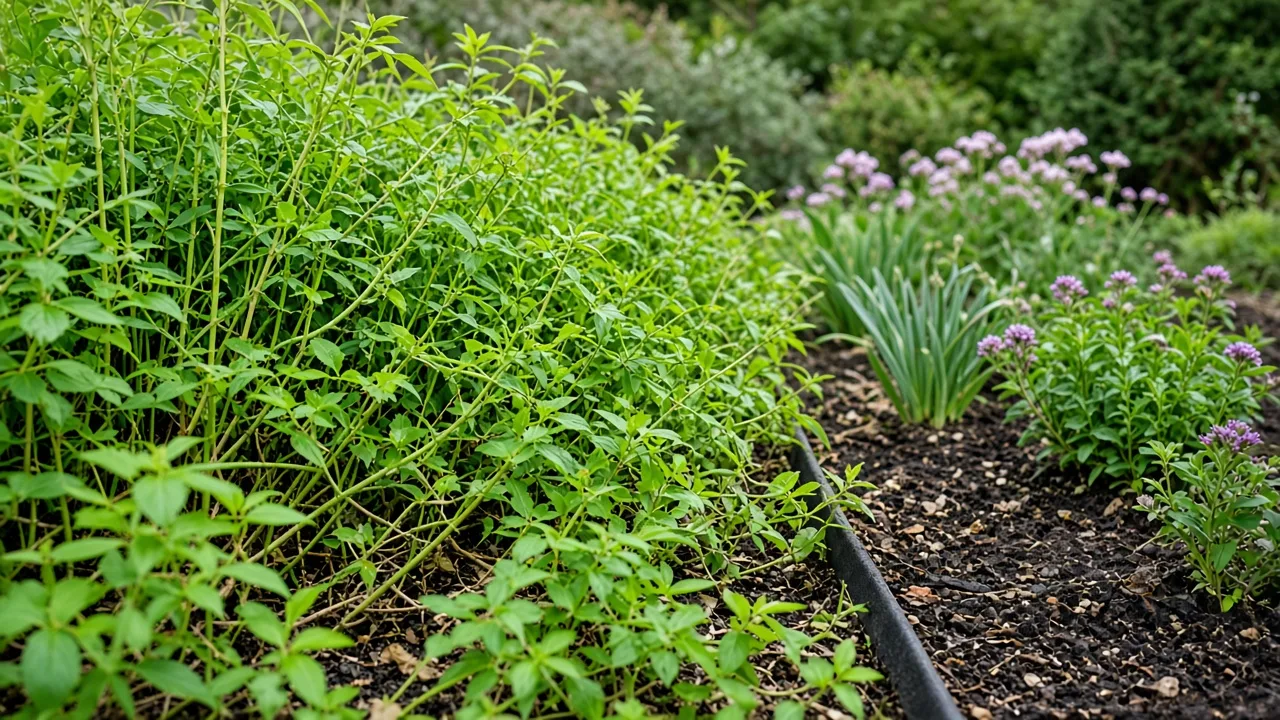
Ground covers can hold soil, cover bare ground, and reduce routine weeding. The risk comes when a plant moves beyond the bed: a rhizome slips under a fence, stems root where they touch soil, or seeds reach a woodland edge. A patch that looks tidy in one yard can become a persistent problem in a nearby natural area.
The five plants below are flagged as invasive or potentially invasive in particular regions, including by North Carolina Cooperative Extension’s regional ground-cover list and Ontario’s Invasive Ground Covers guide. That does not mean every plant is prohibited everywhere. Check the current list and rules for your state, province, county, and municipality before buying, sharing, or disposing of one.
Invasive vs. aggressive: why the distinction matters
In everyday garden talk, “invasive” often means “it took over my flower bed.” Ecologists use the term more narrowly. NOAA describes invasive species as organisms introduced outside their native range that cause harm to the environment, economy, or human health. A plant can spread quickly in a garden and still not meet that ecological definition in every location.
That distinction changes the decision. An aggressive plant may be a nuisance around a lawn or perennial border; an ecologically invasive plant can also escape cultivation, establish in natural communities, and displace native vegetation. Check your local invasive species authority rather than relying on a national list or a nursery label. The NOAA definition is useful background, but local agencies determine which plants pose documented risks in your region.
A plant listing is regional, not a national ban
A plant’s risk depends on climate, habitat, and where it can spread. English ivy, for example, is invasive in parts of the United States, while the specific status and legal restrictions vary by jurisdiction. A university extension page that calls a species invasive in one state does not automatically establish a ban in another.
Use the word “listed” carefully. A state invasive plant council may identify a species as a high-priority ecological threat without making it illegal to sell; a statute may separately restrict sale, transport, or propagation. Before you act, search the exact scientific name with your state or provincial invasive-plant program, then read the current rule itself if you need to know whether a restriction is legally binding. If a plant is permitted where you live, it can still be a poor choice beside a creek, woodland, preserve, or property boundary.
At a glance: how these ground covers spread
| Plant | Main route of spread | Why it is hard to contain | Local check |
|---|---|---|---|
| Goutweed | Underground rhizomes and seed | Small root pieces can resprout beyond the bed | State invasive-plant list; woodland-edge guidance |
| Chameleon plant | Vigorous rhizomes; sometimes plant fragments | Roots can extend through wet soil and return after incomplete removal | State or provincial prohibited/restricted list |
| English ivy | Ground runners, climbing stems, and seed from mature vines | Escapes through woodland edges and climbs trees or structures | State extension and local sale/planting rules |
| Common periwinkle | Trailing stems that root at nodes; spread from plantings | Dense mats persist and move into neighboring habitat | State invasive-plant council or extension |
| Yellow archangel | Rooting stems and seed | New plants establish from stem nodes and discarded material | Regional invasive-plant list, especially western states |
The table is a screening tool, not a substitute for your local list. Scientific names matter because common names are reused: “bishop’s weed” can refer to goutweed, but is also used for unrelated plants, and annual vinca is not common periwinkle. When you are unsure what is growing, compare leaves, stems, flowers, and growth habit with an extension profile before pulling or sharing it.
Goutweed (Aegopodium podagraria)
Goutweed is also sold or discussed as bishop’s weed, ground elder, or snow-on-the-mountain, especially for variegated garden forms. It has divided leaves and small white flower clusters, but the feature that matters most is below the surface: branching rhizomes spread outward and can send up new shoots from separated pieces. The NC State Extension profile describes it as aggressive and records invasive status in several northeastern and midwestern states, including Connecticut, Michigan, New Jersey, Pennsylvania, Vermont, and Wisconsin.
A small clump can become a wide mat, then reappear through lawn, under edging, or among the roots of shrubs where digging becomes risky. Variegated forms are not a reliable containment strategy; they can spread too, and green reversions may be especially vigorous. Avoid planting or sharing goutweed near natural areas, and do not assume a physical border will stop rhizomes unless it is designed and maintained for that purpose.
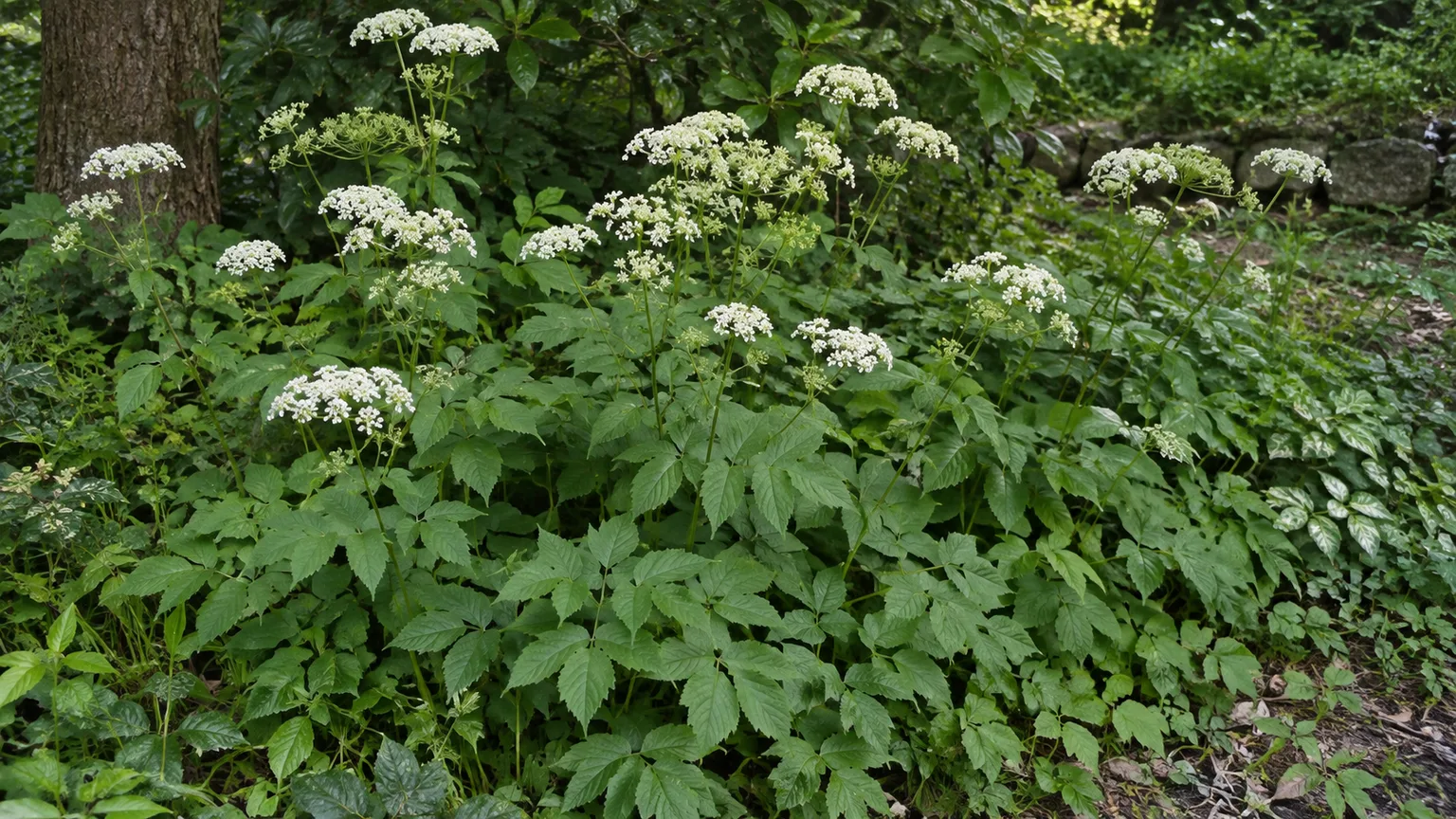
For an established patch, work when soil is moist enough to loosen roots, then lift the rhizomes carefully and sift the soil by hand. A fork is often more useful than a rotary tiller: chopping roots into pieces can leave viable fragments spread through the bed. Mark the outer edge, check it every few weeks during the growing season, and remove each new shoot with as much attached root as practical. NC State lists native wild ginger among alternatives in its profile; in other regions, ask a local extension office or native-plant program for a shade-tolerant replacement suited to your soil.
Chameleon plant (Houttuynia cordata)
Chameleon plant, also called fish mint or heart-leaved houttuynia, is grown for heart-shaped leaves that may be green, cream, and red. It tolerates wet sites and can be used as a marginal plant near water, qualities that can make it seem like a neat solution for a damp corner. Its rhizomes can travel well beyond the original planting, however, and a small piece left behind can produce new growth. NC State Extension notes that it spreads rapidly by rhizomes and that the roots can be difficult to remove.
The combination of moist soil and fragmented roots makes this one a poor “dig it once” project. Avoid putting it beside a pond that connects to a creek or drainage ditch, where escaped material may be carried downstream. The NC State profile documents its Asian origin and spreading habit; local authorities determine whether it is prohibited or classed as invasive in your area.
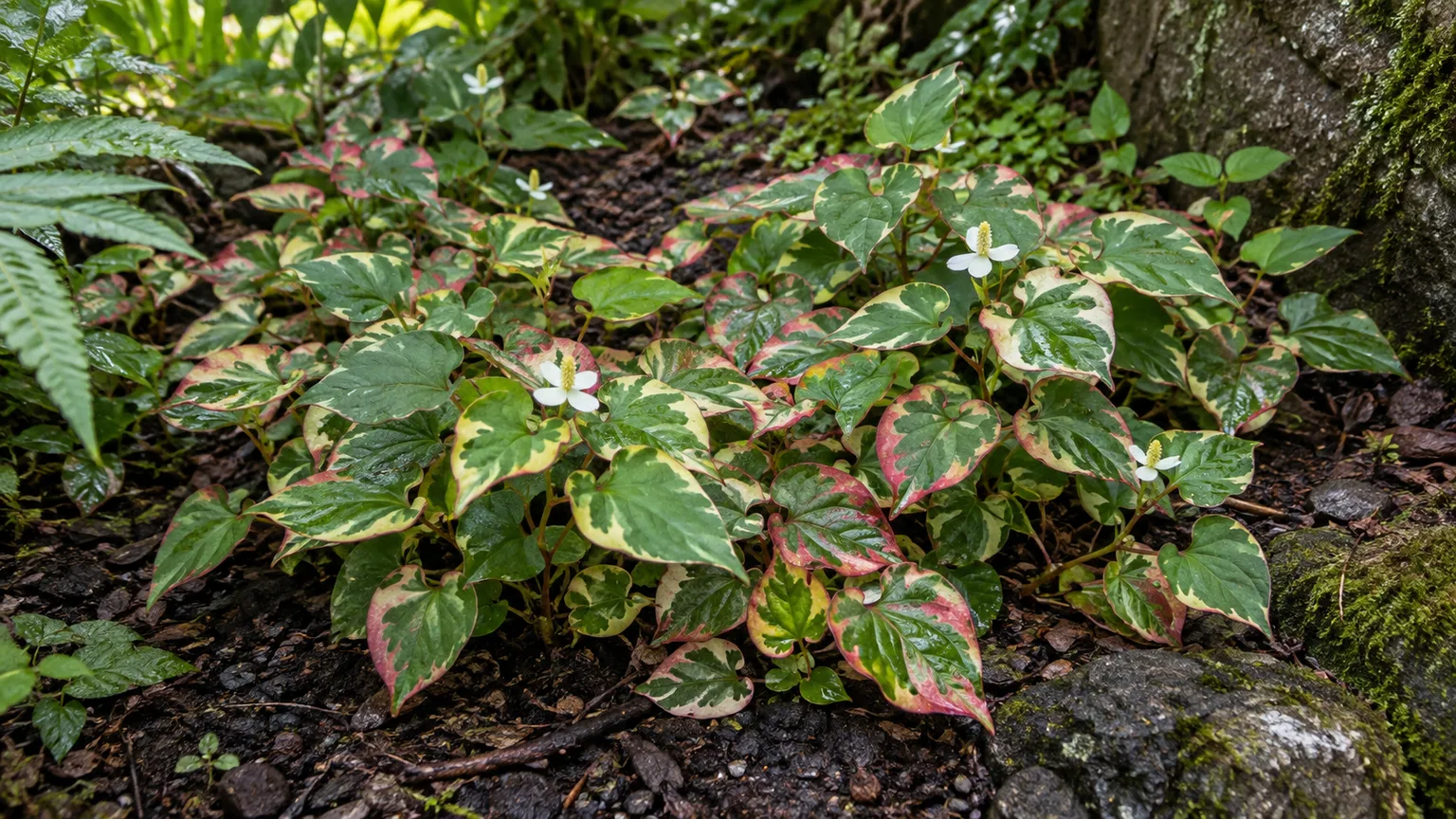
If you already have it, first stop new planting and prevent soil or roots from moving to another bed. For a small isolated patch, dig from the outside inward and collect every root piece you can see; avoid shaking contaminated soil into clean areas. For a large patch, cover the whole area and its advancing edges, then keep the cover in place through an entire growing season and inspect the perimeter for escapes. That approach takes time and may not kill deep rhizomes on the first attempt. If using an herbicide is necessary, confirm that it is legal and labeled for the site, protect nearby water, and follow the product label exactly; never spray a wetland edge casually.
English ivy (Hedera helix)
English ivy is an evergreen vine that forms a low carpet when young and climbs when it reaches a tree, wall, or other support. Its familiar glossy leaves can hide its growth habit: juvenile stems creep along the ground, while mature climbing stems can flower and produce berries. Birds eat the fruit and disperse seeds, so ivy can move beyond a landscaped bed into forests and other natural areas.
The risks are not limited to a messy border. Dense ivy can shade out native seedlings and ground-layer plants; climbing vines add weight and moisture against tree bark and can make inspection or maintenance difficult. NC State Extension describes English ivy as invasive in North Carolina and notes both its spread and climbing effects. Penn State Extension’s English ivy landscape guidance also explains how it escapes plantings and why removal needs follow-up. Status and legal restrictions still vary by location.
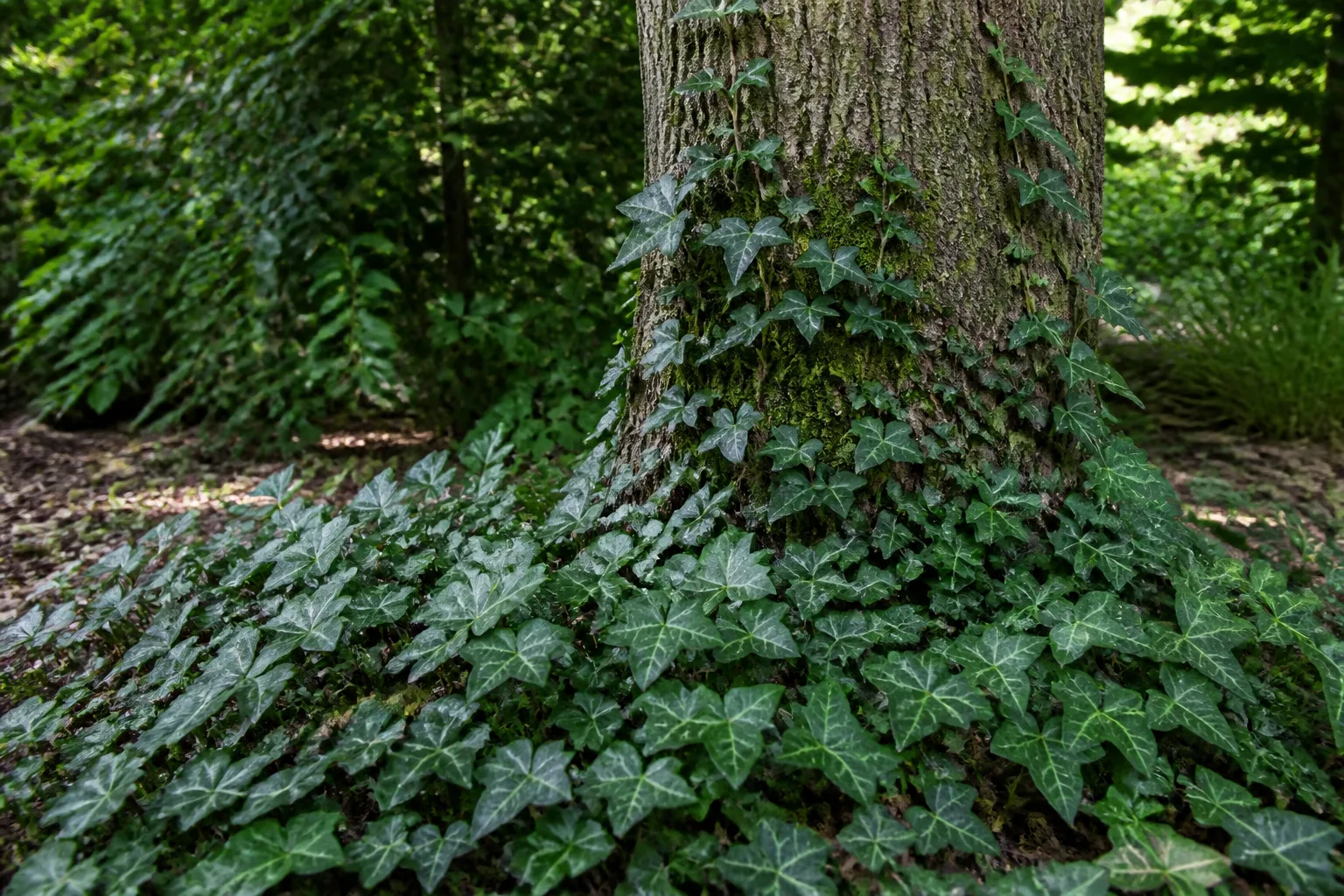
For a small ground patch, pull runners after rain and remove rooted nodes, checking again for new shoots. If ivy has climbed a tree, cut the vine stems at the base and remove a manageable band of lower growth without pulling the upper vines down; pulling can tear bark or bring down dead branches. Let attached upper stems die and dry before removing them only if it is safe to do so. Large trees, high vines, or ivy on masonry may call for an arborist or qualified removal service. Wear gloves and long sleeves because some people develop skin irritation, and keep berries away from children and pets. Do not let cut vines root in another part of the yard.
Common periwinkle (Vinca minor)
Common periwinkle is an evergreen mat-forming plant with opposite leaves and blue-purple, five-petaled flowers in spring. It is sometimes confused with big periwinkle (Vinca major), which has larger leaves and flowers, or with annual vinca (Catharanthus roseus), which is a different plant. Identify the species before using a local list: rules for one “vinca” do not automatically apply to the others.
Vinca minor spreads mainly as trailing stems extend and root at nodes, creating a dense carpet that can move from a garden into woodland edges. It is native to Europe and parts of western Asia, and some North American jurisdictions flag it because established mats can suppress native understory plants. NC State’s profile notes its presence on several state “most unwanted” lists and the North Carolina Invasive Plant Council’s invasive designation. Ontario also lists periwinkle among invasive ground covers. Those are regional assessments, not evidence that every jurisdiction bans it.
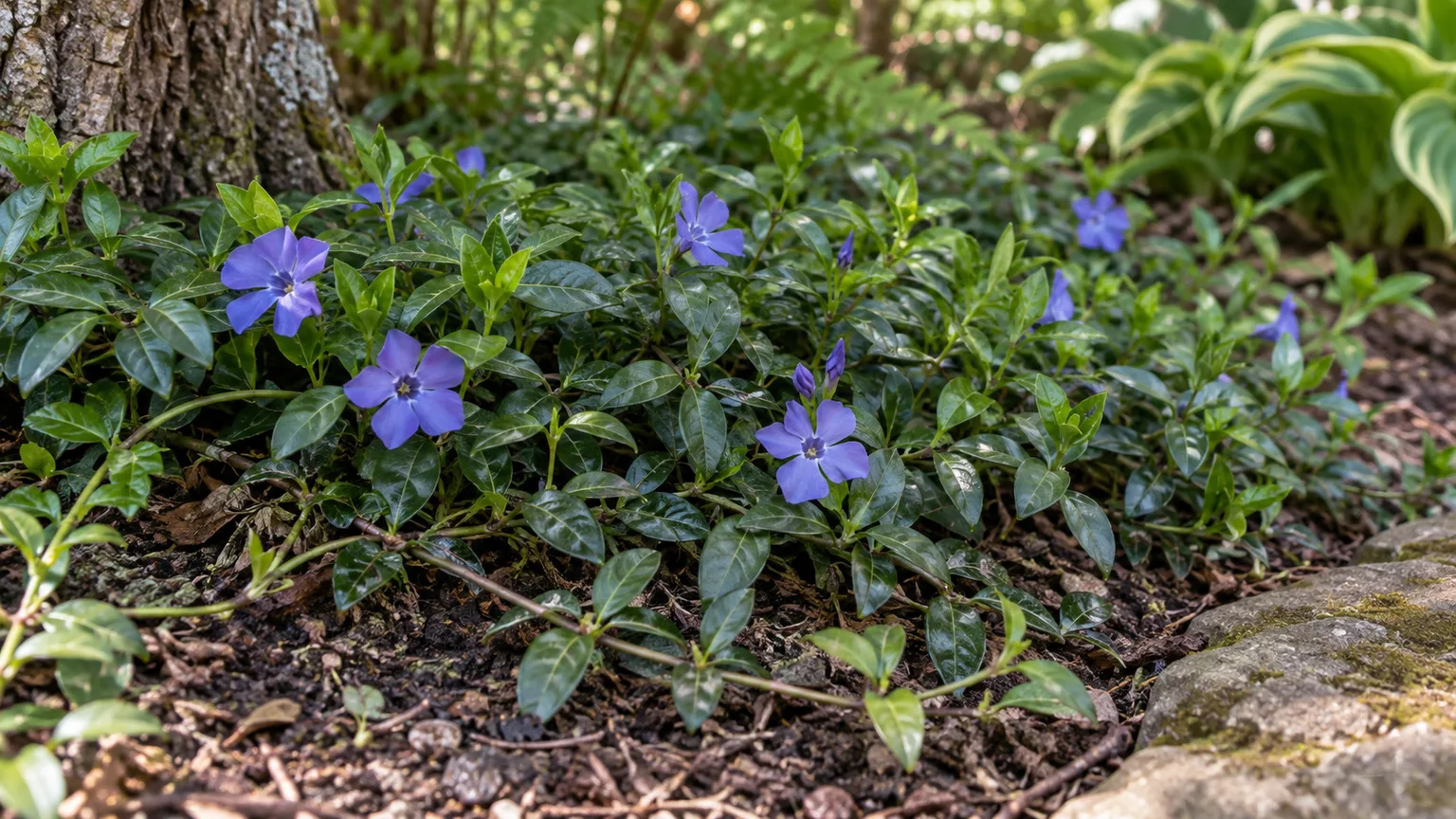
A narrow strip can often be removed by lifting the runners and rooting nodes, but a broad mat usually needs repeated work. Start at the woodland-facing edge and work inward so you can keep the boundary contained. Pulling the whole mat at once may disturb soil and damage desirable plants threaded through it; cut and lift sections, then return for regrowth. Do not dump pulled stems into a wooded ravine or an informal brush pile. If periwinkle is still offered locally, choose a replacement with similar shade and moisture needs that is native to your region, rather than selecting a substitute from a national “safe plants” list.
Yellow archangel (Lamiastrum galeobdolon)
Yellow archangel, also called yellow dead nettle, has silver-marked leaves and yellow flowers. The common name “dead nettle” is also used for other plants, so confirm the scientific name before comparing it with a local invasive list. Garden cultivars can be attractive in shade, but stems that touch soil can root and help the patch expand; seed can contribute to spread as well.
NC Cooperative Extension’s Henderson County list includes yellow archangel among invasive ground covers. The NC State Plant Toolbox profile for Lamium galeobdolon notes fast growth and invasive concern in western parts of the country. This illustrates why region matters: the species is not uniformly labeled invasive across North America, and a county extension list is a warning to investigate locally rather than a statement of a continent-wide legal status.
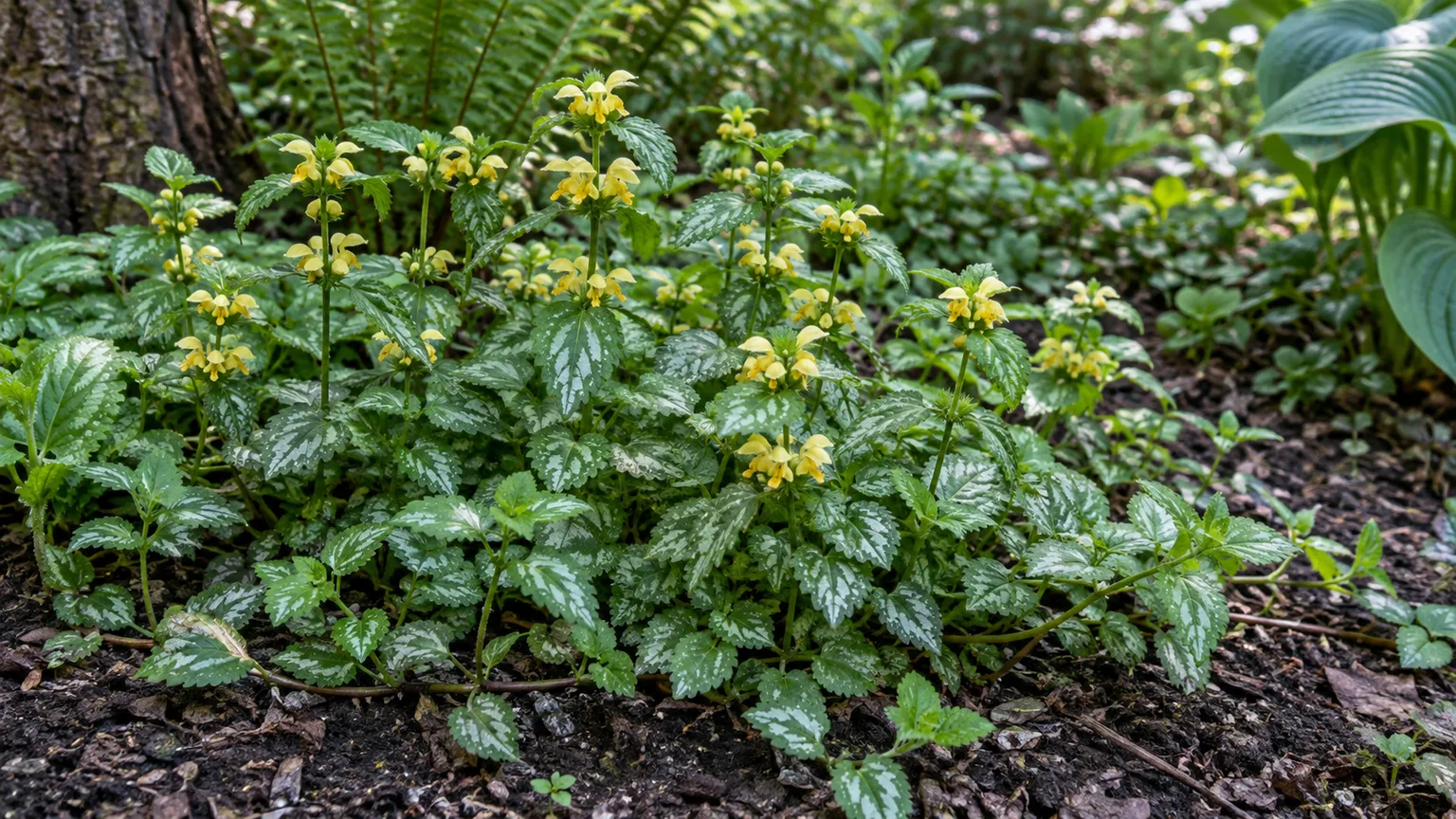
If it is growing where it is not wanted, lift rooted stems before the plant sets seed and bag any seed-bearing material. Search beyond the visible leafy edge because stems can root at a distance. Thin, shallow patches are easier to remove than old, interwoven mats; use a hand fork to loosen the soil without chopping up roots. In locations where it is invasive or restricted, ask the local invasive-plant office about disposal rules before moving plant waste. Do not trade divisions from a patch just because the cultivar is sold in another region.
Fast-spreading does not always mean invasive
Ajuga (Ajuga reptans) makes dense mats and can spread into lawns or neighboring beds. NC State Extension describes it as aggressive and notes that it is considered invasive in some parts of the country, while also rating its threat to native plant communities in North Carolina as low. That is a useful reason to check both the ecological evidence and the maintenance fit: “low threat here” does not mean “will stay where planted,” and “aggressive” does not automatically mean legally listed invasive.
Evening primrose (Oenothera biennis) is another case where self-seeding is not enough to call a plant invasive. It is native to eastern North America and can volunteer around a garden, but seedlings and ecological impact depend on region and habitat. Compare the NC State Ajuga profile and common evening primrose profile with your local references. If a vigorous plant is crowding out preferred garden plants, manage it as a garden problem; reserve the ecological label for evidence and regional assessments that support it.
Check a ground cover before you buy or share it
Before buying a plant, write down its scientific name from the label and search it with your state or province plus “invasive plant.” Check the state department of natural resources, agriculture department, invasive plant council, or university extension first. Then check municipal rules if you live near a conservation area, waterway, or community garden; local restrictions may be more specific than a state fact sheet.
Ask four questions before you plant: Does it spread by seed, runners, rhizomes, or several routes? Can those routes reach a woodland, stream, wetland, or neighbor’s property? Will a border contain it in your actual soil and slope? Can you remove it without spreading viable pieces? A “yes” to the last three risk questions is a reason to choose another species, even if the plant is technically allowed for sale.
A listing on a nursery website is not proof that the plant is low-risk in your county. Sales practices and invasive lists change, and different authorities use categories such as prohibited, regulated, watch list, or invasive. Read the date and definitions on the official page. When sources disagree, contact your extension office or invasive-plant program with a photo and location; they can help identify the plant and explain which designation applies.
How to remove an established patch without spreading it
Start by identifying the species and checking whether it is legally restricted. Photograph the patch, note the edge nearest natural habitat, and decide how you will contain the waste before you begin. Choose a dry, calm day if seed heads are present, and avoid working when the soil is so wet that roots break apart or contaminated mud sticks to tools and boots.
Pull seedlings and shallow runners first
Hand-pulling works best for seedlings and small patches with shallow roots. Water the ground a few hours beforehand if the soil is hard, then loosen plants with a fork and follow each runner to its rooted nodes. Pull steadily rather than jerking, because a snapped stem or rhizome can leave a piece behind. Keep a tarp or bucket beside you so roots and stems do not trail across clean ground.
If desirable plants are mixed into the mat, do not rake or till the whole bed. Cut out manageable sections, separate the ground cover from plants you intend to keep, and inspect the soil where roots interlace. That takes longer than stripping everything at once, but it reduces damage and makes it easier to catch fragments. Replanting or mulching after removal can shade bare soil, though neither step prevents regrowth from roots left underneath.
Smother larger mats instead of chopping them up
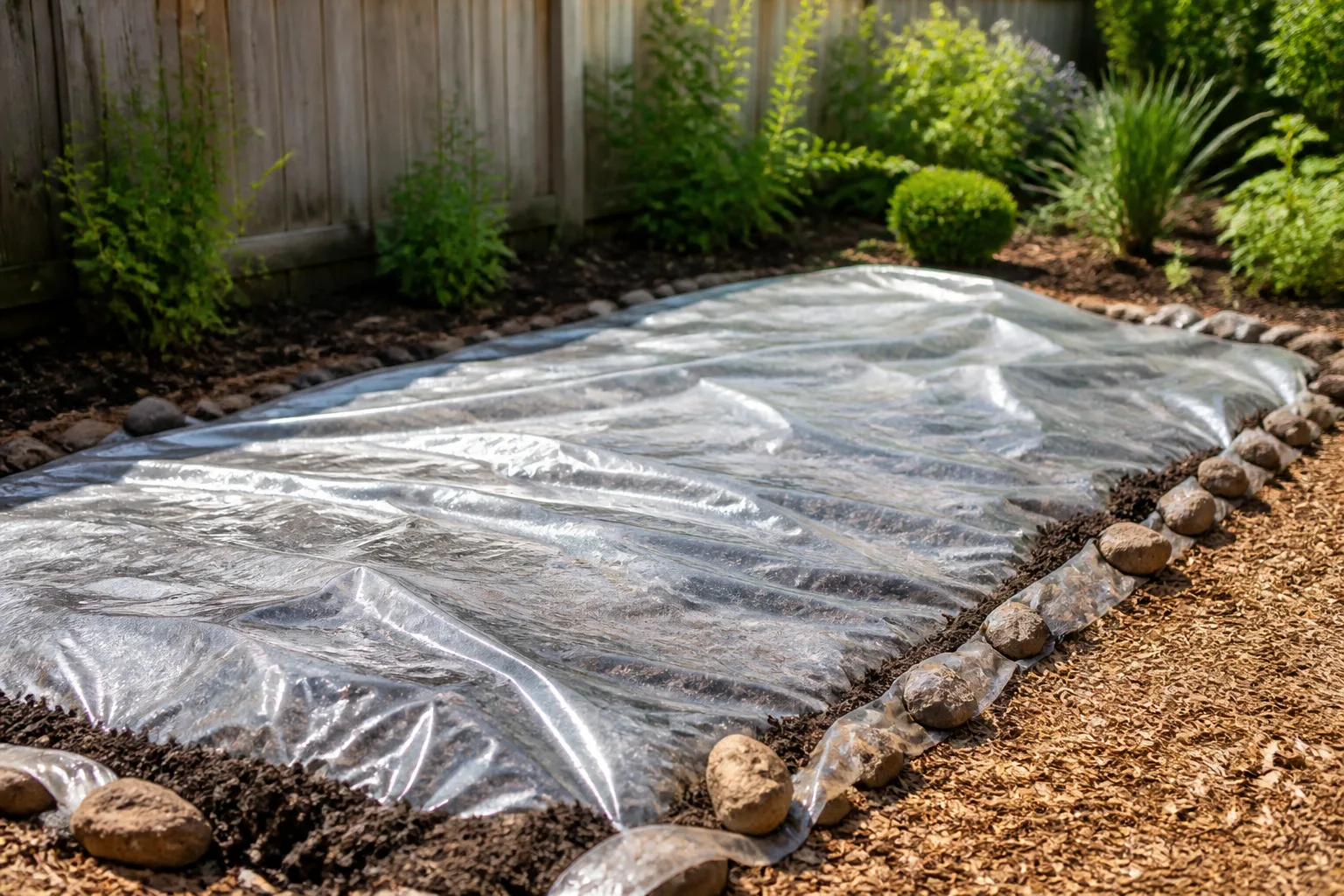
For a large, contained patch, an opaque tarp or overlapping cardboard and mulch can deprive leaves of light. Extend the cover beyond the visible edge because runners may be hidden under nearby plants. Secure the edges so wind cannot uncover the patch, and leave the material in place for a full growing season or longer if the species has deep rhizomes. Check the perimeter regularly; shoots that emerge beyond the cover still need to be removed.
Smothering is slower than digging and can affect plants or soil organisms underneath, so avoid covering desirable trees, shrubs, and mixed plantings without a plan. Solarization uses clear plastic and intense sun to heat soil; it is most effective in hot, sunny conditions and is different from simply laying a dark tarp over a shady woodland edge. A method that works on a sunny open bed may fail under tree canopy. Fine Gardening’s removal guidance and Epic Gardening’s ground-cover removal overview both emphasize matching the method to the plant and checking for regrowth.
Dispose of roots, runners, and seed heads safely
Do not put invasive plant waste into a home compost pile unless a local authority confirms that the facility reaches temperatures and manages material in a way that will kill that species. Rhizomes, rooted nodes, berries, and seed heads can survive casual composting or move with unfinished compost. Keep pulled material contained, and follow municipal yard-waste rules; some communities accept bagged invasive plants, while others require household trash or a designated drop-off.
Never dump plant waste into a creek, roadside, woodland, vacant lot, or storm drain. Clean soil from tools and shoes over the infested area, then wash them before working elsewhere. If local rules allow trash disposal, seal plant material in bags and label or handle it as required. When the legal status is unclear, call the municipal waste service or extension office before moving a large load; their instructions take precedence over generic online advice.
After removal, inspect the site every few weeks during active growth and again the following spring. The first flush of green does not mean the method failed; it may be the best opportunity to exhaust remaining roots while shoots are small. Continue until no new growth appears through at least a full growing season, and longer for persistent rhizomatous plants. Keep notes or photos from the same point so you can spot a small returning edge before it becomes another mat.
Choose a replacement for the exact site
Once a patch is controlled, avoid filling the bare ground with the fastest-growing plant you can find. A replacement should fit the light, moisture, soil, slope, and maintenance you can provide while staying within its intended boundary. Native plants are often a strong starting point near natural areas because they support local food webs, but “native” alone does not guarantee a plant will suit every garden or remain compact.
Think about the job the ground cover must do. For erosion control, prioritize dense rooting and consider a mix of locally appropriate plants rather than one monoculture. For a shady woodland edge, seek regionally native sedges, ferns, or low perennials recommended by your extension service or native plant society. For a narrow path border, a slower-growing clumper may be easier to edge than a runner. For a wet site, choose plants that tolerate seasonal water without escaping into a connected waterway.
Match the species to sun, moisture, slope, and region
Use a local native plant database or extension office to build a short list, then compare mature spread, height, water needs, and whether stems root where they touch soil. Ask whether the plant is known to naturalize outside cultivation in your county, not only whether it appears on a national list. The NC State goutweed profile, for example, points readers to native wild ginger as a woodland alternative; that suggestion is relevant to suitable parts of eastern North America, not a universal substitute for every climate.
If you want a plant that covers ground quickly, use physical boundaries and leave room for maintenance. A locally native ground cover can still spread vigorously in a rich, moist bed. Set edging where you can inspect it, leave a mowable strip along woodland borders, and remove seed heads or wandering stems before they reach a natural area. In a restoration buffer, follow the land manager’s species list rather than introducing any ornamental ground cover.
Conclusion
Goutweed, chameleon plant, English ivy, common periwinkle, and yellow archangel deserve a local status check because each can spread beyond a garden under the right conditions. Their risk is not identical: rhizomes, rooted stems, climbing growth, and seed dispersal call for different containment and removal choices. An invasive designation also depends on region and authority; it does not mean every plant on this list is illegal everywhere.
Before planting, confirm the scientific name and your local rules. If a patch is already established, contain it, remove it with a method suited to its growth, dispose of every viable piece according to local guidance, and monitor the site for regrowth. Replace it with a plant recommended for your own region and the actual conditions of the bed, then keep an eye on its edges. That extra check is easier than managing a ground cover after it has crossed the fence.