How to Get Rid of Bamboo From Your Yard Naturally: A Guide
Learn how to get rid of bamboo from your yard naturally: identify running bamboo, dig rhizomes, smother large patches, and prevent new shoots from returning.

To get rid of bamboo naturally, remove the underground rhizomes from a small patch or repeatedly cut new growth from a larger one until the rhizomes run out of stored energy. Smothering can help when an opaque cover can stay anchored for an extended period. No matter which method you choose, inspect for new shoots and remove them promptly; cutting the visible canes once does not kill the underground network.
The right plan depends on whether the bamboo is running or clumping, how far it has spread, and whether its rhizomes are coming from a neighbor’s yard. Start by identifying the growth pattern and marking the patch before you dig, mow, or cover it. That first check prevents wasted effort and helps you avoid spreading live pieces into clean soil.
Get the diagnosis and boundary right
Bamboo is a perennial grass. Its woody canes, called culms, grow from underground stems called rhizomes. A rhizome can travel away from the visible clump and send up a new shoot, so the canes you see are not a reliable map of the entire plant.
Walk the edges of the patch and flag every shoot, including isolated ones in lawn beds, gravel, or along a fence. Note nearby trees, irrigation lines, drains, and desirable plants that could be damaged by digging or covered by a tarp. If you share a boundary with another property, mark the property line before deciding where to excavate.
Running bamboo behaves differently from clumping bamboo
Running bamboo sends long, horizontal rhizomes outward; clumping bamboo forms a tighter mass with shorter rhizomes. Running types are more likely to appear as scattered shoots several feet beyond the original canes, while a clumping type usually expands close to the parent plant. Clemson Cooperative Extension explains that running bamboo can be difficult to control because rhizomes spread underground and small sections left after digging can regenerate; its guidance also recommends patience and follow-up over multiple years (Clemson Cooperative Extension).
If the bamboo was planted intentionally and remains in a contained clump, you may be able to remove just the unwanted edge or install a barrier rather than excavate the whole plant. If shoots have crossed the lawn, reached a neighbor’s side, or emerged far from the original stand, treat it as a running-bamboo problem. When the species is unknown, assume the network may extend beyond the visible canes and work outward carefully.
The easiest time to map the patch is when shoots are visible, often during the main growing season in your climate. Dormant canes may be easy to cut, but the absence of green growth does not show where the rhizomes end; flag the last known shoots before they die back and keep that boundary on your monitoring map.
Rule out a lookalike before digging
Confirm that the plant is true bamboo before you start. Bamboo has jointed culms with distinct nodes and leaves attached along branches; Japanese knotweed is a different plant with broad leaves and canes that resemble bamboo from a distance. A mistaken identification matters because removal and disposal guidance can differ by species and location.
If the plant does not match bamboo clearly, photograph the canes, leaves, nodes, and new shoots and ask a local cooperative extension office or invasive-plant program to identify it. Fine Gardening’s invasive-plant guidance likewise recommends confirming the species and checking regional resources before removing a plant, since misidentification can harm desirable or native plants (Fine Gardening).
Choose a method for your patch
Use the smallest method that can reach the whole rhizome network. Digging is usually the most direct option for a small, isolated patch because it physically removes the underground growth; repeated cutting or smothering takes longer but can cover a larger area with less excavation.
| Situation | Best starting method | What to expect |
|---|---|---|
| A few shoots or a young clump with clear edges | Dig and remove rhizomes | Fastest way to reduce the patch, but you still need to watch for missed fragments. |
| A broad stand with room to cover it | Cut canes, then use an opaque tarp | Requires a large cover, reliable anchoring, and checks along every edge. |
| Bamboo scattered through lawn | Cut tall canes safely, then mow new shoots frequently | Repeated work over multiple growing seasons; mowing once in a while is not enough. |
| Shoots crossing a fence from next door | Remove shoots on your side and plan a monitored barrier | The source may continue sending rhizomes until the neighboring patch is controlled. |
Dig a small, isolated clump
Digging makes sense when you can work around the whole patch and reach the rhizomes without cutting through valuable roots, paving, or underground services. It becomes inefficient when mature bamboo covers a wide bed or disappears under a shed, retaining wall, or neighboring structure. In that situation, remove what you safely can and combine it with a suppression plan or get a site-specific estimate from a bamboo-removal professional.
Use repeated cutting or tarps on a broad stand
Choose cutting and mowing if the area is accessible to a mower and can stay clear of obstacles. Choose a tarp if the patch can be covered without smothering plants you want to keep and you can leave the cover secure through repeated growth cycles. A tarp may save excavation but is not a short-term shortcut: the perimeter must be watched for shoots that escape the covered footprint.
A mixed border needs a more selective plan than an open lawn. Digging individual runners may preserve nearby plants if you can trace the bamboo stems, while a continuous cover will also block light from flowers, shrubs, and grass underneath it. If the patch reaches under a deck or established tree canopy, do not force a single method across the entire area; divide it into workable zones and use the approach each zone can tolerate.
Treat a boundary incursion as a containment problem
If the bamboo begins outside your property, digging out every rhizome on your side may not stop new ones from arriving. Remove visible shoots and decide whether a properly installed barrier along the boundary is feasible, while also speaking with the owner of the source patch. Check local rules before installing anything; for example, Lexington, Massachusetts has a specific running-bamboo bylaw, but its requirements are local rather than a universal standard (Town of Lexington).
Digging is fastest for a small patch
Work after rain or water the soil the day before, when it is damp enough to loosen but not so wet that it collapses into mud. Wear sturdy gloves, eye protection, and closed-toe footwear; cut canes can be sharp, and digging through a dense root mass is strenuous. If you need to dig near buried cables, pipes, or irrigation, contact the appropriate utility-locate service first.
Cut the canes, then loosen soil
Cut the canes low enough to give yourself room to work, but leave short stubs to help locate the clump. Use loppers for small culms and a pruning saw for thicker ones; do not feed tall, woody stalks into a lawn mower. Clear the cut canes from the work area so they do not hide the soil or trip you as you follow the roots.
Start a trench around the outside of the visible clump and loosen soil with a sharp spade or mattock. Work in manageable sections, lifting the loosened mass rather than trying to yank the whole stand at once. For a small clump, a garden fork can tease smaller rhizomes from the soil; a spade is more effective for severing thick, woody sections.
Follow rhizomes instead of hacking at them
Look for tough, horizontal, jointed stems running away from the canes. Most bamboo rhizomes run fairly close to the soil surface, but an established clump may have a deeper root mass, so do not assume every section sits at the same depth. Trace each rhizome until it ends or reaches a point where it is safe to cut, then lift out as much of the connected stem as possible. Work slowly near nearby shrubs and trees so you do not mistake their roots for bamboo or damage roots you want to keep.
Do not rototill the patch or chop the soil into small pieces. A tiller can scatter live rhizome sections through the bed, turning one patch into many smaller ones; Clemson notes that even a small amount of remaining rhizome can allow bamboo to re-establish. Shake soil from each removed section over the hole, inspect it for attached segments, and hand-pick visible fragments before replacing the soil. Keep a separate bucket or tarp beside you for rhizomes so they do not get mixed back into the soil pile. If you find an unusually long stem running under a path or fence, stop cutting blindly; trace it from both sides or switch to containment where the line cannot be safely excavated.
Smothering can work if the cover stays put
A heavy, opaque tarp can suppress a large patch by blocking light from the canes and new shoots. Cut the existing canes down first, then cover the entire visibly affected area with a durable, UV-resistant sheet; extend it beyond the outermost shoots because a rhizome may be growing underground past the last cane you can see. There is no dependable margin that fits every patch, so use a generous buffer and inspect outside the cover.
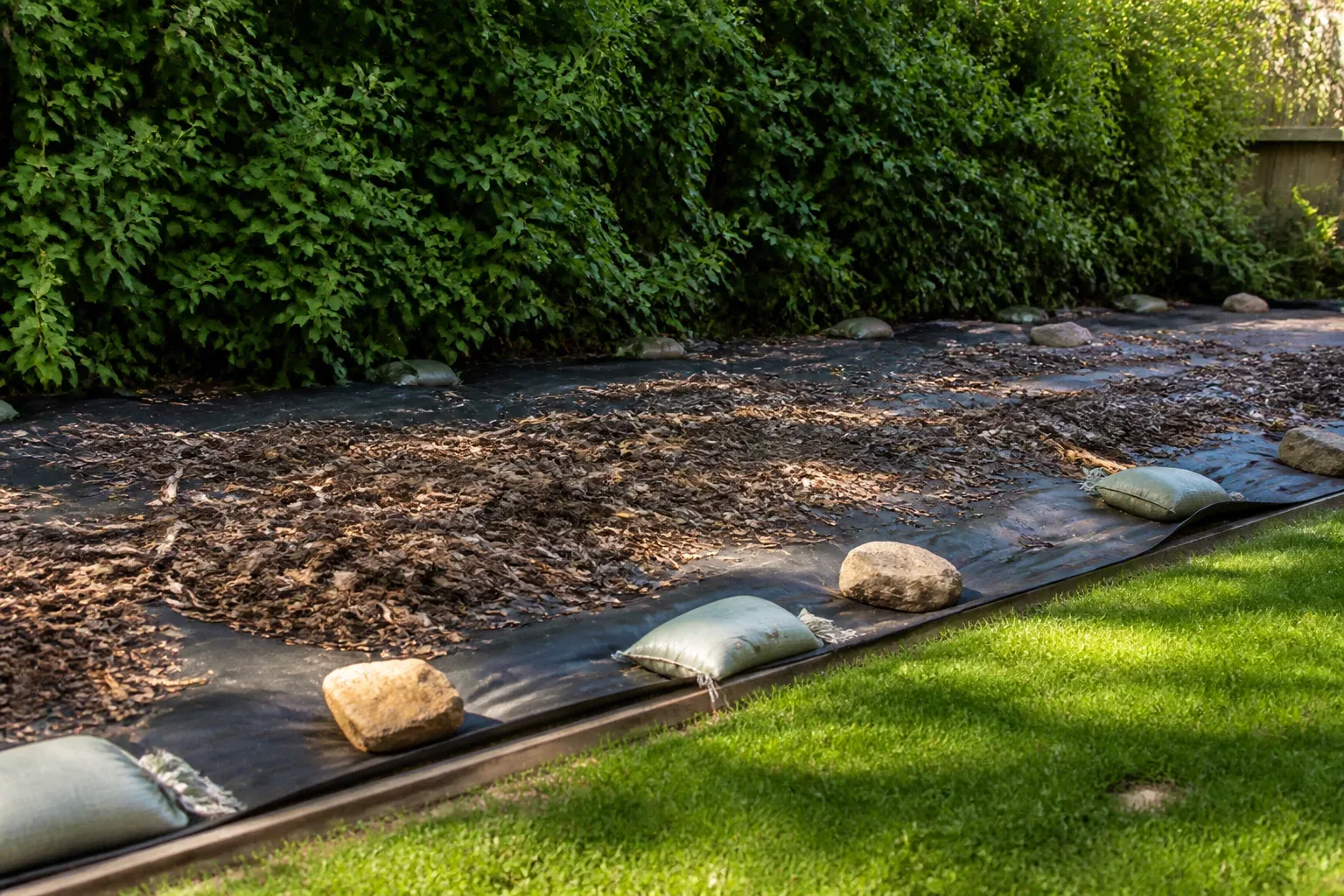
Overlap adjoining sheets enough that shoots cannot find a gap, and anchor the edges with landscape pins or heavy weights. Check the perimeter regularly, especially after wind or rain, and cut or dig any shoot that appears outside the tarp before it can leaf out. RHS guidance notes that bamboo rhizomes may spread beyond the visible plant and that eradication can take years; treat the tarp as one phase of control, not proof the rhizomes are dead (Royal Horticultural Society).
Keep the cover in place through the growing season and be prepared to leave it longer if shoots return when you uncover the soil. A fixed number of weeks is not a reliable finish line because patch size, shade, moisture, temperature, and tarp coverage all affect the result. This method also kills grass, perennials, and seedlings beneath the sheet, so do not lay it over a mixed border unless you are willing to replant that area.
Before spreading the tarp, remove loose sticks and cut canes that could puncture it, then plan how you will reach the perimeter for inspections. Do not rely on thin landscape fabric that admits light or has open seams; the purpose is to keep shoots from receiving light across the covered patch. If wind repeatedly lifts the cover, add anchors or choose another method, because a flap at the edge gives new shoots a path out.
Cutting and mowing exhaust reserves over time
Bamboo stores energy in its rhizomes and can use those reserves to push up fresh canes after cutting. Repeatedly remove shoots as soon as they emerge and before they develop a full canopy; the aim is to prevent the leaves from replenishing the underground reserve. Cutting only the tall culms once leaves the rhizomes intact, so expect new shoots.
For a lawn-sized patch, cut mature stalks safely with loppers or a saw, then mow short, tender regrowth whenever it appears and the ground is firm enough for the mower. Do not force a mower through hard canes, and do not let shoots grow tall enough to become a hazard or damage equipment. Clemson Cooperative Extension describes regular mowing as a long-term control method and notes that it can take two to three years to see results; weather and the amount of surviving rhizome can make the timeline longer or shorter. Gardening Know How likewise emphasizes removing fresh shoots promptly and planning for multi-season follow-up (Gardening Know How).
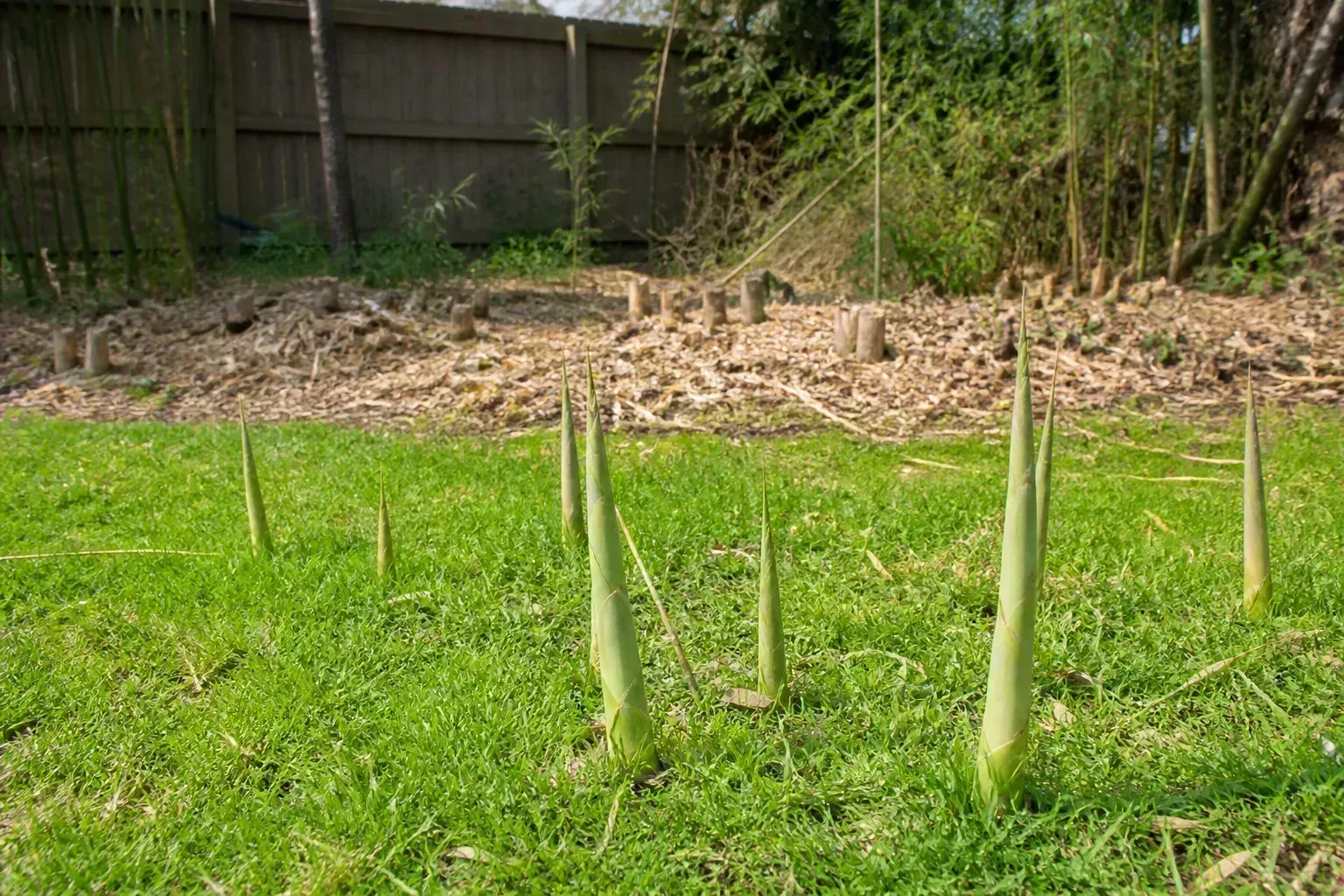
Watering the patch does not remove rhizomes. Some instructions suggest watering to encourage new shoots after cutting, but that is only useful if you are prepared to remove every new shoot promptly; otherwise you are helping the plant rebuild its leaf area. If you cannot check frequently, keep the area covered or schedule reliable mowing rather than encouraging growth you will not control.
Prevent shoots from returning across a property line
A root barrier is useful when you need to protect a lawn, bed, or boundary from bamboo that you are retaining elsewhere or that continues to grow next door. It does not kill the bamboo on the other side or remove rhizomes that have already crossed; first cut and remove the rhizomes on your side of the proposed barrier. A barrier installed through an existing patch without clearing the unwanted side can simply trap the problem in a new shape.
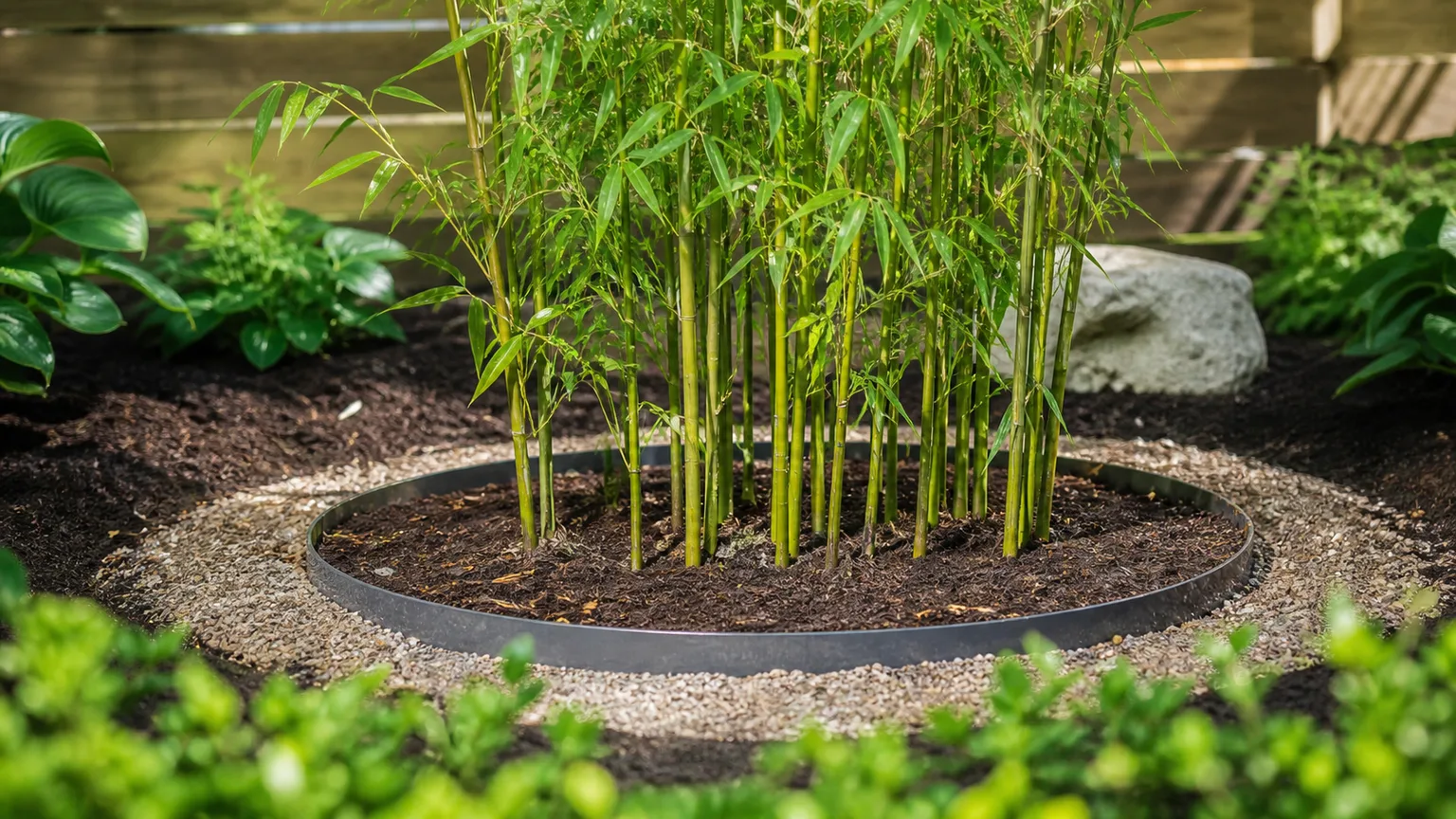
Use a purpose-made, durable barrier with tightly joined seams, and make sure the top edge remains visible enough to inspect. Recommendations for depth vary by source and location, and some towns set their own specifications, so confirm the material and installation depth with local extension or municipal guidance instead of treating one measurement as universal. Rhizomes can follow a weak seam, pass above a low barrier, or grow around an open end, so inspect the perimeter at least several times during the growing season and cut back any escape promptly.
If bamboo is crossing from a neighbor’s yard, keep dated photos of new shoots and the line where they emerge, then discuss a coordinated plan. A barrier or repeated cutting on your side can protect your space, but it may become a recurring maintenance job until the source patch is also managed. If the spread is damaging a structure, paving, a drain, or a shared landscape, document the issue and check local ordinances or seek qualified local advice before digging under the boundary.
Monitor until the patch stays quiet through growth
The control job continues after the last mature cane is gone. Mark the original patch and its perimeter, then inspect the whole area at least weekly while new shoots are emerging; reduce the frequency only after the site has stayed clear through active growth. Check fence lines, lawn edges, paving gaps, and the far side of any tarp because escaped rhizomes can emerge away from the original clump.
Remove each new shoot below the soil line if you can reach its rhizome, or cut it immediately and repeat the next time it appears. If shoots become smaller and weaker over successive checks, the control method is reducing the plant’s reserves, but keep going until you have passed a full growing season without new growth. A warm climate may extend the period when bamboo can grow, while a cold dormant season can hide rather than eliminate surviving rhizomes.
Keep a simple log with the date, location, and size of new shoots. This is especially useful when several methods are being used, or when growth seems to come from outside the area you are treating; the pattern can reveal a missed rhizome route or a continuing neighbor source. Recheck after soil work, landscaping, or fence repairs that may expose or move rhizome fragments.
Dispose of rhizomes without spreading them
Do not put live bamboo rhizomes in a home compost pile. A backyard heap may not get hot enough throughout to kill every viable section, and moving fresh fragments in an open trailer can spread them along the route. Keep culms and rhizomes contained as you work, and bag or box the underground pieces separately from clean soil.
Ask your municipal green-waste facility whether it accepts bamboo rhizomes or other invasive plant material; rules vary by location and collection method. The Royal Horticultural Society advises against home composting bamboo rhizomes and recommends using local green-waste recycling or a recycling site where accepted. If your local facility does not accept them, follow its instructions for household disposal rather than leaving fragments in a brush pile or dumping them at a vacant site.
Clean soil from your spade, fork, mower deck, and wheelbarrow before moving to another part of the yard. A loose rhizome caught on a tool can be carried to a clean bed, and a mower can drag small shoots into the lawn; a quick inspection after each work session closes that preventable route of spread.
Mistakes that prolong removal
The most common mistake is treating the canes as the whole plant. A patch may look cleared after cutting while the rhizomes remain alive underground; the first scattered shoots are a signal to continue the plan, not a sign that the method failed immediately. Conversely, leaving those shoots untouched for weeks allows them to grow leaves and replenish the network.
Avoid turning a small patch into many fragments with a rototiller, composting fresh rhizomes, or using a tarp that stops at the edge of the visible canes. Do not assume a root barrier is an eradication method, and do not plant aggressive perennials around the edge as a substitute for follow-up; crowding does not reliably stop bamboo underground. A second mistake is ignoring the property line: if the source is outside your yard, re-growth may be continuous even when your own digging is thorough.
Finally, do not choose a method before checking what else is in the work zone. Digging can injure wanted tree roots and buried services, while a tarp blocks light from every plant beneath it; mowing can damage equipment if mature stalks are left in the path. Match the tool and method to the site, and reduce the treatment area only when the evidence shows the bamboo is no longer returning.
When to hire a bamboo removal professional
Bring in a specialist if the patch is larger than you can excavate safely, runs beneath a building or hardscape, is mixed through established trees or a valuable bed, or crosses a boundary where coordinated work is needed. A contractor with bamboo-removal experience can trace the rhizome network, recommend machinery or staged control, and identify where a barrier would actually protect the area. Ask how they will handle regrowth and disposal; a bid that promises permanent removal in one visit without explaining follow-up deserves questions.
Professional removal does not eliminate the need to monitor. Request a clear scope that says whether the work includes digging, hauling, tarp installation, follow-up visits, and shoots that appear later. For a large stand, staged excavation or a multi-season cut-and-monitor plan may be more realistic—and less disruptive—than removing every rhizome in one pass.
Conclusion
For a small bamboo patch, dig out the connected rhizomes and keep checking the disturbed soil for fragments. For a broad stand, repeated cutting or a secured opaque tarp can suppress new growth, but each method needs regular edge checks and persistence through multiple growing seasons.
The crucial step is to manage the underground network, not just the visible canes. Identify the growth pattern, choose a method your yard can support, dispose of rhizomes responsibly, and treat every new shoot as a cue to continue until the patch stays clear.