How to Get Rid of Aphids on Garden Plants Safely
Learn how to get rid of aphids: identify colonies, rinse them off without damaging leaves, use insecticidal soap safely, and protect beneficial insects.
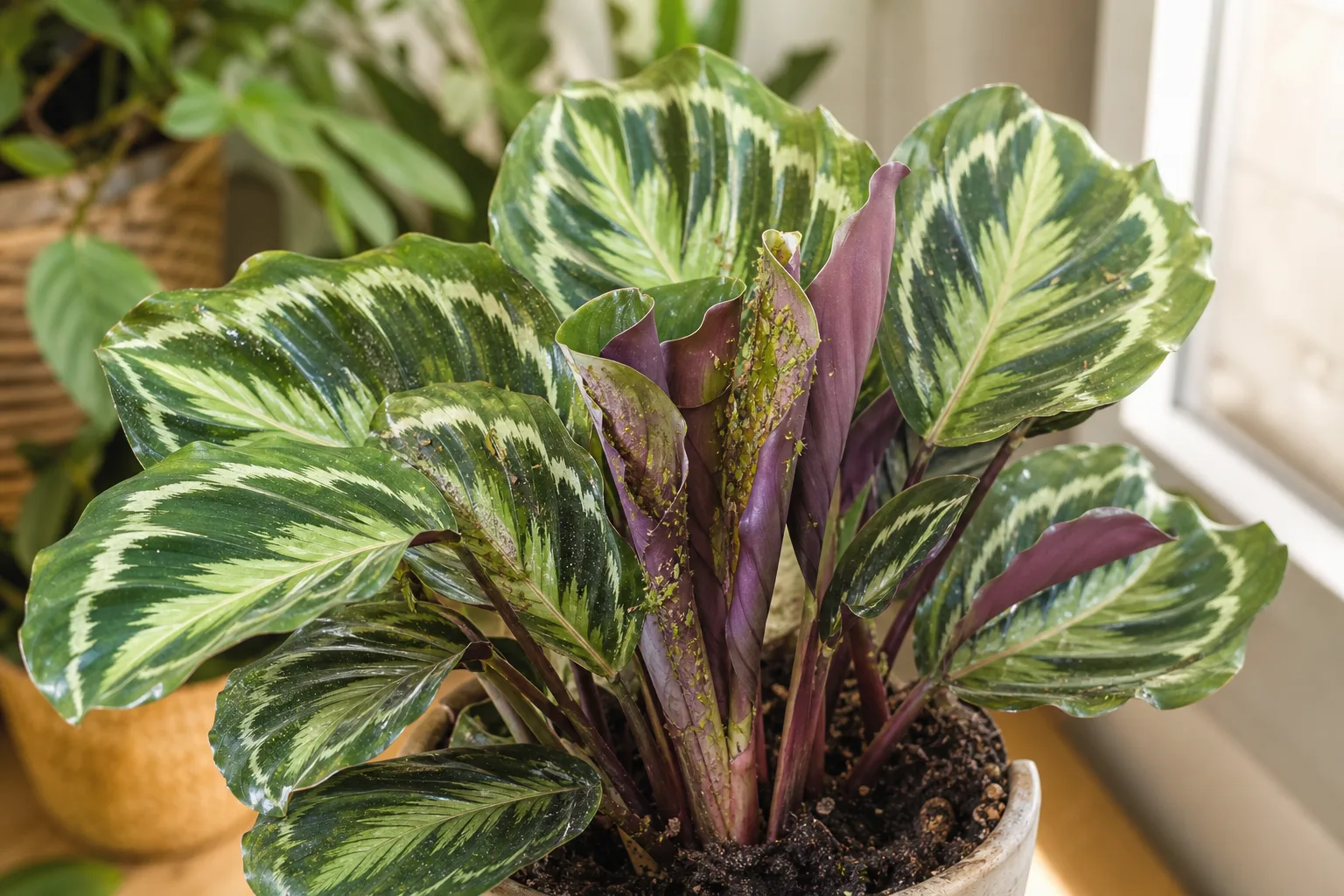
Aphids are small, soft-bodied insects that cluster on tender shoots and the undersides of leaves. A few on an established plant are often more alarming than damaging, but a fast-growing colony can curl new leaves, weaken seedlings, leave sticky honeydew, and sometimes spread plant viruses. The useful first move is not to reach for a spray; it is to confirm the insect, judge the plant’s risk, and remove the colony with the least disruptive method that will work.
Start with a 10-Minute Check
Turn over several of the newest leaves, inspect buds and soft stem tips, and look for groups of pear-shaped insects rather than one isolated bug. Check a second plant of the same kind, especially one nearby or upwind, then note whether the plant is a seedling, an established shrub, an edible crop, or a houseplant that can be separated from others. That quick scan tells you whether this is a small cleanup, a developing outbreak, or a symptom that needs a closer diagnosis.
If you find a handful on sturdy foliage, rinse them off or pinch off the infested tip and check again in a few days. If the leaves are already tightly curled, a young crop is stalling, or there are aphids on several plants, act promptly and inspect beyond the obvious leaves because colonies can be hidden in creases. Leave time for predators if you see lady beetle or lacewing larvae, hoverfly larvae, or swollen tan aphid “mummies”; a visible community of natural enemies can change the decision to spray.
For a quick first pass, use this order:
- Confirm live aphids on new growth or leaf undersides.
- Rinse a sturdy plant or remove a badly infested tip.
- Check nearby plants and follow ant trails to the colony.
- Reinspect after two or three days; repeat a physical cleanup if live aphids remain.
- Consider a labeled insecticidal soap or horticultural oil only if the colony persists and the plant can tolerate it.
How to Recognize Aphids
Aphids are usually only a few millimeters long, with a soft, pear-shaped body, long legs and antennae, and a pair of short tubes called cornicles near the rear. They can be green, yellow, brown, red, black, or nearly white depending on the species and host plant, so color alone is not a reliable test. Most garden aphids gather in groups on tender new growth, flower buds, or the undersides of leaves, where their piercing mouthparts draw sap from the plant.
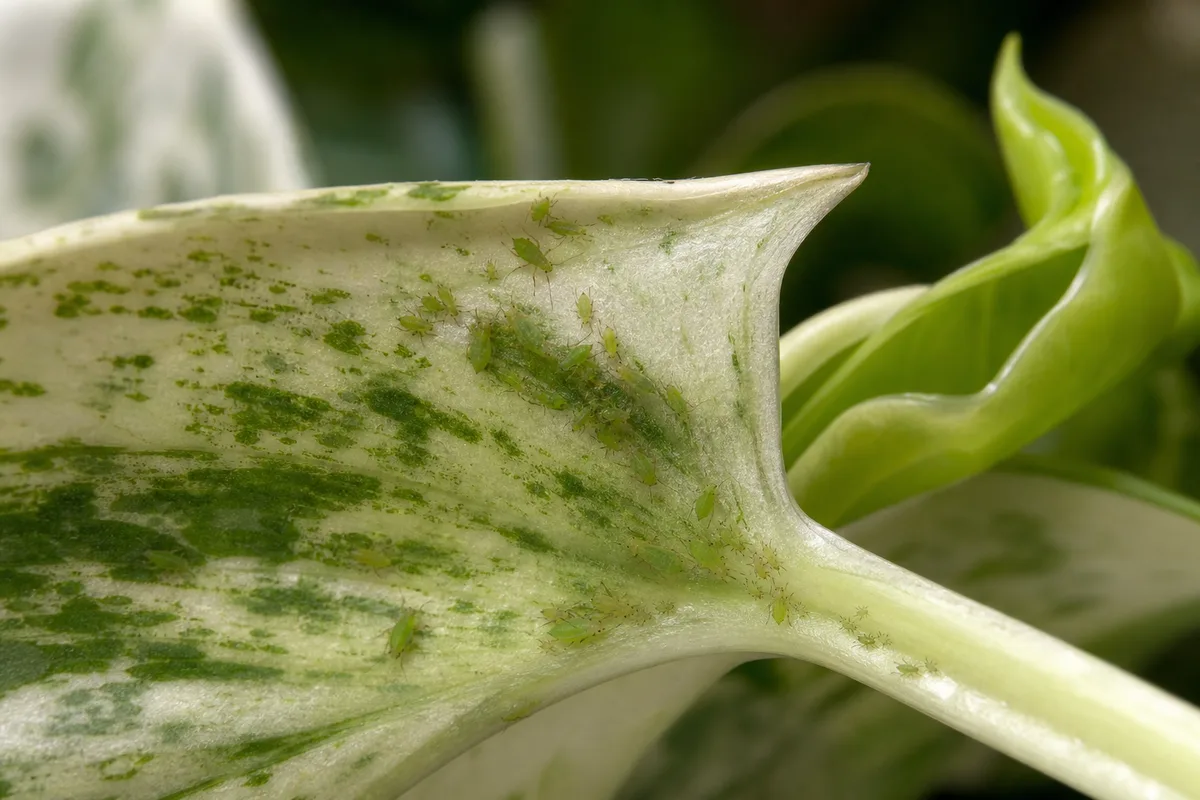
Some aphids have wings, particularly when colonies become crowded or a host plant is no longer suitable. Others are covered with a white, waxy coating and may look fuzzy from a distance. UC IPM notes that the cornicles are a distinguishing feature of aphids; if you have a hand lens, look for those paired projections rather than relying on color or leaf damage alone. (UC Statewide Integrated Pest Management Program)
Aphids vs. common look-alikes
Several pests also hide on leaf undersides or leave sticky honeydew. Whiteflies flutter up in a small cloud when a leaf is disturbed; thrips are narrower and often leave silvery streaks or black specks; mealybugs look like cottony patches; and scale insects are fixed, shell-like bumps. Aphids tend to move slowly and form obvious clusters on soft tissue. Ants or sticky leaves support an aphid diagnosis, but neither proves it because scale and whiteflies also produce honeydew.
Aphids can be mistaken for little green leaf bumps or bits of soil until you nudge them: living aphids have legs and will shift or crawl, while shed skins are papery and empty. If you see distortion but cannot find live insects, inspect again with a magnifier and consider other causes such as a virus, herbicide exposure, or uneven water stress. Treating the wrong problem wastes time and can add plant stress without changing the underlying symptoms.
Signs of an Aphid Infestation
The clearest sign is a cluster of live insects on a stem tip, bud, or the underside of a young leaf. As feeding intensifies, new leaves may curl, pucker, yellow, or remain smaller than normal; flowers and shoots may be stunted. Aphids also excrete honeydew, a clear sticky residue that can coat leaves or surfaces below the plant. Sooty mold sometimes grows on that sugary film, turning leaves black, and ants may visit to harvest it.
Do not use damage alone as your diagnosis. Aphids often feed on new growth, so a plant with a few insects but vigorous, normally shaped growth may need only monitoring. UC IPM explains that established plants can tolerate low or moderate numbers, while heavy feeding is more likely to yellow leaves and stunt shoots; vegetable crops can face an additional risk because some aphids transmit viruses. (UC IPM aphid management guidance)
Aphid feeding can cause distortion, but an aphid-borne virus can also cause mottling, rings, or persistent abnormal growth. The distinction matters: removing aphids can reduce a colony, but a contact spray cannot cure a virus already inside the plant. If symptoms spread to new leaves after the insects are gone, photograph the pattern and ask a local extension office or plant clinic to assess it before you escalate pesticide use.
Choose a Control Method by Plant and Severity
A good aphid treatment matches both the colony and the plant. A strong hose stream may be a fine fit for a rose or collard plant and a poor fit for a fragile seedling, a plant with delicate flowers, or a small indoor pot that cannot dry quickly. Start with the option that reaches the aphids without tearing leaves, removing beneficial insects, or exposing the crop to an unnecessary pesticide.
| What you find | First choice | Why it fits |
|---|---|---|
| A few aphids on sturdy leaves | Rinse with water | Quick knockdown with little residue |
| One or two crowded tips or curled leaves | Pinch or prune the affected tissue | Removes a sheltered colony that sprays may miss |
| Indoor plant or delicate foliage | Isolate, rinse gently, or wipe reachable insects | Limits spread while protecting fragile leaves |
| Persistent colony on a plant that tolerates treatment | Labeled insecticidal soap or horticultural oil | Contact products can control aphids reached by the spray |
| Beneficial larvae or many aphid mummies present | Pause and monitor before spraying | Natural enemies may already be reducing the colony |
Use the table as a starting point, not as a promise of instant eradication. Aphids may hide in curled leaves, newly arriving winged aphids can restart a colony, and contact products do not protect growth that appears later. NC Cooperative Extension recommends thoroughly covering the underside of leaves when treating vegetable aphids and notes that repeat applications may be needed; follow the product label for the actual interval and crop. (NC Cooperative Extension)
Wash Aphids Off With Water
For many outdoor plants, a firm stream of plain water is the best first treatment. Aim from below the leaf so the spray reaches colonies on the underside, then move around the plant rather than blasting the same spot. Use enough pressure to dislodge aphids without shredding leaves or snapping soft stems; test one section first if the plant is fragile. The point is to knock the insects off, not to scour the foliage.
Water works especially well on sturdy roses, herbs, vegetables, and shrubs that tolerate a rinse. UC IPM notes that most aphids dislodged by a water spray will not make their way back onto the plant, and an early-day rinse gives foliage time to dry. Practical guidance from Gardeners’ Path likewise stresses angling a wand toward leaf undersides while keeping the spray strong enough to remove aphids but gentle enough to avoid plant damage. (Gardeners’ Path aphid guide)
After rinsing, inspect the crown, leaf joints, and newest folded leaves again. A single rinse can dramatically reduce visible numbers without reaching every aphid, so repeat the inspection in two or three days and wash again if live colonies remain. Avoid soaking a plant that is already waterlogged or leaving dense foliage wet overnight; if the plant is indoors, rinse it in a sink or shower and let excess water drain before returning it to its place.
Prune, Pinch, or Wipe Small Colonies
When aphids are limited to a few shoot tips, pruning is often cleaner than spraying. Use clean scissors to remove the infested tip or leaf, place it directly into a bag, and discard it rather than dropping it beside the plant. Do not remove so much foliage that you leave a young plant with too little leaf area; cut only the sections where a colony is concentrated.
For a small houseplant or a single aphid cluster, wipe the insects away with a damp cloth or cotton pad, supporting the leaf so it does not tear. Rinse the cloth between leaves, and check nearby stems because wiping one visible group will not reach every nymph. Avoid rubbing alcohol as a default treatment: concentration and plant sensitivity vary, and a wipe can burn tender or waxy foliage even when it kills the insects it touches.
Pruning has a useful second benefit when leaves have curled around aphids. The fold protects insects from water and contact sprays, so removing one heavily distorted leaf may be more effective than coating the outside and hoping the product reaches inside. If pruning would remove most of a shrub or crop, switch to careful inspection and a method suited to the whole plant rather than shearing it indiscriminately.
Use Insecticidal Soap or Horticultural Oil Safely
If physical removal is not enough, use a product labeled for aphids on the specific plant or crop. Insecticidal soap and horticultural oil work mainly by contacting and smothering exposed insects; they are not general repellents and usually do not leave long-lasting protection. A spray that misses the aphids, especially those tucked inside curled leaves, will not solve the colony. Cover both leaf surfaces and stems only as the label directs.
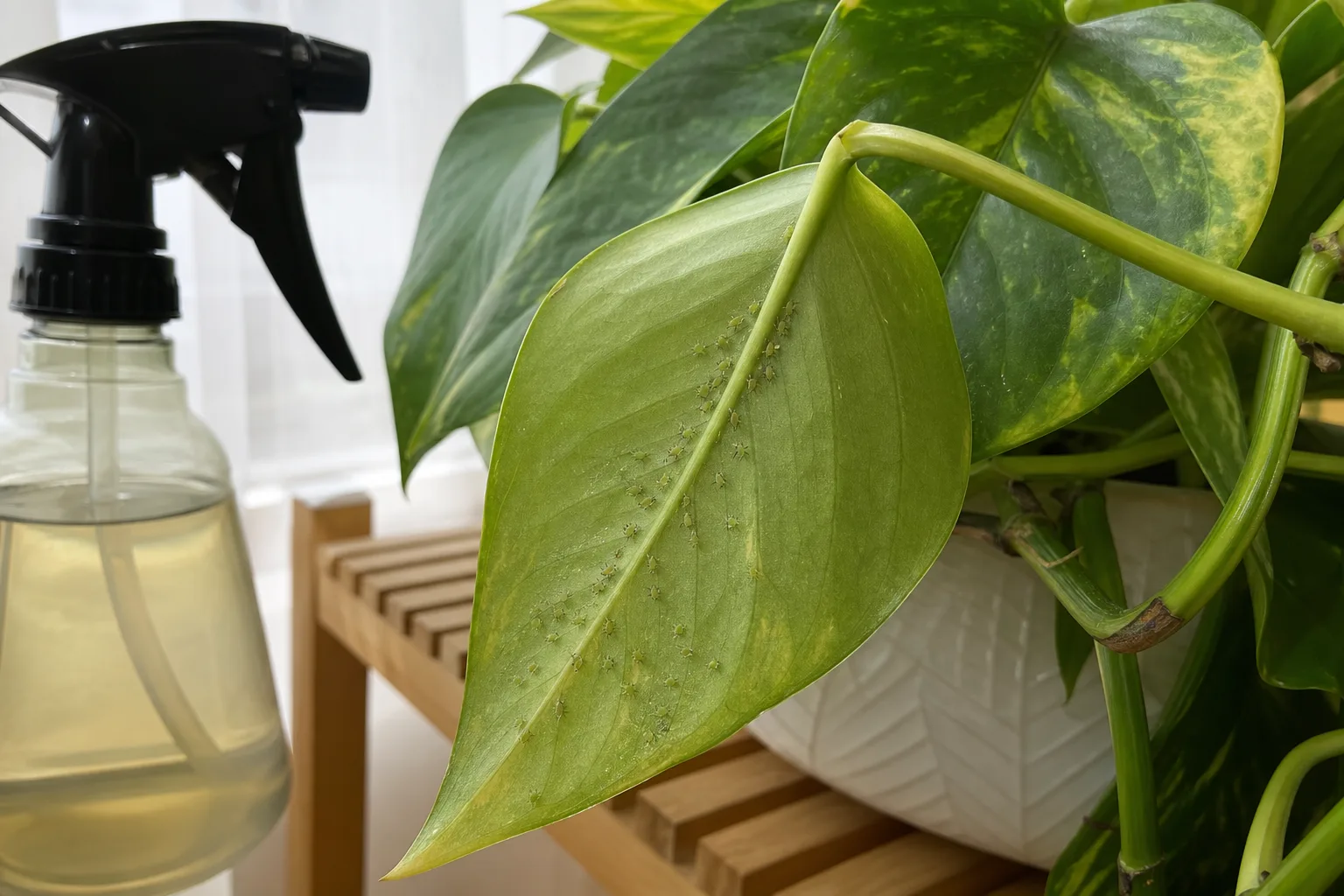
A commercial insecticidal soap is formulated for plant use. Dish detergent is a household cleaner, not a substitute: its additives and degreasers vary, and an improvised recipe can injure leaves or fail to control aphids consistently. Neem is also not automatically harmless because it is plant-derived; oil can burn foliage under stressful conditions, and any spray that hits a beneficial insect can harm it. Choose a product with directions for your pest, plant, and setting instead of relying on the words “natural” or “organic” as a safety guarantee.
Read the full label before mixing or applying any pesticide. UC IPM cautions against using soaps and oils on water-stressed plants or in temperatures above 90°F, and notes that some species are sensitive; test a small area and wait several days before treating the whole plant. Avoid spraying open flowers or pollinators, use protective equipment if the label calls for it, and keep people and pets away until the stated re-entry period has passed. For vegetables and herbs, check the crop list and preharvest interval rather than assuming that “organic” means same-day harvest. Apply repeat treatments only at the interval on the label.
Work With Beneficial Insects and Ants
Aphids have predators and parasitoids that can do sustained work while you are not watching. Lady beetle larvae, lacewing larvae, and hoverfly larvae eat aphids; tiny parasitoid wasps lay eggs inside them, leaving swollen tan or bronze “mummies.” These helpers may appear only after an aphid population is established, so a few aphids alongside predators are not necessarily a reason to spray immediately. Avoid broad-spectrum insecticides that kill beneficial insects as well as the target pest.
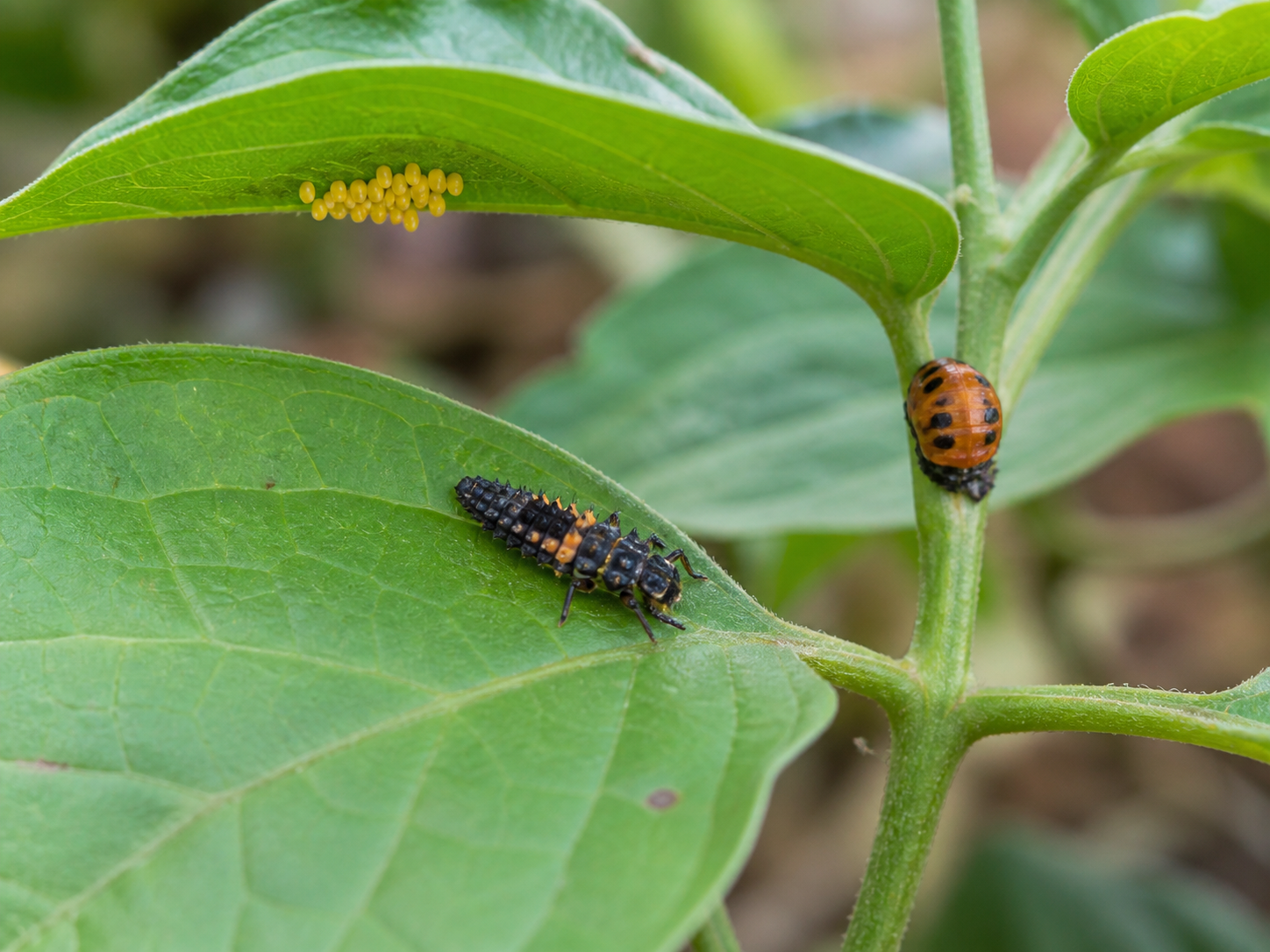
To make the garden more hospitable to beneficials, keep a range of flowering plants nearby and avoid routine spraying. This is a long-term balance, not an instant treatment: predators cannot always protect a vulnerable seedling before damage occurs. Buying and releasing adult lady beetles is also unreliable for a small home garden because many disperse; UC IPM describes releases as temporary and dependent on handling and timing. Preserving naturally present larvae and parasitoids is usually the more practical first step.
Ants complicate that balance because they collect honeydew and may defend aphids from predators. Follow ant trails to find hidden colonies, and remove easy routes such as branches touching fences or buildings. On a tree trunk, a properly installed sticky barrier or bait may help in some situations, but sticky materials should not be applied directly to young or thin bark, and baits must be used according to their label and kept away from children and pets. Control the ant route; do not spray the whole plant with an ant product.
Why Aphids Return and What to Do Next
Aphids reproduce quickly in warm conditions, and many active colonies consist of live young rather than eggs. A treatment may kill the insects it hits while leaving aphids in folded leaves, on a nearby plant, or in fresh growth untouched. Winged forms can also move to another suitable host, so an apparently clean plant may be recolonized from elsewhere. That is why control is a short cycle of removal, inspection, and proportionate follow-up rather than a one-time blanket spray.
Check the treated plant and its neighbors every two or three days for the first week, then return to a weekly inspection while new growth is expanding. If numbers are clearly falling and the plant is growing normally, keep monitoring instead of adding a second product. If live aphids persist, ask what the first method missed: Did the spray reach leaf undersides? Are leaves curled around a colony? Are ants guarding the site? Is new growth drawing the insects back because excess nitrogen is pushing soft shoots?
Aphids on one plant do not automatically mean every plant in the garden needs treatment. Many species favor particular hosts, and blanket spraying can damage the predators that would help keep later outbreaks smaller. Focus on the affected plants, prune the worst pockets, correct a specific care imbalance, and repeat the least disruptive action that reaches live aphids.
Prevent Aphids Before They Build Up
Prevention is mostly about noticing aphids early and avoiding conditions that make young tissue unusually lush. Inspect new plants before bringing them inside or setting them among vegetables, including leaf undersides and growing tips. During a rapid flush of growth or after a previous infestation, check susceptible plants twice a week; a weekly walk is a reasonable baseline at quieter times. Look first at plants of the same species near an affected one rather than assuming every plant is equally vulnerable.
Avoid overfertilizing. High, readily available nitrogen can push soft new growth that aphids exploit, so use only the amount appropriate for the plant and apply it according to the product directions rather than trying to outgrow the pest with fertilizer. Maintain suitable water, light, and spacing so a plant is not weakened by avoidable stress, but remember that healthy plants can still attract aphids. “Healthy” is not immunity; it is a better starting point for tolerating minor feeding.
Floating row covers can shield vulnerable seedlings from incoming aphids when installed before the insects arrive. Choose a cover suitable for the crop, secure its edges, and remove or open it when pollinators need access to flowers; check beneath it because a cover can trap pests that were already present. Reflective mulch is another specialized option used for some susceptible vegetables, but it is not necessary for every bed and may overheat roots in hot weather. Gardeners’ Path discusses both row covers and companion planting as tools, while also warning that trap cropping is not universal because aphid species differ in their host range. (Gardeners’ Path; Gardening Know How)
Companion plants such as dill, fennel, yarrow, or flowering native plants may support beneficial insects, but do not count on a strongly scented herb to repel every aphid species. A trap crop works only if it attracts the pest that is actually present and you are willing to monitor or remove the aphids on that plant. For a small garden, keeping plants under observation, limiting excess nitrogen, protecting seedlings, and leaving predator habitat usually provides more dependable prevention than rearranging the entire bed around untested repellent claims.
Adapt the Plan for Houseplants, Vegetables, and Trees
The same pest calls for different tactics depending on how the plant is used and what damage matters. A houseplant benefits from isolation; a vegetable seedling may need virus protection; and a mature shrub may tolerate a colony while its predators catch up. Match treatment to that context instead of using the same spray on every plant.
Indoor plants and containers
Move an infested houseplant away from other plants while you inspect it, then check nearby leaves and stems for winged adults or new colonies. In a sink or shower, rinse the foliage with lukewarm water at a pressure the plant can tolerate; support fragile leaves and turn the pot so the undersides receive attention. Wipe the insects from leaves that cannot be safely rinsed, and remove only the most heavily infested tips if pruning will not ruin the plant’s shape.
Let the foliage drain and dry before putting the plant back, and clean the sill or saucer where honeydew may have collected. Recheck every few days because indoor warmth can allow populations to keep developing, and contact treatments need to reach insects hiding in new growth. If you use a soap or oil product indoors, confirm that its label permits indoor houseplants and follow all ventilation, application, and re-entry directions.
Seedlings and edible crops
Young vegetable plants deserve closer attention than a mature ornamental because a small aphid colony can distort new growth quickly, and some aphids transmit viruses after brief feeding. Use insect-exclusion fabric before aphids arrive, inspect transplants before planting, and rinse or remove early colonies as soon as you find them. North Carolina Cooperative Extension notes that vegetable aphids shelter beneath leaves and in buds, so any crop treatment must reach those locations; it also emphasizes that repeat applications may be needed. (NC Cooperative Extension)
When using a pesticide on food, the crop must appear on the product label and the harvest interval must be observed exactly. The interval can differ by active ingredient and crop, even when two products are both marketed for organic gardening. Wash harvested produce under running water as you normally would, and do not assume that an insecticide will prevent a virus after the plant is infected. If a young crop has severe distortion or mosaic-like symptoms, compare it with local extension guidance before deciding whether to keep or remove the plant.
Roses, shrubs, and trees
On roses, aphids commonly gather around soft buds and stem tips. A hose nozzle aimed upward at the leaf undersides can clear a visible colony; prune a badly infested bud if it is already misshapen and the plant has plenty of healthy growth. Check again in a few days rather than coating the entire shrub because you spotted aphids on one flower stem.
Established shrubs and trees can often tolerate light aphid feeding, and a high canopy may have natural enemies working out of sight. Look for honeydew drip, ants climbing the trunk, curled leaves, and predator activity before treating. For tall trees, recurring honeydew, extensive leaf distortion, or symptoms involving multiple plants, contact a certified arborist or local extension service; a homeowner spray may not reach the colony and can expose beneficial insects across a large area.
Aphid Eggs and the Winter Question
Aphids do not all follow one calendar. In many mild-weather colonies, females give birth to live nymphs, which molt several times before becoming adults; UC IPM reports that some species can move from newborn nymph to reproducing adult in about seven to eight warm days. In colder regions and on deciduous hosts, some species produce eggs in fall or winter that survive until spring. Eggs are therefore a real part of some aphids’ life cycles, but they are not the usual explanation for a summer colony that seems to reappear after a rinse.
The white flecks on an infested plant are often shed skins, not eggs. Aphid skins are pale and hollow, while an overwintering egg is a small, attached, oval structure that may darken as it develops; identifying species and egg sites can take close inspection. Do not spend time searching every leaf for eggs when the active colony is visible. Remove live aphids first, then, if a woody plant has a recurring seasonal problem, ask an extension office which host and dormant-season timing apply in your area before considering any dormant treatment.
When to Get Expert Help
Ask a county extension office, plant clinic, or qualified horticulture professional for help when the insects do not match the description, the plant declines despite repeated removal, symptoms spread after aphids disappear, or a tree-sized infestation is beyond reach. Bring close-up photographs of the insect, the whole plant, the underside of affected leaves, and any distortion or honeydew. Include the plant name, location, when the symptoms began, and any products already used; that context can separate aphids from a virus or another sap-feeding pest.
Get a diagnosis before using a systemic insecticide or repeated broad-spectrum spray on a flowering plant, an edible crop, or a tree visited by pollinators. Product availability and rules vary by location, and pesticide labels specify where and how a product may be used. A persistent problem is a reason to improve the diagnosis and treatment match, not to keep increasing the strength of a homemade mixture.
Conclusion
To control aphids, first confirm a live colony on new growth or leaf undersides, then choose the smallest treatment that fits the plant: rinse sturdy foliage, prune a concentrated pocket, or use a labeled contact product only when physical removal is not enough. Recheck within a few days, preserve predators where possible, and look for ants, curled leaves, new growth, and crop-specific risks if the insects return. That measured routine protects the plant while avoiding unnecessary sprays and gives you a clear point to ask for expert help.