How to Remove Tomato Stains From Tupperware Containers
Learn how to remove tomato stains from Tupperware containers in a few gentle steps, when baking soda helps, and which methods can dull or damage plastic.
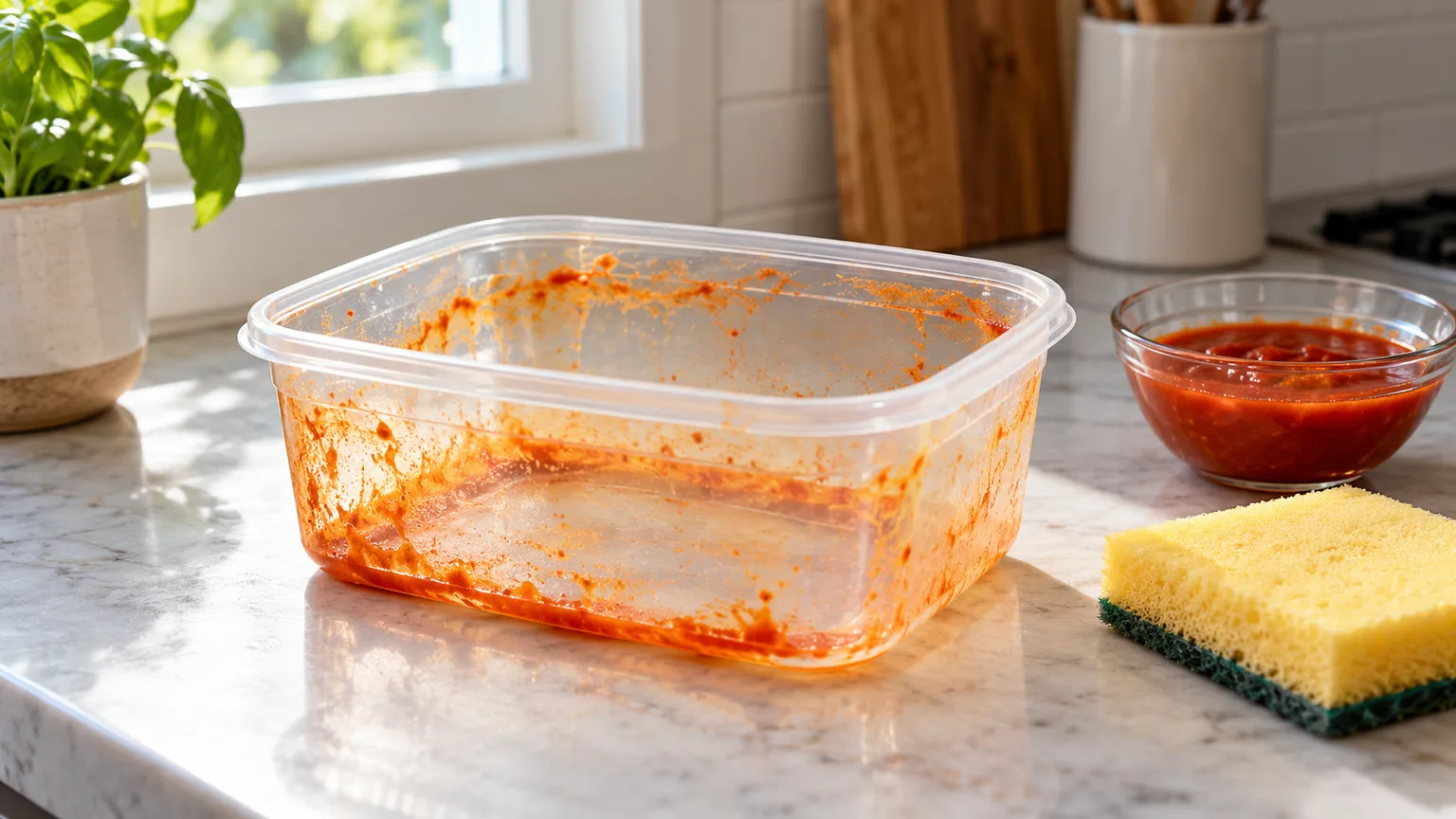
An orange film in a food container is frustrating, but scrubbing harder is rarely the best first move. Tomato sauce leaves both oily residue and colored pigment, and the right treatment depends on whether you are looking at leftover grease, a stain that remains after washing, or plastic that has been scratched or heat-worn.
Start with the container’s care instructions. For genuine Tupperware, the brand’s care page calls for a cold rinse, warm soapy water, and a soft cloth or sponge; it also warns that abrasives, including baking soda, can dull the finish.Tupperware’s care instructions Other household guides recommend baking soda paste for tomato discoloration, so this article explains when that popular method is reasonable and when to skip it.
The gentlest way to remove a tomato stain
First remove any food and wipe away the remaining sauce. Rinse the container with cool water, wash it with dish soap and a soft sponge, and let it dry so you can see whether the orange color is still present. If the container is an actual Tupperware product, follow its current care page or product insert before trying a paste or chemical soak.
If you have a generic reusable container whose manufacturer permits baking soda, apply a small amount of paste to one inconspicuous area and let it sit briefly before wiping gently. Rinse and wash it again. When the maker advises against abrasives, use the soap-and-soft-cloth route and try daylight after washing rather than grinding the surface with powder.
Why tomato sauce leaves orange marks on plastic
Tomato sauce combines colored plant pigments with oil. Washing can remove sauce, crumbs, and much of the greasy film, while some color remains behind in the plastic surface. Tasting Table describes lycopene as the tomato pigment and notes that oil in the sauce can make the stain more persistent.Tasting Table’s cleaning guide
Heat and time make the job less forgiving. A container that held hot sauce or sat with oily leftovers for a long time may keep a faint tint even after proper washing. That does not mean the container is still dirty; it means the visible color has outlasted the residue that ordinary dishwashing can remove.
The distinction matters because a stain is not a reason to attack the container with steel wool, a knife, or a harsh scouring pad. Those tools can scratch the plastic, creating a rough surface that is harder to clean and looks worse. Treat the residue first, then decide whether the remaining color is worth another mild attempt.
Check the container before choosing a cleaner
“Tupperware” is often used as a general name for plastic food tubs, but reusable containers vary in material, finish, age, and care rules. Look for the maker’s label, care insert, or dishwasher and microwave markings. A care instruction for one product should not be assumed to apply to every plastic tub or lid.
This is especially important with baking soda. It is a mild abrasive and commonly appears in cleaning recipes, but Tupperware’s care page explicitly says to avoid abrasives, even baking soda, because they may dull the finish.Tupperware’s care instructions If the container is an authentic Tupperware piece and its instructions still match that guidance, do not use a baking-soda paste as a stain treatment.
Check condition as well as material. If the plastic is already rough, deeply scratched, cloudy in a way that does not wash off, sticky, cracked, or warped, stain removal is no longer the only issue. A cleaner cannot restore a worn surface or a lid that no longer fits securely.
Start with a cold rinse and a normal wash
For a fresh tomato stain, scrape leftover food into the compost or trash with a flexible spatula or paper towel. Rinse the container with cool water before adding soap; Tupperware’s care guidance specifically recommends rinsing in cold water as soon as the container is emptied.Tupperware’s care instructions Wiping first also keeps a thick layer of sauce from spreading over the whole interior.
Next, wash with ordinary dishwashing detergent and a soft sponge or cloth. Work around corners, the rim, and the base, where sauce can collect. Rinse thoroughly, then dry the container so you can inspect the plastic without a film of water or soap hiding the result.
If the container feels slick after washing, address the grease rather than treating it as a pigment problem. Add a little undiluted dish soap to the oily surface, spread it with a soft sponge, and then wash as usual. A second wash is gentler than a long soak in a chemical that the container’s maker may not approve.
Use soap and a paper towel for fresh greasy residue
A clean paper towel can add soft friction without the scraping action of a scouring pad. For a fresh, greasy film, add a few drops of dish soap and a small splash of water to the container, place a damp paper towel inside, and close the lid only if the container’s shape and seal make that safe. Shake gently for several seconds, then discard the towel and wash the container by hand.
This is a quick cleanup step, not a guaranteed way to remove pigment that has already marked the plastic. If the container still looks orange but feels clean and smooth, repeating the shake-and-wash cycle again and again is unlikely to improve it much. Move to a compatible stain treatment or accept a faint cosmetic tint.
Do not use boiling water or shake a hot sealed container. Warm water is enough for normal hand-washing when the manufacturer allows it, and hot contents should be cooled before they are stored in plastic. Martha Stewart’s cleaning guidance likewise recommends cooling tomato dishes before storage because heat can make staining more likely.Martha Stewart’s container-cleaning guide
When a baking-soda paste is appropriate
For generic plastic containers whose maker permits mildly abrasive cleaners, a baking-soda paste is a practical next step for an orange mark that remains after washing. Martha Stewart and Tasting Table describe a mixture of about 2 tablespoons of baking soda, 1 teaspoon of water, and ¼ teaspoon of dish soap; the paste sits for at least 15 minutes before it is rinsed and the container is washed again.Martha Stewart’s container-cleaning guide Tasting Table’s cleaning guide
Use the paste as a soak, not a scouring compound. Spread a thin layer over the stain with a soft cloth, leave it for 10 to 15 minutes on the first try, then wipe gently and rinse. If the color is lighter but still present, one more short treatment may be reasonable when the container’s care guidance allows it; stop if the finish becomes dull or rough.
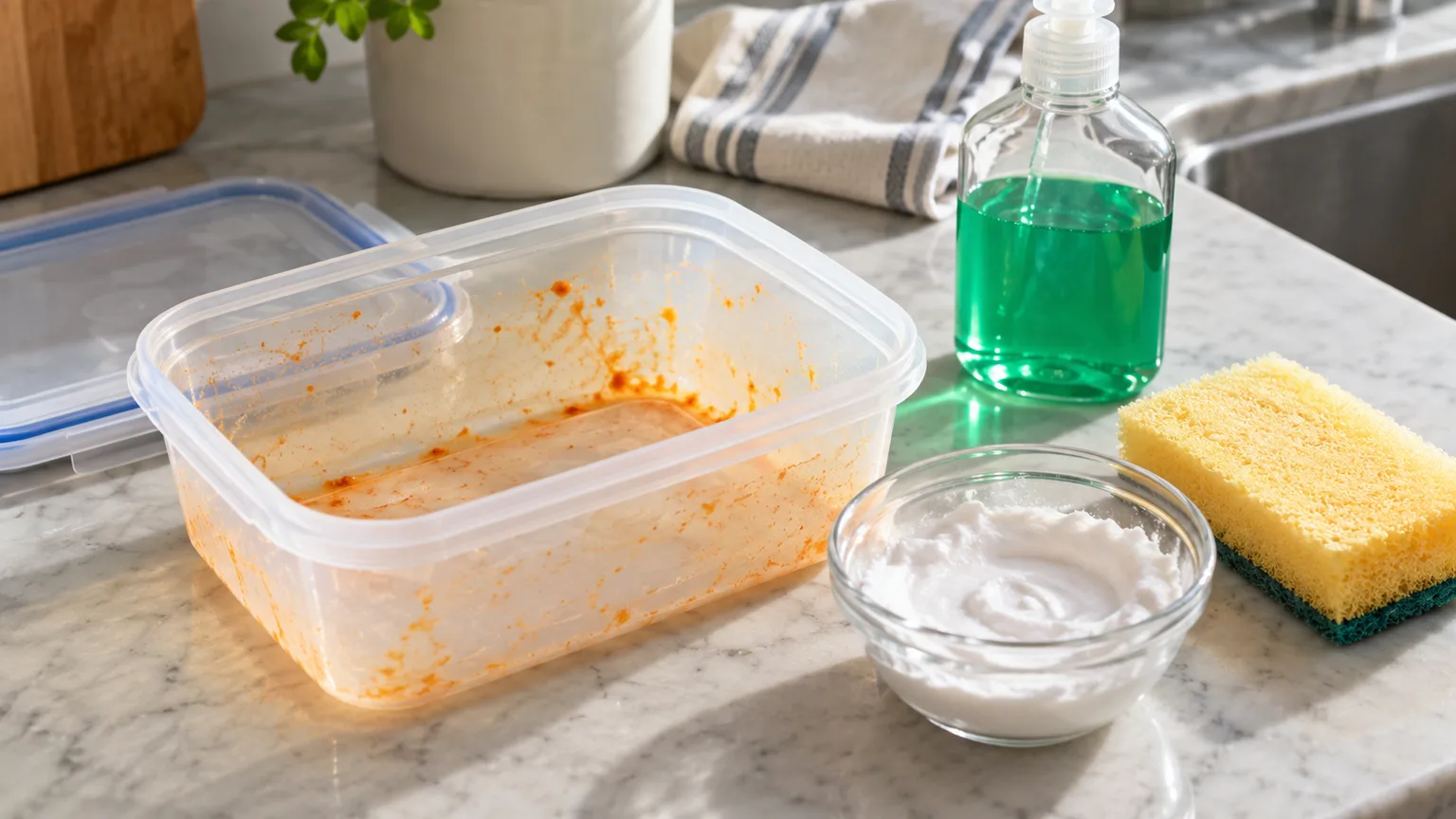
Do not treat a recipe as universally safe just because it uses pantry ingredients. The brand-specific warning about baking soda is a good example of why a “natural” cleaner can still wear a surface.Tupperware’s care instructions On a product with an anti-scratch coating, special finish, or explicit no-abrasive instruction, skip this method entirely.
Try sunlight for color that remains after washing
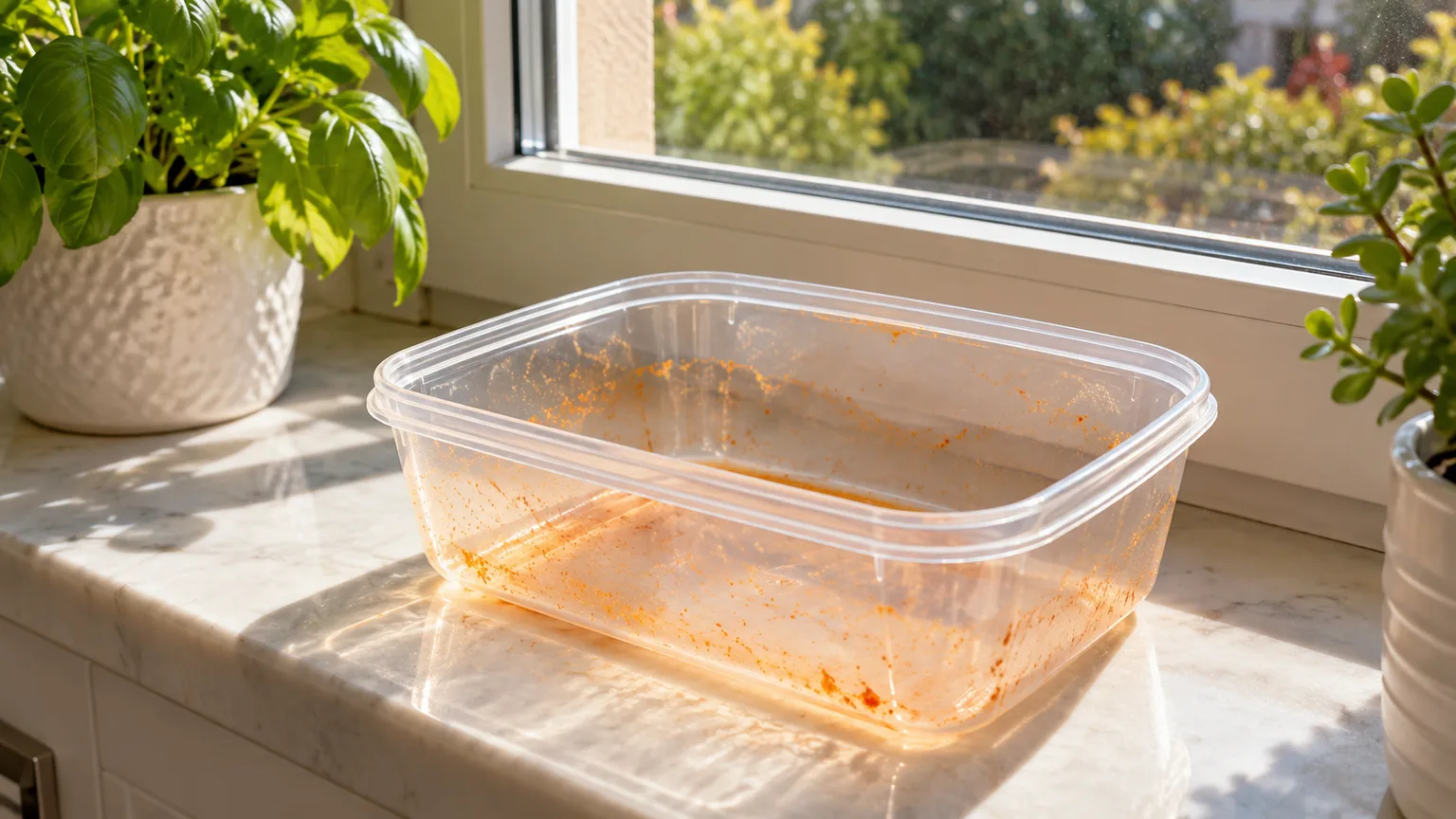
After cleaning and rinsing the container, leave it open in direct sunlight for a short period and inspect it. Sunlight can fade some residual food color, and editorial cleaning guides recommend it as a hands-off option for stained plastic.Allrecipes’ plastic-container guide Treat this as an optional fading step, not a sterilizing method or a promise that every orange ring will disappear.
Start with an hour or two rather than leaving the container outdoors all day. Strong sun can heat plastic, so choose a spot where the tub stays reasonably cool, keep it away from dust and insects, and bring it inside if it starts to feel hot. Wash the container again with dish soap before using it for food.
The result depends on the stain, the plastic, and the strength of the sunlight. A light surface tint may fade; a dark mark left after repeated hot storage may barely change. If the container does not look much different after a few hours, further exposure is not necessarily worth the time.
What vinegar and lemon can and cannot do
Vinegar is useful for some household cleaning tasks and can help with lingering odors, but it is not the first treatment I would choose for a pigment stain in a food tub. Tomato discoloration is not simply a layer of mineral scale that acid can dissolve. If you want to test diluted vinegar for an odor, use a brief, mild soak only when the manufacturer allows it, then wash the container with dish soap and rinse thoroughly.
Lemon juice is also acidic, but acidity does not make it automatically better for plastic or for tomato color. A lemon-and-sun treatment is sometimes suggested, yet it adds another variable and can leave a citrus smell. If the goal is to reduce visible orange color, try the care-compatible method first and judge whether sunlight alone is enough.
Never combine vinegar or lemon juice with bleach. The Centers for Disease Control and Prevention says not to mix household bleach with any other cleaner or disinfectant because dangerous vapors can be released.CDC bleach guidance Use one product at a time, rinse thoroughly between separate methods, and do not experiment with cleaner mixtures inside food containers.
Should you use bleach or hydrogen peroxide?
Do not make bleach the default answer for a stained food container. Some cleaning guides suggest diluted bleach, but product makers may prohibit it or warn against abrasive and harsh cleaners; the specific container instructions come first. If those instructions do not explicitly allow bleach on that food-contact item, skip it and use soap, a compatible mild method, or sunlight.
Bleach is a chemical disinfectant, not a routine stain remover for a container that only needs washing. The CDC says soap and water remove dirt and impurities in most household cleaning situations, and it directs users to follow the bleach label and never mix bleach with another cleaner.CDC bleach guidance If an approved product label does allow a bleach treatment for that exact item, follow its dilution, contact time, ventilation, protective-equipment, and rinse directions exactly.
Hydrogen peroxide is often proposed online for stubborn orange stains, but do not leave a container filled with peroxide for a day or use an unspecified concentration. The product’s food-contact compatibility and the container material matter, and the manufacturer may not have tested that treatment. Unless the maker specifically approves it, choose a milder method instead of improvising with a stronger oxidizer.
Cleaning the lid, rim, and seal
Tomato sauce often reaches the underside of the lid, the lip around the container, and grooves that are easy to miss. Wash these parts separately with dish soap and a soft cloth or sponge, taking care not to stretch a seal or force a stiff brush through a narrow groove. A clean, damp cloth or soft cotton swab can reach corners without gouging the plastic.
If the lid has a removable silicone gasket, remove and wash it only if the product instructions say it is removable. Let both pieces dry fully before reassembling and storing them. Food trapped in a groove is a cleaning issue; a flat orange tint left on otherwise clean plastic is a different problem and does not call for harder scrubbing.
Avoid putting a lid in a dishwasher unless it is marked dishwasher-safe. Dishwasher-safe status and rack placement vary by product, and some lids can warp before the container base does. Follow the care mark on the lid itself when it differs from the tub.
Mistakes that make stains harder to remove
The most common mistake is escalating friction too fast. Steel wool, a knife, gritty scrub pads, and aggressive circular scrubbing can scratch plastic; a scratched container may trap residue and look permanently cloudy. Let a compatible cleaner sit briefly, then wipe rather than grind.
Another mistake is treating several products as a cocktail. Do not mix bleach with vinegar, lemon juice, ammonia, dish soap, or another cleaner. Rinse between separate products, and read the container and chemical labels before using any stronger treatment.
Also avoid heating or boiling a stained plastic container to “open its pores,” microwaving a cleaning mixture, or pouring hot tomato sauce directly into it. Plastic products are not interchangeable in heat tolerance, and a stain is not improved by risking a warped base or lid. If you reheat food, use only a container specifically marked microwave-safe and follow its use instructions.
Prevent tomato stains next time
For tomato-based leftovers, prevention is easier than stain removal. Let hot sauce cool before transferring it to plastic, then refrigerate it promptly according to ordinary food-storage practice. Tupperware product guidance also cautions users to cool hot foods and rinse containers promptly; Martha Stewart recommends glass or ceramic for strongly colored tomato foods when avoiding stains is the priority.Tupperware’s care instructions Martha Stewart’s container-cleaning guide
If you prefer plastic, dedicate one older or darker container to marinara, chili, curry, and other deeply colored dishes. This keeps the most visible containers clear and lets you store leftovers without worrying about every orange mark. A darker tint on a container can make discoloration less noticeable, but it does not change the need to clean it after every use.
When you empty the container, wipe out oily sauce with a paper towel or rinse it promptly instead of letting it dry in place. Store it with the lid separated or ajar once it is fully clean and dry. A small routine change will prevent more stains than repeated deep-cleaning after the pigment has settled.
Plastic versus glass for tomato leftovers
Glass is the simplest choice when a clear container must remain clear. It is less prone to visible tomato discoloration, and glass containers are often suitable for reheating if their own manufacturer says so. Check that the glass item is intended for food storage and that its lid is removed or vented as directed before heating.
Plastic is lighter and less likely to shatter, which makes it convenient for lunch bags, children’s meals, and everyday storage. The trade-off is that some plastics retain color and odors, and each container has its own limits for heat, dishwasher use, and abrasive cleaning. There is no need to replace a sound plastic set solely because tomato sauce leaves a faint mark.
Choose based on how you use the container. Use glass for frequent tomato-sauce reheating or for a clear presentation; keep plastic for lightweight storage where a cosmetic stain is acceptable. If you have a glass container with a plastic lid, leave enough headspace so sauce does not smear onto the lid.
When a stained container should be replaced
Color alone is not a reliable measure of a container’s condition. If the interior is smooth, the tub has been washed thoroughly, and the lid still closes properly, a faint orange tint is mainly an appearance issue. Do not keep applying stronger chemicals just to restore a perfectly clear look.
Replace the container if it has a crack, a sharp or rough gouge, a melted or warped area, a persistent sticky film, or a lid that no longer fits. Deep scratches and damage are harder to clean than a smooth surface, and heat deformation can interfere with the lid’s fit. If a sour or rancid smell remains after a full wash and drying, retire it from food use rather than masking the odor with fragrance.
If you are unsure whether the container can tolerate a cleaning chemical or dishwasher cycle, the product insert or manufacturer support page is the best source. A different brand’s cleaning recipe cannot confirm that your particular tub has the same finish or material.
Quick method guide by stain type
| What you notice | Start here | Next step | Stop if |
|---|---|---|---|
| Fresh sauce or loose food | Cool-water rinse, then dish soap and a soft sponge | Wash once more if it still feels greasy | Plastic starts to look rough or dull |
| Greasy film after washing | Dish soap on the surface, then a normal wash | Try a damp paper towel shake for a small container | The container or lid is damaged |
| Smooth orange tint after washing | Follow the product’s care instructions | Short sunlight exposure; baking-soda paste only if allowed | The maker warns against abrasives or the finish changes |
| Odor without visible food | Wash, rinse, and dry open | Use a mild odor-removal method approved by the maker | Odor remains after thorough cleaning |
The order is intentional: remove food, wash, inspect, and only then decide whether the color needs a second treatment. This avoids using an abrasive or oxidizer on residue that ordinary dish soap would have removed. It also gives you a clear stopping point when the stain is cosmetic but the plastic remains smooth and intact.
Conclusion
To remove tomato stains from Tupperware, start with a cool rinse and a thorough wash using dish soap and a soft sponge. For a remaining stain, check the product instructions before reaching for baking soda: Tupperware’s current care guidance warns that abrasives, including baking soda, can dull its finish, even though some general cleaning guides recommend a paste for other plastic containers.Tupperware’s care instructions Tasting Table’s cleaning guide
Use sunlight only as a low-effort option for color that remains after cleaning, and treat bleach or hydrogen peroxide as product-specific chemical treatments, not universal fixes. For next time, cool sauce before storing it, rinse promptly, or use glass when preserving clear plastic matters more than the lighter weight of a tub. If the container is cracked, warped, or deeply scratched, replace it; if it is smooth and clean but lightly orange, you can stop.



