How to Grow and Care for Almond Trees
Learn if your climate suits almond trees, how to choose a pollinator, plant and prune them, manage water, and harvest and dry nuts at the right stage.
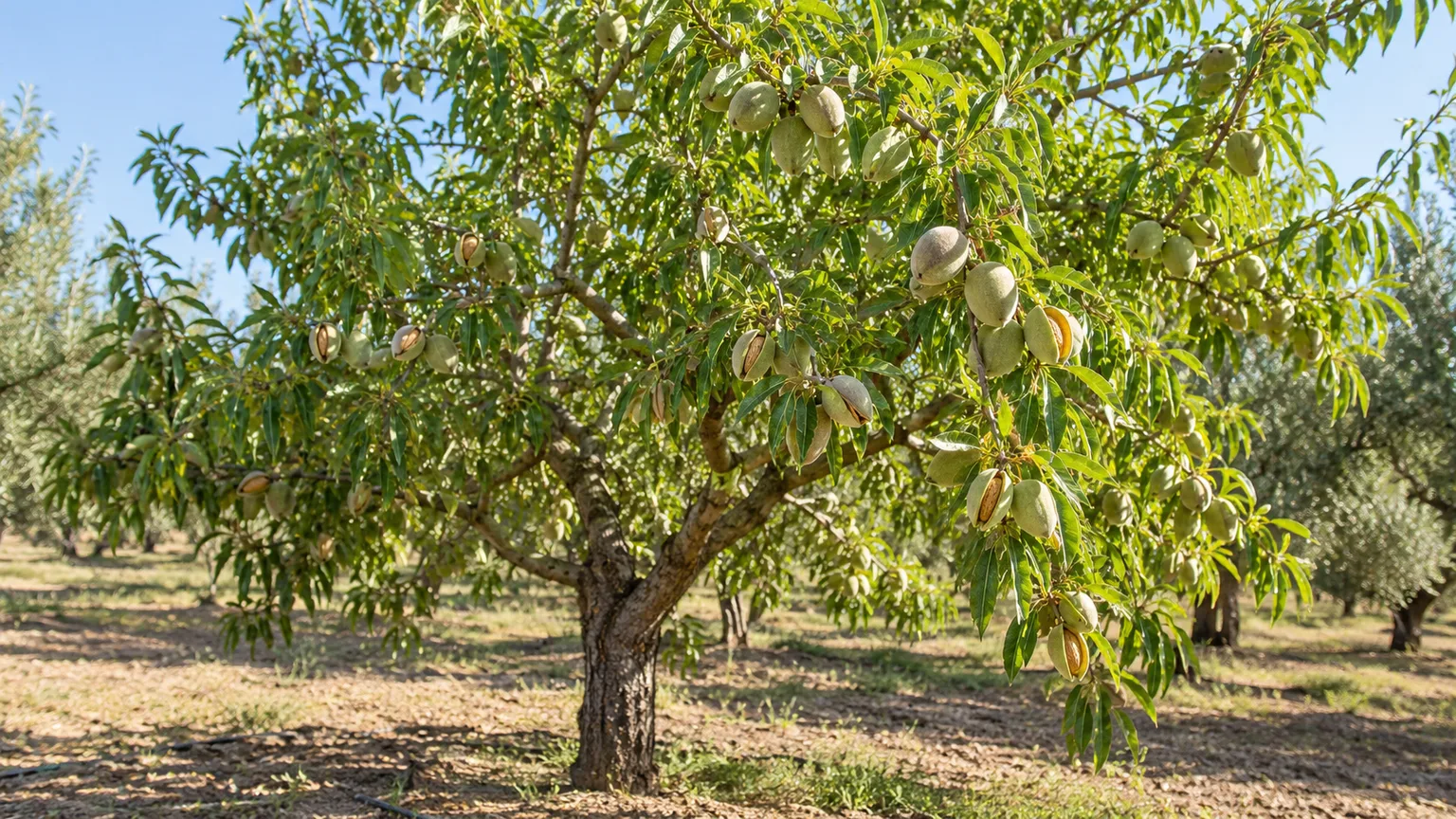
An almond tree can be both a spring-flowering landscape tree and a source of edible kernels, but those are not the same promise. Reliable nut production depends on matching a named edible cultivar to your winter chill, summer length, pollination window, and spring-frost pattern. If you have mild winters, a long warm growing season, and a sunny site where cold air can drain away, an almond may be worth planting; if not, it may flower beautifully yet set little or no crop.
The practical order is simple: confirm climate fit, choose the cultivar and pollination plan, plant into well-drained soil, keep the young root zone evenly moist, and protect the tree’s fruiting structure as it matures. Almonds are stone fruits: the part we eat is the seed inside a hard shell, enclosed by a fleshy hull. That distinction explains why harvest begins when the outer hull splits, not when a green fruit looks large.
Start with the climate reality check
An almond tree that survives winter is not necessarily an almond tree that will produce a dependable crop. Almonds need enough winter chill for normal bud development, then a long, warm period for the hulls and kernels to mature.
They bloom early, often before many other fruit trees, so the flowers may open while frost is still possible. A garden can therefore be warm enough for the wood to live but too cold, too wet, or too frost-prone for a reliable harvest.
Use your local extension office, nearby growers, and a nursery with regional experience to check the cultivar’s chilling requirement and bloom timing. USDA hardiness zones describe average winter minimums; they do not tell you whether a particular almond receives its required chill or whether flowers escape a late frost. A hilltop or gentle slope with good air drainage can be safer than a sheltered-looking low pocket where cold air settles.
Winter chill is cultivar-specific, not one magic number
Chill hours are the hours a tree experiences during the dormant season below a specified temperature, commonly 45°F in basic orchard guidance. The requirement differs among cultivars, and regional publications give different ranges because they address different cultivars and climates.
For example, UC IPM describes about 400 to 500 hours below 45°F for almond adaptation in its California home-landscape guidance, while a UC home-orchard publication lists a broader 250-to-500-hour range. Treat those as regional guidance, not a universal label for every almond tree; check the exact selection with a local source before buying. UC IPM’s almond cultural guide and UC ANR’s home-orchard crop notes illustrate why the cultivar and location need to be considered together.
A cultivar planted where it receives too little chill may leaf out unevenly or bloom irregularly, which can disrupt pollination. One planted where winter cold is excessive may suffer bud or wood injury.
The nursery tag should identify the cultivar, not merely say “almond,” and the seller should be able to tell you the tree’s chill requirement and expected local bloom period. If that information is unavailable, ask your county extension service before investing years in a tree that may never fruit consistently.
Early bloom makes spring frost decisive
A late frost can erase a season’s crop even when the tree is otherwise healthy. UC IPM notes that dormant buds tolerate more cold than open flowers; from midbloom until young fruit reach pea size, temperatures only slightly below freezing can significantly damage the crop. Look at your own yard’s frost history and avoid the bottom of a slope, a cold-air basin, or a low spot next to a wall that traps cold air. UC IPM’s frost guidance for almond explains how sensitivity rises as buds open.
A late-blooming cultivar can reduce exposure, but it does not eliminate frost risk. A frost cloth may help protect a small tree on a forecast cold night if it can be covered without breaking branches; it is not a practical guarantee for a mature canopy. If your site regularly freezes during bloom, decide whether ornamental flowers alone would justify the tree before planning around a nut crop.
Buy an edible almond cultivar with the right pollination plan
Read the botanical and cultivar name on the label and confirm that the tree is a sweet almond selected for kernels. “Flowering almond” often refers to a compact ornamental shrub grown for spring blossoms, not the nut-producing almond tree. Utah State University Extension specifically cautions against confusing edible almond (Prunus dulcis) with ornamental flowering almond (Prunus triloba); a photo of the ornamental plant can help you see the difference, but a tag is the reliable way to identify nursery stock.
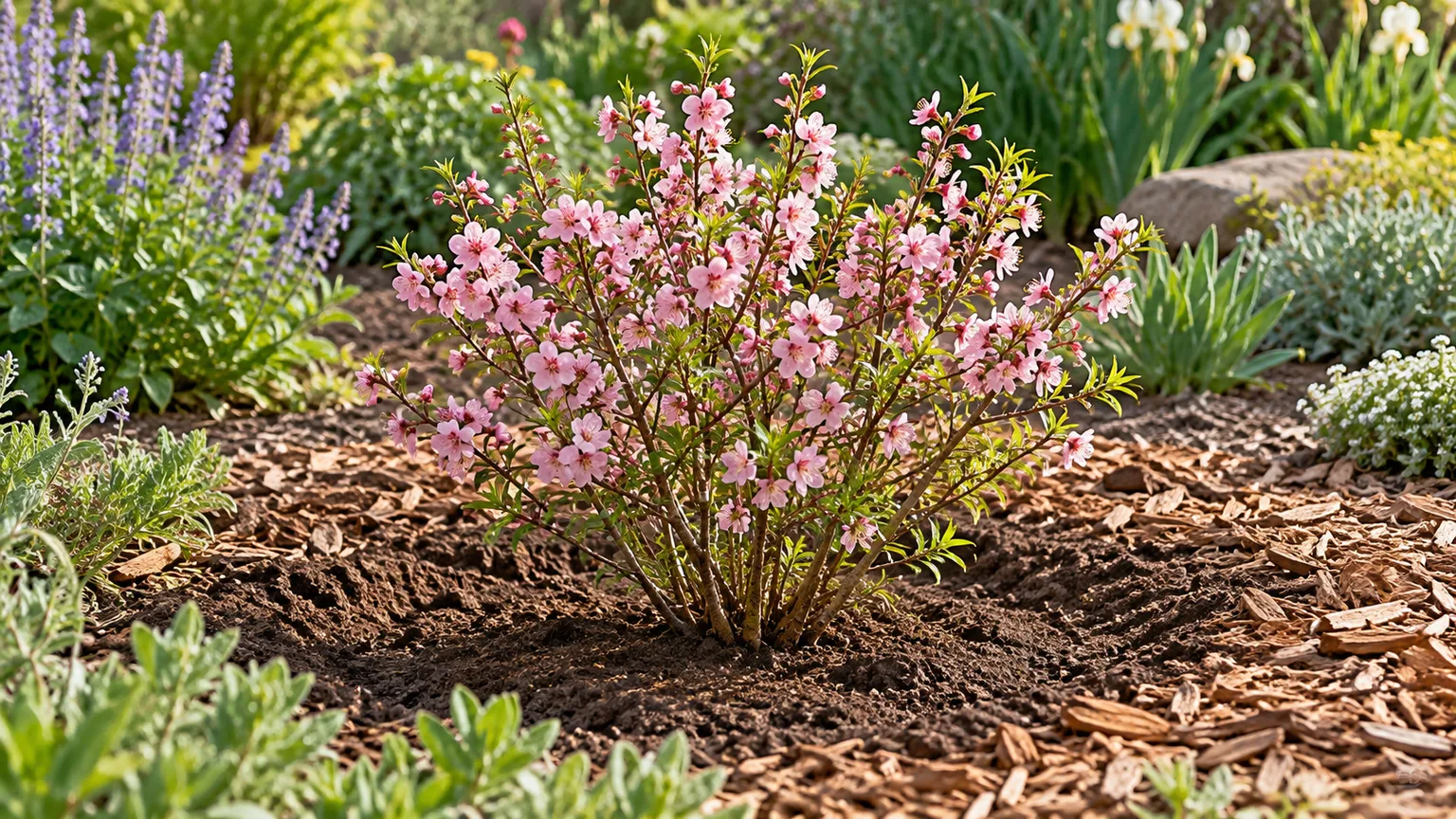
Most almond cultivars need pollen from a genetically different, compatible cultivar whose bloom overlaps. Bees and other insects carry that pollen, so two varieties that flower weeks apart may not function as a useful pair even if they are planted near each other.
If you only have room for one tree, look for a cultivar sold as self-fruitful or self-compatible—All-in-One is one commonly marketed example—and verify its chill requirement and local performance. Even a self-fruitful tree still benefits from insect visits; self-fruitful means it can set fruit with its own pollen, not that pollination is unnecessary.
Before you pay, get five specifics from the nursery: whether the tree is an edible sweet almond, whether it is self-fruitful, which compatible pollenizer to pair it with, the expected mature size on its rootstock, and whether the cultivar ripens before autumn rain arrives locally. The seller should be able to name the cultivar, rootstock, chill requirement, and likely bloom period; if not, the label is insufficient for a nut-producing planting.
Utah State’s almond guide explains how the scion determines crop traits while the rootstock can affect hardiness, disease resistance, and size. Utah State University Extension’s home-garden guide also discusses named cultivars and pollination limits. Do not assume a label such as “hardy almond” guarantees sweet, edible kernels; some hardy offerings are peach-almond hybrids selected for flowers or cold survival rather than a dessert-quality crop.
Choose a sunny, well-drained permanent site
Give the tree a full-sun position with enough open space for its mature canopy and for air to move through the branches. A mature almond can occupy a broad footprint; Utah State Extension uses roughly a 20-by-20-foot space as a planning example, but cultivar, rootstock, training, and climate change final size.
Keep it away from overhead wires, buildings, drains, septic features, and pavement that would make fallen hulls or future pruning difficult. Do not plant it where lawn sprinklers keep the crown area wet every day.
Drainage is a better planting test than soil color. After a heavy rain, does water disappear from the future root zone, or does it sit there for hours or days? Almond roots need oxygen and do poorly in persistently saturated ground.
UC IPM recommends deep, well-drained soil and warns against low or soggy sites; where drainage is marginal, a broad raised mound may help, but it cannot fix a site that stays waterlogged. A soil test can clarify pH, salinity, and nutrient status before planting. Avoid trying to “fix” heavy clay by replacing only the soil in the planting hole with potting mix; the abrupt boundary can hold water or discourage roots from spreading into surrounding soil.
Plant the tree at the correct depth
Plant a dormant bare-root tree during the cool planting season for your area, usually winter or early spring when the ground is workable. Protect bare roots from sun and wind while you prepare the hole, and plant promptly rather than letting them dry.
A container-grown tree can be planted when heat stress is low and the soil can be watered consistently. The hole should be wide enough to spread the roots naturally, not a narrow shaft that forces roots to curl.
Bare-root and container planting
Before planting, remove broken roots with a clean cut and soak dry bare roots in cool water for several hours if the nursery or local extension recommends it. Set the tree so its first structural roots sit at or just above finished grade; burying the root flare can keep bark wet and contribute to decline. On a grafted tree, keep the graft union above the soil line—UC IPM advises about 2 inches—and do not bury it under mulch.
Backfill with the soil you excavated, firm gently to remove large air pockets, and water slowly to settle it. The UC IPM planting instructions emphasize spreading the roots and avoiding fertilizer or amendments in the planting hole.
For a potted tree, slide the root ball out and look for circling roots. Loosen a few that run around the outside; if the root mass is tightly girdled or woody, ask the nursery whether it can be corrected before planting. Set the root ball at the same depth it grew in the pot, adjusting for the visible flare rather than trusting a potting mix line that may be too high.
Water immediately after planting. Stake only if wind rocks the root ball; if you do, tie loosely and remove the stake once roots hold the tree upright.
Spread a shallow mulch layer across the root zone to slow evaporation and suppress weeds, leaving a clear gap around the trunk. Keep grass, weeds, string trimmers, and mower blades away from the bark while the tree establishes. A trunk guard may be useful where rabbits or rodents feed, but check beneath it regularly so it does not trap moisture or hide damage.
Water deeply, then tune the interval to soil
A young almond tree needs consistent moisture while roots establish, but it does not need permanently wet soil. Water slowly enough for moisture to soak through the root ball and into the surrounding soil. Then let excess water drain and check before watering again.
UC IPM gives 3 to 5 gallons per week as a possible young-tree starting point in its California guidance, while also noting that sandy soil may need more frequent irrigation than heavier soil and that hot weather changes demand. Use that number as a reference, not a universal weekly prescription.
Place drip emitters or a soaker hose over the developing root zone rather than directly against the trunk. As the canopy expands, move water outward toward and beyond the drip line so roots are encouraged to spread.
Deep, infrequent watering generally builds a better root system than short daily sprinkles, but the actual interval depends on rainfall, soil texture, temperature, tree size, and irrigation flow. Reduce watering as growth slows in fall; do not abruptly withhold water from a young tree during a hot, dry spell.
Read water stress and drainage before watering again
Check moisture a few inches below the surface in more than one place: inside the original root ball and just outside it. If the root ball is dry while surrounding soil is damp, water is bypassing the roots; apply more slowly or adjust the emitters.
If both areas remain wet for days, improve drainage or lengthen the interval rather than adding fertilizer to a struggling tree. Wilting or leaf scorch may signal water stress, but those signs can also follow heat, root damage, salinity, or disease, so inspect the soil before reacting.
Avoid wetting the lower trunk and keep mulch off the bark. Persistent saturation deprives roots of oxygen and increases root or crown rot risk; repeated shallow watering can keep roots near the surface, where heat and drought affect them quickly. For an established tree, expand the wetted area as roots grow, and adjust irrigation after rain rather than following a calendar without checking the ground.
Fertilize in response to growth, not by habit
Do not add fertilizer to the planting hole or automatically feed a newly planted almond. Young roots are vulnerable to concentrated salts, and fertilizer cannot compensate for poor drainage, insufficient sun, or transplant shock.
In later years, judge growth and leaf appearance alongside a soil test. A vigorous tree making long, soft shoots may have enough nitrogen already; adding more can favor leaves and shoots over flowers and increase pest or disease problems.
Regional recommendations differ with soil and production goals. Utah State Extension gives annual shoot growth ranges as a vigor check—about 12 to 18 inches for young nonbearing trees and 6 to 12 inches for mature bearing trees—while UC IPM cautions that excessive nitrogen can worsen pests and reduce fruit quality. These are useful diagnostic references, not targets that justify dosing every tree the same way.
Use a local soil or leaf analysis and follow the lab or extension recommendation; keep fertilizer away from the trunk and water it in. If new leaves are unusually small or pale, confirm the cause before adding a micronutrient spray, because root trouble and irrigation stress can look similar to nutrient deficiency.
Train and prune for a sturdy open-center canopy
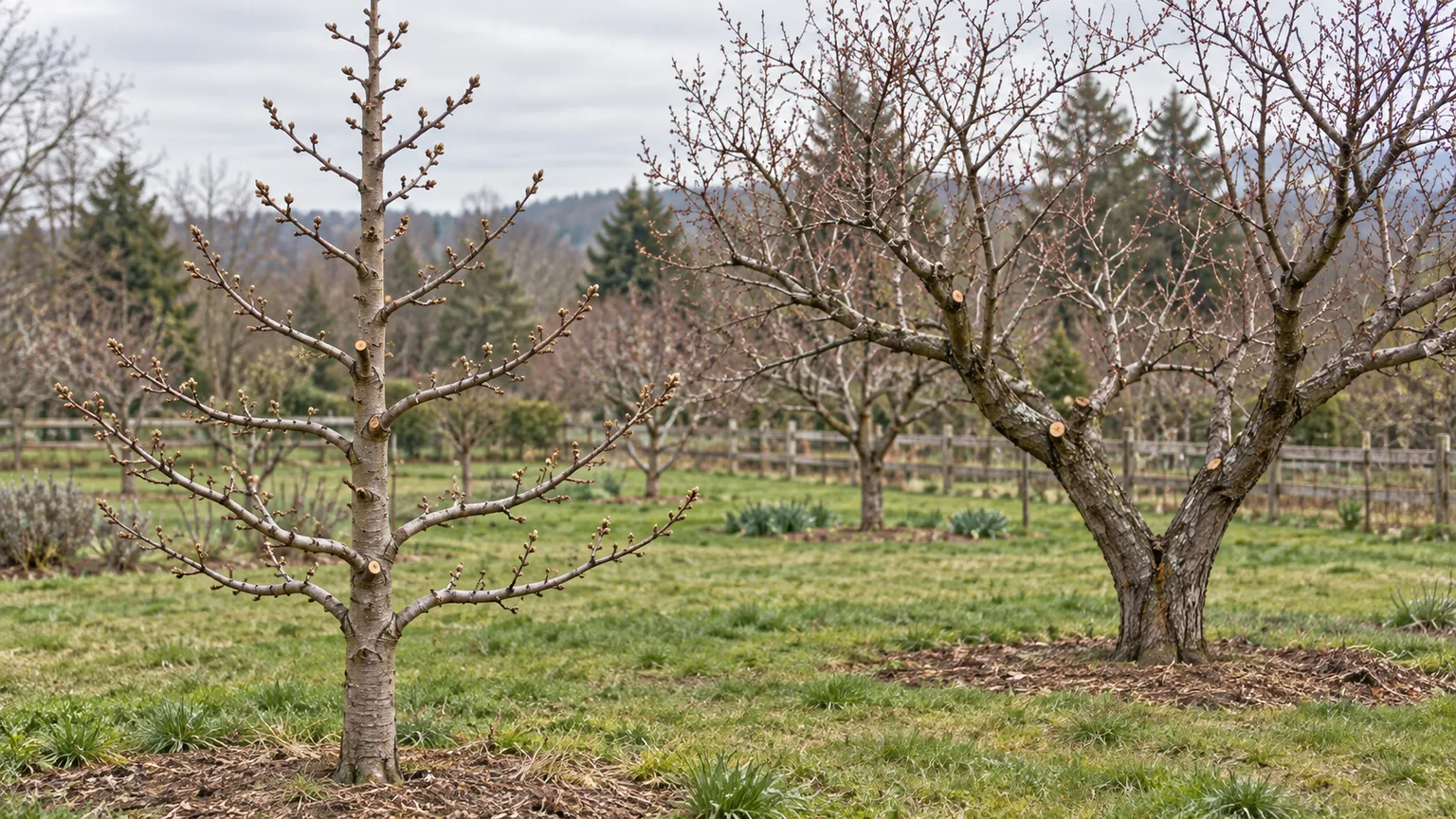
Almond branches must support crop weight without crowding the center. Young trees are commonly trained to an open vase or modified vase form with three or four well-spaced main scaffold limbs and no dominant central leader. The open center admits light and air, makes inspection and harvest easier, and reduces rubbing, shaded interior growth. UC IPM’s training guidance and Horticulture’s almond growing guide both describe open-center training as a practical structure for this stone fruit.
Build the framework in the first years
At planting, first check what kind of tree you bought. A bare unbranched whip and a branched nursery tree need different cuts, and local training systems vary.
UC IPM’s California home-garden guidance heads an unbranched almond to about 30 inches to establish a low framework; Utah State advises selecting and retaining well-spaced branches when the tree already has them. Follow your nursery’s directions or local extension guidance instead of automatically making that cut on every specimen.
Over the first two or three years, retain a few strong, wide-angled limbs spaced around the trunk and remove shoots that compete with them, grow inward, or emerge very low. Keep the trunk clear below the chosen scaffold height, but avoid stripping too much healthy growth at once. If the tree sets flowers immediately after planting, removing some or all of the first small crop can direct energy toward roots and framework; do not let a tiny newly planted tree carry a heavy crop that bends young limbs.
Preserve mature fruiting wood
Once the frame is established, prune lightly. Remove dead, broken, diseased, crossing, or inward-growing branches and any vigorous upright water sprouts that block the canopy.
Almonds bear on short spurs and on growth produced the previous year, so repeatedly shortening every branch can remove future flower buds. Keep sound fruiting wood; cut back only where there is a clear structural, safety, or disease reason.
Dormant-season pruning is common for structure and inspection, but timing can vary with local disease pressure. In areas where silver leaf is a concern, the RHS advises mid-summer pruning; in other regions, local extension guidance may favor dormant pruning for framework and sanitation.
Prune in dry weather with sharp, clean tools, and avoid flush cuts into the branch collar. Large neglected trees or limbs near buildings are jobs for a qualified arborist rather than drastic topping.
Follow the crop from blossom to hull split
Almond blossoms open before leaves fully fill the canopy. If pollination succeeds, the flower’s ovary develops into a small green drupe; the hull surrounds the hard shell, and the seed inside becomes the kernel.
The tree may shed some flowers and tiny fruits naturally. That early drop is not automatically a sign that care has failed, but a crop that vanishes after bloom should prompt you to check frost records, bloom overlap, bee activity, and the tree’s age.
Do not expect a new tree to produce immediately. Utah State Extension says home gardeners should not expect a harvest for roughly four to six years after planting; timing varies with nursery size, cultivar, site, and establishment.
A grafted tree is a more predictable purchase than a seedling because its cultivar and likely kernel traits are known. If the tree blooms heavily but does not set fruit, check whether its pollen partner flowered at the same time and whether cold, rain, or wind limited insect activity during bloom.
Harvest, dry, and store the kernels
The clearest harvest cue is hull split: the leathery green hull opens along its seam and begins to dry, exposing the shell. Do not wait for every almond to fall naturally if autumn rain, birds, or insects threaten the crop.
UC IPM recommends harvesting as soon as hulls begin splitting to reduce worm damage and weather exposure. Shake or tap small branches over a clean tarp, gather the nuts promptly, and discard any that are moldy, damaged, or visibly infested.
Remove the hulls soon after harvest while leaving the hard shells intact. Spread the in-shell almonds in a thin layer on a clean, airy screen or tray under cover where air can circulate; protect them from rain, rodents, and insects.
Drying time depends on humidity and airflow, so use the kernel as a check: it should feel firm and snap rather than bend or feel rubbery. Do not seal damp nuts in a jar or bag, where moisture can encourage mold.
Once fully dry, store in-shell almonds in a cool, dry place in an airtight container; refrigerating or freezing extends storage, especially for shelled kernels whose oils can go rancid. UC IPM describes a 48-hour freeze for hulled nuts before room-temperature storage as a way to kill insect pests and eggs. Keep the container labeled with the harvest date, and inspect the first batch after storage for off odors, condensation, or mold. UC IPM’s harvest and storage advice gives more detail on prompt hull removal and pest prevention.
Troubleshoot poor crops, pests, and disease
A tree that flowers but gives no almonds is usually dealing with a pollination, frost, climate, or maturity problem—not a need for stronger fertilizer. Start with the date of bloom and your local minimum temperature.
Then confirm whether a compatible cultivar flowered at the same time, whether bees were active, and whether the tree has had enough years to establish. If fruit sets and then disappears, inspect for frost-damaged kernels, hull damage, and signs of insects before changing the watering schedule.
Too much nitrogen and hard pruning can drive leafy shoots while reducing flowers and fruiting wood. Waterlogged roots may grow poorly even when the foliage looks thirsty; underwatering during fruit development can also reduce kernel quality.
Correct the cause you observe: improve drainage, adjust irrigation, stop unnecessary feeding, or preserve the mature one-year shoots and spurs that carry buds. A soil test is more useful than a blind dose of fertilizer when symptoms are unclear.
Look for pests and disease in context. Navel orangeworm larvae can feed inside almonds, leaving webbing and frass; remove old “mummy” nuts left on the tree or ground after harvest and gather the current crop promptly. UC IPM’s home-garden navel orangeworm guidance emphasizes sanitation and early harvest.
Aphids, scale, mites, brown rot, leaf curl, and cankers can also affect almond and related stone fruits; identify the symptom before choosing any treatment, and avoid spraying flowers when bees are visiting. For pesticide use, follow the label and local regulations, and seek local extension diagnosis if branches are dying back or the trunk is cankering.
A bitter or unknown kernel is not a taste test. Some almond relatives and peach-almond hybrids can produce bitter kernels that contain amygdalin, which can release cyanide when crushed or chewed. Eat only almonds from a positively identified, reputable sweet-almond cultivar; do not sample kernels from an ornamental shrub, a volunteer seedling, or an unlabeled old tree. Utah State University Extension explains the distinction between sweet and bitter kernels.
Decide whether a pot or seedling makes sense
A permanent container is usually a poor choice if your goal is a reliable almond harvest. Even a dwarfing rootstock needs a large, stable root zone, consistent irrigation, and enough canopy space to flower and ripen a crop; a pot also heats and dries faster than garden soil. A large container can be useful temporarily for a young tree or where you can move it into a protected, sunny position, but plan for eventual in-ground planting and confirm the nursery’s advice on rootstock and final size.
Growing a tree from a grocery-store almond is an experiment, not a dependable way to establish a named cultivar. Many retail kernels have been heat-treated or otherwise handled so they may not germinate; a seedling that does grow will not necessarily match the parent’s fruit quality, chill requirement, or pollination behavior.
Commercial almond trees are grafted so the named scion grows on a selected rootstock. For an edible crop, buy a grafted tree from a nursery that can identify both parts and provide a compatible pollination plan.
Conclusion
Choose an almond tree only after checking the cultivar’s chill requirement, bloom timing, pollination needs, and fit with your local frost and summer-rain pattern. Plant it in full sun and fast-draining soil, keep the young roots evenly moist, train a strong open center, and prune lightly enough to preserve fruiting wood.
If the tree sets a crop, harvest when hulls split, dry the in-shell almonds thoroughly, and store them cool and dry. A locally recommended grafted sweet-almond cultivar is the best starting point; no watering or fertilizer routine can overcome a climate or pollination mismatch.



